From Surf Wiki (app.surf) — the open knowledge base
Rigging
Ropes, cables and chains which support masts of sailing ships
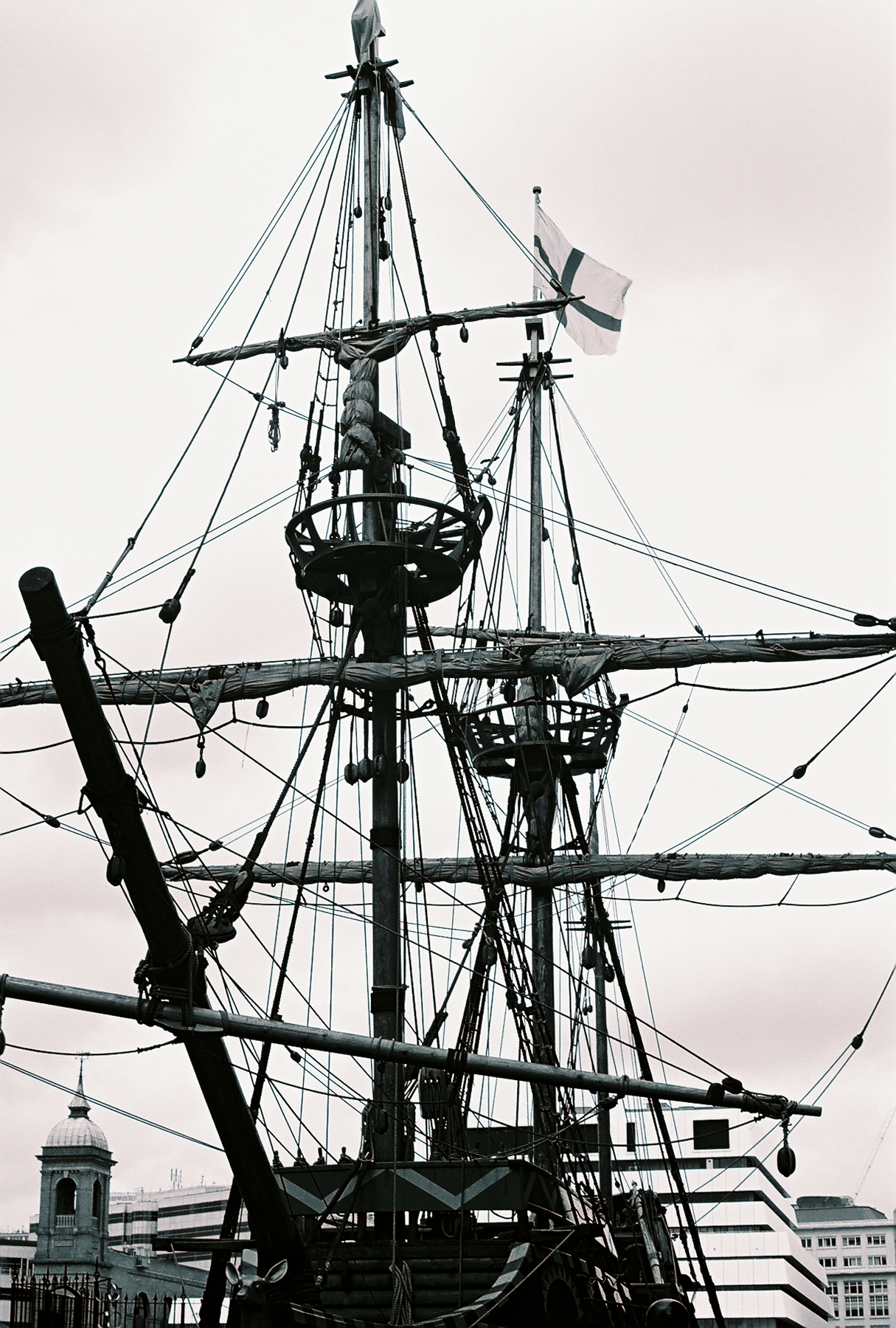
Ropes, cables and chains which support masts of sailing ships
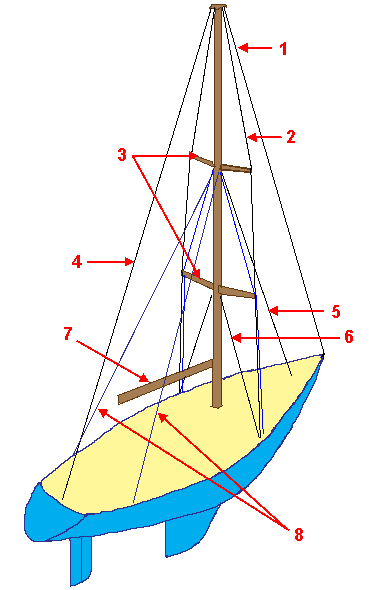
Key:
- Forestay
- Shroud
- (Spreaders)
- Backstay
- Inner forestay
- Sidestay
- (Boom)
- Running backstays]]

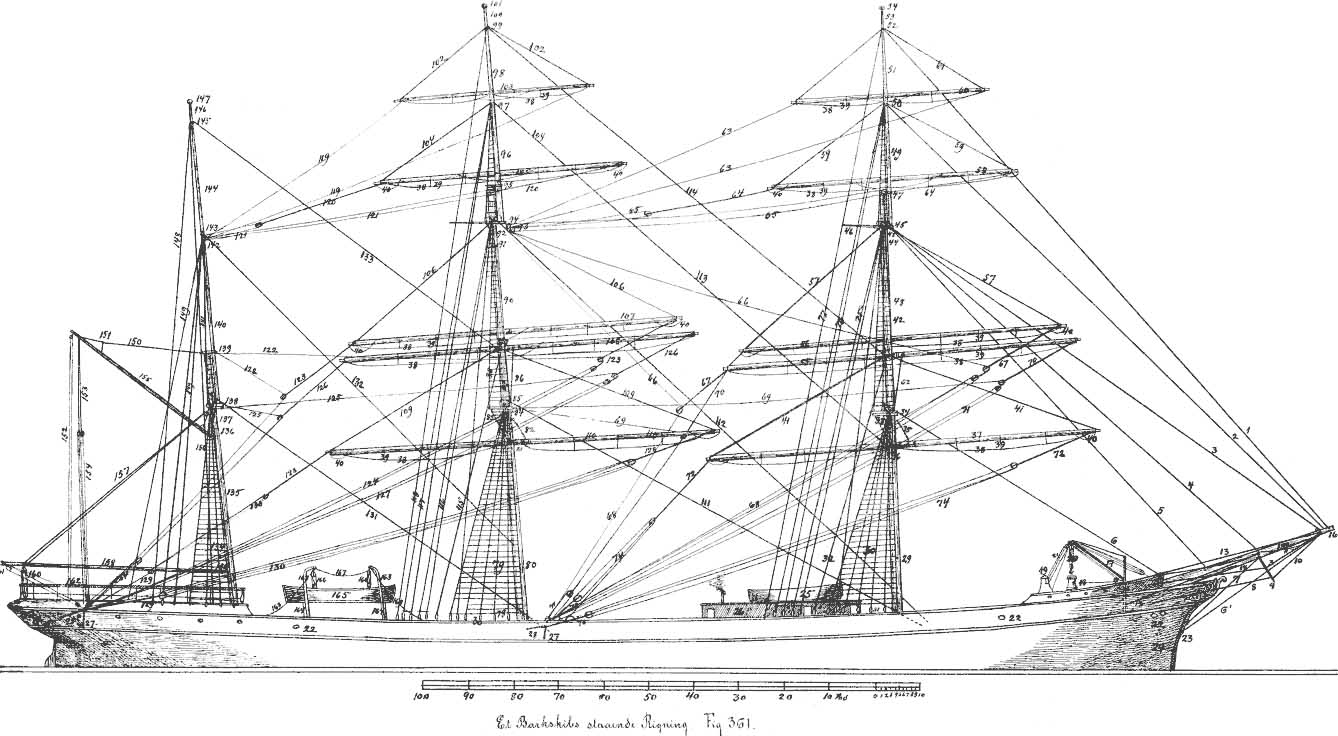

Rigging comprises the system of ropes, cables and chains, which support and control a sailing ship or sail boat's masts and sails. Standing rigging is the fixed rigging that supports masts including shrouds and stays. Running rigging is rigging which adjusts the position of the vessel's sails and spars including halyards, braces, sheets and vangs. | archive-url = https://web.archive.org/web/20160929101046/https://en.oxforddictionaries.com/definition/rigging | url-status = dead | archive-date = September 29, 2016 | access-date = 2017-01-02
Etymology
According to the Encyclopædia Britannica Eleventh Edition "rigging" derives from Anglo-Saxon wrigan or wringing, "to clothe". The same source points out that "rigging" a sailing vessel refers to putting all the components in place to allow it to function, including the masts, spars, sails and the rigging.
History
Theophrastus in his History of Plants ( 300 BCE) states that the rigging on King Antigonus' fleet was made from papyrus reed.
Types of rigging
Rigging is divided into two classes, standing, which supports the mast (and bowsprit), and running, which controls the orientation of the sails and their degree of reefing. Configurations differ for each type of rigging, between fore-and-aft rigged vessels and square-rigged vessels.
Standing
Main article: Standing rigging
Standing rigging is cordage which is fixed in position. Standing rigging is almost always between a mast and the deck, using tension to hold the mast firmly in place. Due to its role, standing rigging is now most commonly made of steel cable. It was historically made of the same materials as running rigging, only coated in tar for added strength and protection from the elements.
Fore-and-aft rigged vessels
Main article: Fore-and-aft rig
Most fore-and-aft rigged vessels have the following types of standing rigging: a forestay, a backstay, and upper and lower shrouds (side stays). Less common rigging configurations are diamond stays and jumpers. Both of these are used to keep a thin mast in column especially under the load of a large down wind sail or in strong wind. Rigging parts include swageless terminals, swage terminals, shackle toggle terminals and fail-safe wire rigging insulators.
Square-rigged vessels
Main article: Square rig
Whereas 20th-century square-rigged vessels were constructed of steel with steel standing rigging, prior vessels used wood masts with hemp-fiber standing rigging. As rigs became taller by the end of the 19th century, masts relied more heavily on successive spars, stepped one atop the other to form the whole, from bottom to top: the lower mast, top mast, and topgallant mast. This construction relies heavily on support by a complex array of stays and shrouds. Each stay in either the fore-and-aft or athwartships direction has a corresponding one in the opposite direction providing counter-tension. Fore-and-aft the system of tensioning start with the stays that are anchored in front of each mast. Shrouds are tensioned by pairs of deadeyes, circular blocks that have the large-diameter line run around them, whilst multiple holes allow smaller line—lanyards—to pass multiple times between the two and thereby allow tensioning of the shroud. In addition to overlapping the mast below, the top mast and topgallant mast are supported laterally by shrouds that pass around either a platform, called a "top", or cross-wise beams, called "crosstrees". Each additional mast segment is supported fore and aft by a series of stays that lead forward. These lines are countered in tension by backstays, which are secured along the sides of the vessel behind the shrouds.
Running
Main article: Running rigging
Running rigging is the cordage used to control the shape and position of the sails. Materials have evolved from the use of Manilla rope to synthetic fibers, which include dacron, nylon and kevlar.
References
References
- Theophrastus. (1916). "Enquiry into plants and minor works on odours and weather signs". W. Heinemann; G.P. Putnam's Sons.
- {{Cite EB1911. Thompson. Edward Maunde
This article was imported from Wikipedia and is available under the Creative Commons Attribution-ShareAlike 4.0 License. Content has been adapted to SurfDoc format. Original contributors can be found on the article history page.
Ask Mako anything about Rigging — get instant answers, deeper analysis, and related topics.
Research with MakoFree with your Surf account
Create a free account to save articles, ask Mako questions, and organize your research.
Sign up freeThis content may have been generated or modified by AI. CloudSurf Software LLC is not responsible for the accuracy, completeness, or reliability of AI-generated content. Always verify important information from primary sources.
Report