From Surf Wiki (app.surf) — the open knowledge base
Rift valley
Linear lowland created by a tectonic rift or fault

Linear lowland created by a tectonic rift or fault


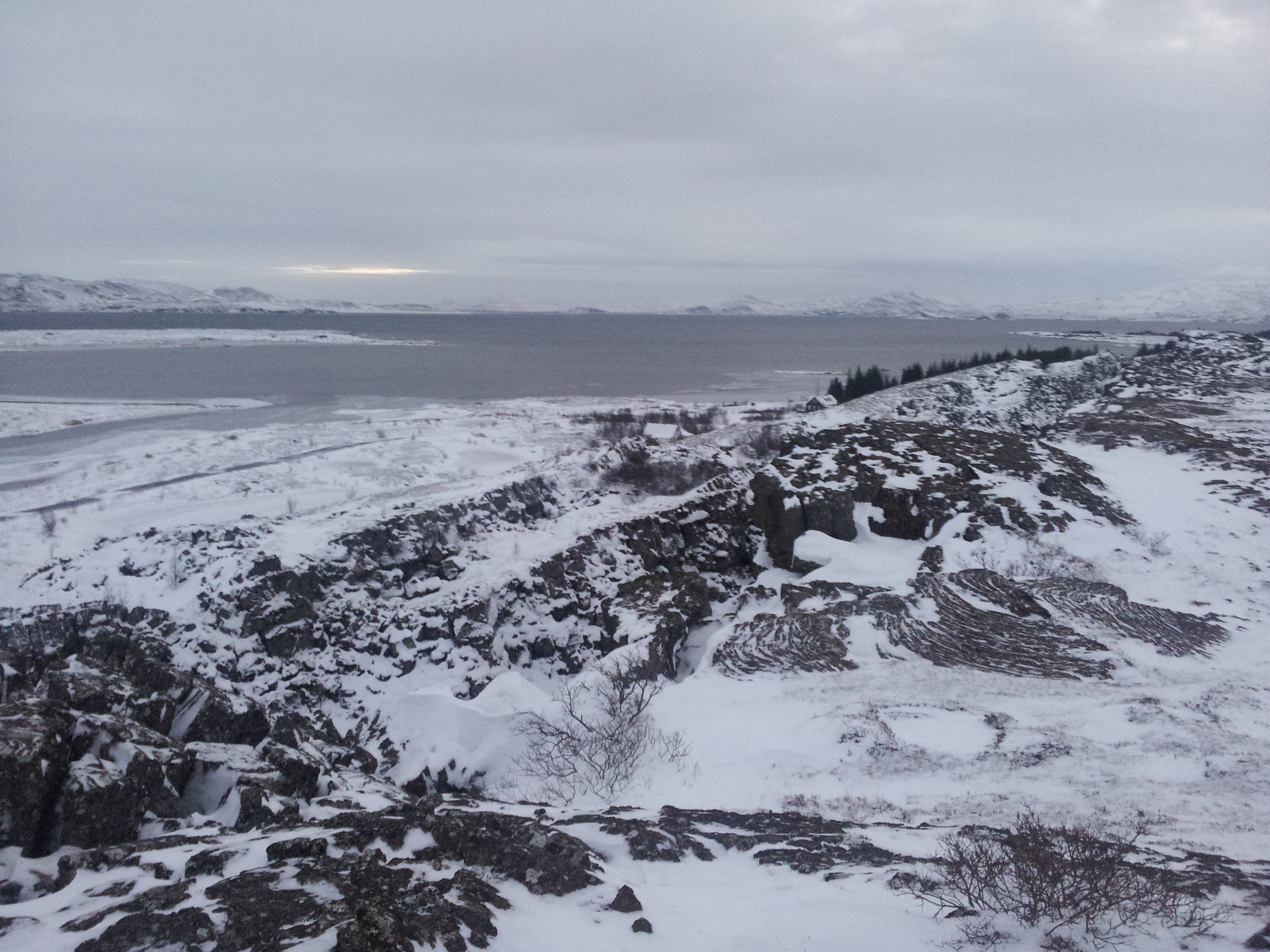
A rift valley is a linear shaped lowland between several highlands or mountain ranges produced by the action of a geologic rift. Rifts are formed as a result of the pulling apart of the lithosphere due to extensional tectonics. The linear depression may subsequently be further deepened by the forces of erosion. More generally the valley is likely to be filled with sedimentary deposits derived from the rift flanks and the surrounding areas. In many cases rift lakes are formed. One of the best known examples of this process is the East African Rift.{{cite web
Earth's rift valleys
The most extensive rift valley is located along the crest of the mid-ocean ridge system and is the result of sea floor spreading. Examples of this type of rift include the Mid-Atlantic Ridge and the East Pacific Rise.
Many existing continental rift valleys are the result of a failed arm (aulacogen) of a triple junction, although there are three, the East African Rift, Rio Grande rift and the Baikal Rift Zone, which are currently active, as well as a fourth which may be, the West Antarctic Rift System. In these instances, not only the crust but entire tectonic plates are in the process of breaking apart forming new plates. If they continue, continental rifts will eventually become oceanic rifts.
Other rift valleys are the result of bends or discontinuities in horizontally-moving (strike-slip) faults. When these bends or discontinuities are in the same direction as the relative motions along the fault, extension occurs. For example, for a right lateral-moving fault, a bend to the right will result in stretching and consequent subsidence in the area of the irregularity. In the view of many geologists today, the Dead Sea lies in a rift which results from a leftward discontinuity in the left lateral-moving Dead Sea Transform fault. Where a fault breaks into two strands, or two faults run close to each other, crustal extension may also occur between them, as a result of differences in their motions. Both types of fault-caused extension commonly occur on a small scale, producing such features as sag ponds or landslides.
Rift valley lakes
Main article: Rift lake
Many of the world's largest lakes are located in rift valleys. Lake Baikal in Siberia, a World Heritage Site,{{cite web |access-date=2007-01-13 |access-date=2007-01-07 |archive-date=2012-04-19 |archive-url=https://web.archive.org/web/20120419072226/http://www2.gi.alaska.edu/ScienceForum/ASF9/986.html |url-status=dead
Extraterrestrial rift valleys
Rift valleys are also known to occur on other terrestrial planets and natural satellites. The 4,000 km long Valles Marineris on Mars is believed by planetary geologists to be a large rift system. Some features of Venus, most notably, the 4,000 km Devana Chasma and a part of the western Eistla, and possibly also Alta and Bell Regio have been interpreted by some planetary geologists as rift valleys. Some natural satellites also have prominent rift valleys. The 2,000 km long Ithaca Chasma on Tethys in the Saturn system is a prominent example. Charon's Nostromo Chasma is the first confirmed in the Pluto system, however large chasms up to 950 km wide observed on Charon have also been tentatively interpreted by some as giant rifts, and similar formations have also been noted on Pluto. A recent study suggests a complex system of ancient lunar rift valleys, including Vallis Rheita and Vallis Alpes. The Uranus system also has prominent examples, with large 'chasma' believed to be giant rift valley systems, most notably the 1492 km long Messina Chasma on Titania, 622 km Kachina Chasmata on Ariel, Verona Rupes on Miranda, |access-date=2007-07-23 |url-status=dead |archive-url=https://web.archive.org/web/20080709020909/http://www.space.com/scienceastronomy/solarsystem/miranda_creation_011016-1.html |archive-date=July 9, 2008 and Mommur Chasma on Oberon.
References
References
- "The World's Greatest Lakes".
- Siegert, Martin J.. (1999). "Antarctica's Lake Vostok". American Scientist.
- John Grotzinger ..... (2006). "Understanding Earth.". W. H. Freeman.
- (1998). "Rift processes at the Valles Marineris, Mars: Constraints from gravity on necking and rate-dependent strength evolution". Journal of Geophysical Research.
- (2012). "The formation of Valles Marineris: 3. Trough formation through super-isostasy, stress, sedimentation, and subsidence". Journal of Geophysical Research.
- (2006). "Topographic Analysis Of Devana Chasma, Venus; Implications For Rift System Segmentation And Propagation". Journal of Structural Geology.
- (1992). "Regional topographic rises on Venus: Geology of Western Eistla Regio and comparison to Beta Regio and Atla Regio". Journal of Geophysical Research.
- (1992). "Venus tectonics: An overview of Magellan observations". Journal of Geophysical Research.
- (16 July 2015). "'Blowing my mind': Peaks on Pluto, canyons on Charon". PhysOrg.
- (2014). "Structure and evolution of the lunar Procellarum region as revealed by GRAIL gravity data". Nature.
This article was imported from Wikipedia and is available under the Creative Commons Attribution-ShareAlike 4.0 License. Content has been adapted to SurfDoc format. Original contributors can be found on the article history page.
Ask Mako anything about Rift valley — get instant answers, deeper analysis, and related topics.
Research with MakoFree with your Surf account
Create a free account to save articles, ask Mako questions, and organize your research.
Sign up freeThis content may have been generated or modified by AI. CloudSurf Software LLC is not responsible for the accuracy, completeness, or reliability of AI-generated content. Always verify important information from primary sources.
Report