From Surf Wiki (app.surf) — the open knowledge base
Rickshaw
Two- or three-wheeled passenger cart
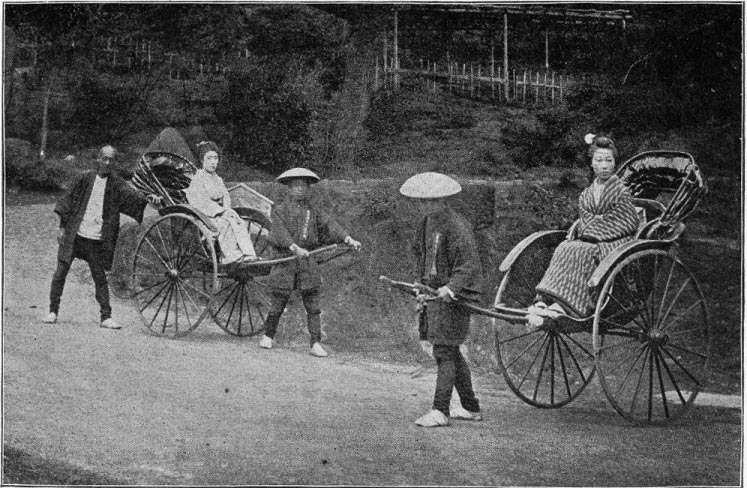
Two- or three-wheeled passenger cart
Rickshaw originally denoted a pulled rickshaw, a two- or three-wheeled cart generally pulled by one person carrying one passenger. The first known use of the term in English was in 1879. Over time, cycle rickshaws (also known as pedicabs or trishaws), auto rickshaws, and electric rickshaws were invented, and have replaced the original pulled rickshaws, with a few exceptions for their use in tourism.
Pulled rickshaws created a popular form of transportation and a source of employment for male labourers within Asian cities in the 19th century. Their appearance was related to newly acquired knowledge of ball-bearing systems. Their popularity declined as cars, trains, and other forms of transportation became widely available.
Auto rickshaws are becoming more popular in some cities in the 21st century as an alternative to taxis because of their low cost of hire. Bangladesh holds the record of hosting highest number of rickshaws in the world with 40,000 rickshaws operating in the capital Dhaka alone every day. In 2023, UNESCO listed rickshaws and rickshaw art as 'intangible heritage' of Bangladesh.
Etymology
Name
Rickshaw originates from the Japanese word jinrikisha (人力車, 人 jin = human, 力 riki = power or force, 車 sha = vehicle), which literally means "human-powered vehicle".
History
Origin
The first rickshaws were invented in France in the late 17th century, to fulfill, along with other types of carriages such as cabriolets and fiacres, the unmet demand for public transportation created by the 1679 cessation of Paris' first omnibus service. These vehicles, called "vinaigrettes" for their resemblance to the handcarts used by contemporary vinegar-sellers, were fully-enclosed two-wheeled carriages with space for a single person. Usually, they were moved by two people; one holding the bars at the front and the other pushing from behind.
A painting named "Les deux carrosses" by Claude Gillot shows 2 rickshaws in 1707.
Rickshaws were independently invented in Japan circa 1869, after the lifting of a ban on wheeled vehicles from the Tokugawa period (1603–1868), and at the beginning of a period of rapid technical advancement in Japan.
Inventor
There are many theories about the inventor, with the most likely and widely accepted theory describing the rickshaw as having been invented in Japan in 1869, by Izumi Yosuke, who formed a partnership with Suzuki Tokujiro and Takayama Kosuke to build the vehicles, having been "inspired by the horse carriages that had been introduced to the streets of Tokyo a few years earlier".
Other theories about the inventor of the rickshaw include:
- Reverend Jonathan Goble (sometimes called Jonathan Scobie), an American Free Baptist minister and missionary to Japan, is said to have invented the rickshaw around 1869 to transport his invalid wife through the streets of Yokohama.
- An American blacksmith named Albert Tolman is said to have invented the rickshaw, or "man drawn lorry" in 1846 in Worcester, Massachusetts, for a South American bound missionary.
- In New Jersey, the Burlington County Historical Society claims an 1867 invention by carriage maker James Birch, and exhibits a Birch rickshaw in its museum.
Japan historian Seidensticker wrote of the theories:
Though the origins of the rickshaw are not entirely clear, they seem to be Japanese, and of Tokyo specifically. The most widely accepted theory offers the name of three inventors, and gives 1869 as the date of invention.
Description
The vehicle had a wooden carriage that rode on "superior Western wheels" and was a dramatic improvement over earlier modes of transportation. Whereas the earlier sedan chairs required two people, the rickshaw generally only required one. More than one person was required for hilly or mountainous areas. It also provided a smoother ride for the passenger. Other forms of vehicles at the time were drawn by animals or were wheelbarrows. The vehicle also has an collapsible hood for protection from sun or rain.
The Powerhouse Museum in Sydney, has had a rickshaw in its collection for over 120 years. It was made about 1880 and is described as:
A rickshaw, or jinrikisha, is a light, two-wheeled cart consisting of a doorless, chairlike body, mounted on springs with a collapsible hood and two shafts. Finished in black lacquer-ware over timber, it was drawn by a single rickshaw runner.
Late 19th century

In the Late 19th century, hand-pulled rickshaws became an inexpensive, popular mode of transportation across Asia. Peasants who migrated to large Asian cities often worked first as a rickshaw runner. It was "the deadliest occupation in the East, [and] the most degrading for human beings to pursue."
Japan
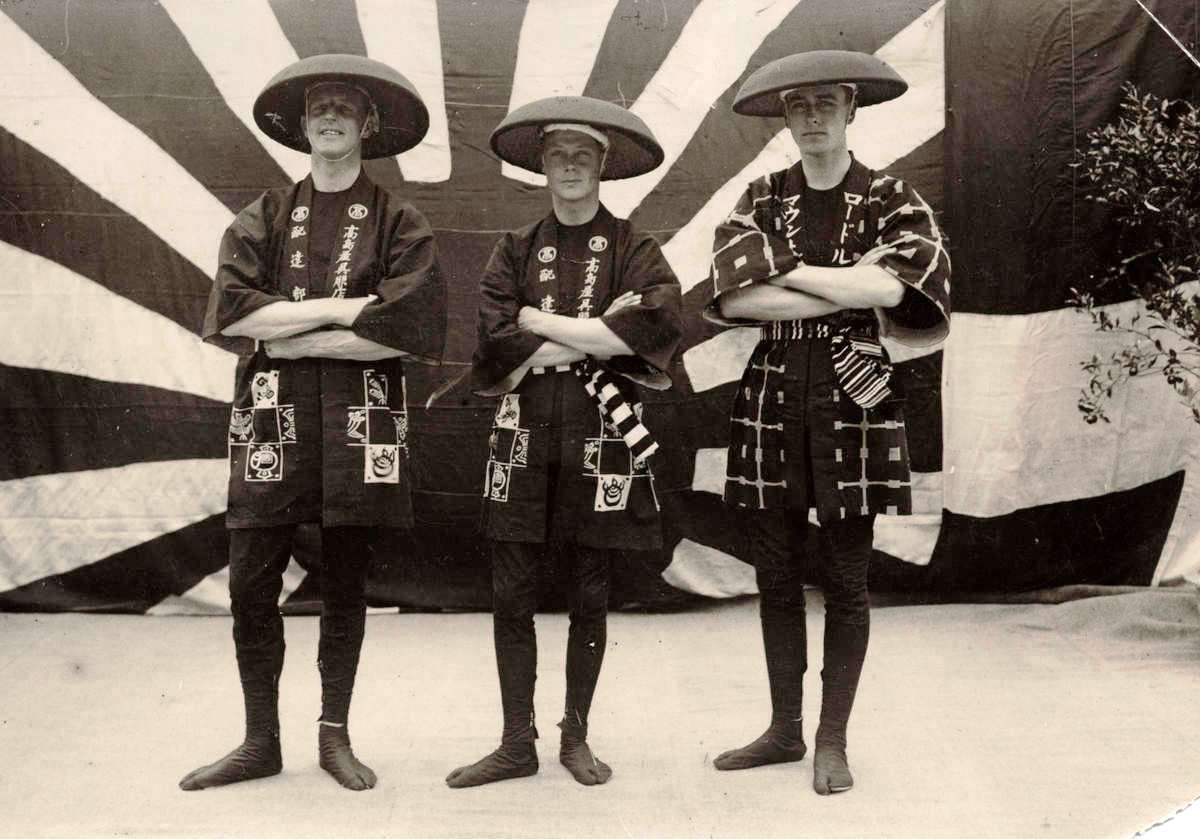
Starting in 1870, the Tokyo government issued a permit to build and sell 人力車 (jinrikisha: rickshaw in Japanese) to the trio that are believed in Asia to be the rickshaw's inventors: Izumi Yosuke, Takayama Kosuke, and Suzuki Tokujiro. In order to operate a rickshaw in Tokyo, a seal was required from these men. By 1872, they replaced the kago and norimono, becoming the main mode of transportation in Japan, with about 40,000 rickshaws in service. At that time man-power was much cheaper than horse-power; horses were generally only used by the military. Some of the rickshaws were artistically decorated with paintings and rear elevations. In this time, the more exuberant styles of decorations were banned. If the families were well-off financially they might have their own rickshaw runner. Generally, runners covered 30 to(-) in a day, at an average traveling speed of 8 km/h.
Japanese rickshaw manufacturers produced and exported rickshaws to Asian countries and South Africa.
Singapore
Singapore received its first rickshaws in 1880 and soon after they were prolific, making a "noticeable change in the traffic on Singapore's streets." Bullock carts and gharries were used before rickshaws were introduced.
Many of the poorest individuals in Singapore in the late nineteenth century were poverty-stricken, unskilled people of Chinese ancestry. Sometimes called coolies, the hardworking men found that pulling a rickshaw was a new opportunity for employment.
In 1897, martial law was declared to end a four-day rickshaw workers' strike.
Other


In China, the rickshaw was first seen in 1873 and was used for public transportation the following year. Within a year there were 10,000 rickshaws in operation. Around 1880 rickshaws appeared in India, first introduced in Simla by Reverend J. Fordyce. At the turn of the century they were introduced in Calcutta, India, and by 1914 were a conveyance for hire. The rickshaw was also introduced to Korea in the late 19th century.
20th century
After World War II, there was a major shift in the use of man-powered rickshaws:
Hand-pulled rickshaws became an embarrassment to modernizing urban elites in the Third World, and were widely banned, in part because they were symbolic, not of modernity, but of a feudal world of openly marked class distinctions. Perhaps the seated rickshaw passenger is too close to the back of the laboring driver, who, besides, is metaphorically a draught animal harnessed between shafts.
The cycle rickshaw was built in the 1880s and was first used with regularity starting in 1929 in Singapore. They were found in every south and east Asian country by 1950. By the late 1980s there were estimated 4 million cycle rickshaws in the world.
Africa

Rickshaws were introduced to Durban, South Africa, and by 1904 there were about 2,000 registered rickshaw pullers. Rickshaws operated in Nairobi in the beginning of the 20th century; pullers went on strike there in 1908. In the 1920s, they were used in Bagamoyo, Tanga, Tanzania and other areas of East Africa for short distances.
Asia
The rickshaw's popularity in Japan had declined by the 1930s with the advent of motorized forms of transportation like automobiles and trains. After World War II, when gasoline and automobiles were scarce, they made a temporary comeback. The rickshaw tradition has stayed alive in Kyoto and Tokyo's geisha districts. In the 1990s, German-made cycle rickshaws called "velotaxis" were introduced in Japanese cities, including Kobe.

In post-war Hong Kong, rickshaws was one of the main transportation either for transporting goods or for transporting people during the Japanese invasion, known as the Battle of Hong Kong. Japanese military hired many rickshaw pullers to have them gathered and organize with other cooks and seamen for an underground armed team to enact the anti-British Colony clan. However, after World War II, other forms of transport such as pedicabs and streetcar became strong competitors of rickshaws, leading the business of rickshaws into stagnation.
Chiuchow men formed a faction within the Canton rickshaw pullers union in the 1920s. In addition, the Chiuchow pullers could be identified by their hats which were rounded and flat at the top; while the rival Hoklo men had a cone-shaped headgear with sharp points at the top. However, rickshaw use began to decline in the 1920s as the government introduced the streetcar system in 1924. The number of rickshaw pullers had declined from 44,200 to 25,877 six months after the opening of the tramway. It had also caused the Beijing tramway riot in October 1929. A rough form of a rickshaw is sometimes used for hauling coal, building materials or other material. Both motorized and pedal-power cycle rickshaws, or pedicabs, were used for short-distance passenger travel. There are still many rickshaws in many cities for either touring purposes (in big cities such as Beijing and Shanghai, with traditional Chinese rickshaws) or short range transportation in some counties. However, the new Communist government banned rickshaws in Canton in the early 1950s, leading to another low tide of rickshaws.
In Singapore, the rickshaw's popularity increased into the 20th century. There were approximately 50,000 rickshaws in 1920 and that number had doubled by 1930. Cycle rickshaws were used in Singapore beginning in 1929. Within six years pulled rickshaws were outnumbered by cycle rickshaws, which were also used by sightseeing tourists.

In the 1930s, cycle rickshaws were used in Dhaka, Bangladesh, Kolkata, India; and Jakarta, Indonesia. By 1950 they could be found in many South and East Asian countries. By the end of the 20th century, there were 300,000 such vehicles in Dhaka. By the end of 2013, there were about 100,000 electric rickshaws in Delhi.
In Viêtnam, the rickshaw was called with the French name "Pousse-pousse". In 1883, Jean Thomas Raoul Bonnal, Supérior Résident of Tonkin, import 2 rickshaws from Japan in the city of Hanoi and made copies of them.
North America
Pedicabs were introduced in North America in 1962, where they were a means of transportation at the Seattle World's Fair in the state of Washington.
21st century

The 21st century has seen a resurgence in rickshaws, particularly in motorized rickshaws and cycle rickshaws. Auto rickshaws, also called velotaxis, have resurged as they are about 1/3 to 1/2 the cost of regular taxis. German velotaxis are three-wheeled, powered vehicles with a space for a driver and, behind the driver, space for two passengers. Cycle rickshaws are used in many Asian, North American, and European cities. They are increasingly being used as an eco-friendly way of short-range transportation, particularly in urban areas. Along with auto rickshaws, they are also used (particularly by Asian cities) for tourism, because of their "novelty value as an entertaining form of transportation".
Africa
In Madagascar, pulled cycle and auto rickshaws are a common form of transportation in a number of cities, especially Antsirabe. They are known as pousse-pousse, meaning push-push. Aboboyaa is a tricycle used in the transportation of goods and service in Ghana.
Asia

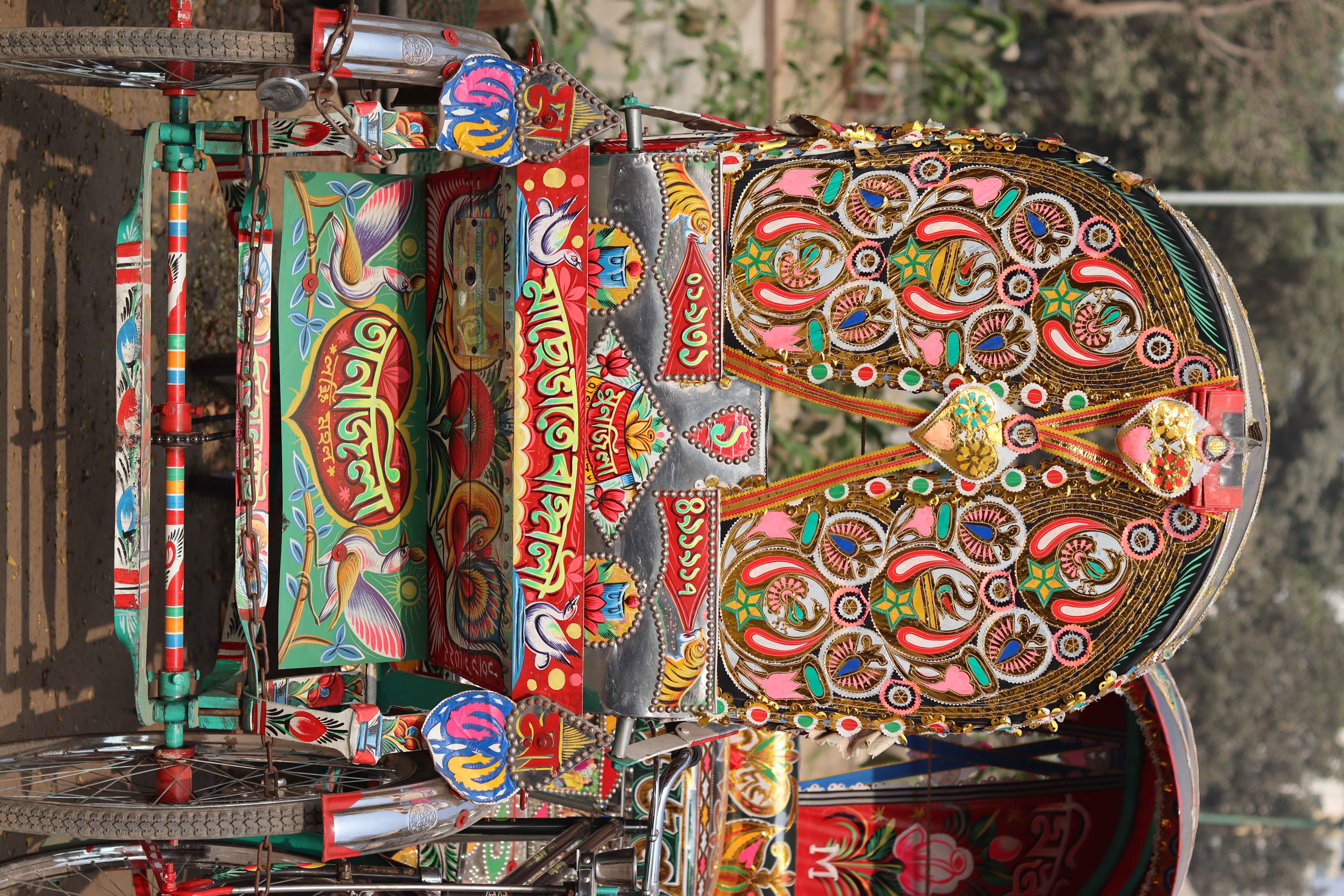
Macau still uses tri-wheeled bicycle rickshaw, or riquexó in Portuguese, as Macau was a Portuguese colony in the past. This kind of transportation was very famous until the late 20th century, due to the fact of being a small city and few cars, not so many motorcycles, very bad public transport and no other transport such as train or subway. You can go around Macau peninsula and the twos island on rickshaw, and visit the Riquexó Museum and see the evolution of rickshaws from the 18th century until modern times.
Automated cycle rickshaws, called velotaxis, are popular in Kyoto and Tokyo, Japan. Their use is growing at a rate of about 20–30% a year in Japanese cities. The traditional rickshaws are still alive for travelers in some tourist places in Japan. Rickshaws are found in Hong Kong. In China, automated and pedal-power cycle rickshaws, or pedicabs, are used for short-distance passenger travel in large cities and many medium-sized cities. Most Indian cities offer auto rickshaw service; hand-pulled rickshaws do exist in some areas, such as Kolkata (Calcutta) as a part of their transport system which also includes cycle rickshaws. Sri Lanka has over 1 million auto rickshaws registered in use as of 2018.
Australia
In Australia, cycle rickshaws or trishaws (three wheels) are used in Melbourne and St Kilda. They are also seen in Cowaramup, Western Australia at Bakehouse '38.
Europe
Cycle rickshaws or trishaws (three wheels) are used in some large continental European cities, such as:
- Austria: Vienna
- Denmark: Copenhagen and Odense
- Estonia: Tallinn
- France: Paris and Nantes
- Germany: Lake Constance, Berlin, Frankfurt, Hamburg, Hanover and other cities.
- Hungary: Budapest
- Ireland: Cork and Dublin.
- Italy: Florence, Milan, and Rome
- The Netherlands: Amsterdam and in the Caribbean, Willemstad
- Norway: Oslo
- Poland: Kraków and Łódź
- Russia: Saint Petersburg
- Spain: Barcelona
- Switzerland: Bern
- Romania: Bucharest
Within the United Kingdom, pedicabs operate in:
- London, mostly in Soho and other areas of central London. Their activity is not regulated by Transport for London, so there are no limits of the fees they can charge. which was later enacted as the Pedicabs (London) Act 2024, introducing a formal licensing and regulatory framework for their operation.
- Edinburgh, where vendors are hired like taxis and provide tours.
- Oxford.
File:Biketaxi Kuopio.jpg|Biketaxi rickshaw in Kuopio, Finland. File:Brighton to Newhaven along the coast 056.jpg|Auto rickshaw located in Brighton Marina.
North America

- In Canada, there are pedicabs in operation in Victoria and Vancouver. They are regulated in Toronto and Vancouver. Pulled rickshaw rides are available in downtown Ottawa, with tours of historical Byward Market.
- In the United States, San Diego and New York City each host hundreds of pedicabs; dozens of other North American cities also have pedicab services.{{cite book | title=Proceedings of the International Conferences on Transportation Systems Planning and Operation, Volume 1 | author=Indian Institute of Technology (Madras, India). Dept. of Civil Engineering | editor=V. Thamizh Arasan | publisher=Allied Publishers | year=2004 | page=202}} In New York, human powered transport is used primarily by tourists due to its cost. In New Orleans, pedicabs have been used to transport French Quarter tourists since the summer of 2012.
- In Mexico, there are thousands of pedicabs. All drivers are in informal circumstances, and have precarious working conditions, long hours (11.3 hours a day), low wages (US$59.18 per week), and no social protections or benefits. 6.3% reported suffering from a disease, 49.5% corresponded to musculoskeletal conditions and only 11.6% were affiliated to any health system. 53.8% are owners of the vehicle and, although it does not seem to influence physical illness (P=0.03), it is related to the psychosocial ones (P=0.260).
Types
Types of rickshaws include:
- a pulled rickshaw; a two-wheeled passenger cart pulled by a human runner
- a cycle rickshaw, also called a pedicab
- an auto rickshaw, also called a tuk-tuk, auto, mototaxi, or baby taxi
- an electric rickshaw, also called e-rickshaw.
File:Pousse-pousse_Madagascar.jpg|Pulled rickshaw, Madagascar File:Riksaw nepal.jpg|Cycle rickshaws, Nepal File:Auto_Rickshaw_in_San_Francisco.jpg|Auto rickshaw, San Francisco, California File:Human.rickshaw.kolkata.india.JPG|Pulled Rickshaw in Kolkata File:Gem_prince.jpg|FRP, GEM e-rickshaw Haryana, India File:COLLECTIE TROPENMUSEUM Becaks bij de Britse ambassade TMnr 20018038.jpg|Cycle rickshaw in Jakarta, Indonesia known as "Bechak"
Explanatory notes
Citations
References
- "Rickshaw". Merriam-Webster, Incorporated.
- Molla, Mohammad Al-Masum. (2019-07-07). "Ban on rickshaw: How logical is it?".
- Report, Star Digital. (2023-12-06). "Unesco lists rickshaws and rickshaw art as 'intangible heritage'".
- Chamberlain, Basil Hall. (1891). "Things Japanese: being notes on various subjects connected with Japan for the use of travellers and others". K. Paul, Trench, Trübner & Co., Ltd..
- "Oxford Reference".
- Mellot and Blancart (2006), p. 7.
- Chris Rowthorn. (2007). "Japan". Lonely Planet.
- James Francis Warren. (2003). "Rickshaw Coolie: A People's History of Singapore, 1880-1940". NUS Press.
- David Diefendorf. (2007). "Amazing . . . But False!: Hundreds of "Facts" You Thought Were True, But Aren't". Sterling Publishing Company.
- Chris Carlsson. (2002). "Critical Mass: bicycling's defiant celebration". AK Press.
- (2009). "Eyewitness Top 10 Travel Guide Series: Tokyo". Penguin.
- Louis Frédéric. (2002). "Japan enciklopedia". Harvard University Press.
- Boye De Mente. (2010). "The Bizarre and the Wondrous from the Land of the Rising Sun!". Cultural-Insight Books.
- Parker, F. Calvin. (1990). "Jonathan Goble of Japan". University Press of America.
- William E. Lewis. (26 March 2007). "Through the Heartland on U.S. 20: Massachusetts: Volume I: A Historical Travel Guide". PublishAmerica.
- "Corson Poley Center". Burlington County Historical Society.
- Hanchao Lu. (1999). "Beyond the Neon Lights: Everyday Shanghai in the Early Twentieth Century". University of California Press.
- Edward Seidensticker. (2010). "Tokyo from Edo to Showa". Tuttle Classics.
- "Japanese rickshaw". Powerhouse Museum.
- Leo Suryadinata. (1992). "Chinese Adaptation and Diversity: Essays on Society and Literature in Indonesia, Malaysia & Singapore". National University of Singapore Press.
- James Francis Warren. (2003). "Rickshaw Coolie: A People's History of Singapore, 1880–1940". NUS Press.
- Beyond the Neon Lights: Everyday Shanghai in the Early Twentieth Century
- Pamela Kanwar. (2003). "Imperial Simla: the political culture of the Raj". Oxford University Press.
- (2003). "Seoul, twentieth century, growth and change of the last 100 years". 서울시정개발연구원.
- Chris Carlsson. (2002). "Critical Mass: bicycling's defiant celebration". AK Press.
- David Edgerton. (2011). "The Shock of the Old: Technology and Global History Since 1900". Oxford University Press.
- Romita Hanuman. "Rickshaws".
- (2006). "South Africa: Lesotho & Swaziland". Lonely Planet.
- (1985). "Africa under colonial domination 1880 - 1935: 7". UNESCO.
- Werner Voigt. (1995). "60 Years in East Africa: The Life of a Settler". General Store Publishing House.
- (2013-03-10). "African Zulu Ricksha Pullers - South African Rickshaws".
- (2005). "Wartime Experience, Collective Memories, and Hong Kong Identity". China Review International.
- Frank Owen. (1945). "Des Voeux Road Central, Central District".
- David Strand. (June 2007). "Reviewed Work: Reluctant Heroes: Rickshaw Pullers in Hong Kong and Canton, 1874–1954 by Fung Chi Ming". The American Historical Review.
- Boye De Mente. (2010). "The Bizarre and the Wondrous from the Land of the Rising Sun!". Cultural-Insight Books.
- Perry, Elizabeth. (May 1984). "Collective Violence in China, 1880-1980". Theory and Society.
- "China Travel Guide – Tiki Travel". FB Editions.
- Suryadinata (1992). p. 40.
- David Edgerton. (2011). "The Shock of the Old: Technology and Global History Since 1900". Oxford University Press.
- Faiz JamilFaiz Jamil. "Regulation threatens India's e-rickshaws".
- Bill Cotter. (2010). "Seattle's 1962 World's Fair". Arcadia Publishing.
- Boye De Mente. (2010). "The Bizarre and the Wondrous from the Land of the Rising Sun!". Cultural-Insight Books.
- [[Ed Sobey]]. (2009). "A Field Guide to Automotive Technology". Chicago Review Press.
- (2008). "Madagascar, Volume 15 of Cultures of the World Cultures of the World – Group 15". Marshall Cavendish.
- (2012). "Madagascar Travel Guide". Lonely Planet.
- Nartey, Laud. (2021-10-25). "Gov't restricts "Aboboyaa" on major highways in Accra".
- (2021-11-02). "Use beach road to Tema – Police caution 'aboboyaa' riders".
- Annang, Evans. (2022-01-24). "Apiate Disaster: I did not collide with explosives truck – 'Aboboyaa' driver speaks".
- (2021-10-22). "Ban on 'aboboyaa' on Accra highways to take effect from Nov. 1 – Henry Quartey - MyJoyOnline.com".
- "Arrested 'Aboboyaa' riders on Tema Motorway to be pardoned".
- (2021-11-03). "'Aboboyaa' operators call for designation of tricycle routes – MyJoyOnline.com".
- (2021-11-01). "Aboboyaa operators still using Accra-Tema motorway despite ban".
- (25 October 2021). "No 'aboboyaa' on highways from Nov. 1".
- Quist, Ebenezer. (2021-11-02). "If I can't use Motorway, I have to carry the borla to my house – Aboboyaa rider".
- (18 February 2010). "Frommer's India". John Wiley and Sons.
- Elizabet Olesen. (2011). "Denmark Travel Adventures". Hunter Publishing, Inc.
- "Main Street Pedicab Operators". Main Street Pedicabs.
- (10 August 2015). "Tallinn puts a stop to cycle rickshaw expansion". [[Eesti Rahvusringhääling.
- "Pedicabs, Cycle Rickshaws: International Directory". International Bicycle Fund.
- "Bike taxi". Amsterdam Tourism & Convention Board.
- pinokio. "Велорикши в Питере". GreenWord.ru: иллюстрированный интернет-журнал о человеке и природе.
- "Pedicabs (London) Act 2024".
- "Frommer's Scotland". John Wiley & Sons. (2012)
- [https://www.biketaxi.fi/ Biketaxi – Official Site] {{In lang. fi
- Ulysses Travel Editorial Staff, Ulysses Travel Guides. (2003). "Vancouver and Victoria. 4th ed.". Hunter Publishing, Inc.
- "Pedicabs, City of Vancouver". City of Vancouver.
- (9 May 2007). "Rickshaw owners back in driver's seat: Toronto rickshaws can now charge unlimited fares after a judge said City Hall's price limits were chosen on a "whim."". National Post, CanWest MediaWorks Publications Inc. (posted on Canada.com).
- (2006). "Frommer's Canada: With the best hiking & outdoor adventures". John Wiley & Sons.
- "Downtown Ottawa Rickshaw Tours". Ottawa Rickshaws.
- "Travel Inspiration". Condé Nast Traveler.
- "New York City News: Latest Headlines, Videos & Pictures". am New York.
- "NYC Taxi & Limousine Commission – RATE OF FARE".
- [http://www.smithsonianmagazine.com/issues/2007/march/rickshaw.php "Rickshaws Reinvented – The ancient transportation takes a modern turn"], Dina Modianot-Fox, Smithsonian Magazine, March 2007
- "Big Breezy Pedaling: The New Orleans Pedicab". GoNOLA.com.
- Berrones-Sanz, Luis David. (2018). "The working conditions of motorcycle taxi drivers in Tláhuac, Mexico City". Journal of Transport & Health.
This article was imported from Wikipedia and is available under the Creative Commons Attribution-ShareAlike 4.0 License. Content has been adapted to SurfDoc format. Original contributors can be found on the article history page.
Ask Mako anything about Rickshaw — get instant answers, deeper analysis, and related topics.
Research with MakoFree with your Surf account
Create a free account to save articles, ask Mako questions, and organize your research.
Sign up freeThis content may have been generated or modified by AI. CloudSurf Software LLC is not responsible for the accuracy, completeness, or reliability of AI-generated content. Always verify important information from primary sources.
Report