From Surf Wiki (app.surf) — the open knowledge base
Rhizomelic chondrodysplasia punctata
Recessive genetic condition
Recessive genetic condition
| Field | Value |
|---|---|
| name | Rhizomelic chondrodysplasia punctata |
| image | File:Plasmologen.svg |
| caption | Low levels of plasmalogens is a characteristic of rhizomelic chondrodysplasia punctata. |
| symptoms | Alopecia, flat face |
| causes | PEX7 gene, GNPAT gene and AGPS gene mutations |
| diagnosis | Clinical and radiologic finding |
| treatment | Physical therapy |
Rhizomelic chondrodysplasia punctata is a rare developmental brain disorder characterized by abnormally short arms and legs (rhizomelia), seizures, recurrent respiratory tract infections and congenital cataracts.
The cause is a genetic mutation that results in low levels of plasmalogens, which are a type of lipid found in cell membranes throughout the body, but whose function is not known.
Signs and symptoms
Rhizomelic chondrodysplasia punctata has the following symptoms:
- Bilateral shortening of the femur, resulting in short legs
- Post-natal growth problems (deficiency)
- Cataracts
- Intellectual disability
- Possible seizures
- Possible infections of respiratory tract
Genetics
This condition is a consequence of mutations in the PEX7 gene, the GNPAT gene (which is located on chromosome 1) or the AGPS gene. The condition is acquired in an autosomal recessive manner.
Pathophysiology
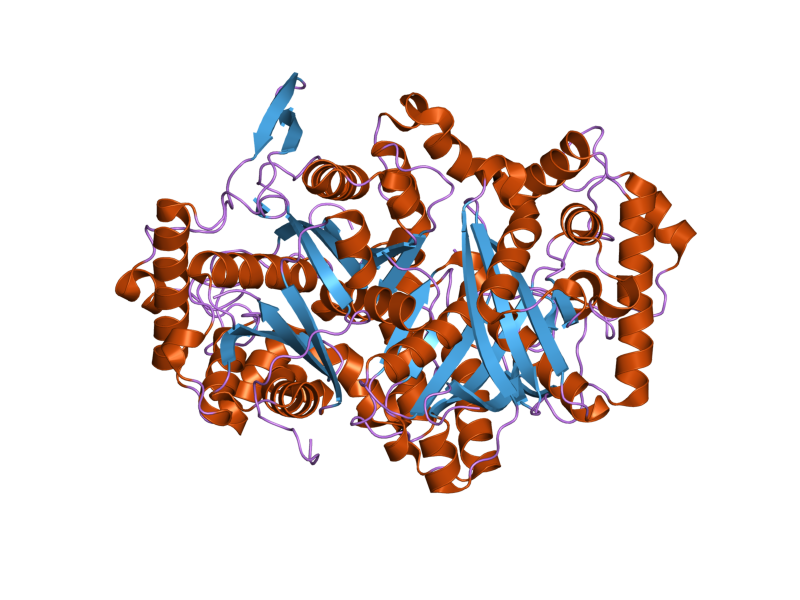
The mechanism of rhizomelic chondrodysplasia punctata in the case of type 1 of this condition involves a defect in PEX7, whose product is involved in peroxisome assembly. There are 3 pathways that depend on peroxisomal biogenesis factor 7 activities, including:
- AGPS (catalyzes plasmalogen biosynthesis)
- PhYH (catalyzes catabolism of phytanic acid)
- ACAA1 (catalyzes beta-oxidation of VLCFA - straight)
Diagnosis
The diagnosis of rhizomelic chondrodysplasia punctata can be based on genetic testing as well as radiography results, plus a physical examination of the individual.
Types
- Type 1 (RCDP1) is associated with PEX7 mutations; these are peroxisome biogenesis disorders where proper assembly of peroxisomes is impaired.
- Type 2 (RCDP2) is associated with DHAPAT mutations.
- Type 3 (RCDP3) is associated with AGPS mutations.
Treatment
Management of rhizomelic chondrodysplasia punctata can include physical therapy; additionally orthopedic procedures improved function sometimes in affected people.
Prognosis
The prognosis is poor in this condition, and most children die before the age of 10. However, some survive to adulthood, especially if they have a non-classical (mild) form of RCDP.
Children with classical, or severe, RCDP1 have severe developmental disabilities. Most of them achieve early developmental skills, such as smiling, but they will not develop skills expected from a baby older than six months (such as feeding themselves or walking). By contrast, children with non-classical mild RCDP1 often learn to walk and talk.
References
References
- "Rhizomelic chondrodysplasia punctata type 1". US National Library of Medicine.
- Reference, Genetics Home. "rhizomelic chondrodysplasia punctata".
- "Rhizomelic chondrodysplasia punctata type 1". US National Library of Medicine.
- "Rhizomelic chondrodysplasia punctata". Orphanet.
- Braverman, Nancy E.. (2020). "Rhizomelic Chondrodysplasia Punctata Type 1". GeneReviews.
- {{OMIM. 222765. Rhizomelic Chondrodysplasia Punctata, Type 2; RCDP2
- {{OMIM. 600121. Rhizomelic Chondrodysplasia Punctata, Type 3; RCDP3
This article was imported from Wikipedia and is available under the Creative Commons Attribution-ShareAlike 4.0 License. Content has been adapted to SurfDoc format. Original contributors can be found on the article history page.
Ask Mako anything about Rhizomelic chondrodysplasia punctata — get instant answers, deeper analysis, and related topics.
Research with MakoFree with your Surf account
Create a free account to save articles, ask Mako questions, and organize your research.
Sign up freeThis content may have been generated or modified by AI. CloudSurf Software LLC is not responsible for the accuracy, completeness, or reliability of AI-generated content. Always verify important information from primary sources.
Report