From Surf Wiki (app.surf) — the open knowledge base
Republic of China Navy
Maritime service branch of Taiwan's military
Maritime service branch of Taiwan's military
| Field | Value | ||
|---|---|---|---|
| unit_name | Republic of China Navy | ||
| image | Republic of China Navy (ROCN) Logo.svg | ||
| image_size | 150px | ||
| caption | Emblem of the Republic of China Navy | ||
| start_date | |||
| country | Republic of China (Taiwan) | ||
| type | Navy | ||
| role | Maritime warfare | ||
| size | 30,000 active personnel (2026) | ||
| 30,000 reservists (2026) | |||
| 100 ships (2026) | |||
| 24 aircraft (2026) | |||
| command_structure | Flag of the Republic of China Army.svg Nationalist Chinese military (1928-1946) | ||
| colors | White | ||
| Blue | |||
| Red | |||
| march | 新海軍 | ||
| ("The New Navy") | |||
| equipment | |||
| equipment_label | Fleet | ||
| website | |||
| <!-- Commanders --> | commander1 | ROC Commanding General of Navy Flag.svg Admiral Chiang Cheng-kuo | |
| commander1_label | Commander of the Navy | ||
| commander2 | ROCN Vice Admiral's Flag.svg Vice Admiral Ma Qunchao | ||
| commander2_label | Deputy Commanding-General | ||
| commander3 | Chief Petty Officer First Class Weng Linjun | ||
| commander3_label | Master Chief Petty Officer | ||
| notable_commanders | |||
| identification_symbol | [[File:Flag of the Republic of China.svg | 100px | border]] |
| identification_symbol_label | Ensign | ||
| identification_symbol_2 | [[File:Naval Jack of the Republic of China.svg | 100px | border]] |
| identification_symbol_2_label | Jack | ||
| identification_symbol_3 | [[File:ROCN Commission Pennant.svg | 200px]] | |
| identification_symbol_3_label | Commissioning pennant | ||
| identification_symbol_4 | [[File:ROCN Unit Flag.svg | 100px]] | |
| identification_symbol_4_label | Unit colour | ||
| module | {{Infobox Chinese | ||
| showflag | stp | ||
| s | 中华民国海军 | ||
| t | 中華民國海軍 | ||
| p | Zhōnghuá Mínguó Hǎijūn | ||
| w | Chunghua Minkuo Haichün | ||
| h | Chûng-fà Mìn-koet Hói-kiûn | ||
| bpmf | ㄓㄨㄥ ㄏㄨㄚˊ ㄇㄧㄣˊ ㄍㄨㄛˊ ㄏㄞˇ ㄐㄩㄣ | ||
| tp | Jhōnghuá Mínguó Hǎijyūn | ||
| tl | Tiong-huâ Bîn-kok Hái-kun | ||
| poj | Tiong-hôa Bîn-kok Hái-kun | ||
| xej | ژْوڭخُوَا مِنْقُوَ حَےْجُنْ | ||
| l2 | China Navy | ||
| child | yes }} |
30,000 reservists (2026) 100 ships (2026) 24 aircraft (2026)
ROC Ministry of National Defense Flag.svg Republic of China Armed Forces (since 1946) Blue Red ("The New Navy")
The Republic of China Navy (ROCN, ), colloquially known as the Taiwanese Navy () by Western or mainland Chinese media, or commonly referred as the National Military Navy () by local Taiwanese people, is the maritime branch of Taiwan's military, the Republic of China Armed Forces.
The service was formerly known as the Chinese Navy, the Central Navy or the Nationalist Chinese Navy before and during World War II, as well as and prior to the ROC's retreat to Taiwan.
Today, the ROC Navy's primary mission is to defend the territorial waters of the Taiwan Area under the jurisdiction of the government of the Republic of China (Taiwan) against any possible blockades, attacks, or invasion from the People's Liberation Army of Communist China coming from the mainland. Operations include maritime patrols in the Taiwan Strait and surrounding waters, as well as readiness for counter-strike and counter-invasion operations during wartime. The Republic of China Marine Corps (ROCMC) functions as a branch of the Navy.
The ship prefix, for the Republic of China warships, is ROCS (Republic of China Ship). An older term was the CNS (Chinese Navy Ship), which was mostly used with the pre-WWII era Nationalist Chinese navy ships.
History
Early years
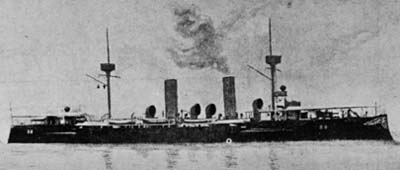
The Republic of China Navy traces its origins to the Imperial Qing Navy. During the Xinhai Revolution, by late October 1911, nearly the entire Qing fleet had defected to the revolutionary forces. Under the leadership of Admiral Sa Zhenbing (薩鎮冰), then Minister of the Navy, who deliberately avoided taking military action against the revolutionaries, the Qing fleet effectively aligned itself with the new Republic. This mass defection formed the foundational core of what would become the Republic of China Navy.
Later the commander of one of those ships, Huang Chung-ying (黃鍾瑛), became the first Minister of the Navy of the Republic of China, where as Sa Zhenbing had served in several civilian administrative roles in the Beiyang government.
Several naval expansion programs were proposed during the first decade of the republic, but none of them were carried out because of a lack of funding, the outbreak of World War I, and the chaos of the Warlord Era in China. The cruisers that had been acquired by the Qing dynasty between the 1870s and the 1900s remained the main ships of the Chinese fleet through the 1930s. During this time the ROC Navy consisted of three fleets: the Central, Northeast, and Guangdong fleets, and its command structure was divided because of the warlordism in the country. When Sun Yat-sen established his government in 1917 in Guangzhou he was supported by the Navy admirals Cheng Biguang and Lin Baoyi, and when Chiang Kai-shek began his Northern Expedition in 1926 another admiral, Yang Shuzhuang, led part of the Beiyang Fleet to defect to Chiang's forces.
Navy of the Nationalist China

Following the success of the Northern Expedition, the Republic of China Navy (ROCN) formally realigned with the Nationalist Government under Chiang Kai-shek. During this time the Navy was commonly referred as the Central Navy (中央海軍).
It is important to note that prior to 1938, the Republic of China Navy operated as an independent national institution, and was not under the authority of the largely KMT controlled Military Affairs Commission of the Nationalist Government. This gave the navy a unique administrative status, distinct from the Army, Military Police, Air Force, and Air Defense Troops, all of which were part of the National Revolutionary Army under the Military Affairs Commission of the Nationalist Government. Ironically, the Republic of China Navy during that period, is still commonly referred to by mainland Chinese media—particularly pro-communist outlets—as the Navy of the Kuomintang (Chinese: 国民党海军), despite having little direct association with the Kuomintang party itself.
Chiang expressed strong interest in modernizing and expanding the navy, and while some steps were taken—such as acquiring new vessels and reorganizing command structures—these efforts were only partially realized due to limited industrial capacity, financial constraints, and competing military priorities. The most notable examples of these efforts were the acquisition of the two Ninghai-class light cruisers and a number of torpedo boats purchased from the German Reich and the United Kingdom, respectively, reflecting an attempt to build a more capable blue-water force despite the difficult circumstances.
By the late 1930s, the ROCN continued to emphasise to coastal and riverine defense, with a particular emphasis on the Yangtze river, whose navigability allowed ocean-going vessels to penetrate deep into the Chinese interior.
However, when the Second Sino-Japanese War broke out in 1937, the ROCN proved vastly outmatched by the Imperial Japanese Navy. Several of its key ships, including cruisers, were either destroyed in air raids or deliberately scuttled by their crews as blockships along the Yangtze.
With most of its combat vessels either destroyed or scuttled during the early naval engagements of the Second Sino-Japanese War, the Republic of China Navy suffered a near-total defeat at the hands of the Imperial Japanese Navy. Facing a situation where it could no longer effectively operate a fleet, the Ministry of the Navy was dissolved on January 1, 1938, and downgraded to the Navy Command Headquarters under the Military Affairs Commission of the Nationalist Government. This marked the end of the navy’s independent administrative status and its integration into the broader military command structure dominated by the National Revolutionary Army.
Chinese Civil War
.jpg)
Following World War II, the Republic of China Navy received a number of former Japanese and American warships as part of postwar realignment and military aid. Most of the Imperial Japanese Navy vessels transferred to China were delivered as part of Japan's war reparations, while the decommissioned U.S. Navy ships were provided primarily through American military assistance programs. These additions temporarily strengthened the ROCN's capabilities during the turbulent years of the Chinese Civil War, in which the navy played a key role in escorting supply convoys and ultimately in the evacuation of the ROC government and over one million refugees to Taiwan in 1949.
In parallel with these developments, the Republic of China Marine Corps was reactivated on September 16, 1947, as part of a broader naval reorganisation. After the retreat to Taiwan, the navy underwent extensive restructuring and revival, a process later immortalized in the post-1949 ROC Navy anthem, the New Navy (新海軍).
After relocation to Taiwan
The island of Taiwan was placed under Japanese rule from 1895, with the Imperial Japanese Navy responsible for defending the waters of Taiwan and Penghu. After World War II, on 25 October 1945, the jurisdiction of Taiwan and Penghu was transferred to the Republic of China and the ROCN began its operation in that territory.
Following the relocation of the ROC government to Taiwan, the ROCN was involved in a number of commando attack escorts, evacuation and transport of more displaced soldiers and later to provide patrols and resupply operations to Kinmen and Matsu in the Taiwan Strait and South China Sea offshore islands.
The Navy Fleet Helicopter Squadron, established on September 1, 1977, marked the official reactivation of naval aviation capabilities for the Republic of China Navy. This milestone ended a nearly-four-decade hiatus in operational naval aviation since the outbreak of the Second Sino-Japanese War, during which the original ROC naval air arm had been lost or rendered inactive.
Since the 1990s the Navy has grown in importance as the emphasis of the ROC's military doctrine moves towards countering a possible People's Republic of China (PRC) blockade, as well as offshore engagement. As of 2004 the ROCN had been working hard to expand its capability in electronic and anti-submarine warfare, as well as the replacement of antiquated warships and support vessels.
In 2018 Lungteh Shipbuilding was awarded a contract to produce eleven Tuo Chiang Block II corvettes and four minelayers for the Taiwanese Navy.
In April 2020 in response to the COVID-19 pandemic the ROCN cut short their semi-annual goodwill mission to Central and South America. The flotilla consisting of two frigates and a supply vessel was subject to 30 days of quarantine after returning to Taiwan.
In April 2020 Taiwanese boatbuilder Karmin International Co., Ltd. won a NT$450-million (US$14.9-million) contract to supply the Republic of China Navy with eighteen special operations watercraft and eight RIB tenders, the latter for the Cheng Kung-class frigates. Delivery was scheduled for June 2022. The contract covered only the watercraft themselves with their machine guns, infrared equipment, and boarding ladders sourced separately.
In December 2025, the ROC Naval Command announced it seeks to purchase 1,500 unmanned surface vessels (USV)s, which would be capable of operating up to 44 kilometers off the coast, use "swarm" tactics, and resist electronic warfare. The procurement is part of Taiwan's proposed new military budget for 2026.
Rank and rating insignia
Main article: Republic of China Armed Forces rank insignia
Officer ranks
Other ranks
Equipment
Main article: List of ships of the Republic of China Navy, List of equipment of the Republic of China Navy
Traditionally, most ROCN equipment has been purchased from the United States. The ships themselves have often been older, second-hand vessels without the newest technology. More recently, in the 1990's several ships have been built domestically under licence or through domestic development. The ROCN has also purchased s from France and s from the Netherlands as well as four U.S. (renamed Keelung) destroyers originally intended for Iran. Despite the ROCN refurbishing and extending the service life of its vessels and equipment, it has suffered from procurement difficulties due to pressures exerted by the PRC.
On 12 September 2007, an arms notification was sent to the United States Congress concerning an order for 12 P-3C Orion patrol aircraft and 3 "spare aircraft", along with an order for 144 SM-2 Block IIIA surface-to-air missiles. A contract was awarded to Lockheed Martin to refurbish the 12 P-3C Orion aircraft for the ROC on 13 March 2009, with deliveries to start in 2012.
In 2008, the ROCN set out to acquire an improved anti-ship capability. On 26 August, an arms notification was sent to Congress for an order for 60 air-launched Harpoon Block II missiles for the 12 P-3Cs. At least a portion of these missiles will be installed on the navy's s.
On 29 January 2010, the U.S. government announced five notifications to the U.S. Congress for arms sales to the ROC. In the contracts total US$6.392 billion, ROC Navy would get 2 s for US$105 million, 25 Link 16 terminals on ships for US$340 million, 10 ship- and 2 air-launched Harpoon L/II for US$37 million.
The ROC Navy already has 95 older Harpoon missiles in its inventory for the 8 s, 22 newer RGM-84L for the 4 Kidd-class destroyers, 32 sub-launched Harpoon II on order for the 2 Hai Lung-class submarines, and with 60 air-launched Harpoon Block II anti-ship missile on order for the 12 P-3Cs, plus the newly announced 10 ship-launched and 2 air-launched Harpoon II/L sales.
On 31 August 2010, it was announced for the next year's defense budget, ROCN planned to lease one or two more s (LST) from the United States, but the 900-ton stealth corvette plan was put on hold, due to lack of funds. That same year, On 29 September, the U.S. Congress passed a resolution, authorizing the U.S. Government for the sale of one more Osprey-class minehunter to the ROC.
Other ongoing local upgrade programs include locally designed and built Ching Chiang class of 12 patrol ships. Since 2006, seven ships of this class were upgraded to carry four HF-2/3 with W-160 fire control radar from Wu Chin III program (as well as Honeywell H-930 MCS CDS stripped from seven retired Yang-class Wu Chin 3 anti-air warfare destroyers). In 2010 more ships of this class were undergoing this same upgrade program but using CSIST produced fire control radars instead.

On 29 December 2010, two LSTs (中肇、中治戰車登陸艦) and four remaining of Adjutant-class coastal minehunters were retired.
In 2011, the navy retired several vessels. On 31 October, all eight PCL in the 124th Fleet were retired. On 28 December, the two Lung Jiang-class (PSMM Mk5) guided missile patrol boats (PGG 601 and PPG 602) of the 131st Fleet were retired from ROC Navy service, after entering service in 1978 and 1981 respectively.
In June 2018, two s of the US Navy, ex- and ex-, were handed over to the Government of the Republic of China for the Republic of China Navy. The transfer cost was an estimated US$177 million. The transfer of the ships includes the advanced AN/SQR-19 Multi-Function Towed array sonar. Taiwan had previously been blocked from acquiring the AN/SQR-19, and the transfer of the system points to an anti-submarine focus in line with the Knox-class frigates they will likely replace.
The keel of a new rescue and salvage ship was laid in March 2022.
Future Light Frigates
原型艦概念渲染圖.jpg)
The ROC Navy has started construction on 12 new domestically-built light frigates for the Taiwanese navy. These vessels are in the 2,500-ton weight class and will have two configurations, an anti-aircraft warfare (AAW) version and an anti-submarine warfare (ASW) version. Both variants will be equipped with an OTO Melara 76mm gun with programmable ammunition and a close-in weapons system (CIWS), either a Phalanx 20mm gun system or the indigenous Sea Oryx. The AAW variant will have a 32 cell VLS for TC-2N missiles while the ASW will have two box launchers for 16 TC-2N missiles. The AAW variant will have 8 anti-ship cruise missile launchers, each able to fit either a single HF-2 or HF-3, while the ASW variant will have 16 launchers. The ASW variant is the only variant that will be fitted with Mk 32 light torpedo launchers and a towed variable depth sonar. The frigates will have a BAE System's Artisan radar, Lockheed Martin Canada's CMS-330 combat management system, and either Rolls Royce MT30 or General Electric LM2500 engines for propulsion. The new frigates are intended to become the workhorse of the ROC Navy, replacing the larger OHP and La Fayette class frigates in patrol duties.
Indigenous "Landing Platform Dock" / Amphibious Assault Ship
Main article: Yushan-class landing platform dock

In September 2018, Taiwan confirmed a contract for the first amphibious assault ship built in Taiwan. It will be built by CSBC Corporation, a local shipyard. Four are planned, with the first to enter service around 2021. It will be roughly similar to the US Navy's , but with a slightly smaller displacement. Support features include a full hospital, well deck, full aviation facilities, storage for wheeled vehicles, and dedicated accommodations for a full battalion of Marines. The vessel design will be armed with a 76 mm naval gun in the primary position, a close-in weapon system (CIWS) turret, two 12.7 mm machine gun positions in the forward section, and launchers that can deploy the Hsiung Feng II and III family of anti-ship and land-attack cruise missiles. The primary sensor is expected to be a naval version of the indigenous CS/MPQ-90 Bee Eye AESA radar.
Fleet Air Defense Upgrade / Hsun Lien Project
The ROC Navy currently lacks a modern fleet defense system. Keelung class destroyers currently use obsolete Mark 26 missile launchers designed from the 1970s and does not currently have a modern centralized air defense combat system like the Aegis. Past US administrations rejected the sale of Aegis radar system and Arleigh Burke-class destroyers, including George W. Bush in 2001. Under the George W. Bush administration, the US instead sold Taiwan four Kidd-class destroyers, which did not carry the Aegis and were no longer in service in the US Navy at the time. However, in January 2019, the US government delivered two sets of Mk 41 VLS to Taiwan. The ROC government plans to integrate the MK41 VLS and locally developed Tien-Kung III (Sky Bow III) with its indigenously developed Hsun Lien naval combat system, which is similar to Aegis, to upgrade its ship air defense capabilities. Taiwan has acquired the license and technology to produce additional MK 41 VLS launchers. The ROC Navy currently as of 2019 possesses at least 14 warships compatible with the Mk41. In November 2019 it was reported that the decommissioned amphibious landing ship Kao Hsiung (LCC-1) was being used as a test ship for the Hsun Lien naval combat system project and had been fitted with a large phased array radar system and the Mark 41 Vertical Launching System. In January 2020, it is reported the Tien-Kung III (Sky Bow III) is successfully fired from the Mark 41 Vertical Launching System. In August 2023, it was reported the domestically developed Hua Yang vertical missile launch system (VLS) has passed tests and will be installed on new naval ships in the future. In 2022, it was reported as a short-term solution the ROC Navy will upgrade their Kang Ding-class (La Fayette class) with 32-cell VLS integrated with their domestically developed Aegis-like system with the assistance of a retired French Navy officer. The VLS will have TC-2N surface-to-air missiles, a large upgrade over the existing RIM-72C Sea Chaparral, though it will lack the air defense range of its Keelung-class destroyer with their SM-2 Block IIIA missiles.
Hai Kun-class submarine (formerly: Indigenous Defense Submarine Program)
Main article: Hai Kun-class submarine
In November 2020, President Tsai Ing-wen opened the submarine construction facility in Kaohsiung with plans to build eight submarines. Construction was to begin with a prototype boat which was to be built over 78 months. The first boat is scheduled to enter service in 2025. Between December 2020 and February 2021, the United States reportedly approved the export of three key systems to Taiwan for the program: digital sonar systems, integrated combat systems and auxiliary equipment systems (periscopes).
In 2023, Taiwan revealed its first domestically designed and built submarine, the Hai Kun. The submarine was moved onto a floating dry dock and then launched off the CSBC shipyard in Kaoshiung on February 26, 2024.
Surface fleet
Destroyers (4 in service)
| Class | Picture | Type | Ships | Displacement | Note | Destroyers (4 in service) |
|---|---|---|---|---|---|---|
| [[File:2025.08.22 ROCS Ma Kong (DDG-1805) 01.jpg | 200px | Kee-Lung-class]] | / destroyer | |||
| DDG-1801 | ||||||
| DDG-1802 | ||||||
| DDG-1803 | ||||||
| DDG-1805 | 9,574 tonnes | Formerly Kidd-class destroyers in US Service built in 1978. Originally built for the Imperial Iranian Navy. |
Frigates (21 in service)
| Class | Picture | Type | Ships | Displacement | Note | Frigates (22 in service) |
|---|---|---|---|---|---|---|
| [[File:Tzu I Shipped in No.12 Pier of Zhongzheng Naval Base 20130504a.jpg | 200px | Cheng Kung-class]] | & / frigate | |||
| 4,105 tonnes | Eight licensed ships based on US built. Two additional ex-US Navy ships (ROCS Ming Chuan & ROCS Feng Jia ) | |||||
| [[File:ROCN Kang Ding (PFG-1202) Shipped at Zuoying Naval Base 20151024b.jpg | 200px | Kang Ding-class]] | / frigate | |||
| 3,600 tonnes | French-built | |||||
| [[File:ROCN_FFG-934_head_in_Keelung_20190324.jpg | 200px | Chi Yang-class]] | / frigate | |||
| 4,260 tonnes | Ex- |
Corvettes (13 in service; 5 in building)
| Class | Picture | Type | Ships | Displacement | Note | Patrol ships (7 in service) & corvette (3 in service) |
|---|---|---|---|---|---|---|
| [[File:Keelung Taiwan Ship-ROCN-Ching-Chiang-01.jpg | 200px | Ching Chiang-class]] | / patrol ship / corvette | |||
| 500 tonnes | Delivery began 1999–2000 | |||||
| [[File:ROCN Ta Chiang.png | 200px | Tuo Chiang-class]] | / corvette | |||
| 600 tonnes | Lead ship delivered in March 2014. |
Fast attack missile craft (30 in service)
| Class | Picture | Type | Ships | Displacement | Note | Fast attack missile crafts (31 in service) |
|---|---|---|---|---|---|---|
| [[File:FACG-74 in No.13 Pier Right Front View 20130504.jpg | 200px | Kuang Hua VI-class]] | / | |||
| missile boat | FACG-61/2009 | |||||
| FACG-62/2009 | ||||||
| FACG-63/2009 | ||||||
| FACG-64/2009 | ||||||
| FACG-65/2009 | ||||||
| FACG-66/2009 | ||||||
| FACG-68/2010 | ||||||
| FACG-69/2010 | ||||||
| FACG-70/2010 | ||||||
| FACG-71/2010 | ||||||
| FACG-72/2010 | ||||||
| FACG-73/2010 | ||||||
| FACG-74/2010 | ||||||
| FACG-75/2010 | ||||||
| FACG-77/2010 | ||||||
| FACG-78/2010 | ||||||
| FACG-79/2011 | ||||||
| FACG-80/2011 | ||||||
| FACG-81/2011 | ||||||
| FACG-82/2011 | ||||||
| FACG-83/2011 | ||||||
| FACG-84/2011 | ||||||
| FACG-86/2011 | ||||||
| FACG-87/2011 | ||||||
| FACG-88/2011 | ||||||
| FACG-89/2011 | ||||||
| FACG-90/2011 | ||||||
| FACG-91/2011 | ||||||
| FACG-92/2011 | ||||||
| FACG-93/2011 | 186.5 tonnes | Delivery began 2003 |
Mine warfare vessels (10 in service)
| Class | Picture | Type | Ships | Displacement | Note | Minesweepers (9 in service) |
|---|---|---|---|---|---|---|
| [[File:07.26 總統視導「漢光38號演習」聯合截擊作戰實彈操演 - 52242538465.jpg | 200px | Yung Feng-class]] | / minesweeper | |||
| 558.3 tonnes | MWW-50 class, built anew in Germany in early 1990s | |||||
| Yung Jin-class | [[File:ROCN Yung Jin (MHC-1310) Shipped in Zhongzheng Naval Base 20130504a.jpg | 200px | Yung Jin-class]] | / minesweeper | ||
| 893 tonnes | ex- | |||||
| [[File:12.15 總統出席「高效能艦艇後續艦首艦命名、下水暨快速布雷艇首艇交艇典禮」- 50721841919.jpg | 200px | Min Jiang-class]] | / minelayer | FMLB-1 | ||
| FMLB-2 | ||||||
| FMLB-3 | ||||||
| FMLB-5 | 347 tons | Built in Taiwan by Lung Teh Shipbuilding, 2020-2021 |
Amphibious ships (9 in service)
| Class | Picture | Type | Ships | Displacement | Note | Amphibious ships (9 in service) |
|---|---|---|---|---|---|---|
| [[File:ROCN_LST-232_at_Port_of_Kaohsiung_20161217.jpg | 200px | Newport-class]] | / | |||
| tank landing ship | ||||||
| 8,450 tonnes | ex-USN and | |||||
| Chung Hai-class | [[File:ROCS Chung Yeh (LST-231).jpg | 200px | Chung-hai-class]] | / | ||
| tank landing ship | ||||||
| 4,080 tonnes | Landing Ship, Tank (LST-1) | |||||
| Kaohsiung-class | [[File:ROCN Kao Hsiung (LCC-1) Shipped in No.1 Pier of Zhongzheng Naval Base Right Front View 20130504.jpg | 200px | Kaohsiung-class]] | / | ||
| amphibious command ship | ROCS Kao Hsiung | |||||
| LCC-1 | 3,698 tonnes | ex-, an | ||||
| Hsu Hai-class | [[File:執行外島運補任務的旭海軍艦.jpg | 200px | Hsu Hai-class]] | / | ||
| dock landing ship | 13,700 tonnes | ex-, an | ||||
| Yushan-class | [[File:09.30 總統主持「玉山軍艦交艦典禮」-52394480150.jpg | 200px | Yus han-class]] | / | ||
| Amphibious transport dock | 10,600 tonnes |
Submarine fleet
Submarines (4 in service; 1 undergoing trials)
| Class | Picture | Type | Boats | Displacement | Note | Submarines (2 in service) |
|---|---|---|---|---|---|---|
| Chien Lung-class | [[File:SS793 Submarines1.jpg | 200px | Chien Lung-class]] | / | ||
| Diesel-electric submarine | ROCS Hai Lung (SS-793) | |||||
| ROCS Hai Hu (SS-794) | 2,660 tonnes | Based on . These are also known by the lead ship's name as the Hai Lung-class. | ||||
| (Tench-class) | [[File:ROCN_SS-791_left_side_in_Keelung_20190928a.jpg | 200px | Hai Shih-class]] | / | ||
| Diesel-electric submarine | (ex-USS Cutlass) | |||||
| (ex-USS Tusk) | 2,420 tonnes | Used primarily for training. World's oldest longest-serving submarines. Has two (one for each submarine) of the three remaining working Arma gyrocompass in the world. Expected to be retired after construction of IDS project boats. | ||||
| [[File:09.28 總統主持「潛艦國造原型艦命名暨下水典禮」 - Flickr id 53219332200.jpg | 200px | Hai Kun-class]] | / | |||
| Diesel-electric submarine | 2,500 tonnes | First domestically developed submarine. Launched on February 26, 2024. |
Auxiliary fleet
Auxiliary ships (7 in service)
| Class | Picture | Type | Boats | Displacement | Note | Auxiliary Ships (10 in service) | ||
|---|---|---|---|---|---|---|---|---|
| [[File:ROCN Panshi (AOE-532) at Zuoying Naval Base 20151024.jpg | 200px | Pan Shi-class]] | / | |||||
| fast combat support ship | 20,895 tonnes | AOE-532 | ||||||
| Wu Yi-class | [[File:武夷號油彈補給艦.JPG | 200px | Wu Yi-class]] | / | ||||
| fast combat support ship | 17,000 tonnes | AOE-530 | ||||||
| Ta Kuan-class | [[File:ROCN_Ta_Kuan_(AGS-1601)_Shipped_at_Zuoying_Naval_Base_20151024a.jpg | 200px | Ta Kuan-class]] | / research ship | 3,200 tonnes | Oceanographic measurement | ||
| Ta Hu-class (Diver-class) | [[File:ROCN_ARS-552_in_Port_of_Keelung_20240518.jpg | 200px | Ta Hu-class]] | / | ||||
| rescue and salvage ship | (ex-USS Grapple) | |||||||
| (ex-USS Recovery) | 1,975 tonnes | Expected to be retired after the construction of the An-hai Project | ||||||
| Ta Tung-class (Cherokee-class) | / fleet tug | (ex-USS Apache) | 1,255 tonnes | Expected to be retired after the construction of the An-Hai Project | ||||
| Da Wu-class | [[File:大武軍艦_舷側.jpg | 200px | Da Wu]] | / | ||||
| rescue and salvage ship | 3,250 tonnes | ARS-571 |
Aircraft
Main article: Republic of China Naval Aviation Command
Fixed-wing
| Name | Origin | Type | Variant | In service | Notes | Fixed-wing | |||||||
|---|---|---|---|---|---|---|---|---|---|---|---|---|---|
| Lockheed P-3 Orion | Maritime patrol | P-3C | 12 | Re-built ex-US Navy aircraft and replaced ROCN Grumman S-2 Trackers | |||||||||
| NCSIST Albatross | Reconnaissance UAV | 26 | last1=and Evelyn Kao | first1=Wang Cheng-chung | title=Albatross drone makes first fly-over demonstration in Pingtung | url=https://focustaiwan.tw/politics/201901240016 | website=focustaiwan.tw | date=24 January 2019 | publisher=Focus Taiwan | access-date=17 January 2020}} | |||
| NCSIST Cardinal | Reconnaissance UAV | Cardinal II | 54 | last1=Strong | first1=Matthew | title=Taiwan military plans Cardinal drones upgrade | url=https://www.taiwannews.com.tw/news/5911993 | website=taiwannews.com.tw | date=31 July 2024 | publisher=Taiwan News | access-date=31 July 2024}} |
Helicopters
| Name | Origin | Type | Variant | In service | Notes | Helicopters | |||||||
|---|---|---|---|---|---|---|---|---|---|---|---|---|---|
| Sikorsky S-70 | Search and rescue / Anti-submarine warfare | S-70C(M)-1/2 Thunderhawk | date=4 December 2020 | title=World Air Forces 2021 | url=https://www.flightglobal.com/download?ac=75345 | archive-url=https://web.archive.org/web/20210210005436/https://www.flightglobal.com/download?ac=75345 | archive-date=10 February 2021 | access-date=27 February 2021 | publisher=FlightGlobal | url-status=live}} | To be replaced | ||
| McDonnell Douglas MD 500 Defender | Anti-submarine warfare | 500MD/ASW Defender | 7 | Out of original 13 ordered |
Armament
[[Surface-to-air missiles]]
| Name | Origin | Type | Notes | Surface-to-air missile |
|---|---|---|---|---|
| Sky Sword I | Short-range | Shipboard deployment with Sea Oryx system. | ||
| Sky Sword II | Medium-range | Unknown number of TC-2N, to be fielded on Tuo Chiang Block II corvettes and retrofitted on the Kang Ding-class frigates. | ||
| RIM-66 SM-1MR | Medium-range | 97 RIM-66B Standard-1MR delivered in 1993, 207 RIM-66B Standard-1MR delivered in 1994, 204 RIM-66B Standard-1MR delivered in 2001 | ||
| RIM-66 SM-2MR | Medium-long range | 148 Standard Missile-2MR delivered in 2005, 144 Standard Missile-2MR delivered in 2008, 16 Standard Missile-2MR ordered in 2017 | ||
| FIM-92 Stinger | Short-range | 250 missiles, 70 launch systems and 62 friend-or-foe identification systems, all of which are expected to be delivered by 2025. | ||
| RIM-72C Sea Chaparral | Short-range | Deployed on some domestic warships as well as La Fayette Frigates. To be replaced. |
[[Anti-ship missiles]]
| Name | Origin | Type | Notes | Anti-ship missile |
|---|---|---|---|---|
| AGM-84 Harpoon | Subsonic | (183) AGM-84s – (60) 84Ls | ||
| Hsiung Feng II | Subsonic | Unknown, in mass production with secondary ground attack capability | ||
| Hsiung Feng III | Supersonic | Unknown, in mass production with secondary ground attack capability |
[[Close-In Weapon System|CIWS]]
| Name | Origin | Type | Notes | CIWS |
|---|---|---|---|---|
| Phalanx CIWS | Gun System | 20mm, 7 Mk-15 delivered in 1989, 6 Mk-15 delivered in 1996, 1 Mk15 delivered in 2014, 13 Mk15 delivered in 2016, 11 Mk15 delivered in 2018 | ||
| Sea Oryx | Missile System | Short-range missile defence system available in a 24-round launcher using off-board sensors, or an autonomous 12-round launcher with its own radar and EO/IR sensor. The system can be truck-mounted or mounted on a warship. | ||
| XTR-101/102 | Gun System | 20mm, more than 20 systems deployed in coastal defenses. |
[[Torpedoes]]
| Name | Origin | Type | Notes | Torpedoes |
|---|---|---|---|---|
| Mark 46 torpedo | Lightweight | 100 delivered in 1992, 150 Mk-46 Mod-5 NEARTIP delivered in 1994, 110 Mk-46 Mod-5 NEARTIP delivered in 1998, | ||
| 90 Mk-46 Mod-5 NEARTIP delivered in 2000, 41 Mk-46 Mod-5 NEARTIP delivered in 2001 | ||||
| Mark 54 lightweight torpedo | Lightweight | 168 delivered in 2017. | ||
| Mark 48 torpedo | Heavyweight | 46 ordered in 2018 | ||
| SUT torpedo | Heavyweight | multirole, 200 delivered in 1998 from Indonesian production line |
Gallery
File:Hsiung Feng II and Hsiung Feng III launchers of ROCN PFG2-1110 20190324.jpg|Hsiung Feng II and Hsiung Feng III launchers of Tian Dan (PFG2-1110) File:獨立型海劍羚飛彈系統模型 (48573270086).jpg|Sea Oryx missile launcher display at MND Hall 2019 File:海鋒大隊 雄風二.jpg|ROCN Hsiung Feng II missiles in an underground missile launch bunker File:Covered ROCN Hsiung Feng II & Hsiung Feng III Anti-Ship Missile Launchers Truck Display at Zuoying Naval Base Ground 20141123a.jpg|Covered ROCN Hsiung Feng II & Hsiung Feng III anti-ship missile launchers truck displayed at Zuoying Naval Base File:ROCN Hsiung Feng II & Hsiung Feng III Anti-Ship Missile Launchers Truck Display at Zuoying Naval Base Ground 20151024.jpg|ROCN Hsiung Feng II & Hsiung Feng III anti-ship missile launchers truck File:HF-3 ASCM fired from TEL system.jpg|Hsiung Feng III anti-ship missile launched from a missile launchers truck File:ROCN Hughes 500 6910 Carried on Lan Yang (FFG-935) Helicopter Deck Rear Right View 20141123.jpg|ROCN Hughes 500 "6910" carried on Lan Yang (FFG-935) helicopter deck from rear right view File:ROCN S-70C(M) 2307 Flying over Zuoying Naval Base in Morning 20141123a.jpg|ROCN S-70C(M) "2307" flying over Zuoying Naval Base in the morning File:Mark 32 Torpedo Tubes Mounted on ROCN Tzu I (PFG-1107) Right Side 20130504.jpg|Mark 32 torpedo tubes mounted on ROCN Tzu I (PFG-1107) File:No.1 Wan Xiang CAPTOR Mine Display at ROCN Ho Zhong (LCU-484) 20151024.jpg|No.1 Wan Xiang CAPTOR mine displayed aboard ROCN Ho Zhong (LCU-484) File:No.2 Wan Xiang Bottom Mine Display at ROCN Ho Zhong (LCU-484) 20151024b.jpg|No.2 Wan Xiang Bottom mine displayed aboard ROCN Ho Zhong (LCU-484) File:RIM-72C Launcher Mounted on ROCN Si Ning (PFG-1203) 20150316.jpg|Sea Chaparral launcher mounted on ROCN Si Ning (PFG-1203) File:T-75S 20mm Cannon Mounted on FACG-77 20130504c.jpg|T-75S 20mm Cannon mounted on ROCS FACG-77 File:Phalanx CIWS and Bofors 40mm L70 Gun aboard on ROCN Di Hua (PFG-1206) 20151024.jpg|Phalanx CIWS and Bofors 40 mm L/70 gun aboard on ROCN Di Hua (PFG-1206) File:M96 Motorboat Display at Navy Fleet Command Ground 20170715Fa.jpg|M96 motorboat File:03.21 總統出席「海軍106年敦睦支隊啟航歡送暨潛艦國造設計啟動及合作備忘錄簽署」,並視導磐石軍艦 33183344490 394dce2511 o.jpg|The President of Taiwan aboard the Pan Shi File:OTO Melara 76mm Gun aboard the Frigate ROCN Si Ning (PFG-1203) 20150316.jpg|OTO Melara 76 mm gun aboard the frigate ROCN Si Ning (PFG-1203) File:ROCN S-70C(M) 2312 Display at Zuoying Naval Base Ground 20151024a.jpg|ROCN S-70C(M) "2312" File:Visitors in Front of ROCN Kao Hsiung (LCC-1) 20151024.jpg|Visitors in front of ROCN Kao Hsiung (LCC-1) File:TC-2N missile fired from ROCS Ta Chiang.png|TC-2N
Organization
Republic of China Navy Command Headquarters
_Rear_Admiral_Chiang_Cheng-kuo_海軍少將蔣正國_(201703031735160_海軍敦睦遠航訓練支隊抵澎開放參觀.jpg)
The Navy CHQs (中華民國國防部海軍司令部) is subordinate to the General Staff, the Minister of Defense, and the ROC President. :*Internal units: Personnel, Combat Readiness & Training, Logistics, Planning, Combat Systems, General Affairs, Comptroller, Inspector General, Political Warfare. :*Naval Fleets Command (艦隊指揮部) ::*124th Fleet: Zuoying District, Kaohsiung City :::*242nd Squadron :::*262nd Squadron ::*131st Fleet: Keelung City, Taiwan :::*212nd Squadron :::*232nd Squadron :::*252nd Squadron ::*146th Fleet: Magong City, Penghu County, Taiwan :::*226th Squadron :::*268th Squadron ::*Amphibious Fleet (151st Fleet), Zuoying District, Kaohsiung City ::*168th Fleet: Suao, Yilan County, Taiwan :::*231st Squadron :::*251st Squadron ::*192nd Fleet (Navy Minesweeper Fleet): Zuoying District, Kaohsiung City :::*216th Squadron :::*236th Squadron :::*248th Squadron ::*256th Submarine Squadron: Zuoying District, Kaohsiung City ::*Hai Feng Shore Based Anti-ship Missile Group (海鋒大隊), operates 6 batteries of fixed/mobile HF-2 anti-ship missiles. :::*7th Hai Feng Shore Based Anti-ship Missile Squadron (海鋒大隊第七中隊), Haulien, Eastern Taiwan. ::*Naval Aviation Command (operates from Pingtung, Tsoying, and Hualien AB) :::*701st Helicopter Squadron (Light), S-70C(M)-1, at Hualien. :::*702nd Helicopter Squadron (Light), S-70C(M)-2, at Tsoying. :::*501st Helicopter Squadron (Light), 500MD ASW, at Tsoying. :::*Maintenance Group ::::*1st Maintenance Squadron (Pingtung) ::::*2nd Maintenance Squadron (Tsoying) ::::*3rd Maintenance Squadron (Hualien) :*Marine Corps Command (陸戰隊指揮部) :*Education, Training and Doctrine Command (教育訓練暨準則發展司令部) :*Logistics Command (後勤司令部) :*Naval Academy, Hydrographic & Oceanographic Bureau, Shipbuilding Development Center, Communication Systems, General Service.
Sources:
Bases


- Zuoying Naval Base – 1st Naval District HQ, largest naval base in Taiwan – Zuoying District, Kaohsiung
- Makung Naval Base (Makung, Pescadores) – 2nd Naval District HQ – home to attack squadrons, training centre and naval yard
- Keelung Naval Base, Keelung – 3rd Naval District HQ, home to northern patrol and transport squadrons and small naval yard
- Suao Naval Base, Su-ao, Yilan – East Coast Command and supports Keelung Naval Base
All remaining bases are small naval stations supporting PCL class small patrol boats and Fast Attack Boat:
- Anping Naval Base, Anping
- Hsinchu Naval Base, Hsinchu
- Hualien Naval Base, Hualien
- Kenting Naval Base, Hengchun
- Tamshui Naval Base, Tamshui
- Wu Chi Naval Base, Wuqi District
In 2017 the Navy embarked on a major expansion of the Zuoying naval base. Under the name Weihai Project (威海) the expansion was given a budget of more than a billion US dollars.
Notes
References
Citations
- {{cite book |author=Ministry of Defense of the Republic of China |date=2010 |title=中華民國海軍陸戰隊發展史 |trans-title= The Development History of the Republic of China Marine Corps
References
- [https://www.flightglobal.com/download?ac=90688 World Air Forces 2023]. ''[[FlightGlobal]]'', p. 31.
- "Navy Command hierarchy". ROC Ministry of National Defense.
- "Taiwan navy under fire for letting sailors infected with coronavirus into community". South China Morning Post.
- (16 December 2020). "Taiwan's new corvette warships come heavily armed". Asia Times.
- "The Month In Free China".
- Zhao, Xuduo. (2023). "Heretics in Revolutionary China: The Ideas and Identities of Two Cantonese Socialists, 1917–1928". Brill.
- (23 April 2019). "World Navies: Taiwan develops indigenous combat capabilities". Marine Link.
- (4 December 2018). "Taiwanese domestic shipbuilder gets bid to build 11 corvettes, 4 minelayers". Taiwan News.
- (8 April 2020). "Taiwan Navy's goodwill mission cut short due to COVID-19". Taiwan News.
- (15 April 2020). "Taiwanese company wins Navy contract for special operations craft". Taiwan News.
- (19 December 2025). "China & Taiwan Update, December 19, 2025". [[Institute for the Study of War]].
- (2007-09-13). "Pentagon could make 2.2 billion dollar arms sales to Taiwan". Yahoo! news.
- (July 2018). "U.S. in deal to refurbish aircraft for Taiwan". Washington Post.
- Jennings, Ralph. (2008-08-27). "U.S. to sell anti-ship missiles to Taiwan". Reuters.
- (2010-01-29). "USDA New Release". dsca.mil.
- (2010-01-29). "USDA New Release". dsca.mil.
- "armstrade.sipri.org".
- (2010-08-31). "Next Year Defense Budget Believed To Be Lowest In 5 Years". United Daily newspaper.
- (2010-09-30). "US Congress approved sales of mine hunter to Taiwan". United Daily News.
- (2010-12-29). "6 Navy ships retired.". Youth Daily News.
- (2011-10-31). "All 8 Navy PCL Retired Into History.". Military News Agency.
- (2011-12-28). "2 Lung Jiang Missile Guided Patrol Boats Retired". United Daily News.
- [https://www.defensenews.com/naval/2017/03/14/taiwan-receives-two-us-navy-frigates/ Taiwan receives two US Navy frigates], Mike Yeo, DefenseNews, 2018-06-14
- (15 March 2022). "Taiwan begins construction of naval auxiliary rescue and salvage ship". Taiwan News.
- (22 May 2023). "Taiwan to Begin Light Frigate Construction in June".
- (November 5, 2018). "Interview with Adm. Richard Chen, Republic of China Navy (Ret.)". Defense Media Network.
- Ridzwan Rahmat. (27 September 2018). "Kaohsiung Maritime 2018: Taiwan confirms contract for first amphibious assault ship".
- Ridzwan Rahmat. (30 September 2018). "Kaohsiung Maritime 2018: CSBC reveals further details of LPD on order for Taiwan".
- (2017-04-20). "Taiwan will Build its first Indigenous 'Landing Platform Dock' Warship".
- (2017-08-08). "Taiwan's Navy seeks first indigenous landing platform dock". Defense News.
- (June 6, 2016). "Taiwanese Navy Plans to Enhance Fleet Air Defense".
- (2018-02-28). "Taiwan and missile defence: Current situation and future prospects".
- (March 21, 2001). "China Warns U.S. on Warship Sale to Taiwan".
- (2001-04-24). "Bush Won't Sell Advanced Radar System to Taiwan".
- (24 April 2001). "Bush rejects sale of Aegis".
- (24 January 2019). "Alert 5 » Two sets of Mk 41 VLS delivered to Taiwan, will be integrated with indigenous anti-air missiles - Military Aviation News".
- "【獨家】兩套「Mk 41 VLS」運抵高雄 中科院將執行海弓三實彈驗證及整合測試 -- 上報 / 調查".
- (2019-01-28). "New Missile Launchers Won't Save Taiwan's Navy".
- (20 November 2019). "Mysterious radar ship spotted off coast of S. Taiwan". Taiwan News.
- (15 January 2020). "Taiwan has successfully test-fired TK-3 from Mk 41 VLS – Alert 5".
- "News Story". UDN News.
- "Taiwan to begin installing domestic vertical missile launch system on Navy ships".
- (4 February 2022). "Taiwan to Upgrade Kang Ding-class Frigates with French Assistance".
- (November 29, 2020). "Taiwan starts building its own submarine fleet".
- Newdick, Thomas. (25 November 2020). "Taiwan Is Finally Set To Build The New Diesel-Electric Submarines It Desperately Needs".
- Chung, Lawrence. "Biden gives Taiwan a boost with submarine technology it can't build on its own".
- (September 28, 2023). "Taiwan reveals first domestically made submarine in defence milestone". Reuters.
- Lee, Curtis. (2024-02-27). "Taiwan Launches Its First Indigenous Submarine".
- "US plans to sell warships to Taiwan".
- (21 July 2015). "Taiwan's Force Modernization: The American Side". Defense Industry Daily.
- Rahmat, Ridzwan. (13 March 2014). "Taiwan launches first 'carrier killer' stealth missile corvette".
- "World Navies Today: Taiwan (Republic of China)".
- (17 December 2021). "Taiwan Navy receives final pair of rapid mine-laying ships". Taiwan News.
- (30 September 2019). "Taiwan public gets glimpse of world's lon".
- "Museum documents an operating US, WW II built submarine in Taiwan".
- (24 January 2019). "Albatross drone makes first fly-over demonstration in Pingtung". Focus Taiwan.
- (31 July 2024). "Taiwan military plans Cardinal drones upgrade". Taiwan News.
- (4 December 2020). "World Air Forces 2021". FlightGlobal.
- (22 February 2021). "Taiwan To Upgrade Its La Fayette Frigates With New Air Defense & Combat Systems". Naval News.
- "TRADE REGISTERS". Stockholm International Peace Research Institute.
- "Hsiung Feng II". Center for Strategic and International Studies.
- Trevithick, Joseph. (2019-08-14). "Taiwan Reveals Land-Based Variant Of Naval Point Defense Missile System To Guard Key Sites".
- (20 September 2019). "Taiwan's Navy places order for locally built anti-ship guns". Focus Taiwan.
- "TAIPEI ECONOMIC AND CULTURAL REPRESENTATIVE OFFICE (TECRO) IN THE UNITED STATES -MK 54 LIGHTWEIGHT TORPEDO (LWT) CONVERSION KITS".
- "Red Roof Tiles and White Walls, Hidden Missile Base Next To Hotel.". United Daily News.
- "Navy opens missile base in eastern Taiwan to media". The China Post.
- (2010-12-20). "ROC Navy opens missile base in eastern Taiwan to media". China Defense Blog.
- (2004). "2004 National Defense Report". ROC Ministry of National Defense.
- "Combat Units Under the ROC Navy Fleet HQ". Taiwanmilitary.org.
- "Zuoying naval base to get upgrade". Taipei Times.
- (16 October 2018). "Navy radar station guards west coast from mountain top". Taipei Times.
- (13 May 2021). "Taiwan Navy orders new radar system from domestic manufacturer". Taiwan News.
This article was imported from Wikipedia and is available under the Creative Commons Attribution-ShareAlike 4.0 License. Content has been adapted to SurfDoc format. Original contributors can be found on the article history page.
Ask Mako anything about Republic of China Navy — get instant answers, deeper analysis, and related topics.
Research with MakoFree with your Surf account
Create a free account to save articles, ask Mako questions, and organize your research.
Sign up freeThis content may have been generated or modified by AI. CloudSurf Software LLC is not responsible for the accuracy, completeness, or reliability of AI-generated content. Always verify important information from primary sources.
Report