From Surf Wiki (app.surf) — the open knowledge base
Reflexology
Alternative medical practice involving pressure to parts of the body

Alternative medical practice involving pressure to parts of the body
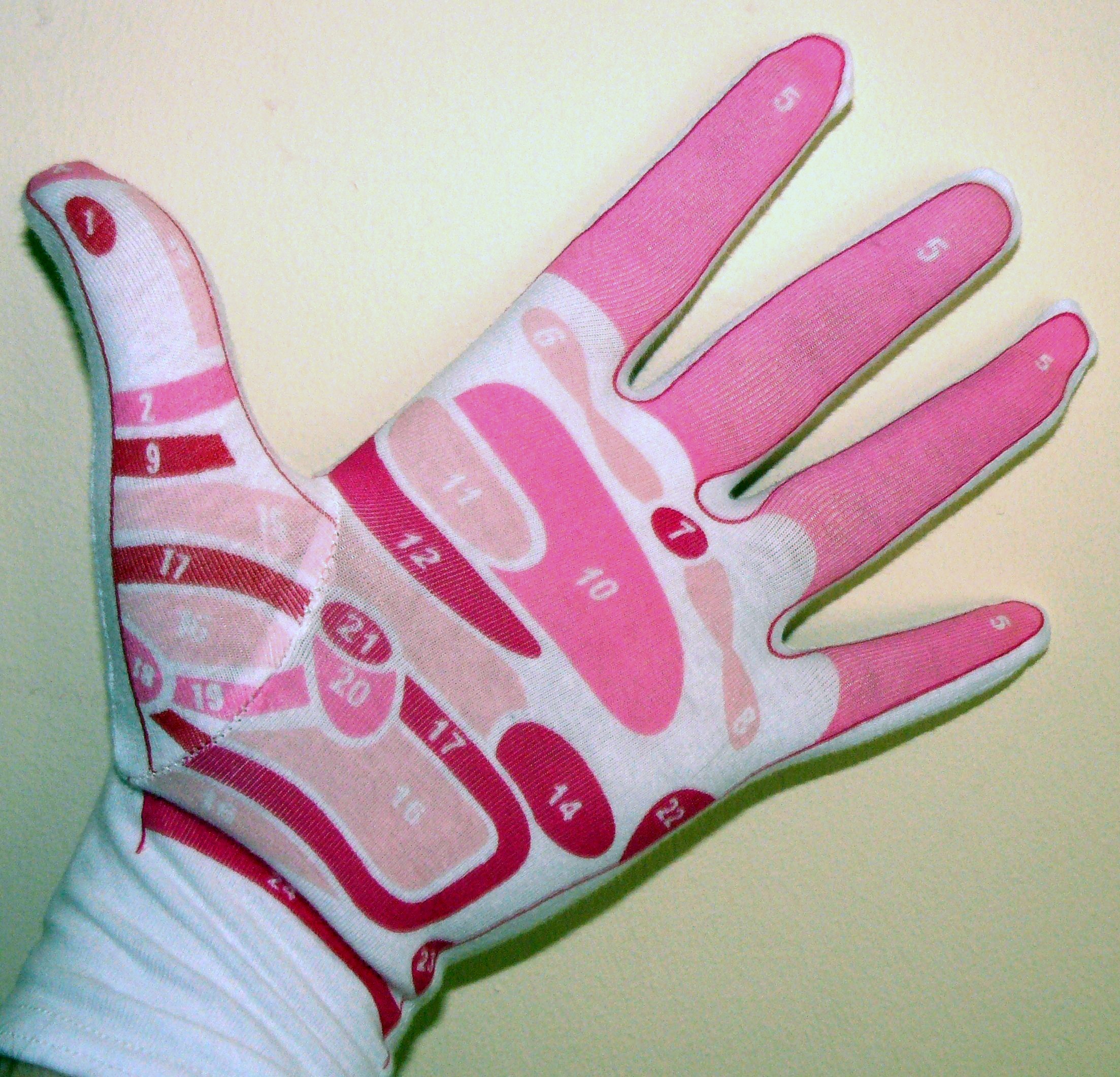
Reflexology, also known as zone therapy, is a complementary medical practice involving the application of pressure to specific points on the feet, ears, and hands. This is done using thumb, finger, and hand massage techniques without the use of oil or lotion. It is based on a pseudoscientific
There is no convincing scientific evidence that reflexology is effective for any medical condition, or provides any health benefits.
Definition
In a Cochrane Collaboration review, reflexology is defined as follows: "Reflexology is gentle manipulation or pressing on certain parts of the foot to produce an effect elsewhere in the body."
The Australian Government's Department of Health define reflexology as "a system of applying pressure, usually to the feet, which practitioners believe stimulates energy and releases 'blockages' in specific areas that cause pain or illness."
History
Similar practices such as acupuncture have been practiced in China. Reflexology was introduced to the United States in 1913 by William H. Fitzgerald, M.D. (1872–1942), an ear, nose, and throat specialist, and Edwin F. Bowers. Fitzgerald claimed that applying pressure had an anesthetic effect on other areas of the body. It was modified in the 1930s and 1940s by Eunice D. Ingham (1889–1974), a nurse and physiotherapist. Ingham claimed that the feet and hands were especially sensitive and mapped the entire body into "reflexes" on the feet, renaming "zone therapy" as reflexology. Many of the modern reflexologists use Ingham's methods, or similar techniques of reflexologist Laura Norman.
Efficacy
In 2015, the Australian Government's Department of Health published the results of a review of alternative therapies that sought to determine if any were suitable for being covered by health insurance. Reflexology was one of 17 therapies evaluated for which no clear evidence of effectiveness was found.
- Accordingly, in 2017, the Australian government named reflexology as a practice that would not qualify for insurance subsidy, saying this step would "ensure taxpayer funds are expended appropriately and not directed to therapies lacking evidence".
Reviews from 2009 and 2011 have found no evidence sufficient to support the use of reflexology for any medical condition. A 2009 systematic review of randomized controlled trials concludes: "The best evidence available to date does not demonstrate convincingly that reflexology is an effective treatment for any medical condition."
There is no clinical evidence that reflexology is effective to treat cancer. Cancer Research UK have commented that "there is no scientific evidence to prove that reflexology can cure or prevent any type of disease, including cancer".
Claimed mechanism
There is no consensus among reflexologists on how reflexology is supposed to work; a unifying theme is the idea that areas on the foot correspond to areas of the body and that by manipulating these one can improve health through one's qi. Reflexologists divide the body into ten equal vertical zones, five on the right and five on the left.
Reflexologists posit that the blockage of an energy field, invisible life force, or Qi, can prevent healing. Another tenet of reflexology is the belief that practitioners can relieve stress and pain in other parts of the body through the manipulation of the feet. One claimed explanation is that the pressure received in the feet may send signals that 'balance' the nervous system or release chemicals such as endorphins that reduce stress and pain. These hypotheses are rejected by the medical community who cite a lack of scientific evidence and the well-tested germ theory of disease.
Reflexology's claim to manipulate energy (Qi) is unsupported by science; there is no scientific evidence for the existence of life energy (Qi), "energy balance", "crystalline structures" or "pathways" in the body.
In Trick or Treatment? Alternative Medicine on Trial, Simon Singh states that if indeed the hands and feet "reflect" the internal organs, reflexology might be expected to explain how such "reflection" was derived from the process of Darwinian natural selection, but Singh says that no argument or evidence has been adduced.
Regulation
In the United Kingdom, reflexology is coordinated on a voluntary basis by the Complementary and Natural Healthcare Council (CNHC). Registrants are required to meet Standards of Proficiency outlined by Profession Specific Boards but since CNHC is voluntary anyone practicing can describe themselves as a reflexologist. When the CNHC began admitting reflexologists, a skeptic searched for, and found, 14 of them who were claiming efficacy on illnesses. Once pointed out, the CNHC had the claims retracted as it conflicted with the UK's Advertising Standards Authority code.
Reflexology is one of the most used alternative therapies in Denmark. A national survey from 2005 showed that 21.4% of the Danish population had used reflexology at some point and 6.1% had used reflexology within the previous year. A study from Norway showed that 5.6% of the Norwegian population in 2007 had used reflexology within the last 12 months.
Notes
References
- (1993). "The Complete Guide to Foot Reflexology". Reflexology Research Project.
- Ernst E. (2009). "Is reflexology an effective intervention? A systematic review of randomised controlled trials". Med J Aust.
- (2018). "Massage, reflexology and other manual methods for managing pain in labour". [[Cochrane Collaboration]].
- Norman, Laura. (1989). "The Reflexology Handbook, A Complete Guide". [[Piatkus]].
- Fitzgerald, William H.; Bowers, Edwin F. (1917) ''Zone therapy; or, Relieving pain at home''. Columbus, Ohio: I. W. Long, Publisher ([https://archive.org/details/zonetherapyorrel00fitziala California Digital Library]) Accessed Jan. 2015
- Benjamin, Patricia. (1989). "Eunice D. Ingham and the development of foot reflexology in the U.S". American Massage Therapy Journal.
- "Massagenerd.com Presents History of Massage, Therapies & Rules".
- "cancer.org – Reflexology".
- Paola S. (17 October 2017). "Homeopathy, naturopathy struck off private insurance list". Australian Journal of Pharmacy.
- (Feb 2011). "Reflexology: an update of a systematic review of randomised clinical trials". Maturitas.
- (2024). "Reflexology and cancer".
- Norman, Laura. (1989). "The Reflexology Handbook, A Complete Guide". [[Piatkus]].
- (1996). "Reflexology". National Council Against Health Fraud.
- (May 6, 2008). "Reflexology". Aetna IntelliHealth.
- Barrett, Stephen. (2004-09-25). "Reflexology: A close look". [[Quackwatch]].
- Singh, Simon; [[Ernst, Edzard]] (2008). ''Trick or Treatment? Alternative Medicine on Trial''. Transworld. {{ISBN. 978-0-593-06129-9.{{page?. (October 2020)
- "CNHC – Policies".
- [http://adventuresinnonsense.blogspot.com/2009/11/cnhc-wishes-to-place-on-formal-record_27.html CNHC Wishes to Thank Simon Perry], adventuresinnonsense.blogspot.com, Friday, 27 November 2009
- [http://www.vifab.dk/uk/alternative+medicine/alternative+therapies/reflexology? Reflexology in Denmark] {{Webarchive. link. (2012-04-04 text from [http://www.vifab.dk/uk Knowledge and Research Center for Alternative Medicine] {{Webarchive). link. (2012-04-04 a Danish governmental institution)
- [http://www.nifab.no/om_alternativ_behandling/alternativ_behandling_i_norge/nifab_undersoekelsen Nifab-undersøgelsen] {{Webarchive. link. (2012-09-04 in Norwegian only)
This article was imported from Wikipedia and is available under the Creative Commons Attribution-ShareAlike 4.0 License. Content has been adapted to SurfDoc format. Original contributors can be found on the article history page.
Ask Mako anything about Reflexology — get instant answers, deeper analysis, and related topics.
Research with MakoFree with your Surf account
Create a free account to save articles, ask Mako questions, and organize your research.
Sign up freeThis content may have been generated or modified by AI. CloudSurf Software LLC is not responsible for the accuracy, completeness, or reliability of AI-generated content. Always verify important information from primary sources.
Report