From Surf Wiki (app.surf) — the open knowledge base
Red meat
Meat from mammals such as beef, pork, and lamb

Meat from mammals such as beef, pork, and lamb

In the context of nutrition, red meat is defined as meat obtained from mammals, including beef, pork, lamb, mutton, veal, venison, and goat. Red meat does not necessarily appear red in color.
Red meat is a good source of protein, iron, zinc, and vitamins B1, B2, B6, and B12. According to the International Agency for Research on Cancer (IARC), unprocessed red meat probably causes cancer, particularly colorectal cancer. Studies have also linked red meat with higher risks of cardiovascular disease and type 2 diabetes. If meat is processed, such as by salting, curing, or smoking, health risks further increase. Processed meat is known to cause colorectal cancer. The World Cancer Research Fund recommends minimizing consumption of processed meat and limiting red meat to no more than three portions per week, which is equivalent to about 350–500g (12–18oz) cooked weight.
In culinary contexts, the term red meat is used more loosely to refer to meat that is red when raw.
Definition
| Name | Myoglobin | USDA category | ||||||||
|---|---|---|---|---|---|---|---|---|---|---|
| Aged beef | 1.50 – 2.00% | date=16 May 2008 | title=USDA-Safety of Fresh Pork...from Farm to Table | url=https://www.fsis.usda.gov/food-safety/safe-food-handling-and-preparation/meat-catfish/fresh-pork-farm-table | url-status=live | archive-url=https://web.archive.org/web/20130918111427/http://www.fsis.usda.gov/wps/portal/fsis/topics/food-safety-education/get-answers/food-safety-fact-sheets/meat-preparation/fresh-pork-from-farm-to-table/ct_index | archive-date=18 September 2013 | access-date=16 September 2009 | publisher=Fsis.usda.gov}} | |
| Beef | 0.40 – 1.00% | Red meat | ||||||||
| Pork | 0.10 – 0.30% | Red meat | ||||||||
| Veal | 0.10 – 0.30% | Red meat | ||||||||
| Turkey thigh | 0.25 – 0.30% | Dark meat | ||||||||
| Chicken thigh | 0.18 – 0.20% | Dark meat | ||||||||
| Turkey breast | 0.008% | White meat | ||||||||
| Chicken breast | vauthors = Penner KP, Clarke MP | date = September 1990 | url=http://www.anslab.iastate.edu/Class/AnS460-560/Class%20Notes/E-ChemistryofMeatProtein-5.ppt | title = Red Meats: Nutrient Contributions to the Diet | publisher = Iowa State Animal Science | access-date=16 September 2009 | url-status=live | archive-url=https://web.archive.org/web/20090324234102/http://www.anslab.iastate.edu/Class/AnS460-560/Class%20Notes/E-ChemistryofMeatProtein-5.ppt | archive-date=24 March 2009}} | White meat |

In the context of nutritional science, red meat is defined as meat obtained from mammals, including beef, pork, lamb, mutton, veal, venison, and goat. Some sources also specify that the meat must be muscle meat, as opposed to organ meat. Red meat does not necessarily appear red in color.
In culinary contexts, the term red meat is used more loosely to refer to meat that is red when raw. The term is used to refer to adult or "gamey" mammals, while that from young mammals (rabbit, veal, lamb) is white. Most poultry is white. Game is sometimes put in a separate category altogether ( ). The redness of meat comes from its myoglobin content.
Some cuts of pork are considered white under the gastronomic definition, but all pork is considered red meat in nutritional studies. The National Pork Board has positioned it as "the other white meat", profiting from the ambiguity to suggest that pork has the nutritional properties of white meat, which is considered more healthful.
Ostrich, emu, and rhea meat are sometimes referred to as types of red meat or "alternatives to red meat" . However, their nutritional characteristics differ significantly from the characteristics of other types of red meat.
Nutrition==
Red meat contains large amounts of iron, creatine, minerals such as zinc and phosphorus, and B-vitamins: (niacin, vitamin B12, thiamin and riboflavin). Red meat is a source of lipoic acid.
Red meat contains small amounts of vitamin D. Offal such as liver contains much higher quantities than other parts of the animal.
Health effects
Overall, diets high in red and processed meats are associated with an increased risk of type 2 diabetes (T2D), cardiovascular disease (CVD), cancer (particularly colorectal cancer), and all-cause mortality. The body of epidemiological data showing their associations with T2D, CVD, and cancer is large and consistent.
The associations are strongest for processed meat, which is meat that has undergone salting, curing, fermentation, smoking, or other processes to enhance flavor or improve preservation, such as bacon, ham, salami, pepperoni, hot dogs, and some sausages.
A 2025 umbrella review found that a high intake of red meat is associated with an increased all-cause mortality risk.
There are no long-term randomized controlled trials that have investigated red meat consumption and disease outcomes, and such trials are unlikely to be conducted due to ethical, financial and practical reasons. Most of the data on red meat and health effects is from long-term epidemiological studies.
Cancer
In 2015, the International Agency for Research on Cancer (IARC) classified unprocessed red meat as "probably carcinogenic to humans (Group 2A)". To make this classification, the IARC Working Group assessed over 800 epidemiological studies in addition to other types of studies such as animal bioassays. When assessing whether substances are carcinogenic to humans, it is rare for data from randomized trials to be available.
The Working Group found "limited" epidemiological evidence linking unprocessed red meat to colorectal, pancreatic, and prostate cancer. Additionally, it found "strong mechanistic evidence" that unprocessed red meat is carcinogenic. Mechanistic evidence is evidence of plausible biological pathways in which a substance could cause cancer. For instance, studies had found that participants who had recently eaten red meat had higher levels of carcinogenic N-nitroso compounds in their guts and feces.
For processed red meat, evidence of harm is stronger. The IARC classified processed meat as carcinogenic to humans (Group 1), based on "sufficient evidence in humans that the consumption of processed meat causes colorectal cancer."
The American Institute for Cancer Research, Cancer Research UK and World Cancer Research Fund International have supported these conclusions. More recent meta-analyses have further supported the finding that high consumption of red meat is associated with increased risk of gastrointestinal cancer.
Increase in cancer risk
The IARC concluded that if unprocessed red meat does cause cancer, there is a 17% higher risk of colorectal cancer for every 100 g of unprocessed red meat consumed daily. It found a 18% higher risk of colorectal cancer for every 50 g of processed red meat consumed daily.
A 2021 umbrella review reported an increase of 11–51% risk of multiple cancer per 100g/d increment of red meat, and an increase of 8-72% risk of multiple cancer per 50g/d increment of processed meat.
A 2022 Burden of Proof study analyzed data from epidemiological evidence (not mechanistic evidence) and found that each 100 g of unprocessed red meat consumed per day would increase colorectal cancer risk by at least 6% and breast cancer by at least 3%. The Burden of Proof methodology was later criticized for systematically under-estimating levels of risk.
Mechanisms
Heme iron in red meat has been associated with increased colorectal cancer risk. The American Institute for Cancer Research and World Cancer Research Fund have commented that "haem iron, which is present at high levels in red meat, has been shown to promote colorectal tumorigenesis by stimulating the endogenous formation of carcinogenic N-nitroso compound." N-Glycolylneuraminic acid (Neu5Gc) has also been suggested as a mechanism.
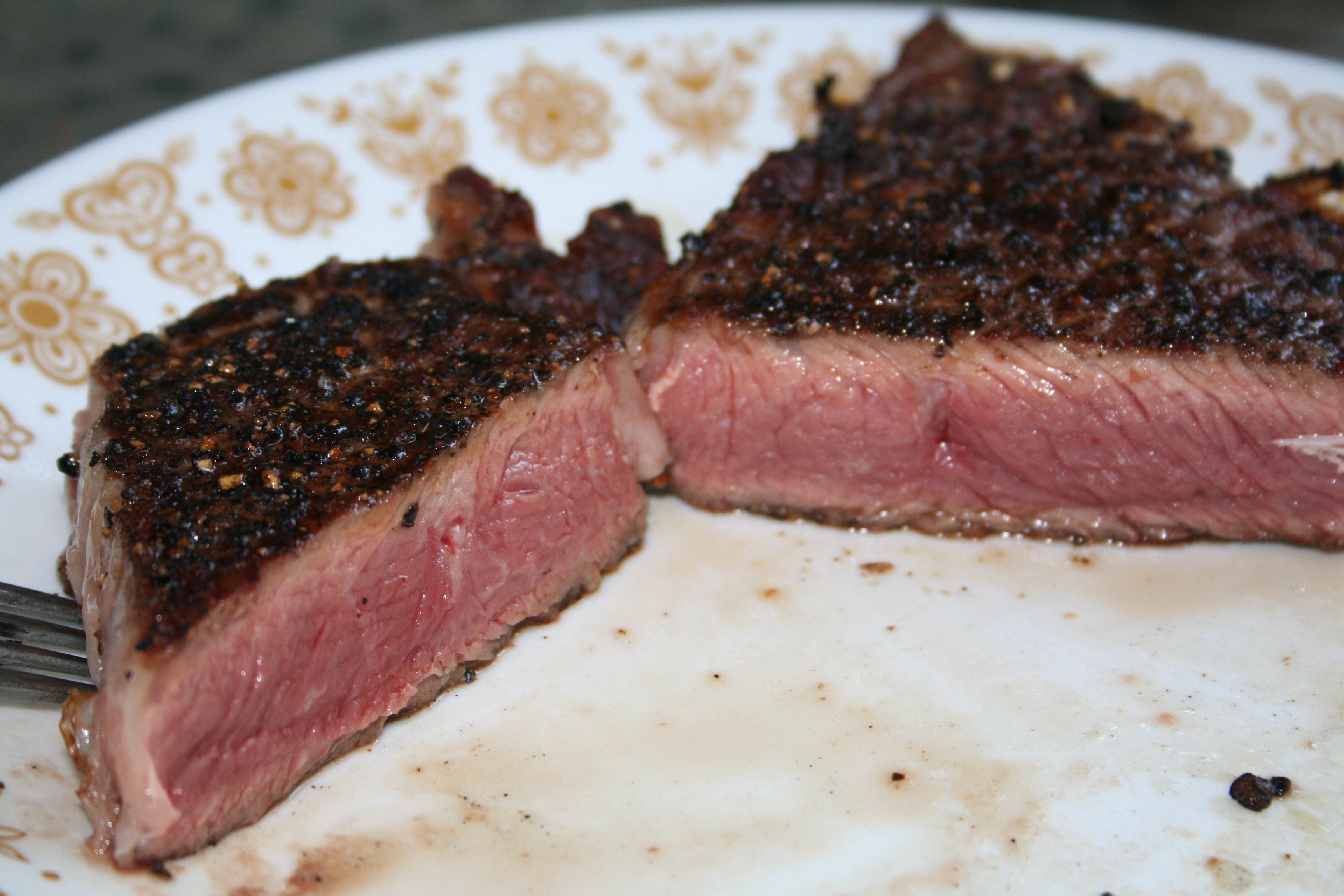
A 2017 literature review indicated there are numerous potential carcinogens of colorectal tissue in red meat, particularly those in processed red meat products, such as N-nitroso compounds, polycyclic aromatic hydrocarbons (PAHs), and heterocyclic amines (HCAs). Cooking meat with "high-temperature methods, such as pan frying or grilling directly over an open flame", also causes formation of PAHs and HCAs.
Cooking methods
Meats cooked at high temperatures, especially above 300 F (as in grilling or pan frying), or that are cooked for a long time tend to form more HCAs. Cooking methods that expose meat to smoke contribute to PAH formation. Using a microwave oven to cook meat prior to exposure to high temperatures can substantially reduce HCA formation by reducing the time that meat must be in contact with high heat to finish cooking.
Meat that is cooked longer and at higher temperatures is associated with a 4.62 times greater risk of breast cancer compared with rare or medium-done meat.
Cardiovascular disease
Red meat consumption is associated with an increased risk of coronary heart disease, high blood pressure and stroke. Factors associated with increased stroke risk from consuming red meat include saturated fats that increase levels of blood cholesterol, LDL cholesterol, triglycerides, and heme iron, which may precipitate atherogenesis in cerebral arteries, leading to stroke.
In 2020, the National Heart Foundation of New Zealand Expert Nutrition Policy (ENP) issued a position statement that concluded that high consumption of red meat increases risk of heart disease and stroke by 16%.
Diabetes
Processed and unprocessed red meat consumption is a risk factor for developing type 2 diabetes across populations.
A 2017 review found that daily consumption of 85 grams of red meat and 35 grams of processed red meat products by European and American consumers increased their risk of type 2 diabetes by 18–36%, while a diet of abstinence of red meat consuming whole grains, vegetables, fruits, and dairy was associated with an 81% reduced risk of diabetes. One study estimated that "substitutions of one serving of nuts, low-fat dairy, and whole grains per day for one serving of red meat per day were associated with a 16–35% lower risk of type 2 diabetes". A 2022 umbrella review found that consuming an additional 100g of red meat per day was associated with a 17% increased risk of type 2 diabetes.
Inflammatory bowel disease
High red and processed meat consumption is associated with an increased risk of inflammatory bowel disease. The American Gastroenterological Association have stated that a diet low in red and processed meat may reduce ulcerative colitis flares.
Industry funding
A 2025 review found that nutritional studies on red meat consumption funded by the meat industry reported favorable (20.7%) or neutral (79.3%) cardiovascular outcomes for red meat intake. This was in opposition to independent studies that reported unfavourable (73.3%) or neutral (26.7%) cardiovascular outcomes. The review concluded that "most studies without conflicts of interest with the red meat industry suggested an unfavorable effect of unprocessed red meat consumption on risk factors for cardiovascular disease".
Dietary guidelines
The World Cancer Research Fund recommends limiting red meat to no more than three servings per week.
In 2011, the USDA launched MyPlate, which did not distinguish between kinds of meat, but did recommend eating at least 8 oz of fish each week. In 2011, the Harvard School of Public Health launched the Healthy Eating Plate in part because of the perceived inadequacies of the USDA's recommendations. The Healthy Eating Plate encourages consumers to avoid processed meat and limit red meat consumption to twice a week because of links to heart disease, diabetes, and colon cancer. To replace these meats it recommends consuming fish, poultry, beans, or nuts.
The National Heart Foundation of New Zealand recommends that one should aim to reduce consumption of red meat below 350g per week and replace meat with plant sources of protein.
The European Association for the Study of Diabetes recommends that diabetics minimise the consumption of red meat.
References
References
- "Is Pork Red Meat? And Is It Healthy?".
- (21 February 2024). "Meat and meat products – a scoping review for Nordic Nutrition Recommendations 2023". Food & Nutrition Research.
- (26 October 2015). "Cancer: Carcinogenicity of the consumption of red meat and processed meat".
- (21 July 2023). "Red meat consumption, cardiovascular diseases, and diabetes: a systematic review and meta-analysis". European Heart Journal.
- (1 September 2024). "Meat consumption and incident type 2 diabetes: an individual-participant federated meta-analysis of 1·97 million adults with 100 000 incident cases from 31 cohorts in 20 countries". The Lancet Diabetes & Endocrinology.
- "Limit consumption of red and processed meat {{!}} Recommendation evidence".
- "White Meat". thefreedictionary.com.
- (16 May 2008). "USDA-Safety of Fresh Pork...from Farm to Table". Fsis.usda.gov.
- (August 2016). "Comparison of normal and PSE turkey breast meat for chemical composition, pH, color, myoglobin, and drip loss". Revista Brasileira de Zootecnia.
- (September 1990). "Red Meats: Nutrient Contributions to the Diet". Iowa State Animal Science.
- (26 October 2015). "Cancer: Carcinogenicity of the consumption of red meat and processed meat".
- (17 May 2010). "Red and Processed Meat Consumption and Risk of Incident Coronary Heart Disease, Stroke, and Diabetes Mellitus". Circulation.
- IARC Working Group on the Evaluation of Carcinogenic Risks to Humans. (2018). "Red Meat and Processed Meat". International Agency for Research on Cancer.
- (17 July 2019). "Are ratites "red" or "white" meat?". US Department of Agriculture.
- [[Larousse Gastronomique]], first edition
- (10 October 2014). "The color of meat depends on myoglobin: Part 1".
- Dougherty, Philip H.. (15 January 1987). "Dressing Pork for Success". [[The New York Times]].
- Hall, Trish. (13 November 1991). "And This Little Piggy Is Now on the Menu". [[The New York Times]].
- (1 December 2014). "Ostrich meat: Production, quality parameters, and nutritional comparison to other types of meats1". Journal of Applied Poultry Research.
- (1 September 2016). "Technological and nutritional properties of ostrich, emu, and rhea meat quality". Journal of Veterinary Research.
- (September 1990). "Red Meats: Nutrient Contributions to the Diet". Kansas State University Agricultural Experiment Station and Cooperative Extension Service.
- (September 2007). "Nutritional composition of red meat". University of Wollongong.
- (July 2013). "Natural vitamin D content in animal products". Advances in Nutrition.
- (September 2014). "Association between total, processed, red and white meat consumption and all-cause, CVD and IHD mortality: a meta-analysis of cohort studies". British Journal of Nutrition.
- (3 July 2019). "Role of diet in type 2 diabetes incidence: umbrella review of meta-analyses of prospective observational studies". BMJ.
- (12 January 2016). "Dietary and Policy Priorities for Cardiovascular Disease, Diabetes, and Obesity". Circulation.
- (2020). "Red and Processed Meats and Health Risks: How Strong is the Evidence?". Diabetes Care.
- (26 October 2015). "IARC Monographs evaluate consumption of red meat and processed meat".
- (2025). "Umbrella Review of Systematic Reviews and Meta-analyses on Consumption of Different Food Groups and Risk of All-cause Mortality". Advances in Nutrition.
- Meinilä J, Virtanen JK. (2024). "Meat and meat products – a scoping review for Nordic Nutrition Recommendations 2023". Food Nutr Res.
- (2018). "Meat, fish and dairy products and the risk of cancer".
- (1 October 2015). "Q&A on the carcinogenicity of the consumption of red meat and processed meat". World Health Organization.
- "Red Meat and Processed Meat". International Agency for Research on Cancer.
- (2018). "Red Meat and Processed Meat". International Agency for Research on Cancer.
- (25 June 2019). "Does eating processed and red meat cause cancer?".
- "Red Meat (Beef, Pork, Lamb): Increases Risk of Colorectal Cancer".
- "Limit red and processed meat".
- (2024). "The association between major gastrointestinal cancers and red and processed meat and fish consumption: A systematic review and meta-analysis of the observational studies". PLOS ONE.
- (2023). "Association of meat consumption with the risk of gastrointestinal cancers: a systematic review and meta-analysis". BMC Cancer.
- (September 2021). "Red and processed meat consumption and cancer outcomes: Umbrella review". Food Chem.
- (October 2022). "Health effects associated with consumption of unprocessed red meat: a Burden of Proof study". Nat Med.
- (April 2023). "Concerns about the Burden of Proof studies". Nature Medicine.
- (2011). "Heme iron from meat and risk of colorectal cancer: a meta-analysis and a review of the mechanisms involved". Cancer Prev. Res..
- (2016). "Mechanisms Linking Colorectal Cancer to the Consumption of (Processed) Red Meat: A Review". Critical Reviews in Food Science and Nutrition.
- (2023). "N-glycolylneuraminic acid as a carbohydrate cancer biomarker". Translational Oncology.
- (2024). "N-glycolylneuraminic acid in red meat and processed meat is a health concern: A review on the formation, health risk, and reduction". Comprehensive Reviews in Food Science and Food Safety.
- (April 2017). "A critical overview on the biological and molecular features of red and processed meat in colorectal carcinogenesis". Journal of Gastroenterology.
- (2018). "Chemicals in Meat Cooked at High Temperatures and Cancer Risk".
- (2 April 2018). "Chemicals in Meat Cooked at High Temperatures and Cancer Risk - NCI".
- (18 November 1998). "Well-done meat intake and the risk of breast cancer". Journal of the National Cancer Institute.
- (1 September 2021). "Consumption of red meat and processed meat and cancer incidence: a systematic review and meta-analysis of prospective studies". European Journal of Epidemiology.
- [https://web.archive.org/web/20231025225421/https://assets.heartfoundation.org.nz/documents/shop/nutrition/docs/red-meat-and-poultry-position-statement.pdf "Red meat and poultry"]. assets.heartfoundation.org.nz. Retrieved 25 October 2023.
- (December 2022). "Red/processed meat consumption and noncancer-related outcomes in humans: Umbrella review". Br J Nutr.
- (August 2017). "Role of Total, Red, Processed, and White Meat Consumption in Stroke Incidence and Mortality: A Systematic Review and Meta-Analysis of Prospective Cohort Studies". Journal of the American Heart Association.
- [https://web.archive.org/web/20231025224327/https://www.heartfoundation.org.nz/wellbeing/healthy-eating/nutrition-facts/is-meat-good-for-you "Is meat good for you?"]. heartfoundation.org.nz. Retrieved 25 October 2023.
- Wenming Shi. (2023). "Red meat consumption, cardiovascular diseases, and diabetes: a systematic review and meta-analysis". European Heart Journal.
- (September 2022). "Consumption of different animal-based foods and risk of type 2 diabetes: An umbrella review of meta-analyses of prospective studies". Diabetes Research and Clinical Practice.
- (2024). "Meat consumption and incident type 2 diabetes: an individual-participant federated meta-analysis of 1·97 million adults with 100 000 incident cases from 31 cohorts in 20 countries". The Lancet Diabetes & Endocrinology.
- (May 2017). "Food groups and risk of type 2 diabetes mellitus: a systematic review and meta-analysis of prospective studies". European Journal of Epidemiology.
- (October 2011). "Red meat consumption and risk of type 2 diabetes: 3 cohorts of US adults and an updated meta-analysis". The American Journal of Clinical Nutrition.
- (n.d.). "Red/processed meat consumption and noncancer-related outcomes in humans: Umbrella review". British Journal of Nutrition.
- (2023). "The Association between Total Protein, Animal Protein, and Animal Protein Sources with Risk of Inflammatory Bowel Diseases: A Systematic Review and Meta-Analysis of Cohort Studies". Advances in Nutrition.
- (2024). "Diet, Food, and Nutritional Exposures and Inflammatory Bowel Disease or Progression of Disease: an Umbrella Review". Advances in Nutrition.
- (2024). "AGA Clinical Practice Update on Diet and Nutritional Therapies in Patients With Inflammatory Bowel Disease: Expert Review". Gastroenterology.
- (2025). "Industry study sponsorship and conflicts of interest on the effect of unprocessed red meat on cardiovascular disease risk: a systematic review of clinical trials". Am J Clin Nutr.
- (2012). "Food Pyramids: What Should You Really Eat". Harvard School of Public Health.
- "MyPlate Protein foods". USDA.
- (April 2023). "Evidence-based European recommendations for the dietary management of diabetes". Diabetologia.
This article was imported from Wikipedia and is available under the Creative Commons Attribution-ShareAlike 4.0 License. Content has been adapted to SurfDoc format. Original contributors can be found on the article history page.
Ask Mako anything about Red meat — get instant answers, deeper analysis, and related topics.
Research with MakoFree with your Surf account
Create a free account to save articles, ask Mako questions, and organize your research.
Sign up freeThis content may have been generated or modified by AI. CloudSurf Software LLC is not responsible for the accuracy, completeness, or reliability of AI-generated content. Always verify important information from primary sources.
Report