From Surf Wiki (app.surf) — the open knowledge base
Reconnaissance vehicle
Military vehicle used for forward reconnaissance

Military vehicle used for forward reconnaissance
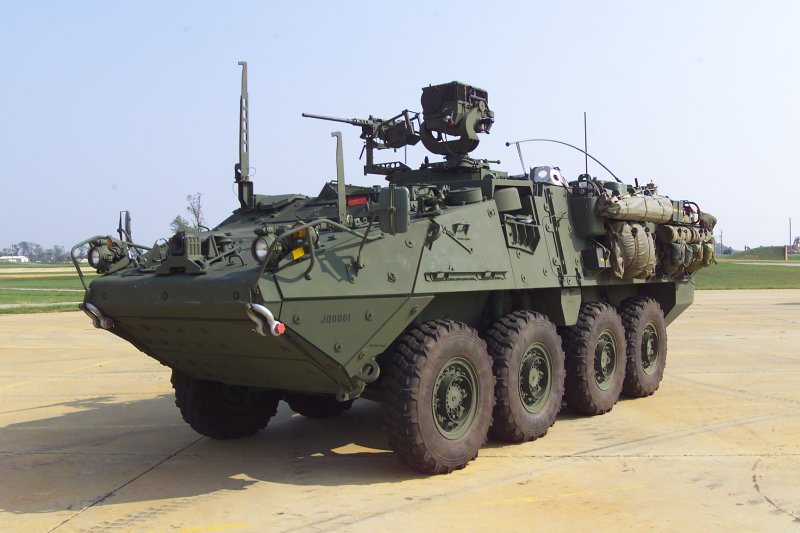
A reconnaissance vehicle, also known as a scout vehicle, is a military vehicle used for forward reconnaissance. Both tracked and wheeled reconnaissance vehicles are in service. In some nations, light tanks such as the M551 Sheridan and AMX-13 have also been used by scout platoons. Their armament ranges from a medium machine gun to a large cannon. Modern examples are often fitted with ATGMs and a wide range of sensors.
Reconnaissance vehicles are designed with several philosophies: scout cars used for passive reconnaissance, with a low profile or small size and are lightly armoured to maximize mobility, relying on speed, stealth and cover to escape detection; armoured reconnaissance used for active reconnaissance, distinct from ordinary scouts in weight and size of weapons and armor, designed not to break away from attacks, but to force their way through towards their objective.
Design
Smaller caliber weapons help reduce the vehicle's profile and noise signatures. In contrast, French, and British doctrine was to fit reconnaissance vehicles, such as the AEC, EBR and the AMX 10 RC, with the heaviest weaponry possible on their light chassis, so as to allow them a further role for defence of the flanks. Some vehicles are designed for special data collection tasks (Sd.Kfz. 250/12) Thus reconnaissance vehicles can be divided into 3 main categories:
- Scout cars: Their main role is surveying the routes (directions of attack) and monitoring the activities of the enemy. Therefore, their weapons and armor are modest, since they are not designed to fight, but this role requires good observation, high speed and they are typically amphibious. Typical examples: Fennek, BRDM, Sd. Kfz. 221, Dingo, BA-64, Csaba.
- Combat reconnaissance vehicles: Heavier wheeled or tracked vehicles armed with autocannons and/or low pressure guns, some with thicker armor (up to 40 mm), for aggressive reconnaissance and to provide fire support for reconnaissance teams. Many are amphibious in order to be able to follow lighter units. Cold war and modern "light tanks" usually fit into this category but they often perform different tasks too. Typical examples: Scimitar & Scorpion, Saladin, Luchs, AML, BRM–1, M3, PT-76, AEC, BA-3, Sd. Kfz. 234/2.
- Intelligence vehicle: These (usually wheeled) units monitor enemy communications, artillery fire, or movements via electro-optics, electronic sensors or radar. They mainly provide information for strategic level decision making. At a tactical level, counter-battery operations and some kinds of precision strikes rely on data gathered by such platforms. Typical examples: Sd.Kfz. 250/12, YPR-765 PRRDR, 1V152, Infauna, M1015, Przebiśnieg, Samarkand. This category may include NBC reconnaissance cars (BRDM-2RKh, TPz 1A3/ABC), certain PsyOps vehicles (ZS-82) and electronic recon vehicles of engineer units (IRM) because of their strategic role.
Recon units sometimes also use other types of vehicles and some are mistakenly classified as recon vehicles. Reconnaissance troops use various all-terrain vehicles (MB, UAZ, HMMWV), motorcycles (Zündapp), militarized trucks known as "technicals" (Toyota), APCs (M113, BTR-40, BTR-80), self-propelled artillery (M106), and even tank destroyers (B1) but these are still classified according to their original type and role, not as scout vehicles.
History

During World War II, the British generally used armoured cars for reconnaissance, from the machine gun armed Humber Light Reconnaissance Car and Daimler Dingo to the 6-pdr (57 mm) gun equipped AEC armoured car. Post war the British Army used the Ferret and later, Fox scout cars. In Japan, the Kurogane Type 95 was introduced as a reconnaissance vehicle for operations in China.
The U.S. and UK experimented with the Future Scout and Cavalry System (FSCS) and Tactical Reconnaissance Armoured Combat Equipment Requirement (TRACER) programs in the 2000s aimed at creating a stealth reconnaissance vehicle capable of C-130 airlift.
Prior to the 2003 invasion of Iraq, the Iraqi Army placed an emphasis on the use of light wheeled vehicles for reconnaissance, particularly Soviet-manufactured BRDM-2 and French-designed Panhard AML armoured cars. Each corps had an attached BRDM or AML battalion. These were allocated by division; every brigade headquarters and regular infantry battalion received a platoon of six. The Iraqis did not make competent use of these assets during the Gulf War, opting to depend on signals intelligence against the comparatively sophisticated Coalition.
South African expeditionary forces in Angola also employed wheeled reconnaissance vehicles for their strategic and tactical mobility, sometimes engaging Angolan units up to brigade strength. Scout cars such as the Eland Mk7 were used to lure hostile T-34s or T-54/55s into prepared ambushes, where they were destroyed by heavier vehicles, ATGMs, and artillery.
Role
Reconnaissance by fire. Reconnaissance of enemy positions can involve firing upon the enemy in hopes of receiving return fire that gives away the enemy's position. This can make the reconnaissance vehicle vulnerable to return fire that may destroy the vehicle before the enemy's position can be relayed.
Dismounted operations by armed scouts include observation post manning, reconnaissance of areas not traversable by vehicle, and marking enemy mine fields.
CBRN reconnaissance vehicles can also detect weapons of mass destruction. They accompany regular reconnaissance vehicles and are fully protected against airborne threats.
.jpg)
List of contemporary reconnaissance vehicles
_owned_by_James_Stewart_pic6.JPG)
.jpg)


- Poland AMZ Bóbr-3
- Poland LPU Wirus 4
- UK Alvis FV601 Saladin
- France AMX-10 RC
- Australia ASLAV
- Serbia BOV M11
- USSR BRDM-1
- USSR BRDM-2
- Russia BPM-97
- USA Cadillac Gage Commando Scout
- USA M1117 armored security vehicle
- Canada Coyote
- Canada Lynx
- Canada TAPV
- Hungary D-442 FÚG
- Ukraine Dozor-B
- France EBRC Jaguar
- Brazil EE-3 Jararaca
- Brazil EE-9 Cascavel
- South Africa Eland
- Germany/Netherlands Fennek
- UK FV702 Ferret
- UK FV722 Fox
- Italy Freccia "Esplorante"
- UK FV101 Scorpion
- UK FV102 Striker
- UK FV107 Scimitar
- UK Sabre
- Philippines Gagamba
- South Korea K151 Raycolt
- South Korea K808 White Tiger
- Japan Type 87 ARV
- Italy LMV
- US LAV-25 Armored Reconnaissance Vehicle
- US M1127
- US M3 cavalry fighting vehicle
- Malaysia Mildef Rentaka
- Switzerland Mowag Eagle
- Switzerland Mowag Spy
- Turkey Otokar Akrep
- Turkey Otokar Cobra I & II
- Turkey Katmerciler Hızır Ateş variant
- Turkey FNSS Pars 8x8 Scout
- France Panhard AML
- France Panhard ERC 90
- France Panhard VBL
- Italy Puma
- Israel RBY MK 1
- South Africa RG-35 4x4 RPU
- South Africa Rooikat
- Germany Schützenpanzer SPz 11-2 Kurz
- Germany Spähpanzer Luchs
- Greece Namco Tiger
- Spain VEC-M1
- France VBC-90
- Germany Wiesel
- South Korea XAV
- ChinaZLT-11
References
References
- "return fire"
- "FM 17-98 Chapter 3 Reconnaissance".
- Chizek, Judy G.. (2003-01-17). "Military Transformation: Intelligence, Surveillance and Reconnaissance".
- Green, Michael. (2017). "Allied Armoured Fighting Vehicles of the Second World War". Barnsley: Pen & Sword Military Press..
- "Reconnaissance vehicles".
- "Electronic Warfare - Unwanted Child of the Polish Armed Forces - Defence24.com".
- "Unit Organisation and Equipment".
- "World's 1st mass-produced compact 4WD fully restored".
- Bill Yenne. (2006). "Secret Gadgets and Strange Gizmos: High-Tech (and Low-Tech) Innovations of the U.S. Military". Zenith Imprint.
- Bourque, Stephen. (November 2002). "Jayhawk!: The VII Corps in the Persian Gulf War". Diane Publishing Company.
- "Mobile firepower for contingency operations: Emerging concepts for US light armour forces".
- Groman, Jeff. (1985). "Weapons of war". Multimedia Publications (UK).
- Michael Green, Greg Stewart. (2004). "Weapons of the Modern Marines". Zenith Imprint.
- U.S. Army. (December 2010). "Stryker Nuclear, Biological, and Chemical Reconnaissance Vehicle (NBCRV)".
- (11 May 2011). "BAES reveals RG35 RPU variant".
This article was imported from Wikipedia and is available under the Creative Commons Attribution-ShareAlike 4.0 License. Content has been adapted to SurfDoc format. Original contributors can be found on the article history page.
Ask Mako anything about Reconnaissance vehicle — get instant answers, deeper analysis, and related topics.
Research with MakoFree with your Surf account
Create a free account to save articles, ask Mako questions, and organize your research.
Sign up freeThis content may have been generated or modified by AI. CloudSurf Software LLC is not responsible for the accuracy, completeness, or reliability of AI-generated content. Always verify important information from primary sources.
Report