From Surf Wiki (app.surf) — the open knowledge base
Real ID Act
United States law for identity documents

United States law for identity documents
| Field | Value |
|---|---|
| shorttitle | Real ID Act of 2005 |
| longtitle | An Act to establish and rapidly implement regulations for state driver's license and identification document security standards, to prevent terrorists from abusing the asylum laws of the United States, to unify terrorism-related grounds for inadmissibility and removal, and to ensure expeditious construction of the San Diego border fence. |
| enacted by | 109th |
| effective date | Immigration provisions: |
| May 11, 2005 | |
| Identification document provisions: | |
| May 11, 2008 (original) | |
| April 21, 2014–January 22, 2018 (state-based) | |
| May 7, 2025–May 5, 2027 (card-based) | |
| public law url | http://www.gpo.gov/fdsys/pkg/STATUTE-119/pdf/STATUTE-119-Pg231.pdf |
| cite public law | 109-13 |
| cite statutes at large | |
| acts repealed | Intelligence Reform and Terrorism Prevention Act §§ 5402, 5403, 7212 |
| sections amended | Immigration provisions: |
| , , , , , , , , , | |
| Identification document provisions: | |
| note | |
| introducedin | House |
| introducedbill | |
| introducedby | Jim Sensenbrenner (R–WI) |
| introduceddate | January 26, 2005 |
| committees | House Judiciary, House Homeland Security, House Government Reform, Senate Judiciary |
| passedbody1 | House |
| passeddate1 | February 10, 2005 |
| passedvote1 | 261–161; appended to , passed 388–43 on March 16, 2005 |
| passedbody2 | Senate |
| passeddate2 | April 21, 2005 |
| passedvote2 | 99–0, as part of |
| conferencedate | May 3, 2005 |
| passedbody3 | House |
| passeddate3 | May 5, 2005 |
| passedvote3 | 368–58 |
| passedbody4 | Senate |
| passeddate4 | May 10, 2005 |
| passedvote4 | 100–0 |
| signedpresident | George W. Bush |
| signeddate | May 11, 2005 |
| amendments | Court Security Improvement Act of 2007 § 508 |
| Real ID Act Modification for Freely Associated States Act | |
| CARES Act (PDF) § 16006 | |
| Consolidated Appropriations Act, 2021 (PDF) § 1001 | |
| SCOTUS cases |
May 11, 2005 Identification document provisions: May 11, 2008 (original) April 21, 2014–January 22, 2018 (state-based) May 7, 2025–May 5, 2027 (card-based) | cite statutes at large = , , , , , , , , , Identification document provisions: note Real ID Act Modification for Freely Associated States Act CARES Act (PDF) § 16006 Consolidated Appropriations Act, 2021 (PDF) § 1001
The Real ID Act of 2005 is a United States federal law that standardized requirements for driver's licenses and identification cards issued by U.S. states and territories in order to be accepted for accessing U.S. government facilities, nuclear power plants, and for boarding airline flights in the United States.
The requirements include verification of the personal information presented when applying for the identification document, security features on the document, and electronic sharing of databases between states. The act also made modifications to U.S. immigration law regarding asylum, border security, deportation, and specific work visas.
Enacted in response to the September 11 attacks, the provisions regarding identification documents were originally intended to take effect in 2008, but enforcement was repeatedly delayed due to widespread opposition and refusal by many state governments to implement them. Eventually states began to comply in 2012, and enforcement based on the issuing state or territory began from 2014 to 2018 depending on the facility. After numerous extensions, by 2020, all states were certified as compliant, and by 2024, all territories were certified. Enforcement based on the identification documents began on May 7, 2025, and is scheduled to be implemented in phases until complete enforcement begins on May 5, 2027.
Legislative history
In the United States, driver licenses and identification cards issued by the states and territories are widely used as a form of identification. Before the Real ID Act, each state and territory set its own rules for issuing such cards, including what documents must be provided to obtain one, what information was displayed on the card, and its security features.
In response to the September 11 attacks, the U.S. government established the 9/11 Commission to provide recommendations to prevent future attacks. In its report, issued in July 2004, one of the commission's many recommendations was establishing federal standards for identification documents. In December 2004, the Intelligence Reform and Terrorism Prevention Act (IRTPA), enacted to implement the commission's recommendations, directed the Secretary of Transportation to form a negotiated rulemaking committee with representatives from state governments and the Department of Homeland Security, to issue regulations establishing standards for identification documents issued by the states, and prohibited federal agencies from accepting identification documents that did not conform to these standards.
In February 2005, less than two months after IRTPA was enacted, the House of Representatives passed the Real ID Act as H.R. 418, introduced by Representative Jim Sensenbrenner (R-WI). The bill would repeal the provisions regarding identification documents in IRTPA, replace them with a version that would set the federal standards directly rather than in negotiation with the states, and would make various changes to U.S. immigration law regarding asylum, border security and deportation. In March, the text of the Real ID Act was appended as a rider on an omnibus spending bill, H.R. 1268, the Emergency Supplemental Appropriations Act for Defense, the Global War on Terror, and Tsunami Relief 2005, which was passed by the House. The Senate removed the Real ID Act from the bill, added sections regarding visas for workers, and passed it in April. In May, the conference report merging the bill versions, including the Real ID Act added by the House and the visa sections added by the Senate, was agreed to by both houses, and the bill was signed into law by President George W. Bush on May 11, 2005.
Although the title of the law has the term REAL ID in all capitals, it does not provide a meaning for REAL as an acronym. ID is a common acronym for identity document.
Amendments
On January 7, 2008, the Court Security Improvement Act of 2007 specified that federal judges could use their court address instead of their residential address on their identification documents for purposes of the Real ID Act.
On December 17, 2018, Congress amended the Real ID Act to remove an outdated reference to the Trust Territory of the Pacific Islands (terminated in 1994) and to clarify that citizens of its successor Freely Associated States (Marshall Islands, Micronesia and Palau) were eligible for driver licenses and identification cards when admitted to the United States.
On March 27, 2020, the CARES Act, enacted in response to the COVID-19 pandemic, extended the deadline for states to comply with the Real ID Act to at least September 30, 2021.
On December 27, 2020, the Consolidated Appropriations Act, 2021 amended the Real ID Act to accept electronic versions of identification documents, and to exempt states from requiring applicants to provide documentation of their Social Security number, such as their Social Security card. In states that chose not to require such documentation, applicants were still required to provide their Social Security number, which states would verify directly with the Social Security Administration. The amendment also repealed federal funds that the original law had provided for states to assist in their compliance.
Provisions
Identification documents
The Real ID Act prohibits federal agencies from accepting driver's licenses and identification cards issued by U.S. states and territories that do not satisfy certain standards, for accessing federal government facilities, nuclear power plants, and for boarding airline flights in the United States. The standards require that:
- The person applying for an identification document must provide documentation of the person's full name, date of birth, and residential address; a Social Security number or documentation that the person is not eligible for one; and documentation that the person is a U.S. national or a foreign national legally present in the United States.
- The state or territory must capture a photograph of the applicant, store digital images of the documents presented by the applicant, and verify the documents directly with the authorities that issued them. For example, the Social Security number must be verified with the Social Security Administration, and the legal presence of foreign nationals must be verified with the Department of Homeland Security (DHS) through the Systematic Alien Verification for Entitlements (SAVE).
- The state or territory must confirm that any existing identification document of the applicant issued by another state or territory is terminated; limit the validity of identification documents to eight years; implement background checks and fraud prevention programs for employees issuing identification documents; maintain an electronic database of identification documents issued, including driver histories and violations, and provide access to it to all other states and territories.
- The identification document must display the person's full name, date of birth, gender, photograph, address, signature, and document number, and must contain security features and machine-readable technology.
The Real ID regulations, issued by the DHS, clarified some of the verification requirements:
- Applicants must provide at least two documents showing their address, but these documents do not need to be verified further.
- Birth certificates must be verified through the Electronic Verification of Vital Events (EVVE) system maintained by the National Association for Public Health Statistics and Information Systems (NAPHSIS), rather than the authority that issued the certificate.
- U.S. passports and visas on foreign passports must be verified with the Department of State, but the foreign passports themselves do not need to be verified with the issuing authority.
The system used to share databases of identification documents between states and territories is the State-to-State (S2S) Verification Service, supported by the State Pointer Exchange Services (SPEXS) platform, developed by the American Association of Motor Vehicle Administrators (AAMVA) with federal funds. Although the Real ID Act requires that states and territories share their databases, this requirement was not included in the DHS criteria to certify their compliance.
States and territories are still allowed to issue identification documents that do not satisfy the Real ID requirements, but in this case, the document must state that it may not be accepted for federal purposes.
Immigration
Asylum
The Real ID Act increased the burden of proof for individuals applying for asylum. It authorized immigration judges to require that applicants present evidence for their asylum claim, if available, in addition to their testimony and to determine the credibility of witnesses based on their demeanor, plausibility, and consistency. The law also eliminated the numerical limit on individuals granted asylum, previously set at 10,000 per year.
Border security
The Illegal Immigration Reform and Immigrant Responsibility Act of 1996 had provided for improvements to the border barrier near San Diego, with a waiver of two specific environmental laws, the National Environmental Policy Act and the Endangered Species Act of 1973, which could otherwise prevent construction in the area. The Real ID Act expanded this provision, allowing a waiver of any laws that could interfere with the construction.
Other sections of the Real ID Act ordered some reports and pilot projects related to border security.
Inadmissibility and deportation
The Real ID Act expanded the grounds for inadmissibility and deportation of foreign nationals based on terrorist activities, including membership in terrorist organizations, endorsement or espousal of such activities, and receipt of military-type training from or on behalf of these groups. It also barred individuals deemed inadmissible on these grounds from challenging their deportation orders through habeas corpus, mandamus, or other petitions for judicial review.
Work visas
The Save Our Small and Seasonal Businesses Act of 2005, added to the Real ID Act during its congressional passage, allowed foreign nationals who had an H-2B visa for temporary workers in any of the previous three years to apply as returning workers without counting toward the annual limit of that visa category.
A section of the Real ID Act created the E-3 visa, a type of work visa for nationals of Australia and their dependents, with an annual limit of 10,500.
The last section of the Real ID Act allocated up to 50,000 previously unused employment-based immigration visas for new applicants to work as physical therapists, nurses, or with exceptional ability in sciences or arts.
Implementation
The Real ID Act, enacted on May 11, 2005, specified that after three years, from May 11, 2008, federal agencies would no longer accept any identification documents issued by states and territories that did not start issuing documents that satisfied the standards. The statute did not directly prohibit federal agencies from accepting non-compliant identification documents issued by compliant states and territories. However, due to widespread opposition and refusal by many state governments to implement the provisions, the deadline was extended numerous times.
On January 29, 2008, DHS issued the Real ID regulations, specifying a gradual implementation schedule. Until May 11, 2008, states and territories would have to comply with the Real ID Act or request an extension, valid until December 31, 2009, and they could later request an additional extension to May 11, 2011. Documents issued by states and territories that were certified as compliant or that were granted an extension would continue to be accepted, even if the documents themselves did not satisfy the standards, until December 1, 2014, for people born after December 1, 1964, or until December 1, 2017, for others. After these last deadlines, identification documents themselves would have to satisfy the standards to be accepted by federal agencies.
On March 7, 2011, DHS extended the deadline for states and territories to become compliant to January 15, 2013, but all identification documents continued to be accepted during 2013. On December 29, 2014, DHS extended the deadline for documents to satisfy the standards to October 1, 2020, regardless of age.
Enforcement based on the issuing state or territory finally began in 2014 and 2015 for accessing federal facilities and in 2018 for boarding airline flights:
- April 21, 2014: DHS headquarters at the Nebraska Avenue Complex in Washington, D.C.
- July 21, 2014: areas of federal facilities and nuclear power plants accessible only to employees, contractors, and guests
- January 19, 2015: areas of federal facilities accessible to the general public with identification, at facility security levels 1 and 2
- October 10, 2015: areas of federal facilities accessible to the general public with identification at facility security levels 3, 4, and 5, and military facilities
- January 22, 2018: boarding federally regulated commercial aircraft (airline flights)
After the deadlines, only identification documents issued by states and territories that were certified as compliant with the Real ID Act or granted an extension were accepted. Between 2014 and 2018, some states and territories were not compliant and did not have an extension, resulting in their identification documents not being accepted for accessing federal facilities during some periods. However, from 2018 all states and territories were compliant or continuously maintained extensions, so their identification documents remained accepted for boarding airline flights.
Due to the COVID-19 pandemic, on April 27, 2020, the extended deadline after which identification documents would have to satisfy the Real ID Act standards to be accepted by federal agencies was again extended, by one year to October 1, 2021. On May 3, 2021, it was extended to May 3, 2023; on December 5, 2022, it was extended to May 7, 2025.
On January 14, 2025, the Transportation Security Administration (TSA) maintained in principle the deadline of May 7, 2025, but allowed flexible enforcement, for example by warning holders of noncompliant documents rather than refusing them altogether, until May 5, 2027. On December 1, 2025, TSA announced that the system, named Confirmed.ID, would begin on February 1, 2026, and increased the fee to $45.
State certifications
DHS began certifying states as compliant in 2012. Adoption slowed after 2013 but increased significantly in 2018 and 2019, as the final phase of implementation approached and states were faced with potential air travel restrictions for their residents. DHS completed certification of all states by 2020, and of all territories by 2024.
The Real ID Act requires that states and territories share their ID and driver history databases with each other, but this requirement was not included in the DHS certification criteria.
| State or territory | Real ID certification | S2S implementation | DHR implementation | ||||||||||
|---|---|---|---|---|---|---|---|---|---|---|---|---|---|
| Colorado | url=https://www.dhs.gov/news/2012/12/20/dhs-determines-13-states-meet-real-id-standards | title=DHS determines 13 states meet Real ID standards | publisher=U.S. Department of Homeland Security | date=December 20, 2012}} | url=https://www.aamva.org/State-to-State/ | title=State-to-State (S2S) Verification Services | publisher=American Association of Motor Vehicle Administrators | archive-url=https://web.archive.org/web/20211001143413/https://www.aamva.org/State-to-State/ | archive-date=October 1, 2021}} | url=https://www.aamva.org/publications-news/aamva-news/co,-ri,-and-sd-join-state-to-state-driver-history-record;-co,-ri,-and-tx-successfully-complete-exclu | title=CO, RI, and SD Join State-to-State Driver History Record; CO, RI, and TX Successfully Complete Exclusive Electronic Exchange Structured Testing | publisher=American Association of Motor Vehicle Administrators | date=March 11, 2024}} |
| Connecticut | December 20, 2012 | ||||||||||||
| Delaware | December 20, 2012 | December 19, 2016 | June 10, 2024 | ||||||||||
| Georgia (U.S. state) | December 20, 2012 | January 19, 2021 | September 18, 2023 | ||||||||||
| Indiana | December 20, 2012 | February 15, 2016 | url=https://www.aamva.org/publications-news/aamva-news/nebraska-and-indiana-join-state-to-state-driver-history-record | title=Nebraska and Indiana Join State-to-State Driver History Record | publisher=American Association of Motor Vehicle Administrators | date=February 20, 2024}} | |||||||
| Iowa | December 20, 2012 | May 23, 2016 | by November 10, 2025 | ||||||||||
| Maryland | December 20, 2012 | February 1, 2016 | August 22, 2022 | ||||||||||
| Ohio | December 20, 2012 | April 19, 2021 | url=https://www.aamva.org/publications-news/aamva-news/arkansas-and-ohio-join-state-to-state-verification-service-driver-history-record | title=Arkansas and Ohio Join State-to-State Verification Service Driver History Record | publisher=American Association of Motor Vehicle Administrators | date=July 31, 2023}} | |||||||
| South Dakota | December 20, 2012 | October 3, 2016 | March 11, 2024 | ||||||||||
| Tennessee | December 20, 2012 | March 5, 2018 | April 10, 2023 | ||||||||||
| West Virginia | December 20, 2012 | ||||||||||||
| Wisconsin | December 20, 2012 | August 10, 2015 | April 11, 2022 | ||||||||||
| Wyoming | December 20, 2012 | November 21, 2016 | October 20, 2025 | ||||||||||
| Nebraska | February 15, 2013 | October 17, 2016 | February 20, 2024 | ||||||||||
| Alabama | by February 28, 2013 | url=https://images.magnetmail.net/images/clients/AAMVA/attach/AL_S2SDHR_GoLive.pdf | title=AAMVA Congratulates Alabama on a Successful S2S DHR Launch | publisher=American Association of Motor Vehicle Administrators}} | April 25, 2022 | ||||||||
| Florida | by February 28, 2013 | url=https://images.magnetmail.net/images/clients/AAMVA/attach/2023/January2023/FL_S2S_DHR_GoLive_01172023.pdf | title=Florida Becomes the 38th State to Join State-To-State Verification Service (S2S) and 8th State to Join S2S Driver History Record (DHR) | publisher=American Association of Motor Vehicle Administrators}} | January 17, 2023 | ||||||||
| Kansas | by February 28, 2013 | December 14, 2020 | June 2, 2025 | ||||||||||
| Utah | by February 28, 2013 | January 28, 2019 | March 13, 2023 | ||||||||||
| Vermont | by February 28, 2013 | url=https://www.aamva.org/publications-news/aamva-news/vermont-joins-s2s-and-s2s-dhr-and-implements-nrii-solution-and-the-cdlis-solution-for-dach | title=Vermont Joins S2S and S2S DHR and Implements NRII Solution and the CDLIS Solution for DACH | publisher=American Association of Motor Vehicle Administrators | date=November 14, 2025}} | November 10, 2025 | |||||||
| Hawaii | September 9, 2013 | December 12, 2022 | May 19, 2025 | ||||||||||
| Mississippi | by December 20, 2013 | April 8, 2019 | April 29, 2024 | ||||||||||
| District of Columbia | by December 31, 2014 | url=https://www.aamva.org/publications-news/aamva-news/district-of-columbia-joins-state-to-state-verification-service-and-driver-history-record | title=District of Columbia Joins State-to-State Verification Service and Driver History Record | publisher=American Association of Motor Vehicle Administrators | date=September 30, 2024}} | September 30, 2024 | |||||||
| Nevada | by December 31, 2014 | ||||||||||||
| Arizona | by July 12, 2016 | February 27, 2017 | September 16, 2024 | ||||||||||
| Arkansas | by December 8, 2016 | June 6, 2016 | July 31, 2023 | ||||||||||
| New Mexico | December 22, 2016 | June 18, 2018 | May 13, 2024 | ||||||||||
| Texas | by August 10, 2017 | url=https://images.magnetmail.net/images/clients/AAMVA/attach/2023/September2023/TX-Joins-S2S-and-DHR.pdf | title=Texas Becomes the 39th State to Join State-to-State Verification Service (S2S) and 13th State to Join S2S Driver History Record (DHR) | publisher=American Association of Motor Vehicle Administrators}} | September 5, 2023 | ||||||||
| North Carolina | by October 12, 2017 | February 25, 2019 | June 30, 2025 | ||||||||||
| Louisiana | by January 23, 2018 | October 17, 2018 | |||||||||||
| Michigan | by January 23, 2018 | March 15, 2021 | October 16, 2023 | ||||||||||
| New York | by February 23, 2018 | September 3, 2024 | |||||||||||
| South Carolina | May 18, 2018 | url=https://images.magnetmail.net/images/clients/AAMVA/attach/subfolder5/SC-Joins-S2S-DHR.pdf | title=South Carolina Joins State to State Verification Service (S2S) and Driver History Record (DHR) | publisher=American Association of Motor Vehicle Administrators}} | July 25, 2022 | ||||||||
| Idaho | July 31, 2018 | August 22, 2016 | November 18, 2024 | ||||||||||
| North Dakota | September 10, 2018 | November 16, 2015 | May 9, 2022 | ||||||||||
| New Hampshire | url=https://www.dhs.gov/real-id | title=Real ID | publisher=U.S. Department of Homeland Security | archive-url=https://web.archive.org/web/20181001202436/https://www.dhs.gov/real-id | archive-date=October 1, 2018}} | June 14, 2021 | |||||||
| Puerto Rico | October 1, 2018 | ||||||||||||
| Washington | October 1, 2018 | September 4, 2018 | February 18, 2025 | ||||||||||
| Massachusetts | November 1, 2018 | March 26, 2018 | June 27, 2022 | ||||||||||
| Minnesota | November 19, 2018 | September 30, 2019 | September 19, 2022 | ||||||||||
| Virginia | December 10, 2018 | December 5, 2016 | August 26, 2024 | ||||||||||
| Guam | February 8, 2019 | ||||||||||||
| Illinois | March 20, 2019 | ||||||||||||
| United States Virgin Islands | by April 4, 2019 | ||||||||||||
| Alaska | by April 28, 2019 | January 30, 2017 | |||||||||||
| Missouri | by April 28, 2019 | March 25, 2019 | November 12, 2024 | ||||||||||
| Montana | by April 28, 2019 | November 23, 2020 | November 13, 2023 | ||||||||||
| Rhode Island | April 30, 2019 | June 3, 2019 | March 11, 2024 | ||||||||||
| Pennsylvania | May 17, 2019 | May 21, 2018 | May 5, 2025 | ||||||||||
| California | May 22, 2019 | ||||||||||||
| Kentucky | July 19, 2019 | ||||||||||||
| Maine | September 13, 2019 | url=https://www.aamva.org/publications-news/aamva-news/maine-joins-state-to-state-verification-service-and-driver-history-record | title=Maine Joins State-to-State Verification Service and Driver History Record | publisher=American Association of Motor Vehicle Administrators | date=December 16, 2024}} | December 16, 2024 | |||||||
| New Jersey | March 27, 2020 | March 25, 2024 | |||||||||||
| Oregon | August 4, 2020 | July 6, 2020 | May 12, 2025 | ||||||||||
| Oklahoma | September 10, 2020 | ||||||||||||
| Northern Mariana Islands | March 26, 2021 | ||||||||||||
| American Samoa | February 14, 2024 |
Document versions
Most states and territories decided to offer two versions of identification documents, one compliant with the Real ID requirements and one not compliant. The compliant version is marked with a gold or black star, a white star in a gold or black circle, a white star in a gold bear in the case of California, a white star in a gold state map in the case of Maine, Michigan and Nevada, or a white star in a gold Old Man of the Mountain in the case of New Hampshire. The non-compliant version has a text stating that it is not valid for federal purposes, but it can still be used to drive or as local identification, so it is useful for applicants who are ineligible or do not wish to provide all documentation required for a compliant version in their jurisdiction.
Some states also offer enhanced driver licenses and enhanced identification cards, which are only available to U.S. nationals and may be used for international travel within the Americas by land or sea. They are marked with a U.S. flag and may not have a Real ID star symbol but are also compliant with the Real ID requirements and are accepted for federal purposes.
The state of Washington is unique in that it only offers enhanced and non-compliant versions, making its residents who are not U.S. nationals ineligible for compliant state-issued identification documents. It is also the only state that does not offer any document with a Real ID star symbol, even though its enhanced version is compliant.
Documents for boarding flights
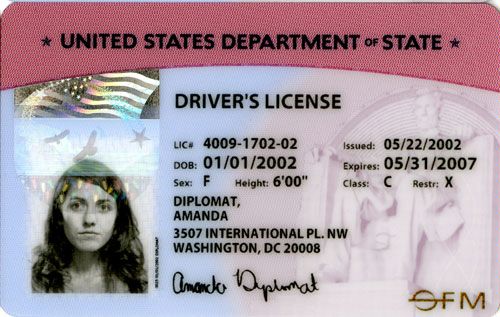
Before boarding an airline flight in the United States, passengers must pass through an airport security checkpoint operated by the Transportation Security Administration, which requires that passengers age 18 and older present an identification document whose name must match their boarding pass. Many types of documents are accepted for this purpose:
- Driver license or identification card issued by a U.S. state or territory (only if compliant with Real ID standards, after full enforcement)
- Enhanced driver license or enhanced identification card issued by a U.S. state
- Passport of any country or U.S. passport card
- DHS trusted traveler card (Global Entry, NEXUS, SENTRI or FAST)
- U.S. permanent resident card or employment authorization document (I-766)
- Border Crossing Card
- Driver license issued by a Canadian province or Canadian Indian Status card
- Photo identification card issued by a federally recognized tribe
- U.S. Department of Defense identification, including for dependents
- Personal Identity Verification (PIV) card for U.S. federal employees and contractors
- Transportation Worker Identification Credential or Merchant Mariner Credential
- Veteran Health Identification Card
- Driver license or identification card issued by the U.S. Department of State for foreign diplomatic and consular officers and their eligible dependents
Except for the first category of documents in the above list, the other documents listed remain accepted regardless of the Real ID Act. Passengers without any acceptable identification document may still be allowed to board flights after completing an identity verification process, which may require a fee.
Identification documents are accepted up to two years after their expiration. Passengers under age 18 are not required to present identification at security checkpoints.
Passengers boarding an international flight may be required to present more specific documents, such as a passport or visa, to the airline during check-in and after arrival at their destination, but they may still present any of the acceptable documents at the security checkpoint.
Criticism
The Bush administration's Real ID Act was strongly supported by the conservative Heritage Foundation and other opponents of illegal immigration. However, it faced criticism from across the political spectrum, including from libertarian groups, like the Cato Institute; immigrant advocacy groups; human and civil rights organizations, like the ACLU; Christian advocacy groups, such as the American Center for Law & Justice (ACLJ); privacy advocacy groups, like the 511 campaign; state-level opposition groups, such as North Carolinians Against Real ID and government accountability groups in Florida; labor groups, like AFL–CIO; People for the American Way; consumer and patient protection groups; some gun rights groups, such as Gun Owners of America; many state lawmakers, state legislatures, and governors; the Constitution Party; and the editorial page of The Wall Street Journal, among others.
Highlighting the broad diversity of the coalition opposing Title II of the Real ID Act, the American Center for Law and Justice (ACLJ), founded by evangelical Christian Pat Robertson, participated in a joint press conference with the ACLU in 2008.
Among the 2008 presidential candidates, John McCain strongly supported the Real ID Act, but Hillary Clinton called for it to be reviewed, Barack Obama and Ron Paul flatly opposed it, and Mike Huckabee called it "a huge mistake." The subsequent Obama administration opposed it.
In 2008, Cindy Southworth, technology project director for the National Network to End Domestic Violence, noted a "conundrum" in the mission "to identify people who are dangerous, such as terrorists, and at the same time, [...] in a way that keeps everyday citizens and victims safe." The National Coalition Against Domestic Violence also voiced concern about the Real ID Act.
Adrian Wyllie, the then-chair of the Libertarian Party of Florida, drove without carrying a driver license in 2011 in protest of the Real ID Act. After being ticketed, Wyllie argued in court that Florida's identification laws violated his privacy rights; a judge rejected this claim.
Congress
The House of Representatives approved the original Real ID Act, H.R.418, on February 10, 2005, by a vote of 261–161. At the insistence of the bill's sponsor and then House Judiciary Committee Chair Jim Sensenbrenner, the Real ID Act was subsequently attached by the House Republican leadership as a rider to H.R.1268, a bill dealing with emergency appropriations for the Iraq War and with the 2004 tsunami relief funding, which was widely regarded as a must pass bill. The Senate passed H.R.1268 on April 21, 2005, without the Real ID Act. However, the Real ID Act was reinserted in the conference report on H.R.1268, which was then passed by the House on May 5, 2005, by a 368–58 vote and unanimously by the Senate on May 10, 2005.
A May 3, 2005, statement by the American Immigration Lawyers Association said: "Because Congress held no hearings or meaningful debate on the legislation and amended it to a must-pass spending bill, the Real ID Act did not receive the scrutiny necessary for most measures, and most certainly not the level required for a measure of this importance and impact. Consistent with the lack of debate and discussion, conference negotiations also were held behind closed doors, with Democrats prevented from participating."
On February 28, 2007, Senator Daniel Akaka (D-HI) introduced the Identification Security Enhancement Act of 2007 to repeal the Real ID Act and restore the equivalent provisions of the Intelligence Reform and Terrorism Prevention Act, which provided more regulatory flexibility with state participation. Seven Democratic and Republican senators cosponsored the bill. Committee hearings were held, but the bill did not advance.
A similar bill was introduced on February 16, 2007, by Representative Tom Allen (D-ME), with 41 cosponsors, all Democrats. This bill did not advance either.
A more limited bill, introduced on February 13, 2007, by Senator Susan Collins (R-ME), with four cosponsors, would have extended the deadlines for states to comply with the Real ID Act.
On June 15, 2009, Senator Daniel Akaka introduced the PASS ID Act, which would replace the Real ID Act with a similar law without some of the requirements that were considered excessive, such as the obligation to verify documents with the issuing authority and shared databases. The bill passed the Committee on Homeland Security and Governmental Affairs but did not advance further.
State legislatures
Many state legislatures strongly opposed the Real ID Act, before the states eventually complied with it years later.
On January 25, 2007, the Maine Legislature overwhelmingly passed a resolution refusing to implement the Real ID Act in that state and calling on Congress to repeal the law. Many Maine lawmakers believed that the law would do more harm than good, they were concerned that it would create bureaucratic problems, threaten individual privacy, could make citizens more vulnerable to ID theft, and would cost Maine taxpayers at least $185million in five years to implement all aspects of the bill. The resolution vote in the Maine House of Representatives was 137–4 and in the Maine Senate unanimous, 34–0.
On February 16, 2007, the Utah legislature unanimously passed a resolution opposing the Real ID Act. The resolution stated that Real ID was "in opposition to the Jeffersonian principles of individual liberty, free markets, and limited government", and that "the use of identification-based security cannot be justified as part of a 'layered' security system if the costs of the identification 'layer'—in dollars, lost privacy, and lost liberty—are greater than the security identification provides".
Alaska, Arizona, Arkansas, Colorado, Georgia, Hawaii, Idaho, Illinois, Louisiana, Michigan, Minnesota, Missouri, Montana, Nebraska, Nevada, New Hampshire, North Dakota, Oklahoma, Pennsylvania, South Carolina, Tennessee, Virginia, and Washington joined Maine and Utah in passing legislation opposing the Real ID Act. Similar resolutions were introduced in the District of Columbia, Kentucky, Louisiana, Maryland, Massachusetts, New York, Ohio, Oregon, Rhode Island, Texas, Vermont, West Virginia, Wisconsin, and Wyoming.
On April 16, 2009, the Missouri House of Representatives passed a bill prohibiting the state from complying with the Real ID Act, by a vote of 83–69 and 3 present. On May 13, 2009, the Missouri Senate unanimously passed the bill 43–0. Missouri Governor Jay Nixon signed this bill into law on July 13, 2009. This law was later repealed in 2017. Alaska also repealed its anti-Real-ID law in 2017.
In the 2012 Florida Legislative Session, the anti-Real-ID bill HB 109 and its Senate companion S 220 were introduced. Named the Florida Driver's License Citizen Protection Act, it would require discontinuation of several of the federally mandated provisions of the Real ID Act and destruction of copies of U.S. citizens' documents from the government database. That bill died in the Transportation and Highway Safety Subcommittee on March 9, 2012.
Constitutionality
Some critics claimed that the Real ID Act violated the Tenth Amendment to the United States Constitution as a federal legislation in an area that, under the terms of the Tenth Amendment, was the province of the states. Anthony Romero, the executive director of the ACLU, stated: "Real ID is an unfunded mandate that violates the Constitution's 10th Amendment on state powers, destroys states' dual sovereignty and consolidates every American's private information, leaving all of us far more vulnerable to identity thieves".
Former Republican Representative Bob Barr wrote in a February 2008 article: "A person not possessing a Real ID Act-compliant identification card could not enter any federal building, or an office of his or her congressman or senator or the U.S. Capitol. This effectively denies that person their fundamental rights to assembly and to petition the government as guaranteed in the First Amendment".
The DHS's final rule regarding the implementation of the Real ID Act discussed several constitutional concerns raised by the commenters on the proposed version of this rule. The DHS explicitly rejected the assertion that the implementation of the Real ID Act would lead to violations of the citizens' individual constitutional rights. Concerning the Tenth Amendment argument about the violation of states' constitutional rights, the DHS rule acknowledged that these concerns had been raised by several individual commenters and in the comments by some states. The DHS rule did not attempt to rebuff the Tenth Amendment argument directly, but said that the DHS was acting in accordance with the authority granted to it by the Real ID Act and that DHS had been and would be working closely with the states on the implementation of the Real ID Act.
On November 1, 2007, attorneys for Defenders of Wildlife and the Sierra Club filed an amended complaint in U.S. District Court challenging the Real ID Act. The amended complaint alleged that this unprecedented authority violated the fundamental separation of powers principles enshrined in the U.S. Constitution. On December 18, 2007, Judge Ellen Segal Huvelle rejected the challenge. On March 17, 2008, the attorneys filed a petition for a writ of certiorari with the U.S. Supreme Court to hear their "constitutional challenge to the Secretary's decision waiving nineteen federal laws, and all state and local legal requirements related to them, in connection with the construction of a barrier along a portion of the border with Mexico". They questioned whether the preclusion of judicial review amounted to an unconstitutional delegation of legislative power and whether the "grant of waiver authority violates Article I's requirement that a duly-enacted law may be repealed only by legislation approved by both Houses of Congress and presented to the President". On April 17, 2008, numerous amicus briefs "supporting the petition were filed on behalf of 14 members of Congress, a diverse coalition of conservation, religious and Native American organizations, and 28 law professors and constitutional scholars". The Supreme Court denied the petition on June 23, 2008.
National ID card
There was disagreement about whether the Real ID Act instituted a "national identification card" system. The new law only set forth national standards, but left the issuance of cards and the maintenance of databases in state hands; therefore, the Department of Homeland Security claimed that it was not a "national ID" system. Websites such as no2realid.org, unrealid.com, and realnightmare.org argued that this was a trivial distinction, and that the new cards were in fact national ID cards, due to the uniform national standards, the linked databases created by AAMVA, and the requirement of such identification for domestic air travel.
Many advocacy groups and individual opponents of the Real ID Act believed that having a Real ID-compliant identification might become a requirement for various basic tasks. A January 2008 statement by the ACLU of Maryland said: "The law places no limits on potential required uses for Real IDs. In time, Real IDs could be required to vote, collect a Social Security check, access Medicaid, open a bank account, go to an Orioles game, or buy a gun. The private sector could begin mandating a Real ID to perform countless commercial and financial activities, such as renting a DVD or buying car insurance. Real ID cards would become a necessity, making them de facto national IDs". However, government-issued identification was already required to perform some of these tasks; for example, two forms of identification – usually a driver license, passport, or Social Security card – were required by the Patriot Act in order to open a bank account.
Privacy
Many privacy rights advocates charged that by creating a national system electronically storing vast amounts of detailed personal data about individuals, the Real ID Act increased the chance of such data being stolen and thus raised the risk of identity theft. The Bush administration, in the DHS final rule regarding the Real ID Act implementation, countered that the security precautions regarding handling sensitive personal data and hiring workers for this task, which were specified in the Real ID Act and in the rule, provided sufficient protections against unauthorized use and theft of such personal data.
Another privacy concern raised by privacy advocates such as the Electronic Frontier Foundation was that the implementation of the Real ID Act would make it substantially easier for the government to track numerous activities of Americans and conduct surveillance. Supporters of the Real ID Act, such as the conservative think-tank Heritage Foundation, dismissed this criticism under the grounds that states would be permitted by law to share data only when validating someone's identity.
The Data Privacy and Integrity Advisory Committee, which was established to advise the Department of Homeland Security on privacy-related issues, released a statement regarding the Department of Homeland Security's proposed rules for the standardization of state driver licenses on May 7, 2007. The committee stated that "Given that these issues have not received adequate consideration, the Committee feels it is important that the following comments do not constitute an endorsement of REAL ID or the regulations as workable or appropriate", and "The issues pose serious risks to an individual's privacy and, without amelioration, could undermine the stated goals of the REAL ID Act".
Gender
The Real ID Act requires that states and territories include an individual's gender on each driver license and identification card issued. The requirements for changing the recorded gender varied by jurisdiction, from merely a personal request to additional documentation such as a court order or proof of surgery.
Some scholars criticized the inclusion of gender markers in identification documents, pointing to the ineffectiveness of gender in confirming a person's identity or due to privacy concerns of transgender individuals.
Asylum and deportation
Many immigrant and civil rights advocates felt that the changes related to evidentiary standards and the immigration officers' discretion in asylum cases, contained in the Real ID Act, would prevent many legitimate asylum seekers from obtaining asylum. For example, scholars pointed to how the Real ID Act placed more emphasis on applicant account discrepancies to determine asylum seekers as "incredible" and discretion on additional corroboration requirements, which discounted potential trauma-related psychological and other barriers related to persecution that might affect testimony accounts. Additionally, a 2005 article in LCCR-sponsored Civil Rights Monitor stated, "The bill also contained changes to asylum standards, which according to LCCR, would prevent many legitimate asylum seekers from obtaining safe haven in the United States. These changes gave immigration officials broad discretion to demand certain evidence to support an asylum claim, with little regard to whether the evidence can realistically be obtained; as well as the discretion to deny claims based on such subjective factors as 'demeanor'. Critics said the reason for putting such asylum restrictions into what was being sold as an anti-terrorism bill was unclear, given that suspected terrorists are already barred from obtaining asylum or any other immigration benefit".
Similarly, some immigration and human rights advocacy groups maintained that the Real ID Act provided an overly broad definition of "terrorist activity" that would prevent some deserving categories of applicants from gaining asylum or refugee status in the United States. A November 2007 report by Human Rights Watch raised this criticism specifically in relation to former child soldiers who had been forcibly and illegally recruited to participate in an armed group.
Environment
In 2020, the section of the Real ID Act waiving laws that could interfere with the construction of the border barrier negatively impacted the natural and cultural environment of the border area. One example was at Quitobaquito Springs in the Organ Pipe Cactus National Monument in Arizona, one of the only reliable above-ground water sources in the Sonoran Desert and home to the endangered Sonoyta pupfish and Sonora mud turtle. The spring and surrounding lands are also sacred to the Hia C-eḍ Oʼodham and Tohono Oʼodham peoples. Due to the construction of the border barrier, the flow of water declined precipitously from March 2020, and threatened the cultural landscape as well as the two endangered species, along with other desert animals and plants that relied on the water.
References
References
- {{USBill. 109. H.R.. 1268, Emergency Supplemental Appropriations Act for Defense, the Global War on Terror, and Tsunami Relief, 2005, United States Congress.
- (2020). "Implementing the REAL ID Act: Intergovernmental Conflict and Cooperation in Homeland Security Policy". Publius: The Journal of Federalism.
- {{USFR. 90. 3472, Minimum Standards for Driver's Licenses and Identification Cards Acceptable by Federal Agencies for Official Purposes; Phased Approach for Card-Based Enforcement, January 14, 2025.
- [https://www.govinfo.gov/content/pkg/GPO-911REPORT/pdf/GPO-911REPORT.pdf The 9/11 Commission Report: Final Report of the National Commission on Terrorist Attacks Upon the United States], U.S. Government Publishing Office, July 22, 2004. Page 390.
- {{USPL. 108. 458. Intelligence Reform and Terrorism Prevention Act of 2004 § 7212.
- {{USBill. 109. H.R.. 418, REAL ID Act of 2005, United States Congress.
- The identification document provisions of the Real ID Act were codified as a note in [[Title 49 of the United States Code. 49. 30301, Notes, Improved Security for Drivers' Licenses and Personal Identification Cards.
- {{USPL. 110. 177. Court Security Improvement Act of 2007 § 508.
- {{USBill. 115. H.R.. 3398, United States Congress.
- [https://www.govtrack.us/congress/bills/115/hr3398/summary H.R. 3398 (115th): Real ID Act Modification for Freely Associated States Act], Govtrack.
- {{USPL. 116. 136. Coronavirus Aid, Relief, and Economic Security Act § 16006.
- {{USPL. 116. 260. Consolidated Appropriations Act, 2021 § 1001.
- [https://www.dhs.gov/real-id/real-id-faqs REAL ID Frequently Asked Questions], U.S. Department of Homeland Security, September 28, 2022.
- {{USCFR. 6. 37, Real ID driver's licenses and identification cards.
- {{USFR. 73. 5272, Minimum Standards for Driver's Licenses and Identification Cards Acceptable by Federal Agencies for Official Purposes, January 29, 2008.
- (October 26, 2022). "State-to-State (S2S) Verification Service". American Association of Motor Vehicle Administrators.
- "What Is Real REAL ID Compliance?". Cato Institute.
- {{USPL. 104. 208. Illegal Immigration Reform and Immigrant Responsibility Act of 1996 § 102.
- {{USPL. 110. 161. Consolidated Appropriations Act, 2008 § 564.
- {{USFR. 79. 77836, Minimum Standards for Driver's Licenses and Identification Cards Acceptable by Federal Agencies for Official Purposes, December 29, 2014.
- [https://www.cisa.gov/sites/default/files/publications/REAL%20ID%20Act%20of%202005%20Implementation%20-%20An%20ISC%20Guide%202019.pdf REAL ID Act of 2005 Implementation: An Interagency Security Committee Guide], Cybersecurity and Infrastructure Security Agency, 2019.
- {{USFR. 86. 23237, Minimum Standards for Driver's Licenses and Identification Cards Acceptable by Federal Agencies for Official Purposes, May 3, 2021.
- (December 5, 2022). "DHS Announces Extension of REAL ID Full Enforcement Deadline". U.S. Department of Homeland Security.
- On November 20, 2025, TSA announced that its alternative identity verification process for people without acceptable identification to access airport boarding areas would be modernized, and that a fee of [[United States dollar. US$]]18 would be required to use the system for 10 days.{{USFR. 90. 52427, TSA Modernized Alternative Identity Verification User Fee, November 20, 2025.
- (December 1, 2025). "TSA introduces new $45 fee option for travelers without REAL ID starting February 1". Transportation Security Administration.
- "REAL ID Frequently Asked Questions". U.S. Department of Homeland Security.
- [https://www.dhs.gov/real-id Real ID], U.S. Department of Homeland Security.
- (December 20, 2012). "DHS determines 13 states meet Real ID standards". U.S. Department of Homeland Security.
- "State-to-State (S2S) Verification Services". American Association of Motor Vehicle Administrators.
- (March 11, 2024). "CO, RI, and SD Join State-to-State Driver History Record; CO, RI, and TX Successfully Complete Exclusive Electronic Exchange Structured Testing". American Association of Motor Vehicle Administrators.
- (June 10, 2024). "Delaware Joins State-to-State Verification Service Driver History Record". American Association of Motor Vehicle Administrators.
- (December 9, 2019). "Request for Information, Docket No. DHS-2019-0056". U.S. Department of Homeland Security, Nebraska Department of Motor Vehicles.
- (February 28, 2013). "Nineteen Jurisdictions Now Meet Federal REAL ID Rules: 1/3 of the Way There". PR Newswire.
- "AAMVA Congratulates Alabama on a Successful S2S DHR Launch". American Association of Motor Vehicle Administrators.
- "Florida Becomes the 38th State to Join State-To-State Verification Service (S2S) and 8th State to Join S2S Driver History Record (DHR)". American Association of Motor Vehicle Administrators.
- (January 9, 2018). "Upcoming change to Hawaii's Real ID compliant credentials". Hawaii Department of Transportation.
- "Hawaii To Begin Using S2S Functionality". American Association of Motor Vehicle Administrators.
- (May 19, 2025). "Hawaii Joins State-to-State Driver History Record; Hawaii and Nebraska Implement the Medical Examiner Certification Integration Final Rule (NRII) Solution". American Association of Motor Vehicle Administrators.
- (December 20, 2013). "DHS Releases Phased Enforcement Schedule for Real ID". U.S. Department of Homeland Security.
- (April 29, 2024). "Mississippi Joins State-to-State Verification Service Driver History Record and Massachusetts Successfully Completes Exclusive Electronic Exchange Structured Testing". American Association of Motor Vehicle Administrators.
- "Current status of states/territories". U.S. Department of Homeland Security.
- (September 30, 2024). "District of Columbia Joins State-to-State Verification Service and Driver History Record". American Association of Motor Vehicle Administrators.
- "Current status of states/territories". U.S. Department of Homeland Security.
- "Current status of states/territories". U.S. Department of Homeland Security.
- (June 30, 2017). "Financial statements and report of independent auditors". Taxation and Revenue Department of New Mexico.
- "Real ID". U.S. Department of Homeland Security.
- "Texas Becomes the 39th State to Join State-to-State Verification Service (S2S) and 13th State to Join S2S Driver History Record (DHR)". American Association of Motor Vehicle Administrators.
- "Real ID". U.S. Department of Homeland Security.
- "Real ID". U.S. Department of Homeland Security.
- (October 16, 202). "Michigan Joins State-to-State Verification Service Driver History Record". American Association of Motor Vehicle Administrators.
- "Real ID". U.S. Department of Homeland Security.
- (September 3, 2024). "New York Becomes 41st State To Join State-to-State Verification Service (S2S)". American Association of Motor Vehicle Administrators.
- "Real ID". U.S. Department of Homeland Security.
- "South Carolina Joins State to State Verification Service (S2S) and Driver History Record (DHR)". American Association of Motor Vehicle Administrators.
- "Real ID". U.S. Department of Homeland Security.
- "Real ID". U.S. Department of Homeland Security.
- "Real ID". U.S. Department of Homeland Security.
- (February 19, 2025). "Washington Joins State-to-State Verification Service Driver History Record". American Association of Motor Vehicle Administrators.
- "Real ID". U.S. Department of Homeland Security.
- (November 19, 2018). "Determination that Minnesota is in full compliance with the Real ID Act". U.S. Department of Homeland Security.
- "Real ID". U.S. Department of Homeland Security.
- (February 8, 2019). "DHS: Guam IDs are now Real ID compliant". The Guam Daily Post.
- "Real ID". U.S. Department of Homeland Security.
- "Real ID". U.S. Department of Homeland Security.
- "Real ID". U.S. Department of Homeland Security.
- (November 12, 2024). "Missouri Joins S2S DHR, Implements CDLIS EEE Changes, and Missouri and Arizona Implement CDLIS Solution for DACH". American Association of Motor Vehicle Administrators.
- (April 30, 2019). "Federal government certifies Rhode Island Real ID program". Rhode Island Government.
- (February 28, 2022). "PennDOT House Appropriations Statement". Pennsylvania Department of Transportation.
- (May 22, 2019). "Determination that California is in full compliance with the Real ID Act". U.S. Department of Homeland Security.
- "Real ID". U.S. Department of Homeland Security.
- "Real ID". U.S. Department of Homeland Security.
- (December 16, 2024). "Maine Joins State-to-State Verification Service and Driver History Record". American Association of Motor Vehicle Administrators.
- "Real ID". U.S. Department of Homeland Security.
- (March 18, 2024). "New Jersey To Begin Using State-to-State Verification Service". American Association of Motor Vehicle Administrators.
- "Real ID". U.S. Department of Homeland Security.
- "Real ID". U.S. Department of Homeland Security.
- "Real ID". U.S. Department of Homeland Security.
- "Real ID". U.S. Department of Homeland Security.
- [https://www.keesingtechnologies.com/document-verification/real-id/ REAL ID symbols and status by state], Keesing Technologies, April 2025.
- [https://www.dhs.gov/enhanced-drivers-licenses-what-are-they Enhanced Drivers Licenses: What Are They?], U.S. Department of Homeland Security.
- (October 1, 2019). "Washington residents will need REAL ID-compliant identification to fly starting October 2020". Transportation Security Administration.
- "REAL ID". Washington State Department of Licensing.
- [https://www.tsa.gov/travel/security-screening/identification Acceptable Identification at the TSA Checkpoint], Transportation Security Administration.
- [https://www.state.gov/wp-content/uploads/2019/05/271733.pdf Diplomatic Note 17-823: Real ID Act], U.S. Department of State, May 30, 2017.
- "REAL ID Frequently Asked Questions {{!}} Transportation Security Administration".
- ccpafl. (May 18, 2011). "Florida LP Chairman Adrian Wyllie surrenders license in protest of REAL ID act".
- "PA State Rep. Dennis O'Brien - Rohrer to Join ACLJ and ACLU Opposing Real ID".
- "North Carolinians Against Real ID website".
- "Floridians Against REAL ID website".
- (May 8, 2007). "Congress rethinks the Real ID Act". [[CNET]].
- [http://www.privacycoalition.org/stoprealid/ The Privacy Coalition] Accessed February 17, 2008
- Steve Meyer. (February 10, 2009). "Real ID Exposed at National Press Club with Mark Lerner, Host".
- McCullagh, Declan. [http://www.news.com/8301-13578_3-9864581-38.html "In '08 presidential race, who's the most tech-friendly?"], CNET, February 5, 2008. Accessed February 17, 2008
- (September 25, 2007). "Mike Huckabee: The RCP Interview". [[Real Clear Politics]].
- Broache, Anne. (February 8, 2008). "Real ID worries domestic violence groups".
- "National Coalition Against Domestic Violence".
- Jacob Carpenter, [https://web.archive.org/web/20150305070504/http://www.naplesnews.com/news/crime/judge-to-former-gubernatorial-candidate-good-try-no-dice Judge to former gubernatorial candidate: Good try, no dice], ''Naples Daily News'' (March 2, 2015).
- Curtis Krueger, [https://web.archive.org/web/20120301203321/http://www.tampabay.com/news/courts/libertarian-gets-ticketed-on-purpose-to-make-argument-in-court/1190322 Libertarian gets ticketed on purpose to make argument in court Libertarian gets ticketed on purpose to make argument in court], ''St. Petersburg Times'' (September 7, 2011).
- Zetter, Kim. (May 10, 2005). "No Real Debate for Real ID".
- (March 31, 2005). "Immigrants' Rights Update, Vol. 19, Issue 2". National Immigration Law Center.
- Shahani, Aarti. (April 29, 2005). "Real ID Act Attached to "Must-Pass" Spending Bill Imposes Anti-Immigrant Measures".
- [http://www.visalaw.com/05may1/7may105.html AILA Statement on REAL ID] {{Webarchive. link. (May 10, 2008 May 3, 2005)
- {{USBill. 110. S.. 717, Identification Security Enhancement Act of 2007, United States Congress.
- {{USBill. 110. H.R.. 1117, REAL ID Repeal and Identification Security Enhancement Act of 2007, United States Congress.
- {{USBill. 110. S.. 563, A bill to extend the deadline by which State identification documents shall comply with specific minimum standards and for other purposes, United States Congress.
- {{USBill. 111. S.. 1261, PASS ID Act, United States Congress.
- "An Act To Prohibit Maine from Participating in the Federal REAL ID Act of 2005".
- "Utah Legislature HR0002".
- "Alaska State Legislature".
- "Alaska State Legislature".
- [https://www.aclu.org/safefree/general/29291prs20070405.html 'Washington Becomes Fourth State to Oppose REAL ID'], ACLU, April 5, 2007. Accessed July 23, 2007.
- [https://www.cnet.com/news/congress-rethinks-the-real-id-act-1/ "Congress rethinks the Real ID Act"], CNET News, May 8, 2007. Accessed May 19, 2016.
- [http://www.epic.org/privacy/id_cards/ 'National ID Cards and REAL ID Act'], Electronic Privacy Information Center. Accessed July 23, 2007.
- [http://www.billingsgazette.net/articles/2007/04/17/news/state/28-law.txt 'Gov signs law rejecting Real ID act'], ''Billings Gazette'', April 17, 2007. Accessed July 23, 2007.
- [http://www.legislature.state.tn.us/bills/currentga/asp/WebBillInfo/BillCompanionInfo.aspx?billnumber=SJR0248 'Bill Information for SJR0248'] Tennessee State Legislature. Accessed August 8, 2007.
- https://www.azcentral.com/specials/special12/articles/0618real-id0618.html?&wired Napolitano: Real ID a no-go in Arizona
- "Real ID Nullification Legislation".
- "Status of Anti-Real ID Legislation in the States".
- "Bill Actions".
- By. "Greitens signs Real ID legislation, putting Missouri in compliance with federal law".
- "Missouri House of Representatives - Bill Information for HB151".
- reports, Staff and Wire. (May 19, 2017). "UPDATE: Gov. Walker signs REAL ID bill into law".
- "HB 109 - Issuance and Renewal of Drivers' Licenses and Identification Cards".
- (2012). "Senate Bill 220".
- "Floridians Against REAL ID: Florida Driver's License Citizen Protection Act as of September 19, 2011".
- (2012). "House Bill 109".
- (March 6, 2007). "Opposing view: Repeal Real ID". [[USA Today]].
- (February 6, 2008). "Real ID Act a Real Intrusion on Rights, Privacy". [[The Atlanta Journal-Constitution]].
- "Border Fence Construction: San Pedro Riparian NCA – Defenders of Wildlife".
- (November 1, 2007). "Conservation Groups Challenge Chertoff's Waiver Power as Unconstitutional".
- ((Andrew J. Pincus, Charles A. Rothfeld, Robert Dreher, Brian Segee, Dan Kahan, Terri-Lei O'Malley)). (March 17, 2008). "Petition for Writ of Certiorari re: San Pedro Border Case".
- Joe Vickless. (March 17, 2008). "U.S. Supreme Court Asked to Answer: Is Chertoff Above the Law?". Defenders of Wildlife.
- Brian Segee. (April 25, 2008). "Congress to hold field hearing on border wall". Defenders of Wildlife.
- (April 2008). "Wildlife and Border Policy". Defenders of Wildlife.
- Joe Vickless. (April 18, 2008). "Congressional, religious, cultural and academic leaders urge Supreme Court to hear challenge to border wall". Defenders of Wildlife.
- [https://www.supremecourt.gov/search.aspx?filename=/docketfiles/07-1180.htm Defenders of Wildlife, et al., v. Michael Chertoff, Secretary of Homeland Security], U.S. Supreme Court.
- McCullagh, Declan, "[http://news.cnet.com/FAQ+How+Real+ID+will+affect+you+-+page+3/2100-1028_3-5697111-3.html?tag=st.num FAQ: How Real ID will affect you]", CNET, May 6, 2005. Accessed May 5, 2007
- [https://www.dhs.gov/xprevprot/laws/gc_1172767635686.shtm DHS: REAL ID Proposed Guidelines: Questions & Answers] {{webarchive. link. (March 4, 2007)
- "[https://www.aclu.org/privacy/gen/33952prs20080115.html ACLU Of Maryland Blasts New Real ID Regulations]", ACLU, January 15, 2008. Accessed February 17, 2008
- (January 17, 2008). "ACLU Scorecard on Final Real ID Regulations". [[ACLU]].
- (February 28, 2007). "Real ID Act Will Increase Exposure to ID Theft". Privacy Rights Clearinghouse.
- (February 28, 2007). "The Many Faces of the Real ID Act". PrivacyActivism.
- (May 19, 2005). "Real ID Act mostly helps identity thieves". [[The Mercury News]].
- (August 16, 2007). "Real ID. Threatening Your Privacy Through an Unfunded Government Mandate". [[Electronic Frontier Foundation]].
- (August 16, 2007). "Federal ID plan raises privacy concerns". [[CNN]].
- Ryan Singel. May 7, 2007. [http://blog.wired.com/27bstroke6/2007/05/homeland_securi.html "Homeland Security's Own Privacy Panel Declines to Endorse License Rules"]. ''Wired''.
- Rivelli, Elizabeth. "Changing Gender On Your Driver's License".
- Migdon, Brooke. (May 31, 2022). "Here are the states where you can (and cannot) change your gender designation on official documents".
- Perry, Tatiania. (November 29, 2021). "Non-Binary, Gender X Driver's Licenses, Passports Gaining Popularity".
- (November 2021). "ID Documents Center".
- McGrath, James. (January 1, 2009). "Are You a Boy or a Girl - Show Me Your REAL ID". Nevada Law Journal.
- (2009). "Artful Concealment and Strategic Visibility: Transgender Bodies & U.S. State Surveillance After 9/11". Surveillance & Society.
- (March 2005). "The 'REAL ID' Act Is a Really Bad Idea". National Immigration Law Center.
- Marisa Silenzi Cianciarulo. (2006). "Terrorism and asylum seekers: why the Real ID Act is a false promise". Harvard Journal on Legislation.
- (Fall–Winter 2005). "Anti-immigrant 'REAL ID' Act Becomes Law". Civil Rights Monitor.
- (March 2005). "AIUSA Issue Brief: The REAL ID Act of 2005 and Its Negative Impact on Asylum Seekers". [[Amnesty International USA]].
- (November 2007). "United States of America: Compliance with the Optional Protocol to the Convention on the Rights of the Child on the involvement of children in armed conflict". [[Human Rights Watch]].
- [https://web.archive.org/web/20210316025900/https://www.nationalgeographic.com/science/article/quitobaquito-springs-arizona-drying-up-border-wall Sacred Arizona spring drying up as border wall construction continues], National Geographic, July 20, 2020.
- (2018). "Quitobaquito Springs". National Park Service.
This article was imported from Wikipedia and is available under the Creative Commons Attribution-ShareAlike 4.0 License. Content has been adapted to SurfDoc format. Original contributors can be found on the article history page.
Ask Mako anything about Real ID Act — get instant answers, deeper analysis, and related topics.
Research with MakoFree with your Surf account
Create a free account to save articles, ask Mako questions, and organize your research.
Sign up freeThis content may have been generated or modified by AI. CloudSurf Software LLC is not responsible for the accuracy, completeness, or reliability of AI-generated content. Always verify important information from primary sources.
Report