From Surf Wiki (app.surf) — the open knowledge base
Rat-catcher
Type of professional in pest control
Type of professional in pest control
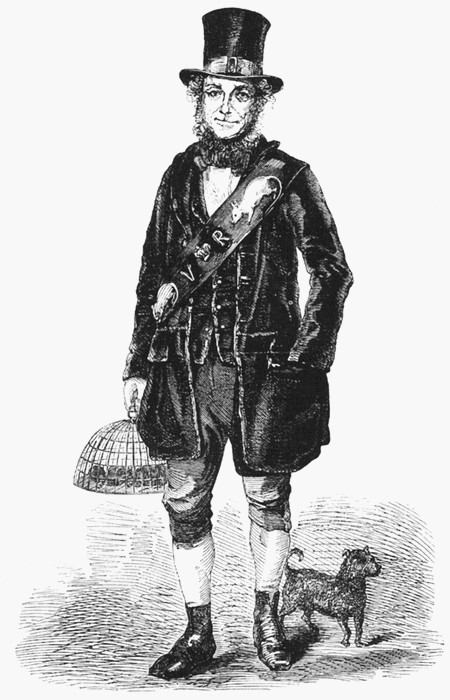
A rat-catcher is a person who kills or captures rats as a professional form of pest control. Keeping the rat population under control was practiced in Europe to prevent the spread of diseases, most notoriously the Black Death, and to prevent damage to food supplies. In modern developed countries, such a professional is otherwise known as a pest control operative or pest exterminator.
Anecdotal history
A famous rat-catcher from Victorian England was Jack Black, who is known through Henry Mayhew's interview for London Labour and the London Poor.
Techniques
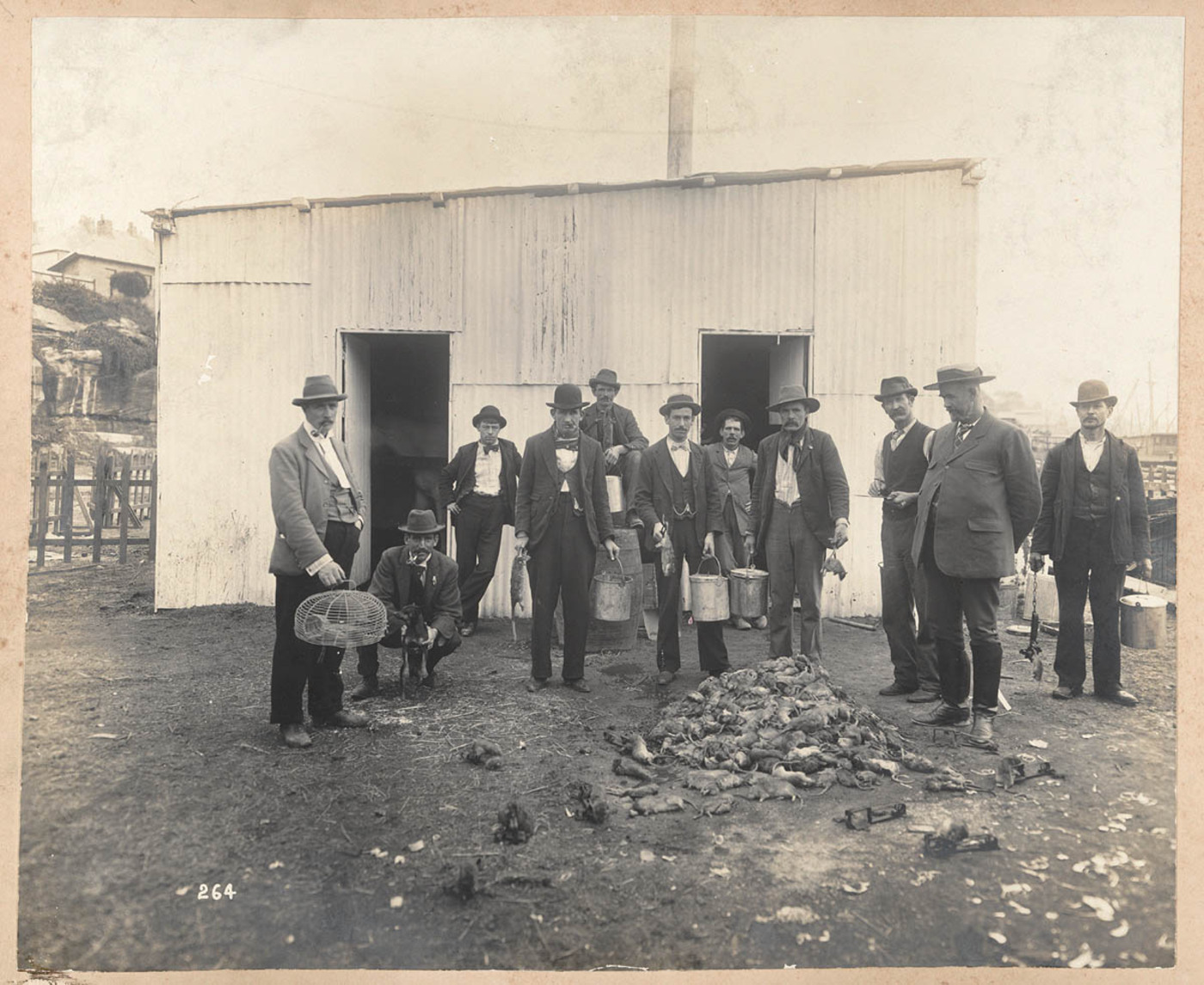
Rat-catchers may attempt to capture rats themselves, or release "ratters", animals trained or naturally skilled at catching them. They may also set a rat trap or other traps.
Modern methods of rat control include traps, poisoned bait, introducing predators, reducing litter, smoke machines, and clearing of current or potential nest sites.
Ratters
Main article: Ratter (dog)
A "ratter" usually refers to a dog used for catching or killing rats. This includes specially-bred terriers for vermin-hunting, which may be known as rat terriers, although the latter may refer to a breed that was historically developed in rat-baiting.
Conditions and risks
Rats are rarely seen in the open, preferring to hide in holes, haystacks and dark locations. A rat-catcher's risk of being bitten is high, as is the risk of acquiring a disease from a rat bite.
Gallery
File:Pied piper.jpg|The oldest picture of the Pied Piper of Hamelin, copied from the glass window of the Market Church in Hamelin File:FOURNEL(1887) p039 Fig.18.jpg|Death to the Rats, Edmé Bouchardon File:Rattenfänger F 18Jh.jpg|Rat-catcher, 18th century File:Rattenfänger 19Jh.jpg|Rat-catcher, 19th century File:Frustrated Rat Catcher LACMA AC1998.249.17.jpg|Frustrated Rat Catcher (Ittan (Japan, circa 1820–1877), Los Angeles County Museum of Art
In popular culture
Folklore
- A famous fictional rat-catcher was the Pied Piper of Hamelin; different versions of his story have been adapted into a variety of media works.
Comic books
- In the DC Comics Universe, one of Batman's enemies is the Rat Catcher, alias Otis Flannegan, who was employed as a real rat-catcher for Gotham City. The Rat Catcher occasionally orchestrates rat plagues using his uncanny ability to control rats.
Film
- Rat catchers make a major appearance in Dario Argento's The Phantom of the Opera (1998 film).
- Ratcatcher (1999), written and directed by Lynne Ramsay, is her debut feature film.
Television
- Colin "Chopper" Mozart, rat-catcher, was featured in an episode of Monty Python's Flying Circus
- The character Charlie Kelly from It's Always Sunny in Philadelphia was responsible for catching and exterminating rats at Paddy’s Pub.
Literature
- Rat-catchers appear in George Eliot's The Mill on the Floss (1860).
- British author Roald Dahl's short story, "The Ratcatcher", was collected in Someone Like You (1953).
- Serafina, the Chief Rat Catcher of the Biltmore Estate in Asheville, N.C. Serafina is a fictional character created by author Robert Beatty and was first introduced in Serafina and the Black Cloak, a spooky, historical fiction novel. Serafina's mysterious adventures grew into a trilogy (Book 2: Serafina and the Twisted Staff, Book 3: Serafina and the Splintered Heart) and the fourth book in the series is due for release in summer 2019.
Music
- The humorous ballad "The Famous Rat-Catcher" (c. 1615)--sometimes referenced by the first line, "There was a rare rat-catcher"—evokes both the material culture of contemporary ratting and the verminous conduct of a particular practitioner. A fellow rat-catcher also carries treatments for venereal disease; it is not clear from either the song or the editor's commentary whether this was a common part of the rat-catching trade.
References
References
- Mayhew, Henry. (1851). "London Labour and the London Poor, Volume 3".
- Schappi, Colin. (2023-04-12). "Rat-Hunting Dogs in Bushwick".
- ''Batman: Arkham Asylum'' character bios.
- "Shakespeare/Michelangelo/Colin Mozart [ratcatcher]" (1970) http://www.montypython.net/scripts/shakespeare.php
- "Books". robert-beatty.com.
- The text and woodcut illustration of this broadside ballad were reprinted in Hyder E. Rollins, ed., ''A Pepysian Garland: Black Letter Broadside Ballads of the Years 1594-1639, Chiefly from the Collection of Samuel Pepys'' (Cambridge University Press, 1922), pp. 60-65. The Library of Congress holds an original broadside: https://www.loc.gov/item/2007681612/. The text appears, with melody, in [[Ross W. Duffin]], ''Shakespeare's Songbook'' (New York: W. W. Norton, 2004), p. 326 et seq. The Baltimore Consort's performance is included in ''A Trip to Killburn: Playford Tunes and Their Ballads'' (Dorian, 1996; DOR-90238).
This article was imported from Wikipedia and is available under the Creative Commons Attribution-ShareAlike 4.0 License. Content has been adapted to SurfDoc format. Original contributors can be found on the article history page.
Ask Mako anything about Rat-catcher — get instant answers, deeper analysis, and related topics.
Research with MakoFree with your Surf account
Create a free account to save articles, ask Mako questions, and organize your research.
Sign up freeThis content may have been generated or modified by AI. CloudSurf Software LLC is not responsible for the accuracy, completeness, or reliability of AI-generated content. Always verify important information from primary sources.
Report