From Surf Wiki (app.surf) — the open knowledge base
Rami Levy Hashikma Marketing
Third largest Israeli retail supermarket chain

Third largest Israeli retail supermarket chain
| Field | Value |
|---|---|
| name | Rami Levy Chain Stores Hashikma Marketing 2006 Ltd. |
| logo | File:Rami Levy Hashikma Marketing logo.png |
| type | Public company |
| traded_as | |
| foundation | |
| founder | Rami Levy |
| location_city | Jerusalem |
| location_country | Israel |
| locations | 44 supermarkets |
| 20 cellular communications stores | |
| key_people | Rami Levy (Owner and CEO) |
| Adina Levy (CFO) | |
| Shmulik Levy (Vice President Operations) | |
| industry | Supermarket |
| revenue | NIS 1.14 billion (US$401 million) (2013) |
| operating_income | NIS 115 million (US$32 million) (2010) |
| net_income | NIS 92.47 million (US$27 million) (2011) |
| assets | NIS 643 million ($US179 million) (2010) |
| equity | NIS 500 million (US$139 million) (2010) |
| owner | Rami Levy |
| num_employees | 5,000+ |
| subsid | Yafiz clothing stores |
| Rami Levy Communications | |
| Israir Airlines |
20 cellular communications stores Adina Levy (CFO) Shmulik Levy (Vice President Operations) Rami Levy Communications Israir Airlines Rami Levy Hashikma Marketing (, Rami Levy Shivuk Hashikma) is the third largest Israeli retail supermarket chain,{{cite web |url=http://www.globes.co.il/serveen/globes/docview.asp?did=1000758167&fid=4948|title=Can Rami Levy remain lean?
History
Rami Levy Hashikma Marketing was founded by Rami Levy (born 1955, Jerusalem, Israel), one of six children of an Israeli-born father and Iraqi-born mother. He grew up in poverty in a one-room tin shack with a shared kitchen and bathroom in the Nachlaot neighborhood. Shopping with his mother in the nearby Mahane Yehuda Market (the "shuk"), Levy came to the realisation that there were price differentials available to wholesalers, who preferred selling to retailers than dealing with individuals. Upon completing his army service in 1976, he began selling goods at wholesale prices directly to individuals out of a 40 m2 stall that his grandfather had left to the family on Hashikma Street, one of the commercial streets of the shuk. He named his new company after himself and the street he was located on.
Levy said he initially bought goods from a wholesaler and sold them at cost. After three months, he bought goods directly from the importer whilst maintaining his wholesale selling prices, thus becoming the first discount store in Israel. In the early 1980s Levy opened his second, 80 m2 store. He opened his first supermarket in Talpiot in 1992; he has since opened two other supermarkets in Talpiot to accommodate business.
In May 2007 the company, with eight branches and a market valuation of NIS 430 million, made its initial public stock offering on the Tel Aviv Stock Exchange. Within two years, the number of branches doubled to 16.

Rami Levy introduced supermarket price wars to Israel by promoting low prices and discounts in advance of Jewish holidays. For example, for one week in 2008, the chain sold milk for less than the price of water, and drove headline prices of chicken down to 0.79 shekels per kilo. For Rosh Hashanah 2010, it again grabbed headlines by offering chicken, apples and honey at 1 shekel per kilo (13 cents per pound). Similar promotions were carried out for Passover 2011.
In 2009 the chain's discounting policy began to make a dent in the market share of Israel's leading supermarket chains, Shufersal Ltd. and Blue Square-Israel Ltd. Industry analysts attribute the chain's success to Levy's management strategy and marketing skills. Rami Levy Hashikma Marketing stock trades in the TA-75 and TA-100 indexes at a market cap of NIS 1.77 billion (US$474 million)(2011).
Locations
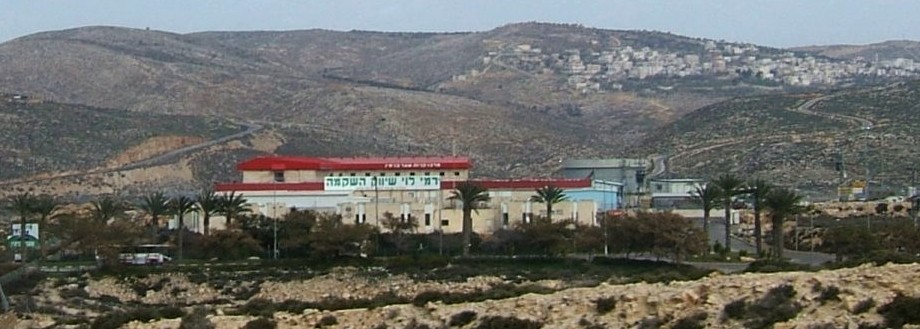
There are currently 44 Rami Levy supermarkets, located in several Jerusalem neighborhoods as well as in Afula, Akko, Ashdod, Ashkelon, Bat Yam, Beersheba, Beit Shemesh, Eilat, Hadera, Haifa, Holon, Kadima, Karmiel, Kastina, Kfar Saba, Kiryat Shmona, Lod, Mevasseret Zion, Modiin, Nesher, Netanya, Nahariya, Pardes Hanna, Petah Tikva, Ra'anana, Ramat Gan, Ramat Hahayal, Rehovot, Rishon LeZion, Rosh HaAyin, Tiberias, Yavne, and Zichron Yaakov. There are also five locations in the West Bank: Beitar Illit, Gush Etzion, Sha'ar Binyamin, Ariel, and Mishor Adumim. Levy's stores in the West Bank are often cited as a model of Arab-Jewish coexistence, as Arabs and Jews shop and work there side-by-side.
In 2010, the locations in West Bank, which attract thousands of Palestinian shoppers and top Palestinian Authority officials, and which are staffed by both Arabs and Jews, were targeted by the PA's anti-Israeli goods campaign. For several months the PA attempted to discourage Arabs from shopping at Rami Levy supermarkets, culminating in an official boycott of the chain in September 2010. At the same time, there were concerns among some Orthodox Jews in the area regarding security and especially the issue of intermixing between the male Arab shelving staff and the female Jewish cashiers. All these issues have been largely put aside by the local populations, as witnessed by the multi-ethnic crowds that fill the stores on any given afternoon.
Diversification
In-house brand and outlet stores
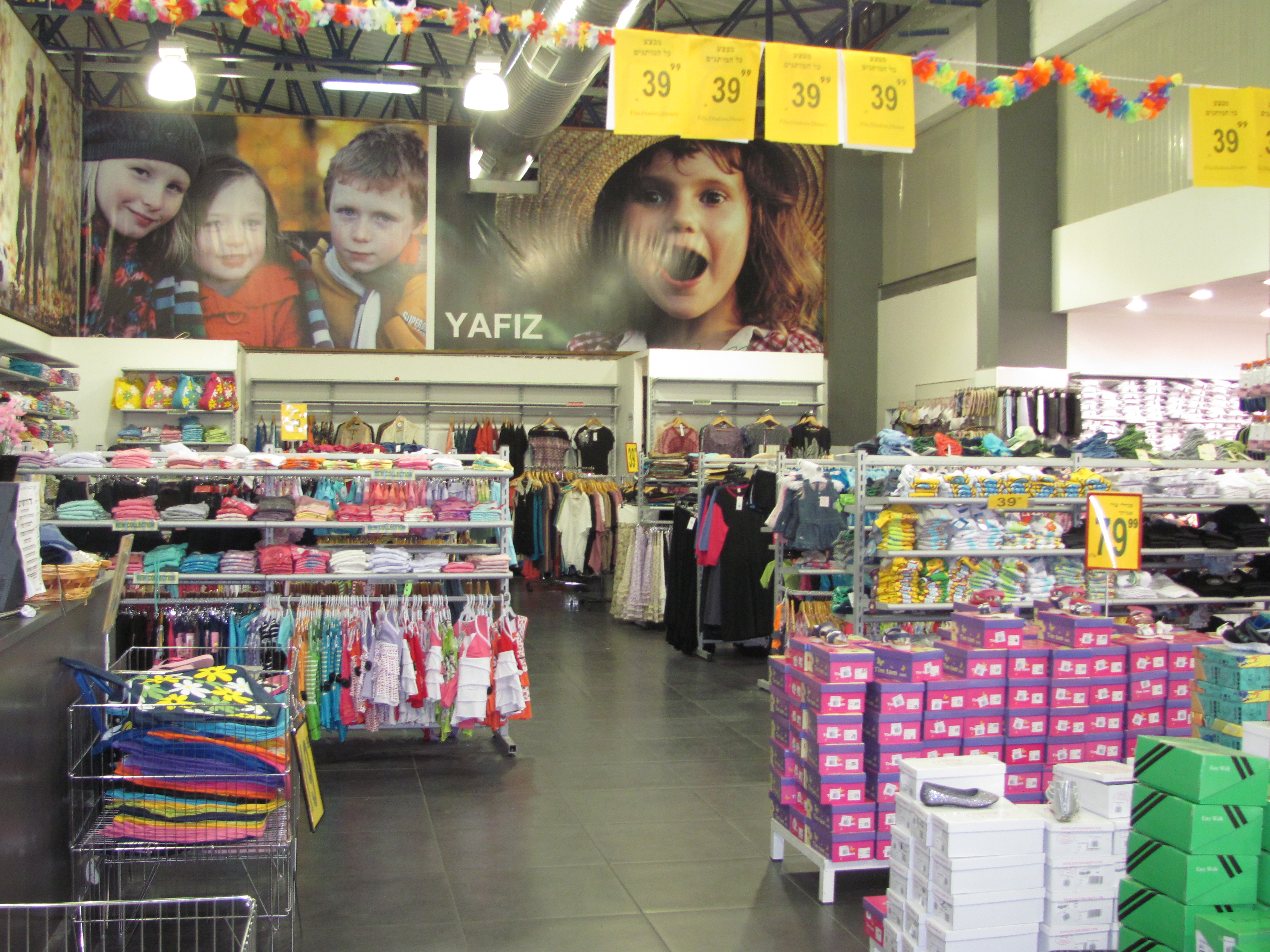
Rami Levy Hashikma Marketing markets a house brand called Hamutag (, lit. "the brand"), which includes food, detergents, and toiletries. Some stores have "Pizza Hashikma" and "Burger Hashikma" outlets which sell fast food at a discount. The chain also includes an in-house store called Yafiz which stocks low-priced clothing and shoes for men, women, teens, children and infants.
Real estate development
In 2000 Rami Levy purchased a plot in the Har Nof neighborhood of Jerusalem zoned for 100 housing units. He also invested 145.5 million NIS (US$36.3 million) in land for 265 apartments in the Holyland complex. In 2008, he bought the rights to SBH Sha'ar L'Yerushalayim for 15 million NIS (US$3.95 million), making him the controlling shareholder of a company that owns land on Hebron Road zoned for 240 housing units, a hotel, and commercial and industrial space. In 2009 he bought Delek Real Estate's share of the Jerusalem Railway Station compound on Derech Beit Lehem (Bethlehem Road) for about 13 million (US$3.6 million); the site is zoned for 1000 housing units. In 2010 Levy partnered with Amikam Ben-Zvi and Housing and Construction Real Estate to buy 13 million NIS (US$3.6 million) worth of land in the Givat HaMatos area in Jerusalem, also zoned for 1000 housing units. However, Levy blames slow progress on developing the company's recent acquisitions on bureaucratic red tape by planning authorities.
In 2011 Levy made headlines with his bid to take over the development of the Nof Zion luxury housing product in the East Jerusalem neighborhood of Jabel Mukaber after developer Digal made a debt settlement with creditors. When the identity of the competing bidder – Palestinian-American businessman Bashar Masri – was announced in the Israeli newspapers, nearly 77 percent of bondholders voted to negotiate with the group of Jewish investors headed by Levy.
Rami Levy Hashikma Marketing owns 65% of the land on which its supermarkets stand, including approximately 35000 m2 of land in Mevasseret Zion, Modiin, Gush Etzion, and Pardes Hanna. The company uses its own equity – estimated at NIS 500 million (US$139 million) – for its commercial real estate purchases.
Cellular communications

In September 2010 Rami Levy Hashikma Marketing became the fourth company in Israel to receive a mobile virtual network operator license from the Israel Ministry of Communications. The company previously announced in a 2010 statement to the Tel Aviv Stock Exchange that upon receiving this license, it would open a new subsidiary, Rami Levy Hashikma Marketing Communications Ltd., and sell advanced mobile telephone services in its supermarkets. In February 2011 Rami Levy signed an agreement with Israeli mobile phone provider Pelephone, allowing the supermarket chain to use Pelephone's infrastructure to provide cellular phone services. In December 2011 Rami Levy Communications went live with the opening of two branches in Jerusalem. Rami Levy Communications is the first MVNO to buy blocks of minutes from other cellular companies and resell them to consumers for less than the providing company charges.
Criticism
Involvement in Israeli settlements
On 12 February 2020, the United Nations published a database of companies doing business related in the West Bank, including East Jerusalem, as well as in the Golan Heights. Rami Levy Hashikma Marketing was listed on the database on account of its activities in Israeli settlements in these occupied territories, which are considered illegal under international law.
Nepotism
Levy employs 20 family members in his business, and many of the stores are managed by relatives.
References
References
- Gantz, Nesanel. "Lunch Break: With Rami Levy". ''[[Ami (magazine). Ami]]'', 15 January 2014, pp. 40–42.
- "Rami Levi Chain Stores Hashikma Marketing 2006 Ltd.". [[Tel Aviv Stock Exchange]].
- (25 August 2009). "Rami Levy Banks on Deep Discounts: The Israeli supermarket chain, plans to boost its market share by mid-2011 with new stores and price cuts". Bloomberg.
- "About". rami-levi.co.il.
- Nahum-Halevy, Ranit. (8 March 2010). "Rami Levy blames high housing prices on ILA". [[Haaretz]].
- Veeder, Nechama. (15 August 2003). "Shop Talk". The Jerusalem Post.
- Bar, Noam. (19 May 2011). "Why did Rami Levi stock rise so much: Shoppers, or rightists?". Haaretz.
- Hayut, Ilanit. (11 February 2008). "Price War Bursts Out Between Israeli Supermarkets". Globes.
- Ross, Idele. (2008). "Price Wars at Supermarket Chains". KosherToday.
- Paz, Shelly. (15 February 2008). "Rami Levy ain't chickening out, and at NIS 0.79 per kilo everyone's flocking". The Jerusalem Post.
- Spira, Yechiel. (16 September 2008). "Israel: Round 2 of Chicken 'War' Between SuperSol & Rami Levy". [[Yeshiva World News]].
- (17 January 2011). "Zionist Entrepreneur Saves Jerusalem Neighborhood". Arutz Sheva.
- Ben Gedalyahu, Tzvi. (30 March 2011). "Pre-Passover Miracle Prices: Chickens for 13 Cents a Pound". Arutz Sheva.
- Hayut, Ilanit. (29 March 2011). "Supermarket Battles Heat Up as Passover Nears: Rami Levi again promotes one shekel chickens; nearby rivals to match". Globes.
- Amit, Hagai. (8 March 2010). "Is Shlomo Rodav five times more talented than Rami Levy?". Haaretz.
- "רמי לוי שיווק השקמה".
- link. rami-levy.co.il
- (22 September 2010). "Supermarkets = Superpeace". The Media Line.
- Abu Toameh, Khaled. (5 July 2010). "PA Warns Palestinian Shoppers". [[The Jerusalem Post]].
- AFP. (4 July 2010). "Settlers worry about impact of Palestinian boycott". Asia Pacific News.
- (21 September 2010). "PA Declares Official Boycott of Rami Levi". Arutz Sheva.
- (2010-07-04). "Groceries and politics". shimshonit.com.
- (2011). "Company description". The Financial Times Ltd..
- link. Rami Levy
- link. Rami Levy
- link. Rami Levy
- Shauly, Avi. (12 January 2011). "Confirmed: Rami Levy buys Digal's Nof Zion project". Globes.
- Ferziger, Jonathan. (3 February 2011). "Netanyahu's Economic Peace Tested by Palestinian Construction Roadblocks". Bloomberg.
- Hayut, Ilanit. (6 September 2010). "Supermarket Chain Rami Levi To Receive MVNO License: Rami Levi will become the fourth company to receive an MVNO license". Globes.
- Friedman, Ron. (8 September 2010). "Honey, pick up some milk and a cellphone". The Jerusalem Post.
- Scheer, Steven. (15 February 2011). "Bezeq's Pelephone inks another mobile operator deal". Reuters.
- Aharoni, Efrat. (5 December 2011). "Rami Levy expects 250,000 mobile carrier subscribers". Globes.
- (12 Feb 2020). "Database of all business enterprises involved in certain activities relating to Israeli settlements in East Jerusalem and the West Bank (A/HRC/43/71)". UN OCHA.
- (12 February 2020). "UN rights office issues report on business activities related to settlements in the Occupied Palestinian Territory". [[Office of the United Nations High Commissioner for Human Rights]].
- (23 December 2016). "S/RES/2334(2016)". [[United Nations Security Council]].
This article was imported from Wikipedia and is available under the Creative Commons Attribution-ShareAlike 4.0 License. Content has been adapted to SurfDoc format. Original contributors can be found on the article history page.
Ask Mako anything about Rami Levy Hashikma Marketing — get instant answers, deeper analysis, and related topics.
Research with MakoFree with your Surf account
Create a free account to save articles, ask Mako questions, and organize your research.
Sign up freeThis content may have been generated or modified by AI. CloudSurf Software LLC is not responsible for the accuracy, completeness, or reliability of AI-generated content. Always verify important information from primary sources.
Report