From Surf Wiki (app.surf) — the open knowledge base
Rama
Major deity in Hinduism
.jpg)
Major deity in Hinduism
| Field | Value | ||
|---|---|---|---|
| type | Hindu | ||
| image | Lord Rama with arrows.jpg | ||
| caption | Rama holding arrows, early 19th century depiction | ||
| name | Rama | ||
| symbol | Sharanga (bow) | ||
| Arrows | |||
| Devanagari | राम | ||
| Sanskrit_transliteration | |||
| member_of | Dashavatara | ||
| other_names | Ramachandra, Raghava, Maryada Purushottama | ||
| god_of | {{hlist | The Ideal Man | Embodiment of Dharma |
| affiliation | Seventh avatar of Vishnu, Brahman, Vaishnavism | ||
| day | Thursday | ||
| parents | |||
| spouse | Sita | ||
| abode | |||
| weapon | Sharanga (bow) and arrows | ||
| texts | Ramayana and its other versions | ||
| siblings | |||
| festivals | |||
| avatar_birth | Ayodhya, Kosala (present-day Uttar Pradesh, India) | ||
| avatar_end | Sarayu River, Ayodhya, Kosala (present-day Uttar Pradesh, India) | ||
| children | |||
| dynasty | Raghuvamsha-Suryavamsha | ||
| predecessor | Dasharatha | ||
| gender | Male | ||
| successor | Lava (North Kosala) | ||
| mantra | Jai Shri Ram | ||
| Jai Siya Ram | |||
| Hare Rama | |||
| Ramanama repetition | |||
| weapons | Dhanush(Bow) | ||
| army | Vanara Sena | ||
| Ayodhyan Army | |||
| venerated_in | Ramanandi Sampradaya | ||
| Sri Vaishnavism | |||
| Smartism |
the Hindu god
Arrows |The Supreme Being (Ramaism)}} Kusha (South Kosala) Jai Siya Ram Hare Rama Ramanama repetition Ayodhyan Army Sri Vaishnavism Smartism Rama (; , , ) is a major deity in Hinduism. He is worshipped as the seventh and one of the most popular avatars of Vishnu. In Rama-centric Hindu traditions, he is considered the Supreme Being. Also considered as the ideal man (maryāda puruṣottama), Rama is the male protagonist of the Hindu epic Ramayana. His birth is celebrated every year on Rama Navami, which falls on the ninth day of the bright half (Shukla Paksha) of the lunar cycle of Chaitra (March–April), the first month in the Hindu calendar.
According to the Ramayana, Rama was born to Dasaratha and his first wife Kausalya in Ayodhya, the capital of the Kingdom of Kosala. His siblings included Lakshmana, Bharata, and Shatrughna. He married Sita. Born in a royal family, Rama's life is described in the Hindu texts as one challenged by unexpected changes, such as an exile into impoverished and difficult circumstances, and challenges of ethical questions and moral dilemmas. The most notable story involving Rama is the kidnapping of Sita by the demon-king Ravana, followed by Rama and Lakshmana's journey to rescue her.
The life story of Rama, Sita and their companions allegorically discusses duties, rights and social responsibilities of an individual. It illustrates dharma and dharmic living through model characters.
Rama is especially important to Vaishnavism. He is the central figure of the ancient Hindu epic Ramayana, a text historically popular in the South Asian and Southeast Asian cultures. His ancient legends have attracted bhashya (commentaries) and extensive secondary literature and inspired performance arts. Two such texts, for example, are the Adhyatma Ramayana – a spiritual and theological treatise considered foundational by Ramanandi monasteries, and the Ramcharitmanas – a popular treatise that inspires thousands of Ramlila festival performances during autumn every year in India.
Rama legends are also found in the texts of Jainism and Buddhism, though he is sometimes called Pauma or Padma in these texts, and their details vary significantly from the Hindu versions. Jain Texts also mention Rama as the eighth balabhadra among the 63 salakapurusas. In Sikhism, Rama is mentioned as twentieth of the twenty-four divine avatars of Vishnu in the Chaubis Avtar in Dasam Granth.
Etymology and nomenclature
Rama is also known as Ram, Raman, Ramar, and Ramachandra (; , ). Rāma is a Vedic Sanskrit word with two contextual meanings. In one context, as found in Atharva Veda, as stated by Monier Monier-Williams, it means "dark, dark-colored, black" and is related to the term ratri, which means night. In another context in other Vedic texts, the word means "pleasing, delightful, charming, beautiful, lovely".
Rama as a first name appears in the Vedic literature, associated with two patronymic names – Margaveya and Aupatasvini – representing different individuals. A third individual named Rama Jamadagnya is the purported author of hymn 10.110 of the Rigveda in the Hindu tradition. The word Rama appears in ancient literature in reverential terms for three individuals:
- Parashu-rama, as the sixth avatar of Vishnu. He is linked to the Rama Jamadagnya of the Rigveda fame.
- Rama-chandra, as the seventh avatar of Vishnu and of the ancient Ramayana fame.
- Bala-rama, also called Halayudha, as the elder brother of Krishna both of whom appear in the legends of Hinduism, Buddhism and Jainism.
The name Rama appears repeatedly in Hindu texts, for many different scholars and kings in mythical stories. The word also appears in ancient Upanishads and Aranyakas layer of Vedic literature, as well as music and other post-Vedic literature, but in qualifying context of something or someone who is "charming, beautiful, lovely" or "darkness, night".
The Vishnu avatar named Rama is also known by other names. He is called Ramachandra (beautiful, lovely moon), or Dasarathi (son of Dasaratha), or Raghava (descendant of Raghu, solar dynasty in Hindu cosmology).
Additional names of Rama include Ramavijaya (Javanese), Phreah Ream (Khmer), Phra Ram (Lao and Thai), Megat Seri Rama (Malay), Raja Bantugan (Maranao), Ramar or Raman (Tamil), and Ramudu (Telugu). In the Vishnu sahasranama, Rama is the 394th name of Vishnu. In some Advaita Vedanta inspired texts, Rama connotes the metaphysical concept of Supreme Brahman who is the eternally blissful spiritual Self (Atman, soul) in whom yogis delight nondualistically.
The root of the word Rama is ram- which means "stop, stand still, rest, rejoice, be pleased".
According to Douglas Q. Adams, the Sanskrit word Rama is also found in other Indo-European languages such as Tocharian ram, reme, *romo- where it means "support, make still", "witness, make evident". The sense of "dark, black, soot" also appears in other Indo European languages, such as *remos or Old English romig.
Legends
This summary is a traditional legendary account, based on literary details from the Ramayana and other historic mythology-containing texts of Buddhism and Jainism. According to Sheldon Pollock, the figure of Rama incorporates more ancient "morphemes of Indian myths", such as the mythical legends of Bali and Namuci. The ancient sage Valmiki used these morphemes in his Ramayana similes as in sections 3.27, 3.59, 3.73, 5.19 and 29.28.
Birth
The ancient epic Ramayana states in the Balakanda that Rama and his brothers were born to Kaushalya and Dasharatha in Ayodhya, a city on the banks of Sarayu River. The Jain versions of the Ramayana, such as the Paumacariya (literally deeds of Padma) by Vimalasuri, also mention the details of the early life of Rama. The Jain texts are dated variously, but generally pre-500 CE, most likely sometime within the first five centuries of the common era. Moriz Winternitz states that the Valmiki Ramayana was already famous before it was recast in the Jain Paumacariya poem, dated to the second half of the 1st century CE, which pre-dates a similar retelling found in the Buddha-carita of Asvagosa, dated to the beginning of the 2nd century CE or prior.
Dasharatha was the king of Kosala, and a part of the Kshatriya solar dynasty of Iksvakus. His mother's name Kaushalya literally implies that she was from Kosala. The kingdom of Kosala is also mentioned in Buddhist and Jain texts, as one of the sixteen Maha janapadas of ancient India, and as an important center of pilgrimage for Jains and Buddhists. However, there is a scholarly dispute whether the modern Ayodhya is indeed the same as the Ayodhya and Kosala mentioned in the Ramayana and other ancient Indian texts.
Rama's birth, according to Ramayana, is an incarnation of God (Vishnu) as human. When demigods went to Brahma to seek liberation from Ravana's menace on the Earth (due to powers he had from Brahma's boon to him), Vishnu himself appeared and said he will incarnate as Rama (human) and kill Ravana (since Brahma's boon made him invincible from all, including God, except humans).
Youth, family and marriage to Sita
Rama had three brothers, according to the Balakanda section of the Ramayana. These were Lakshmana, Bharata and Shatrughna. The extant manuscripts of the text describes their education and training as young princes, but this is brief. Rama is portrayed as a polite, self-controlled, virtuous youth always ready to help others. His education included the Vedas, the Vedangas as well as the martial arts.
The years when Rama grew up are described in much greater detail by later Hindu texts, such as the Ramavali by Tulsidas. The template is similar to those found for Krishna, but in the poems of Tulsidas, Rama is milder and reserved introvert, rather than the prank-playing extrovert personality of Krishna.

In the kingdom of Mithilā, Janaka conducted a svayamvara ceremony at his capital with the condition that she would marry only a prince who would possess the strength to string the ajagava, one of the bows of the deity Shiva. Many princes attempted and failed to string the bow. During this time, Vishvamitra had brought Rama and his brother Lakshmana to the forest for the protection of a yajna (ritual sacrifice). Hearing about the svayamvara, Vishvamitra asked Rama to participate in the ceremony with the consent of Janaka, who agreed to offer Sita's hand in marriage to the prince if he could fulfil the requisite task. When the bow was brought before him, Rama seized the centre of the weapon, fastened the string taut, and broke it in two in the process. Witnessing his prowess, Janaka agreed to marry his daughter to Rama and invited Dasharatha to his capital. During the homeward journey to Ayodhya, another avatar of Vishnu, Parashurama, challenged Rama to combat, on the condition that he was able to string the bow of Vishnu, Sharanga. When Rama obliged him with success, Parashurama acknowledged the former to be a form of Vishnu and departed to perform penance at the mountain Mahendra. The wedding entourage then reached Ayodhya, entering the city amid great fanfare. Thereafter, Rama lived happily with Sita for twelve (12) years.
Meanwhile, Rama and his brothers were away, Kaikeyi, the mother of Bharata and the third wife of King Dasharatha, reminds the king that he had promised long ago to comply with one thing she asks, anything. Dasharatha remembers and agrees to do so. She demands that Rama be exiled for fourteen years to Dandaka forest. Dasharatha grieves at her request. Her son Bharata, and other family members become upset at her demand. Rama states that his father should keep his word, adds that he does not crave for earthly or heavenly material pleasures, and seeks neither power nor anything else. He informs of his decision to his wife and tells everyone that time passes quickly. Sita leaves with him to live in the forest, and Lakshmana joins them in their exile as the caring close brother.
Exile and war
Main article: Exile of Rama

Rama heads outside the Kosala kingdom, crosses Yamuna river and initially stays at Chitrakuta, on the banks of river Mandakini, in the hermitage of sage Vasishtha. During the exile, Rama meets one of his devotee, Shabari who happened to love him so much that when Rama asked something to eat she offered her ber, a fruit. But every time she gave it to him she first tasted it to ensure that it was sweet and tasty as a testament to her devotion. Rama also understood her devotion and ate all the half-eaten bers given by her. Such was the reciprocation of love and compassion he had for his people. This place is believed in the Hindu tradition to be the same as Chitrakoot on the border of Uttar Pradesh and Madhya Pradesh. The region has numerous Rama temples and is an important Vaishnava pilgrimage site. The texts describe nearby hermitages of Vedic rishis (sages) such as Atri, and that Rama roamed through forests, lived a humble simple life, provided protection and relief to ascetics in the forest being harassed and persecuted by demons, as they stayed at different ashrams.
After ten years of wandering and struggles, Rama arrives at Panchavati, on the banks of river Godavari. This region had numerous demons (rakshashas). One day, a demoness called Shurpanakha saw Rama, became enamored of him, and tried to seduce him. Rama refused her. Shurpanakha retaliated by threatening Sita. Lakshmana, the younger brother protective of his family, in turn retaliated by cutting off the nose and ears of Shurpanakha. The cycle of violence escalated, ultimately reaching demon king Ravana, who was the brother of Shurpanakha. Ravana comes to Panchavati to take revenge on behalf of his family, sees Sita, gets attracted, ask Maricha, his uncle, to disguised himself as a magnificent deer to lure Sita, and kidnaps her to his kingdom of Lanka (believed to be modern Sri Lanka).
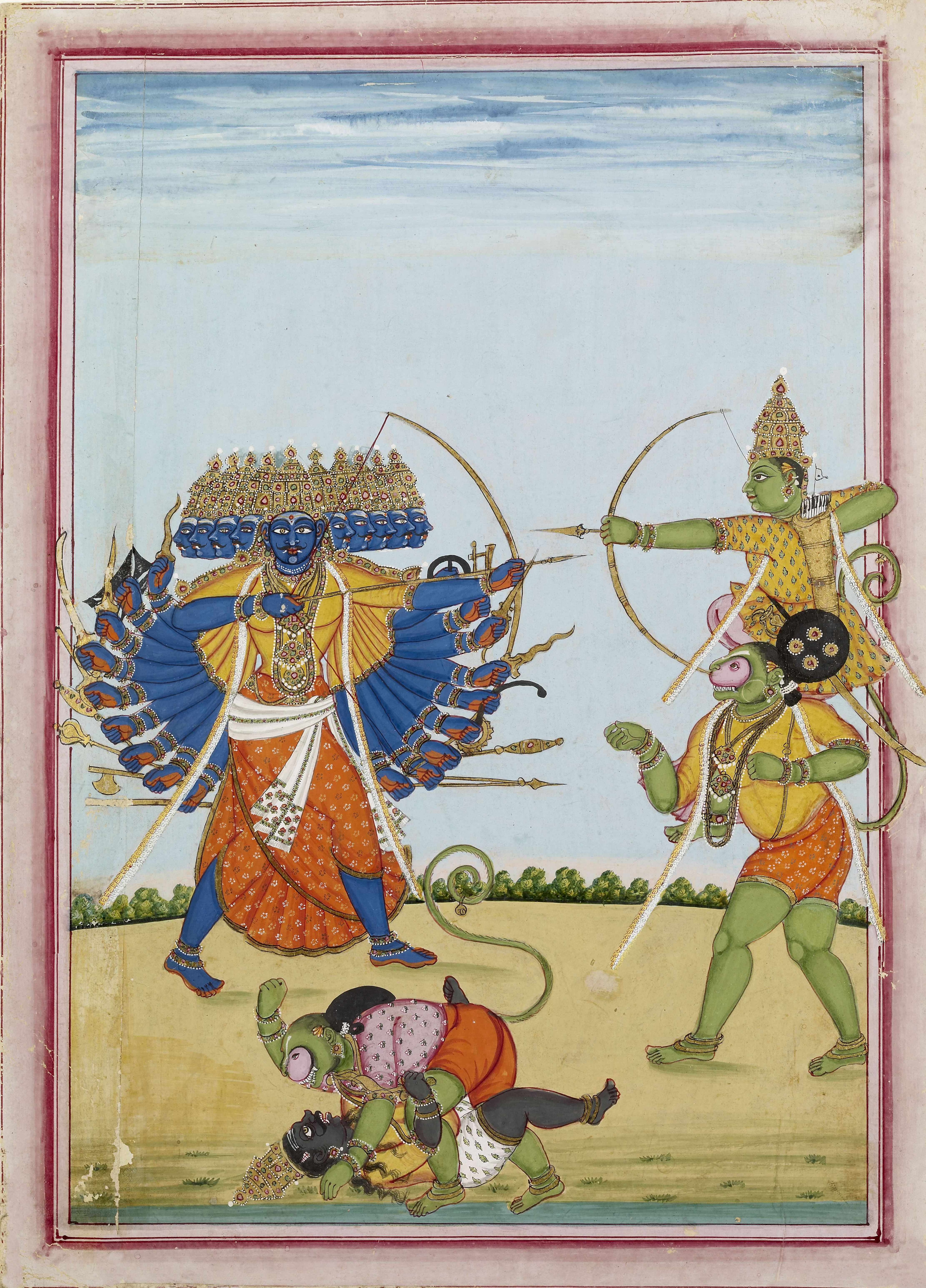
Rama and Lakshmana discover the kidnapping, worry about Sita's safety, despair at the loss and their lack of resources to take on Ravana. Their struggles now reach new heights. They travel south, meet Sugriva, marshall an army of monkeys, and attract dedicated commanders such as Hanuman who was a minister of Sugriva. Meanwhile, Ravana harasses Sita to be his wife, queen or goddess. Sita refuses him. Ravana gets enraged and ultimately reaches Lanka, fights in a war that has many ups and downs, but ultimately Rama prevails, kills Ravana and forces of evil, and rescues his wife Sita. They return to Ayodhya.
Post-war life
The return of Rama to Ayodhya was celebrated with his coronation. It is called Rama pattabhisheka, and his rule itself as Rama rajya described to be a just and fair rule. It is believed by many that when Rama returned people celebrated their happiness with diyas (lamps), and the festival of Diwali is connected with Rama's return.
Upon Rama's accession as king, rumours emerge that Sita may have gone willingly when she was with Ravana; Sita protests that her capture was forced. Rama responds to public gossip by renouncing his wife and asking her to prove her chastity in front of Agni (fire). She does and passes the test. Rama and Sita live happily together in Ayodhya, have twin sons named Kusha and Lava, in the Ramayana and other major texts. However, in some revisions, the story is different and tragic, with Sita dying of sorrow for her husband not trusting her, making Sita a moral heroine and leaving the reader with moral questions about Rama. In these revisions, the death of Sita leads Rama to drown himself. Through death, he joins her in afterlife. Depiction of Rama dying by drowning himself and then emerging in the sky as a six-armed incarnate of Vishnu is found in the Burmese version of Rama's life story called Thiri Rama.
Variations
_LACMA_AC1999.127.36.jpg)
Rama's legends vary significantly by the region and across manuscripts. While there is a common foundation, plot, grammar and an essential core of values associated with a battle between good and evil, there is neither a correct version nor a single verifiable ancient one. According to Paula Richman, there are hundreds of versions of "the story of Rama in India, Southeast Asia and beyond". The versions vary by region reflecting local preoccupations and histories, and these cannot be called "divergences or different tellings" from the "real" version, rather all the versions of Rama story are real and true in their own meanings to the local cultural tradition, according to scholars such as Richman and Ramanujan.
The stories vary in details, particularly where the moral question is clear, but the appropriate ethical response is unclear or disputed. For example, when demoness Shurpanakha disguises as a woman to seduce Rama, then stalks and harasses Rama's wife Sita after Rama refuses her, Lakshmana is faced with the question of appropriate ethical response. In the Indian tradition, states Richman, the social value is that "a warrior must never harm a woman". The details of the response by Rama and Lakshmana, and justifications for it, has numerous versions. Similarly, there are numerous and very different versions to how Rama deals with rumours against Sita when they return victorious to Ayodhya, given that the rumours can neither be objectively investigated nor summarily ignored. Similarly the versions vary on many other specific situations and closure such as how Rama, Sita and Lakshmana die.
The variation and inconsistencies are not limited to the texts found in the Hinduism traditions. The Rama story in the Jain tradition also show variation by author and region, in details, in implied ethical prescriptions and even in names – the older versions using the name Padma instead of Rama, while the later Jain texts just use Rama.
Dating and historicity

In some Hindu texts, Rama is stated to have lived in the Treta Yuga that their authors estimate existed before about 5000 BCE. Archaeologist H. D. Sankalia, who specialised in Proto- and Ancient Indian history, find such estimate to be "pure speculation". Sankalia states that incidents of the Ramayana story could have taken place between 1,500-700 BCE.
The composition of Rama's epic story, the Ramayana, in its current form is usually dated between 8th and 4th century BCE. According to John Brockington, a professor of Sanskrit at Oxford known for his publications on the Ramayana, the original text was likely composed and transmitted orally in more ancient times, and modern scholars have suggested various centuries in the 1st millennium BCE. In Brockington's view, "based on the language, style and content of the work, a date of roughly the fifth century BCE is the most reasonable estimate".
Historians often highlight that Rama's narrative reflects not only religious beliefs but also societal ideals and moral principles. They explore the possibility of Rama being a composite figure, embodying virtues and qualities valued in ancient Indian society. This perspective underscores the Ramayana's role as both a religious scripture and a cultural artifact, illustrating how legends like Rama's have shaped India's collective consciousness and ethical frameworks over centuries. Ariel Glucklich about this, quoted: "[...] Rama serve not only as historical narratives but also as moral and spiritual teachings, shaping cultural identity and religious beliefs in profound ways."
Iconography and characteristics

Rama iconography shares elements of avatars of Vishnu, but has several distinctive elements. He has two hands, holds a bana (arrow) in his right hand, while he holds the dhanus (bow) in his left. The most recommended icon for him is that he be shown standing in tribhanga pose (thrice bent "S" shape). He is shown black, blue or dark color, typically wearing reddish color clothes. Rama is often accompanied with his brother Lakshmana on his left side while his consort Sita always on his right, both of golden-yellow complexion. His monkey companion Hanuman stands nearby with folded arms. The group can be accompanied with Rama's brothers Bharata and Shatrughna too.
The Ramayana describes Rama as a charming, well built person of a dark complexion (varṇam śyāmam) and long arms (ājānabāhu, meaning a person whose middle finger reaches beyond their knee). In the Sundara Kanda section of the epic, Hanuman describes Rama to Sita when she is held captive in Lanka, to prove to her that he is indeed a messenger from Rama. He says:
he has his clavicle concealed and is known by the people as Rama. He has a voice (deep) like the sound of a kettledrum and glossy skin, is full of glory, square-built, and of well-proportioned limbs and is endowed with a dark-brown complexion.}}
Philosophy and symbolism
Main article: Symbolism of Rama,

Rama's life story is imbued with symbolism. According to Sheldon Pollock, the life of Rama as told in the Indian texts is a masterpiece that offers a framework to represent, conceptualise and comprehend the world and the nature of life. Like major epics and religious stories around the world, it has been of vital relevance because it "tells the culture what it is". Rama's life is more complex than the Western template for the battle between the good and the evil, where there is a clear distinction between immortal powerful gods or heroes and mortal struggling humans. In the Indian traditions, particularly Rama, the story is about a divine human, a mortal god, incorporating both into the exemplar who transcends both humans and gods.
A superior being does not render evil for evil, this is the maxim one should observe; the ornament of virtuous persons is their conduct. (...) A noble soul will ever exercise compassion even towards those who enjoy injuring others. (Abridged, Translator: Roderick Hindery) As a person, Rama personifies the characteristics of an ideal person (purushottama).{{cite journal| author = Hess, L.| year = 2001| title = Rejecting Sita: Indian Responses to the Ideal Man's Cruel Treatment of His Ideal Wife| journal = Journal of the American Academy of Religion
According to Rodrick Hindery, Book 2, 6 and 7 are notable for ethical studies. The views of Rama combine "reason with emotions" to create a "thinking hearts" approach. Second, he emphasises through what he says and what he does a union of "self-consciousness and action" to create an "ethics of character". Third, Rama's life combines the ethics with the aesthetics of living.
Rama's life and comments emphasise that one must pursue and live life fully, that all three life aims are equally important: virtue (dharma), desires (kama), and legitimate acquisition of wealth (artha). Rama also adds, such as in section 4.38 of the Ramayana, that one must also introspect and never neglect what one's proper duties, appropriate responsibilities, true interests, and legitimate pleasures are.
Literary sources

''Ramayana''
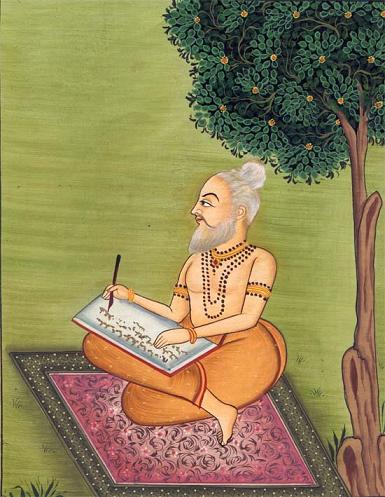
The primary source of the life of Rama is the Sanskrit epic Ramayana composed by Rishi Valmiki. The epic had many versions across India's regions. The followers of Madhvacharya believe that an older version of the Ramayana, the Mula-Ramayana, previously existed. The Madhva tradition considers it to have been more authoritative than the version by Valmiki.
Versions of the Ramayana exist in most major Indian languages; examples that elaborate on the life, deeds and divine philosophies of Rama include the epic poem Ramavataram, and the following vernacular versions of Rama's life story:
- Ramavataram or Kamba-Ramayanam in Tamil by the poet Kambar. (12th century)
- Saptakanda Ramayana in Assamese by poet Madhava Kandali. (14th century)
- Krittivasi Ramayana in Bengali by poet Krittibas Ojha. (15th century)
- Ramcharitmanas in Awadhi by sant Tulsidas. (16th century)
- Pampa Ramayana, Torave Ramayana by Kumara Valmiki and Sri Ramayana Darshanam by Kuvempu in Kannada
- Bhavartha Ramayana in Marathi by Sant Eknath. (16th century)
- Ranganatha Ramayanam () by Ranganatha, and Ramayana Kalpavruksham by Viswanatha Satyanarayana in Telugu
- Vilanka Ramayana in Odia
- Adhyatma Ramayanam Kilippattu in Malayalam by Ezhuttachan (this text is closer to the Advaita Vedanta-inspired rendition Adhyatma Ramayana). (16th century)
The epic is found across India, in different languages and cultural traditions.
In Tamil literature
Main article: Ramayana in Tamil literature
There are several references of the Ramayana in early Tamil literature even before the Ramavataram (Kamba Ramayanam), which seems to indicate that the story of the text was familiar in the Tamil lands even before the 12th century. Tamil Sangam texts like the Akananuru, Purananuru, and the Kalittokai mention scenes of the Ramayana and figures such as Rama, Sita, the ten-faced demon (Ravana), and monkeys. The Tamil epic Cilappatikaram also mentions Rama as the avatar of Vishnu, who measured the three worlds and destroyed the city of Lanka.
''Adhyatma Ramayana''
Adhyatma Ramayana is a late medieval Sanskrit text extolling the spiritualism in the story of Ramayana. It is embedded in the latter portion of Brahmānda Purana, and constitutes about a third of it. The text philosophically attempts to reconcile Bhakti in god Rama and Shaktism with Advaita Vedanta, over 65 chapters and 4,500 verses.
The text represents Rama as the Brahman (metaphysical reality), mapping all attributes and aspects of Rama to abstract virtues and spiritual ideals. Adhyatma Ramayana transposes Ramayana into symbolism of self study of one's own soul, with metaphors described in Advaita terminology. It influenced the popular Ramcharitmanas by Tulsidas, This was also translated by Thunchath Ezhuthachan to Malayalam, which lead the foundation of Malayalam literature itself.
''Ramacharitmanas''

The Ramayana is a Sanskrit text, while Ramacharitamanasa retells the Ramayana in Awadhi, commonly understood in northern India by speakers of the several Hindi languages. Ramacharitamanasa was composed in the 16th century by Tulsidas. The popular text is notable for synthesising the epic story in a Bhakti movement framework, wherein the original legends and ideas morph in an expression of spiritual bhakti (devotional love) for a personal god.
Tulsidas was inspired by Adhyatma Ramayana, where Rama and other figures of the Valmiki Ramayana along with their attributes (saguna narrative) were transposed into spiritual terms and abstract rendering of an Atma (soul, self, Brahman) without attributes (nirguna reality).
The Ramacharitmanas is notable for being the Rama-based play commonly performed every year in autumn, during the weeklong performance arts festival of Ramlila. The "staging of the Ramayana based on the Ramacharitmanas" was inscribed in 2008 by UNESCO as one of the Intangible Cultural Heritages of Humanity.
''Yoga Vasistha''
Main article: Yoga Vasistha
Tr: Christopher Chapple Yoga Vasistha is a Sanskrit text structured as a conversation between young Prince Rama and sage Vasistha who was called as the first sage of the Vedanta school of Hindu philosophy by Adi Shankara. The complete text contains over 29,000 verses. The short version of the text is called Laghu Yogavasistha and contains 6,000 verses. The exact century of its completion is unknown, but has been estimated to be somewhere between the 6th century CE to as late as the 14th century CE, but it is likely that a version of the text existed in the 1st millennium CE.
The Yoga Vasistha text consists of six books. The first book presents Rama's frustration with the nature of life, human suffering and disdain for the world. The second describes, through the figure of Rama, the desire for liberation and the nature of those who seek such liberation. The third and fourth books assert that liberation comes through a spiritual life, one that requires self-effort, and present cosmology and metaphysical theories of existence embedded in stories. These two books are known for emphasising free will and human creative power. The fifth book discusses meditation and its powers in liberating the individual, while the last book describes the state of an enlightened and blissful Rama.
Yoga Vasistha is considered one of the most important texts of the Vedantic philosophy. The text, states David Gordon White, served as a reference on Yoga for medieval era Advaita Vedanta scholars. The Yoga Vasistha, according to White, was one of the popular texts on Yoga that dominated the Indian Yoga culture scene before the 12th century.
''Upanishad''
Rama is the central character in three of the fourteen Vaishnava Upanishads – Rama Rahasya Upanishad, Rama Tapaniya Upanishad and Tarasara Upanishad.
Rama Rahasya Upanishad talks about is largely recited by Hanuman, who states that Rama is identical to the supreme unchanging reality Brahman, same as major Hindu deities, and the means to satcitananda and liberation. The text also includes sections on Tantra suggesting the Bīja mantra based on Rama. The Rama Tapaniya Upanishad, emphasis is on the Rama mantra Rama Ramaya namaha. It presents him as equivalent to the Atman (soul, self) and the Brahman (Ultimate Reality). Tarasara Upanishad describes Rama as Paramatman, Narayana and supreme Purusha (cosmic man), the ancient Purushottama, the eternal, the liberated, the true, the highest bliss, the one without a second.
Other major texts
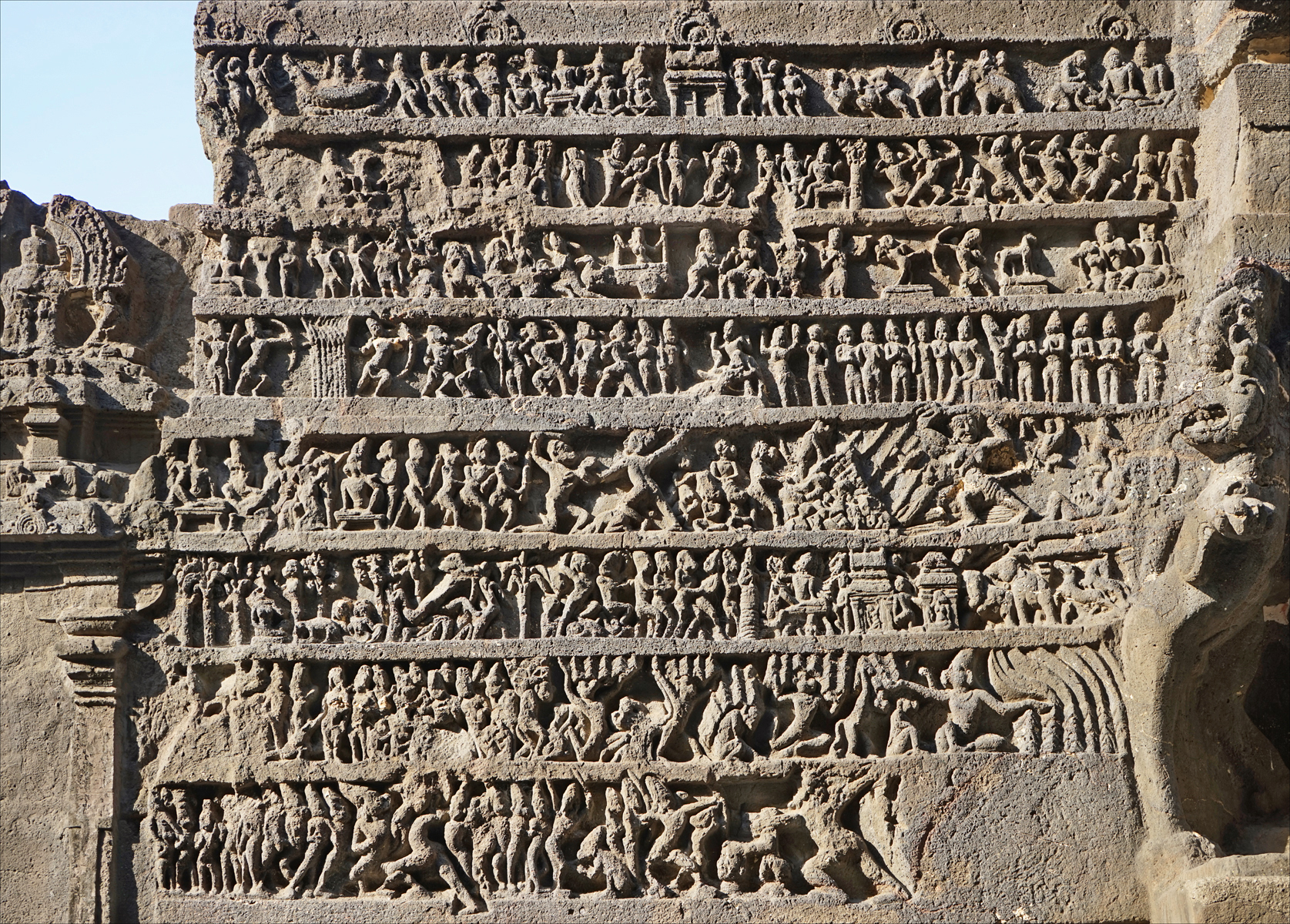
Other important historic Hindu texts on Rama include Bhusundi Ramanaya, Prasanna Raghava, and Ramavali by Tulsidas. The Sanskrit poem Bhaṭṭikāvya of Bhatti, who lived in Gujarat in the seventh century CE, is a retelling of the epic that simultaneously illustrates the grammatical examples for Pāṇini's Aṣṭādhyāyī as well as the major figures of speech and the Prakrit language. Another historically and chronologically important text is Raghuvamsa authored by Kalidasa. Its story confirms many details of the Ramayana, but has novel and different elements. It mentions that Ayodhya was not the capital in the time of Rama's son named Kusha, but that he later returned to it and made it the capital again. This text is notable because the poetry in the text is exquisite and called a Mahakavya in the Indian tradition, and has attracted many scholarly commentaries. It is also significant because Kalidasa has been dated to between the 4th and 5th century CE, suggesting that the Ramayana legend was well established by the time of Kalidasa.
The Mahabharata has a summary of the Ramayana. The Jainism tradition has extensive literature of Rama as well, but generally refers to him as Padma, such as in the Paumacariya by Vimalasuri.
Rama appears in the Puranas namely the Vishnu Purana and Padma Purana (as an avatar of Vishnu), the Matsya Purana (as form of Bhagavan), the Linga Purana (as form of Vishnu), the Kurma Purana,Agni Purana, Garuda Purana (as Rama), the Skanda Purana and the Shiva Purana. Additionally, the Rama story is included in the Vana Parva of the Mahabharata, which has been a part of evidence that the Ramayana is likely more ancient, and it was summarised in the Mahabharata epic in ancient times.
Rama and Sita appears as the central character in Valmiki Samhita, which is attributed to their worship and describes them to be the ultimate reality. Apart from other versions of Ramayana, many 14th-century Vaishnava saints such as Nabha Dass, Tulsidas and Ramananda have their works written about Rama's life. While Ramananda's Sri Ramarchan Paddati explains the complete procedure to worship Sita-Rama, Tulsidas's Vinaya Patrika has devotional hymns dedicated to Rama including Shri Ramachandra Kripalu. Ramananda through his conversation with disciple Surasurananda in Vaishnava Matabja Bhaskara, explains about the worship of Rama, Sita and Lakshmana, and answers the 10 most prominent questions related to Vaishnavism. Vedanta Desika's Hamsa-Sandesha, is a love poem which describes Rama sending message to Sita through a swan.{{cite journal | title = Lovers, Messengers and Beloved Landscapes: Sandeśa Kāvya in Comparative Perspective
Worship and festivals

Vyasa represents Rama as the Brahman (metaphysical reality), mapping all saguna (attributes) of Rama to the nirguna nature (ultimate unchanging attributeless virtues and ideals, in the Adhyatma Ramayana). The text raises every mundane activity of Rama to a spiritual or transcendent level, the story into symbolism, thus instructing the seeker to view his or her own life through the symbolic vision for his soul, where the external life is but a metaphor for the eternal journey of the soul in Advaita terminology.
Hymns
List of prayers and hymns dedicated to Rama are:
- Jai Shri Ram – Greeting or Salutation in North India dedicated to Rama.
- Jai Siya Ram – Greeting or Salutation in North India dedicated to Sita and Rama.
- Siyavar Ramchandraji Ki Jai – Greeting or Salutation dedicated to Sita and Rama. The hymns introduces Rama as Sita's husband.
- Sita-Ram-Sita-Ram – The maha-mantra is as follows: सीता राम सीता राम सीता राम जय सीता राम।।}}
- Hare Rama Rama Rama, Sita Rama Rama Rama.
- Ramashatanamastotra – The hymn dedicated to Rama, which contains 108 names of Rama, mentioned in the Yaga Kanda of Ananda Ramayana.
- Ramastotram – The hymn dedicated to Rama, mentioned in the Vilasa Kanda of Ananda Ramayana.
- *Ramaraksha Mahamantra * – The hymn dedicated to Rama, mentioned in the Janma Kanda of Ananda Ramayana.
- Ramasahasranamastotra – The hymn dedicated to Rama, mentioned in the Rajya Kanda of Ananda Ramayana.
- Rama Kavacha – The hymn dedicated to Rama, mentioned in the Manohar Kanda of Ananda Ramayana.
- Vinaya Patrika – The devotional poem has prayers dedicated to Rama, including Shri Ramachandra Kripalu, which is as follows: नव कञ्ज लोचन कञ्ज मुख कर कञ्ज पद कञ्जारुणं ॥}}
- Janaki Mangal – This verse describes the episode of Sita and Rama's marriage and has hymns and prayers dedicated to them.
- Thumak Chalat Ram Chandra – This devotional song describes the beauty of Rama's face during his childhood.
- Hare Rama Hare Krishna – This hymn is dedicated to both Rama and Krishna, and is as follows: Hare Rama Hare Rama Rama Rama Hare Hare Hare Krishna Hare Krishna Krishna Krishna Hare Hare
Festivals
Rama Navami
Main article: Rama Navami
Rama Navami is a spring festival that celebrates the birthday of Rama. The festival is a part of the spring Navratri, and falls on the ninth day of the bright half of Chaitra month in the traditional Hindu calendar. This typically occurs in the Gregorian months of March or April every year.
The day is marked by recital of Rama legends in temples, or reading of Rama stories at home. Some Vaishnava Hindus visit a temple, others pray within their home, and some participate in a bhajan or kirtan with music as a part of puja and aarti. The community organises charitable events and volunteer meals. The festival is an occasion for moral reflection for many Hindus. Some mark this day by vrata (fasting) or a visit to a river for a dip.
The important celebrations on this day take place at Ayodhya, Sitamarhi, Janakpur (Nepal), Bhadrachalam, Kodandarama Temple, Vontimitta and Rameswaram. Rathayatras, the chariot processions, also known as Shobha yatras of Rama, Sita, his brother Lakshmana and Hanuman, are taken out at several places. In Ayodhya, many take a dip in the sacred river Sarayu and then visit the Rama temple.
Rama Navami day also marks the end of the nine-day spring festival celebrated in Karnataka and Andhra Pradesh called Vasanthothsavam (Festival of Spring), that starts with Ugadi. Some highlights of this day are Kalyanam (ceremonial wedding performed by temple priests) at Bhadrachalam on the banks of the river Godavari in Bhadradri Kothagudem district of Telangana, preparing and sharing Panakam which is a sweet drink prepared with jaggery and pepper, a procession and Rama temple decorations.
Ramlila and Dussehra
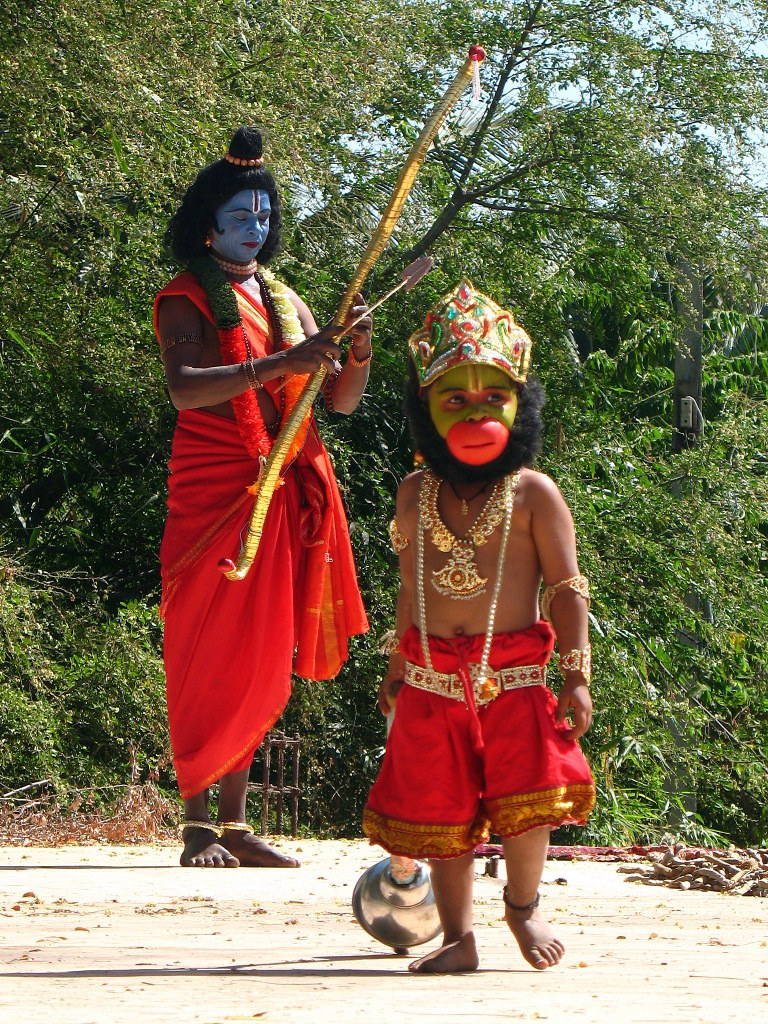
Rama's life is remembered and celebrated every year with dramatic plays and fireworks in autumn. This is called Ramlila, and the play follows the Ramayana or more commonly the Ramcharitmanas. It is observed through thousands of Rama-related performance arts and dance events, that are staged during the festival of Navratri in India. After the enactment of the legendary war between Good and Evil, the Ramlila celebrations climax in the Dussehra (Dasara, Vijayadashami) night festivities where the giant grotesque effigies of Evil such as of demon Ravana are burnt, typically with fireworks.
The Ramlila festivities were declared by UNESCO as one of the "Intangible Cultural Heritages of Humanity" in 2008. Ramlila is particularly notable in historically important Hindu cities of Ayodhya, Varanasi, Vrindavan, Almora, Satna and Madhubani – cities in Uttar Pradesh, Uttarakhand, Bihar and Madhya Pradesh. The epic and its dramatic play migrated into southeast Asia in the 1st millennium CE, and Ramayana based Ramlila is a part of performance arts culture of Indonesia, particularly the Hindu society of Bali, Myanmar, Cambodia and Thailand.
Diwali
In some parts of India, Rama's return to Ayodhya and his coronation is the main reason for celebrating Diwali, also known as the Festival of Lights.
In Guyana, Diwali is marked as a special occasion and celebrated with a lot of fanfare. It is observed as a national holiday in this part of the world and some ministers of the Government also take part in the celebrations publicly. Just like Vijayadashmi, Diwali is celebrated by different communities across India to commemorate different events in addition to Rama's return to Ayodhya. For example, many communities celebrate one day of Diwali to celebrate the Victory of Krishna over the demon Narakasur.
Vasanthotsavam
Vasanthotsavam is an annual Seva celebrated in Tirumala to celebrate the arrival of spring season. Abhishekam - specifically called Snapana Thirumanjanam (Holy bathing), is performed to the utsava murthy and his consorts on all the three days. On the third day, abhishekam is performed to the idols of Rama, Sita, Lakshmana and Hanumana along with Krishna and Rukmini. Procession of the consecrated idols are taken in a procession in the evening on all the three days.
Temples
Main article: Category:Rama temples, thumb, Rama Temple at [[Ramtek]] (10th century, restored). A medieval inscription here calls Rama as ''Advaitavadaprabhu'' or "Lord of the Advaita doctrine".{{cite book

Temples dedicated to Rama are found all over India and in places where Indian migrant communities have resided. In most temples, the iconography of Rama is accompanied by that of his wife Sita and brother Lakshmana. In some instances, Hanuman is also included either near them or in the temple premises.
Hindu temples dedicated to Rama were built by the early 5th century, according to copper plate inscription evidence, but these have not survived. The oldest surviving Rama temple is near Raipur (Chhattisgarh), called the Rajiva-locana temple at Rajim near the Mahanadi river. It is in a temple complex dedicated to Vishnu and dates back to the 7th-century with some restoration work done around 1145 CE based on epigraphical evidence. The temple remains important to Rama devotees in the contemporary times, with devotees and monks gathering there on dates such as Rama Navami.
Some of the Rama temples include:
- Rama Mandir, Ram Janmabhoomi, Ayodhya, Uttar Pradesh.
- Bhadrachalam Temple, Telangana.
- Kodandarama Temple, Vontimitta, Andhra Pradesh.
- Ramateertham Temple, Andhra Pradesh.
- Ramaswamy Temple, Kumbakonam, Tamil Nadu.
- Kola Valvill Ramar Temple, Tiruvelliyangudi, Tamil Nadu.
- Veeraraghava Swamy Temple, Tiruvallur, Tamil Nadu.
- Adi Jagannatha Perumal Temple, Tamil Nadu.
- Ramchaura Mandir, Bihar.
- Mudikondan Kothandaramar Temple, Tamil Nadu.
- Vijayaraghava Perumal temple, Tamil Nadu.
- Punnainallur Kothandaramar Temple, Tamil Nadu.
- Eri-Katha Ramar Temple, Tamil Nadu.
- Kothandarama Temple, Thillaivilagam, Tamilnadu.
- Kothandaramaswamy Temple, Rameswaram, Tamil Nadu.
- Sri Kothanda Ramaswamy Temple, Tamil Nadu.
- Kothandaramar temple, Vaduvur, Tamil Nadu
- Sri Yoga Rama temple, Tamil Nadu.
- Kodandaramaswamy Temple, Tamil Nadu.
- Kothandaramaswami Temple, Nandambakkam, Tamil Nadu.
- Triprayar Sriramaswami Kshetram, Triprayar, Kerala.
- Kalaram Temple, Nashik, Maharashtra.
- Raghunath Temple, Jammu.
- Ram Mandir, Bhubaneswar, Odisha.
- Kodandarama Temple, Chikmagalur, Karnataka.
- Odogaon Raghunath Temple, Odisha.
- Sri Rama Temple, Ramapuram, Kerala.
- Thakurdwara Bhagwan Narainji, Gurdaspur, Punjab
- Vilwadrinatha Temple, Thiruvilwamala, Kerala.
- Gibraltar Hindu Temple, Gibraltar, Britain.
- Perth Ram Temple, Perth, Australia.
Outside Hinduism
Jainism

In Jainism, the earliest known version of the Rama story is variously dated from the 1st to the 5th century CE. This Jain text, credited to Vimalsuri, shows no signs of distinction between Digambara-Svetambara (sects of Jainism), and is in a combination of Maharashtri and Sauraseni languages. These features suggest that this text has ancient roots.
In Jain cosmology, people continue to be reborn as they evolve in their spiritual qualities, until they reach the Jina state and complete enlightenment. This idea is explained as cyclically reborn triads in its Puranas, called the Baladeva, Vasudeva and evil Prati-vasudeva. Rama, Lakshmana and evil Ravana are the eighth triad, with Rama being the reborn Baladeva, and Lakshmana as the reborn Vasudeva. Rama is described to have lived long before the 22nd Jain Tirthankara called Neminatha. In the Jain tradition, Neminatha is believed to have been born 84,000 years before the 9th-century BCE Parshvanatha.
Jain texts tell a very different version of the Rama legend than the Hindu texts, such as those by Valmiki. According to the Jain version, Lakshmana (Vasudeva) is the one who kills Ravana (Prativasudeva). Rama, after he participates in the rescue of Sita and in the preparation for war, does not kill; thus, he remains a non-violent person. The Rama of Jainism has numerous wives as does Lakshmana, unlike the virtue of monogamy given to Rama in the Hindu texts. Towards the end of his life, Rama becomes a Jaina monk then successfully attains siddha, followed by moksha. His first wife, Sita, becomes a Jaina nun at the end of the story. In the Jain version, Lakshmana and Ravana both go to the hell of Jain cosmology, because Ravana killed many, while Lakshmana killed Ravana to stop Ravana's violence. Padmapurana mentions Rama as a contemporary of Munisuvrata, 20th tirthankara of Jainism.
Buddhism
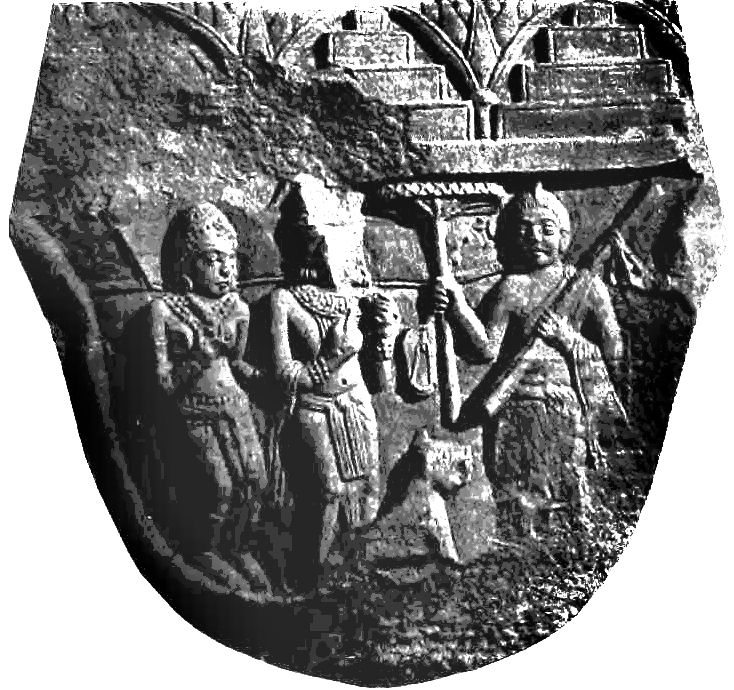
The Dasaratha-Jataka (tale number 461) provides a version of the Rama story. It calls Rama as Rama-pandita.
At the end of this Dasaratha-Jataka discourse, the Buddhist text declares that the Buddha in his prior rebirth was Rama:
|Jataka Tale No. 461|Translator: W.H.D. Rouse}}
While the Buddhist Jataka texts co-opt Rama and make him an incarnation of Buddha in a previous life, the Hindu texts co-opt the Buddha and make him an avatar of Vishnu. The Jataka literature of Buddhism is generally dated to be from the second half of the 1st millennium BCE, based on the carvings in caves and Buddhist monuments such as the Bharhut stupa. The 2nd-century BCE stone relief carvings on Bharhut stupa, as told in the Dasaratha-Jataka, is the earliest known non-textual evidence of Rama story being prevalent in ancient India.
Sikhism

Main article: Rama in Sikhism
Rama is mentioned as one of twenty four divine incarnations of Vishnu in the Chaubis Avtar, a composition in Dasam Granth traditionally and historically attributed to Guru Gobind Singh. The discussion of Rama and Krishna avatars is the most extensive in this section of the secondary Sikh scripture. The name of Rama is mentioned more than 2,500 times in the Guru Granth Sahib and is considered an avatar along with the Krishna.
Influence and depiction

Rama's story has had a major socio-cultural and inspirational influence across South Asia and Southeast Asia.
Few works of literature produced in any place at any time have been as popular, influential, imitated and successful as the great and ancient Sanskrit epic poem, the Valmiki Ramayana. :– Robert Goldman, Professor of Sanskrit, University of California at Berkeley.
According to Arthur Anthony Macdonell, a professor at Oxford and Boden scholar of Sanskrit, Rama's ideas as told in the Indian texts are secular in origin, their influence on the life and thought of people having been profound over at least two and a half millennia. Their influence has ranged from being a framework for personal introspection to cultural festivals and community entertainment. His life stories, states Goldman, have inspired "painting, film, sculpture, puppet shows, shadow plays, novels, poems, TV serials and plays."
Paintings
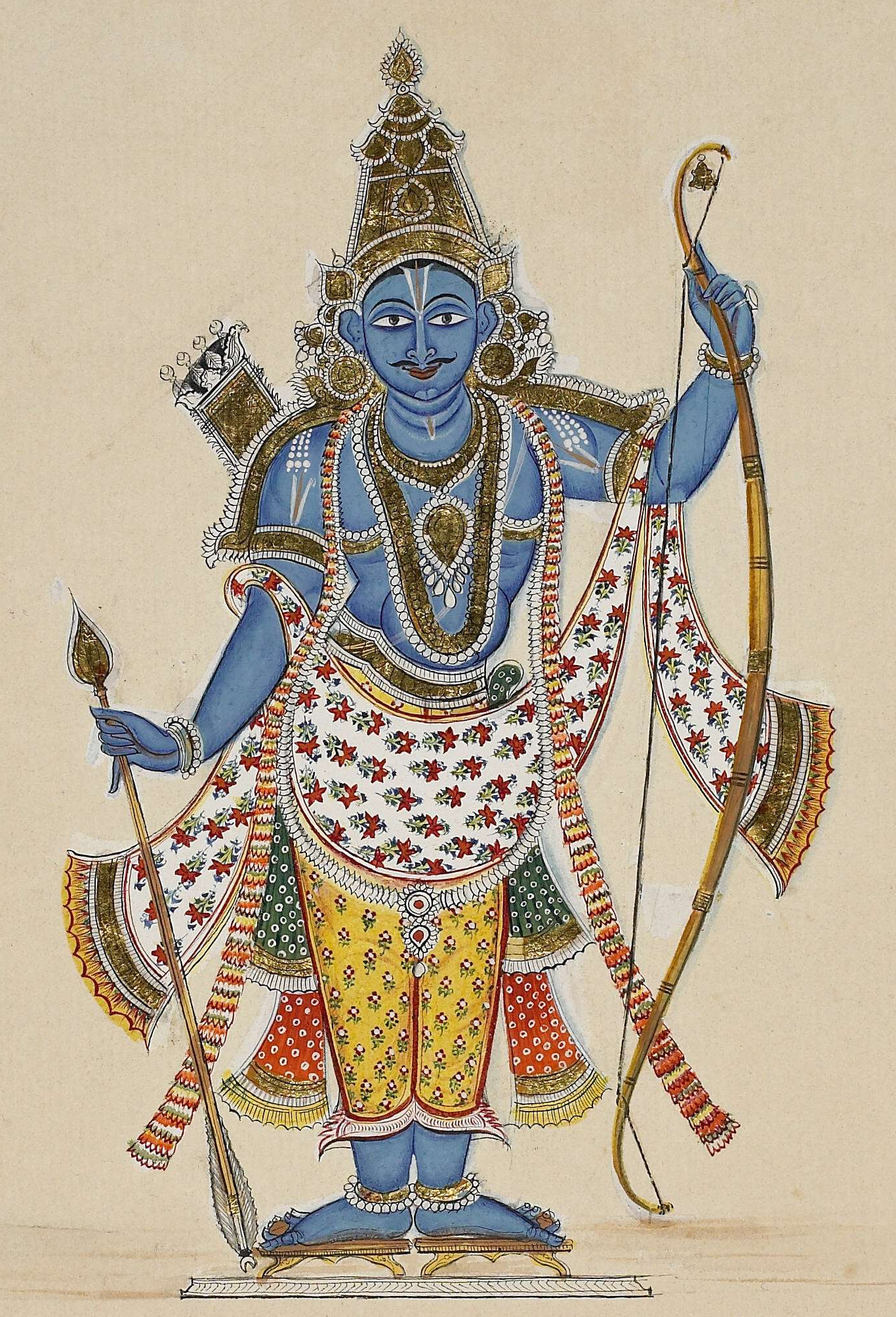
Rama and Sita have inspired many forms of performance arts and literary works. Madhubani paintings are charismatic art of Bihar, and are mostly based on religion and mythology. In the paintings, Hindu gods like Sita-Rama are in center with their marriage ceremony being one of the primary theme. Rama's exile, Sita's abduction and Lanka war have also been depicted in the Rajput paintings.
Music
Rama is a primary figure in Maithili music, of the Mithila region. The folk music genre Lagan, mentions about the problems faced by Rama and Sita during their marriage.
Hindu arts in Southeast Asia
Rama's life story, both in the written form of Sanskrit Ramayana and the oral tradition arrived in southeast Asia in the 1st millennium CE. Rama was one of many ideas and cultural themes adopted, others being the Buddha, the Shiva and host of other Brahmanic and Buddhist ideas and stories. In particular, the influence of Rama and other cultural ideas grew in Java, Bali, Malaya, Burma, Thailand, Cambodia and Laos.
The Ramayana was translated from Sanskrit into old Javanese around 860 CE, while the performance arts culture most likely developed from the oral tradition inspired by the Tamil and Bengali versions of Rama-based dance and plays. The earliest evidence of these performance arts are from 243 CE according to Chinese records. Other than the celebration of Rama's life with dance and music, Hindu temples built in southeast Asia such as the Prambanan near Yogyakarta (Java), and at the Panataran near Blitar (East Java), show extensive reliefs depicting Rama's life. The story of Rama's life has been popular in Southeast Asia.
Main article: Rama (Kings of Thailand)
In the 14th century, the Ayutthaya Kingdom and its capital Ayuttaya was named after the Hindu holy city of Ayodhya, with the official religion of the state being Theravada Buddhism. Thai kings, continuing into the contemporary era, have been called Rama, a name inspired by Rama of Ramakien – the local version of Sanskrit Ramayana, according to Constance Jones and James Ryan. For example, King Chulalongkorn (1853–1910) is also known as Rama V, while King Vajiralongkorn who succeeded to the throne in 2016 is called Rama X.
Culture
In the North Indian region, mainly in Uttar Pradesh and Bihar, people use salutations such as Jai Shri Ram, Jai Siya Ram and Siyavar Ramchandraji Ki Jai. Ramanandi ascetics (called Bairagis) often use chants like "Jaya Sita Ram" and "Sita Ram". The chants of Jai Siya Ram is also common at religious places and gatherings, for example, the Kumbh Mela. It is often used during the recital of Ramayana, Ramcharitmanas, especially the Sundara Kanda.
In Assam, Boro people call themselves Ramsa, which means Children of Ram. In Chhattisgarh, Ramnami people tattooed their whole body with name of Ram.
Rama has been considered as a source of inspiration and has been described as Maryāda Puruṣottama Rāma ().{{Refn|
- |group=lower-greek}} He has been depicted in many films, television shows and plays.
In popular culture
Films
The following people portrayed Rama in the film adaptation of Ramayana.
- Prithviraj Kapoor portrayed him in the 1934 Bengali film Seeta.
- Prem Adib portrayed him in the 1943 Hindi film Ram Rajya.
- N. T. Rama Rao portrayed him in the 1958 Tamil film Sampoorna Ramayanam.
- N. T. Rama Rao Jr portrayed him in the 1997 Telugu film Ramayanam.
- Prem Nazir portrayed him in the 1960 Malayalam film Seeta.
- Kanta Rao portrayed him in the 1968 Telugu film Veeranjaneya.
- Jeetendra portrayed him in the 1997 Hindi film Lav Kush.
- Nikhil Kapoor and Arun Govil voiced him in the 1992 animated film Ramayana: The Legend of Prince Rama.
- Manoj Bajpayee voiced him in the 2010 animated Hindi film Ramayana: The Epic.
- Nandamuri Balakrishna portrayed him in the 2011 Telugu film Sri Rama Rajyam.
- Kunal Kapoor voiced her in the 2016 Hindi animated film Mahayoddha Rama.
- Prabhas portrayed him in the 2023 Hindi film Adipurush.
Television
The following people portrayed Rama in the television adaptation of Ramayana.
- Arun Govil portrayed him in the 1987 series Ramayan and the 1998 series Luv Kush.
- Siraj Mustafa Khan portrayed him in the 1997 series Jai Hanuman.
- Nitish Bharadwaj portrayed him in the 2000 series Vishnu Puran and the 2002 series Ramayan.
- Gurmeet Choudhary portrayed him in the 2008 series Ramayan.
- Debargo Sanyal voiced him in the 2008 America animated series Sita Sings the Blues.
- Piyush Sahdev portrayed him in the 2011 series Devon Ke Dev...Mahadev.
- Gagan Malik portrayed him in the 2012 series Ramayan and the 2015 series Sankat Mochan Mahabali Hanumaan.
- Rajneesh Duggal portrayed him in the 2012 mini-series Ramleela – Ajay Devgn Ke Saath.
- Ashish Sharma portrayed him in the 2015 series Siya Ke Ram.
- Himanshu Soni portrayed him in the 2019 series Ram Siya Ke Luv Kush.
- Waseem Mushtaq portrayed him in the 2019 series Shrimad Bhagwat Mahapuran.
- Diganth portrayed him in the 2021 web series Ramyug.
- Amar Upadhyay and Karan Suchak portrayed him in the 2022 series Jai Hanuman – Sankatmochan Naam Tiharo.
- Sujay Reu portrayed him in the 2024 series Shrimad Ramayan.
- Pavan Sharma portrayed him in 2024 DD National series Kakabhushundi Ramayan- Anasuni Kathayein.
YouTube
- Tarun Chandel portrayed in 2024 YouTube series Valmiki Ramayan
Others
- Rama's life struggles were portrayed in the "Sita-Rama episode" of the 2023 play, Prem Ramayan.
- Shri Ram Janki Medical College and Hospital in Samastipur, Bihar.
Notes
References
Citations
Sources
Bibliography
References
- SATTAR, ARSHIA. (20 October 2020). "Maryada: Searching for Dharma in the Ramayana". [[HarperCollins.
- (5 August 2011). "Dharma Personified".
- "Rama".
- (1999). "Sri Ramacaritamanasa". Motilal Banarsidass.
- "City News, Indian City Headlines, Latest City News, Metro City News".
- [https://web.archive.org/web/20121104195645/http://articles.timesofindia.indiatimes.com/2009-04-02/mysore/28056195_1_ramanavami-music-festival-temples-devotees Ramnavami] ''[[The Times of India]]'', 2 April 2009.
- William H. Brackney. (2013). "Human Rights and the World's Major Religions, 2nd Edition". ABC-CLIO.
- Roderick Hindery. (1978). "Comparative Ethics in Hindu and Buddhist Traditions". Motilal Banarsidass.
- (1990). "The Ramayana of Valmiki: Balakanda". [[Princeton University Press]].
- Dimock, E.C. Jr.. (1963). "Doctrine and Practice among the Vaisnavas of Bengal". History of Religions.
- Marijke J. Klokke. (2000). "Narrative Sculpture and Literary Traditions in South and Southeast Asia". BRILL.
- (1977). "The Ramlila of Ramnagar [India]". The MIT Press.
- {{Harvard citation no brackets. James G. Lochtefeld. 2002
- Jennifer Lindsay. (2006). "Between Tongues: Translation And/of/in Performance in Asia". National University of Singapore Press.
- (2003). "South Asian Folklore: An Encyclopedia : Afghanistan, Bangladesh, India, Nepal, Pakistan, Sri Lanka". Taylor & Francis.
- King, Anna S.. (2005). "The intimate other: love divine in Indic religions". Orient Blackswan.
- Matchett, Freda. (2001). "Krishna, Lord or Avatara?: the relationship between Krishna and Vishnu". 9780700712816.
- Palem, Supreeth. (November 11, 2020). "24-avatars-lord-vishnu".
- {{Harvard citation no brackets. Robin Rinehart. 2011
- (16 October 2016). "Why we put 'a' after each Hindu name".
- {{cite LPD. 3
- "Monier-Williams Sanskrit-English Dictionary --र".
- (1921). "Pali-English Dictionary". Motilal Banarsidass.
- Asko Parpola. (1998). "Studia Orientalia, Volume 84". Finnish Oriental Society.
- (1993). "Allied Chambers transliterated Hindi-Hindi-English dictionary". Allied Publishers.
- (2001). "Sītāpaharaṇam: Changing thematic Idioms in Sanskrit and Tamil. In Dirk W. Lonne ed. Tofha-e-Dil: Festschrift Helmut Nespital, Reinbeck, 2 vols., pp. 783–97". Dr. Inge Wezler, Verlag für Orientalistische Fachpublikationen.
- (2007). "The Rāmāyaṇa of Vālmīki: An Epic of Ancient India. Araṇyakāṇḍa". Motilal Banarsidass.
- [https://archive.org/stream/ShrimadValmikiRamayan-SanskritTextWithHindiTranslation-DpSharma10/ShrimadValmikiRamayan-SktHindi-DpSharmaVol01-BalaKanda1927#page/n177/mode/2up ''Valmiki Ramayana''], ''Bala Kanda''
- Cort. (2010). "Framing the Jina: Narratives of Icons and Idols in Jain History". [[Oxford University Press]].
- Winternitz, Moriz. (1981). "A History of Indian Literature, Volume 1". Motilal Banarsidass Publishers Private Limited.
- A. W. P. Guruge. (1991). "The Society of the Ramayana". Abhinav Publications.
- John Cort. (2010). "Framing the Jina: Narratives of Icons and Idols in Jain History". Oxford University Press.
- Peter van der Veer. (1994). "Religious Nationalism: Hindus and Muslims in India". University of California Press.
- John Cort. (2010). "Framing the Jina: Narratives of Icons and Idols in Jain History". Oxford University Press.
- Rosen, Steven. (2006). "Essential Hinduism". Praeger.
- {{harvnb. Dalal. 2010
- Bhalla, Prem P.. (1 January 2009). "The Story Of Sri Ram". Peacock Books.
- Valmiki. "The Ramayana".
- Debroy, Bibek. (2005). "The History of Puranas". Bharatiya Kala Prakashan.
- Goldman, Robert P.. (1984). "The Rāmāyaṇa of Vālmīki: An Epic of Ancient India". Princeton University Press.
- Ramanujan, A. K.. "Teen Sau Ramayan". Vani Prakashan.
- {{harvnb. Dalal. 2010
- Pargiter, F. E.. (2011). "The Geography of Ráma's Exile". Journal of the Royal Asiatic Society.
- {{harvnb. Hindery. 1978
- (2012-08-16). "The golden deer". The Hindu.
- B. A van Nooten William. (2000). "Ramayana". University of California Press.
- (1996). "The Ramayana of Valmiki: An Epic of Ancient India : Sundarkand". Princeton University Press.
- Ramashraya Sharma. (1986). "A Socio-political Study of the Vālmīki Rāmāyaṇa". Motilal Banarsidass.
- Gregory Claeys. (2010). "The Cambridge Companion to Utopian Literature". Cambridge University Press.
- (1971). "Self-realization Magazine". Self-Realization Fellowship.
- Frye. (2015). "Northrop Frye's Uncollected Prose". [[University of Toronto Press]].
- Rooney. (2017). "The Thiri Rama: Finding Ramayana in Myanmar". [[Taylor & Francis]].
- {{harvnb. Richman. 1991
- A. N. Jani. (2005). "Asian Variations in Ramayana: Papers Presented at the International Seminar on 'Variations in Ramayana in Asia". Sahitya Akademi.
- Monika Horstmann. (1991). "Rāmāyaṇa and Rāmāyaṇas". Otto Harrassowitz Verlag.
- Padmanabh S Jaini. (1993). "Purana Perennis: Reciprocity and Transformation in Hindu and Jaina Texts". State University of New York Press.
- Umakant P. Shah. (2005). "Asian Variations in Ramayana: Papers Presented at the International Seminar on 'Variations in Ramayana in Asia". Sahitya Akademi.
- Dhirajlal Sankalia, Hasmukhlal. (1982). "The Ramayana in historical perspective". [[Macmillan Publishers]].
- Hasmukhlal Dhirajlal Sankalia. (1977). "Aspects of Indian History and Archaeology". B. R. Publishing Corporation.
- Parmeshwaranand, Swami. (2001a). "Encyclopaedic Dictionary of Puranas". Swarup & Sons.
- Simanjuntak, Truman. (2006). "Archaeology: Indonesian Perspective : R.P. Soejono's Festschrift".
- (2016). "The Other Ramayana Women: Regional Rejection and Response". Routledge.
- Yadav, Ramprasad. "Historical and Cultural Analysis of Ramayana: An Overview". International Journal of Historical Studies.
- Menon, Ramesh. "The Ramayana: A Modern Retelling of the Great Indian Epic". [[North Point Press]].
- Cartwright, Mark. (13 September 2015). "Rama".
- Mohan, Urmila. (2018). "Clothing as devotion in Contemporary Hinduism". Brill Research Perspectives in Religion and Art.
- T. A. Gopinatha Rao. (1993). "Elements of Hindu iconography". Motilal Banarsidass.
- (2024-03-29). "Sundar Kand PDF".
- {{harvnb. Valmiki Ramayan
- Roderick Hindery. (1978). "Comparative Ethics in Hindu and Buddhist Traditions". Motilal Banarsidass.
- "Nature and Interior". University of Pittsburgh Press.
- (2007). "The Rāmāyaṇa of Vālmīki: An Epic of Ancient India. Araṇyakāṇḍa". Motilal Banarsidass.
- Gavin Flood. (17 April 2008). "The Blackwell Companion to Hinduism". Wiley India Pvt. Limited.
- Roderick Hindery. (1978). "Comparative Ethics in Hindu and Buddhist Traditions". Motilal Banarsidass.
- Roderick Hindery. (1978). "Comparative Ethics in Hindu and Buddhist Traditions". Motilal Banarsidass.
- Timm, Jeffrey R.. (1 January 1992). "Texts in Context: Traditional Hermeneutics in South Asia". SUNY Press.
- (2006). "Encyclopedia of Hinduism". Infobase Publishing.
- Gilbert Pollet. (1 January 1995). "Indian Epic Values: Rāmāyaṇa and Its Impact : Proceedings of the 8th International Rāmāyaạ Conference, Leuven, 6-8 July 1991". Peeters Publishers.
- link. (25 February 2021 , Moynihan @Maxwell, [[Maxwell School]] of [[Syracuse University]]'s South Asian Center)
- (1904). "A Primer of Tamil Literature". The Ananda Press.
- (1973). "The Smile of Murugan on Tamil Literature of South India". E J Brill.
- (July 2015). "Akananuru: Neytal – Poem 70".
- (1999). "The four hundred songs of war and wisdom : an anthology of poems from classical Tamil : the Puṟanāṉūṟu". Columbia University Press.
- (1950). "Purananuru".
- (20 February 2024). "The Silappadikaram".
- John Nicol Farquhar. (1920). "An Outline of the Religious Literature of India". Oxford University Press.
- RC Prasad. (1989). "Tulasīdāsa's Sriramacharitmanasa". Motilal Banarsidass.
- R. Barz. (1991). "Rāmāyaṇa and Rāmāyaṇas". Otto Harrassowitz Verlag.
- Paniker, K. Ayyappa. (2006). "A Short History of Malayalam Literature". Information & Public Relations Department Kerala State.
- Ralhan 1997, pp. 194–197.
- Pradas 2008, p. 878, quoting J. L. Brockington: ... for in his more personal ''Vinayapatrika'' Tulasi alludes to having visions of Rama.
- Lutgendorf 1991, pp. 49–50.
- {{harvnb. Miller. 2008
- {{harvnb. Varma. 2010
- [https://www.britannica.com/topic/Ramcharitmanas Ramcharitmanas] {{Webarchive. link. (11 April 2017 , Encyclopaedia Britannica (2012))
- {{harvnb. Poddar. 2001
- {{harvnb. Das. 2010
- "Ramlila-The traditional performance of Ramayana".
- {{Harvnb. Chapple. 1984
- {{Harvnb. Chapple. 1984
- {{Harvnb. Leslie. 2003
- {{Harvnb. Chapple. 1984
- Surendranath Dasgupta, A History of Indian Philosophy, Volume 2, Cambridge University Press, {{ISBN. 978-0-521-04779-1, pages 252–253
- {{Harvnb. Chapple. 1984
- Valmiki. (1984). "The Concise Yoga Vāsiṣṭha". State University of New York Press.
- Tigunait, Rajmani. (2002). "The Himalayan Masters: A Living Tradition". [[Himalayan University.
- White, David Gordon. (2014). "The "Yoga Sutra of Patanjali": A Biography". [[Princeton University Press]].
- Deussen, Paul. (1997). "Sixty Upanishads of the Veda". Motilal Banarsidass.
- Kapila Vatsyayan. (2004). "The Ramayana Revisited". Oxford University Press.
- Edmour J. Babineau. (1979). "Love of God and Social Duty in the Rāmcaritmānas". Motilal Banarsidass.
- Bhaṭṭi. (600). "[[Bhaṭṭikāvya]]". [[Clay Sanskrit Library]].
- {{harvnb. Dalal. 2010
- (1916). "Jataka Tales". Cambridge University Press (Reprinted: 2014).
- (1901). "The Jātaka: Or, Stories of the Buddha's Former Births". [[Cambridge University Press]].
- Jaiswal, Suvira. (1993). "Historical Evolution of Ram Legend". Social Scientist.
- Wilson, H. H.. (1840). "The Vishnu Purana: A system of Hindu mythology and tradition". Oriental Translation Fund.
- Kinsley, David. (1988-07-19). "Hindu Goddesses: Visions of the Divine Feminine in the Hindu Religious Tradition". University of California Press.
- Dalal, Roshen. (2017-07-14). "Hinduism and its basic texts". Routledge.
- Buitenen. (1973). "The Mahabharata, Volume 2: Book 2: The Book of Assembly; Book 3: The Book of the Forest". [[University of Chicago Press]].
- Valmiki. (2023-10-06). "Valmiki Samhita (वाल्मीकि संहिता)".
- Bhagavānadāsa, Vaishṇava. (1992). "Ramanand Darshan Samiksha". Prajñā Prakāśana Mañca.
- "Goswāmi Tulasīdās".
- "Stuti Vinay Patrika".
- Varnekar, Dr. Sridhar Bhaskar. (1988). "Sanskrit Vadamay Kosh". Bhartiye Bhasha Parishad.
- Pandey, Dr. Rajbali. (1970). "Hindu Dharma Kosha". Uttar Pradesh Hindi Sansthan.
- (1 January 2006). "Dealing with Deities: The Ritual Vow in South Asia". SUNY Press.
- Larson, Gerald James. (16 February 1995). "India's Agony Over Religion: Confronting Diversity in Teacher Education". SUNY Press.
- {{Harvard citation no brackets. James G. Lochtefeld. 2002
- Lorenzen, David N.. (1999). "Who Invented Hinduism?". Comparative Studies in Society and History.
- (1984). "Vaisnava Sects, Saiva Sects, Mother Worship". Firma KLM Private Ltd..
- "Mahārāj Śri Haridās Jī Kī Vaṇī." In Mahārāj Śri Haridās Jī Kī Vaṇī, edited by Swami Mangaldas. Jaipur: Nikhil Bharatiya Niranjani Mahasabha, 1931.
- [http://spokensanskrit.de/index.php?beginning=0+&tinput=+Adhyatma&trans=Translate Adhyātma], Sanskrit-English Digital Lexicon, Koeln University, Germany (2011)
- "Adhyatma Ramayanam".
- Sadguru Sant Keshavadas. (1988). "Ramayana at a Glance". Motilal Banarsidass Publications.
- Poonam, Snigdha. (13 February 2020). "The 3 Most Polarizing Words in India". Foreign Policy.
- "6.1 Many Ramayanas: text and tradition - The Ramayan".
- Nagar, Shantilal. (2006). "Ananda Ramayana". Parimal Publications.
- "Vinay Patrika website, Kashi Hindu Vishwavidhyalaya".
- "Tulsidas's Janaki Mangal".
- (August 21, 1949). "The Indian Listener: Vol. XIV. No. 20". All India Radio.
- "References to the Maha Mantra (pdf)".
- [http://caitanyacaritamrta.com/adi/5/132/en1 Chaitanya Charitamrita Adi-5.132] {{webarchive. link. (27 September 2007 "if someone says that the "Rama" in "Hare Rama" is Lord Ramacandra and someone else says that the "Rama" in "Hare Rama" is Sri Balarama, both are correct".)
- "City News, Indian City Headlines, Latest City News, Metro City News".
- "Ramanavami, decades-old devotional treat".
- "BBC – Religions – Hinduism: Rama Navami".
- (8 April 2014). "President and PM greet people as India observes Ram Navami today". news.biharprabha.com.
- "National Portal of India".
- John, Josephine. (8 April 2014). "Hindus around the world celebrate Ram Navami today".
- "Sitamarhi {{!}} India".
- "Latest News, India News, Breaking News, Today's News Headlines Online".
- "City News, Indian City Headlines, Latest City News, Metro City News".
- Satpathy, Kriti Saraswat. (14 April 2016). "Did you know these rituals of Ram Navami celebration in Karnataka?".
- Kasbekar, Asha. (2006). "Pop Culture India!: Media, Arts, and Lifestyle". ABC-CLIO.
- Bose. (2004). "The Ramayana Revisited". [[Oxford University Press]].
- N, Ramesan. (1981). "The Tirumala Temple". [[Tirumala Tirupati Devasthanams.
- (2006-04-12). "Vasanthotsavam begins". [[The Hindu]].
- Hans Bakker. (1990). "The History of Sacred Places in India As Reflected in Traditional Literature: Papers on Pilgrimage in South Asia". BRILL.
- (19 April 2013). "Teerthayatra Archival – Bhadrachalam". [[E TV (India).
- Bhat, Rama. (2006i). "The Divine Anjaneya: Story of Hanuman". iUniverse.
- J. L. Brockington. (1998). "The Sanskrit Epics". BRILL.
- Meister, Michael W.. (1988). "Prasada as Palace: Kutina Origins of the Nagara Temple". Artibus Asiae.
- James C. Harle. (1994). "The Art and Architecture of the Indian Subcontinent". Yale University Press.
- (22 January 2024). "Why India's New Ram Temple Is So Important".
- (11 July 2015). "అదిగదిగో భద్రగిరి". [[Namasthe Telangana]].
- Diwakar, Macherla. (2011). "Temples of South India". Techno Book House.
- (2014). "Sri Kolavilli Ramar temple". [[Dinamalar]].
- "Ramchaura Mandir - Hajipur {{!}} Ramchaura Mandir Photos, Sightseeing - Native Planet".
- Karkar, S.C.. (2009). "The Top Ten Temple Towns of India". Mark Age Publication.
- "Vilwadrinatha Temple". PampadyDesam.
- Archer, Edward G.. (2006). "Gibraltar, identity and empire". Routledge.
- John E Cort. (1993). "Purana Perennis: Reciprocity and Transformation in Hindu and Jaina Texts". State University of New York Press.
- Jacobi, Herman. (2005). "Vimalsuri's Paumachariyam". Prakrit Text Society.
- Iyengar, Kodaganallur Ramaswami Srinivasa. (2005). "Asian Variations in Ramayana". Sahitya Akademi.
- Bassuk. (1987). "Incarnation in Hinduism and Christianity: The Myth of the God-Man". [[Macmillan Publishers.
- Edward Geoffrey Parrinder. (1997). "Avatar and Incarnation: The Divine in Human Form in the World's Religions". Oxford: Oneworld.
- (2003). "South Asian Folklore: An Encyclopedia". [[Taylor & Francis]].
- Naomi Appleton. (2010). "Jātaka Stories in Theravāda Buddhism: Narrating the Bodhisatta Path". Ashgate Publishing.
- Mandakranta Bose. (2004). "The Ramayana Revisited". Oxford University Press.
- Singh, Govind. (2005). "Dasamgranth". Munshiram Manoharlal Publishers.
- Doris R. Jakobsh. (2010). "Sikhism and Women: History, Texts, and Experience". [[Oxford University Press]].
- (2010). "The Politics of Sikh Identity: Understanding Religious Exclusion". Sociological Bulletin.
- Goldman, Robert. (2013). "The Valmiki Ramayana". Center for South Asia Studies.
- Sundaram. (2002). "Kamba Ramayana". [[Penguin Books]].
- (30 September 2017). "Madhubani Painting". Abhinav Publications.
- "Rājput painting".
- "Sāhibdīn {{!}} Indian painter {{!}} Britannica".
- Edward O. Henry. (1998). "Maithil Women's Song: Distinctive and Endangered Species". Ethnomusicology.
- "Maithili Music of India and Nepal : SAARC Secreteriat". South Asian Association For Regional Cooperation.
- Willem Frederik Stutterheim. (1989). "Rāma-legends and Rāma-reliefs in Indonesia". Abhinav Publications.
- James R. Brandon. (2009). "Theatre in Southeast Asia". Harvard University Press.
- Brandon. (2009). "Theatre in Southeast Asia". Harvard University Press.
- Jan Fontein (1973), [https://www.jstor.org/stable/4171579 The Abduction of Sitā: Notes on a Stone Relief from Eastern Java] {{Webarchive. link. (6 May 2020 , Boston Museum Bulletin, Vol. 71, No. 363 (1973), pp. 21–35)
- Kats, J.. (1927). "The Ramayana in Indonesia". Cambridge University Press.
- (2010). "A Global History of Architecture". John Wiley & Sons.
- Michael C. Howard. (2012). "Transnationalism in Ancient and Medieval Societies: The Role of Cross-Border Trade and Travel". McFarland.
- (2006). "Encyclopedia of Hinduism". Infobase Publishing.
- Onial, Devyani. (2020-08-06). "From assertive 'Jai Shri Ram', a reason to move to gentler 'Jai Siya Ram'". The Indian Express.
- Wilson, H. H.. (1958). "Religious sects of the Hindus". Susil Gupta (India) Private Ltd..
- MOLESWORTH, James T.. (1857). "A Dictionary English and Maráthí ... commenced by J. T. Molesworth ... completed by T. Candy".
- (2015-08-30). "Chants of 'Jai Shree Ram' fill air as sadhus march for holy dip".
- Balajiwale, Vaishali. (2015-09-14). "More than 25 lakh devotees take second Shahi Snan at Nashik Kumbh Mela".
- (1994). "Encyclopaedia of Indian Cinema". [[British Film Institute]].
- Vijayakumar, B.. (3 August 2014). "Films and the Ramayana". [[The Hindu]].
- Bhagwan Das Garg. (1996). "So many cinemas: the motion picture in India". Eminence Designs.
- "Ramayanam Reviews".
- "Lav Kush (1997)". Bollywood Hungama.
- Nagpaul D'souza, Dipti. (17 September 2010). "Epic Effort". Indian Express.
- "Telugu Review: 'Sri Rama Rajyam' is a must watch". CNN-IBN.
- "Prabhas says he was 'frightened' to play Lord Ram in 'Adipurush'".
- (23 August 2008). "All Indian life is here". [[The Daily Telegraph]].
- "Sita Sings the Blues reviews". [[Metacritic]].
- Bhattacharyya, Anushree. (27 August 2013). "An epic battle". [[The Financial Express (India).
- (7 February 2016). "What helps Ashish Sharma emote better?". Indian Express.
- (6 May 2021). "Ramyug first impression: Kunal Kohli's retelling of Lord Ram's story misses the mark".
- (4 December 2023). "Sujay Reu portrayed him in Sony Entertainment's show Srimad Ramayan".
- (19 May 2023). "Darpan theatre festival: Tales of epic love, sacrifice draw applause". Hindustan Times.
- (21 January 2024). "Nitish dedicates 500-bed hospital named after Lord Ram and goddess Sita".
This article was imported from Wikipedia and is available under the Creative Commons Attribution-ShareAlike 4.0 License. Content has been adapted to SurfDoc format. Original contributors can be found on the article history page.
Ask Mako anything about Rama — get instant answers, deeper analysis, and related topics.
Research with MakoFree with your Surf account
Create a free account to save articles, ask Mako questions, and organize your research.
Sign up freeThis content may have been generated or modified by AI. CloudSurf Software LLC is not responsible for the accuracy, completeness, or reliability of AI-generated content. Always verify important information from primary sources.
Report