From Surf Wiki (app.surf) — the open knowledge base
Railway slide fence
Structural fence designed to physically stop falling rocks from reaching the tracks

Structural fence designed to physically stop falling rocks from reaching the tracks
A slide fence is a structural fence designed to physically stop falling rocks from reaching the tracks. The fence is designed to retain a rockslide if possible, but if it is displaced by such it also can cause the signaling system to display a restrictive aspect to approaching trains.
Operation
Mechanical
The mechanical slide fence parallel to the rails consists of a series of tensioned wires strung about 10 in apart on poles. When a rock slide occurs, one or more of the wires may break, allowing heavy weights attached to either end to drop. This triggers the protecting signals to the 'danger' position.
Electrical
There are two types of electrical slide fences in operation, as described in section 5.1.12 of the AREMA C&S Manual.
One type of electrical slide fence consists of a series of parallel conductive wires strung about 8 in apart on poles that create a fence parallel to the rails. An electrical circuit through these wires is monitored by signaling equipment. In normal operation, the electric current in the fence wires continuously energizes a relay, sending an indication that the fence is intact. If a rock slide occurs, one or more of the wires is broken, interrupting the current. This allows the relay to open, indicating that a slide has occurred thus causing the approaching signals to display a stop or slow aspect. Restoring normal operation requires splicing the broken fence wires back together after the right of way has been cleared.
Another type of slide fence is similar except that the wires do not have to break and thus it is easier to maintain and reset. This slide fence consists of a series of fence sections, typically as shown in the SLIDE FENCE DETAIL drawing (pictured right). Each fence section is held in place by strong springs. At each end are electro-mechanical plugs, which maintain a continuous electrical circuit that is monitored by signaling equipment. In normal operation, the current through the plugs energizes a relay, thus indicating that the fence is in place. When a rock slide occurs, the fence moves laterally, causing a plug to pull out. This breaks the circuit, allowing the relay to denergize thus preventing the approaching signals from displaying unrestricted aspects.
Structural fence
The structural fence is a physical barrier designed to stop falling rocks from reaching the tracks. Several methods are used, including steel I-beams, wooden barriers, and galvanized fencing. Alternatively, netting can be installed directly against the rock.
Where used
North America
A slide fence is typically found in a rock-cut area, where rocks could fall on the track and present a danger to approaching trains. The length of the fence may range from 100 ft to several miles (kilometers), depending on the length of the rock cut and the area being protected. The slide fence is usually located on the uphill side of the track in the slide area.
Europe

Consequences of slide fence activation
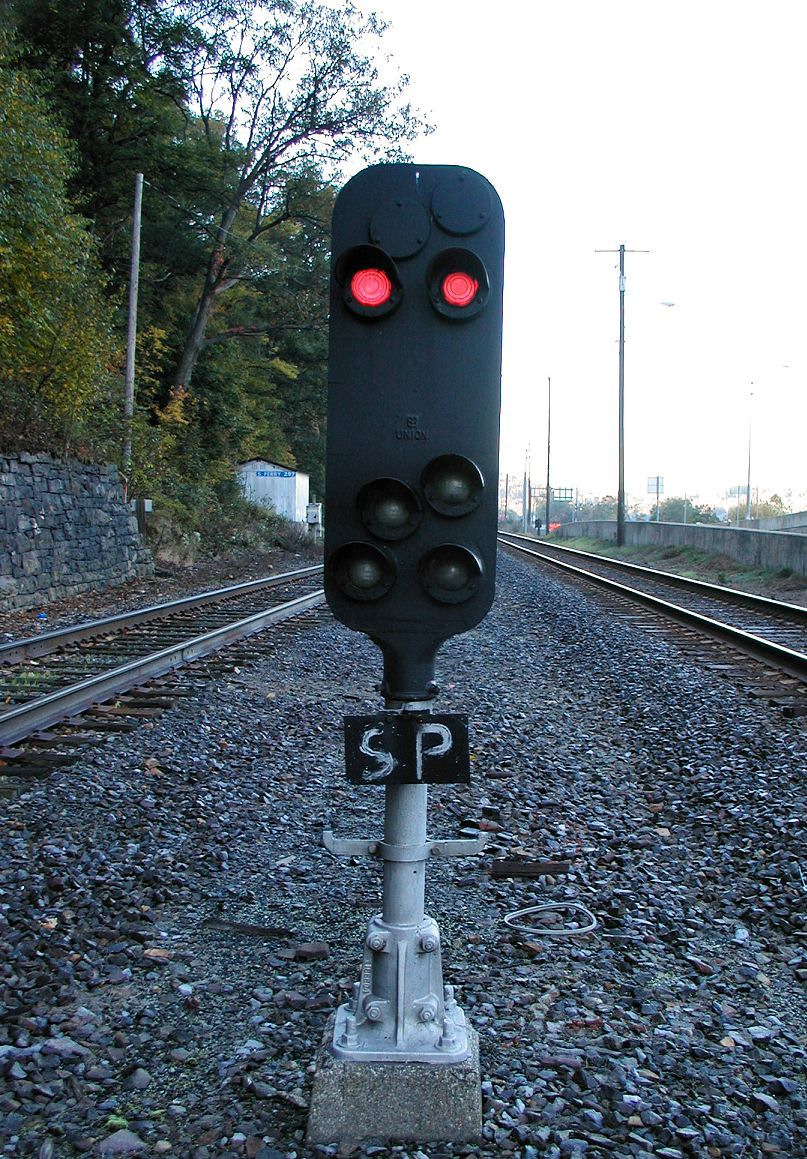
In North America slide fences are typically connected in such a way as to shunt the track circuit when activated. This causes signals on either side of the slide fence to display a restricting indication, requiring trains to travel at a speed enabling them to stop within one-half the range of vision. On lines formerly operated by the Pennsylvania Railroad, signals connected to a slide detector have an 'SP' placard, reminding engineers to watch for slides when governed by any restrictive speed signal.
Alternatives
Several alternative technologies have been tried to solve the rock slide problem, including:
- Acoustic sensing
- Avalanche control
- Electromagnetic sensing
- Fiber optics buried parallel to ROW
- Seismic sensing
- Distributed acoustic sensing
- Visual sensing, using cameras
References
References
- "Railway Signalling and Operations, Glossary of Signalling Terms".
- [http://www.arema.org/ The American Railway Engineering and Maintenance of Way Association]
- [http://www.patentstorm.us/patents/6216985-description.html US Patent 6216985 Railway hazard acoustic sensing, locating, and alarm system] {{webarchive. link. (2007-09-29)
- "Weir-Jones Engineering RockFall - Seismic RockFall Detection System".
- [http://www.tc.gc.ca/TDC/publication/pdf/13900/13928e.pdf/ Railway Rockfall Electromagnetic Field Disturbance Sensing System Development and Test Results] {{webarchive. link. (2008-12-03)
- Lustig, David. (May 28, 2023). "Rockslide detectors are a critical device". [[Kalmbach Media.
- [https://archive.today/20070420160140/http://www.tc.gc.ca/tdc/projects/rail/h/5656.htm/ Transport Canada Seismic Rail line rockfall monitoring]
- (2023-10-31). "Railway-News eMagazine Issue 4 2023 by a2b Global Media - Issuu".
This article was imported from Wikipedia and is available under the Creative Commons Attribution-ShareAlike 4.0 License. Content has been adapted to SurfDoc format. Original contributors can be found on the article history page.
Ask Mako anything about Railway slide fence — get instant answers, deeper analysis, and related topics.
Research with MakoFree with your Surf account
Create a free account to save articles, ask Mako questions, and organize your research.
Sign up freeThis content may have been generated or modified by AI. CloudSurf Software LLC is not responsible for the accuracy, completeness, or reliability of AI-generated content. Always verify important information from primary sources.
Report