From Surf Wiki (app.surf) — the open knowledge base
Rafat, Salfit
Town in Salfit Governorate, West Bank
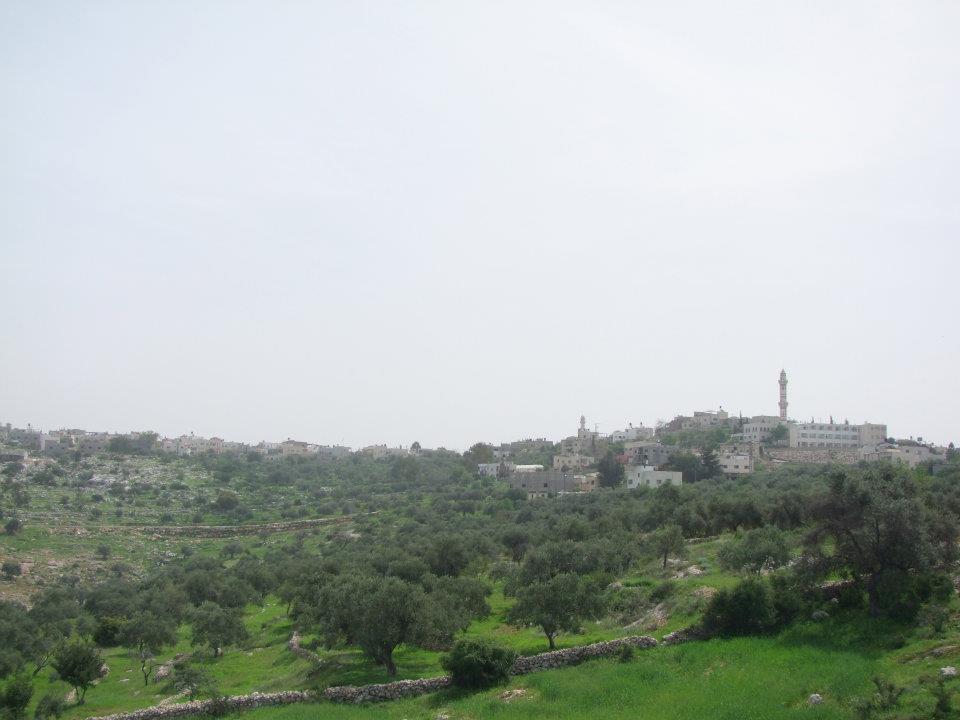
Town in Salfit Governorate, West Bank
| Field | Value |
|---|---|
| name | Rafat |
| translit_lang1 | Arabic |
| translit_lang1_type | Arabic |
| translit_lang1_info | رافات |
| translit_lang1_type1 | Latin |
| translit_lang1_info1 | Rafat (official) |
| type | Municipality type D (Village council) |
| image_skyline | File:ZawiyaWestBank.JPG |
| image_caption | Rafat in the front, az-Zawiya in the back |
| pushpin_map | Palestine |
| pushpin_map_caption | Location of Rafat within Palestine |
| coordinates | |
| grid_name | Palestine grid |
| grid_position | 154/164 |
| subdivision_type | State |
| subdivision_name | State of Palestine |
| subdivision_type1 | Governorate |
| subdivision_name1 | Salfit |
| established_title | Founded |
| government_footnotes | tags -- |
| government_type | Village council |
| unit_pref | dunam |
| elevation_footnotes | |
| elevation_m | 293 |
| population_footnotes | |
| population_total | 2522 |
| population_as_of | 2017 |
| population_density_km2 | auto |
| blank_name_sec1 | Name meaning |
| blank_info_sec1 | Rafat, personal name, meaning "acts of kindness" |
Rafat () is a Palestinian town in the Salfit Governorate of the State of Palestine, in the northern West Bank, 38 kilometers southwest of Nablus. According to the Palestinian Central Bureau of Statistics, it had a population of 2,522 in 2017.
Location
Rafat is 13 km west of Salfit. It is south of az-Zawiya, north east of Deir Ballut, north west of Kafr ad-Dik, and east of Kafr Qasem.
History
Sherds from the Iron Age II, Persian, Hellenistic/Roman, Byzantine, Crusader/Ayyubid and Mamluk eras have been found here.
Three olive oil installations dating from the Iron Age have been found here, alongside a white mosaic pavement.
Ottoman era
In 1517, the village was included in the Ottoman Empire with the rest of Palestine, and potsherds from the early Ottoman period have been found here.
In the 18th and 19th centuries, Rafat formed part of the highland region known as Jūrat ‘Amra or Bilād Jammā‘īn. It was situated between Dayr Ghassāna in the south, and Majdal Yābā, Jammā‘īn, Mardā and Kifl Ḥāris in the east. According to historian Roy Marom, it served as a buffer zone between Jerusalem and Nablus, and suffered from instability due to the migration of Bedouin tribes and infighting among local clans for the right to collect taxes on behalf of the Ottoman authorities."
In 1838, Rafat was described as a Muslim village in Jurat Merda, south of Nablus. The area was dotted by ruins.
In 1870, Victor Guérin found a number of ancient cisterns, a rectangular birket cut in the rock measuring 15 paces long by 10 broad, and several tombs. In 1870/1871 (1288 AH), an Ottoman census listed the village in the nahiya (sub-district) of Jamma'in al-Thani, subordinate to Nablus. In 1882, the PEF's Survey of Western Palestine (SWP) described Rafat as "a semi-ruinous stone village on a ridge, apparently an ancient site, with a very conspicuous Mukam on a piece of rock west of the village, and rock-cut tombs. The water supply is from wells and cisterns." They further noted: "On the north-west of the village is a steep rocky descent, in which are two tombs of the kind called 'rock-sunk', one of which is cut in a square block of rock, the top of which is levelled."
British Mandate era
In the 1922 census of Palestine conducted by the British Mandate authorities, Rafat had a population of 92, all Muslim, increasing in the 1931 census to 127, still all Muslim, in a total of 31 houses.
In the 1945 statistics the population of Rafat was 180, all Muslims, while the total land area was 8,125 dunams, according to an official land and population survey. Of this, 1,889 dunams were used for cereals, while 24 dunams were classified as built-up (urban) areas.
File:Rafat 1943.jpg|Rafat 1943 1:20,000 File:Biddya 1945.jpg|Rafat 1945 1:250,000
Jordanian era
In the wake of the 1948 Arab–Israeli War, and after the 1949 Armistice Agreements, Rafat came under Jordanian rule.
In 1961, the population was 375.
Post-1967
Since the Six-Day War in 1967, Rafat has been under Israeli occupation.
After the 1995 accords, 7.5% of the village land was classified as Area B, the remaining 92.5% as Area C. According to ARIJ, Israel has confiscated 101 dunams of land from Rafat and land from Zawiya for the Israeli quarry of "Mazor Atiqa". This quarry is now on the Israeli side of the separation wall, and Israel exports 94% of the materials extracted from it to Israel. This in a clear violation of the international law, which does not permit any civil occupation to exploit natural resources in occupied territories for their economic favour.
Notable people
- Yahya Ayyash
References
Bibliography
References
- [http://vprofile.arij.org/salfit/pdfs/vprofile/Rafat_vp_en.pdf Rafat village profile], ARIJ, p. 4
- (February 2018). "Preliminary Results of the Population, Housing and Establishments Census, 2017". [[State of Palestine]].
- Palmer, 1881, p. [https://archive.org/stream/surveyofwesternp00conduoft#page/240/mode/1up 240]
- Finkelstein et al, 1997, pp. 254–255
- Dauphin, 1998, p. 815
- It appeared in the 1596 [[daftar. tax-records]] as '''Arafat'', located in the ''[[Nahiya]]'' of Jabal Qubal of the ''[[Liwa (Arabic). Liwa]]'' of [[Nablus Sanjak. Nablus]]. The population was 6 households, all [[Muslim]]. In addition to sporadic income and a fixed tax for residents of the Nablus region, they paid a fixed tax rate of 33.3% on agricultural products like wheat, barley, summer crops, olive trees, goats, and beehives; a total of 3,100 [[akçe]].Hütteroth and Abdulfattah, 1977, p. 134
- Marom, Roy. (2022-11-01). "Jindās: A History of Lydda's Rural Hinterland in the 15th to the 20th Centuries CE". Lod, Lydda, Diospolis.
- Robinson and Smith, 1841, vol 3, Appendix 2, p. [https://archive.org/stream/biblicalresearch03robiuoft#page/126/mode/1up 126]
- Robinson and Smith, 1841, vol 3, p. [https://archive.org/stream/biblicalresearch03robiuoft#page/n37/mode/1up 20]
- Guérin, 1875, pp. 129 -[https://archive.org/stream/descriptiongogr04gugoog#page/n155/mode/1up 130]; as given in Conder and Kitchener, 1882, SWP II, p. [https://archive.org/stream/surveyofwesternp02conduoft#page/367/mode/1up 367]
- Guérin, 1875, p.[https://books.google.com/books?id=QA-5U1MEUaUC 130]: le roc et mesurant 15 pas de long sur 1o de large. Sur les pentes de la colline ont été pratiqués plusieurs tombeaux, dont la forme est celle d'auges ou de fosses creusées perpendiculairement dans le roc, à fleur du sol; elles étaient fermées jadis au moyen soit d'un couvercle en dos d'âne,soit tout simplement de gros blocs monolithes plus ou moins bien équarris, comme on l'observe, par exemple, pour les tombeaux du Kharbet el-Medieh, à l'endroit appelé ''Kharbet el-Yehoud''.
- Grossman, David. (2004). "Arab Demography and Early Jewish Settlement in Palestine". Magnes Press.
- Conder and Kitchener, 1882, SWP II, p. [https://archive.org/stream/surveyofwesternp02conduoft#page/286/mode/1up 286]
- Conder and Kitchener, 1882, SWP II, p. [https://archive.org/stream/surveyofwesternp02conduoft#page/367/mode/1up 367]
- Barron, 1923, Table IX, p. [https://archive.org/stream/PalestineCensus1922/Palestine%20Census%20%281922%29#page/n28/mode/1up 26]
- Mills, 1932, p. [https://archive.org/details/CensusOfPalestine1931.PopulationOfVillagesTownsAndAdministrativeAreas 64]
- Government of Palestine, Department of Statistics, 1945, p. [http://users.cecs.anu.edu.au/~bdm/yabber/census/VSpages/VS1945_p19.jpg 19]
- Government of Palestine, Department of Statistics. ''Village Statistics, April, 1945.'' Quoted in Hadawi, 1970, p. [http://www.palestineremembered.com/download/VillageStatistics/Table%20I/Nablus/Page-060.jpg 60]
- Government of Palestine, Department of Statistics. ''Village Statistics, April, 1945.'' Quoted in Hadawi, 1970, p. [http://www.palestineremembered.com/download/VillageStatistics/Table%20II/Nablus/Page-107.jpg 107]
- Government of Palestine, Department of Statistics. ''Village Statistics, April, 1945.'' Quoted in Hadawi, 1970, p. [http://www.palestineremembered.com/download/VillageStatistics/Table%20III/Nablus/Page-157.jpg 157]
- Government of Jordan, Department of Statistics, 1964, p. [http://users.cecs.anu.edu.au/~bdm/yabber/census/JordanCensusPages/JordanCensus1961-p26.pdf 26]
- [http://vprofile.arij.org/salfit/pdfs/vprofile/Rafat_vp_en.pdf Rafat village profile], ARIJ, p. 17
This article was imported from Wikipedia and is available under the Creative Commons Attribution-ShareAlike 4.0 License. Content has been adapted to SurfDoc format. Original contributors can be found on the article history page.
Ask Mako anything about Rafat, Salfit — get instant answers, deeper analysis, and related topics.
Research with MakoFree with your Surf account
Create a free account to save articles, ask Mako questions, and organize your research.
Sign up freeThis content may have been generated or modified by AI. CloudSurf Software LLC is not responsible for the accuracy, completeness, or reliability of AI-generated content. Always verify important information from primary sources.
Report