From Surf Wiki (app.surf) — the open knowledge base
Race (biology)
Informal rank in the taxonomic hierarchy, below the level of subspecies
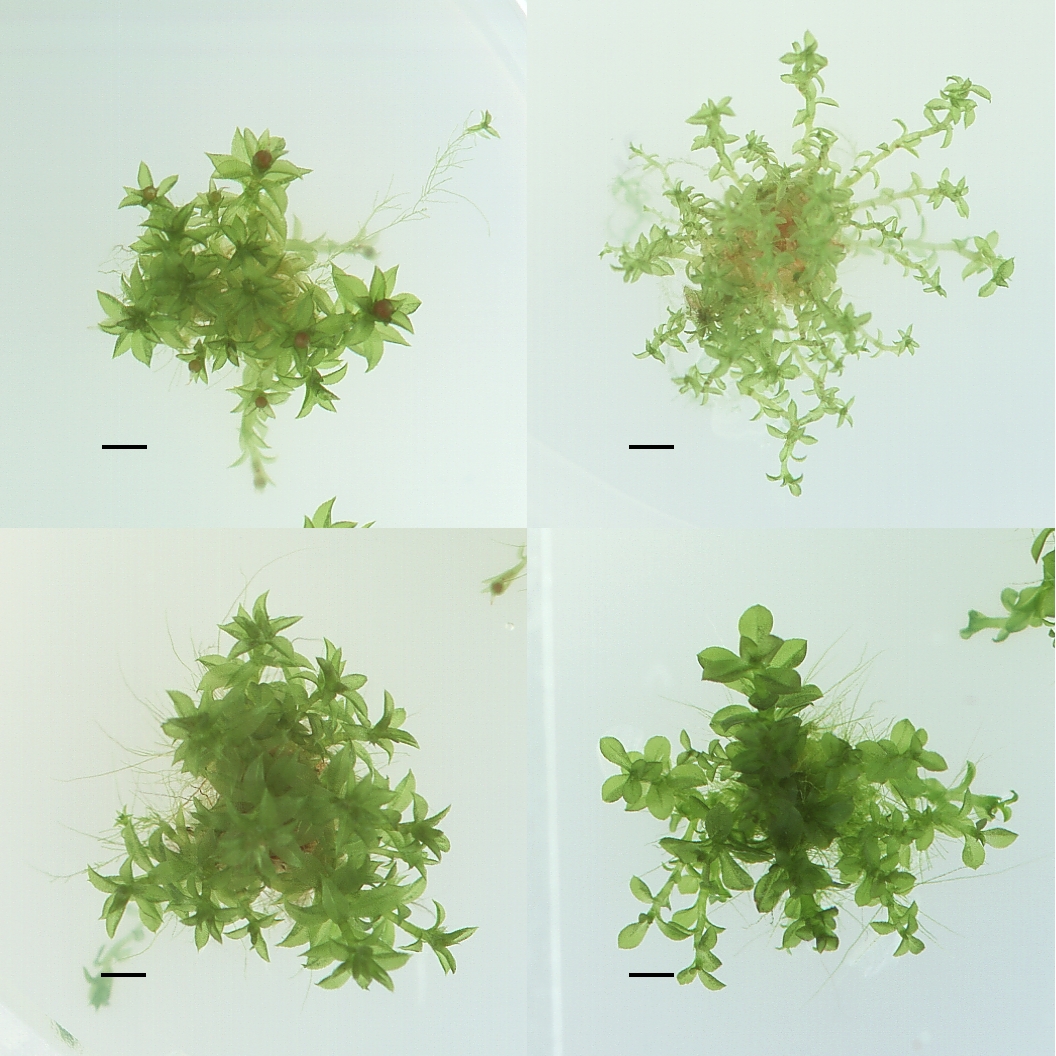
Informal rank in the taxonomic hierarchy, below the level of subspecies
taxonomy
In biological taxonomy, race is an informal rank in the taxonomic hierarchy for which various definitions exist. Sometimes it is used to denote a level below that of subspecies, while at other times it is used as a synonym for subspecies. It has been used as a higher rank than strain, with several strains making up one race. Races may be genetically distinct populations of individuals within the same species, or they may be defined in other ways, e.g. geographically, or physiologically. Genetic isolation between races is not complete, but genetic differences may have accumulated that are not (yet) sufficient to separate species.
The term is recognized by some, but not governed by any of the formal codes of biological nomenclature. Taxonomic units below the level of subspecies are not typically applied to animals.
Other terms
In botany, the Latin words stirps and proles were traditionally used, and proles was recommended in the first botanical Code of Nomenclature, published in 1868.
Definitional approaches
Races are defined according to any identifiable characteristic, including gene frequencies. "Race differences are relative, not absolute." Adaptive differences that distinguish races can accumulate even with substantial gene flow and clinal (rather than discrete) habitat variation. Hybrid zones between races are semi-permeable barriers to gene flow, see for example the chromosome races of the Auckland tree wētā.
The term race has also historically been used in relation to domesticated animals, as another term for breed; this usage survives in combining form, in the term landrace, also applied to domesticated plants. The cognate words for race in many languages (; ; ) may convey meanings the English word does not, and are frequently used in the sense of 'domestic breed'.
Distinguishing from other taxonomic ranks
If the races are sufficiently different or if they have been tested to show little genetic connection regardless of phenotype, two or more groups/races can be identified as subspecies or (in botany, mycology, and phycology) another infraspecific rank, and given a name. Ernst Mayr wrote that a subspecies can be "a geographic race that is sufficiently different taxonomically to be worthy of a separate name."
Study of populations preliminarily labelled races may sometimes lead to classification of a new species. For example, in 2008, two populations of the brown planthopper (Nilaparvata lugens) in the Philippines, one adapted to feeding on rice, and another on Leersia hexandra grass, were reclassified from races into "two distinct, but very closely allied, sympatric species", based on poor survival rate when given the opposite food source, barriers to hybridization between the populations, uniform preference for mating between members of the same population, differences in mating sounds, oviposition variances, and other distinguishable characteristics.
For pathogenic bacteria adapted to particular hosts, races can be formally named as pathovars. For parasitic organisms governed by the International Code of Nomenclature for algae, fungi, and plants, the term forma specialis (plural formae speciales) is used.
In mycology and phytopathology
Classification of fungal microbes into races is done frequently in mycology, the study of fungi, and especially in phytopathology, the study of plant diseases, which are often fungal. The term "physiologic race" was recommended for use over "biologic form" at the International Botanical Congress of 1935. Although historically the term has been used inconsistently by plant pathologists, the modern trend is to use race to refer to "groups of host genotypes permitting characterization of virulence" (in simpler terms: grouping the parasitic fungi into races based on how strongly they affect particular host plants).
Commercial Cucumis melo (cantaloupe and muskmelon) production, for example, has been engaged in a biological "arms race", since 1925, against cucurbit powdery mildew, caused by successively arising races of Podosphaera xanthii fungus, with new cultivars of melons being developed for resistance to these pathogens.
A 2004 literature review of this issue concluded that "race identification is important for basic research and is especially important for the commercial seed industry", but was seen as having little utility in horticulture for choosing specific cultivars, because of the rapidity with which the local pathogen population can change geographically, seasonally, and by host plant.
Classification of fungal races can be difficult because host plants' responses to particular populations of fungi can be affected by humidity, light, temperature, and other environmental factors; different host plants may not all respond to particular fungal populations or vice versa; and identification of genetic differences between populations thought to form distinct fungal races can be elusive.
References
References
- (2004). "Conceptualizing human variation". Nature Genetics.
- (1993). "Host race formation in ''Tetranychus urticae'': Genetic differentiation, host plant preference, and mate choice in a tomato and a cucumber strain". Entomologia Experimentalis et Applicata.
- (1991). "Copper- and streptomycin-resistant strains and host differentiated races of ''Xanthomonas campestris'' pv. ''vesicatoria'' in North Carolina". Plant Disease.
- (2004). "Chambers Dictionary of Science and Technology". [[Chambers Harrap]] / Allied Chambers.
- (1992). "Academic Press Dictionary of Science and Technology". Academic Press (Harcourt Brace Jovanovich).
- Jaenike, J.. (1981). "Criteria for Ascertaining the Existence of Host Races". The American Naturalist.
- (December 2006). "Taxonomic considerations in listing subspecies under the U.S. Endangered Species Act". Conservation Biology.
- de Candolle, A.. (1868). "Laws of Botanical Nomenclature adopted by the International Botanical Congress held at Paris in August 1867; together with an Historical Introduction and Commentary by Alphonse de Candolle, Translated from the French". L. Reeve and Co..
- (1968). "A glossary of genetics and cytogenetics: Classical and molecular". Springer-Verlag.
- Van Buskirk, J.. (2014). "Incipient habitat race formation in an amphibian". Journal of Evolutionary Biology.
- (1 November 1985). "Analysis of Hybrid Zones". Annual Review of Ecology and Systematics.
- (2003). "A Comparison of Five Hybrid Zones of the Weta Hemideina Thoracica (orthoptera: Anostostomatidae): Degree of Cytogenetic Differentiation Fails to Predict Zone Width". Evolution.
- (2004). "Chambers Dictionary of Science and Technology". Chambers Harrap / Allied Chambers.
- (2004). "Chambers Dictionary of Science and Technology". Chambers Harrap / Allied Chambers.
- (1992). "Academic Press Dictionary of Science and Technology". Academic Press.
- (2004). "Chambers Dictionary of Science and Technology". Chambers Harrap / Allied Chambers.
- (2004). "Chambers Dictionary of Science and Technology". Chambers Harrap / Allied Chambers.
- See any comprehensive multilingual dictionaries, e.g ''The Velázquez Spanish and English Dictionary''.
- Mayr, Ernst. (1970). "Populations, Species, and Evolution". Belknap / Harvard University Press.
- Mayr, Ernst. (Winter 2002). "The Biology of Race and the Concept of Equality". [[Daedalus (journal).
- (May 1985). "The status of weed-associated populations of the brown planthopper, ''Nilaparvata lugens'' (Stål) – host race or biological species?". Zoological Journal of the Linnean Society.
- (2008). "Dictionary of the Fungi". CAB International.
- (2004). "Monitoring Physiological races of ''Podosphaera xanthii'' (syn. ''Sphaerotheca fuliginea''), the Causal Agent of Powdery Mildew in Curcubits: Factors Affecting Race Identification and the Importance for Research and Commerce". Phythoparasitica.
- (June 2011). "Inheritance of Resistance in Melon PI 313970 to Cucurbit Powdery Mildew Incited by ''Podosphaera xanthii'' Race S". HortScience.
This article was imported from Wikipedia and is available under the Creative Commons Attribution-ShareAlike 4.0 License. Content has been adapted to SurfDoc format. Original contributors can be found on the article history page.
Ask Mako anything about Race (biology) — get instant answers, deeper analysis, and related topics.
Research with MakoFree with your Surf account
Create a free account to save articles, ask Mako questions, and organize your research.
Sign up freeThis content may have been generated or modified by AI. CloudSurf Software LLC is not responsible for the accuracy, completeness, or reliability of AI-generated content. Always verify important information from primary sources.
Report