From Surf Wiki (app.surf) — the open knowledge base
Quezon Boulevard
Road in Manila, Philippines
_wiki.jpg)
Road in Manila, Philippines
| Field | Value | |||
|---|---|---|---|---|
| country | PHL | |||
| image | [[File:Quezon Boulevard, Quiapo (Manila; 02-01-2025).jpg | 250px]] | ||
| caption | Looking south towards Quezon Bridge | |||
| marker_image | ||||
| [[File:Quezon Boulevard Street Sign.png | 200px]] | |||
| name | Quezon Boulevard | |||
| former_names | Quezon Avenue (alternate, ) | |||
| maint | Department of Public Works and Highways - North Manila Engineering District Office | |||
| namesake | Manuel L. Quezon | |||
| length_km | 1.1 | |||
| length_round | 1 | |||
| part_of | From Lerma to Quezon Bridge:{{plainlist | |||
| * {{jct | country | PHL | N | 170}} |
| direction_a | North | |||
| terminus_a | in Sampaloc and Santa Cruz | |||
| junction | ||||
| direction_b | South | |||
| terminus_b | Carlos Palanca Sr. Street in Quiapo | |||
| location | Manila |
the road in the City of Manila
- R-8
Quezon Boulevard is a short stretch of highway in Manila, Philippines, running north–south through the district of Quiapo. It is a six- to ten-lane 1.1 km divided boulevard designated as a component of National Route 170 (N170) of the Philippine highway network, except for its service roads, and Radial Road 8 (R-8) of Manila's arterial road network, which links the center of Manila to North Luzon Expressway in Quezon City in the north. The boulevard is the main access to the popular Quiapo Church and is one of the main thoroughfares of the University Belt area. It is named after former Philippine President Manuel L. Quezon.
History
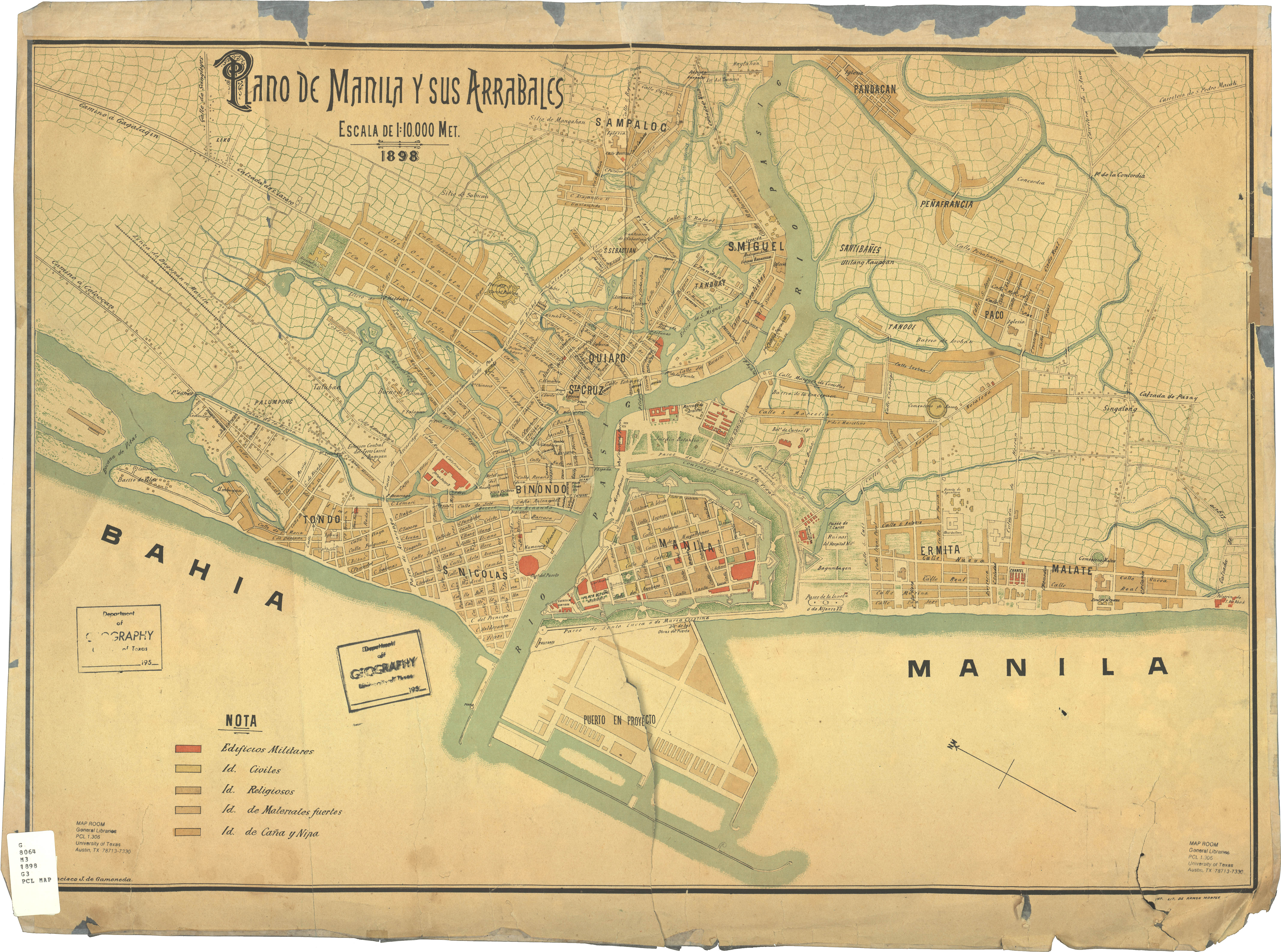
The origin of the boulevard could be traced back to two parallel streets, Calle Santa Rosa and Calle Concepcion, that terminated at Estero de Curtidor (now part of Estero de Quiapo), as well as Calle P. Blanco and the old sections of Calle Norzagaray and Calle Globo de Oro at the south. In the early 1900s, Calle Santa Rosa and Calle Concepcion were renamed Calle Regidor (after La Solidaridad writer Antonio Maria Regidor) and Calle Martin Ocampo (after El Renacimiento and La Vanguardia editor Martin Ocampo), respectively. Calle Martin Ocampo was also known as Calle El Dorado circa 1920.
Quezon Boulevard was developed as part of a national road plan to connect the government center of Manila in Rizal Park to the proposed new capital on the Diliman estate. Named after the then-President of the Commonwealth, Manuel Luis Quezon, it was built in 1939 over Calle Regidor and the western portion of Calle Norzagaray, which were widened by demolishing all the buildings and houses on its east side and eventually combined with Calle Martin Ocampo, Calle P. Blanco, and a portion of Calle Globo de Oro. It was also in 1939 when the old Puente Colgante, which connected the boulevard south over the Pasig River to Padre Burgos Avenue in Ermita, was replaced by the modern steel arch bridge, Quezon Bridge. According to a 1945 map published by the United States Army Map Service, it was also known as Quezon Avenue. Its northern extension is now called España Boulevard and Quezon Avenue, respectively.
Route description
.jpg)
Quezon Boulevard begins on Carlos Palanca Sr. Street (formerly Calle Echague) by the riverside Quinta Market as a continuation of Padre Burgos Avenue from Ermita and Intramuros from Quezon Bridge. It intersects with Arlegui Street, which leads to the San Miguel district and the Malacañang Palace complex, and Hidalgo Street (former Calle San Sebastian), which leads to San Sebastian Church, before arriving at Plaza Miranda and Quiapo Church, the site of the annual Feast of the Black Nazarene. The boulevard then runs into a junction with Gonzalo Puyat Street (former Calle Raon), which cuts through the commercial area of Quiapo towards Santa Cruz and heads for Sampaloc district at the intersection with Recto Avenue. It ends at the junction with Lerma Street, continuing as Alfonso Mendoza Street (formerly Calle Andalucía), which heads north to the San Lazaro Tourism and Business Park.
Intersections
(Route number changes from N170 to unnumbered)
Landmarks
.jpg)
From north to south:
- Manila City Jail
- Far Eastern University
- Isetann Cinerama Recto
- QQ Mall
- Sun Star Grand Hotel
- Raon Shopping Center
- Quiapo Church
- Bahay Nakpil-Bautista
- Quiapo Market
- Plaza Miranda
- Hotel 99
- Quinta Market
References
References
- "North Manila".
- de Gamoneda, Francisco J.. (1898). "Plano de Manila y sus Arrables".
- (1894). "Plano de Manila y sus arrabales 1894". Lit De Chofre y Co..
- (1919). "Map of city of Manila and vicinity". Office of Dept. Engineer, Phil. Dept..
- (1934). "Complete YMCA 1934 Manila map".
- (1920). "City of Manila, Philippine Island". John Bach.
- (July 2025). "Manila Extramuros". [[Philippine Institute for Development Studies]].
- (August 1945). "Map City of Manila / compliments of the American Red Cross Service Bureau; prepared under the direction of the Chief Engineer, GHQ, AFPAC, US Army, by Base Map Plant No. 1, August 1945". United States. Army Map Service.
- (March 7, 1984). "An Act Renaming Timog Avenue and East Avenue as Carlos P. Garcia Avenue".
- (1960). "Table and Pocket Map Guide City of Manila". J.M. Azucena Publishing.
- "Road and Bridge Inventory".
This article was imported from Wikipedia and is available under the Creative Commons Attribution-ShareAlike 4.0 License. Content has been adapted to SurfDoc format. Original contributors can be found on the article history page.
Ask Mako anything about Quezon Boulevard — get instant answers, deeper analysis, and related topics.
Research with MakoFree with your Surf account
Create a free account to save articles, ask Mako questions, and organize your research.
Sign up freeThis content may have been generated or modified by AI. CloudSurf Software LLC is not responsible for the accuracy, completeness, or reliability of AI-generated content. Always verify important information from primary sources.
Report