From Surf Wiki (app.surf) — the open knowledge base
Qiqihar
City in Manchuria, China
.jpg)
City in Manchuria, China
| Field | Value |
|---|---|
| name | Qiqihar |
| native_name | 齐齐哈尔市 |
| native_name_lang | zh-Hans |
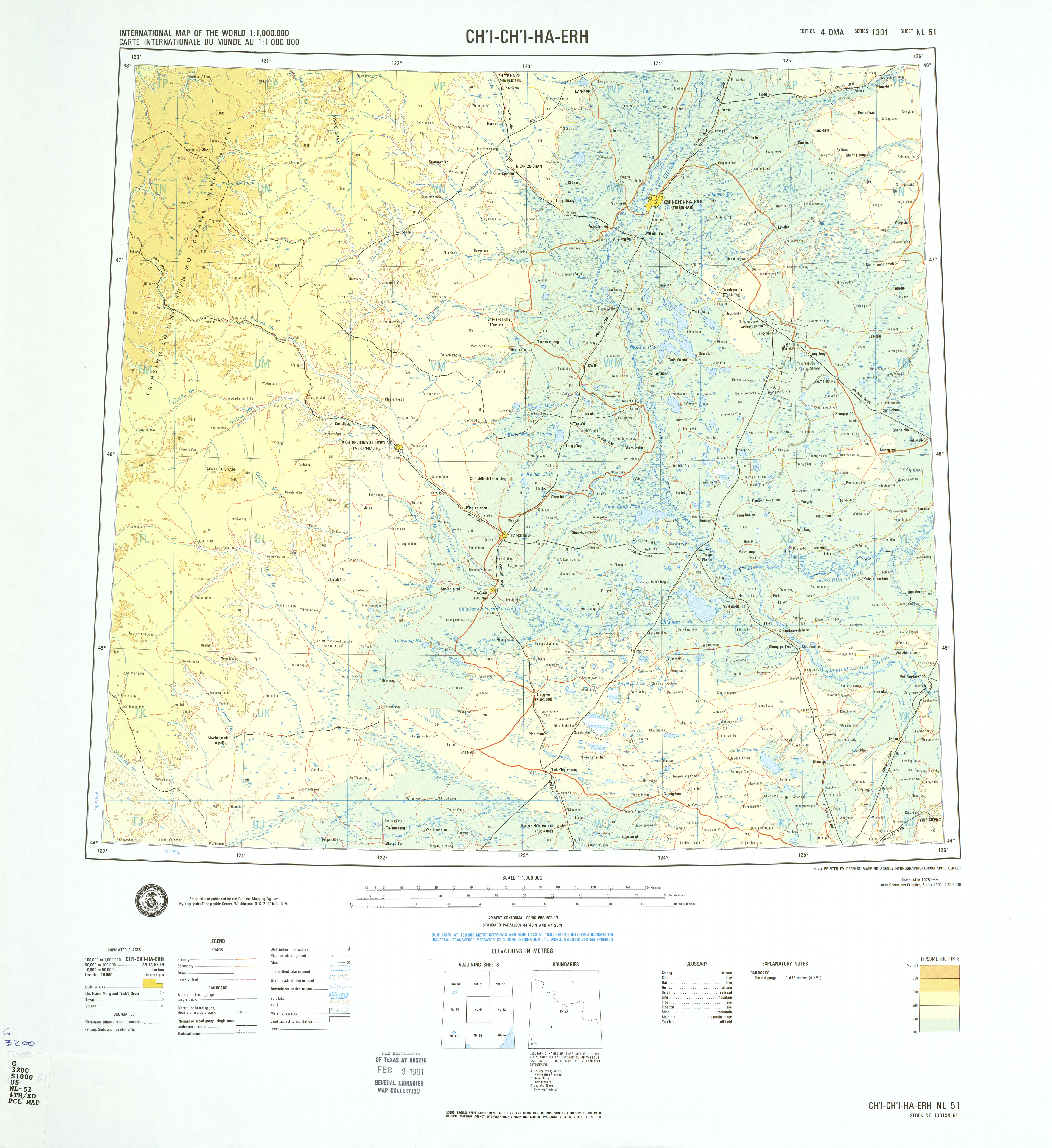
| other_name | Ch'i-ch'i-ha-erh, Tsitsihar |
| settlement_type | Prefecture-level city |
| image_skyline | Qiqiharskyline4.JPG |
| nickname | The Crane City (鹤城) |
| image_map | Location of Qiqihar Prefecture within Heilongjiang (China).png |
| map_caption | Location of Qiqihar City (yellow) in Heilongjiang (light grey) and China |
| pushpin_map | Heilongjiang |
| pushpin_map_caption | Location of the city centre in Heilongjiang |
| coor_pinpoint | Qiqihar municipal government |
| coordinates | |
| subdivision_type | Country |
| subdivision_name | People's Republic of China |
| subdivision_type1 | Province |
| subdivision_type2 | County-level divisions |
| subdivision_type3 | towns and townships |
| subdivision_type4 | villages |
| subdivision_name1 | Heilongjiang |
| subdivision_name2 | 16 |
| subdivision_name3 | 156 |
| subdivision_name4 | 1361 |
| established_title | Established |
| established_date | 1125 |
| established_title1 | |
| established_title2 | |
| seat_type | Municipal seat |
| seat | Jianhua District |
| parts_style | |
| parts | |
| government_type | Prefecture-level city |
| leader_title | CPC Qiqihar Secretary |
| leader_name | Sun Shen (孙珅) |
| leader_title1 | Mayor |
| leader_name1 | Li Yugang (李玉刚) |
| total_type | |
| unit_pref | |
| area_magnitude | |
| area_total_km2 | 42205.82 |
| area_land_km2 | |
| area_urban_km2 | 4039.3 |
| area_metro_km2 | 970.3 |
| elevation_footnotes | |
| elevation_m | 147 |
| population_total | 4067489 |
| population_as_of | 2020 census |
| population_footnotes | |
| population_density_km2 | auto |
| population_urban | 1406987 |
| population_density_urban_km2 | auto |
| population_metro | 959787 |
| population_density_metro_km2 | auto |
| population_density_blank1_km2 | auto |
| demographics_type2 | GDP |
| demographics2_title1 | Prefecture-level city |
| demographics2_info1 | CN¥ 127 billion |
| US$ 20.4 billion | |
| demographics2_title2 | Per capita |
| demographics2_info2 | CN¥ 23,041 |
| US$ 3,699 | |
| postal_code_type | Postal code |
| postal_code | 161000 |
| area_code | 0452 |
| website | https://web.archive.org/web/20071017012317/http://www.qqhr.gov.cn/ |
| p2 | |
| timezone | China Standard |
| utc_offset | +08:00 |
| blank2_name | License Plate |
| blank2_info | 黑B |
| blank3_name | Administrative division code |
| blank3_info | 230200 |
| blank4_name | |
| iso_code | CN-HL-02 |
| blank5_name | Climate |
| blank5_info | Dwa |
Default is list if up to 5 items, coll if more than 5-- US$ 20.4 billion US$ 3,699 Qiqihar (also spelled Tsitsihar) is the second-largest city in the Heilongjiang province of China, in the west central part of the province. The built-up (or metro) area made up of Longsha, Tiefeng and Jianhua districts had 959,787 inhabitants, while the total population of the prefecture-level city was shrinking to 4,067,489 as of the 2020 census (5,367,003 as of 2010). In 2024, the total registered population of the city will be 5.06 million. Among them, the rural population is 3.165 million.These are mainly Han Chinese, though the city is also home to thirty-four minorities including Manchus, Daur, and Mongols. Numerous wetlands are close to Qiqihar, including the Zhalong Nature Reserve, famous in China for being home to numerous red-crowned cranes.
Etymology
"Qiqihar" is a Dagur word meaning "border" or "natural pasture". |access-date=18 August 2012 |url-status=live |archive-url=https://web.archive.org/web/20071017012317/http://www.qqhr.gov.cn/EN/Investment.htm |archive-date=October 17, 2007
History
Early history
Qiqihar is one of the oldest cities in the northeast of China. The region was originally settled by nomadic Daur and Tungus herdsmen. The city's original name was Bukui (), the Chinese transcription of a Dagur word meaning "auspicious". The city's oldest mosque, the Bukui Mosque, predates the foundation of the city by seven years. During the Imperial Russian eastward advance to the Pacific, Qiqihar became a major garrison center in 1674. In 1691, a stronghold was constructed in Qiqihar because the Qing government campaigned against the Mongols.
Around 1700 it was a centre for Russo-Chinese trade. A military depot with barracks and an arsenal was set up there, and many convicted criminals were exiled to the area. Heilongjiang Martial was domiciled in Qiqihar City in 1699. Qing China had initially intended to keep the far-northern Heilongjiang province as a semi-pastoral area, separate from the wider Chinese agricultural economy, so it did not allow seasonal urban migrants, such as those from Hebei and Shandong who wished to participate in the Qiqihar fur trade, to own farms or develop the land.
After the Russian Empire seized Outer Manchuria according to the Treaty of Aigun and the Convention of Peking, the Qing decided to lift the various restrictions on settlement that it placed on Northeast China and on Heilongjiang residency in particular, in 1868, 1878, and 1904. It enlisted Han Chinese to help to teach the local Solon people farming techniques, provide materials and tax exemptions to convert them from hunting. In 1903, the completion of the Chinese Eastern Railway made Qiqihar a centre for communications between China and Russia. A network of lines radiating from Qiqihar was extended into the northwestern part of Heilongjiang Province including Jiagedaqi and Manzhouli in the late 1920s.
Second Sino-Japanese War

In 1931, Japan used a false flag attack, known as the September 18 Incident, to justify moving its Guandong Army to capture major cities in Northeast China that month, starting with Shenyang, Changchun, then Jilin City. General Ma Zhanshan was ordered to act as Governor and Military Commander-in-chief of Heilongjiang Province on 10 October. General Ma declined a Japanese ultimatum to surrender Qiqihar on 15 November. However, after their success in the Jiangqiao campaign, the Japanese began their occupation of Qiqihar on 19 November. Liaoning fell in December, and Harbin in February; the puppet Manchukuo government of the Japanese-occupied territory under General Zhang Jinghui established Qiqihar as its administrative center and of Longjiang province. Qiqihar became a major military base for the Guandong Army and its economic importance also grew rapidly. During the occupation, the Imperial Japanese Army established Unit 516 in Qiqihar for research into chemical warfare. A major mustard gas tank left over from the Second Sino-Japanese War buried underground was accidentally damaged in August 2003, causing 43 injuries and one death.
Modern era

After the defeat of Japan, the Democratic Regime Qiqihar Municipal Government was established, under the administration of Nenjiang Province. Japanese forces in Northeast China surrendered to the Soviet Union while other Japanese forces in the rest of China surrendered to the Nationalist government. From March to May, Soviet troops progressively withdrew from their positions, giving the People's Liberation Army more notice than the National Revolutionary Army so that the former could occupy more positions in the context of the Chinese Civil War. Qiqihar was controlled by the Communists on April 24, 1946, along with other important regional cities like Changchun, Jilin City, and Harbin. Qiqihar was established as the capital of Heilongjiang Province after the foundation of People's Republic of China in 1949. However, after Songjiang Province was merged into Heilongjiang Province, the provincial capital was transferred to Harbin in 1954. During the first five-year plan of China from 1951 to 1956, many factories including Beiman Special Steel Co. and China First Heavy Industries were aid-constructed by the Soviet Union in Fularji District, making Qiqihar an important centre of equipment manufacturing industry in Northeast China. In 1984, Qiqihar was designated to be one of the 13 Larger Municipalities in China by the General Office of the State Council.
Geography
Qiqihar City occupies a land area of 42,289 square kilometers at an altitude of 100–500 meters, with an average elevation of 146 meters.
Border
Qiqihar is located along the middle and lower reaches of the Nen River and the hinterland of Songnen Plain, which is adjacent to the Greater Khingan Range and Hulunbuir Prairie. Bordering prefecture cities are:
- Baicheng, Jilin (S)
- Daqing (E)
- Heihe (N)
- Hulunbuir, Inner Mongolia (W)
- Suihua (NE)
- Hinggan League, Inner Mongolia (W) The city's metro area is located 359 km from the provincial capital of Harbin, 282 km from Baicheng, 139 km from Daqing, and 328 km from Suihua. The total area under the city's jurisdiction is 42289 km2. The region's elevation above sea level is generally between 200 and. |access-date=18 August 2012 |url-status=live |archive-url=https://web.archive.org/web/20071017012317/http://www.qqhr.gov.cn/EN/dldy.htm |archive-date=October 17, 2007
Climate
Qiqihar has a cold, monsoon-influenced, humid continental climate (Köppen Dwa), with four distinct seasons. It has long, bitterly cold, but dry winters, with a 24-hour average in January of -18.1 °C. Spring and fall are mild, but short and quick transitions. Summers are very warm and humid, with a 24-hour average in July of 23.3 °C. The average annual precipitation is 415 mm, with over two-thirds of it falling from June to August. The annual mean is 4.38 °C. With monthly percent possible sunshine ranging from 56% in July to 73% in February, the city receives abundant sunshine, with 2,839 hours of bright sunshine annually. Extreme temperatures have ranged from -39.5 °C on January 8 1956 to 42.1 °C on 26 June 1980. Unusually for a place with such cold winters, it has never experienced a temperature of -40 degrees (C/F) or lower. | Jan record high C = 2.4 | Feb record high C = 12.8 | Mar record high C = 23.5 | Apr record high C = 32.1 | May record high C = 36.4 | Jun record high C = 42.1 | Jul record high C = 39.9 | Aug record high C = 37.5 | Sep record high C = 33.3 | Oct record high C = 26.9 | Nov record high C = 15.9 | Dec record high C = 7.8 | Jan record low C = −39.5 | Feb record low C = −34.5 | Mar record low C = −29.4 | Apr record low C = -15.6 | May record low C = −7.4 | Jun record low C = 1.9 | Jul record low C = 9.9 | Aug record low C = 5.4 | Sep record low C = −3.5 | Oct record low C = -16.0 | Nov record low C = −27.9 | Dec record low C = -35.0
Subdivisions

Qiqihar is divided into 16 divisions: 7 districts (), 8 counties () and 1 county-level city ().
| Map | # | Name | Hanzi | Hanyu Pinyin | Population (2010 est.) | Area (km2) | Density (/km2) |
|---|---|---|---|---|---|---|---|
| 1 | Longsha District | 龙沙区 | Lóngshā Qū | 354,987 | 283 | 1,254 | |
| 2 | Jianhua District | 建华区 | Jiànhuá Qū | 292,579 | 81 | 3,612 | |
| 3 | Tiefeng District | 铁锋区 | Tiěfēng Qū | 331,951 | 695 | 478 | |
| 4 | Ang'angxi District | 昂昂溪区 | Áng'ángxī Qū | 80,109 | 623 | 129 | |
| 5 | Fularji District | 富拉尔基区 | Fùlā'ěrjī Qū | 256,159 | 375 | 683 | |
| 6 | Nianzishan District | 碾子山区 | Niǎnzishān Qū | 72,151 | 290 | 249 | |
| 7 | Meilisi Daur District | 梅里斯达斡尔族区 | Méilǐsī Dáwò'ěrzú Qū | 165,852 | 1,948 | 85 | |
| 8 | Nehe City | 讷河市 | Nèhé Shì | 625,892 | 6,664 | 94 | |
| 9 | Longjiang County | 龙江县 | Lóngjiāng Xiàn | 572,764 | 6,197 | 92 | |
| 10 | Yi'an County | 依安县 | Yī'ān Xiàn | 480,035 | 3,780 | 127 | |
| 11 | Tailai County | 泰来县 | Tàilái Xiàn | 302,027 | 4,061 | 74 | |
| 12 | Gannan County | 甘南县 | Gānnán Xiàn | 368,734 | 4,384 | 84 | |
| 13 | Fuyu County | 富裕县 | Fùyù Xiàn | 276,537 | 4,335 | 64 | |
| 14 | Keshan County | 克山县 | Kèshān Xiàn | 403,175 | 3,632 | 111 | |
| 15 | Kedong County | 克东县 | Kèdōng Xiàn | 264,285 | 2,083 | 127 | |
| 16 | Baiquan County | 拜泉县 | Bàiquán Xiàn | 519,766 | 3,569 | 146 |
Demographics
According to the Seventh national population census, the population amounted to 4,067,489. Compared with 5,367,003 people in the Sixth national census in 2010, it decreased by 1,299,514 people, a drop of 24.21%, with an average annual growth rate of -2.73%.
There were 2,044,598 males, accounting for 50.27%. There were 2,022,891 women, accounting for 49.73%. The sex ratio (with females as 100, the proportion of males to females) decreased from 102.00 in the Sixth national census in 2010 to 101.07.
Economy
Qiqihar is a heavily industrialized city involved in manufacturing.
In 2009, the city's 95 large-scale equipment manufacturing enterprises, with total assets of 30.6 billion yuan, accounting for the city's industrial enterprises above designated size of 46.5% of total assets, the number of employees 5.2 million, accounting for the city's industrial enterprises above the size of 45.6% of the total number of employees. The main business income of 25.57 billion yuan, industrial added value of 8.05 billion yuan, profits of 1.96 billion yuan, 1.03 billion yuan of taxes, respectively, year on year growth of 2.9%, 3%, 19.6% and 22.3%, accounting for the city's industrial enterprises above designated size were 40.6%, 40%, 44.3% and 31.7%, respectively.
Hospitals
Qiqihar has 23 hospitals.
Companies
Companies conducting business in Qiqihar include RT-Mart, Walmart, GOME Electrical Appliances, and Suning Commerce Group.
Banks
Since Qiqihar is a large city, numerous banks are represented here. Some of the banks include Bank of China, China Construction Bank, Industrial and Commercial Bank of China, and Agricultural Bank of China.
Tourism
Qiqihar is very close to the Zhalong Nature Reserve and the Longsha park.
Transportation
Airport
Qiqihar is served by its own domestic airport, Qiqihar Sanjiazi Airport.
Trains
Qiqihar is well connected in terms of railway transportation. Trains from Qiqihar Railway Station connect the city with Harbin, Beijing, Dalian, Hangzhou, Xi'an and several other major cities in China. Qiqihar Sanjiazi Airport, 13 km from Qiqihar's downtown area, operates daily flights to Beijing, Guangzhou, Shanghai and other major cities in China. In the district of Ang'angxi, the Harbin-Manzhouli Railway intersects with the Qiqihar-Bei'an Railway.
The Harbin–Qiqihar intercity railway opened on 17 August 2015; it provides frequent high-speed service to Harbin, as well as some direct trains to Beijing.
River
The Nen River is used to transport freight.
Gallery
File:Old Qiqihar Station 01.jpg|The old station building, now used for first class File:Qiqihar Station 01.jpg|The old station building File:Qiqihar Station 02.jpg|The new station building
Education
Numerous schools exist in the city. Four elementary schools feed into 8 city or county high schools.
There are two universities: Qiqihar University and its medical school.
Sister cities
- US New Castle County, Delaware, United States
- Japan Utsunomiya, Tochigi, Japan
- South Korea Goyang, Gyeonggi, South Korea
- Egypt 10th of Ramadan City, Egypt
- Russia Krasnoyarsk, Russia
Notable people from Qiqihar
- Wanrong - Princess consort to Puyi
- Ma Zhanshan - General
- Zhou Tienong - Vice chair of Standing committee of Congress of China
- Chen Yunlin - politician
- Zhai Zhigang - Astronaut
- Liu Boming - Astronaut
- Bai Xue - 10,000 meter runner
- Mao Buyi - singer-songwriter
- Li Yingying - Chinese female national volleyballer
- Wang Manyu - Table tennis player
- Tu Honggang - Singer
References
Notes
References
- "China: Hēilóngjiāng (Prefectures, Cities, Districts and Counties) - Population Statistics, Charts and Map".
- "(黑龙江省)2024年齐齐哈尔市国民经济和社会发展统计公报-红黑统计公报库".
- {{citation. link. (2006-08-25)
- {{citation. (2005-06-27). link
- (1989). Heilongjiang People's Press
- Fuliang Shan, Patrick. (June 2006). "Ethnicity, nationalism and race relations: The chinese treatment of the solon tribes in Heilongjiang frontier society, 1900 – 1931". Asian Ethnicity.
- Matsusaka, Yoshihisa Tak. (2003). "The Making of Japanese Manchuria, 1904-1932". Harvard University Asia Center.
- (June 28, 2004). "Mustard Gas Victims Prepare Case Against Japan".
- (2003-08-13). "Diplomatic row over poison gas". The Guardian.
- Zarrow, Peter. (2005). "China in war and revolution, 1895 - 1949". Routledge, Taylor & Francis Group.
- "Archived copy".
- Heinzig, Dieter. (2004). "The Soviet Union and communist China 1945-1950: the arduous road to the alliance". M.E. Sharpe.
- link. (July 2018)
- link
- link. [[China Meteorological Administration]]
- (December 2012). China Statistics Press
- "2020年黑龙江省第七次全国人口普查主要数据公报_统计公报_黑龙江省人民政府网".
- "Northernmost PDL opens in Heilongjiang".
- "High-speed rail to open after 6 years of challenges".
- link. (2015-07-30)
- "Foreign Relations - Foreign Relations - Krasnoyarsk city administration official website".
This article was imported from Wikipedia and is available under the Creative Commons Attribution-ShareAlike 4.0 License. Content has been adapted to SurfDoc format. Original contributors can be found on the article history page.
Ask Mako anything about Qiqihar — get instant answers, deeper analysis, and related topics.
Research with MakoFree with your Surf account
Create a free account to save articles, ask Mako questions, and organize your research.
Sign up freeThis content may have been generated or modified by AI. CloudSurf Software LLC is not responsible for the accuracy, completeness, or reliability of AI-generated content. Always verify important information from primary sources.
Report