From Surf Wiki (app.surf) — the open knowledge base
QF 6-pounder 6 cwt Hotchkiss
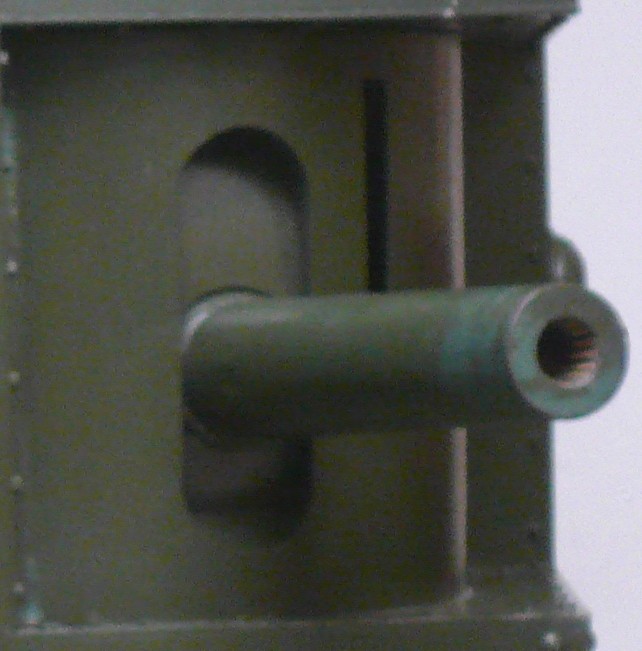
| Field | Value |
|---|---|
| image | Bovington QF 6-pounder 6 cwt Hotchkiss.JPG |
| image_size | 300 |
| caption | QF 6 pounder 6 cwt Hotchkiss used for gunnery training |
| name | QF 6 pounder 6 cwt Hotchkiss Mk 1 - 2 |
| origin | United Kingdom |
| is_artillery | yes |
| is_UK | yes |
| is_ranged | yes |
| used_by | United Kingdom |
| wars | World War I, World War II |
| designer | Hotchkiss |
| type | Tank gun, armoured train gun |
| service | 1917–1944 |
| caliber | 2.244 in (57 mm) |
| part_length | Bore: 52.12 inch (1.32 m) 23 calibres |
| breech | Vertical sliding block |
| velocity | 1,350 ft/s (411 m/s) |
| cartridge | Fixed QF, HE (57 x 306R) |
| range | 7,300 yards (6,675 m) |
| recoil | Hydro-spring |
Total: 60 inch (1.52 m) The Ordnance QF 6-pounder 6 cwt Hotchkiss Mk I and Mk II was a shortened version of the original QF 6 pounder Hotchkiss naval gun, and was developed specifically for use in the sponsons of the later marks of British tanks in World War I, from Mark IV onwards.
History
World War I
The original QF 6 pounder naval gun had turned out to be too long for practical use with the current British heavy tank designs, which mounted guns in sponsons on the side rather than turrets on top as modern tanks do. The muzzles of the long barrels sometimes dug into the mud or struck obstacles when the vehicle crossed trenches or shell craters. The shortened QF 6 pounder 6 cwt Mk I of single tube construction was introduced in January 1917 in the Mark IV tank, and may be considered the world's first specialised tank gun.
The shortened barrel incurred a reduction in muzzle velocity, but as tank guns in World War I were used against unarmoured or lightly armoured targets such as machine gun nests and artillery pieces at relatively short ranges of a few hundred yards, this was not a major disadvantage.
The Mk II gun was developed at the same time, having a built-up barrel construction.
World War II
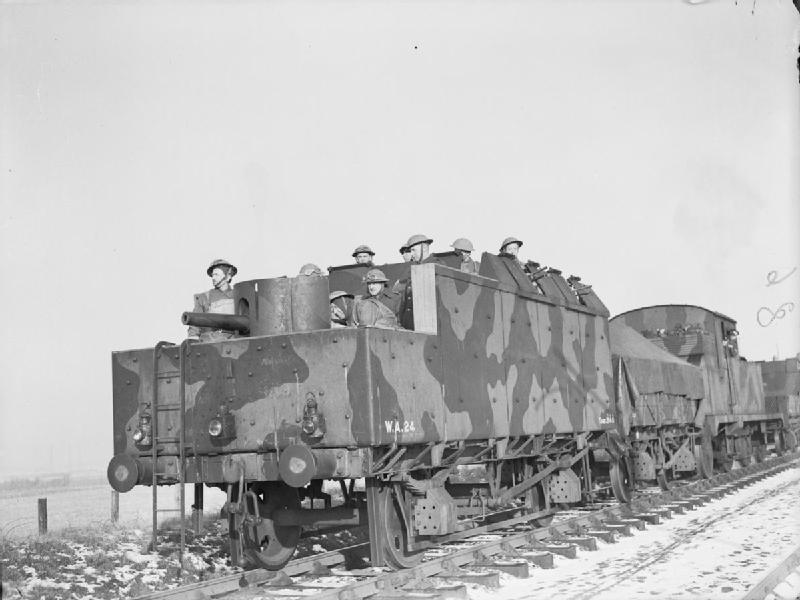
The gun was reused in the Second World War, being fitted to the 12 Armoured Trains operated in the United Kingdom. Just as with the tank mounting, the short barrel was an advantage, preventing fouling of line-side structures and bridges. The last British armoured trains (in Scotland) were decommissioned in 1944.
In 1940 as part of the British anti-invasion preparations, a large number of pillboxes were built to a design, known as Type 28 or FW3/28, intended for the modern 2-pounder anti-tank gun. However, as these were in desperately short supply, 6-pounder Hotchkiss guns firing solid shot were used instead. Unlike the 2-pounder which could be wheeled into the pillbox on its carriage, a holdfast was incorporated into the floor to which a pedestal mounting could be bolted. It is unlikely that many of these emplacements were permanently armed, but the guns were held in reserve until required.
Bibliography
- I.V. Hogg and L.F. Thurston, British Artillery Weapons & Ammunition 1914-1918. London: Ian Allan, 1972.
References
- Hogg & Thurston 1972, Page 39
- Lowry, Bernard. (2014). "Pillboxes and Tank Traps". Shire Publications.
This article was imported from Wikipedia and is available under the Creative Commons Attribution-ShareAlike 4.0 License. Content has been adapted to SurfDoc format. Original contributors can be found on the article history page.
Ask Mako anything about QF 6-pounder 6 cwt Hotchkiss — get instant answers, deeper analysis, and related topics.
Research with MakoFree with your Surf account
Create a free account to save articles, ask Mako questions, and organize your research.
Sign up freeThis content may have been generated or modified by AI. CloudSurf Software LLC is not responsible for the accuracy, completeness, or reliability of AI-generated content. Always verify important information from primary sources.
Report