From Surf Wiki (app.surf) — the open knowledge base
Pupillary response
Physiological response that varies the size of the pupil

Physiological response that varies the size of the pupil
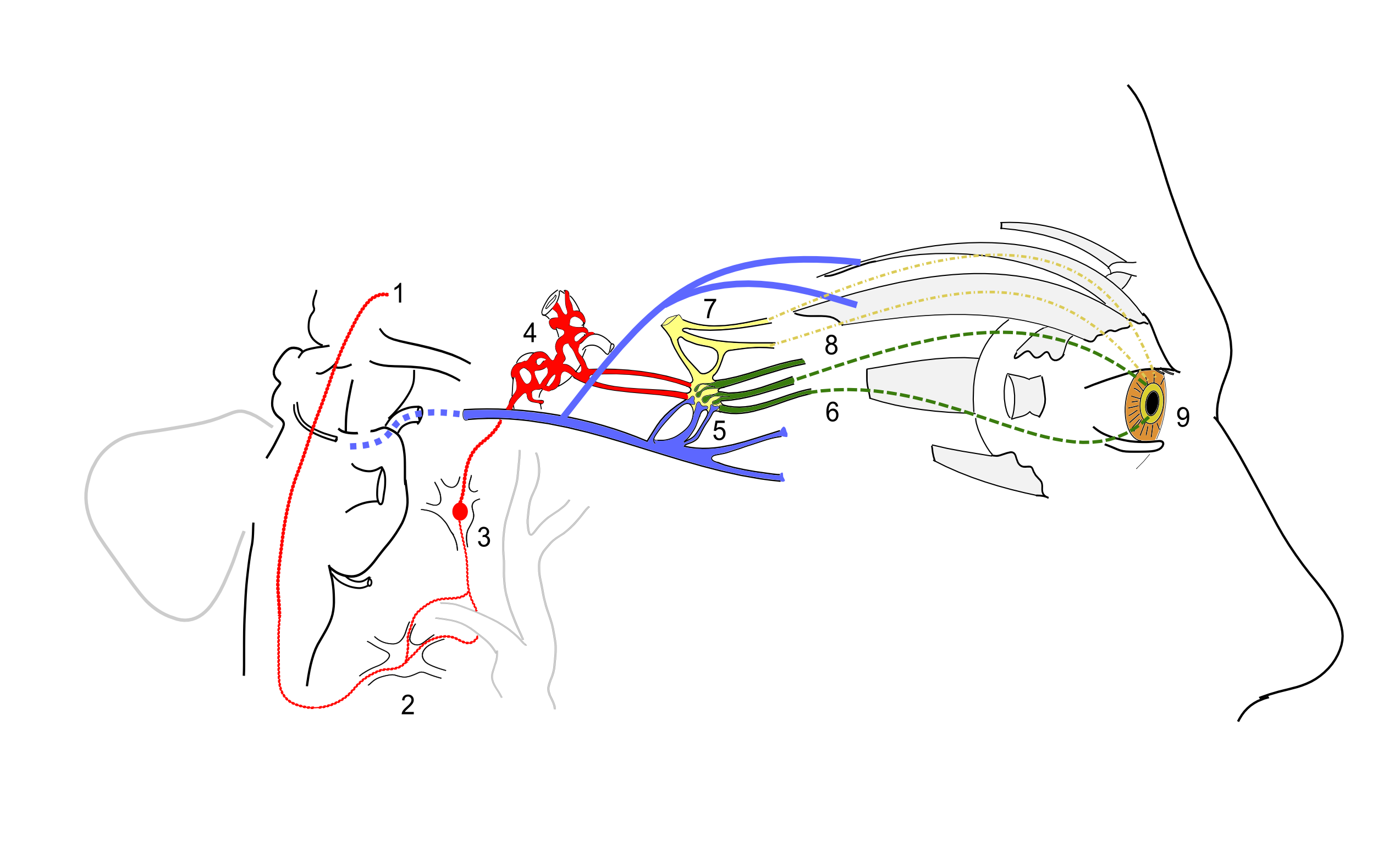
Pupillary response is a physiological response that varies the size of the pupil between 1.5 mm and 8 mm, via the optic and oculomotor cranial nerve.
A constriction response (miosis), is the narrowing of the pupil, which may be caused by scleral buckles or drugs such as opiates/opioids or anti-hypertension medications. Constriction of the pupil occurs when the circular muscle, controlled by the parasympathetic nervous system (PSNS), contracts, and also to an extent when the radial muscle relaxes.
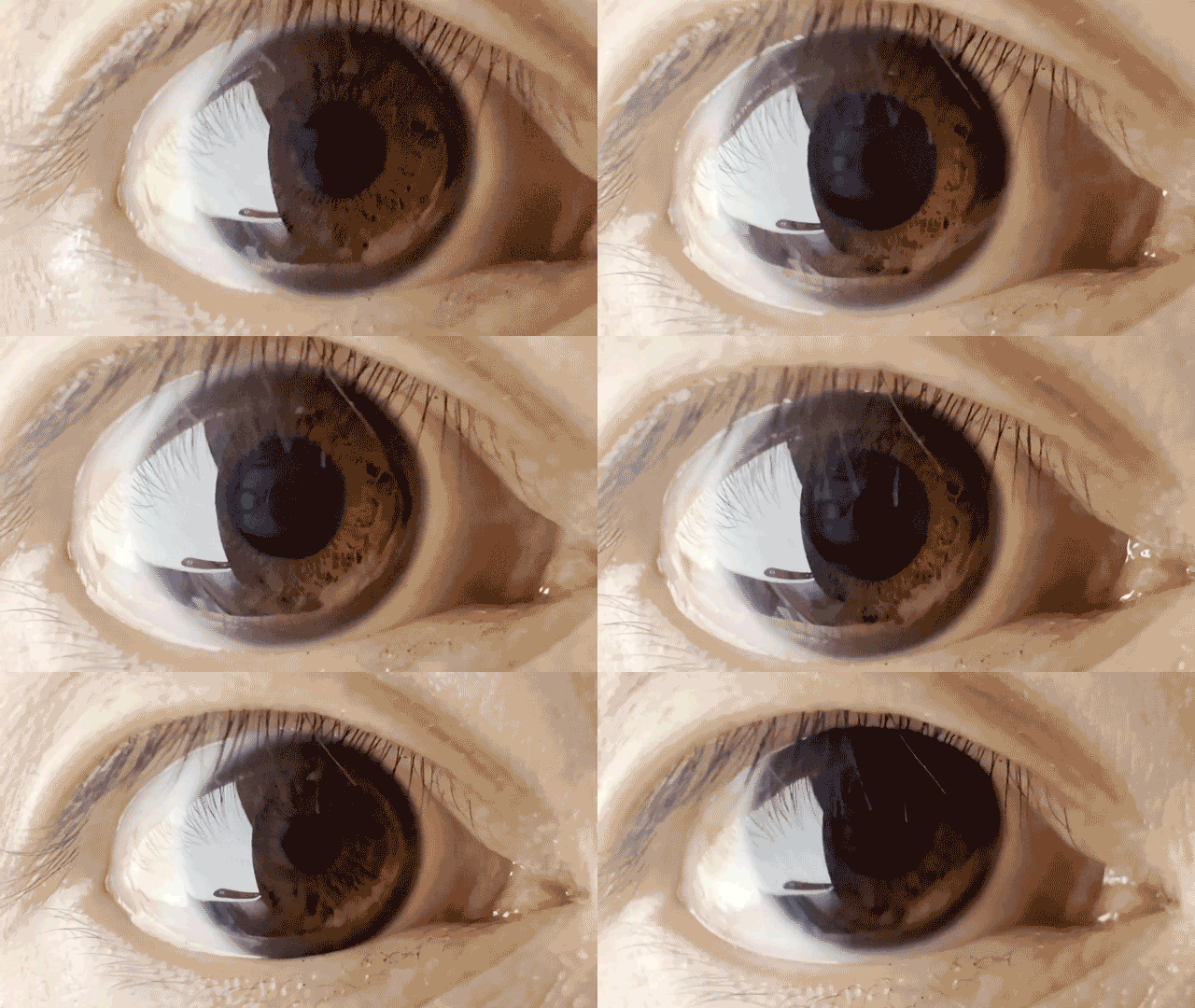
A dilation response (mydriasis), is the widening of the pupil and may be caused by adrenaline; anticholinergic agents; stimulant drugs such as MDMA, cocaine, and amphetamines; and some hallucinogenics (e.g. LSD). Dilation of the pupil occurs when the smooth cells of the radial muscle, controlled by the sympathetic nervous system (SNS), contract, and also when the cells of the iris sphincter muscle relax.
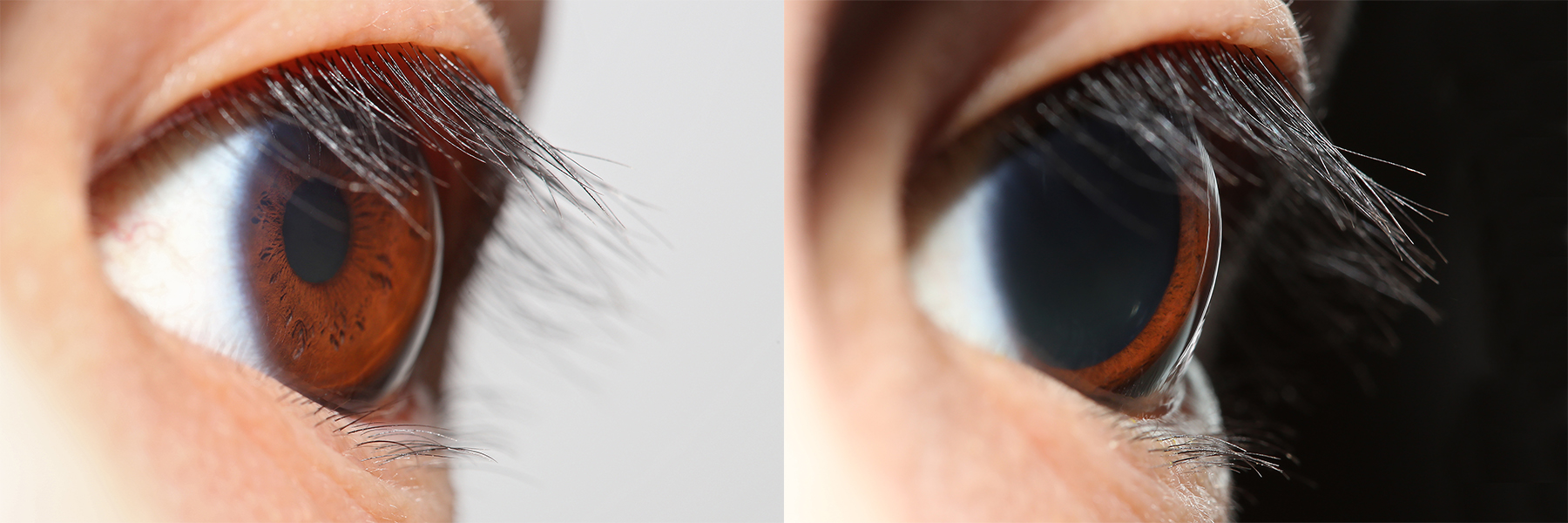
The responses can have a variety of causes, from an involuntary reflex reaction to exposure or inexposure to light—in low light conditions a dilated pupil lets more light into the eye—or it may indicate interest in the subject of attention or arousal, sexual stimulation, uncertainty, information content, decision conflict, errors, physical activity or increasing cognitive load or cognitive demand. These relationships are investigated in the context of task-invoked pupillary response. The responses correlate strongly with activity in the locus coeruleus neurotransmitter system. The pupils contract immediately before REM sleep begins.{{cite journal | vauthors = Lowenstein O, Feinberg R, Loewenfeld IE |author1-link = Otto Lowenstein |archive-url = https://web.archive.org/web/20120319233224/http://www.faa.gov/library/reports/medical/oamtechreports/1960s/media/AM65-09.pdf |archive-date = 2012-03-19 A pupillary response can be intentionally conditioned as a Pavlovian response to some stimuli.
Some humans have the ability to exert direct and voluntary control over their iris sphincter muscles and dilator muscles, granting them the ability to dilate and constrict their pupils on command, regardless of lighting condition and/or eye accommodation state. However, this ability is very rare, and its potential use or advantages are unclear.
The latency of pupillary response (the time in which it takes to occur) increases with age.{{cite book | vauthors = Feinberg R, Podolak E |archive-url = https://web.archive.org/web/20120320010318/http://www.faa.gov/library/reports/medical/oamtechreports/1960s/media/AM65-25.pdf |archive-date = 2012-03-20
In ophthalmology, intensive studies of pupillary response are conducted via videopupillometry.
Anisocoria is the condition of one pupil being more dilated than the other.

| Constriction (Parasympathetic) | Dilation (Sympathetic) | Muscular mechanism | Cause in pupillary light reflex | Other physiological causes | Corresponding non-physiological state |
|---|---|---|---|---|---|
| Relaxation of iris dilator muscle, activation of iris sphincter muscle | Activation of iris dilator muscle, relaxation of iris sphincter muscle | ||||
| Increased light | Decreased light | ||||
| Accommodation reflex | Fight-or-flight response, sexual arousal | ||||
| Miosis | Mydriasis |
References
References
- McDougal, David H.. (2015). "Autonomic Control of the Eye". Comprehensive Physiology.
- (November 1981). "The pupillary light reflex in normal subjects". The British Journal of Ophthalmology.
- Jaanus SD. (1992). "Ocular side effects of selected systemic drugs". Optom Clin.
- (August 1960). "Pupil size as related to interest value of visual stimuli". Science.
- (June 2012). "Rational regulation of learning dynamics by pupil-linked arousal systems". Nature Neuroscience.
- Basgol, Hamit. (2025-02-01). "Violation of auditory regularities is reflected in pupil dynamics". Cortex.
- Basgol, Hamit. "Modality-general sensitivity of pupil responses to regularity violations".
- (May 2018). "Midfrontal theta and pupil dilation parametrically track subjective conflict (but also surprise) during intertemporal choice". NeuroImage.
- (2020-11-01). "Errors lead to transient impairments in memory formation". Cognition.
- (2022-09-24). "Pupil-linked arousal with very light exercise: pattern of pupil dilation during graded exercise". The Journal of Physiological Sciences.
- (December 1966). "Pupil diameter and load on memory". Science.
- (2005-07-21). "An integrative theory of locus coeruleus-norepinephrine function: adaptive gain and optimal performance". Annual Review of Neuroscience.
- (January 2016). "Relationships between Pupil Diameter and Neuronal Activity in the Locus Coeruleus, Colliculi, and Cingulate Cortex". Neuron.
- (August 2014). "Pupil diameter covaries with BOLD activity in human locus coeruleus". Human Brain Mapping.
- Baker, Lynn Erland. (1938). "The Pupillary Response Conditioned to Subliminal Auditory Stimuli". Ohio State University.
- Eberhardt, Lisa V.. (2021-10-01). "Direct voluntary control of pupil constriction and dilation: Exploratory evidence from pupillometry, optometry, skin conductance, perception, and functional MRI". International Journal of Psychophysiology.
- (1970). "A new videopupillography". Ophthalmologica.
This article was imported from Wikipedia and is available under the Creative Commons Attribution-ShareAlike 4.0 License. Content has been adapted to SurfDoc format. Original contributors can be found on the article history page.
Ask Mako anything about Pupillary response — get instant answers, deeper analysis, and related topics.
Research with MakoFree with your Surf account
Create a free account to save articles, ask Mako questions, and organize your research.
Sign up freeThis content may have been generated or modified by AI. CloudSurf Software LLC is not responsible for the accuracy, completeness, or reliability of AI-generated content. Always verify important information from primary sources.
Report