From Surf Wiki (app.surf) — the open knowledge base
Publius Sextilius
Roman governor of Africa
Roman governor of Africa
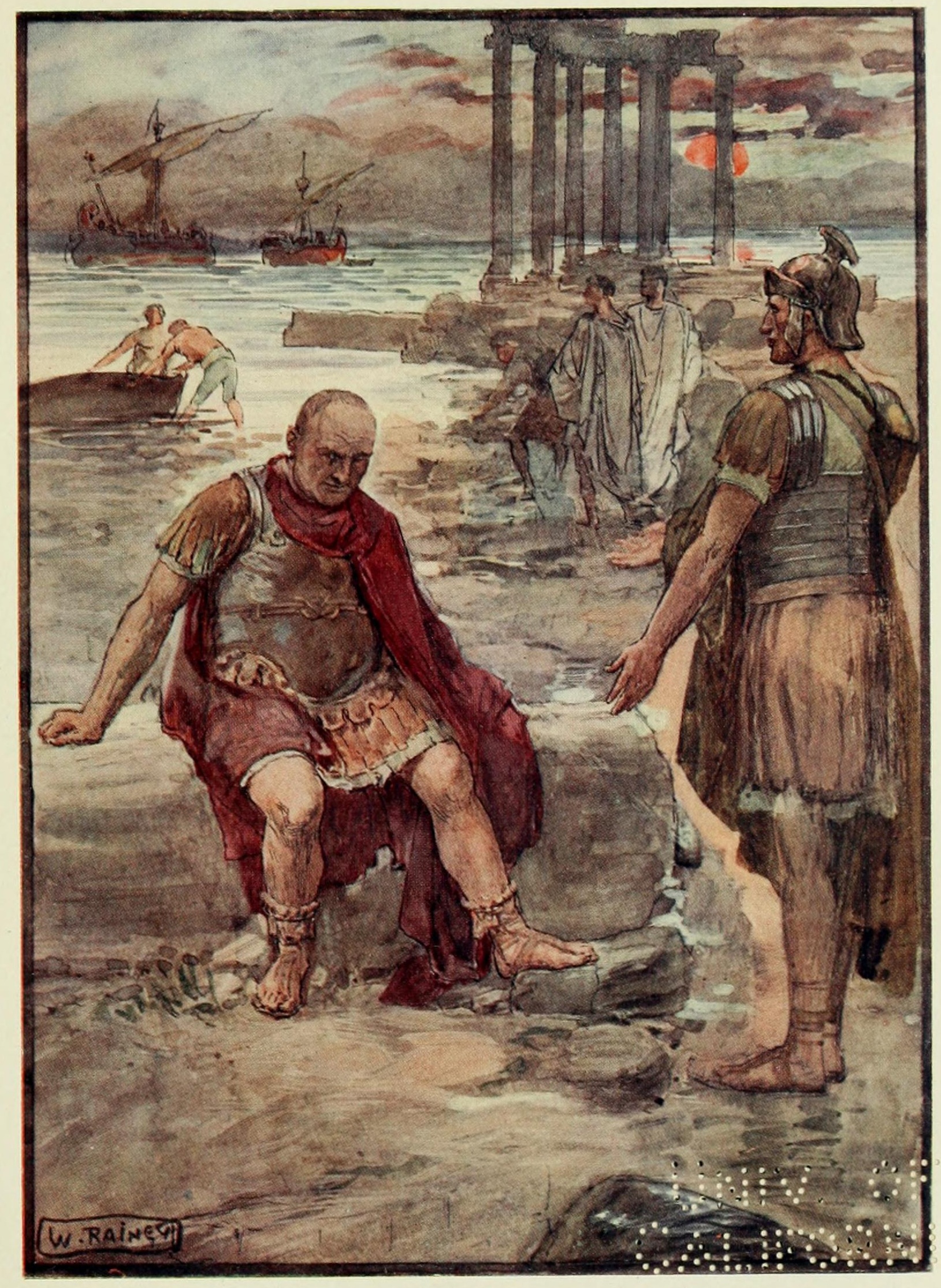
Publius Sextilius was a Roman praetor (92 BC?) and governor of Africa during the civil wars between Sulla and Marius. As governor in 88 BC, he refused Marius and his followers asylum in Africa.
Marius in Africa
Plutarch presents a highly colored version of how Sextilius rejected Marius and furnishes a moral:
Little is known of this Sextilius. It is likely that he belonged to the senatorial family of Sextilii who used the praenomen Publius, among them a 2nd-century B.C. praetor from whom a letter fragment survives. At one time, numismatic evidence was interpreted as referring to Sextilius as praetor and propraetor, but the coin has since been determined to belong to the Augustan period.
Before the arrival of Marius in Africa, Sextilius had taken a neutral position in the civil war. He had allowed some of Marius's allies to join up with Hiempsal II, king of Numidia, who at that time was attempting to gain the confidence of the Marians while acting on behalf of Sulla. If Sextilius had been serious about carrying out his threat to treat Marius as a public enemy — a senatorial decree which sanctioned his execution at sight — he most likely would have allowed Marius to enter the country rather than warning him off. The difficulty of Sextilius's position is indicated by the consequences of his action: since no further public office for him is known, he evidently pleased neither side in the conflict.
Date of praetorship
Cicero writes of a P. Sextilius Rufus who claimed he was bound by his oath of office to follow the Lex Voconia in depriving a young woman of her inheritance. E. Badian has argued that this was the P. Sextilius who became governor of Africa and dates his praetorship to 92.
Literary interests
There is some indication that Publius Sextilius took an interest in or was a patron of literature. When Cassius Dionysius of Utica translated the great agricultural treatise of the Carthaginian Mago into Greek, he dedicated his translation to Sextilius.
References
References
- Plutarch, ''Marius'' 40.3–4; Appian, ''Bellum civile'' 1.62 as Σέξστιος; Varro, ''De re rustica'' 1.1.10 with the title praetor; [[T.R.S. Broughton]], ''The Magistrates of the Roman Republic'', vol. 2 (New York 1952), pp. 41, 49, 620.
- See T.F. Carney, "The Flight and Exile of Marius," ''Greece & Rome'' 8 (1961) 98–121: "It must occur to anyone who reads Plutarch's account of Marius' flight and exile to wonder how much of this thrilling and romantic tale is historically true."
- Plutarch, ''Marius'' 40.3–4, Loeb Classical Library translation, Bill Thayer's edition at [https://penelope.uchicago.edu/Thayer/E/Roman/Texts/Plutarch/Lives/Marius*.html LacusCurtius]
- [[Ernst Badian. E. Badian]], “A ''fundus'' at [[Fondi. Fundi]],” ''American Journal of Philology'' 101 (1980), p. 111; [[D.R. Shackleton Bailey]], “The Roman [[Nobiles. Nobility]] in the Second Civil War,” ''Classical Quarterly'' 10 (1960), p. 263, note 1.
- See discussion in T.R.S. Broughton, ''The Magistrates of the Roman Republic'', vol. 2 (New York 1952), p. 45, note 4.
- T.F. Carney, "The Flight and Exile of Marius," ''Greece & Rome'' 8 (1961), pp. 113–114. Carney argues that both Hiempsal and Sextilius were attempting to maintain the appearance of complying with the senatorial decree while taking no direct action against Marius.
- Cicero, ''De finibus'' 2.55
- On the ''[[cognomen]]'' and voting tribe of P. Sextilius, see [[T.P. Wiseman]], ''New Men in the Roman Senate'' (Oxford University Press, 1971), p. 261.
- Broughton had dated the praetorship to 89 or 88 in ''MRR2'' (1952); in vol. 3 (1986), p. 198, he prefers Badian's argument from ''Journal of Roman Studies'' 55 (1965), p. 113.
- [[Marcus Terentius Varro
This article was imported from Wikipedia and is available under the Creative Commons Attribution-ShareAlike 4.0 License. Content has been adapted to SurfDoc format. Original contributors can be found on the article history page.
Ask Mako anything about Publius Sextilius — get instant answers, deeper analysis, and related topics.
Research with MakoFree with your Surf account
Create a free account to save articles, ask Mako questions, and organize your research.
Sign up freeThis content may have been generated or modified by AI. CloudSurf Software LLC is not responsible for the accuracy, completeness, or reliability of AI-generated content. Always verify important information from primary sources.
Report