From Surf Wiki (app.surf) — the open knowledge base
Ptuj

| Field | Value | |
|---|---|---|
| name | Ptuj | |
| settlement_type | Town | |
| motto | ||
| image_skyline | {{multiple image | |
| border | infobox | |
| perrow | 1/2/2/1 | |
| total_width | 290 | |
| align | center | |
| caption_align | center | |
| image1 | View of Ptuj Castle 01.jpg | |
| caption1 | View of old town over the Drava River | |
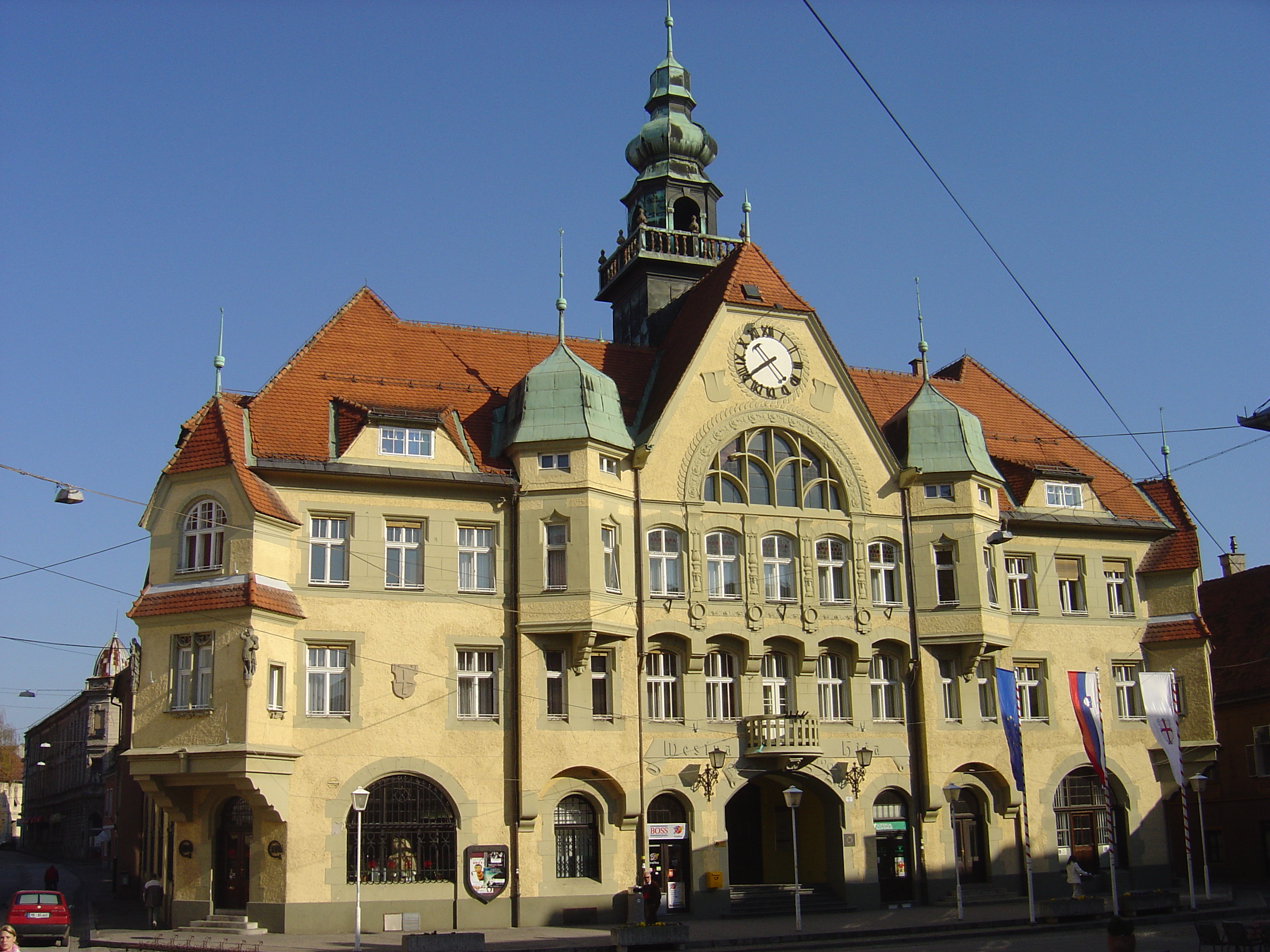
| image2 | Ptuj Town Hall.jpg | |
| caption2 | Town Hall | |
| image3 | Jurij Ptuj.jpg | |
| caption3 | St. George's Church | |
| image4 | Courtyard of Ptuj Castle.jpg | |
| caption4 | Castle Courtyard | |
| image5 | Ptuj Monastery.JPG | |
| caption5 | Minorite Monastery | |
| image6 | View of Ptuj (1).jpg | |
| caption6 | View from Ptuj Castle | |
| image_flag | Zastava Ptuja.svg | |
| image_shield | CoA of Ptuj.svg | |
| pushpin_map | Slovenia | |
| pushpin_label_position | left | |
| pushpin_map_caption | Location of the city of Ptuj in Slovenia | |
| <!-- Location --> | subdivision_type | Country |
| subdivision_name | Slovenia | |
| subdivision_type1 | Traditional region | |
| subdivision_name1 | Styria | |
| subdivision_type2 | Statistical region | |
| subdivision_name2 | Drava | |
| subdivision_type3 | Municipality | |
| subdivision_name3 | Ptuj | |
| leader_title | Mayor | |
| leader_name | Nuška Gajšek (SD) | |
| established_title | First mention | |
| established_date | AD 69 | |
| established_title1 | Town privileges | |
| established_date1 | 1376 | |
| founder | Vespasian | |
| named_for | ||
| unit_pref | Metric | |
| area_total_km2 | 25.6 | |
| <!-- Elevation --> | elevation_m | 232 |
| elevation_ft | 761 | |
| <!-- Population --> | population_as_of | 2023 |
| population_total | 17984 | |
| population_density_km2 | auto | |
| population_metro | ||
| timezone1 | CET | |
| utc_offset1 | +01 | |
| timezone1_DST | CEST | |
| utc_offset1_DST | +02 | |
| coor_pinpoint | ||
| coordinates | ||
| blank_info | ||
| postal_code_type | ||
| postal_code | 2250 | |
| registration_plate | MB | |
| website |
Ptuj (; , ; ) is the eighth-largest town of Slovenia, located in the traditional region of Styria (northeastern Slovenia). It is the seat of the Municipality of Ptuj. Being the oldest recorded city in Slovenia, it has been inhabited since the late Stone Age and developed from a Roman military fort, located at a strategically important crossing of the Drava River along a prehistoric trade route between the Baltic Sea and the Adriatic.
History
Vexilloid of the Roman Empire.svg Roman Empire (69–476AD)
Simple Labarum.svg Ostrogothic Kingdom (476–552)
Lombards (552–568)
Pannonian Avars (568–623, 658–700)
Samo's Empire (623–658)
Early Slavs (700–795)
Francia (795–840)
Balaton Principality (840–874)
Wappen Erzbistum Salzburg.png Archbishop of Salzburg (977–1555)
Habsburg Monarchy (1555–1804)
Austrian Empire (1804–1867)
Austria-Hungary (1867–1918)
State of Slovenes, Croats and Serbs (1918)
Kingdom of Yugoslavia (1918–1941)
Flag of Germany (1935–1945).svg Nazi Germany (1941–1944)
SFR Yugoslavia (1944–1991)
Slovenia 1991–Present
Early history
Ptuj is the oldest recorded town in Slovenia. There is evidence that the area was settled in the Stone Age. In the Late Iron Age it was settled by Celts.
First mentions
By the 1st century BC, the settlement was controlled by Ancient Rome as part of the Pannonian province. In 69 AD, Vespasian was elected Roman Emperor by the Danubian legions in Ptuj, and the first written mention of the city of Ptuj is from the same year. Poetovium was the base-camp of Legio XIII Gemina where it had its legionary fortress or castrum. The name originated in the times of Emperor Trajan, who granted the settlement city status and named it Colonia Ulpia Traiana Poetovio in 103. The patristic writer Victorinus was Bishop of Poetovio before his martyrdom in 303 or 304. The Caesar Constantius Gallus was divested of his imperial robe and arrested in Poetovio before his subsequent execution in Pola (354) (Amm.Marc. Hist. XIV) The battle of Poetovio in 388 saw Theodosius I's victory over the usurper, Maximus.
The city had 40,000 inhabitants until it was plundered by the Huns in 450.
Middle Ages
In 570 the city was occupied by Eurasian Avars and Slavic tribes. Ptuj became part of the Frankish Empire after the fall of the Avar state at the end of 8th century. Between 840 and 874 it belonged to the Slavic Balaton Principality of Pribina and Kocelj. Between 874 and 890 Ptuj gradually came under the influence of the Archbishopric of Salzburg which had both spiritual and temporal rule over the town; city rights passed in 1376 began an economic upswing for the settlement.
Habsburg Monarchy and Austria-Hungary
After the re-establishment of the Habsburg rule in 1490, following Matthias Corvinus's conquests, the Archbishop of Salzburg was stripped of the remaining temporal authority over the town and the surrounding areas; Ptuj (known in German as Pettau) was officially incorporated into the Duchy of Styria in 1555.
Pettau was a battleground during the Ottoman wars in Europe and suffered from fires in 1684, 1705, 1710, and 1744. Its population and importance began to decline in the 19th century, however, after the completion of the Vienna-Trieste route of the Austrian Southern Railway, as the line went through Marburg (Maribor) instead.
According to the 1910 Austro-Hungarian census, 86% of the population of Pettau's Old Town was German-speaking, while the population of the surrounding villages predominantly spoke Slovenian. After the collapse of Austria-Hungary at the end of World War I, Pettau was included in the short-lived Republic of German Austria.
Establishment of Yugoslavia
After the military intervention of the Slovenian general Rudolf Maister, the entire territory of Lower Styria was included into the State of Slovenes, Croats and Serbs (Yugoslavia). During the interwar period, the number and the percentage of those identifying as Germans in the city, which was renamed Ptuj, decreased rapidly, although a relatively strong ethnic German minority remained.
World War II
After the invasion of Yugoslavia in April 1941, Ptuj was occupied by Nazi Germany. From 1941 to 1944 the town's Slovenian population was dispossessed and deported. Their homes were taken over by German speakers from South Tyrol and Gottschee County, who had themselves been evicted according to an agreement between Adolf Hitler and Benito Mussolini. These German immigrants, along with the native German Pettauer, were expelled to Austria in 1945; many later settled in North America.
Since 1945, Ptuj has been populated almost completely by Slovenes.
Culture
The Kurent or Korant Carnival
Ptuj is the center place of a ten-day-long carnival in the spring, an ancient Slavic pagan rite of spring and fertility, called Kurentovanje or Korantovanje. Kurent is believed to be the name of an ancient god of hedonism - the Slavic counterpart of the Greek god Priapos, although there are no written records.
Kurent or Korant is a figure dressed in sheep skin who goes about the town wearing a mask, a long red tongue, cowbells, and multi-colored ribbons on its head. The Kurent(s) from Ptuj and the adjoining villages also wear feathers, while those from the Haloze and Lancova Vas wear horns. Organized in groups, Kurents go through town, from house to house, making noise with their bells and wooden sticks, to symbolically scare off evil spirits and the winter.
Landmarks


The parish church in the settlement is dedicated to Saint George and belongs to the Roman Catholic Archdiocese of Maribor. It is a three-naved Gothic building from the 13th and early 14th century, but the structure incorporates parts of a much earlier structure, dating to the mid-9th century.
- Ptuj Castle
- St. George's Church
- Little Castle
- Ptuj Town Hall
- Ptuj Town Theatre
- Town Tower
- Dominican monastery
- Orpheus Monument
- Franciscan monastery
- Upper Mansion
- St. Oswald's Church
Town quarters
- Center
- Breg–Turnišče
- Ljudski Vrt
- Jezero
- Panorama
- Rogoznica
- Grajena
- Spuhlja
Notable people
- Brigita Brezovac (born 1979), bodybuilder
- Nastja Čeh (born 1978), Slovenian international footballer
- (born 1977), geopolitical analyst and expert of international relations
- Tim Gajser (born 1996), motocross racer
- Luigi Kasimir (1881−1962), artist
- Benka Pulko (born 1967), long-distance motorcycle traveler, writer, photographer, humanitarian and Guinness World Record holder
- Miha Remec (1920−2020), science fiction author
- Angela Salloker (1913−2006), actress
- Aljaž Skorjanec (born 1990), dancer and choreographer
- Viktor Skrabar (1877–1938), lawyer and archaeologist
- Aleš Šteger (born 1973), poet
- Victorinus of Pettau (died 303), bishop and martyr
- Dejan Zavec (born 1976), boxer
International relations
Twin towns and sister cities
Ptuj is twinned with:
- SRB Aranđelovac, Serbia
- SVK Banská Štiavnica, Slovakia (2002)
- GER Burghausen, Germany (2001)
- NMK Ohrid, North Macedonia (2006)
- FRA Saint-Cyr-sur-Loire, France (1998)
- CRO Varaždin, Croatia (2004)
Gallery
File:Ptuj, Slovenia (52204665669).jpg|Town Square
File:Old Houses in Ptuj, Slovenia.jpg|Old Houses
File:Ptuj - Slovénie 8 (53401205423).jpg|Old Town Street
File:Ptuj - Slovénie 11 (53400090332).jpg|Church Tower
File:Ptuj, Little Castle from Presernova ulica 02.jpg|Little Castle
File:Assumption of Mary church in Ptuj (5).jpg|Assumption of Mary Church
File:Ptuj (10) (5338690691).jpg|Theater
File:Water tower in Ptuj (3).jpg|Water Tower
File:Ptuj_-_Orfejev_spomenik_1.jpg|Orpheus Monument at Slovene Square
File:Ptuj, National Hall.jpg|National Hall
File:Ptuj - Slovénie 55 (53400088632).jpg|Town Cinema
File:Ptuj Castle Ouroboros 27102006 01.jpg|Ouroboros at Ptuj Castle
File:Ptuj from the castle.JPG|Seen from the castle
File:Ptuj panorama 01.jpg|Panoramic view from Ptuj Castle
File:Ptuj panorama 02.jpg|Panoramic view of Ptuj
References
References
- "The Princeton Encyclopedia of Classical Sites, POETOVIO (Ptuj) Yugoslavia.". The Princeton Encyclopedia of Classical Sites.
- ''PtujTourism.si''. "[http://www.ptuj-tourism.si/o_ptuju/zgodovina_ptuj.php?lang=en The History of Ptuj]". Accessed November 8, 2006.
- (1904). "Leksikon občin kraljestev in dežel zastopanih v državnem zboru, vol. 4: Štajersko". C. Kr. Dvorna in Državna Tiskarna.
- (19 October 2025). "Ptuj cinema". sloveniaguide.si.
- (3 March 2017). "Najstarejše še aktivno kino prizorišče v Sloveniji". kinoptuj.si.
- (7 March 1897). "Erlebende Photographien (column 1)". Pettauer Zeitung.
- [http://rkd.situla.org/ Slovenian Ministry of Culture register of national heritage] reference number ešd 582
- "Skrabar, Viktor (1877–1938)". Slovenska akademija znanosti in umetnosti.
- (September 23, 2023). "130 let Pokrajinskega muzeja Ptuj – Ormož: Povod za nastanek je bil ohranitev arheološke zbirke". RTV SLO.
This article was imported from Wikipedia and is available under the Creative Commons Attribution-ShareAlike 4.0 License. Content has been adapted to SurfDoc format. Original contributors can be found on the article history page.
Ask Mako anything about Ptuj — get instant answers, deeper analysis, and related topics.
Research with MakoFree with your Surf account
Create a free account to save articles, ask Mako questions, and organize your research.
Sign up freeThis content may have been generated or modified by AI. CloudSurf Software LLC is not responsible for the accuracy, completeness, or reliability of AI-generated content. Always verify important information from primary sources.
Report