From Surf Wiki (app.surf) — the open knowledge base
Prussian Staff College
Former general staff officer school in the Kingdom of Prussia
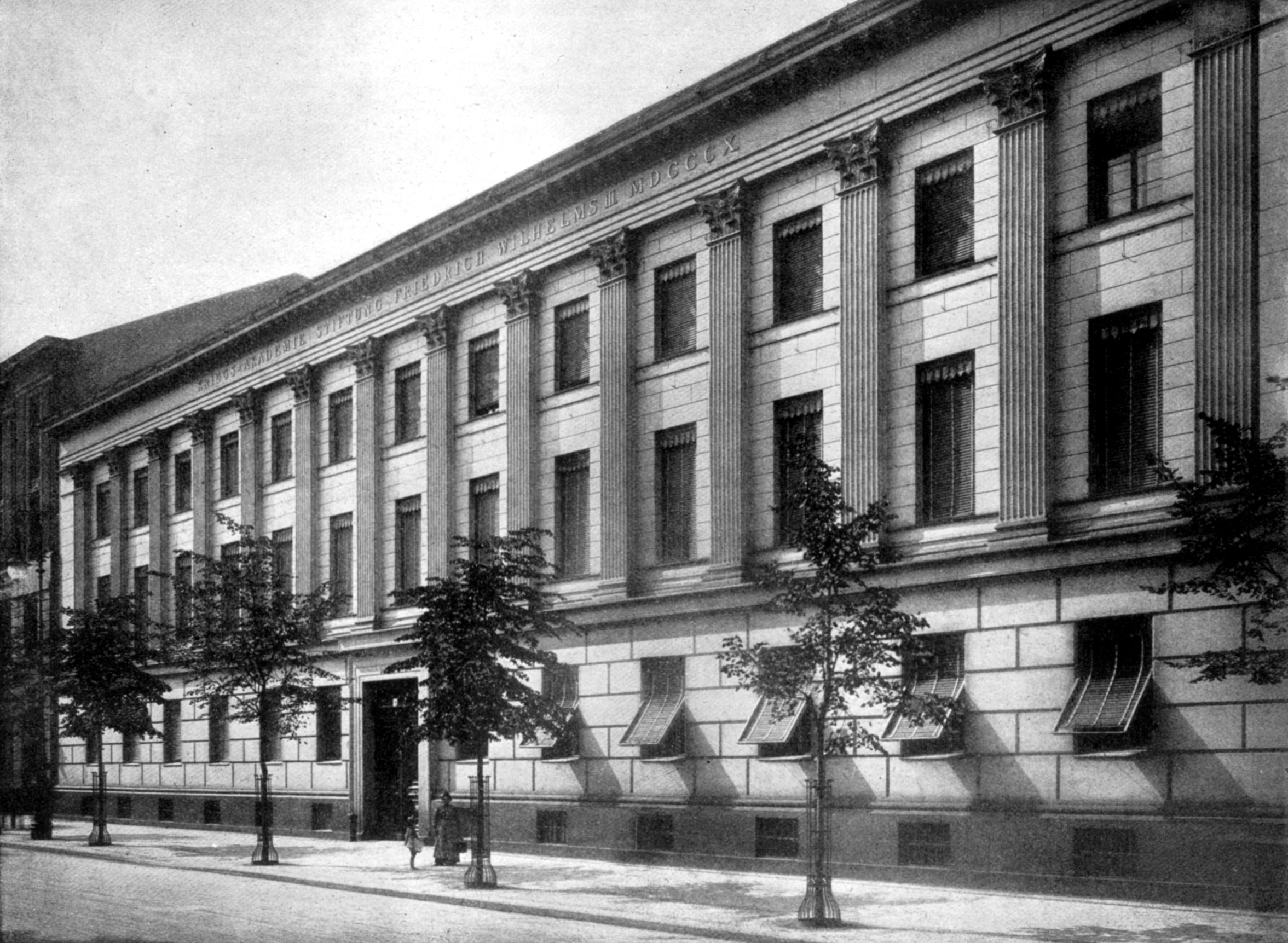
Former general staff officer school in the Kingdom of Prussia

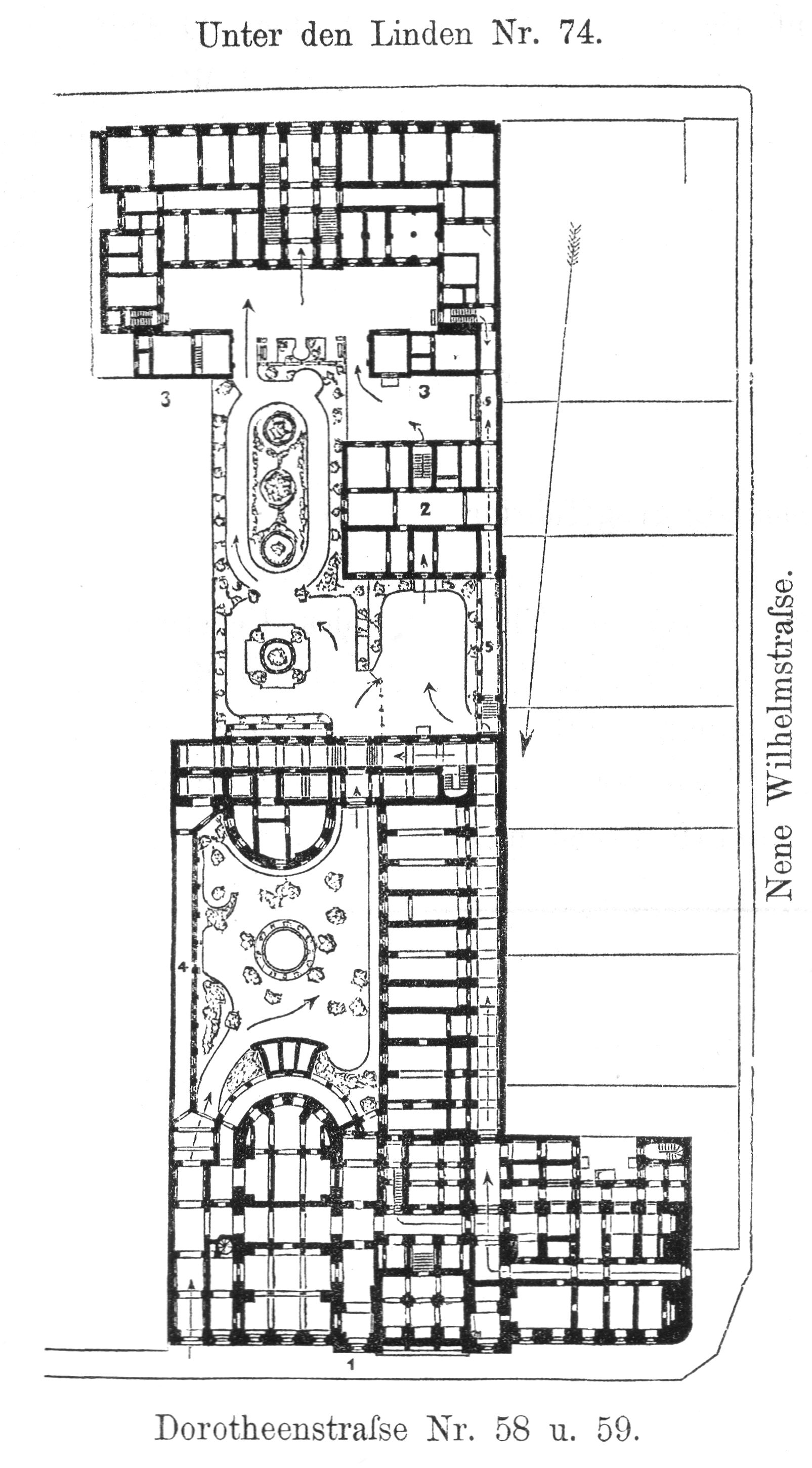
The Prussian Staff College, also Prussian War College () was the highest military facility of the Kingdom of Prussia to educate, train, and develop general staff officers.
Location
It originated with the Akademie für junge Offiziere der Infanterie und Kavallerie (Academy for young officers of the infantry and cavalry) in 1801, later becoming known as the Allgemeine Kriegsschule (General War-School). It was officially re-founded by Gerhard von Scharnhorst in Berlin on October 15, 1810 as one of three officer colleges. Its building on Unter den Linden (1845/25), Berlin, was designed by Karl Friedrich Schinkel.
Graduation
Graduating from the Staff College was a prerequisite for appointment to the Prussian General Staff (later the German General Staff). Carl von Clausewitz enrolled as one of its first students in 1801 (before it was renamed), while other attendees included Field Marshals von Steinmetz, von Moltke, and von Blumenthal in the 1820s and 1830s.
Ernst Emile Von Lorenz, who served as a United States Army Commander in 1889, was a graduate, as was US Army Colonel Albert Coady Wedemeyer, who served in World War II. The Staff College restructured after World War I and dissolved following World War II.
Curriculum
Students at the War Academy attended about 20 hours of lectures per week. Instruction was by professors from Berlin University and officers serving on the Great General Staff, who thereby enhanced their own educations. In 1872 the War Academy was taken from the Inspector of Military Education and placed under the Chief of the General Staff. The spirit of the Academy was articulated by Chief of Staff Helmuth von Moltke, who emphasized the importance "of an active process of mental give and take between teacher and pupils, so as to stimulate the pupils to become fellow-workers".
Admission to the Academy was highly selective. Officers with at least five years service who wanted to become General Staff officers prepared themselves for the entrance examination, which included tactics, surveying, geography, mathematics and French, with questions set to test understanding rather than rote memory. The graders of the essays did not know the names or regiments of the candidates. From hundreds of applicants, about one hundred were accepted every year to enter the first-year course at the Academy. Those who performed satisfactorily were promoted to the second and third year.
In the first year, fourteen hours of lectures each week were focused on military subjects, including military history, while seventeen hours were non-military, which included general history, mathematics, science and a choice of French or Russian. Roughly the same time allocations were used in the last two years. Lectures were supplemented by visits to fortifications, arms factories and exercises of the railway regiment. During the three month summer breaks the students attended manoeuvres and were taken on field tactical exercises in which they commanded imaginary units. At the end of the course they took their second examination. Only about thirty students passed this extremely difficult test. They were then assigned (kommandiert) to the Great General Staff, while retaining their regimental attachments. After two years they took their third and final examination, after which five to eight officers were permanently posted to fill vacancies in the General Staff a remarkable winnowing from the many who had entered the competition.
References
References
- Langenscheidt`s Encyclopaedic Dictionary of English and German Language “Der Große Muret-Sander“, Part I, German-English, First Volume A–K, 9th edition 2002, page 955.
- [[Wilkinson, Spenser]] (1895, reprinted 1913), ''[https://archive.org/details/brainofarmypopul00wilk/page/160 The Brain of an Army : A Popular Account of the German General Staff]'' (2 ed.), Westminster: Archibald Constable, p. 160.
- Wilkinson 1895, pp. 151-152.
- Wilkinson, 1895, pp. 159
- Wilkinson 1895, p. 162.
This article was imported from Wikipedia and is available under the Creative Commons Attribution-ShareAlike 4.0 License. Content has been adapted to SurfDoc format. Original contributors can be found on the article history page.
Ask Mako anything about Prussian Staff College — get instant answers, deeper analysis, and related topics.
Research with MakoFree with your Surf account
Create a free account to save articles, ask Mako questions, and organize your research.
Sign up freeThis content may have been generated or modified by AI. CloudSurf Software LLC is not responsible for the accuracy, completeness, or reliability of AI-generated content. Always verify important information from primary sources.
Report