From Surf Wiki (app.surf) — the open knowledge base
Province of Valladolid
Province of Castile and León, Spain

Province of Castile and León, Spain
| Field | Value | |||||||
|---|---|---|---|---|---|---|---|---|
| name | Province of Valladolid | |||||||
| native_name | es | |||||||
| type | Province | |||||||
| image_skyline | [[File:Panorámica del Castillo de Peñafiel.jpg | 250px]] [[File:Canal de Castilla.jpg | 125px]] [[File:Montealegre paisaje de campo segado y zonas verdes ni.jpg | 125px]] [[File:Pinar 5.JPG | 125px]] [[File:2635-Olmedo (Valladolid).jpg | 125px]] [[File:Castillo de la Mota en Medina del Campo.JPG | 125px]] [[File:Nava del Rey Valladolid bodega ni.jpg | 125px]] |
| image_caption | From top to bottom and from left to right: The Castle of Peñafiel, Canal of Castile, typical landscape of the province, a pine forest, centre of a Castilian town, Castle of La Mota and a wine cellar. | |||||||
| image_flag | Bandera de la provincia de Valladolid.svg | |||||||
| image_shield | Va-dip.svg | |||||||
| image_map | Valladolid in Spain (plus Canarias).svg | |||||||
| map_caption | Map of Spain with Valladolid highlighted | |||||||
| coordinates | ||||||||
| subdivision_type | Country | |||||||
| subdivision_name | Spain | |||||||
| subdivision_type1 | Autonomous community | |||||||
| subdivision_name1 | Castile and León | |||||||
| seat_type | Capital | |||||||
| seat | Valladolid | |||||||
| leader_title | President | |||||||
| area_total_km2 | 8110 | |||||||
| area_rank | Ranked 28th | |||||||
| area_note | 1.61% of Spain | |||||||
| blank_name_sec1 | Official language(s) | |||||||
| blank_info_sec1 | Spanish | |||||||
| population_total | 525398 | |||||||
| population_as_of | 2024 | |||||||
| population_rank | Ranked 29th | |||||||
| population_density_km2 | auto | |||||||
| population_demonym | ||||||||
| population_note | 1.11% of Spain | |||||||
| blank_name_sec2 | Parliament | |||||||
| blank_info_sec2 | Cortes Generales | |||||||
| blank1_name_sec2 | Congress seats | |||||||
| blank2_name_sec2 | Senate seats | |||||||
| iso_code | ES-VA | |||||||
| website | diputaciondevalladolid.es |
Valladolid () is a province of northwestern Spain, in the central part of the autonomous community of Castile and León. It has a population of 525,398 across a total of 225 municipalities, an area of 8,110 km2, resulting in a population density of 64.77 people per km2.
The capital is the city of Valladolid. It is bordered by the provinces of Zamora, León, Palencia, Burgos, Segovia, Ávila, and Salamanca. It is the only Spanish province surrounded entirely by other provinces of the same autonomous community. It is the only peninsular province that has no mountains.
Lying on an extensive plain relevant to overland transport, the province is a major communications hub. Nationally, it connects Madrid with the north of Spain, from Vigo in Galicia to San Sebastián in the Basque Country; internationally, it is on the shortest land route connecting Porto in the north of Portugal with Hendaye in the south of France.
The cuisine of the province is similar to that of the rest of Castile, with meats and roasts occupying a central place. One of the most typical dishes is lechazo, a dish made from unweaned lambs (similar to veal). Suckling pig, black pudding, sausages, sheep's milk cheeses, and breads are also traditional. The province has five wines with a denomination of origin.
The province once served as the capital of the Castilian court and the former capital of the Spanish Empire during the reigns of Emperors Carlos I, Philip II and Philip III, with many castles and strongholds from that time remaining to this day. The capital has an important historical and artistic heritage and is home to one of the more important sculpture museums in Europe. The province of Valladolid is particularly noted for its Holy Week processions, both in the capital and in the localities of Medina de Rioseco and Medina del Campo. In addition, the province includes two sites listed in the UNESCO Memory of the World Programme: the Treaty of Tordesillas and the Archivo General de Simancas.
History
Main article: Vaccaei, Crown of Castile

_1.083_JUAN_PONCE_DE_LEÓN.jpg)
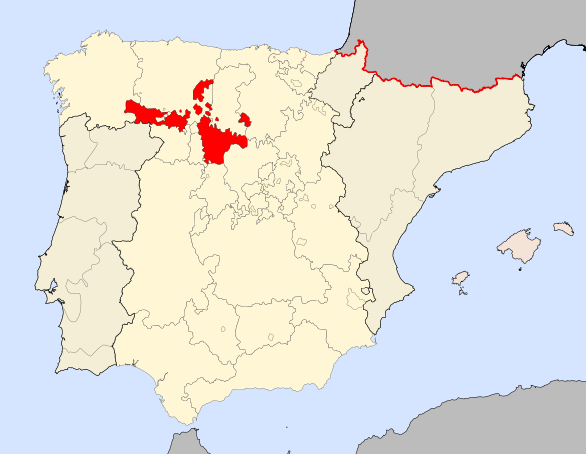
The province of Valladolid was established by the Royal Decree of 29 September 1833, promoted by Minister Javier de Burgos; it was attached to the historic region of Old Castile.
The first stable population to settle in the present province were the pre-Roman Vaccaei people (Spanish: vacceos; the area they inhabited is called the "Vaccea Region"). They belonged to a very advanced culture when the other Celtic peoples arrived in the peninsula from northern Europe (there is evidence that they also occupied territories corresponding to other provinces). Chronicles defined the region as "free and open" and "an open country, fields of wheat, deforested land"; the Vacceos engaged in livestock farming and especially agriculture (cereals).
In 178 BC, the Romans conquered the territory. The lands that make up the current province came under their occupation until the barbarian invasions of the early fifth century AD, when the province came under the control of the Visigothic Kingdom.
Following the Muslim invasion of the Iberian Peninsula in 711, Muslims arrived in the area in 712. Later, during the Reconquista, this area was the subject of battles between the Muslims and the Christian Kingdom of León in the first half of the eleventh century. In 939, the Battle of Simancas secured control of the Douro river basin for the Christian kingdoms. Valladolid was founded in 1072 by Count Pedro Ansúrez. From here its history was linked to that of the Crown of Castile. Cities such as Medina del Campo or Valladolid became important Castilian administrative centres and experienced an economic boom (including the mesta and fairs).
The province was of great importance in the Discovery of the Americas in 1492; Christopher Columbus spent the last years of his life in Valladolid until his death in 1506. It played a role in the subsequent colonization with explorers such as Juan Ponce de León, discoverer of Florida (United States). The Treaty of Tordesillas, which decided the partition of the New World between the Catholic Monarchs and the Kingdom of Portugal and shaped Latin America, was signed in Tordesillas.
The Revolt of the Comuneros occurred in 1520 and ended with the ringleaders publicly executed in Villalar de los Comuneros. Valladolid became the capital of the Spanish Empire between 1601 and 1606. When the Empire began to decline due to continued wars and the emergence of new powers, there was an economic decline in the area, as in the rest of the Spanish monarchy. During the War of the Spanish Succession (1700–1715), the province sided with the Bourbon pretender, who eventually secured the throne. In the Peninsular War against France (1808–1814), a succession of small battles occurred, led by guerrilla fighters such as "The Undaunted".
In the Spanish Civil War (1936–1939), Valladolid was the "most significant regional nucleus" of Falangism in the Spanish Second Republic, garnering the second-highest provincial vote for the party in the otherwise dismal (for Falangists) elections of 1936, just behind Cádiz. The province was controlled by Franco's Nationalists throughout the Civil War. During the Franco period there was an exodus from the rural countryside to the industrial cities. A further exodus occurred with the arrival of democracy in Spain (early 1980s), when the province was made part of the new autonomous community of Castile and León.
A process of economic growth began that peaked with the Spanish property bubble and then suffered from the economic crisis of 2008–2015, similar to the rest of southern Europe. Subsequently, there was some economic growth until 2020, when the COVID-19 pandemic caused the declaration of a state of alarm throughout Spain, resulting in a strong economic standstill. After the lifting of lockdown measures, economic activity reactivated.
Geography

Main article: Geography of Spain
It is bordered by the provinces of Burgos, Palencia and León to the north; Zamora to the west; Salamanca and Ávila to the south; and Segovia to the east. It is the only Spanish province surrounded entirely by others in the same autonomous community (Castile and León).

The province of Valladolid covers an area of 8,110 km2. It is located in the centre of the Meseta Central, a plateau in the middle of the northern half of the Iberian Peninsula, and is characterized by its uniform terrain (777 metres on average with a maximum difference in altitude of 300 metres), making it the most geographically homogeneous province in Spain. The Douro river, which crosses it from east to west, is the backbone of the territory.
It is dominated by an extensive plain in which several areas are distinguished: a moorland area defined by river valleys, some of which stand out in altitude causing a mountainous landscape of isolated hills, such as the Montes Torozos, San Cristobal hill (843 m) and the Sardanedo (854 m); a countryside of rolling hills; and separating them, slopes and deep gorges, such as the Cuesta del Prado, Santovenia, and Cabezón de Pisuerga.

It is the only peninsular province with absolutely no mountains (it has no coastline either), and—together with the Province of Almería—is the least forested (less than 16% of the territory). The highest point is in Castrillo de Duero at the Cuchillejos hill (933 m). The lowest point is the Douro passing by Villafranca de Duero (626 m). Therefore, it is also the only province of Castile and León that does not reach 1,000 m above sea level at any point in its territory.
The hydrographic network is dominated by the Douro and its tributaries (Pisuerga, Esgueva, Adaja, Eresma, Duratón, Zapardiel and Cega, among others) and completed by the Canal de Castilla and the Canal of Douro. There is only one relevant lake: Laguna de Duero. The province has four reservoirs: Encinas de Esgueva, San José, Bajoz and Valdemudarra, all built in the 20th century, except for the last one, which was built in the 2000s.
Climate
.PNG)
The Continental Mediterranean climate is typical of the Meseta Central where the province of Valladolid is located. It is similar to the typical Mediterranean climate but with characteristics of continental climates, including more extreme temperatures, although it is not different enough to be classified separately. In addition, this climate does not receive the influence of the sea; consequently, temperatures are among the most extreme in Spain, with very hot summers and quite cold winters, with a range of 18.5 °C. According to the Köppen climate classification, the main climate in the province in the 1981–2010 reference period is type Csa (Hot-summer Mediterranean climate) and type Csb (Warm-summer Mediterranean climate).
Summer is the driest season and can frequently exceed 30 °C, reaching sporadically over 35 °C. However, in winter it is frequent for temperatures to fall to 0 °C, producing ice on cloudless nights and snow sporadically. When frost combines with fog, it produces hard rime, a very characteristic phenomenon of the area. This northern region of Spain, along with the rest of the provinces of Castile and León, is the coldest region in Southern Europe.


Rainfall follows a very similar pattern to that of the typical Mediterranean climate, reaching between 400 and 600 mm, with a peak during spring and autumn. The declining influence of the sea, however, makes it a drier climate than typical. In the province of Valladolid, the continental Mediterranean climate has temperatures approximately two degrees higher than in other areas with this climate, mainly due to the scarcity of mountains in this province and the altitude, which is between 50 and 200 metres lower on average than in the whole of Castile and León.
Therefore, the province of Valladolid has the most moderate climate of the northern plateau, with an average annual temperature of 11.8 °C. Its average annual rainfall ranges between 400 and 600 millimetres per year, distributed throughout the year with a fairly strong minimum in summer and a very attenuated winter minimum. Rainfall in the province of Valladolid is generally gentle and spread over several days, which favors agriculture.
The extreme weather values recorded at either of the two State Meteorological Agency (AEMet) observatories in the province are 40.2 °C recorded on 19 July 1995, at the Valladolid observatory and -18.8 °C recorded at the Villanubla observatory on 3 January 1971. The strongest wind gust recorded was 133 km/h on 24 January 1971, while the maximum accumulated precipitation in a single day was 90.8 l/m2 on 5 December 1951.
|Jan record high C = 17.0 |Feb record high C = 23.6 |Mar record high C = 24.6 |Apr record high C = 29.2 |May record high C = 33.0 |Jun record high C = 37.0 |Jul record high C = 39.4 |Aug record high C = 38.6 |Sep record high C = 37.6 |Oct record high C = 29.0 |Nov record high C = 23.2 |Dec record high C = 19.8 |Jan record low C = −18.8 |Feb record low C = −16.0 |Mar record low C = −12.4 |Apr record low C = −6.5 |May record low C = −5.4 |Jun record low C = −0.5 |Jul record low C = 2.4 |Aug record low C = 2.4 |Sep record low C = −0.4 |Oct record low C = −5.6 |Nov record low C = −9.2 |Dec record low C = −12.6 |access-date= 22 September 2012}} |access-date=22 September 2012 |archive-url=https://web.archive.org/web/20131215190816/http://www.aemet.es/es/serviciosclimaticos/datosclimatologicos/efemerides_extremos?w=0&k=cle&datos=det&l=2539 |archive-date=15 December 2013 |url-status=dead
Nature


- Nature Reserve Banks of Castronuño (Spanish: Reserva Natural de las Riberas de Castronuño-Vega del Duero): Located in the Montes Torozos shire, this is an area of moorland and sedimentary floodplains. It is a migratory and nesting area for waterbirds. The Duero is surrounded by riparian forests and constitutes a very interesting swamp ecosystem. It is an area of great plains and an absence of high elevations. Fauna is abundant, including herons, night herons, little egrets, snakes, northern shovelers, common pochards, tufted ducks, cormorants, hobbies, ospreys, grass snakes, ladder snakes, peregrine falcons, ocellated lizards, San Antonio frogs, midwife toads, polecats, and badgers. The nature reserve is considered a Special Protection Area for Birds.
- Canal of Castile (Spanish: Canal de Castilla): Construction started in 1753 and took almost a century to complete; it opened in 1849. It is shaped like an inverted "Y" and its purpose was the transport of Castilian wheat toward the ports of the Cantabrian Sea, but the arrival of the railroad soon made it obsolete. It crosses nine municipalities in the province. With the passage of time, a series of wetlands of high ecological value have formed along the banks of the canal, representing an island of biodiversity. Its high ecological value is related to its diverse aquatic vegetation and the large number of vertebrate species supported by them. The canal hosts 121 species of nesting, wintering, and accidental birds; 42 species of mammals, 15 of them insectivorous; 11 species of amphibians; 14 reptiles; and 14 species of fish.
Flora and vegetation
Main article: Forests of the Iberian Peninsula
Vegetation is typical of the plateau (700–800 metres above sea level), with various species of pine (Pinus pinea and Pinus pinaster), holm oak (Quercus ilex), oak (Quercus pyrenaica and Quercus faginea), Cork oak (Quercus suber), elms, poplars, ashes, willows, alders, honeysuckles, cane, bulrushes, shrubs and pastures.
Fauna
Main article: Wildlife of Spain
In general, animals found in the area are those of a typical Mediterranean plateau, such as the European rabbit, red squirrel, European hedgehog, common vole, partridge, little bustard and great bustard, white stork, barn swallow, European robin, common cuckoo, common nightingale, common woodpigeon, Eurasian magpie, mallard, greylag goose, Spanish sparrow and House sparrow, Perez's frog, Montagu's harrier, western marsh harrier, hen harrier, peregrine falcon, short-toed snake eagle, lesser kestrel, common crane, pin-tailed sandgrouse, Geoffroy's bat, trout, common carp, crayfish, Eurasian otter, shrew, Iberian hare, roe deer, wild boar, red fox and grey wolf.
Nava del Rey Valladolid campos labor ni.JPG|Cultivated fields Villavaquerín paisaje.JPG|Typical field Montealegre paisaje de campo segado y zonas verdes ni.jpg|Harvest field Duero 7.JPG|Douro River Pinar 4.JPG|Pines
Economy


The GDP per capita of the province was €24,751 per year in 2010 (approximately $32,176). The province's GDP per capita was 109% of the national average. The total GDP of the province amounted to €13,000,403,000 (approximately $16.9 billion).
Agriculture is dedicated to the cultivation of cereals (wheat and barley), legumes, sugar beets, alfalfa, vegetables, and vines. Livestock farming is also important. Intense industrial activity, especially concentrated in the capital, is derived from agriculture (pasta, flour, chocolate, sugar, etc.), textiles, metallurgy, automobile manufacturing (FASA-Renault), chemicals, construction, paper, and graphic arts. In addition to the capital city Valladolid, the populations of Medina del Campo, Peñafiel, Tordesillas, Tudela de Duero, Laguna de Duero, Íscar, Olmedo and Pedrajas de San Esteban (the last due to its large production of pine nuts) are notable.
The top 10 companies by economic turnover in 2013 were: Renault-España, Michelin, Iveco, El Árbol, Aquagest (Grupo Agbar), Lauki (Lactalis), Begar, ACOR, Grupo Norte and Queserías Entrepinares.
Transport
The province of Valladolid has great strategic importance as a communications hub. Nationally, it is the route that connects Madrid with the entire north of Spain, from Vigo (Galicia) to San Sebastián (Basque Country). Internationally, it lies on the shortest land route connecting Portugal with France, from northern Portugal (Porto) to southern France (Hendaye).
Roads
| Name | From/Until | Important towns of Valladolid where it passes | |
|---|---|---|---|
| [[File:ESP A-6.svg | 48px]] Autovía del Noroeste | Madrid–A Coruña | Medina del Campo, Rueda, Tordesillas, Urueña |
| [[File:ESP A-62.svg | 66px]] Autovía de Castilla | Burgos–Portugal | Cabezón de Pisuerga, Cigales, Valladolid, Simancas, Tordesillas, Alaejos |
| [[File:ESP A-11.svg | 48px]] Autovía del Duero | Soria–Zamora | Peñafiel, Quintanilla de Onésimo, Tudela de Duero, Valladolid, Tordesillas |
| [[File:ESP A-60.svg | 66px]] Autovía Valladolid-León | Valladolid–León | Valladolid, Medina de Rioseco, Mayorga |
| [[File:ESP A-601.svg | 72px]] Autovía de Pinares | Valladolid–Segovia | Valladolid, Boecillo, Portillo, Aldeamayor de San Martín |
| [[File:ESP VA-11.svg | 66px]] VA-11 | Valladolid–Tudela de Duero | Valladolid, Tudela de Duero |
| [[File:ESP VA-12.svg | 72px]] VA-12 | Valladolid–Boecillo | Valladolid, Laguna de Duero, Boecillo |
| [[File:ESP VA-20.svg | 78px]] VA-20 | Valladolid–Arroyo de la Encomienda | Valladolid, Arroyo de la Encomienda |
| [[File:ESP VA-30.svg | 78px]] VA-30 | Cabezón de Pisuerga–Arroyo de la Encomienda | Cabezón de Pisuerga, Santovenia de Pisuerga, Renedo de Esgueva, Valladolid, Arroyo de la Encomienda |

| Name | From/Until | Important towns of Valladolid where it passes |
|---|---|---|
| Madrid–A Coruña | Medina del Campo, Rueda, Tordesillas, Mota del Marqués, Villardefrades | |
| Zaragoza–Portugal | Peñafiel, Quintanilla de Arriba, Quintanilla de Onésimo, Tudela de Duero, Valladolid, Tordesillas | |
| Madrid–León | Olmedo, Mojados, Laguna de Duero, Valladolid, Medina de Rioseco, Mayorga | |
| Burgos–Portugal | Valladolid, Tordesillas, Alaejos |
| Name | From/Until | Important towns of Valladolid where it passes |
|---|---|---|
| Lisbon–Gürbulak | Valladolid, Tordesillas, Alaejos | |
| Tordesillas–Porto | Tordesillas |
Railways

The AVE (Spanish High Speed) network in the province of Valladolid includes stops in the towns of Valladolid, Olmedo, and Medina del Campo. These are part of the following lines: the Madrid–Valladolid high-speed rail line, the Madrid–León high-speed rail line, and the Madrid–Galicia high-speed rail line. A "bypass" near Olmedo is under construction; it will connect the Madrid–Valladolid line with the Madrid–Galicia line.
The future Atlantic Corridor (CORR 7), part of the basic Trans-European Transport Network (TEN-T), will serve as a passenger and freight rail corridor connecting the ports of the Atlantic coast with the interior and the rest of Europe. It is scheduled for completion before 2031.
The publicly owned railway company Renfe operates long-distance and high-speed rail services (AVE, Avant and Talgo).
Airports
.jpg)
The province has one airport, Valladolid Airport, located in Villanubla. It handled 172,006 passengers, 7,268 aircraft movements, and 6,317 tonnes of cargo in 2022. It serves as a key passenger hub for Castile and León, linking to destinations such as Alicante, Barcelona, Palma de Mallorca, Ibiza, Menorca, Gran Canaria, Tenerife South, Lanzarote, Valencia, and Málaga.
There are also a number of small private airfields.
Government and politics

]]

The Province of Valladolid was established by the Royal Decree of 29 October 1833, driven by the minister Javier de Burgos, like the rest of the provinces of the country (see: 1833 territorial division of Spain). This division considered the common historic, cultural, and economic characteristics of each territory.
The government and administration of the province of Valladolid is the responsibility of the , as outlined in the statute of autonomy of Castile and León. Its headquarters have been located in the Pimentel Palace of Valladolid since 1875, when the building was purchased by the Provincial Government.
Political divisions
Today, the province does not have official divisions, but historically it has been divided into eight comarcas (a Spanish term for shires):
- Tierra de Campos ("Land of Fields")
- Montes Torozos ("Torozos Mountains")
- Campiña del Pisuerga ("The Pisuerga Countryside")
- Páramos del Esgueva ("Esgueva's Moorland")
- Tierra del Vino ("Land of Wine")
- Tierra de Pinares ("Land of Pines")
- Campo de Peñafiel ("Peñafiel Field")
- Tierra de Medina ("Land of Medina")
Demography
Population trends
|1833|184647 |1860|246981 |1887|267148 |1900|283045 |1918|287713 |1930|311414 |1940|332934 |1950|348185 |1960|367392 |1970|413026 |1981|481786 |1990|494912 |1995|504583 |2000|495690 |2005|514674 |2010|533640 |2015|526223 |2020|520716
Colors= id:lightgrey value:gray(0.9) id:darkgrey value:gray(0.7) id:sfondo value:rgb(1,1,1)
ImageSize = width:600 height:auto barincrement:28 PlotArea = left:40 bottom:40 top:20 right:20 DateFormat = x.y Period = from:0 till:550 TimeAxis = orientation:horizontal AlignBars = late ScaleMajor = gridcolor:darkgrey increment:50 start:0 ScaleMinor = gridcolor:lightgrey increment:10 start:0 BackgroundColors = canvas:sfondo
PlotData= color:skyblue width:20 shift:(-50,-5) fontsize:M anchor:till bar:1833 from:0 till:185 text:184,647 bar:1860 from:0 till:247 text:246,981 bar:1887 from:0 till:267 text:267,148 bar:1900 from:0 till:283 text:283,045 bar:1918 from:0 till:288 text:287,713 bar:1930 from:0 till:311 text:311,414 bar:1940 from:0 till:333 text:332,934 bar:1950 from:0 till:348 text:348,185 bar:1960 from:0 till:367 text:367,392 bar:1970 from:0 till:413 text:413,026 bar:1981 from:0 till:482 text:481,786 bar:1990 from:0 till:495 text:494,912 bar:2000 from:0 till:496 text:495,690 bar:2010 from:0 till:534 text:533,640 bar:2020 from:0 till:521 text:520,716 bar:2024 from:0 till:525 text:525,398 TextData= pos:(35,20) fontsize:M text:"Source: Instituto Nacional de Estadística, INE"
Demographic indicators
Population
Valladolid is the most populous province of Castile and León, with 525,398 people in 2024 (INE), representing more than 20% of the community's total population. It holds 1.08% of the national population and is the 19th most populous province in Spain.
It has one of the few growing populations in Castile and León and is also one of the youngest. The population is also characterized by having one of the highest life expectancies in Spain and Europe.
Immigration
| Foreign population by nationality | |||
|---|---|---|---|
| Main countries (2019) | Country | Number | % |
| 5,160 | 20.89% | ||
| 5,039 | 20.40% | ||
| 3,432 | 13.89% | ||
| 1,209 | 4.89% | ||
| 863 | 3.49% | ||
| 850 | 3.44% | ||
| 812 | 3.28% | ||
| 715 | 2.89% | ||
| 683 | 2.76% | ||
| 456 | 1.84% | ||
| 365 | 1.47% | ||
| 352 | 1.14% |
As of 2015, immigrants in Valladolid represented 4.81% of the population, with 25,324 immigrants holding a residence card.
Composition of the population
Most of the population of Valladolid (65.4%) was between 16 and 64 years old in 2006 (INE). 17.7% were aged 65 years or more, and 16.9% were children or adolescents.
Total Population of the Province (2021)
- Men: 252,843 (48.7%)
- Women: 266,518 (51.3%)
- Total: 519,361
People by age
- 0–19 years: 90,345 (17.4%)
- 20–39 years: 102,165 (19.7%)
- 40–59 years: 167,904 (32.3%)
- over 60 years: 158,947 (30.6%)
Most populous municipalities
The twenty most populated municipalities in the province of Valladolid are the following (INE 2025):
Considering that the populations of Valladolid, Laguna de Duero, Arroyo de la Encomienda, and Medina del Campo represent almost 75% of the total of the 23 municipalities in the metropolitan area of Valladolid, there is a clear demographic contrast with highly depopulated areas of a marked rural character. Among the least inhabited areas of the province are Aguasal, Torrecilla de la Torre, Almenara de Adaja, San Salvador, and Fontihoyuelo, which do not exceed 40 registered inhabitants.
Heritage


Main article: :Category:Bien de Interés Cultural landmarks in the Province of Valladolid
The province has a total of 188 monuments considered Properties of Cultural Interest. Many are castles, churches, and historical sites, although there are also archaeological sites and archives. In the case of churches and monasteries, there is a wide variety of architectural styles, including Pre-Romanesque, Romanesque, Gothic, Renaissance and Baroque.
File:San Cebrián de Mazote iglesia mozarabe ni.jpg|Church of San Cipriano of San Cebrián de Mazote, of Pre-Romanesque style. File:Urueña anunciada1 lou.jpg|Church of Our Lady of the Announced of Urueña, example of Romanesque. File:Fachada de la iglesia conventual de San Pablo (Valladolid).jpg|San Pablo Church (Valladolid), example of Gothic style. File:Valladolid - Catedral.jpg|Cathedral of Valladolid, example of Renaissance Herrerian style. File:Rueda - Iglesia de Nuestra Señora de la Asuncion 3.JPG|Church of Our Lady of the Assumption of Rueda, one of the best examples of Baroque.
Castles of Valladolid
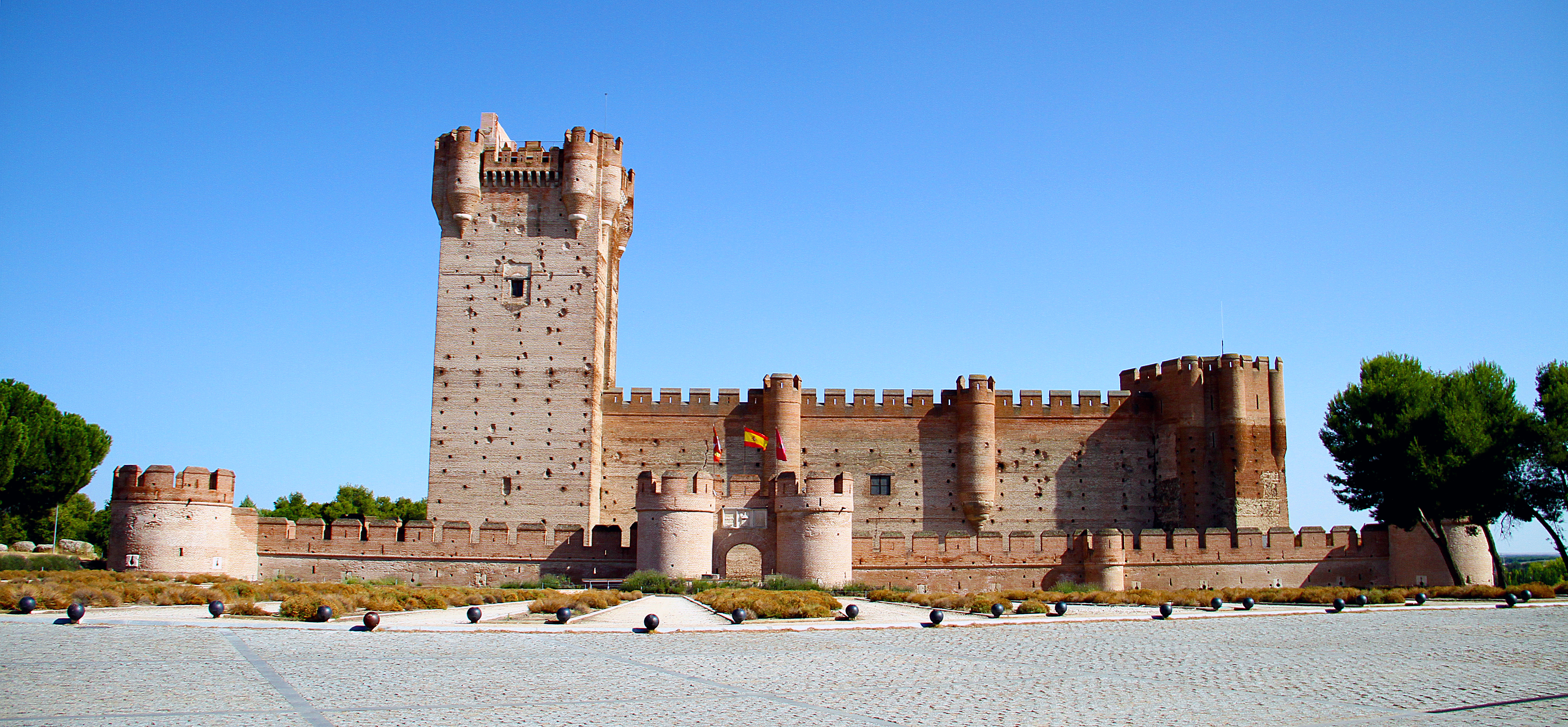
The province of Valladolid is one of the European regions with the most castles, and is improving them for public use. The importance of these castles has led to the "School of Valladolid" (escuela de Valladolid) model of castle construction. The following castles are preserved in the province:
- Castromembibre Castle (Castromembibre)
- Peñafiel Castle (Peñafiel)
- Curiel de Duero Castle-Palace (Curiel de Duero)
- Curiel de Duero Castle (Curiel de Duero)
- Canillas de Esgueva Castle (Canillas de Esgueva)
- Encinas de Esgueva Castle (Encinas de Esgueva)
- Foncastín Castle (Foncastín)
- Fuensaldaña Castle (Fuensaldaña)
- Fuente el Sol Castle (Fuente el Sol)
- Íscar Castle (Íscar)
- La Mota Castle (Medina del Campo)
- Mota del Marqués Castle (Mota del Marqués)
- Montealegre Castle (Montealegre)
- Mucientes Castle (Mucientes)
- Portillo Castle (Portillo)
- San Pedro de Latarce Castle (San Pedro de Latarce)
- Tiedra Castle (Tiedra)
- Tordehumos Castle (Tordehumos)
- Castle of Torrelobatón (Torrelobatón)
- Trigueros del Valle Castle (Trigueros del Valle)
- Urueña Castle (Urueña)
- Villafuerte de Esgueva Castle (Villafuerte de Esgueva)
- Villagarcia de Campos Castle (Villagarcia de Campos)
- Villavellid Castle (Villavellid)
- Castle of Simancas (Simancas)
- Castroverde de Cerrato Castle (Castroverde de Cerrato)
- Villalba de los Alcores Castle (Villalba de los Alcores)
- Barcial de la Loma Castle (Barcial de la Loma)
- Alaejos Castle (Alaejos)
- Pozaldez Castle (Pozaldez)
- San Martín de Valvení Castle (San Martín de Valvení)
- Eván de Abajo Castle (Siete Iglesias de Trabancos)
- Eván de Arriba Castle (Siete Iglesias de Trabancos)
- Alderete Palace-Castle (Tordesillas)
- Villagómez la Nueva Castle (Villagómez la Nueva)
Walls
- Walls of Cigales (Cigales)
- Walls of Curiel de Duero (Curiel de Duero)
- Walls of Mayorga (Mayorga)
- Walls of Medina de Rioseco (Medina de Rioseco)
- Walls of Medina del Campo (Medina del Campo)
- Walls of Olmedo (Olmedo)
- Walls of Peñafiel (Peñafiel)
- Walls of Portillo (Portillo)
- Walls of Tordesillas (Tordesillas)
- Walls of Torrelobatón (Torrelobatón)
- Walls of Tudela de Duero (Tudela de Duero)
- Walls of Urueña (Urueña)
- Walls of Valbuena de Duero (Valbuena de Duero)
- Walls of Valladolid (Valladolid)
- Walls of Villabrágima (Villabrágima)
- Walls of Villalba de los Alcores (Villalba de los Alcores)
Monasteries
Monasteries are another important part of the province's cultural heritage. Some are in excellent condition, while others are preserved only as ruins. Some of the most important are: File:Valladolid monasterioValbuena01 lou.jpg|Monastery of Santa María de Valbuena. File:84 Monasterio de Palazuelos vista general ni.jpg|Monastery of Santa María de Palazuelos. File:Valladolid monasterio Retuerta 01 lou.JPG|Monastery of Santa María de Retuerta. File:Atrio de las Claras.jpg|Monastery of Santa Clara. File:Monasterio La Espina, fachada.JPG|Monastery of Santa María de La Santa Espina. File:VillalbaDeLosAlcores20100114233017SAM 2334.jpg|Monastery of Santa María de Matallana.
Culture
Main article: Holy Week in Valladolid, Seminci


.jpg)
The provincial government is developing a programme called "Cultural Travel" with the intention of bringing the rich history and cultural heritage of the province of Valladolid to the population of the province and all of Spain (including castles, palaces, churches, museums, and gastronomy). The province is one of the most advanced in terms of museums, hosting some of the most important in Castile and León and Spain.
Holy Week (Spanish: Semana Santa) is one of the best known Catholic traditions in the province. It is the annual commemoration of the Passion of Jesus Christ celebrated by Catholic brotherhoods and fraternities that perform penance processions on the streets of each city and town during the last week of Lent, immediately before Easter.
Easter is one of the most spectacular and emotional festivals in Valladolid. Religious devotion, art, colour and music combine in acts to commemorate the death of Jesus Christ: the processions. Members of the different Easter brotherhoods, dressed in their characteristic robes, parade through the streets carrying religious statues (pasos) to the sound of drums and music.
Seminci ("Valladolid International Film Festival") is a film festival held annually in Valladolid since 1956. It is one of the foremost (and oldest) film festivals. The festival has always been characterised by its willingness to take risks and innovate in its programming. It has also been keen to examine critically each new school or movement as it has arisen, whether German, Polish, Chinese, Canadian or otherwise. With a genuine concern for the art of cinema, film-making and film-makers rather than the commercial or glamorous aspects of the industry, the festival has built an identity of its own – equally attractive to enthusiasts, professionals and the media.
The National Sculpture Museum holds more than 1,500 sculptures and 1,200 paintings from the Middle Ages until the beginning of the 19th century, as well as a number of high-quality paintings (Rubens, Zurbarán or Melendez, among others). The sculptural collection is the most important in the Iberian Peninsula and one of the most prominent European collections of this type.
The museum exhibits many national and European sculptures, as well as paintings ranging from the 13th to 19th centuries from the Iberian Peninsula and former territories linked to Spain (Latin America, Flanders and Italy). Painters such as Bononi, Rubens, Zurbarán, Ribalta and Melendez are present, but the centre of the collection corresponds to sculptures dating from the 15th to 17th centuries.
UNESCO awarded the World Heritage Site distinction within the Memory of the World Programme category to the Treaty of Tordesillas in 2007 and the Archivo General de Simancas in 2017.
Languages
Spanish is the only official language throughout the territory. Valladolid is notable for having been the residence of the author of Don Quixote, Miguel de Cervantes, as well as authors such as José Zorrilla and Miguel Delibes, and for the influence of its University. The province receives a significant number of people eager to learn the Spanish language (language tourism).
Some outstanding personalities from Valladolid in the field of literature in the Spanish language are:
File:Jose zorrilla.jpg|José Zorrilla File:Jorge Guillén y la infancia.jpg|Jorge Guillén File:Miguel Delibes (1998) - 1.tif|Miguel Delibes File:Rosa Chacel.jpg|Rosa Chacel
Cuisine

Main article: Cuisine of the province of Valladolid
The gastronomy of the Valladolid province is typically Spanish, although each area presents a different picture. In the northern area of the province, especially in the region of Tierra de Campos ("Land of Fields"), traditional sheep's cheese is made, among which is the cheese of Villalón de Campos, fresh or cured; it is a cheese also known as pata de mulo ("mule's leg"). Also common are garlic soup, stew developed slowly over a fire, lentils stewed elaborately with the Pardina variety from Tierra de Campos, and pigeon or squab prepared with different techniques. Among the typical cakes are the rolls of the Virgin of the Sources (rollos de la Virgen de las Fuentes) in Villalón de Campos, rosquillas de palo (stick doughnuts), aceitadas, oil cakes and greaves. In Medina de Rioseco one can taste traditional sugared almonds or marinas, puff pastry filled with cream and covered with sugar.
Wine

Wines from the province of Valladolid are among the best in the world due to their taste and quality. An example of the fame of these wines is the Vega Sicilia winery. The province has five wines with a Denomination of Origin. Wines of Rueda Denomination of Origin were considered the wines of the court at the time of the Catholic Monarchs. The Verdejo grape variety is used for its production, and to a lesser extent, Sauvignon blanc. Under this appellation, there are white, sparkling, red, rosé and liqueur wines.
Wines of Ribera del Duero are made with the Tinta del País (Tempranillo) grape, and produce young red wines, Reserva and Gran Reserva. Wines of the Toro Designation of Origin are mainly white, rosé and red; the wines of Tierra de León Denomination of Origin are white, rosé and red; and finally, there are the rosé wines of the Cigales Denomination of Origin.
File:DO Cigales.svg|Cigales Denomination of Origin File:DO Ribera del Duero.svg|Ribera del Duero File:DO Rueda.svg|Rueda Denomination of Origin File:DO Toro.svg|Toro Designation of Origin File:DO Tierra de León.svg|Tierra de León Denomination of Origin
Meat
The province is also famous for its meats, mainly lechazo (veal or lamb), suckling pig, steaks, chops, veal ribs, pork ribs, black pudding, and embutidos. There are numerous restaurants that specialize in lechazo and feature hornos de leña (wood-fired ovens), in which the lamb is roasted. The typical restaurant where the meat is traditionally cooked is called a mesón castellano (Castilian tavern).
Bread
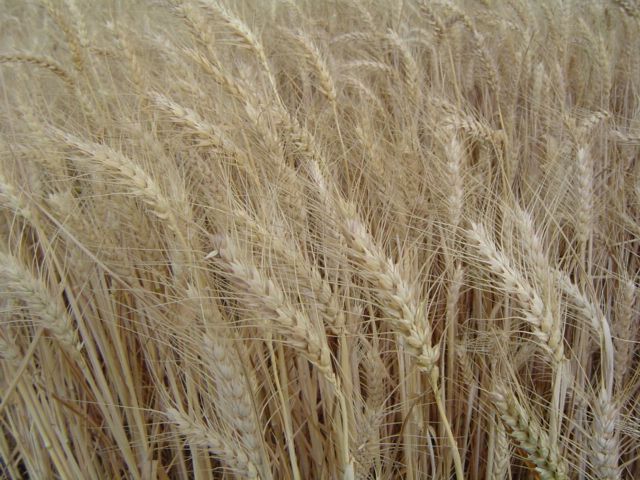
Bread made in the province of Valladolid has a great tradition that goes back to the ninth century (see also: History of bread). Holy Roman Emperor Charles V, during his retreat in the monastery of Yuste, had bread brought from Valladolid; during the 16th century the master bakers were financially supported by the Crown.
The typically Castilian bread is named "Candeal bread", "sobao o bregado" ("kneaded" or "labored"), because since remote times in Castile the wheat variety most used is durum. It has a thin, lightly toasted crust, and a very white, compact crumb with a fine texture and distinctive flavour. This type of bread is suitable to accompany red meats, stews or legumes accompanied by wines from the province. Traditionally it is made by hand, with slow fermentation and prolonged baking in a wood-fired oven.
Different varieties fall under this denomination; the most prominent is the "lechuguino bread" variety, characterized by its typical pattern and care that gives the name to the variety, since formerly, especially in rural areas, "lechuguino" referred to people who were overly dressed up.
Other varieties are the typical four-cornered bread (pan de cuatro canteros), with a characteristic splitting of the dough where the central part is separated from the four edges; the checkered bread (pan de cuadros); the pulley bread (pan de polea), with a slit made with a string that imitates a pulley; the white bar or peaks; and the Fabiola, created in 1961 by a baker from Valladolid in honour of Queen Fabiola of Belgium.
Other types not so traditional in the province but widely consumed in the area are the rustic bar and the barra rica (rich bar).
Sports
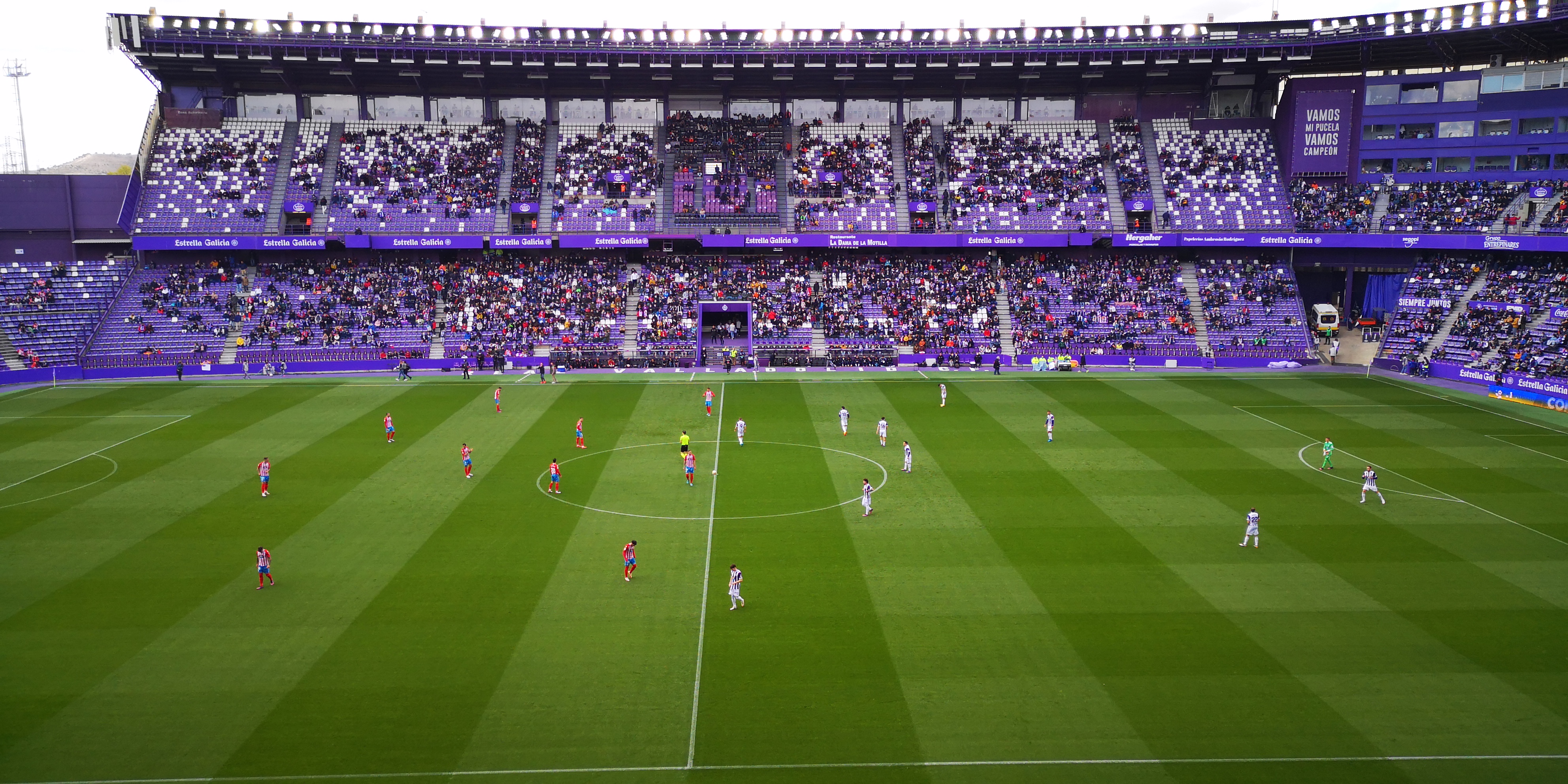
Valladolid has professional teams in four sports: football (soccer), basketball, handball and rugby. In football, Real Valladolid is a historic team of the Spanish La Liga. In basketball, CB Ciudad de Valladolid replaces the original CB Valladolid (which featured players such as Arvydas Sabonis, Oscar Schmidt, John Williams, Ed O'Bannon and Panagiotis Vasilopoulos) following the older team's bankruptcy. In handball, BM Atlético Valladolid replaced BM Valladolid (winner of two King's Cups, one ASOBAL Cup and one EHF Cup Winners' Cup). There is also a women's handball team, BM Aula Cultural. Valladolid is also known as a national centre for rugby, with two of the top teams of the División de Honor de Rugby league: CR El Salvador and Valladolid RAC, which between them have won twenty-two National League Championships, fifteen King's Cups and fifteen Spanish Supercups.
Municipalities
Main article: List of municipalities in Valladolid
References
References
- [http://www.provinciadevalladolid.com/es/provincia/historia Historia de la provincia de Valladolid]
- Payne, S.G. ''The Franco Regime, 1936–1975.'' Madison: University of Wisconsin, 1987. p 65.
- [http://www.fbbva.es/TLFU/dat/dt10_2010.pdf Rugosidad del terreno FBBV 2010] {{webarchive. [link](https://web.archive.org/web/20150924011039/http://www.fbbva.es/TLFU/dat/dt10_2010.pdf véase especialmente las páginas 17 y 18 del informe. (in Spanish))
- [http://www.elnortedecastilla.es/valladolid/201405/30/duero-pulmon-diafragma-valladolid-20140529202533.html El Duero, pulmón y diafragma de Valladolid] El Norte de Castilla (30/05/2014) (in Spanish)
- [http://www.elmundo.es/elmundo/2010/08/25/castillayleon/1282728300.html Valladolid es la provincia española menos arbolada, junto con Almería] El Mundo (25/08/2010) (in Spanish)
- [[Agencia Estatal de Meteorología]]. "Valladolid and Valladolid Airport observatories (reference period: 1981-2010)".
- link. (March 2019 Datos de valores climatológicos procedentes de la Agencia Estatal de Meteorología. (in Spanish))
- [https://www.elnortedecastilla.es/valladolid/baipas-conectara-olmedo-alta-velocidad-valladolid-galicia-20240801135155-nt.html Así será el baipás que conectará en Olmedo la alta velocidad entre Valladolid y Galicia] El Norte de Castilla (1 de agosto de 2024) [in Spanish]
- "Archived copy".
- See [[List of Spanish provinces by population]].
- http://www.ine.es/jaxi/tabla.do?path=/t20/e245/p04/provi/l0/&file=0ccaa007.px&type=pcaxis&L=0> INE: Población extranjera por país de nacimiento, edad (grupos quinquenales) y sexo en la provincia de Valladolid, datos provisionales a 1 de enero de 2015
- Data from [http://www.cajaespana.es/pubweb/decyle.nsf/PorMunicipios/688C5E14150E3A3AC1256E0000357982/$File/47.PDF Informe de Datos Económicos y Sociales de los Municipios de España]{{Dead link. (May 2020)
- "Datos del Registro de Entidades Locales". [[Ministry of Economy (Spain).
This article was imported from Wikipedia and is available under the Creative Commons Attribution-ShareAlike 4.0 License. Content has been adapted to SurfDoc format. Original contributors can be found on the article history page.
Ask Mako anything about Province of Valladolid — get instant answers, deeper analysis, and related topics.
Research with MakoFree with your Surf account
Create a free account to save articles, ask Mako questions, and organize your research.
Sign up freeThis content may have been generated or modified by AI. CloudSurf Software LLC is not responsible for the accuracy, completeness, or reliability of AI-generated content. Always verify important information from primary sources.
Report