From Surf Wiki (app.surf) — the open knowledge base
Province of Lodi
Province of Italy, located in the Lombardy region
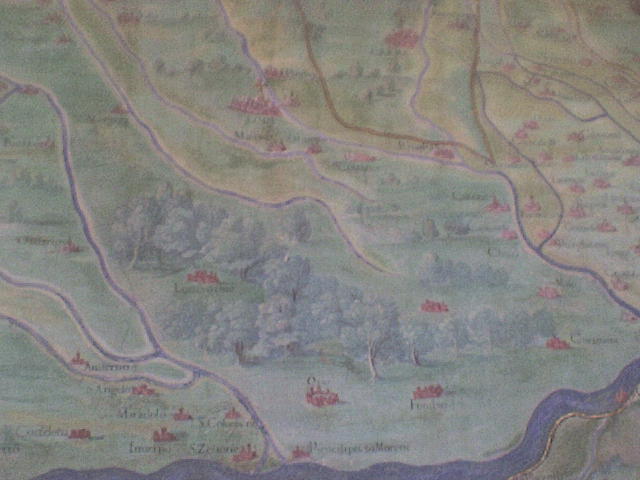
Province of Italy, located in the Lombardy region
| Field | Value |
|---|---|
| name | Province of Lodi |
| native_name | it |
| Pruincia de Lod (Western Lombard) | |
| settlement_type | Province |
| image_skyline | Palazzo San Cristoforo Lodi.jpg |
| image_caption | Palazzo San Cristoforo, the seat of the province |
| image_flag | Flag_of_the_Province_of_Lodi.svg |
| image_shield | Provincia di Lodi-Stemma.svg |
| image_map | Lodi in Italy.svg |
| map_caption | Map highlighting the location of the province of Lodi in Italy |
| subdivision_type | Country |
| subdivision_name | Italy |
| subdivision_type1 | Region |
| subdivision_name1 | Lombardy |
| seat_type | Capital(s) |
| seat | Lodi |
| parts_type | Comuni |
| parts_style | para |
| p1 | 61 |
| leader_title | President |
| leader_name | Francesco Passerini |
| unit_pref | Metric |
| area_total_km2 | 782.99 |
| population_total | 229741 |
| population_as_of | 30 September 2017 |
| population_density_km2 | auto |
| demographics_type2 | GDP |
| demographics2_footnotes | |
| demographics2_title1 | Total |
| demographics2_info1 | €5.679 billion (2015) |
| demographics2_title2 | Per capita |
| demographics2_info2 | €24,746 (2015) |
| timezone1 | CET |
| utc_offset1 | +1 |
| timezone1_DST | CEST |
| utc_offset1_DST | +2 |
| postal_code_type | Postal code |
| postal_code | 26900 |
| area_code_type | Telephone prefix |
| area_code | 0371 |
| registration_plate | LO |
| blank_name_sec1 | ISTAT |
| blank_info_sec1 | |
| website |
Pruincia de Lod (Western Lombard)
The province of Lodi (; Ludesan: pruincia de Lod) is a province in the Lombardy region of Italy. Its provincial capital is the city of Lodi.
As of 2017, it has a population of 229,541 inhabitants over an area of , giving the province a population density of 293.2 inhabitants per square kilometre. The provincial president is Francesco Passerini.
History
The city of Lodi was first settled during the fifth century BC by Celtic tribes, before being occupied by the Romans in 222 BC; by 89 BC it was called Laus Pompeia, the central city of the Lodi Vecchio. The history of the province in the Lombard and Frankish period is poorly documented, but the city of Lodi controlled the important trading route from Milan southwards to Cremona, Piacenza and the lower stretches of the River Lambro.
In 1025, the German emperor, Conrad II, granted certain rights to the Archbishop of Milan which caused land ownership to change and tensions in the region to flare. Allied with the Holy Roman Emperor but independent, Laus Pomperia fought against the Milanesi in the twelfth century, and the city was destroyed in 1111 and again in 1158, which marked the end of the city on the old location. A request made of Frederick I, Holy Roman Emperor, to rebuild the city near the Adda River was granted. The city, however, joined his opponents, the Lombard League, in 1167. Its citizens fought against Frederick at the Battle of Legnano in 1176. Still, it continued to have problems with Milan (also a member of the Lombard League) until the city was conquered in 1335 by lord of Milan Azzone Visconti.
It remained peaceful until it was invaded in the 1490s. The first significant Italian victory by Napoleon took place in the province on 10 May 1796, where the 5,000 men-strong forces of Napoleon defeated Austrian forces of 10,000 men. It fell under Austrian rule until the Austrians left the city in 1859 and it was ruled by the French forces, led by Marshal Patrice de MacMahon, Duke of Magenta, from 10 June 1859. It later became a part of the Kingdom of Italy and became a component of the province of Milan.
Geography

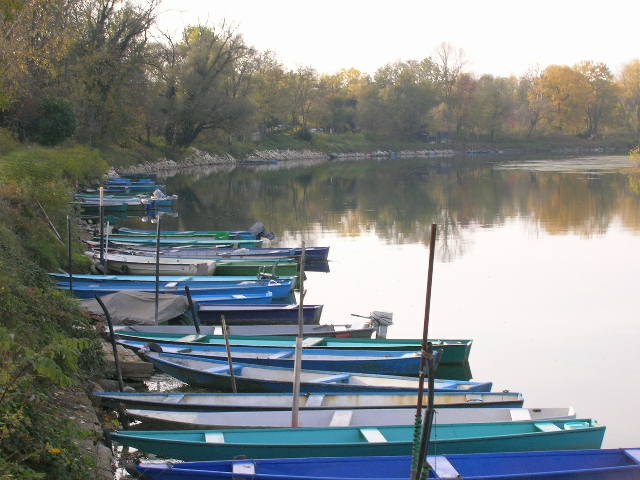
The province of Lodi is one of twelve provinces in the region of Lombardy in northwestern Italy. It is about 780 km2 in area and is delineated by rivers; the right bank of the Adda nearly surrounds it, and a further part of the boundary is formed by the left bank of the Lambro and of the Po. The province is bounded on the east by the Province of Cremona, the Metropolitan City of Milan to the north and by the Province of Pavia to the west. The land is mostly gently sloping or flat and the soil is alluvial loam. It is used to grow fodder crops, which are mown up to eight times a year, rice, wheat, maize, sugarbeet and vegetables.
Municipalities

Here is a list of the most populated municipalities of the province.
| Municipality | Population |
|---|---|
| Lodi | |
| Codogno | |
| Casalpusterlengo | |
| Sant'Angelo Lodigiano | |
| Lodi Vecchio | |
| Zelo Buon Persico | |
| Tavazzano con Villavesco | |
| Mulazzano | |
| Castiglione d'Adda | |
| Massalengo |
The least inhabited municipality is Maccastorna, a town with only 59 inhabitants. The full list is:
- Abbadia Cerreto
- Bertonico
- Boffalora d'Adda
- Borghetto Lodigiano
- Borgo San Giovanni
- Brembio
- Casaletto Lodigiano
- Casalmaiocco
- Casalpusterlengo
- Caselle Landi
- Caselle Lurani
- Castelgerundo
- Castelnuovo Bocca d'Adda
- Castiglione d'Adda
- Castiraga Vidardo
- Cavenago d'Adda
- Cervignano d'Adda
- Codogno
- Comazzo
- Cornegliano Laudense
- Corno Giovine
- Cornovecchio
- Corte Palasio
- Crespiatica
- Fombio
- Galgagnano
- Graffignana
- Guardamiglio
- Livraga
- Lodi
- Lodi Vecchio
- Maccastorna
- Mairago
- Maleo
- Marudo
- Massalengo
- Meleti
- Merlino
- Montanaso Lombardo
- Mulazzano
- Orio Litta
- Ospedaletto Lodigiano
- Ossago Lodigiano
- Pieve Fissiraga
- Salerano sul Lambro
- San Fiorano
- San Martino in Strada
- San Rocco al Porto
- Sant'Angelo Lodigiano
- Santo Stefano Lodigiano
- Secugnago
- Senna Lodigiana
- Somaglia
- Sordio
- Tavazzano con Villavesco
- Terranova dei Passerini
- Turano Lodigiano
- Valera Fratta
- Villanova del Sillaro
- Zelo Buon Persico
Transport
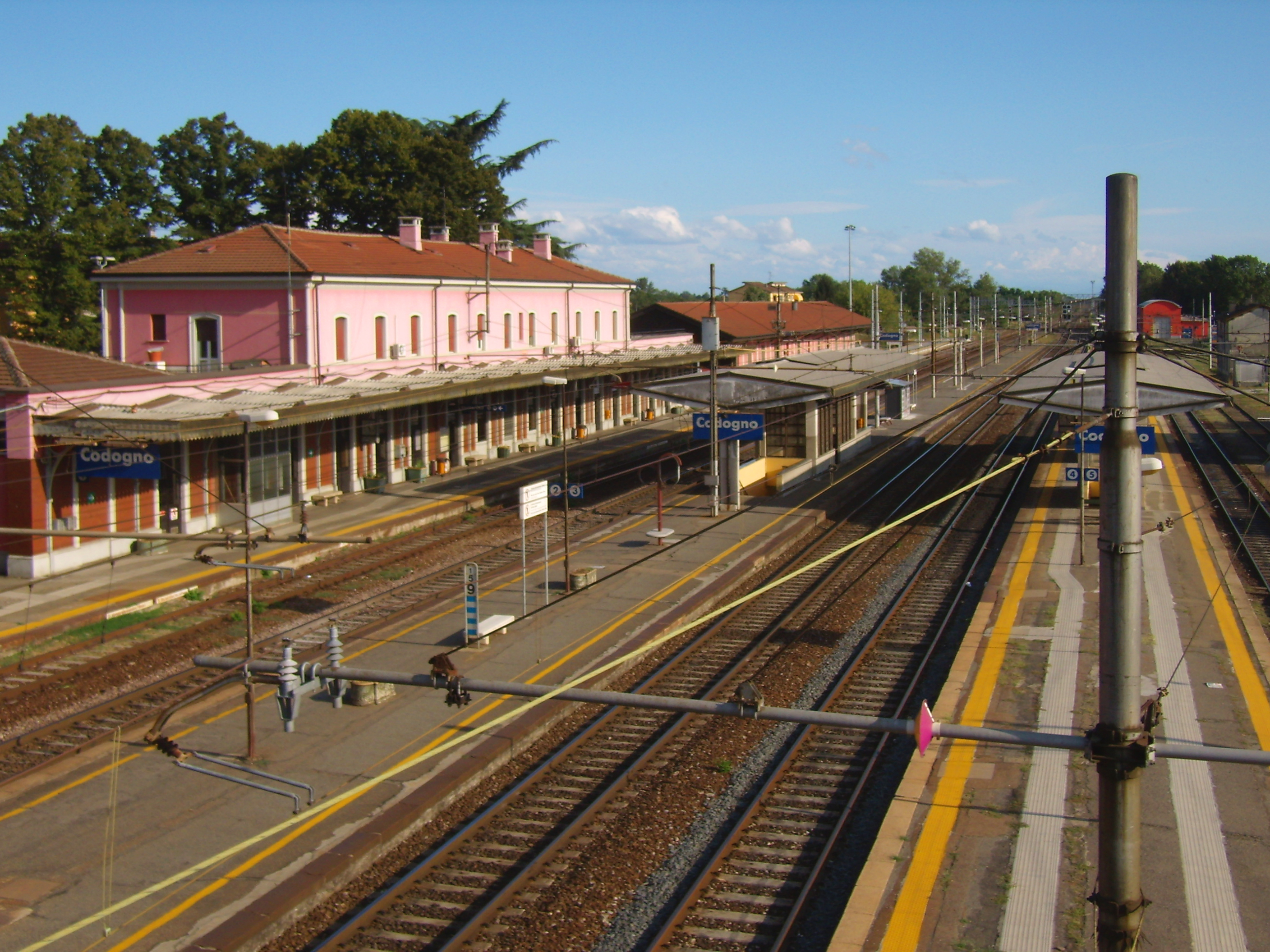
Motorways
- Autostrada A1: Milan-Naples
- Autostrada A58: Milan external east ring road
Railway lines
- Milan–Bologna high-speed railway
- Milan–Bologna railway
References
References
- [http://stats.oecd.org/ Regions and Cities > Regional Statistics > Regional Economy > Regional Gross Domestic Product (Small regions TL3)], OECD.Stats. Accessed on 16 November 2018.
- "Provincia di Lodi". Tutt Italia.
- Christopher Kleinhenz. (2004). "Medieval Italy: An Encyclopedia". Routledge.
- Domenico, Roy Palmer. (2002). "The Regions of Italy: A Reference Guide to History and Culture". Greenwood.
This article was imported from Wikipedia and is available under the Creative Commons Attribution-ShareAlike 4.0 License. Content has been adapted to SurfDoc format. Original contributors can be found on the article history page.
Ask Mako anything about Province of Lodi — get instant answers, deeper analysis, and related topics.
Research with MakoFree with your Surf account
Create a free account to save articles, ask Mako questions, and organize your research.
Sign up freeThis content may have been generated or modified by AI. CloudSurf Software LLC is not responsible for the accuracy, completeness, or reliability of AI-generated content. Always verify important information from primary sources.
Report