From Surf Wiki (app.surf) — the open knowledge base
Protein bar
Type of snack bar high in protein
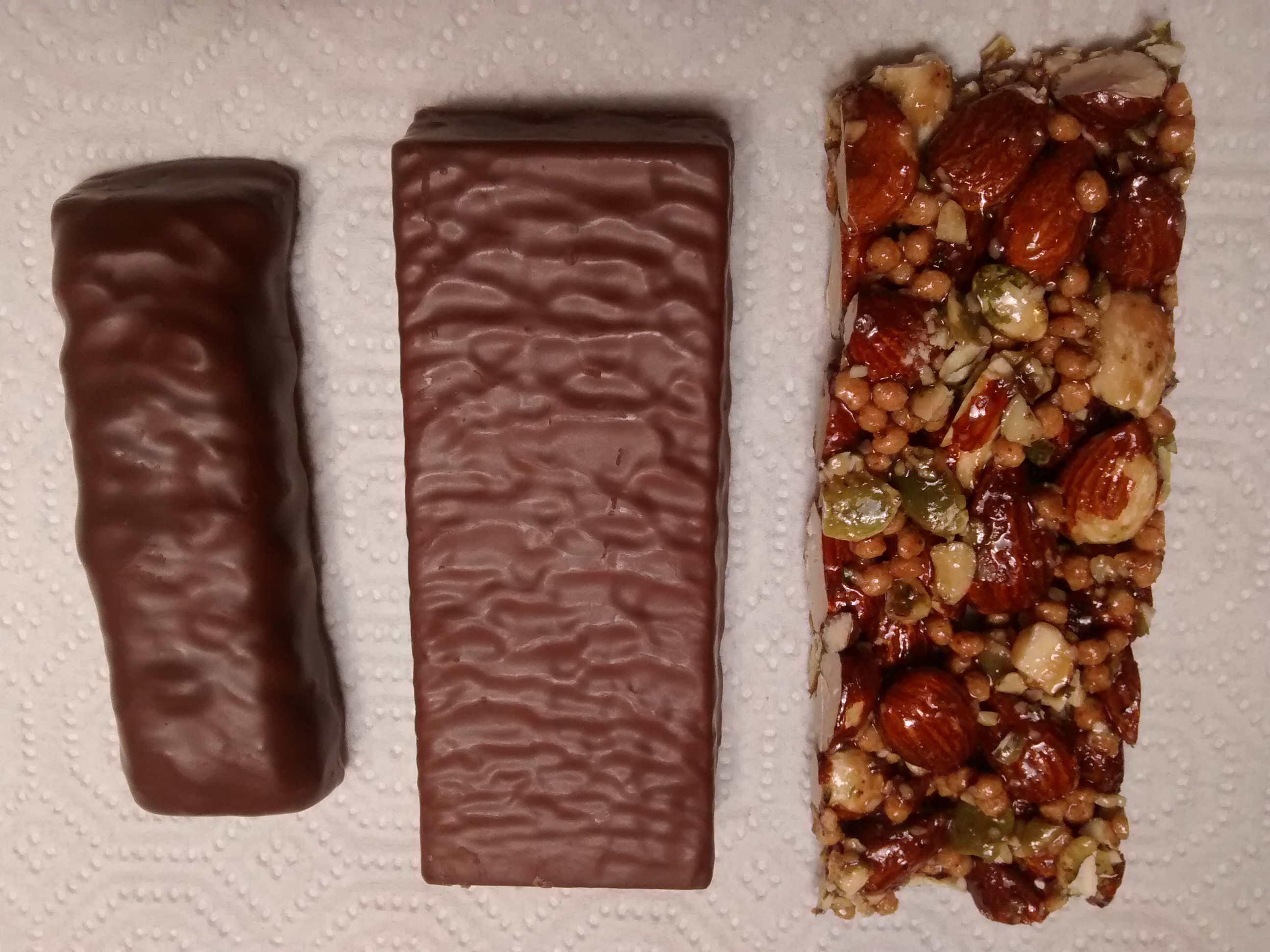
Type of snack bar high in protein
| Field | Value |
|---|---|
| name | Protein bars |
| type | Bar |
| main_ingredient | Various protein foods, sugar |
Protein bars are convenience food that contain a high proportion of protein relative to carbohydrates and fats. Despite the label focusing on protein, many mass-marketed protein bars contain more added sugar than some desserts like cookies or doughnuts, making them more like candy bars. The source of protein may be animal, e.g., whey (vegetarian) or collagen, or plant (e.g., pea protein, or peanut).
Dietary purpose
Protein bars are targeted to people who primarily want a convenient source of protein that does not require preparation (unless homemade). There are different kinds of food bars to fill different purposes. Energy bars provide the majority of their food energy (calories) in carbohydrate form. Meal replacement bars are intended to replace the variety of nutrients in a meal. Protein bars are usually lower in carbohydrates than energy bars, lower in vitamins and dietary minerals than meal replacement bars, and significantly higher in protein than either.
Protein bars may contain high levels of sugar and sometimes are called "candy bars in disguise". Alternative protein bars may use insect protein as an ingredient. Vegan protein bars contain only plant-based proteins from sources like peas, brown rice, hemp, and soybeans.
Protein bars are mainly marketed to athletes or exercise enthusiasts for muscle building or as a wellness-themed convenience food. The global market is growing and expected to reach US$2 billion in annual sales in 2026.
There is a disagreement over the amount of protein required for active individuals and athletic performance. Some research shows that protein supplementation is not necessary. Athletes generally consume higher levels of protein as compared to the general population for muscular hypertrophy and to reduce lean body mass lost during weight loss. Specialists have stated that the general American population is not lacking in protein.
History
Bob Hoffman launched Hoffman's Hi-Proteen Fudge and Hoffman's Hi-Proteen Cookies in the early 1950s, and competitor Joe Weider launched Candy Food Bars with bodybuilder Dave Draper on the packaging in the late 1960s. Pillsbury Space Food Bars and the bars by Tiger's Milk both came to market in the 1960s. Though they had protein, they were marked as energy or nutrition bars. PowerBar, invented in California in 1986, was an early protein bar.
Regional markets
The Australian protein bar market, valued at about US$271 million in 2024, is expected to grow at a compound annual rate of 5–6 percent through the early 2030s.
References
References
- Blum, Dani. (2023-01-12). "Are Protein Bars Actually Good for You?". The New York Times.
- Tormási, Judit. (2025-03-18). "Evaluation of protein quantity and protein nutritional quality of protein bars with different protein sources". Scientific Reports.
- Moss, Michael. (2014-01-28). "A Look Inside the Protein Bar". The New York Times.
- "Nutrition Bars: Healthy or Hype?". WebMD.
- MD, Robert H. Shmerling. (2015-12-15). "Are protein bars really just candy bars in disguise? - Harvard Health Blog". Harvard Health Blog.
- (2019-03-31). "Kyoto venture's new cricket protein bar packed with nutrition". Mainichi Daily News.
- Rathod, Vaidehi. (April 14, 2020). "Be vegan and have your protein too". UTC Scholar.
- (2007-09-26). "International Society of Sports Nutrition position stand: protein and exercise". Journal of the International Society of Sports Nutrition.
- Phillips, Stuart M.. (July 2004). "Protein requirements and supplementation in strength sports". Nutrition (Burbank, Los Angeles County, Calif.).
- (2013-01-16). "How much protein do I need every day?". Examine.com.
- (November 1991). "Protein intake and athletic performance". Sports Medicine.
- Phillips, Stuart M.. (July 2004). "Protein requirements and supplementation in strength sports". Nutrition.
- (February 2010). "Increased protein intake reduces lean body mass loss during weight loss in athletes". Medicine and Science in Sports and Exercise.
- Merritt, Greg. "The History of Protein Bars".
- "Australia Protein Bar Market Report and Forecast 2025–2034".
- "Australia Protein Bar Market: Industry Trends, Share, Size, Growth, Opportunity and Forecast 2025–2033".
This article was imported from Wikipedia and is available under the Creative Commons Attribution-ShareAlike 4.0 License. Content has been adapted to SurfDoc format. Original contributors can be found on the article history page.
Ask Mako anything about Protein bar — get instant answers, deeper analysis, and related topics.
Research with MakoFree with your Surf account
Create a free account to save articles, ask Mako questions, and organize your research.
Sign up freeThis content may have been generated or modified by AI. CloudSurf Software LLC is not responsible for the accuracy, completeness, or reliability of AI-generated content. Always verify important information from primary sources.
Report