From Surf Wiki (app.surf) — the open knowledge base
Prost Grand Prix
French auto racing team

French auto racing team
Gauloises Prost Peugeot (1998–2000) Prost Acer (2001) John Barnard Loïc Bigois ITA Jarno Trulli FRA Jean Alesi GER Nick Heidfeld GER Heinz-Harald Frentzen JPN Shinji Nakano
CZE Tomáš Enge
Prost Grand Prix was a Formula One racing team owned and managed by four-time Formula One world champion Alain Prost. The team participated in five seasons from 1997 to 2001.
The team was the last French Formula One team based in France, in Yvelines (in the surroundings of Paris).
History
Purchase of Ligier
As early as 1992, Alain Prost had ambitions to buy the Ligier team, and had tested their 1992 car incognito, wearing Érik Comas's crash helmet, with a view to being a driver-owner, even setting competitive lap times. Ligier was being supplied with Elf lubricants and Renault engines at the time, and the French manufacturers had strong ties with Prost. They were pushing to keep him in F1 after his sacking by Ferrari at the end of 1991. Prost wanted to bring John Barnard, who had designed his title winning McLaren cars in 1985 and 1986 on board as part of the package. The deal fell through just before the season opening race in South Africa however, and Prost sat the season out before joining the similarly Renault powered Williams team for 1993, and won his fourth world championship before his retirement from racing.
In the meantime, Ligier was bought instead by Cyril Bourlon de Rouvre. The team enjoyed an upswing in fortunes under his ownership and went on to be reasonably competitive in the mid 1990s.
De Rouvre then sold up to Benetton bosses Flavio Briatore and Tom Walkinshaw in early 1994 after being convicted for fraud. Briatore saw this deal as a way to gain access to the Renault engines for Benetton, which at the time were the dominant engines in F1. Briatore placed Walkinshaw at Ligier as team boss, but he walked away and bought Arrows after a disagreement with the Italian, taking chief designer Frank Dernie with him.
Prost completed the purchase of the Ligier team in February 1997 after several months of speculation. The new owner immediately changed the name to Prost. An exclusive contract for full-factory works Peugeot engines was announced for 1998, but the team continued with Ligier's planned Mugen-Honda engines for 1997. As there was no time before the season started to design and build a new car, the team simply used the Ligier JS45 designed by Loïc Bigois and renamed it the Prost JS45.
Early promise
The season started strongly. Olivier Panis lay third in the championship early in the season aided by podium finishes in Brazil (third) and Spain (second). Form seemed to be on Panis' side, but the Frenchman crashed heavily at high speed in Canada, breaking both his legs.
With its lead driver forced to miss much of the season, Prost struggled with novices Jarno Trulli and Shinji Nakano until Panis's return at the . There were glimpses, a commanding drive by Trulli in Austria where he led for much of the race before his engine expired, and a run by Trulli again to fourth at Germany showed potential, and a dogged points finish for Panis on his return in Luxembourg meant that Prost wasted no time in signing the pair up for a further season.
1997 world champion Jacques Villeneuve later remarked that in the year of his title victory, he had regarded Panis as something of a threat. Panis had been fastest in Spain, and was running right behind Villeneuve in Argentina when his car gave up on him. He was close to winning in Canada too as his Bridgestone tyres were better equipped than the Goodyear tyred cars around him.
Problems and decline
After such a promising 1997, hopes were high for the partnership with Peugeot as this was an attempt at becoming an all-French powerhouse and thus Prost earned Peugeot's direct factory support. It was established just a few days before the partnership was made official that Peugeot had changed the terms of their agreement with Prost meaning they had to pay Peugeot for the engines over a period of three seasons rather than receiving them for free over a period of five seasons; this left Prost with little to no choice but to agree to the new terms as it would have left them with little to no time to find a new engine supplier, with potential flow-on ramifications of key sponsors pulling out, things took a turn for the worse in the following seasons. After serious gearbox problems in testing, the team almost did not start the 1998 season-opener as their car still had to pass a crash-test. They made it to the , but the season proved to be a failure. Only Trulli's sixth at Spa kept the team from last in the standings. In the first few races of 1998, the team also ran with X-wings until these were banned on safety grounds.
The 1999 season saw an improvement. John Barnard was hired as technical consultant. Several points finishes were achieved and a second place coming by way of Trulli's strong drive at the Nürburgring. At times the car looked genuinely competitive with strong qualifying displays. Yet the results often failed to materialise. At Magny-Cours Panis had started third, but was unable to capitalise and finished outside the points. Trulli was under contract for 2000, but the team's relative lack of success enabled him to leave for Jordan. Panis was dropped and went on to become McLaren's tester.
Struggle for survival
In 2000 the team began its sharp decline. Veteran racer Jean Alesi, Prost's former teammate at Ferrari in 1991, was signed to the team. The team also signed up rookie F3000 champion Nick Heidfeld for 2000.
Despite a promising driver lineup and aiming for possible Grand Prix victories, Prost finished last in the Constructors Championship, failing to score a single point during the season. Heidfeld was disqualified from the at the Nürburgring for his car being two kilos underweight. Prost fired Alan Jenkins, the car's designer after Monaco. At the their two drivers crashed into each other, putting them both out of the race. The relationship between Prost and Peugeot collapsed.
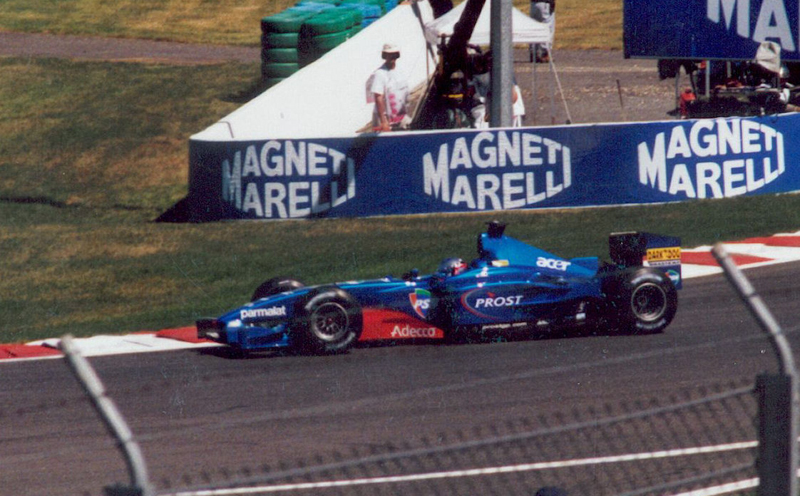
In 2001 the cars now ran with Acer-badged Ferrari engines. The season began with Alesi and ex-Minardi driver Gastón Mazzacane, but after four races, the latter was dropped from the team and replaced by Jaguar's Luciano Burti, who himself was replaced at Jaguar by Pedro de la Rosa. Alesi was very consistent, finishing every race, occasionally in points scoring positions, most notably in Canada when he did a few donuts afterwards and after getting out of the car, threw his helmet into the crowd. It was his best finish with the team. A fallout after the , however, saw Alesi walk out after the . For his final race with Prost, Alesi scored another championship point in that race of attrition. The first start for the race was red-flagged when Burti was launched into the air after crashing at high speed into the back of Michael Schumacher's ailing Ferrari just seconds off the line. Alesi moved to Jordan Grand Prix for the rest of the year, and was replaced at Prost by Heinz-Harald Frentzen, who himself had been sacked from Jordan after Silverstone.
In Belgium, Frentzen qualified a surprising fourth on the grid after getting his first and only dry lap right in drying conditions, but threw it away when he stalled on the initial formation lap, the first of three red flags. The third one saw a long delay after a huge crash at the fastest part of the circuit involving Burti and Eddie Irvine's Jaguar. Burti was transported away from the circuit by helicopter and taken away for medical observation. At Monza, F3000 driver Tomáš Enge became the fifth driver to drive for the team in 2001. There would be no more points that year.
At the end of the season, speculation began surrounding the fate of the team in the light of its increasing debts. Finally, in early 2002 the team went bankrupt, just before the start of the season. Prost had been unable to raise enough sponsorship to keep the team afloat. Deeply hurt by the episode, Prost described it as a disaster for France. Frentzen had hoped to stay, but ended up at Arrows. The team never managed to replace the money that Gauloises stopped supplying when they withdrew their title sponsorship at the end of 2000.
Reflecting back on the experience, Alain Prost stated that Prost Grand Prix was his biggest mistake.
Phoenix Finance's failed F1 entry
A consortium fronted by Phoenix Finance – run by Charles Nickerson, a friend of Arrows' Tom Walkinshaw – purchased the team's assets, believing that together with their purchase of old Arrows assets, specifically the engines, it would gain them entry for the 2002 season. However, the FIA viewed the consortium as a new entry (subject to an entry fee) and the project did not go ahead.
Complete Formula One results
(key)
| Year | Chassis | Engine | Tyres | Drivers | 1 | 2 | 3 | 4 | 5 | 6 | 7 | 8 | 9 | 10 | 11 | 12 | 13 | 14 | 15 | 16 | 17 | Points | WCC | 21 | 6th | 1 | 9th | 9 | 7th | 0 | NC | 4 | 9th | Sources: | |||||||||||||||||
|---|---|---|---|---|---|---|---|---|---|---|---|---|---|---|---|---|---|---|---|---|---|---|---|---|---|---|---|---|---|---|---|---|---|---|---|---|---|---|---|---|---|---|---|---|---|---|---|---|---|---|---|
| JS45 | Mugen-Honda MF-301HB 3.0 V10 | AUS | BRA | ARG | SMR | MON | ESP | CAN | FRA | GBR | GER | HUN | BEL | ITA | AUT | LUX | JPN | EUR | |||||||||||||||||||||||||||||||||
| France Olivier Panis | 5 | 3 | Ret | 8 | 4 | 2 | 11† | 6 | Ret | 7 | |||||||||||||||||||||||||||||||||||||||||
| ITA Jarno Trulli | 10 | 8 | 4 | 7 | 15 | 10 | Ret | ||||||||||||||||||||||||||||||||||||||||||||
| JPN Shinji Nakano | 7 | 14 | Ret | Ret | Ret | Ret | 6 | Ret | 11† | 7 | 6 | Ret | 11 | Ret | Ret | Ret | 10 | ||||||||||||||||||||||||||||||||||
| AP01 | Peugeot A16 3.0 V10 | AUS | BRA | ARG | SMR | ESP | MON | CAN | FRA | GBR | AUT | GER | HUN | BEL | ITA | LUX | JPN | ||||||||||||||||||||||||||||||||||
| France Olivier Panis | 9 | Ret | 15† | 11† | 16† | Ret | Ret | 11 | Ret | Ret | 15 | 12 | DNS | Ret | 12 | 11 | |||||||||||||||||||||||||||||||||||
| ITA Jarno Trulli | Ret | Ret | 11 | Ret | 9 | Ret | Ret | Ret | Ret | 10 | 12 | Ret | 6 | 13 | Ret | 12† | |||||||||||||||||||||||||||||||||||
| AP02 | Peugeot A18 3.0 V10 | AUS | BRA | SMR | MON | ESP | CAN | FRA | GBR | AUT | GER | HUN | BEL | ITA | EUR | MAL | JPN | ||||||||||||||||||||||||||||||||||
| France Olivier Panis | Ret | 6 | Ret | Ret | Ret | 9 | 8 | 13 | 10 | 6 | 10 | 13 | 11† | 9 | Ret | Ret | |||||||||||||||||||||||||||||||||||
| ITA Jarno Trulli | Ret | Ret | Ret | 7 | 6 | Ret | 7 | 9 | 7 | Ret | 8 | 12 | Ret | 2 | Ret | Ret | |||||||||||||||||||||||||||||||||||
| AP03 | Peugeot A20 3.0 V10 | AUS | BRA | SMR | GBR | ESP | EUR | MON | CAN | FRA | AUT | GER | HUN | BEL | ITA | USA | JPN | MAL | |||||||||||||||||||||||||||||||||
| France Jean Alesi | Ret | Ret | Ret | 10 | Ret | 9 | Ret | Ret | 14 | Ret | Ret | Ret | Ret | 12 | Ret | Ret | 11 | ||||||||||||||||||||||||||||||||||
| GER Nick Heidfeld | 9 | Ret | Ret | Ret | 16 | EX | 8 | Ret | 12 | Ret | 12† | Ret | Ret | Ret | 9 | Ret | Ret | ||||||||||||||||||||||||||||||||||
| AP04 | Acer 01A 3.0 V10 | AUS | MAL | BRA | SMR | ESP | AUT | MON | CAN | EUR | FRA | GBR | GER | HUN | BEL | ITA | USA | JPN | |||||||||||||||||||||||||||||||||
| France Jean Alesi | 9 | 9 | 8 | 9 | 10 | 10 | 6 | 5 | 15 | 12 | 11 | 6 | |||||||||||||||||||||||||||||||||||||||
| GER Heinz-Harald Frentzen | Ret | 9 | Ret | 10 | 12 | ||||||||||||||||||||||||||||||||||||||||||||||
| ARG Gastón Mazzacane | Ret | 12 | Ret | Ret | |||||||||||||||||||||||||||||||||||||||||||||||
| BRA Luciano Burti | 11 | 11 | Ret | 8 | 12 | 10 | Ret | Ret | Ret | DNS | |||||||||||||||||||||||||||||||||||||||||
| CZE Tomáš Enge | 12 | 14 | Ret |
References
References
- Prankerd, Tom. (19 April 2013). "Testing Time - Alain Prost, Ligier, 1992".
- "1992 - Le feuilleton Prost - Ligier".
- (12 May 2019). "Prost Grand Prix's original plan to debut in 1995/96".
- (21 May 1993). "Ligier's de Rouvre: Man of Many Parts". The New York Times.
- "Briatore buys out Guy Ligier".
- "Prost and Ligier".
- (14 February 1997). "Motor racing: Prost acquires Ligier F1 team".
- Day, Aron. (16 September 2014). "What Ever Happened To…? Olivier Panis".
- (16 September 2014). "What Ever Happened To…? Olivier Panis".
- (11 March 2023). "The Problems Of Prost Grand Prix".
- (14 May 1998). "Prost And Williams Seek Solutions".
- (19 August 1998). "Prost Looks To Barnard For 1999.".
- Collins, Aaron. (3 September 2018). "F1: Prost Grand Prix - What went wrong?".
- "Prost, Alan Jenkins part ways".
- "Austrian GP, 2000".
- "Prost AP04".
- Edworthy, Sarah. (4 February 2002). "Formula One: Prost's failure casts large shadow".
- (13 August 2015). "Prost says being a team manager his 'biggest mistake'".
- (13 March 2002). "Phoenix will not rise from Prost's flames".
- "Prost Acer Results". Motorsport Stats.
- "Prost Grand Prix". [[Motor Sport (magazine).
This article was imported from Wikipedia and is available under the Creative Commons Attribution-ShareAlike 4.0 License. Content has been adapted to SurfDoc format. Original contributors can be found on the article history page.
Ask Mako anything about Prost Grand Prix — get instant answers, deeper analysis, and related topics.
Research with MakoFree with your Surf account
Create a free account to save articles, ask Mako questions, and organize your research.
Sign up freeThis content may have been generated or modified by AI. CloudSurf Software LLC is not responsible for the accuracy, completeness, or reliability of AI-generated content. Always verify important information from primary sources.
Report