From Surf Wiki (app.surf) — the open knowledge base
Prison officer
Law enforcement official
Law enforcement official
| Field | Value |
|---|---|
| name | Prisons officer |
| image | Prison guard parra jail.JPG |
| caption | A prison guard on lookout in the watchtower at Parramatta Gaol |
| official_names | {{ubl |
| type | Employment |
| activity_sector | Law enforcement |
| competencies | See Working environment |
| formation | See Training |
| employment_field | Prisons, jails |
| related_occupation | Police officer |
|Corrections Officer |Correctional Officer |Correctional Law Enforcement Officer |Correctional Police Officer (New Jersey) |Correctional Peace Officer (California) |Detention Officer |Detention Deputy |Jailer |Prison Guard |Prison Officer}} A prison officer (PO) or corrections officer (CO), also known as a correctional law enforcement officer or less formally as a prison guard, is a uniformed law enforcement official responsible for the custody, supervision, safety, and regulation of prisoners.
Terms for the role

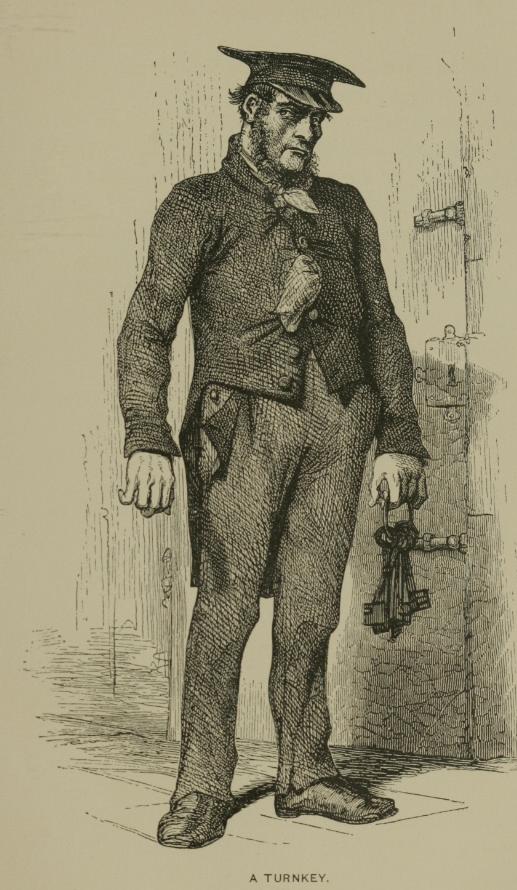
Historically, terms such as "jailer" (also spelled "gaoler"), "guard" and "warder" have all been used. Slang terms have included "turnkey", "screw", "tier boot", "hura", "CO", "Cop", "boss", "keeper", and others pending the region or area.
The term "prison officer" is used for the role in the UK and Ireland. It is the official English title in Denmark, Finland, Sweden and Poland.
The term "corrections officer" or "correction officer" is used in the U.S. and New Zealand. "Detention officer" is used in the U.S., as is the term "penal officer". The term "correctional police officer" or "CPO" is used in New Jersey. Due to the law enforcement status and authority of New Jersey's officers, New Jersey's officers employed by the Department of Corrections are classified as "police officers".
Brazil has a similar system to New Jersey, but the officers are known as "state penal police agent" or "federal penal police agent".
"Correctional officer" is used in Australia, Canada, Jamaica, and the U.S.
In Australia, prison officers were known as turnkeys until the 19th century after which they were known as warders until the late 20th century. Following this period they were known as prison officers and later correctional officers. A slang term for a prison officer throughout the British Empire was, and still is, 'screw'.
The official who is in charge of a specific prison is known by various titles, including: "prison warden" (US and Canada), "governor" (UK and Australia), "superintendent" (South Asia) or "director" (New Zealand), respectively "Direktor" or "Gefängnisdirektor" (Germany).
Duties

Prison officers are responsible for the security of the facility and its property as well as other law enforcement functions.
Correction officers may assist police officers on/off duty depending on their peace officer status and jurisdiction.
Most prison officers or corrections officers are employed by the government of the jurisdiction in which they operate, although some are employed by private companies that provide prison services to the government.
Training
Corrections officers' training will vary from jurisdiction to jurisdiction as well as facility to facility depending on the legislated power given, the nature of the facilities, or even the socioeconomic of the region. In the United States, both Federal and State Correctional Officers attend Correctional Academies similar to Police or other Law Enforcement raining academies, these will vary from state to state.
Training may be provided by external agencies or at the facility with a peer-group or supervisor instructor. In North America, standard training usually includes:
- Use of force and restraints (i.e., handcuffs, leg-irons, belly-chains, etc.)
- Weapons (firearms, taser, pepper spray, baton, etc.)
- Self-defense
- First aid and CPR
- Report writing
- Giving testimony in court
- Defusing hostility
- Interpersonal communication
- Correction law
- Criminal law
- Criminal procedure law
- Case work and criminal investigations
- Hostage negotiation
- Gang intelligence
- Cross gender supervision
Many jurisdictions have also, in recent years, expanded basic training to include:
- Suicide prevention/crisis intervention
- Mental health awareness
- Critical incident stress management
- Occupational Safety and Health Act (U.S.) or Workplace Hazardous Materials Information System (Canada)
- Gang awareness and intervention
- Crisis or hostage negotiation
- Drug abuse training
- Rehabilitation programs
- Rapid response training
- Prison Rape Elimination Act of 2003 (PREA)
- Diversity, equity, and inclusion (DEI)
- Staff wellness
Specialized units
Most institutions in the United States have a crisis resolution team of some sort, though these vary in name:
| Name | Abbreviation |
|---|---|
| Crisis Resolution Team | CRT |
| Special Response Team | SRT |
| Critical Incident Response Team | CIRT |
| Correctional Emergency Response Team | CERT |
| Crisis and Emergency Response Team | |
| Correctional Emergency Unit | CEU |
| Special Security Team | SST |
| Disturbance Control Team | DCT |
| Special Operations And Response Team | SORT |
| Tactical Support Unit | TSU |
These teams take on a role similar to a police SWAT or Special Weapons and Tactics team, but are tailored to the prison setting.
Though these vary greatly from jurisdiction to jurisdiction, they typically must pass a very physically and mentally demanding tactical academy or training course, often lasting a week or more.
Special units must qualify regularly and at shorter intervals than regular line staff to remain in the specialized position. They must also score in the 90th percentile or better of the standard scoring systems.
References
References
- {{Cite OED. warder, n.1
- "Working for HMPS". [[UK Government]].
- [http://www.irishprisons.ie/recruitment-home.htm Irish Prison Service – Recruitment] {{webarchive. link. (17 June 2011 . Retrieved 29 November 2011)
- [http://www.kriminalforsorgen.dk/Files/Filer/Publikationer/Brochurer/kort_og_godt_uk_2011.pdf The Danish Prison and Probation Service – General Information, page 5] {{Webarchive. link. (17 March 2014 Retrieved 2012-07-07)
- [http://www.rskk.fi/inenglish/ The Training Institute for Prison and Probation Services, Finland] {{Webarchive. link. (5 December 2011 Retrieved 29 November 2011)
- [http://www.sweden.gov.se/content/1/c6/01/61/94/0602f648.pdf Swedish Prison and Probation Service – Fact Sheet]. Retrieved 29 November 2011
- [https://www.sw.gov.pl/uploads/5846de09_5fb8_41a6_ad3b_213cc0a80015_angielski.pdf Compendium for foreign nationals on remand, convicted or punished]
- [http://www.indeed.com/salary/Corrections-Officer.html Indeed: Corrections Officer Salary] Retrieved 2012-07-07
- [http://www.justice.gov.yk.ca/prog/cor/wcc/wccknow.html Yukon Department of Justice website] Retrieved 29 November 2011
- [http://www.corrections.govt.nz/careers/opportunities-at-corrections/prison-services-jobs/corrections-officer.html New Zealand Department of Corrections – Job Description] {{Webarchive. link. (5 October 2012 . Corrections.govt.nz Retrieved 29 November 2011)
- [https://www.fbi.gov/atlanta/press-releases/2012/former-fulton-county-detention-officer-sentenced-to-10-years-in-federal-prison-for-public-corruption-and-drug-trafficking FBI Atlanta: Former Fulton County Detention Officer Sentenced to 10 Years in Federal Prison] Retrieved 2012-07-07
- [http://occupations.careers.org/14767/penal-officer Career Occupational Profile for: Penal Officer] Retrieved 2014-03-17
- [https://info.csc.state.nj.us/jobspec/55628.htm NJ Civil Service: Correctional Police Officer] Retrieved 2021-06-13
- [https://info.csc.state.nj.us/jobspec/01400.htm NJ Civil Service: County Correctional Police Officer] Retrieved 2021-06-13
- Junior, Janary. (July 6, 2024). "Promulgada emenda constitucional que cria Polícia Penal, para atuar no sistema prisional.".
- [http://www.correctiveservices.qld.gov.au/Employment/Custodial_Operations/cco.shtml Queensland Corrective Services – Employment Information] Retrieved 2012-07-07
- [http://www.csc-scc.gc.ca/text/carinf/correctional-eng.shtml Correctional Service Canada – Correctional officer job profile] {{webarchive. link. (24 August 2011 Retrieved 29 November 2011)
- [http://www.mcscs.jus.gov.on.ca/english/corr_serv/careers_in_corr/become_corr_off/careers_corr_become_off.html Ontario Correctional Services – Careers] Retrieved 29 November 2011
- [http://www.employment.gov.bc.ca/corrections/?p=Training British Columbia Corrections – Employment Information] Retrieved 29 November 2011
- {{usurped
- [http://www.bls.gov/oco/ocos156.htm US Department of Labor – Correctional Officer job statistics] Retrieved 29 November 2011
- (23 July 2025). "Why Are Prison Officers Called Screws in the UK?".
- Dawson, Christopher. (20 June 2018). "Screw!". Boggo Road Gaol Historical Society.
- "Occupational Outlook Handbook, 2010–11 Edition".
This article was imported from Wikipedia and is available under the Creative Commons Attribution-ShareAlike 4.0 License. Content has been adapted to SurfDoc format. Original contributors can be found on the article history page.
Ask Mako anything about Prison officer — get instant answers, deeper analysis, and related topics.
Research with MakoFree with your Surf account
Create a free account to save articles, ask Mako questions, and organize your research.
Sign up freeThis content may have been generated or modified by AI. CloudSurf Software LLC is not responsible for the accuracy, completeness, or reliability of AI-generated content. Always verify important information from primary sources.
Report