From Surf Wiki (app.surf) — the open knowledge base
Principality of Anhalt
State of the Holy Roman Empire

State of the Holy Roman Empire
| Field | Value |
|---|---|
| native_name | de |
| conventional_long_name | County (Principality) of Anhalt |
| common_name | Anhalt |
| era | Middle Ages |
| status | Principality |
| empire | Holy Roman Empire |
| leader1 | Henry I |
| year_leader1 | 1218–1252 |
| title_leader | Prince of Anhalt |
| life_span | 1218–1806 |
| date_pre | 1212 |
| event_pre | Partitioned from Saxony |
| year_start | 1218 |
| event_start | Elevated to principality |
| event1 | Partitioned¹ |
| date_event1 | 1252–1570 |
| event2 | Joined Council of Princes |
| date_event2 | 1582 |
| event3 | Partitioned² |
| date_event3 | 1603–1863 |
| event_end | Principalities³ raised to duchies |
| year_end | 1806 |
| p1 | Duchy of Saxony |
| flag_p1 | Arms of the house of Anhalt (ancient).svg |
| border_p1 | no |
| s1 | Duchy of Anhalt |
| flag_s1 | Flagge Herzogtum Anhalt.svg |
| image_flag | Flagge Herzogtum Anhalt.svg |
| image_coat | Arms of the house of Anhalt (12th century).svg |
| symbol_type | Lesser arms of Anhalt |
| image_map | Map of Anhalt (1793).svg |
| image_map_caption | Map of Anhalt (Zerbst, Dessau, Köthen, Bernburg) in 1793 |
| religion | Roman Catholic (until 1520s) |
| Lutheran (from 1520s) | |
| capital | Dessau (when united) |
| today | Germany |
| footnotes | 1: 13th-century partition into Anhalt-Aschersleben, Anhalt-Bernburg and Anhalt-Zerbst. |
| 2: 17th-century partition into Anhalt-Bernburg, Anhalt-Dessau, Anhalt-Köthen, Anhalt-Plötzkau and Anhalt-Zerbst. | |
| 3: Anhalt-Bernburg, Anhalt-Dessau and Anhalt-Köthen. |
Lutheran (from 1520s) 2: 17th-century partition into Anhalt-Bernburg, Anhalt-Dessau, Anhalt-Köthen, Anhalt-Plötzkau and Anhalt-Zerbst. 3: Anhalt-Bernburg, Anhalt-Dessau and Anhalt-Köthen.
The Principality of Anhalt () was a State of the Holy Roman Empire, located in Central Germany, in what is today part of the federal state of Saxony-Anhalt.
Under the rule of the House of Ascania, the Anhalt territory was split off the German stem duchy of Saxony in 1212 and granted to Count Henry I, who was raised to the rank of a Prince of the Holy Roman Empire in 1218. Ruled by Ascanian princes from the High Middle Ages to the Early modern period, Anhalt was divided several times amongst various lines of the dynasty until the dissolution of the Empire in 1806, when Napoleon elevated the remaining states of Anhalt-Bernburg, Anhalt-Dessau and Anhalt-Köthen to duchies.
Geography
The Anhalt territory stretched from the Harz mountain range in the west to the Elbe River and beyond to the Fläming Heath in the east. Upon the 1315 loss of Anhalt-Aschersleben, the lands around Ballenstedt formed a western exclave. The area of the later duchy was 906 sq mi (2,300 km2).
In the west, the land is undulating and in the extreme northwest, where it forms part of the Harz mountains, hilly, with the Ramberg (Harz) peak as the tallest point at 1,900 ft (579 m). From the Harz the country gently shelves down to the Saale; the land between this river and the Elbe is particularly fertile. East of the Elbe, the land is mostly a flat sandy plain, with extensive pine forests, interspersed with bog-land and rich pastures. The Elbe is the chief river, intersecting the eastern portion of the former duchy, from east to west, and at Rosslau is met by the Mulde. The navigable Saale takes a northerly direction through the central portion of the territory and receives, on the right, the Fuhne and, on the left, the Wipper and the Bode.
The climate is generally mild, less so in the higher Harz regions to the south-west.
History
From the 9th century onward, the western parts of the later Anhalt territory up to the Elbe and Saale rivers were included in the Schwabengau region of Eastphalia, the eastern part of the medieval Duchy of Saxony. In the 11th century, it came under the rule of Count Esico of Ballenstedt (died 1059 or 1060), mentioned in a 1036 deed issued by Emperor Conrad II at Tilleda. Possibly a descendant of the Saxon margrave Odo, he owned large allodial lands around Ballenstedt in the Schwabengau as well as in the adjacent Gau Serimunt in the former Saxon Eastern March.
Count Esico was succeeded by his son Adalbert II of Ballenstedt, who also appeared as a count in the Saxon Nordthüringgau and further territories in the Eastern March. Adalbert joined the Saxon Rebellion against King Henry IV and was slain in a feud with Egeno II of Konradsburg in 1080. His son Count Otto the Rich appeared as a "Count of Ballenstedt" from 1106. When Emperor Henry V temporarily deprived Lothair of Supplinburg of the Saxon ducal title in 1112, Otto was enfeoffed with the Duchy of Saxony, which, however, he had to renounce shortly afterwards, as Lothair and Henry had reconciled. On the eve of the 1115 Battle of Welfesholz, Otto campaigned the lands of the Polabian Slavs, gaining large estates around Zerbst up to the Hevelli lands ruled by the Hevelli princes.
County of Anhalt
Until his death in 1123, Count Otto had Anhalt Castle built in the Harz mountains near Harzgerode and appears to have been among the first to assume the title of a "Count of Anhalt". He was the father of Albert the Bear, who temporarily was appointed Margrave of the Saxon Eastern March (or March of Lusatia) by the Saxon duke Lothair of Supplinburg and struggled for the ducal title himself. Albert could not prevail against the Welf duke Henry the Lion, nevertheless he conquered the eastern territories of the former Northern March, which had been lost in the 983 Great Slav Rising, where he established the Margraviate of Brandenburg in 1157. When he died in 1170, his younger son Count Bernhard inherited the Ascanian home territories around Anhalt Castle and after the deposition of Henry the Lion by Emperor Frederick Barbarossa finally became Duke of Saxony in 1180. However, he effectively only ruled over the Eastphalian territories, while the Westphalian and Engern parts of Saxony fell under the control of the Prince-Archbishops of Cologne.
The County of Anhalt finally arose upon the death of Duke Bernhard in 1212, when his sons divided their heritage. The younger Albert I became Duke of Saxony, while the elder Henry I went on to rule the Ascanian lands, now definitely separated from Saxony, as Count of Anhalt. In 1218, Henry I assumed the title of a prince and thereby was the real founder of the princely House of Anhalt.
Princes of Anhalt
On Henry's death in 1252, his three sons partitioned the principality and founded, respectively, the lines of Aschersleben, Bernburg and Zerbst. The family ruling in Aschersleben became extinct in 1315, and this district was subsequently incorporated in the neighboring Bishopric of Halberstadt, thus dividing the territory of Anhalt-Bernburg in two separate pieces. The last prince of the original line of Anhalt-Bernburg died in 1468 and his lands were inherited by the princes of the sole remaining line, that of Anhalt-Zerbst. The territory belonging to this branch of the family had been divided in 1396, and after the acquisition of Bernburg Prince George I made a further partition of Zerbst (Zerbst and Dessau). Early in the 16th century, however, owing to the death or abdication of several princes, the family had become narrowed down to the two branches of Anhalt-Köthen and Anhalt-Dessau (issued both from Anhalt-Dessau in 1471).
Wolfgang of Anhalt, called the Confessor, who became prince of Anhalt-Köthen in 1508, was the second ruler in the world to introduce the Reformation to his country. He was a co-signer of the Augsburg Confession in 1530, and after the Battle of Mühlberg in 1547 was placed under Imperial ban and deprived of his lands by Emperor Charles V. After the peace of Passau in 1552 he bought back his principality, but as he was childless he surrendered it in 1562 to his kinsmen the princes of Anhalt-Dessau. Ernest I, Prince of Anhalt-Dessau (d. 1516) left three sons, John V, George III, and Joachim, who ruled their lands together for many years, and who favoured the Lutheran doctrine, which thus became dominant in Anhalt. About 1546 the three brothers divided their principality and founded the lines of Zerbst, Plötzkau and Dessau. This division, however, was only temporary, as the acquisition of Köthen, and a series of deaths among the ruling princes, enabled Joachim Ernest, a son of John V, to unite the whole of Anhalt under his rule in 1570.
The first united principality of Anhalt was short-lived, and in 1603 it was split up into the mini states of Anhalt-Dessau, Anhalt-Bernburg, Anhalt-Köthen, Anhalt-Zerbst and Anhalt-Plötzkau.
Joachim Ernest died in 1586, and his five sons ruled the land in common until 1603, when owing to the lack of primogeniture, Anhalt was again divided, and the lines of Dessau, Bernburg, Plötzkau, Zerbst and Köthen were re-founded. The principality was ravaged during the Thirty Years' War, and in the earlier part of this struggle Christian I of Anhalt-Bernburg took an important part. In 1635 an arrangement was made by the various princes of Anhalt, which gave a certain authority to the eldest member of the family, who was thus able to represent the principality as a whole. This proceeding was probably due to the necessity of maintaining an appearance of unity in view of the disturbed state of European politics.
.svg)
In 1665, the branch of Anhalt-Köthen became extinct, and according to a family compact this district was inherited by Lebrecht, Prince of Anhalt-Plötzkau, who surrendered Plötzkau to Bernburg, and took the title of prince of Anhalt-Köthen. In the same year the princes of Anhalt decided that if any branch of the family became extinct its lands should be equally divided between the remaining branches. This arrangement was carried out after the death of Frederick Augustus, Prince of Anhalt-Zerbst in 1793, and Zerbst was divided between the three remaining princes. During these years the policy of the different princes was marked, perhaps intentionally, by considerable uniformity. Once or twice Calvinism was favoured by a prince, but in general the house was loyal to the doctrines of Martin Luther. The growth of Prussia provided Anhalt with a formidable neighbour, and the long-delayed establishment of primogeniture by all branches of the family prevented further divisions of the principality.
Dukes of Anhalt===
Main article: Duchy of Anhalt

In 1806, Napoleon elevated the remaining states of Anhalt-Bernburg, Anhalt-Dessau and Anhalt-Köthen to duchies; in the meantime, Anhalt-Plötzkau and Anhalt-Zerbst had ceased to exist. With the Dissolution of the Holy Roman Empire the duchies became fully independent. The extinction of the Köthen line in 1853 and the Bernburg line in 1863, resulted in those states merging with Anhalt-Dessau to form the united Duchy of Anhalt.
Rulers of Anhalt
[[House of Ascania]]
Partitions of Anhalt under Ascanian rule
| Duchy of Anhalt |
|---|
| (from Anhalt-Dessau line) |
| (1863-1918) |
Table of rulers
| Ruler | Born | Reign | Death | Ruling part | Consort | Notes | ||
|---|---|---|---|---|---|---|---|---|
| Albert I the Bear | [[File:Albrecht der Bär.jpg | 100px]] | c.1100 | 1123-1170 | 18 November 1170 | Anhalt | Sophie of Winzenburg | |
| 1125 | ||||||||
| thirteen children | ||||||||
| Bernard I | [[File:Bernhard von Sachsen.jpg | 100px]] | c.1134 | 1170-1212 | 2 February 1212 | Anhalt | Brigitte of Denmark | |
| six children | ||||||||
| Sophia of Thuringia | ||||||||
| one child | ||||||||
| Judith of Poland | ||||||||
| c.1173 | ||||||||
| no children | ||||||||
| Henry I | [[File:Heinrich von Anhalt (1170 - 1252).jpg | 100px]] | 1170 | 1212-1252 | 1252 | Anhalt | Irmgard of Thuringia | |
| 1211 | ||||||||
| eleven children | ||||||||
| Henry II the Fat | [[File:Siegel Heinrich I und II (Anhalt).jpg | 100px]] | 1215 | 1252-1266 | 12 June 1266 | Anhalt-Aschersleben | Matilda of Brunswick-Lüneburg | |
| 1245 | ||||||||
| two children | ||||||||
| Bernard I | [[File:Siegel Bernhard I (Anhalt).jpg | 100px]] | 1218 | 1252-1287 | 1287 | Anhalt-Bernburg | Sophia of Denmark | |
| 3 February 1258 | ||||||||
| Hamburg | ||||||||
| six children | ||||||||
| Siegfried I | 1230 | 1252-1298 | 25 March 1298 | Anhalt-Zerbst | Catherine of Sweden | |||
| 17 October 1259 | ||||||||
| ten children | ||||||||
| Regency of Matilda of Brunswick-Lüneburg (1266-1270) | Children of Henry II, ruled jointly, first under their mother, who was elected Abbess of Gernrode in 1275. In 1283, Henry renounced his rights in Otto's favor. | |||||||
| Otto I | [[File:Gemeinschaftliches Siegel Otto I und Heinrich III (Anhalt).jpg | 100px]] | c.1245 | 1266-1304 | 25 June 1304 | Anhalt-Aschersleben | Hedwig of Wrocław | |
| 1283 | ||||||||
| three children | ||||||||
| Henry III | c.1245 | 1266-1283 | 12 June 1266 | Anhalt-Aschersleben | Unmarried | |||
| Bernard II | [[File:Siegel Bernhard II (Anhalt).jpg | 100px]] | 1260 | 1287-1323 | After 26 December 1323 | Anhalt-Bernburg | Helena of Rügen | |
| 27 December 1302 | ||||||||
| three children | ||||||||
| John I | 1258/60 | 1287-1291 | 5 June 1291 | Anhalt-Bernburg | Unmarried | |||
| Albert I | c.1260 | 1298-1316 | 17 August 1316 | Anhalt-Zerbst | Liutgard of Holstein-Itzehoe | |||
| after 1277 | ||||||||
| two children | ||||||||
| Agnes of Brandenburg-Stendal | ||||||||
| 1300 | ||||||||
| five children | ||||||||
| Otto II | [[File:Siegel Otto I (Anhalt) - drittes Reitersiegel und Otto II (Anhalt) - Reitersiegel.jpg | 100px]] | c.1260 | 1304-1315 | 24 July 1315 | Anhalt-Aschersleben | Elisabeth of Meissen | |
| 24 August 1309 | ||||||||
| two children | ||||||||
| Definitively annexed by the Bishopric of Halberstadt | ||||||||
| Albert II | after 1277 | 1316-1362 | 17 July 1362 | Anhalt-Zerbst | Agnes of Rügen | |||
| 2 September 1324 | ||||||||
| no children | ||||||||
| Beatrix of Saxe-Wittenberg | ||||||||
| c.1337 | ||||||||
| five children | ||||||||
| Valdemar I | after 1277 | 1316-1368 | 7 January 1368 | Anhalt-Zerbst | Elisabeth of Saxe-Wittenberg | |||
| 22 June 1344 | ||||||||
| six children | ||||||||
| Beatrice d'Este | ||||||||
| 1365 | ||||||||
| no children | ||||||||
| Albert III | c.1337 | 1359 | 1 August 1359 | Anhalt-Zerbst | Unmarried | |||
| John II | after 1337 | 1362-1382 | 11 April 1382 | Anhalt-Zerbst | Elisabeth of Henneberg-Schleusingen | |||
| 1366 | ||||||||
| four children | ||||||||
| Valdemar II | c.1337 | 1368-1371 | before 24 August 1371 | Anhalt-Zerbst | Unmarried | |||
| Bernard III | [[File:Siegel Bernhard III (Anhalt) - großes Reitersiegel.jpg | 100px]] | 1300 | 1323-1348 | 20 August 1348 | Anhalt-Bernburg | Agnes of Saxe-Wittenberg | |
| 1328 | ||||||||
| five children | ||||||||
| Matilda of Anhalt-Zerbst | ||||||||
| 1339 | ||||||||
| no children | ||||||||
| Matilda of Brunswick-Wolfenbüttel | ||||||||
| 1343 | ||||||||
| two children | ||||||||
| Bernard IV | [[File:Siegel Bernhard IV (Anhalt) - Secret.jpg | 100px]] | Before 1339 | 1348-1354 | 28 June 1354 | Anhalt-Bernburg | Unmarried | |
| Henry IV | Before 1339 | 1354-1374 | 7 July 1374 | Anhalt-Bernburg | Sophia of Stolberg | |||
| before 1348 | ||||||||
| three children | ||||||||
| Otto III | Before 1348 | 1374-1404 | 27 February 1404 | Anhalt-Bernburg | Unknown | |||
| two children | ||||||||
| Lutrudis | ||||||||
| before 1391 | ||||||||
| one child | ||||||||
| Sigismund I | After 1366 | 1382-1405 | 19 January 1405 | Anhalt-Dessau | ||||
| (in Zerbst until 1396) | Judith of Querfurt | |||||||
| 1386 | ||||||||
| eleven children | ||||||||
| Albert IV | After 1366 | 1382-1423 | 24 November 1423 | Anhalt-Köthen | ||||
| (in Zerbst until 1396) | Elisabeth of Mansfeld I | |||||||
| before 1398 | ||||||||
| six children | ||||||||
| Elisabeth of Querfurt | ||||||||
| before 4 January 1419 | ||||||||
| three children | ||||||||
| Valdemar III | After 1366 | 1382-1391 | 1391 | Anhalt-Zerbst | Unmarried | |||
| Bernard V | Before 1374 | 1404-1420 | 24 June 1420 | Anhalt-Bernburg | Elisabeth of Hohnstein-Kelbra | |||
| 8 September 1396 | ||||||||
| one child | ||||||||
| Otto IV | Before 1391 | 1404-1415 | 7 July 1374 | Anhalt-Bernburg | Unmarried | |||
| George I the Elder | 1390 | 1405-1474 | 21 September 1474 | Anhalt-Dessau | Matilda of Anhalt-Bernburg I | |||
| after 1413 | ||||||||
| no children | ||||||||
| Euphemia of Oleśnica | ||||||||
| 1432 | ||||||||
| six children | ||||||||
| Sophia of Hohnstein | ||||||||
| after 1442 | ||||||||
| three children | ||||||||
| Anna of Lindow-Ruppin | ||||||||
| 7 September 1453 | ||||||||
| nine children | ||||||||
| Albert V | After 1390 | 1405-1469 | 1469 | Anhalt-Dessau | Sophie of Hadmersleben | |||
| no children | ||||||||
| Valdemar IV | c.1386 | 1405-1417 | After 22 July 1417 | Anhalt-Dessau | Unmarried | |||
| Sigismund II | After 1390 | 1405-1452 | After 22 May 1452 | Anhalt-Dessau | Matilda of Anhalt-Bernburg II | |||
| no children | ||||||||
| Bernard VI | Before 1391 | 1420-1468 | 2 February 1468 | Anhalt-Bernburg | Matilda of Querfurt-Burgscheidungen | |||
| 21 October 1419 | ||||||||
| two children | ||||||||
| Hedwig of Żagań | ||||||||
| 11 March 1434 | ||||||||
| no children | ||||||||
| Anhalt-Bernburg was annexed to Anhalt-Dessau | ||||||||
| Adolph I | After 1398? | 1423-1473 | 28 August 1473 | Anhalt-Köthen | Cordula of Lindow-Ruppin | |||
| 2 November 1442 | ||||||||
| Ruppin | ||||||||
| seven children | ||||||||
| Valdemar V | After 1398? | 1423-1436 | 28 August 1473 | Anhalt-Köthen | Sophie of Hadmersleben | |||
| 1420 | ||||||||
| no children | ||||||||
| John III | 1436-1463 | 1463 | Anhalt-Köthen | Unmarried | ||||
| Valdemar VI | ||||||||
| (from Anhalt-Dessau line) | 1450 | 1473-1508 | 1 November 1508 | Anhalt-Köthen | Margaret of Schwarzburg | |||
| 24 January 1485 | ||||||||
| Köthen | ||||||||
| four children | ||||||||
| Albert VI | After 1419? | 1473-1475 | 9 January 1475 | Anhalt-Köthen | Elisabeth of Mansfeld II | |||
| 27 March 1454 | ||||||||
| Alsleben | ||||||||
| seven children | ||||||||
| Philip | 31 May 1468 | 1475-1500 | 13 November 1500 | Anhalt-Köthen | Unmarried | |||
| Magnus | 1455 | 1475-1508 | 29 October 1524 | Anhalt-Köthen | Unmarried | |||
| Adolph II | 16 October 1458 | 24 March 1526 | Anhalt-Köthen | Unmarried | ||||
| Ernest I | 1454 | 1474-1516 | 12 June 1516 | Anhalt-Dessau | Margaret of Münsterberg | |||
| 20 January 1494 | ||||||||
| Cottbus | ||||||||
| four children | ||||||||
| George II the Strong | 1454 | 1474-1509 | 25 April 1509 | Anhalt-Dessau | Agnes of Pomerania-Barth | |||
| 1478 | ||||||||
| no children | ||||||||
| Sigismund III | 1456 | 1474-1487 | 27 November 1487 | Anhalt-Dessau | Unmarried | |||
| Rudolph I the Valiant | 1466 | 1474-1510 | 7 September 1510 | Anhalt-Dessau | Unmarried | |||
| Wolfgang the Confessor | [[File:WolfgangvonAnhalt.JPG | 100px]] | 1 August 1492 | 1508-1562 | 23 March 1566 | Anhalt-Köthen | Unmarried | |
| Regency of Margaret of Münsterberg (1516-1524) | Children of Ernest I, ruled jointly, firstly under their mother. In 1544, the brothers divided the land. Joachim mainteined Dessau to himself; John took Zerbst and refounded Anhalt-Zerbst; George took Plotzkau. After George and Joachim's deaths without descendants, their lands were inherited by their nephews, sons of John III. | |||||||
| Joachim I | [[File:Lucas Cranach d.Ä. - Bildnis des Fürsten Joachim (Anhaltische Gemäldegalerie).jpg | 100px]] | 7 August 1509 | 1516-1561 | 6 December 1561 | Anhalt-Dessau | Unmarried | |
| John IV | [[File:Lucas Cranach d.Ä. - Bildnis des Fürsten Johann (Anhaltische Gemäldegalerie).jpg | 100px]] | 4 September 1504 | 1516-1551 | 4 February 1551 | Anhalt-Dessau-Zerbst | ||
| (in Dessau until 1544) | Margaret of Brandenburg | |||||||
| 15 February 1534 | ||||||||
| Dessau | ||||||||
| six children | ||||||||
| George III the God-Blessed | [[File:GeorgeIII-Anhalt-Dessau.jpg | 100px]] | 15 August 1507 | 1516-1553 | 17 October 1553 | Anhalt-Plotzkau | ||
| (in Dessau until 1544) | Unmarried | |||||||
| Charles I | 17 November 1534 | 1551-1561 | 4 May 1561 | Anhalt-Zerbst | Anna of Pomerania | |||
| 16 May 1557 | ||||||||
| Zerbst | ||||||||
| no children | ||||||||
| Joachim Ernest | [[File:Lucas Cranach d.J. - Bildnis des Fürsten Joachim Ernst von Anhalt.jpg | 100px]] | 21 October 1536 | 1551-1562 | 6 December 1586 | Anhalt-Zerbst | Agnes of Barby-Mühlingen | |
| 3 March 1560 | ||||||||
| Barby | ||||||||
| six children | ||||||||
| Eleonore of Württemberg | ||||||||
| 9 January 1571 | ||||||||
| Stuttgart | ||||||||
| ten children | ||||||||
| 1562-1586 | Anhalt | |||||||
| Bernard VII | 17 March 1540 | 1551-1562 | 1 March 1570 | Anhalt-Zerbst | Clara of Brunswick-Lüneburg-Gifhorn | |||
| 28 May 1565 | ||||||||
| Dessau | ||||||||
| one child | ||||||||
| 1562-1570 | Anhalt | |||||||
| John George I | [[File:Johano Georgo la 1-a (1567-1618).JPG | 100px]] | 9 May 1567 | 1586-1603 | 24 May 1618 | Anhalt | Dorothea of Mansfeld-Arnstein | |
| 22 February 1588 | ||||||||
| Hedersleben | ||||||||
| five children | ||||||||
| Dorothea of Palatinate-Simmern | ||||||||
| 21 February 1595 | ||||||||
| Heidelberg | ||||||||
| eleven children | ||||||||
| 1603-1618 | Anhalt-Dessau | |||||||
| Christian I | [[File:Christian I Anhalt Bernburg.jpg | 100px]] | 11 May 1568 | 1586-1603 | 17 April 1630 | Anhalt | Anna of Bentheim-Steinfurt-Tecklenburg-Limburg | |
| 2 July 1595 | ||||||||
| Lorbach | ||||||||
| sixteen children | ||||||||
| 1603-1630 | Anhalt-Bernburg | |||||||
| Rudolph II | [[File:Rudolf (Anhalt-Zerbst).jpg | 100px]] | 28 October 1576 | 1586-1603 | 30 July 1621 | Anhalt | Dorothea Hedwig of Brunswick-Wolfenbüttel | |
| 29 December 1605 | ||||||||
| Wolfenbüttel | ||||||||
| four children | ||||||||
| 1603-1621 | Anhalt-Zerbst | |||||||
| Louis I | [[File:Ludwig I. von Anhalt-Köthen.jpg | 100px]] | 17 June 1579 | 1586-1603 | 7 January 1650 | Anhalt | Amöena Amalie of Bentheim-Steinfurt-Tecklenburg-Limburg | |
| 31 October 1606 | ||||||||
| Rheda | ||||||||
| two children | ||||||||
| Sophia of Lippe | ||||||||
| 12 September 1626 | ||||||||
| Detmold | ||||||||
| two children | ||||||||
| 1603-1650 | Anhalt-Köthen | |||||||
| Augustus | 14 July 1575 | 1586-1603 | 22 August 1653 | Anhalt | Sibylle of Solms-Laubach | |||
| 25 January 1618 | ||||||||
| Ansbach | ||||||||
| eight children | ||||||||
| 1603-1653 | Anhalt-Plötzkau | |||||||
| John Casimir | [[File:Johann Kasimir Fürst Anhalt-Dessau.jpg | 100px]] | 17 December 1596 | 1618-1660 | 15 September 1660 | Anhalt-Dessau | Agnes of Hesse-Kassel | |
| 18 May 1623 | ||||||||
| Dessau | ||||||||
| six children | ||||||||
| Sophie Margaret of Anhalt-Bernburg | ||||||||
| 14 July 1651 | ||||||||
| Dessau | ||||||||
| no children | ||||||||
| Regency of Augustus, Prince of Anhalt-Plötzkau (1621-1642) | ||||||||
| John V | [[File:Johann von Anhalt-Zerbst.jpg | 100px]] | 24 March 1621 | 1621-1667 | 4 July 1667 | Anhalt-Zerbst | Sophie Augusta of Holstein-Gottorp | |
| 16 September 1649 | ||||||||
| Gottorp | ||||||||
| fourteen children | ||||||||
| Christian II | [[File:Christian II. (Anhalt-Bernburg).jpg | 100px]] | 11 August 1599 | 1630-1656 | 22 September 1656 | Anhalt-Bernburg | Eleonore Sophie of Schleswig-Holstein-Sonderburg-Plön | |
| 28 February 1625 | ||||||||
| Ahrensbök | ||||||||
| fifteen children | ||||||||
| Frederick | [[File:Portret van Friedrich, Fürst zu Anhalt-Bernburg-Harzgerode, RP-P-1911-4135.jpg | 100px]] | 16 November 1613 | 1630-1670 | 30 June 1670 | Anhalt-Bernburg | ||
| (at Harzgerode) | Johanna Elisabeth of Nassau-Hadamar | |||||||
| 10 August 1642 | ||||||||
| Bückeburg | ||||||||
| three children | ||||||||
| Anna Katharina of Lippe-Detmold | ||||||||
| (31 July 1612 – 15 October 1659) | ||||||||
| 26 May 1657 | ||||||||
| Harzgerode | ||||||||
| no children | ||||||||
| Regency of Augustus, Prince of Anhalt-Plötzkau, Lebrecht, Prince of Anhalt-Köthen and Emmanuel, Prince of Anhalt-Köthen (1650-1653) | After his death without descendants, his previous regents took over the principality for themselves. | |||||||
| William Louis | 3 August 1638 | 1650-1665 | 13 April 1665 | Anhalt-Köthen | Elisabeth Charlotte of Anhalt-Harzgerode | |||
| 25 August 1663 | ||||||||
| Köthen | ||||||||
| no children | ||||||||
| Lebrecht I | [[File:Leberecht von Anhalt-Köthen (1622 - 1669).jpg | 100px]] | 8 April 1622 | 1653-1665 | 7 November 1669 | Anhalt-Plötzkau | Sophie Ursula Eleonore of Stolberg-Wernigerode | |
| 18 January 1655 | ||||||||
| Plötzkau | ||||||||
| no children | ||||||||
| 1665-1669 | Anhalt-Köthen | |||||||
| Emmanuel | [[File:Emanuel, 1631-1670, furste av Anhalt-Plötzkau Anhalt- Köthen - Nationalmuseum - 15532.tif | 100px]] | 6 October 1631 | 1653-1665 | 8 November 1670 | Anhalt-Plötzkau | Anna Eleonore of Stolberg-Wernigerode | |
| 23 March 1670 | ||||||||
| Ilsenburg | ||||||||
| one child | ||||||||
| 1665-1670 | Anhalt-Köthen | |||||||
| Plotzkau definitively annexed to the Principality of Anhalt-Bernburg | ||||||||
| Victor Amadeus | [[File:Fürst Viktor Amadeus von Anhalt Bernburg.jpg | 100px]] | 6 October 1634 | 1656-1718 | 14 February 1718 | Anhalt-Bernburg | Elisabeth of Palatinate-Zweibrücken | |
| 16 October 1667 | ||||||||
| Meisenheim | ||||||||
| six children | ||||||||
| John George II | [[File:John George II, Prince of Anhalt-Dessau.jpg | 100px]] | 17 November 1627 | 1660-1693 | 7 August 1693 | Anhalt-Dessau | Henriette Catherine of Nassau | |
| 9 September 1659 | ||||||||
| Groningen | ||||||||
| five children | ||||||||
| Regency of Sophie Augusta of Holstein-Gottorp (1667-1674) | Children of John V, divided the rule. | |||||||
| Charles William | [[File:Carl Wilhelm von Anhalt-Zerbst.jpg | 100px]] | 16 October 1652 | 1667-1718 | 3 November 1718 | Anhalt-Zerbst | Sophia of Saxe-Weissenfels | |
| 18 June 1676 | ||||||||
| Halle | ||||||||
| three children | ||||||||
| John Louis I | 4 May 1656 | 1667-1704 | 1 November 1704 | Anhalt-Zerbst | ||||
| (at Dornburg) | Christine Eleonore of Zeutsch | |||||||
| (5 June 1666 – 17 May 1699) | ||||||||
| 23 July 1687 | ||||||||
| Halle | ||||||||
| seven children | ||||||||
| Regencies of Anna Eleonore of Stolberg-Wernigerode (1670-1690) and John George II, Prince of Anhalt-Dessau (1690-1692) | ||||||||
| Emmanuel Lebrecht | [[File:Emanuel Leberecht von Anhalt-Köthen (1671 - 1704).jpg | 100px]] | 20 May 1671 | 1670-1704 | 30 May 1704 | Anhalt-Köthen | Gisela Agnes of Rath | |
| 30 September 1692 | ||||||||
| Nienburg | ||||||||
| (morganatic) | ||||||||
| ten children | ||||||||
| William Louis | [[File:Arolsen Klebeband 01 305.jpg | 100px]] | 18 August 1643 | 1670-1709 | 14 October 1709 | Anhalt-Bernburg | ||
| (at Harzgerode) | Elisabeth Juliana of Solms-Laubach | |||||||
| (6 March 1631 – 2 January 1693)25 July 1671 | ||||||||
| Laubach | ||||||||
| no children | ||||||||
| Sophie Auguste of Nassau-Dillenburg | ||||||||
| (28 April 1666 – 14 January 1733) | ||||||||
| 20 October 1695 | ||||||||
| Frederiksborg | ||||||||
| no children | ||||||||
| Regency of Henriette Catherine of Nassau (1693-1698) | ||||||||
| Leopold I | [[File:1676 Leopold-2.JPG | 100px]] | 3 July 1676 | 1693-1747 | 7 April 1747 | Anhalt-Dessau | Anna Louise Föhse | |
| 8 September 1698 | ||||||||
| Dessau | ||||||||
| (morganatic) | ||||||||
| ten children | ||||||||
| Regency of Gisela Agnes of Rath (1704-1715) | With no male heirs, he was succeeded by his brother. | |||||||
| Leopold | [[File:Leopold von Anhalt-Köthen (1694 - 1728).jpg | 100px]] | 29 November 1694 | 1704-1728 | 19 November 1728 | Anhalt-Köthen | Frederica Henriette of Anhalt-Bernburg | |
| 11 December 1721 | ||||||||
| Bernburg | ||||||||
| one child | ||||||||
| Charlotte Frederike of Nassau-Siegen | ||||||||
| 27 June 1725 | ||||||||
| Weimar | ||||||||
| two children | ||||||||
| Charles Frederick | [[File:Carl Friedrich (Anhalt-Bernburg).jpg | 100px]] | 13 July 1668 | 1718-1721 | 22 April 1721 | Anhalt-Bernburg | Sophie Albertine of Solms-Sonnenwalde | |
| 25 June 1692 | ||||||||
| Bernburg | ||||||||
| six children | ||||||||
| Wilhelmine Charlotte Nüssler | ||||||||
| 1 May 1715 | ||||||||
| Bernburg | ||||||||
| Lebrecht | [[File:Lebrecht, Prince of Anhalt-Zeitz-Hoym (1669-1727).jpg | 100px]] | 28 June 1669 | 1718-1727 | 17 May 1727 | Anhalt-Bernburg | ||
| (in Zeitz-Hoym) | Charlotte of Nassau-Schaumburg | |||||||
| Schaumburg Castle | ||||||||
| 12 April 1692 | ||||||||
| five children | ||||||||
| Eberhardine of Weede | ||||||||
| (9 August 1685 – 13 February 1724) | ||||||||
| 27 June 1702 | ||||||||
| Grave | ||||||||
| six children | ||||||||
| Sophie Sibylla of Ingersleben | ||||||||
| (18 March 1684 – 31 March 1726) | ||||||||
| 14 September 1725 | ||||||||
| (morganatic) | ||||||||
| no children | ||||||||
| John Augustus | [[File:Johann August von Anhalt-Zerbst.jpg | 100px]] | 29 July 1677 | 1718-1742 | 7 November 1742 | Anhalt-Zerbst | Fredericka of Saxe-Gotha-Altenburg | |
| 25 May 1702 | ||||||||
| Zerbst | ||||||||
| no children | ||||||||
| Victor Frederick | [[File:Victor Fridericus.jpg | 100px]] | 20 September 1700 | 1721-1765 | 18 May 1765 | Anhalt-Bernburg | Louise of Anhalt-Dessau | |
| 25 November 1724 | ||||||||
| Dessau | ||||||||
| one child | ||||||||
| Sophie Albertine Fredericka of Brandenburg-Schwedt | ||||||||
| 22 May 1733 | ||||||||
| Potsdam | ||||||||
| five children | ||||||||
| Konstanze Fredericka Schmidt | ||||||||
| 13 November 1750 | ||||||||
| Bernburg | ||||||||
| (morganatic) | ||||||||
| one child | ||||||||
| Victor I Amadeus | [[File:Viktoramadeusanhbernschauhoym.jpg | 100px]] | 7 September 1693 | 1727-1772 | 15 April 1772 | Anhalt-Bernburg | ||
| (in Zeitz-Hoym in 1727; | ||||||||
| in Schaumburg-Hoym from 1727) | Charlotte Louise of Isenburg-Birstein | |||||||
| (31 July 1680 – 2 January 1739) | ||||||||
| 22 November 1714 | ||||||||
| Birstein | ||||||||
| six children | ||||||||
| Hedwig Sophie Henckel of Donnersmarck | ||||||||
| 14 February 1740 | ||||||||
| Pölzig | ||||||||
| six children | ||||||||
| Augustus Louis | [[File:Augustludwigkoeth.jpg | 100px]] | 9 June 1697 | 1728-1755 | 6 August 1755 | Anhalt-Köthen | Agnes Wilhelmine von Wuthenau | |
| 23 January 1722 | ||||||||
| Dresden | ||||||||
| (morganatic) | ||||||||
| two children | ||||||||
| Christine Johanna Emilie of Promnitz-Pless | ||||||||
| 14 January 1726 | ||||||||
| Sorau | ||||||||
| five children | ||||||||
| Anna Fredericka of Promnitz-Pless | ||||||||
| 21 November 1732 | ||||||||
| Sorau | ||||||||
| two children | ||||||||
| John Louis | [[File:Johann ludwig ii.jpg | 100px]] | 23 June 1688 | 1704-1746 | ||||
| 1742-1746 | 5 November 1746 | Anhalt-Zerbst | ||||||
| (in Dornburg) | ||||||||
| Anhalt-Zerbst | Unmarried | |||||||
| Christian August | [[File:Christian August of Anhalt-Zerbst, 1725 (Antoine Pesne).jpg | 100px]] | 29 November 1690 | 1704-1747 | ||||
| 1742-1747 | 16 March 1747 | Anhalt-Zerbst | ||||||
| (in Dornburg) | ||||||||
| Anhalt-Zerbst | Joanna Elisabeth of Holstein-Gottorp | |||||||
| 8 November 1727 | ||||||||
| Vechelde | ||||||||
| five children | ||||||||
| Christian Louis | 5 November 1691 | 1704-1710 | 20 October 1710 | Anhalt-Zerbst | ||||
| (in Dornburg) | Unmarried | |||||||
| John Frederick | 14 July 1695 | 1704-1742 | 11 May 1742 | Anhalt-Zerbst | ||||
| (in Dornburg) | Cajetana of Sperling | |||||||
| (d.17 December 1742) | ||||||||
| no children | ||||||||
| Leopold II Maximilian | [[File:Leopold II. Maximilian von Anhalt-Dessau.jpg | 100px]] | 25 December 1700 | 1747-1751 | 16 December 1751 | Anhalt-Dessau | Gisela Agnes of Anhalt-Köthen | |
| 25 May 1737 | ||||||||
| Bernburg | ||||||||
| seven children | ||||||||
| Regency of Joanna Elisabeth of Holstein-Gottorp (1747-1752) | ||||||||
| Frederick August | [[File:Frederick Augustus, Prince of Anhalt-Zerbst.jpg | 100px]] | 8 August 1734 | 1747-1793 | 3 March 1793 | Anhalt-Zerbst | Caroline Wilhelmina Sophia of Hesse-Kassel | |
| 17 November 1753 | ||||||||
| Zerbst | ||||||||
| no children | ||||||||
| Friederike Auguste Sophie of Anhalt-Bernburg | ||||||||
| 22 May 1764 | ||||||||
| Ballenstedt | ||||||||
| no children | ||||||||
| Definitively annexed by the Principality of Anhalt-Dessau | ||||||||
| Regency of Dietrich of Anhalt-Dessau (1751-1758) | Prince of Anhalt-Dessau, also served as regent for his cousin, Louis Augustus Karl Frederick Emil of Anhalt-Kothen. After his death the regency in Anhalt-Kothen passed together with the principality of Anhalt-Dessau to his son. | |||||||
| Leopold III Frederick Franz | [[File:Leopold III of Anhalt-Dessau.JPG | 100px]] | 10 August 1740 | 1751-1817 | 9 August 1817 | Anhalt-Dessau | Louise Henriette Wilhelmine of Brandenburg-Schwedt | |
| 25 July 1767 | ||||||||
| Charlottenburg | ||||||||
| two children | ||||||||
| Charles George Lebrecht | [[File:Karl George Lebrecht, Prince of Anhalt-Köthen (1730-1789).jpg | 100px]] | 15 August 1730 | 1755-1789 | 17 October 1789 | Anhalt-Köthen | Louise Charlotte of Schleswig-Holstein-Sonderburg-Glücksburg | |
| 26 July 1763 | ||||||||
| Glücksburg | ||||||||
| six children | ||||||||
| Frederick Albert | [[File:FrederickAlbertAnhaltBernburg.jpg | 100px]] | 15 August 1735 | 1765-1796 | 9 April 1796 | Anhalt-Bernburg | Louise Albertine of Schleswig-Holstein-Sonderburg-Plön | |
| 25 November 1724 | ||||||||
| Augustenburg | ||||||||
| two children | ||||||||
| Charles Louis | 16 May 1723 | 1772-1806 | 20 August 1806 | Anhalt-Bernburg | ||||
| (in Schaumburg-Hoym) | Benjamine Gertrude Keiser | |||||||
| (1 January 1729 – 6 January 1787) | ||||||||
| 25 March 1748 | ||||||||
| Stevensweert | ||||||||
| (morganatic) | ||||||||
| Amalia Eleonora of Solms-Braunfels | ||||||||
| (22 November 1734 – 19 April 1811) | ||||||||
| 12 December 1765 | ||||||||
| Braunfels | ||||||||
| five children | ||||||||
| Augustus Christian Frederick | 18 November 1769 | 1789-1812 | 5 May 1812 | Anhalt-Köthen | Fredericka of Nassau-Usingen | |||
| 9 February 1792 | ||||||||
| Frankfurt-am-Main | ||||||||
| no children | ||||||||
| Alexius Frederick Christian | [[File:Alexius Friedrich Christian Fürst von Anhalt-Bernburg.jpg | 100px]] | 12 June 1767 | 1796-1834 | 24 March 1834 | Anhalt-Bernburg | Marie Friederike of Hesse-Kassel | |
| 29 November 1794 | ||||||||
| Kassel | ||||||||
| (annulled 1817) | ||||||||
| four children | ||||||||
| Dorothea Fredericka of Sonnenberg | ||||||||
| 11 January 1818 | ||||||||
| Ballenstedt | ||||||||
| (morganatic) | ||||||||
| no children | ||||||||
| Ernestine Charlotte of Sonnenberg | ||||||||
| 2 May 1819 | ||||||||
| Bernburg | ||||||||
| (morganatic) | ||||||||
| no children | ||||||||
| Victor II Charles | 2 November 1767 | 1806-1812 | 22 April 1812 | Anhalt-Bernburg | ||||
| (in Schaumburg-Hoym) | Amelia of Nassau-Weilburg | |||||||
| 29 October 1793 | ||||||||
| Weilburg | ||||||||
| four children | ||||||||
| Regencies of Leopold III, Duke of Anhalt-Dessau (1812-1817) and Leopold IV, Duke of Anhalt (1817-1818) | Died as a minor, never ruled by his own. | |||||||
| Louis Augustus Karl | [[File:Ludwig-min-Herzog-von-Anhalt.jpg | 100px]] | 20 September 1802 | 1812-1818 | 18 December 1818 | Anhalt-Köthen | Unmarried | |
| Frederick | 29 November 1741 | 1812 | 24 December 1812 | Anhalt-Bernburg | ||||
| (in Schaumburg-Hoym) | Unmarried | |||||||
| Hermine | [[File:Hermine Palatine.jpg | 100px]] | 2 December 1797 | 1812-1817 | 14 September 1817 | Anhalt-Bernburg | ||
| (in Schaumburg and Holzappel) | Archduke Joseph, Palatine of Hungary | |||||||
| 30 August 1815 | ||||||||
| Schaumburg Castle | ||||||||
| two children | ||||||||
| Frederick Ferdinand | [[File:FFAnhaltK.jpg | 100px]] | 25 June 1769 | 1818-1830 | 23 August 1830 | Anhalt-Köthen | Maria Dorothea Henriette Louise of Schleswig-Holstein-Sonderburg-Beck | |
| 26 July 1763 | ||||||||
| Lindenau bei Heiligenbeil | ||||||||
| no children | ||||||||
| Julie of Brandenburg | ||||||||
| 20 May 1816 | ||||||||
| Berlin | ||||||||
| no children | ||||||||
| Henry | [[File:1778 Heinrich.jpg | 100px]] | 30 July 1778 | 1830-1847 | 23 November 1847 | Anhalt-Köthen | Auguste Fredericka Espérance Reuss of Köstritz | |
| 18 May 1819 | ||||||||
| Trebschen | ||||||||
| no children | ||||||||
| Definitively annexed to the Principality of Anhalt-Dessau | ||||||||
| Alexander Charles | [[File:Alexander Karl, Duke of Anhalt-Bernburg (1805-1863).jpg | 100px]] | 2 March 1805 | 1834-1863 | 19 August 1863 | Anhalt-Bernburg | Friederike of Schleswig-Holstein-Sonderburg-Glücksburg | |
| 30 October 1834 | ||||||||
| Gottorp | ||||||||
| no children | ||||||||
| Definitively annexed to the Principality of Anhalt-Dessau | ||||||||
| Leopold IV Frederick | [[File:Leopold IV Anhalt.jpg | 100px]] | 1 October 1794 | 1817-1863 | 22 May 1871 | Anhalt-Dessau | Frederica Wilhelmina of Prussia | |
| 18 April 1818 | ||||||||
| Berlin | ||||||||
| six children | ||||||||
| 1863-1871 | Anhalt | |||||||
| Frederick I | [[File:Friedrich I Anhalt.jpg | 100px]] | 29 April 1831 | 1871-1904 | 24 January 1904 | Anhalt | Antoinette of Saxe-Altenburg | |
| 22 April 1854 | ||||||||
| Altenburg | ||||||||
| six children | ||||||||
| Frederick II | [[File:Friedrich II Anhalt.jpg | 100px]] | 19 August 1856 | 1904-1918 | 21 April 1918 | Anhalt | Marie of Baden | |
| 2 July 1889 | ||||||||
| Karlsruhe | ||||||||
| no children | ||||||||
| Edward | [[File:Eduard, Duke of Anhalt.JPG | 100px]] | 18 April 1861 | 1918 | 13 September 1918 | Anhalt | Louise Charlotte of Saxe-Altenburg | |
| 6 February 1895 | ||||||||
| Altenburg | ||||||||
| (annulled 26 January 1918) | ||||||||
| six children | ||||||||
| Joachim Ernest II | [[File:Joachim Ernst duke of Anhalt.jpg | 100px]] | 11 January 1901 | 1918 | 18 February 1947 | Anhalt | Elisabeth Strickrodt | |
| 3 March 1927 | ||||||||
| Ballenstedt | ||||||||
| (morganatic, annulled 1929) | ||||||||
| no children | ||||||||
| Edda-Charlotte von Stephani-Marwitz | ||||||||
| 15 October 1929 | ||||||||
| Ballenstedt | ||||||||
| (morganatic) | ||||||||
| five children |
Notes
References
References
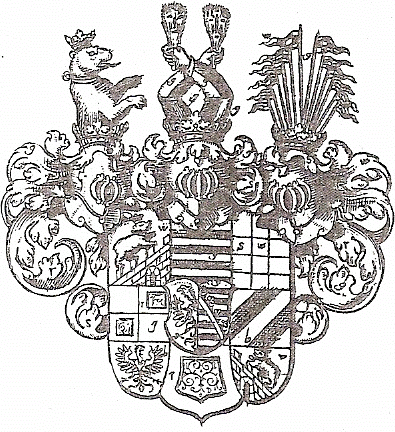
- Siebmacher, Johann. (1703). "Erneuertes und vermehrtes Wappenbuch...". Adolph Johann Helmers.
This article was imported from Wikipedia and is available under the Creative Commons Attribution-ShareAlike 4.0 License. Content has been adapted to SurfDoc format. Original contributors can be found on the article history page.
Ask Mako anything about Principality of Anhalt — get instant answers, deeper analysis, and related topics.
Research with MakoFree with your Surf account
Create a free account to save articles, ask Mako questions, and organize your research.
Sign up freeThis content may have been generated or modified by AI. CloudSurf Software LLC is not responsible for the accuracy, completeness, or reliability of AI-generated content. Always verify important information from primary sources.
Report