From Surf Wiki (app.surf) — the open knowledge base
Princess Street, Manchester
Street in Manchester, England

Street in Manchester, England
Princess Street is one of the main streets in the city centre of Manchester, England. It begins at Cross Street and runs approximately eastwards across Mosley Street, Portland Street and Whitworth Street until the point where it continues as Brook Street and eventually joins the A34.
History
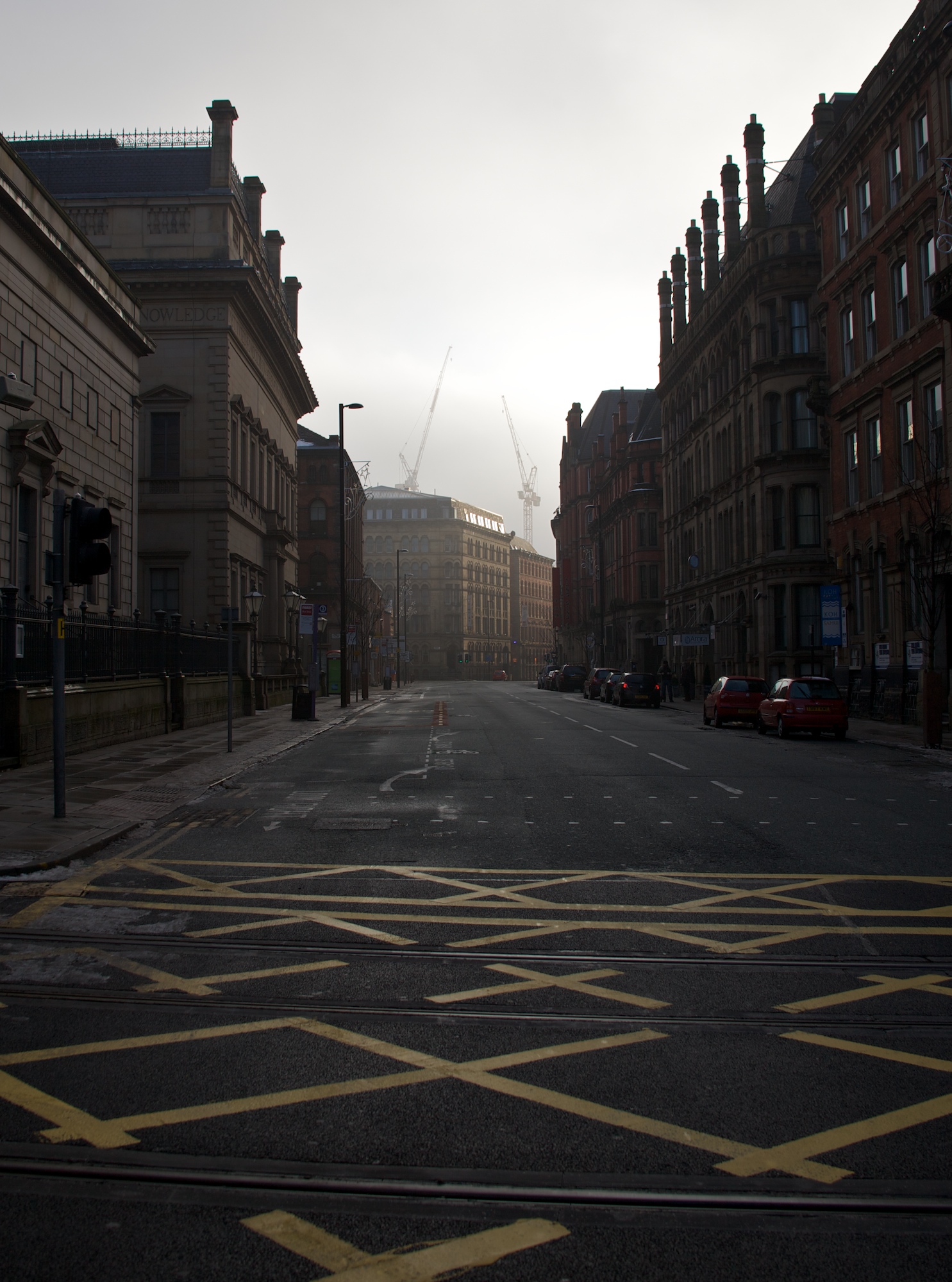
It is not clear whether the street was actually named after a princess and the second part of it once bore the name of David Street. Originally a residential street it became the site of many textile warehouses and large office buildings during the 19th century. Some of these have since been demolished but most have been converted to other uses.
Route
The road is two-way as it passes Albert Square, St Peter's Square and its tram stop. It then becomes one-way southbound but with a contraflow lane for buses, cycles and taxis, and for access. After Portland Street, it becomes fully one-way southbound until Major Street, and resumes fully two-way. It then crosses the Rochdale Canal, Whitworth Street, Charles Street and the River Medlock where it becomes Brook Street and then immediately Upper Brook Street.
Notable buildings
- Northern Assurance Buildings on the north side
- Manchester Town Hall on the south side
- The Athenaeum, on the north side, 1837, Grade II*, architect Sir Charles Barry
- Princess Buildings, on the south side
- The Pickles Building on the north side, Portland Street corner
- Former Mechanics' Institute 103 Princess Street, 1854, Grade II*, architect John Edgar Gregan (the location of the founding meeting of the Trades Union Congress and in the 20th century the College of Commerce and later the National Museum of Labour History).
- Central House, on the south side
- Asia House on the south side, Whitworth Street corner, 1910, architect Harry Fairhurst
- Lancaster House on the south side, Whitworth Street corner
References
References
- {{NHLE
- {{NHLE
- Stewart, Cecil. (1956). "The Stones of Manchester". Edward Arnold.
- {{NHLE
This article was imported from Wikipedia and is available under the Creative Commons Attribution-ShareAlike 4.0 License. Content has been adapted to SurfDoc format. Original contributors can be found on the article history page.
Ask Mako anything about Princess Street, Manchester — get instant answers, deeper analysis, and related topics.
Research with MakoFree with your Surf account
Create a free account to save articles, ask Mako questions, and organize your research.
Sign up freeThis content may have been generated or modified by AI. CloudSurf Software LLC is not responsible for the accuracy, completeness, or reliability of AI-generated content. Always verify important information from primary sources.
Report