From Surf Wiki (app.surf) — the open knowledge base
Prince George, Duke of Kent
British prince (1902–1942)
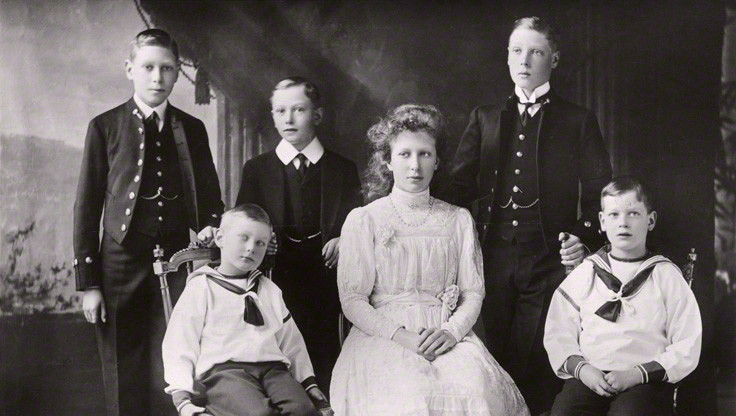
British prince (1902–1942)
| Field | Value | |
|---|---|---|
| name | Prince George | |
| title | Duke of Kent (more) | |
| image | Prince George, Duke of Kent.jpg | |
| caption | George in 1934 | |
| spouse | ||
| issue | {{plainlist | |
| full name | George Edward Alexander Edmund | |
| house | {{plainlist | |
| father | George V | |
| mother | Mary of Teck | |
| birth_name | Prince George of Wales | |
| birth_date | ||
| birth_place | York Cottage, Sandringham, Norfolk, England | |
| death_date | ||
| death_place | Morven, Caithness, Scotland | |
| death_cause | Dunbeath air crash | |
| burial_date | 29 August 1942 | |
| burial_place | ||
| signature | PrinceGeorgeSignature.svg | |
| module | {{Infobox person | |
| embed | yes | |
| education | {{plainlist | |
| embed | yes | |
| allegiance | United Kingdom | |
| branch | {{plainlist | |
| serviceyears | 1916–1942 | |
| serviceyears_label | Years of active service | |
| rank | {{plainlist | |
| battles | {{plainlist |
- Prince Edward, Duke of Kent
- Princess Alexandra, The Hon. Lady Ogilvy
- Prince Michael of Kent}}
- Windsor (from 1917)
- Saxe-Coburg and Gotha (until 1917)}}
- Royal Naval College, Osborne
- Britannia Royal Naval College}}
- }}
- Rear-admiral (RN)
- Major general (British Army)
- Air commodore (RAF)}}
- First World War
- Second World War}} Prince George, Duke of Kent (George Edward Alexander Edmund; 20 December 1902 – 25 August 1942), was a member of the British royal family, the fourth son of King George V and Queen Mary, and a younger brother of Kings Edward VIII and George VI. He served in the Royal Navy during the 1920s before briefly working as a civil servant, and in 1934 was created Duke of Kent. That same year he married Princess Marina of Greece and Denmark, with whom he had three children: Edward, Alexandra, and Michael. In the late 1930s he joined the Royal Air Force, holding staff appointments at RAF Training Command and, from 1941, in the Welfare Section of the Inspector General's Staff. George was killed in an air crash in Scotland in 1942, aged 39, becoming the first member of the royal family in more than four centuries to die on active service.
Early life
George was born at 7:35 pm on 20 December 1902 at York Cottage on the Sandringham Estate in Norfolk, England. His father was the Prince of Wales (later King George V), the only surviving son of King Edward VII and Queen Alexandra. His mother was the Princess of Wales, later Queen Mary, the eldest child and only daughter of the Duke and Duchess of Teck. At the time of his birth, he was fifth in the line of succession to the throne, following his father and three older brothers: Edward, Albert, and Henry.
George was baptised in the Private Chapel at Windsor Castle on 26 January 1903 by Francis Paget, Bishop of Oxford. His godparents were King Edward VII (his paternal grandfather), Prince Valdemar of Denmark (his paternal granduncle, represented by Prince Carl of Denmark, his paternal uncle and first cousin once removed), Prince Louis of Battenberg (husband of his father's cousin), Queen Alexandra (his paternal grandmother), Empress Dowager Maria Feodorovna (his paternal grandaunt, represented by Princess Victoria of the United Kingdom, his paternal aunt), and Princess Christian of Schleswig-Holstein (his paternal grandaunt).
Education and career

George received his early education from a tutor and then followed his elder brother, Henry, to St Peter's Court, a preparatory school at Broadstairs, Kent. At the age of 13, like his brothers, the Prince of Wales, later King Edward VIII and Albert, later King George VI, before him, he went to naval college, first at Osborne and later at Dartmouth. He was promoted to sub-lieutenant on 15 February 1924, and to lieutenant on 15 February 1926. He remained on active service in the Royal Navy until March 1929, serving on and later on the flagship of the Atlantic Fleet (renamed the Home Fleet in 1932), .
After leaving the navy, he briefly held posts at the Foreign Office and later the Home Office, becoming the first member of the royal family to work as a civil servant. and to captain on 1 January 1937.
From January to April 1931, George and his elder brother, the Prince of Wales, travelled 18,000 miles on a tour of South America. Their outward voyage was on the ocean liner . In Buenos Aires they opened a British Empire Exhibition. They continued from Río de la Plata to Rio de Janeiro on the liner and returned from Brazil to Europe on the liner , landing at Lisbon. The princes returned via Paris and an Imperial Airways flight from Paris–Le Bourget Airport that landed specially in Windsor Great Park.
On 23 June 1936, George was appointed a personal aide-de-camp to his eldest brother, the new king, Edward VIII. Following the abdication of Edward VIII, he was appointed a personal naval aide-de-camp to his elder brother, now George VI. On 12 March 1937, he was commissioned as a colonel in the British Army and in the equivalent rank of group captain in the Royal Air Force (RAF). He was also appointed Colonel-in-Chief of the Royal Fusiliers from the same date.
In October 1938, George was appointed Governor-General of Australia in succession to Lord Gowrie, with effect from November 1939. On 11 September 1939, it was announced that, owing to the outbreak of the Second World War, the appointment was postponed.
On 8 June 1939, George was promoted to the ranks of rear admiral in the Royal Navy, major-general in the British Army, and air vice-marshal in the Royal Air Force. At the start of the Second World War, he returned to active naval service with the rank of rear admiral, briefly serving in the Intelligence Division of the Admiralty.
He was patron of the Society for Nautical Research between 1926 and 1942.
Personal life
Marriage and children

On 9 October 1934, in anticipation of his forthcoming marriage to his second cousin, Princess Marina of Greece and Denmark, he was created Duke of Kent, Earl of St Andrews, and Baron Downpatrick. The couple married on 29 November at Westminster Abbey. This was followed by a Greek ceremony in the private chapel at Buckingham Palace, which was converted into an Orthodox chapel for the liturgy. They had three children:
- Prince Edward, Duke of Kent (born 9 October 1935). He married Katharine Worsley on 8 June 1961. They have three children.
- Princess Alexandra, The Hon. Lady Ogilvy (born 25 December 1936). She married the Hon. Angus Ogilvy, son of David Ogilvy, 12th Earl of Airlie and Lady Alexandra Coke, on 24 April 1963. They have two children.
- Prince Michael of Kent (born 4 July 1942). He married Baroness Marie Christine von Reibnitz on 30 June 1978. They have two children.
Relationships
George was rumoured to have had affairs with musical star Jessie Matthews, writer Cecil Roberts, and Noël Coward, a relationship which Coward's long-term partner, Graham Payn, denied. While married, he was also rumoured to have had an affair with Margaret Whigham, later known as Margaret Campbell, Duchess of Argyll, though there is no solid foundation to this rumour.
George's first major affair was with Gladys Jean Combe, younger daughter of Captain Christian Combe, of the Royal Horse Guards, and his wife Lady Jane, daughter of George Conyngham, 3rd Marquess Conyngham. He had met her as a sub-lieutenant on HMS Mackay on one of his trips ashore. He was rumoured to have been addicted to drugs, especially morphine and cocaine, an allegation which reputedly originated from his friendship with Kiki Preston (née Alice Gwynne, 1898–1946), whom he first met in the mid-1920s. Known as "the girl with the silver syringe" due to her addiction to heroin, Preston – a cousin of railroad heiress Gloria Vanderbilt – was married first to Horace R. B. Allen and then, in 1925, to banker Jerome Preston. She died after jumping out of a window of the Stanhope Hotel in New York City. His other alleged sexual liaisons include a ménage à trois with Preston and José Uriburu, bisexual son of Argentine ambassador to the UK José Uriburu Tezanos. In addition to his legitimate children, he was said to have had a son by Kiki Preston. According to the memoirs of a friend, Loelia, Duchess of Westminster, George's brother Edward VIII believed that the son was Michael Temple Canfield (1926–1969), the adopted son of American publisher Cass Canfield – and the first husband of Lee Radziwill, sister of First Lady Jacqueline Kennedy Onassis (wife of President John F. Kennedy).
After he was sent by the King to the Far East, George began a relationship in Singapore in 1926 with Leila Devitt, a hostess and wife of a commodities czar, 10 years his senior. He had several other lovers and mistresses throughout his life, including Poppy Baring (whom the King and Queen deemed unsuitable as a royal bride), Lois Sturt, Paula Gellibrand, Audrey Coats, Edythe d'Erlanger, Myrtle Farquharson, Florence Mills, and Adelaide Hall.
RAF career

As a young man the Duke came to the opinion that the future lay in aviation. It became his passion, and in 1929, the Duke earned his pilot's licence. He was the first of the royal family to cross the Atlantic Ocean by air. Before his flying days, he entered the Royal Navy, and was trained in intelligence work while stationed at Rosyth.
In March 1937, he was granted a commission in the Royal Air Force as a group captain. He was also made the Honorary Air Commodore of No. 500 (County of Kent) Squadron Auxiliary Air Force in August 1938. He was promoted to air vice-marshal in June 1939, along with promotions to flag and general officer rank in the other two services.
In 1939 he returned to active service as a rear admiral in the Royal Navy, but in April 1940, transferred to the Royal Air Force. He temporarily relinquished his rank as an air officer to assume the post of staff officer at RAF Training Command in the rank of group captain, so that he would not be senior to more experienced officers. On 28 July 1941, he assumed the rank of air commodore in the Welfare Section of the RAF Inspector General's Staff. In this role, he went on official visits to RAF bases to help boost wartime morale.
Freemasonry
George was initiated into freemasonry on 12 April 1928 in Navy Lodge No. 2612. He subsequently served as master of Navy Lodge in 1931, and was also a member of Prince of Wales's Lodge No. 259, and Royal Alpha Lodge No. 16, of which he served as master in 1940. He was appointed senior grand warden of the United Grand Lodge of England in 1933, and served as provincial grand master of Wiltshire from 1934, until he was elected grand master of the United Grand Lodge of England in 1939; a position he held until his death in 1942.
Death
On 25 August 1942, George and 14 others took off in a RAF Short Sunderland flying boat W4026 from Invergordon, Ross and Cromarty, to fly to Iceland on non-operational duties. The aircraft crashed on Eagle's Rock, a hillside near Dunbeath, Caithness, Scotland. George and all but one of those on board were killed. He was 39 years old.
His death in RAF service marked the first time in more than 450 years that a member of the royal family died on active service. George's body was interred initially in the Royal Vault of St George's Chapel, Windsor; in 1968, he was buried in the Royal Burial Ground, Frogmore, directly behind Queen Victorias mausoleum. His elder son, six-year-old Edward, succeeded him as Duke of Kent. Marina, his wife, had given birth to their third child, Michael, only seven weeks before George's death. His will was sealed in Llandudno in 1943. His estate was valued at £157,735 (or £ in when adjusted for inflation).
One RAF crew member survived the crash: Flight Sergeant Andrew Jack, the Sunderland's rear gunner. Flight Sergeant Jack's niece has claimed that Jack told his brother that the Duke had been at the controls of the plane; that Jack had dragged him from the pilot's seat after the crash; and that there was an additional person on board the plane whose identity has never been revealed.
In popular culture

The Duke's early life is dramatised in Stephen Poliakoff's television serial The Lost Prince (2003), a biography of the life of the Duke's younger brother John. In the film, the teenage Prince 'Georgie' is portrayed as sensitive, intelligent, artistic and almost uniquely sympathetic to his brother's plight. He is shown as detesting his time at the Royal Naval College and as having a difficult relationship with his austere father.
In May 2008, the BBC aired its Radio 4 comedy Hut 33, Series 2, Episode 1, titled "The Royal Visit". The main guest character for this episode was Duke of Kent, played by Michael Fenton-Stevens. The show is set at Bletchley Park with a team of code breakers. The Duke has been chosen to make an impromptu visit, and the code breakers have been told to hide all evidence of their real work and invent a story. "On no account should the Duke be told what really happens at Bletchley because he is a Nazi spy." He is also portrayed as promiscuous and bisexual, as he tries to gain sexual favours from one of the male staff, and one of the female characters recalls a previous liaison with the Duke.
Much of George's later life was outlined in the documentary film The Queen's Lost Uncle. He is a recurring character in the revival of Upstairs, Downstairs (2010/2012), played by Blake Ritson. He is portrayed as a caring brother, terrified of the mistakes that his family is making; later, he is portrayed as an appeaser of the German regime, but also as a supportive friend of Hallam Holland.
George and his eldest brother the Prince of Wales, later Edward VIII, are shown in Stephen Poliakoff's BBC television serial Dancing on the Edge (2013), in which they are portrayed as supporters of jazz and encouragers of Louis Lester's Jazz Band. A sexual attraction to Louis on George's part is also insinuated.
Honours and arms
| Country | Date | Appointment | Ribbon | Post-nominal | Other | United Kingdom | Denmark | Norway | Sweden | Chile | France | |||||||||
|---|---|---|---|---|---|---|---|---|---|---|---|---|---|---|---|---|---|---|---|---|
| 1923 | Royal Knight Companion of Order of the Garter | [[File:Order of the Garter, ribbon bar (colour from 1950 onwards).svg | 70x70px]] | KG | formally invested in 1924 | |||||||||||||||
| 1935 | Extra Knight of the Order of the Thistle | [[File:UK Order of the Thistle ribbon.svg | 70x70px]] | KT | ||||||||||||||||
| 1934 | Knight Grand Cross of the Order of St Michael and St George | [[File:UK Order St-Michael St-George ribbon.svg | 70x70px]] | GCMG | {{London Gazette | issue = 34045 | date = 27 April 1934 | page = 2703 | ||||||||||||
| 1924 | Knight Grand Cross of the Royal Victorian Order | [[File:Royal Victorian Order UK ribbon.png | 70x70px]] | GCVO | 0-9528527-0-5}}) | |||||||||||||||
| 1936 | Recipient of the Royal Victorian Chain | {{London Gazette | issue = 34238 | date = 31 December 1935 | page = 7 | |||||||||||||||
| 23 June 1936 | Personal aide-de-camp | ADC | ||||||||||||||||||
| 20 September 1922 | Knight of the Order of the Elephant | [[File:Order of the Elephant Ribbon bar.svg | 70x70px]] | |||||||||||||||||
| 20 December 1924 | Grand Cross with Collar of the Order of St. Olav | [[File:St Olavs Orden storkors stripe.svg | 70x70px]] | title=Norges Statskalender for Aaret 1930 | pages=995–996 | year=1930 | chapter=Den kongelige norske Sanct Olavs Orden | chapter-url=https://runeberg.org/norkal/1930/0560.html | location=Oslo | publisher=Forlagt av H. Aschehoug & Co. (w. Nygaard) | language=Norwegian | via=runeberg.org}} | ||||||||
| 1 October 1932 | Knight of the Order of the Seraphim | [[File:Order of the Seraphim - Ribbon bar.svg | 70x70px]] | |||||||||||||||||
| Knight Grand Cross of the Chilean Order of Merit | [[File:CHL Order of Merit of Chile - Grand Cross BAR.svg | 70x70px]] | ||||||||||||||||||
| March 1939 | Grand Cross of the Legion of Honour | [[File:Legion Honour ribbon (II class).svg | 70x70px]] |
Appointments
Military
;Canada
- CAN Colonel-in-Chief, The Essex and Kent Scottish (1937 – 1942)
;New Zealand
- NZ Colonel-in-Chief, Corps of New Zealand Engineers (1938)
;United Kingdom
- UK Colonel-in-Chief, Queen's Own Royal West Kent Regiment (1935)
- UK Colonel-in-Chief, Royal Fusiliers (1937)
- UK Honorary Air Commodore, No. 500 (County of Kent) Squadron Auxiliary Air Force (1938)
Civic
- 1938–42: Grand Master of the Guild of Air Pilots and Air Navigators
Arms
Around the time of his elder brother Prince Henry's twenty-first birthday, Prince George was granted the use of the Royal Arms, differenced by a label argent of three points, each bearing an anchor azure.
| [[Image:Coat of Arms of George, Duke of Kent.svg | 200px | center]] | [[File:Royal Standard of Prince George, Duke of Kent.svg | 200px | center]] | [[File:Royal Standard of Prince George, Duke of Kent (in Scotland).svg | 200px | center]] |
|---|
Ancestry
References
References
- (23 December 1902). "The Princess of Wales". London Evening Standard.
- (27 January 1903). "Court Circular".
- (26 August 1945). "Duke of Kent once called sailor prince". Pittsburgh Post-Gazette.
- {{London Gazette. (23 December 1924)
- {{London Gazette. (16 February 1926)
- He served on the latter as a lieutenant on the admiral's staff before transferring in 1928 to {{HMS. Durban on the [[North America and West Indies Station. America and West Indies Station]], based at the [[Royal Naval Dockyard, Bermuda. Royal Naval Dockyard]] at [[Bermuda]]. His father had previously served at Bermuda on {{HMS. Canada. 1881. 6 and {{HMS. Thrush. 1889. 6 as a watch-keeping lieutenant."Our London Letter", ''The Gloucester Journal'', Gloucester, England. 21 July 1928, p. 13
- {{London Gazette. (1 January 1937)
- Erskine, Barry. "Oropesa (II)". Pacific Steam Navigation Company.
- Nicol, Stuart. (2001). "MacQueen's Legacy; Ships of the Royal Mail Line". [[The History Press.
- Nicol, Stuart. (2001). "MacQueen's Legacy; A History of the Royal Mail Line". [[The History Press.
- (30 April 1931). "Arrival at Windsor by Air". [[National Library, Singapore]].
- (1 May 1931). "Princes Home". [[National Library of Australia]].
- {{London Gazette. (19 June 1936)
- {{London Gazette. (29 January 1937)
- {{London Gazette. (12 March 1937)
- {{London Gazette. (12 March 1937)
- "The Duke of Kent: Appointment in Australia", ''The Times'' (26 October 1938): 14.
- (28 August 1968). "Marina, a tragic but well-loved Princess". The Sydney Morning Herald.
- "Duke of Kent and Australia", ''The Times'' (12 September 1939): 6.
- {{London Gazette. (6 June 1939)
- Hugh Murphy & Derek J. Oddy (2010) ''The Mirror of the Seas; A Centenary History of the Society for Nautical Research'' London, Society for Nautical Research, p.191. {{ISBN. 978-0-902387-01-0
- {{London Gazette. (9 October 1934)
- (29 November 1934). "King and Queen". The Calgary Daily Herald.
- (29 November 1934). "King and Queen see rehearsals". The Sydney Morning Herald.
- Kenneth J. Panton [https://books.google.com/books?id=BiyyueBTpaMC&pg=PA217&lpg=PA217 ''Historical Dictionary of the British Monarchy''], Lanham,MD: Scarecrow Press, 2011, p.217
- King, Francis Henry. ''Yesterday Came Suddenly'', Constable (London) 1993, p278
- Barry Day, ed., ''The Letters of Noël Coward''. New York: Alfred A. Knopf, 2007. p. 691
- [[Gyles Brandreth. Brandreth, Gyles]] (2004). ''Philip and Elizabeth: Portrait of a Marriage''. London: Century. {{ISBN. 0-7126-6103-4, p. 94
- (2 February 2019). "The Dirty Duchess of Argyll was ahead of her time". [[The Times]].
- (2024-06-30). "The scandalous unseen letters of 'love rat' Prince George, Duke of Kent". The Telegraph.
- Lynn Kear and John Rossman. ''Kay Francis: A Passionate Life and Career''. Jefferson, NC: McFarland & Company, 2006. [https://books.google.com/books?id=QWRWZu2EsKAC&pg=PA28 p. 28]
- Farrant, Leda (1994). ''Diana, Lady Delamere and the Lord Erroll Murder'', p. 77. Publishers Distribution Services.
- McLeod, Kirsty. ''Battle Royal: Edward VIII & George VI, Brother Against Brother''. Constable, 1999. p 122
- Lynn Picknett, Clive Prince, Stephen Prior, and Robert Brydon. ''War of the Windsors: A Century of Unconstitutional Monarchy''. p. 58.
- (24 December 1946). "N. Y. Woman Leaps 5 Stories to Death". [[The Lewiston Daily Sun]].
- Bazán, Osvaldo (2004). ''[https://books.google.com/books/about/Historia_de_la_homosexualidad_en_la_Arge.html Historia de la homosexualidad en la Argentina: de la conquista de América al siglo XXI].'' (in Spanish), p. 180. Marea Editorial.
- Nicholson, Stuart (1999). ''Reminiscing in Tempo: A Portrait of Duke Ellington'', p. 146. Northeastern University Press.
- Westminster, Loelia, Duchess of. ''Grace and Favour'', Weidenfeld Nicholson, 1961
- Macwhirter, Robin, 'The Tragedy at Eagle's Rock', Scotsman, 24 August 1985
- {{London Gazette. (12 March 1937)
- {{Harvnb. Hunt. 1972
- {{London Gazette. (16 August 1938)
- {{London Gazette. (7 May 1940)
- {{London Gazette. (30 September 1941)
- "Royal family; aircraft engineer; 1942". Flight Archive.
- "English Royal Freemasons".
- (26 August 1942). "Duke of Kent Dies in an R.A.F. Crash on way to Iceland". [[The New York Times]].
- (9 April 2013). "Aviation – Newbattle at war".
- "Royal Burials in the Chapel since 1805". College of St George - Windsor Castle.
- (18 July 2022). "£187m of Windsor family wealth hidden in secret royal wills".
- "ASN Aircraft accident Short Sunderland III W4026 Dunbeath, Scotland".
- [https://news.bbc.co.uk/1/hi/wales/north_east/3342953.stm "Secret of Duke's plane death."] [[BBC News]], Wales, 23 December 2003. Retrieved 26 September 2017
- "BBC Radio 4 Extra – Hut 33, Series 2, Royal Visit".
- "The Queen's Lost Uncle". Channel 4.
- (26 February 2012). "Upstairs life of a royal rogue". Daily Express.
- Furness, Hannah. (1 February 2013). "New BBC drama to show the scandalous stories of the playboy princes". The Daily Telegraph.
- "List of the Knights of the Garter".
- 0-9528527-0-5)
- "Personal Aide de Camp Appointments 23 June 1936".
- (1933). "Statshaandbog for Kongeriget Danmark for Aaret 1933". J.H. Schultz A.-S. Universitetsbogtrykkeri.
- (1930). "Norges Statskalender for Aaret 1930". Forlagt av H. Aschehoug & Co. (w. Nygaard).
- Per Nordenvall. (1998). "Kungliga Serafimerorden: 1748–1998".
- "The Royal Family – HM Queen Elizabeth II".
- M. & B. Wattel. (2009). "Les Grand'Croix de la Légion d'honneur de 1805 à nos jours. Titulaires français et étrangers". Archives & Culture.
- The Essex and Kent Scottish. "Key Appointments". The Scottish Borderers Foundation.
- Cooke, P.. (2019). "Won by the Spade: How the Royal New Zealand Engineers Built a Nation". Exisle Publishing.
- {{London Gazette. (15 March 1935)
- "Past Masters". The Honourable Company of Air Pilots.
This article was imported from Wikipedia and is available under the Creative Commons Attribution-ShareAlike 4.0 License. Content has been adapted to SurfDoc format. Original contributors can be found on the article history page.
Ask Mako anything about Prince George, Duke of Kent — get instant answers, deeper analysis, and related topics.
Research with MakoFree with your Surf account
Create a free account to save articles, ask Mako questions, and organize your research.
Sign up freeThis content may have been generated or modified by AI. CloudSurf Software LLC is not responsible for the accuracy, completeness, or reliability of AI-generated content. Always verify important information from primary sources.
Report