From Surf Wiki (app.surf) — the open knowledge base
Power Macintosh
Family of personal computers released by Apple Computer
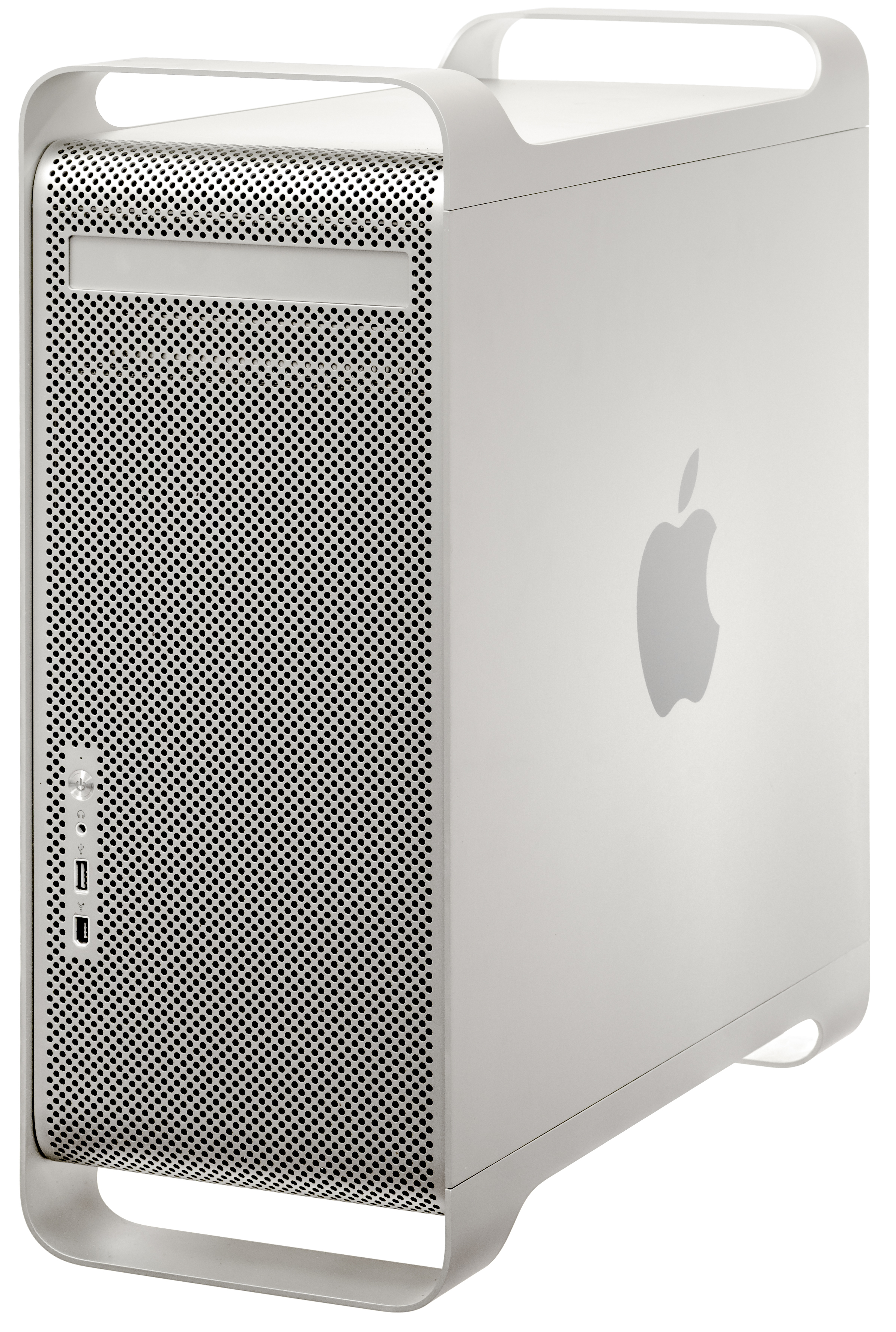
Family of personal computers released by Apple Computer
The Power Macintosh, later Power Mac, is a family of personal computers designed, manufactured, and sold by Apple Computer, Inc as the core of the Macintosh brand from March 1994 until August 2006.
Described by Macworld as "the most important technical evolution of the Macintosh since the Mac II debuted in 1987",{{cite magazine
The Power Macintosh replaced the Quadra and was initially sold in the same enclosures.{{cite web | access-date = September 6, 2017 | archive-date = September 7, 2017 | archive-url = https://web.archive.org/web/20170907122224/http://www.lowendmac.com/roadapples/q800case.shtml | url-status = live
History
The first public demonstration of the new Power Macintosh — specifically, a prototype of what would become the Power Macintosh 6100 – was at an Apple Pacific sales meeting in Hawaii in October 1992.{{cite book
Release and reception (1994–1995)

The original plan was to release the first Power Macintosh machine on January 24, 1994, exactly ten years after the release of the first Macintosh. Ian Diery, who was EVP and general manager of the Personal Computer Division at the time, moved the release date back to March 14 in order to give manufacturing enough time to build enough machines to fill the sales channels and to ensure that the Macintosh Processor Upgrade Card would be available at the same time. This was a departure from prior practice at Apple; they had typically released upgrade packages months after the introduction of new Macintoshes.
The Power Macintosh was formally introduced at the Lincoln Center for the Performing Arts in Manhattan on March 14. Pre-orders for the new Power Macintosh models were brisk, with an announced 150,000 machines already having been sold by that date.{{cite magazine | access-date = December 19, 2020 | archive-date = May 9, 2021 | archive-url = https://web.archive.org/web/20210509145647/https://books.google.com/books?id=DTsEAAAAMBAJ&pg=PA33 | url-status = live
Speed-bumped versions of the Power Macintosh line were introduced at the beginning of 1995, followed in April by the first PowerPC 603 models: an all-in-one model called the Power Macintosh 5200 LC and a replacement for the Quadra 630 called the Power Macintosh 6200. Performa variants of these machines were sold as well, continuing the practice of re-branding other Macintosh models for sale in department stores and big-box electronics retailers. While the 5200 LC was well received by critics for its design, performance, and cost, both it and the 6200 suffered from stability issues (and in the case of the 5200, display issues as well) that could only be solved by bringing the machine to an Apple dealer for replacement parts.{{cite book | access-date = January 20, 2018 | archive-date = October 11, 2017 | archive-url = https://web.archive.org/web/20171011130948/http://www.toddp.com/classic/Software%20Install/Apple%20Support%20Documents/Macintosh%20Secrets/Mac%20Secrets%204th%20ed./ch13.pdf | url-status = live
By mid-1995, the burgeoning Power Macintosh line had all but completely supplanted every prior Macintosh line, with only the high-end Quadra 950 and two low-cost education models (the all-in-one Macintosh LC 580 and desktop LC 630) remaining in production. The competitive marketplace for "accelerator cards" that had existed for earlier Macintosh systems largely disappeared due to the comparatively low price of Apple's Macintosh Processor Upgrade Card (US$600).{{cite magazine
Transition to standardized hardware (1995–1999)

When the Power Macintosh was introduced, it included the same internal and external expansion connections as other Macintosh models, all of which (save for audio input and output) were either wholly proprietary to, or largely exclusive to Apple computers. Over the next five years, Apple replaced all these ports with industry-standard connectors.
The first generation of Power Macintoshes had shipped with NuBus, but by the end of 1993, it was becoming clear that Intel's PCI bus was going to be the widely adopted future of internal expansion.{{cite magazine | access-date = 2018-01-16 | archive-date = May 9, 2021 | archive-url = https://web.archive.org/web/20210509145643/https://books.google.com/books?id=DDsEAAAAMBAJ&pg=PA39 | url-status = live | access-date = 2018-01-16
The transition to PCI continued into 1996, with the introduction of the all-in-one 5400, desktop 6300/160 (usually sold as a Performa 6360), and mini-tower 6400 models. The success of the Macintosh clone market also prompted Apple to produce its own inexpensive machine using parts and production techniques that were common in both the clone market and the Wintel desktop market at the time. The Power Macintosh 4400 (sold as a 7220 in Asia and Australia) employed bent sheet metal instead of plastic for its case internals, and included a standard ATX power supply.
Alongside the transition to PCI, Apple began a gradual transition away from SCSI hard disks to IDE as a cost-saving measure, both for themselves and for users who wanted to upgrade their hard drives. The low-end 5200 and 6200 were the first to adopt IDE internal drives, though Apple's proprietary 25-pin external SCSI connector remained. The beige Power Macintosh G3 models being the last to include SCSI drives as standard, and it was the last Macintosh to include the external SCSI connector. When the Power Macintosh G3 (Blue and White) was introduced in early 1999, the port was replaced by two FireWire 400 ports. The Blue and White G3 was also the last Macintosh to include Apple Desktop Bus ports, a proprietary technology created by Steve Wozniak to connect keyboards, mice and software protection dongles such as those from Avid Technology.{{cite web | access-date = 2018-01-14 | archive-date = August 8, 2018 | archive-url = https://web.archive.org/web/20180808033139/http://www.root6.com/support-2/identifying-the-system-id-dongle-serial-number-and-dongle-type-on-avid-editing-products/ | url-status = live
Another port that was retired during this time is the Apple Attachment Unit Interface. This was a proprietary version of the industry-standard Attachment Unit Interface connector for 10BASE5 Ethernet that Apple had created to avoid confusion with the 15-pin connector that Apple used for connecting external displays.{{cite web | access-date = 2018-01-14 | archive-date = February 24, 2018 | archive-url = https://web.archive.org/web/20180224165619/http://lowendmac.com/2007/apples-aaui-ethernet-connector/ | url-status = live
The Power Mac G4 (AGP Graphics) was released in the second half of 1999; it was the first Power Macintosh to include only industry-standard internal and external expansion. For some years afterwards, a number of third parties created dongles that provided backwards compatibility to users of newer Power Mac systems with old hardware. This included companies like Griffin Technology, MacAlly Peripherals, Rose Electronics and many others. In some cases, these companies produced adapters that matched the aesthetic design of the Power Mac.{{cite web | access-date = 2018-01-14 | archive-date = January 21, 2018 | archive-url = https://web.archive.org/web/20180121071807/http://www.kvm-switches-online.com/cnv-usbadb.html | url-status = live
Industrial design and the Megahertz Myth (1999–2002)
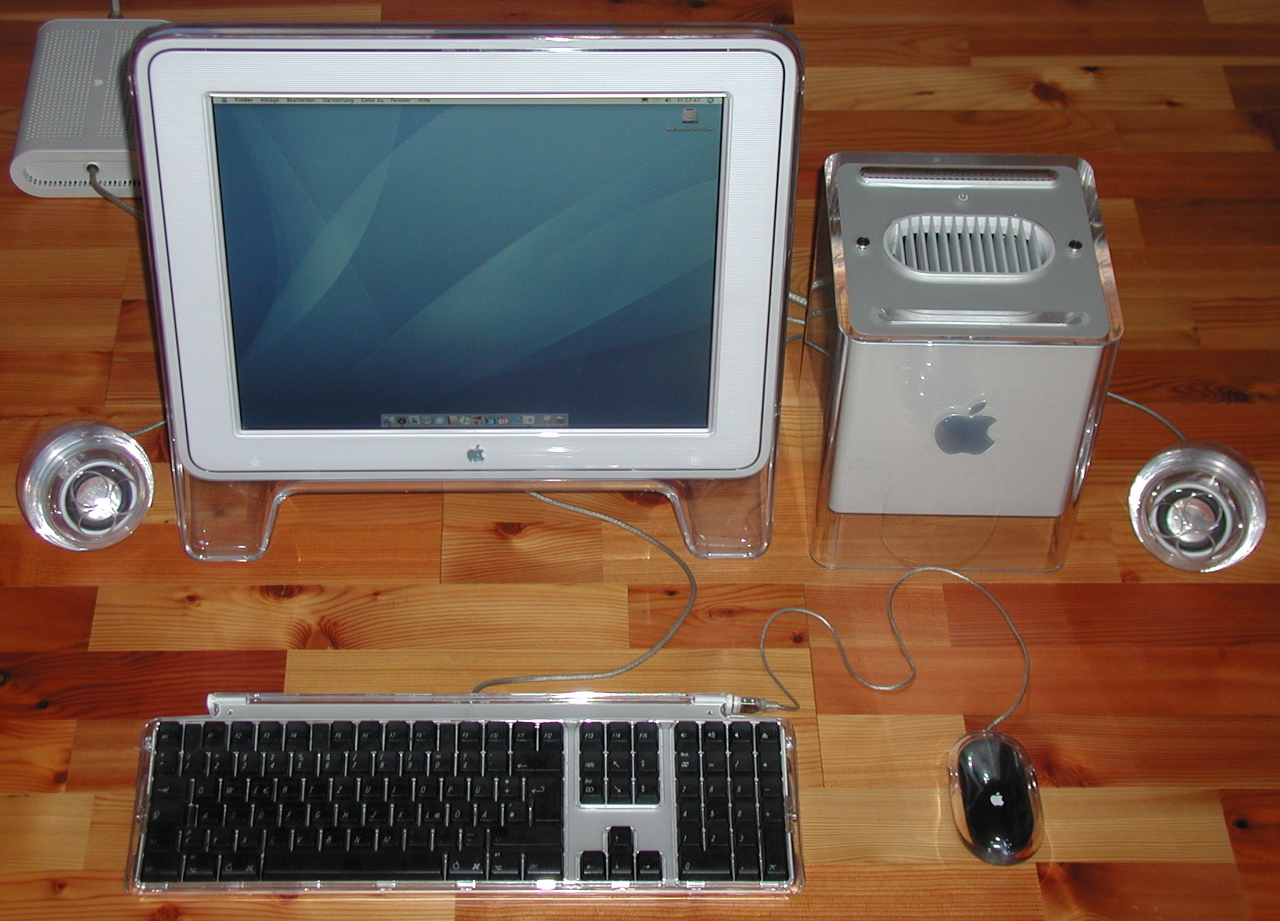
Shortly after Steve Jobs' return to Apple in 1997, Jony Ive was appointed senior vice president of industrial design. Building on the critical and commercial success of the iMac, Ive and his team created an entirely new case design for the Power Macintosh G3, combining many of the aesthetic principles of the iMac (curves, translucent plastics, use of color) with the ease-of-access characteristics of the company's popular "Outrigger" Macintosh models from previous years. The result was the Power Macintosh G3 (Blue and White), a machine that received considerable plaudits from reviewers, including ''PC Magazine'''s Technical Excellence Award for 1999. "The Power Mac provides the fastest access to the insides of a computer we've ever seen," they wrote. "Just lift a handle and a hinged door reveals everything inside." This case design, code-named "El Capitan", was retained through the entire lifetime of the Power Mac G4. The introduction of the Blue and White G3 mini-tower also marked the end of the desktop and all-in-one Power Macintosh case designs, the latter being replaced by the iMac.
A second model called the Power Mac G4 Cube was introduced in 2000, which fitted the specifications of a mid-range Power Mac G4 into a cube less than 9" in each axis. This model was on sale for about a year before being discontinued, and was not considered a sales success (150,000 units were sold, about one-third of Apple's projections), but the distinctive design of both the computer and its accompanying Harman Kardon speakers prompted the Museum of Modern Art in New York City to retain them in their collection.
The PowerPC chips in the G3 and G4 became a central part of Apple's branding and marketing for the Power Macintosh. For example, the Blue and White G3 features the letters "G3" on the side that are fully one-third the height of the entire case, a significant departure from the small labels typically used on prior Macintosh computers. And when the Power Mac G4 was introduced, print ads included pictures of the G4 chip and mentioned its AltiVec instruction set by its own marketing name, "Velocity Engine". A related element of Apple's marketing strategy, especially after mid-2001, was to highlight what they described as the "Megahertz myth", challenging the belief that a processor's clock speed is directly correlated with performance. This had become important with the introduction of Intel's Pentium 4, which featured significantly higher clock speeds than competing chips from Sun, IBM, and AMD, but without a corresponding performance benefit.
The company's public presentations – Stevenotes in particular – often featured lengthy segments pitting a high-powered Compaq or Dell computer against the Power Macintosh in a series of benchmarks and scripted tasks, usually in Adobe Photoshop. These presentations often showed the Power Macintosh besting Intel's Pentium chips by margins significantly exceeding 50%, but independent benchmarks did not bear this out. InfoWorld reviewer Jennifer Plonka reported that the 400 MHz G3 was 11% slower than a comparably-specced Pentium II-450 in an Office applications suite test, while Photoshop 5.0 was faster by 26%. And in 2003, Maximum PC ran a variety of gaming, Photoshop and LightWave 3D benchmarks, and reported that the Dual 1.25 GHz G4 system was about half the speed of a dual-processor Intel Xeon Prestonia 2.8 GHz system.{{cite magazine | access-date = December 19, 2020 | archive-date = May 9, 2021 | archive-url = https://web.archive.org/web/20210509145644/https://books.google.com/books?id=KwIAAAAAMBAJ&pg=PA24 | url-status = live | access-date = 2018-01-17 | archive-date = September 11, 2017 | archive-url = https://web.archive.org/web/20170911024740/https://www.macworld.com/article/1019332/powermac.html | url-status = live | access-date = 2018-01-17 | archive-date = January 26, 2018 | archive-url = https://web.archive.org/web/20180126013200/http://www.apple-history.com/g4_mirror | url-status = live
The ''Power Mac G5'' and the end of the Power Mac (2003–2006)
By the time the Power Mac G5 was unveiled at Apple's Worldwide Developers Conference in July 2003, Apple's desktop range had fallen significantly behind competing computers in performance. The G5 closed much of this gap by moving to the PowerPC 970 processor with clock speeds up to 2.0 GHz, and a full 64-bit architecture. It also introduced a significantly revised enclosure design, replacing the use of plastics with anodized aluminum alloy.
Reviews were generally positive. InfoWorld described the G5 as "Apple's best work yet", and said it "delivers on the present need for rapid computing, deep multitasking, and responsive user interfaces — as well as the future need for mainstream computers that rapidly process and analyze massive data sets."{{cite web | access-date = 2018-01-20 | archive-date = January 21, 2018 | archive-url = https://web.archive.org/web/20180121185819/https://www.infoworld.com/article/2679339/operating-systems/power-mac-g5-is-apple-s-best-work-yet.html | url-status = live | access-date = December 19, 2020 | archive-date = April 11, 2022 | archive-url = https://web.archive.org/web/20220411160536/https://books.google.com/books?id=gWq-HJY2HdkC&pg=PA84 | url-status = live | access-date = 2018-01-17 | archive-date = January 18, 2018 | archive-url = https://web.archive.org/web/20180118064650/https://arstechnica.com/staff/2006/03/3059/ | url-status = live | access-date = 2018-01-14 | archive-date = January 21, 2018 | archive-url = https://web.archive.org/web/20180121071641/https://www.theregister.co.uk/2003/11/11/watchdog_bans_apple_power_mac/ | url-status = live | access-date = 2018-01-20 | archive-date = January 21, 2018 | archive-url = https://web.archive.org/web/20180121071706/https://www.macworld.com/article/1035690/apple.html | url-status = live
Three generations of Power Mac G5 were released before it was discontinued during the Mac transition to Intel processors. The announcement of the transition came in mid-2005, but the third generation of G5 systems was introduced towards the end of 2005. Most notably in this generation was the introduction of a Quad-core 2.5 GHz system. Not only was this the first Apple computer with four processing cores, it was the first to incorporate PCI Express instead of PCI-X for internal expansion.{{cite web | access-date = 2018-01-20 | archive-date = December 27, 2017 | archive-url = https://web.archive.org/web/20171227204219/http://lowendmac.com/2005/power-mac-g5-quad/ | url-status = live
The official end to the Power Macintosh line came at the 2006 Worldwide Developers Conference, where Phil Schiller introduced its replacement, the Mac Pro. The G5's enclosure design was retained for the Mac Pro and continued to be used for seven more years, making it among the longest-lived designs in Apple's history.{{cite web | access-date = January 20, 2018 | archive-date = September 7, 2017 | archive-url = https://web.archive.org/web/20170907081048/https://www.macworld.com/article/2042702/ten-years-in-the-shadow-of-the-power-mac-g5.html | url-status = live
Models
The Power Macintosh models can be broadly classified into two categories, depending on whether they were released before or after Apple introduced its "four quadrant" product strategy in 1998. Before the introduction of the Power Macintosh G3 (Blue and White) in 1999, Apple had shipped Power Macintosh-labelled machines in nine different form factors, some of which were carry-overs from pre-PowerPC product lines, such as the Quadra/Centris 610 and the IIvx. This was reduced to one model in the new product strategy, with the exception of the Power Mac G4 Cube in 2000 and 2001.
1994–1997
Apple named Power Macintosh models from this period after the first pre-PowerPC model of Macintosh to use a particular form factor, followed by a slash and the speed of the CPU. For example, the Power Macintosh 6300/120 uses the Quadra 630's form factor and has a 120 MHz CPU.
Machines with "AV" in their name denote variants that include extended audio-video capabilities.
Machines with "PC Compatible" or "DOS Compatible" in their name include a separate card with an x86-compatible CPU, typically a 486 or Pentium; these models are therefore capable of running MS-DOS and Microsoft Windows applications, typically Windows 3.1 (for earlier PC Compatible machines pre-1995) or Windows 95 (for later PC Compatible machines since 1995).
Machines with "MP" in their name denote machines that include two CPUs.
These early models had two distinct generations. The first generation uses the PowerPC 601 and 603 processors and used the old NuBus/PDS expansion slots, while the second generation uses the faster 603e, 604 and 604e chips as well as industry-standard PCI expansion slots. The second generation also makes use of Open Firmware, allowing them to more easily boot alternate operating systems (including OS X via XPostFacto), though use of various hacks was still necessary.
Power Macintosh 4400

The Power Macintosh 4400 is a desktop case with a height of 5.4 inches, suitable for horizontal placement with a monitor on top.
- Power Macintosh 4400/160, 200, 200 (PC Compatible) (Marketed as the Power Macintosh 7220 in some regions)
Power Macintosh 5200
The Power Macintosh 5200 is an all-in-one form factor with specifications and internal designs similar to the Quadra 630. Collectively these machines are sometimes referred to as the "Power Macintosh/Performa 5000 series".
- Power Macintosh 5200/75 LC
- Power Macintosh 5260/100, 120
- Power Macintosh 5300/100 LC
- Power Macintosh 5400/120, 180, 200
- Power Macintosh 5500/225, 250
Quadra 610
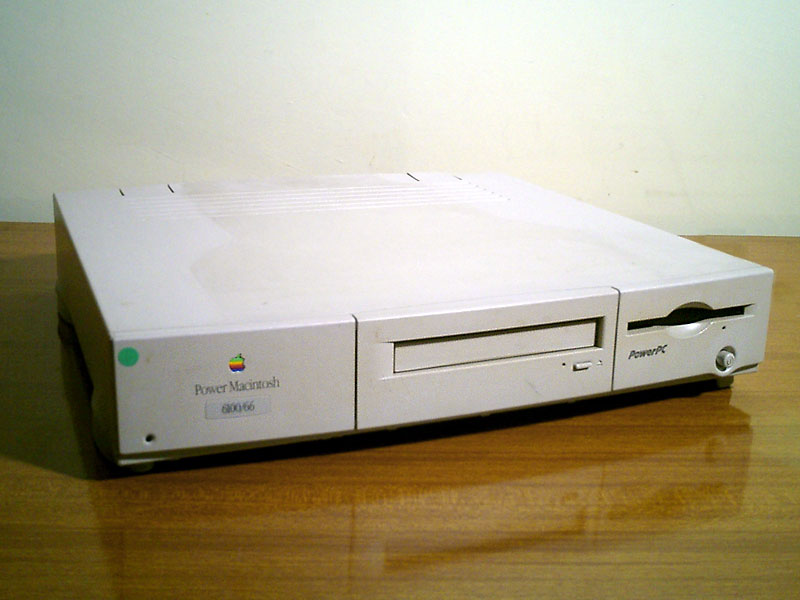
The Quadra 610 form factor is a low-profile "pizza-box" design with a height of 3.4 inches, intended to be placed on a desktop with a monitor on top.
- Power Macintosh 6100/60, 60AV, 66, 66AV, 66 (DOS Compatible)
Quadra 630
The Quadra 630 form factor is a horizontally-oriented design with a height of 4.3 inches, suitable for placing a monitor on top.
- Power Macintosh 6200/75
- Power Macintosh 6300/120, 160
Performa 6400
The Performa 6400 form factor is a mini-tower design, suitable for being placed beside a monitor.
- Power Macintosh 6400/180, 200
- Power Macintosh 6500/225, 250, 275, 300
IIvx

The IIvx form factor is a horizontally-oriented desktop form factor with a height of 6 inches, suitable for placing a monitor on top.
- Power Macintosh 7100/66, 66AV, 80, 80AV
Power Macintosh 7500
The Power Macintosh 7500 form factor is a horizontally-oriented desktop design with a height of 6.15 inches, suitable for placing a monitor on top.
- Power Macintosh 7200/75, 90, 120 (PC), 200 (PC)
- Power Macintosh 7300/166, 180 (PC), 200
- Power Macintosh 7500/100
- Power Macintosh 7600/120, 132, 200
Quadra 800
The Quadra 800 form factor is a mini-tower design, with a width of 7.7 inches.
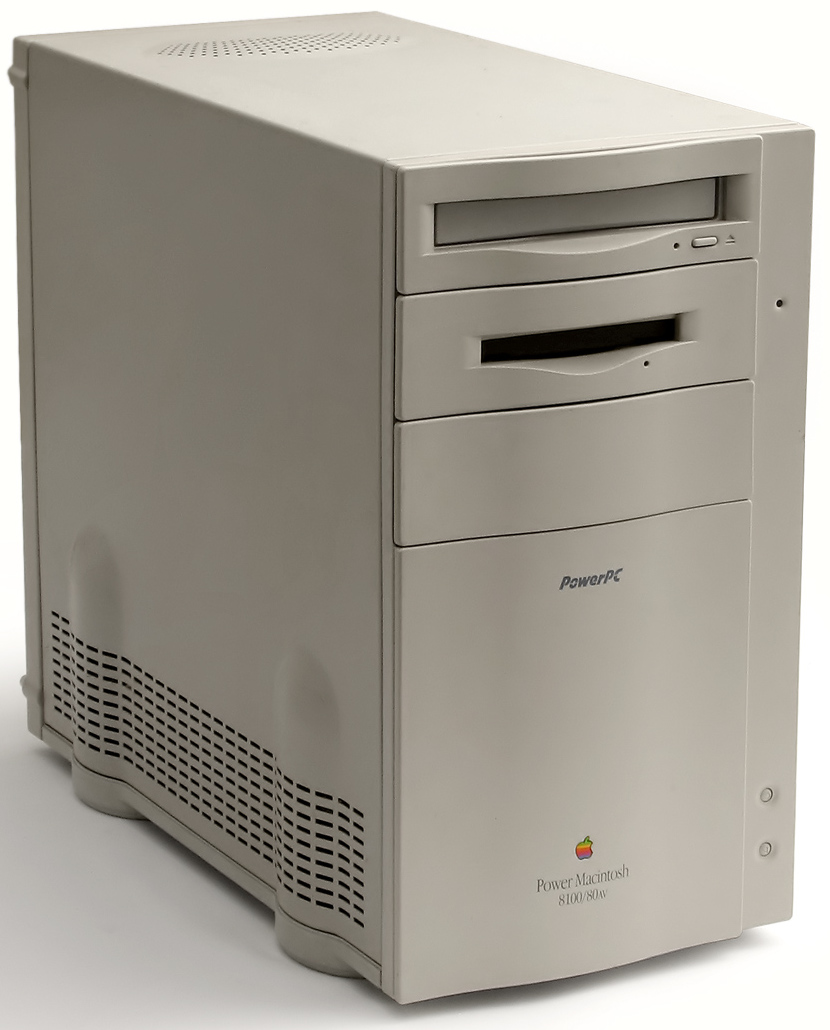
- Power Macintosh 8100/80, 80AV, 100, 100AV, 110, 110AV
- Power Macintosh 8115/110
- Power Macintosh 8200/100, 120
- Power Macintosh 8500/120, 132, 150, 180
- Power Macintosh 8515/120
Power Macintosh 9600
The Power Macintosh 9600 form factor is a mini-tower design with a width of 9.7 inches.
- Power Macintosh 8600/200, 250, 300
- Power Macintosh 9500/120, 132, 150, 180MP, 200
- Power Macintosh 9515/132
- Power Macintosh 9600/200, 200MP, 233, 300, 350
1997–2006

Starting with the Power Macintosh G3, Apple changed its product naming to include the generation of PowerPC CPU, with the name of the form factor or a key feature afterwards in brackets.
The all-in-one models would eventually be spun off into the iMac line, whilst the compact form factor models would be spun off into the Mac Mini.
Power Macintosh G3
- Power Macintosh G3 Desktop
- Power Macintosh G3 Mini Tower
- Power Macintosh G3 All-In-One
- Power Macintosh G3 Blue and White
Power Mac G4

- Power Mac G4 PCI Graphics
- Power Mac G4 AGP Graphics
- Power Mac G4 Gigabit Ethernet
- Power Mac G4 Digital Audio
- Power Mac G4 Quicksilver
- Power Mac G4 Quicksilver 2002
- Power Mac G4 Mirrored Drive Doors
- Power Mac G4 Mirrored Drive Doors FW800
- Power Mac G4 Mirrored Drive Doors 2003
- Power Mac G4 Cube
Power Mac G5
The Power Mac G5's name was changed to incorporate the time period in which the model was released.
- Power Mac G5 Mid 2003
- Power Mac G5 Mid 2004
- Power Mac G5 Late 2004
- Power Mac G5 Early 2005
- Power Mac G5 Late 2005
Naming
The Power Mac brand name was used for Apple's high-end tower style computers, targeted primarily at businesses and creative professionals, in differentiation to their more compact "iMac" line (intended for home use) and the "eMac" line (for the education markets). They were usually equipped with Apple's newest technologies, and commanded the highest prices among Apple desktop models. Some Power Mac G4 and G5 models were offered in dual-processor configurations.
Prior to the Power Mac name change, certain Power Macintosh models were otherwise identical to their lower-cost re-branded siblings sold as the Macintosh LC and Macintosh Performa, as well as the dedicated Apple Workgroup Server and Macintosh Server G3 & G4 lines. Other past Macintosh lines which used PowerPC processors include the PowerBook 5300 and later models, iMac, iBook and Xserve as well as the Apple Network Server, which was technically not a Macintosh.
Advertising and marketing
Apple positioned the Power Macintosh as a high-end personal computer aimed at businesses and creative professionals with an advertising campaign consisting of several television commercials and print ads. The television commercials used the slogan "The Future Is Better Than You Expected", featuring the first three Power Macintosh computers to showcase special features such as networking and MS-DOS compatibility.
In 1993 and 1994, a television advertising campaign created by BBDO aired with the slogan "It does more, it costs less, it's that simple."
Timeline
References
References
- (1999-12-14). "PC Magazine". Ziff Davis, Inc..
- "Stories of Apple – Ten years ago: the Power Macintosh G3 Blue & White".
- (2017-07-03). "Today in Apple history: End of the line for Power Mac G4 Cube {{!}} Cult of Mac". Cult of Mac.
- "The Collection {{!}} MoMA".
- "The Mothership Apple Advertising and Brochure Gallery 8".
- Zisman, Alan. (August 21, 2006). "'Twice as Fast': Did Apple Lie or Just Carefully Select Its Truths?".
- Plonka, Jennifer. (March 15, 1999). "Apple's G3 increases corporate appeal".
This article was imported from Wikipedia and is available under the Creative Commons Attribution-ShareAlike 4.0 License. Content has been adapted to SurfDoc format. Original contributors can be found on the article history page.
Ask Mako anything about Power Macintosh — get instant answers, deeper analysis, and related topics.
Research with MakoFree with your Surf account
Create a free account to save articles, ask Mako questions, and organize your research.
Sign up freeThis content may have been generated or modified by AI. CloudSurf Software LLC is not responsible for the accuracy, completeness, or reliability of AI-generated content. Always verify important information from primary sources.
Report