From Surf Wiki (app.surf) — the open knowledge base
Potentially hazardous object
Hazardous near-Earth asteroid or comet
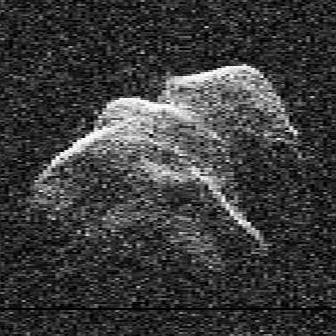
Hazardous near-Earth asteroid or comet
A potentially hazardous object (PHO) is a near-Earth object – either an asteroid or a comet – with an orbit that can make close approaches to the Earth and which is large enough to cause significant regional damage in the event of impact. They are conventionally defined as having a minimum orbit intersection distance with Earth of less than 0.05 AU and an absolute magnitude of 22 or brighter, the latter of which roughly corresponds to a size larger than 140 meters. More than 99% of the known potentially hazardous objects are no impact threat over the next 100 years. , just 21 of the known potentially hazardous objects listed on the Sentry Risk Table could not be excluded as potential threats over the next hundred years. Over hundreds if not thousands of years though, the orbits of some "potentially hazardous" asteroids can evolve to live up to their namesake.
Most of these objects are potentially hazardous asteroids (PHAs), and a few are comets. there are 2,304 known PHAs (about 8% of the total near-Earth population), of which 153 are estimated to be larger than one kilometer in diameter (see list of largest PHAs below). Most of the discovered PHAs are Apollo asteroids (1,965) and fewer belong to the group of Aten asteroids (185).
A potentially hazardous object can be known not to be a threat to Earth for the next 100 years or more, if its orbit is reasonably well determined. Potentially hazardous asteroids with some threat of impacting Earth in the next 100 years are listed on the Sentry Risk Table. , only 17 potentially hazardous asteroids are listed on the Sentry Risk Table. Most potentially hazardous asteroids are ruled out as hazardous to at least several hundreds of years when their competing best orbit models are sufficiently constrained, but recent discoveries whose orbital constraints are little-known have divergent or incomplete mechanical models until observation yields further data. After several astronomical surveys, the number of known PHAs has increased tenfold since the end of the 1990s (see bar charts below). The Minor Planet Center's website List of the Potentially Hazardous Asteroids also publishes detailed information for these objects.
In May 2021, NASA astronomers reported that 5 to 10 years of preparation may be needed to avoid a potential impactor, as most recently based on a simulated exercise conducted by the 2021 Planetary Defense Conference.
Overview

An object is considered a PHO if its minimum orbit intersection distance (MOID) with respect to Earth is less than 0.05 AU – approximately 19.5 lunar distances – and its absolute magnitude is brighter than 22, approximately corresponding to a diameter above 140 m. This is big enough to cause regional devastation to human settlements unprecedented in human history in the case of a land impact, or a major tsunami in the case of an ocean impact. Such impact events occur on average around once per 10,000 years. NEOWISE data estimates that there are 4,700 ± 1,500 potentially hazardous asteroids with a diameter greater than 100 meters.
Levels of hazard
Main article: Torino scale, Palermo scale
The two main scales used to categorize the impact hazards of asteroids are the Palermo scale and the Torino scale.
Potentially hazardous comet
A potentially hazardous comet (PHC) is a short-period comet which currently has an Earth-MOID less than 0.05 AU. Known PHCs include: 109P/Swift-Tuttle, 55P/Tempel–Tuttle, 15P/Finlay, 289P/Blanpain, 255P/Levy, 206P/Barnard–Boattini, 21P/Giacobini–Zinner, and 73P/Schwassmann–Wachmann. Halley's Comet fit the criteria before AD 837, when it passed the earth at a distance of 0.033 AU. It now has an MOID of 0.075 AU.
Numbers

In 2012 NASA estimated 20 to 30 percent of these objects have been found. During an asteroid's close approaches to another planet it will be subject to gravitational perturbation, modifying its orbit, and potentially changing a previously non-threatening asteroid into a PHA or vice versa. This is a reflection of the dynamic character of the Solar System.
Several astronomical survey projects such as Lincoln Near-Earth Asteroid Research, Catalina Sky Survey and Pan-STARRS continue to search for more PHOs. Each one found is studied by various means, including optical, radar, and infrared to determine its characteristics, such as size, composition, rotation state, and to more accurately determine its orbit. Both professional and amateur astronomers participate in such observation and tracking.
Size
Asteroids larger than approximately 35 meters across can pose a threat to a town or city. However the diameter of most small asteroids is not well determined, as it is usually only estimated based on their brightness and distance, rather than directly measured, e.g. from radar observations. For this reason NASA and the Jet Propulsion Laboratory use the more practical measure of absolute magnitude (H). Any asteroid with an absolute magnitude of 22.0 or brighter is assumed to be of the required size.
Only a coarse estimation of size can be found from the object's magnitude because an assumption must be made for its albedo which is also not usually known for certain. The NASA near-Earth object program uses an assumed albedo of 0.14 for this purpose. In May 2016, the asteroid size estimates arising from the Wide-field Infrared Survey Explorer and NEOWISE missions have been questioned. Although the early original criticism had not undergone peer review, a more recent peer-reviewed study was subsequently published.
Largest PHAs
With a mean diameter of approximately 7 kilometers, Apollo asteroid is likely the largest known potentially hazardous object, despite its fainter absolute magnitude of 15.2, compared to other listed objects in the table below (note: calculated mean-diameters in table are inferred from the object's brightness and its (assumed) albedo. They are only an approximation.).
| Designation | Discovery | (H) | ||||||||||||||
|---|---|---|---|---|---|---|---|---|---|---|---|---|---|---|---|---|
| (mag) | D | |||||||||||||||
| (km) | Orbital description | Remarks | References | Year | Place | Discoverer | Class | a | ||||||||
| (AU) | e | i | ||||||||||||||
| (°) | q | |||||||||||||||
| (AU) | Q | |||||||||||||||
| (AU) | MOID | |||||||||||||||
| (AU) | ||||||||||||||||
| 1990 | 413 | R. H. McNaught | 14.1 | 3 | APO | 1.621 | 0.658 | 24.4 | 0.555 | 2.687 | 0.02640 | — | ||||
| 3122 Florence | 1981 | 413 | S. J. Bus | 14.1 | 5 | AMO | 1.769 | 0.423 | 22.2 | 1.020 | 2.518 | 0.04430 | — | |||
| 1998 | 704 | LINEAR | 14.3 | 4 | APO | 2.203 | 0.858 | 17.5 | 0.313 | 4.093 | 0.01443 | — | ||||
| 4183 Cuno | 1959 | 074 | C. Hoffmeister | 14.4 | 4 | APO | 1.982 | 0.634 | 6.7 | 0.725 | 3.240 | 0.02825 | — | |||
| 3200 Phaethon | 1983 | 500 | IRAS | 14.6 | 5.8 | APO | 1.271 | 0.890 | 22.3 | 0.140 | 2.402 | 0.01945 | — | |||
| 2004 | E12 | Siding Spring Survey | 14.7 | 3 | APO | 1.084 | 0.477 | 37.0 | 0.567 | 1.601 | 0.04686 | — | ||||
| 2002 | 704 | LINEAR | 14.9 | 3.1 | AMO | 2.077 | 0.507 | 43.7 | 1.023 | 3.131 | 0.02767 | — | ||||
| 1999 | 704 | LINEAR | 15.1 | 2.9 | APO | 2.448 | 0.610 | 39.2 | 0.955 | 3.942 | 0.01787 | — | ||||
| 2001 | 704 | LINEAR | 15.2 | 3 | APO | 1.754 | 0.439 | 42.0 | 0.983 | 2.524 | 0.02934 | — | ||||
| 1999 | 704 | LINEAR | 15.2 | 7 | APO | 2.726 | 0.641 | 13.8 | 0.978 | 4.474 | 0.02346 | Likely largest PHO | ||||
| 1981 Midas | 1973 | 675 | C. T. Kowal | 15.2 | 2 | APO | 1.776 | 0.650 | 39.8 | 0.621 | 2.931 | 0.00449 | — | |||
| 2201 Oljato | 1947 | 690 | H. L. Giclas | 15.25 | 2.1 | APO | 2.175 | 0.713 | 2.5 | 0.624 | 3.726 | 0.00305 | — | |||
| 2002 | 644 | NEAT | 15.3 | 2.2 | APO | 2.134 | 0.576 | 8.9 | 0.904 | 3.363 | 0.03010 | — | ||||
| 4179 Toutatis | 1989 | 010 | C. Pollas | 15.30 | 2.5 | APO | 2.536 | 0.629 | 0.4 | 0.940 | 4.132 | 0.00615 | — | |||
| 2004 | 704 | LINEAR | 15.4 | 3 | APO | 2.264 | 0.593 | 23.1 | 0.920 | 3.607 | 0.01682 | — | ||||
| 1998 | 704 | LINEAR | 15.6 | 3.5 | APO | 1.924 | 0.639 | 10.8 | 0.694 | 3.154 | 0.00234 | — | ||||
| 4486 Mithra | 1987 | 071 | E. W. Elst | |||||||||||||
| V. G. Shkodrov | 15.6 | 2 | APO | 2.200 | 0.663 | 3.0 | 0.742 | 3.658 | 0.04626 | — | ||||||
| 1620 Geographos | 1951 | 675 | A. G. Wilson | |||||||||||||
| R. Minkowski | 15.60 | 2.5 | APO | 1.245 | 0.335 | 13.3 | 0.828 | 1.663 | 0.03007 | — | ||||||
| 2011 | 703 | CSS | 15.7 | 2.5 | APO | 2.122 | 0.653 | 34.9 | 0.736 | 3.509 | 0.01925 | — | ||||
| 2003 | 699 | LONEOS | 15.7 | 2.5 | AMO | 2.231 | 0.541 | 39.6 | 1.024 | 3.438 | 0.00956 | — | ||||
| 12923 Zephyr | 1999 | 699 | LONEOS | 15.8 | 2 | APO | 1.962 | 0.492 | 5.3 | 0.996 | 2.927 | 0.02115 | — | |||
| 1998 | 566 | NEAT | 15.8 | 2 | APO | 2.380 | 0.573 | 5.9 | 1.017 | 3.743 | 0.01573 | — |
Statistics
Below is a list of the largest PHAs (based on absolute magnitude H) discovered in a given year. Historical data of the cumulative number of discovered PHA since 1999 are displayed in the bar charts—one for the total number and the other for objects larger than one kilometer. PHAs brighter than absolute magnitude 17.75 are likely larger than 1 km in size.
| Number | Name | Year | (H) | Refs |
|---|---|---|---|---|
| 4179 | Toutatis | 1989 | 15.3 | |
| 4953 | 1990 | 14.9 | ||
| 7341 | 1991 | 17.0 | ||
| 10115 | 1992 | 17.2 | ||
| 39572 | 1993 | 16.6 | ||
| 7482 | 1994 | 16.7 | ||
| 243566 | 1995 | 17.4 | ||
| 8566 | 1996 | 16.3 | ||
| 35396 | 1997 | 17.0 | ||
| 16960 | 1998 | 14.4 | ||
| 137427 | 1999 | 15.3 | ||
| 138095 | 2000 | 16.0 | ||
| 111253 | 2001 | 15.3 | ||
| 89830 | 2002 | 15.0 | ||
| 242216 | 2003 | 15.7 | ||
| 242450 | 2004 | 14.6 | ||
| 308242 | 2005 | 16.3 | ||
| 374851 | 2006 | 16.7 | ||
| 214869 | 2007 | 16.5 | ||
| 294739 | 2008 | 17.1 | ||
| 523630 | 2009 | 16.2 | ||
| 458122 | 2010 | 17.6 | ||
| 415029 | 2011 | 15.9 | ||
| 746849 | 2012 | 17.9 | ||
| 507716 | 2013 | 16.4 | ||
| 533671 | 2014 | 16.1 | ||
| – | 2015 | 17.6 | — | |
| 620095 | 2016 | 17.6 | ||
| – | 2017 | 17.9 | — | |
| 756316 | 2018 | 17.7 | ||
| – | 2019 | 18.1 | — | |
| – | 2020 | 17.7 | — | |
| – | 2021 | 17.7 | — | |
| – | 2022 | 17.3 | — | |
| – | 2023 | 18.3 | — | |
| – | 2024 | 19.0 | — |
|max-width=}}
|max-width=}}
Gallery
File:2005YU55-20111107.jpg|Radar image of the 350-meter PHO
Notes
References
|access-date = 16 January 2018}}
|access-date = 22 January 2018 |archive-url = https://web.archive.org/web/20161210142717/http://nss.org/resources/library/planetarydefense/2000-ReportOfTheTaskForceOnPotentiallyHazardousNearEarthObjects-UK.pdf |archive-date = 10 December 2016 |url-status = dead
|access-date = 16 January 2020}}
|access-date = 16 January 2020}}
|access-date = 16 January 2020}}
|access-date = 22 January 2018}}
|access-date=2013-01-23}}
|access-date = 16 January 2020}}
|access-date = 16 January 2020}}
|access-date=2022-09-29}} (Click "Use Unconstrained Settings" and select "H
References
- (12 May 2021). "A NASA simulation revealed that 6 months' warning isn't enough to stop an asteroid from hitting Earth. We'd need 5 to 10 years.". [[Business Insider]].
- Bartels, Meghan. (1 May 2021). "How did you spend your week? NASA pretended to crash an asteroid into Earth.". [[Space.com]].
- (30 April 2021). "Planetary Defense Conference Exercise – 2021 Planetary Defense Conference (virtually) in Vienna, Austria, April 26–April 30, 2021.". [[NASA]].
- Chang, Kenneth. (23 May 2016). "How Big Are Those Killer Asteroids? A Critic Says NASA Doesn't Know.". The New York Times.
- Myhrvold, Nathan. (23 May 2016). "Asteroid thermal modeling in the presence of reflected sunlight with an application to WISE/NEOWISE observational data".
- Billings, Lee. (27 May 2016). "For Asteroid-Hunting Astronomers, Nathan Myhrvold Says the Sky Is Falling". [[Scientific American]].
- NASA Administrator. (25 May 2016). "NASA Response to Recent Paper on NEOWISE Asteroid Size Results". [[NASA]].
- Myhrvold, Nathan. (2018). "An empirical examination of WISE/NEOWISE asteroid analysis and results". [[Icarus (journal).
- Chang, Kenneth. (14 June 2018). "Asteroids and Adversaries: Challenging What NASA Knows About Space Rocks – Two years ago, NASA dismissed and mocked an amateur's criticisms of its asteroids database. Now Nathan Myhrvold is back, and his papers have passed peer review.". The New York Times.
- (17 [[Sentry (monitoring system)#Numbers. Sentry "risk-listed"]] PHAs / [https://cneos.jpl.nasa.gov/stats/totals.html 2289 known PHAs]) ≈ 0.74%
This article was imported from Wikipedia and is available under the Creative Commons Attribution-ShareAlike 4.0 License. Content has been adapted to SurfDoc format. Original contributors can be found on the article history page.
Ask Mako anything about Potentially hazardous object — get instant answers, deeper analysis, and related topics.
Research with MakoFree with your Surf account
Create a free account to save articles, ask Mako questions, and organize your research.
Sign up freeThis content may have been generated or modified by AI. CloudSurf Software LLC is not responsible for the accuracy, completeness, or reliability of AI-generated content. Always verify important information from primary sources.
Report