From Surf Wiki (app.surf) — the open knowledge base
Positive locking device
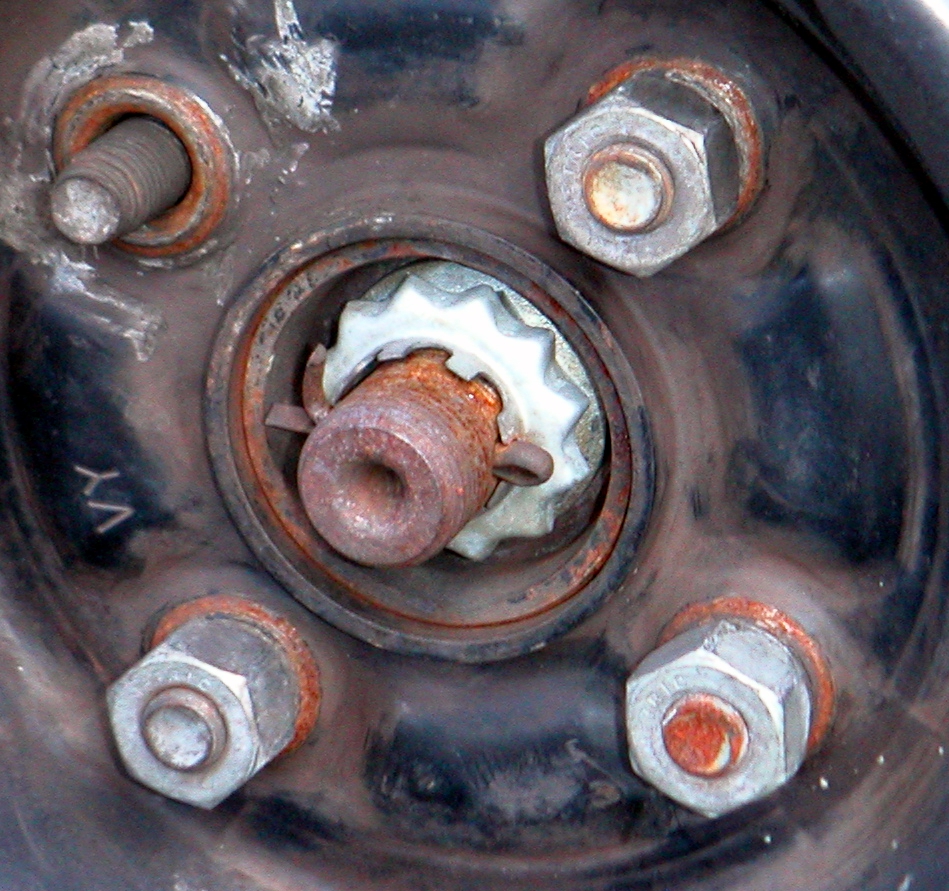
A positive locking device is a device used in conjunction with a fastener in order to positively lock the fastener. This means that the fastener cannot work loose from vibrations. The following is a list of positive locking devices:
- A split beam nut
- A castellated nut and a split pin
- A hex nut or cap screw and a tab washer
- A hex nut or cap screw and a lock plate
- Safety wiring with various types of fasteners
7-122. GENERAL. The word safetying is a term universally used in the aircraft industry. Briefly, safetying is defined as: "Securing by various means any [[Nut (hardware)
nut]], [[Bolt (fastener)
File:Nut lock plate.svg|A locking plate File:Nut tab washer.svg|A tab washer
References
- {{cite book |chapter-url=http://rgl.faa.gov/Regulatory_and_Guidance_Library/rgAdvisoryCircular.nsf/list/AC%2043.13-1B/$FILE/Chapter%2007.pdf |access-date=2012-12-11
References
- Timings, Roger Leslie. (2005). "Newnes Mechanical Engineer's Pocket Book". Newnes.
This article was imported from Wikipedia and is available under the Creative Commons Attribution-ShareAlike 4.0 License. Content has been adapted to SurfDoc format. Original contributors can be found on the article history page.
Ask Mako anything about Positive locking device — get instant answers, deeper analysis, and related topics.
Research with MakoFree with your Surf account
Create a free account to save articles, ask Mako questions, and organize your research.
Sign up freeThis content may have been generated or modified by AI. CloudSurf Software LLC is not responsible for the accuracy, completeness, or reliability of AI-generated content. Always verify important information from primary sources.
Report