From Surf Wiki (app.surf) — the open knowledge base
Porphyrin
Type of chemical compound
Type of chemical compound
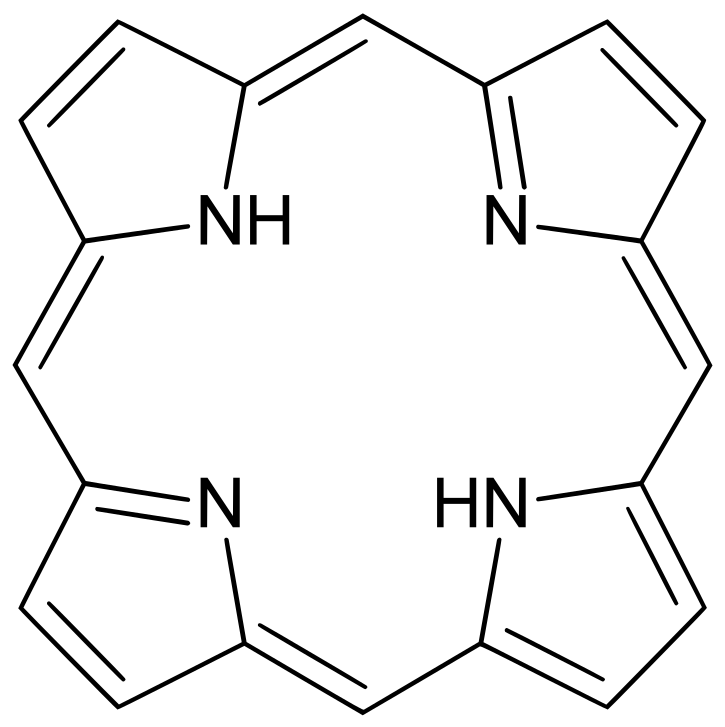
Porphyrins ( ) are heterocyclic, macrocyclic, organic compounds, composed of four modified pyrrole subunits interconnected at their α carbon atoms via methine bridges (). In vertebrates, an essential member of the porphyrin group is heme, which is a component of hemoproteins, whose functions include carrying oxygen in the bloodstream. In plants, an essential porphyrin derivative is chlorophyll, which is involved in light harvesting and electron transfer in photosynthesis.
The parent of porphyrins is porphine, a rare chemical compound of exclusively theoretical interest. Substituted porphines are called porphyrins. With a total of 26 π-electrons the porphyrin ring structure is a coordinated aromatic system. One result of the large conjugated system is that porphyrins absorb strongly in the visible region of the electromagnetic spectrum, i.e. they are deeply colored. The name "porphyrin" derives .
Structure
Porphyrin complexes consist of a square planar MN4 core. The periphery of the porphyrins, consisting of sp2-hybridized carbons, generally display small deviations from planarity. "Ruffled" or saddle-shaped porphyrins is attributed to interactions of the system with its environment. Additionally, the metal is often not centered in the N4 plane. For free porphyrins, the two pyrrole protons are mutually trans and project out of the N4 plane. These nonplanar distortions are associated with altered chemical and physical properties. Chlorophyll-rings are more distinctly nonplanar, but they are more saturated than porphyrins.
Complexes of porphyrins
Main article: Transition metal porphyrin complexes
Concomitant with the displacement of two N-H protons, porphyrins bind metal ions in the N4 "pocket". The metal ion usually has a charge of 2+ or 3+. A schematic equation for these syntheses is shown, where M = metal ion and L = a ligand: :
File:Protoporphyrin IX neutral.svg|Derivatives of protoporphyrin IX are common in nature, the precursor to hemes. File:H2octaethylporphyrin.png |Octaethylporphyrin (H2OEP) is a synthetic analogue of protoporphyrin IX. Unlike the natural porphyrin ligands, OEP2− is highly symmetrical. File:H2TPP.png|Tetraphenylporphyrin (H2TPP)is another synthetic analogue of protoporphyrin IX. Unlike the natural porphyrin ligands, TPP2− is highly symmetrical. Another difference is that its methyne centers are occupied by phenyl groups. File:Heme B.svg|Simplified view of heme, a complex of a protoporphyrin IX CP40model.png|A nanoring of 40 porphyrin molecules, model CP40-STM.png|A nanoring of 40 porphyrin molecules, STM image
Ancient porphyrins
A geoporphyrin, also known as a petroporphyrin, is a porphyrin of geologic origin. They can occur in crude oil, oil shale, coal, or sedimentary rocks. Abelsonite is possibly the only geoporphyrin mineral, as it is rare for porphyrins to occur in isolation and form crystals.
The field of organic geochemistry had its origins in the isolation of porphyrins from petroleum. These findings helped establish the biological origins of petroleum. Petroleum is sometimes "fingerprinted" by analysis of trace amounts of nickel and vanadyl porphyrins. Metalloporphyrins in general are highly stable organic compounds, and the detailed structures of the extracted derivatives made clear that they originated from chlorophyll.
Biosynthesis
In non-photosynthetic eukaryotes such as animals, insects, fungi, and protozoa, as well as the α-proteobacteria group of bacteria, the committed step for porphyrin biosynthesis is the formation of δ-aminolevulinic acid (δ-ALA, 5-ALA or dALA) by the reaction of the amino acid glycine with succinyl-CoA from the citric acid cycle. In plants, algae, bacteria (except for the α-proteobacteria group) and archaea, it is produced from glutamic acid via glutamyl-tRNA and glutamate-1-semialdehyde. The enzymes involved in this pathway are glutamyl-tRNA synthetase, glutamyl-tRNA reductase, and glutamate-1-semialdehyde 2,1-aminomutase. This pathway is known as the C5 or Beale pathway.
Two molecules of dALA are then combined by porphobilinogen synthase to give porphobilinogen (PBG), which contains a pyrrole ring. Four PBGs are then combined through deamination into hydroxymethyl bilane (HMB), which is hydrolysed to form the circular tetrapyrrole uroporphyrinogen III. This molecule undergoes a number of further modifications. Intermediates are used in different species to form particular substances, but, in humans, the main end-product protoporphyrin IX is combined with iron to form heme. Bile pigments are the breakdown products of heme.
The following scheme summarizes the biosynthesis of porphyrins, with references by EC number and the OMIM database. The porphyria associated with the deficiency of each enzyme is also shown:

| Enzyme | Location | Substrate | Product | Chromosome | EC | OMIM | Disorder | ||||||||
|---|---|---|---|---|---|---|---|---|---|---|---|---|---|---|---|
| ALA synthase | Mitochondrion | Glycine, succinyl CoA | δ-Aminolevulinic acid | 3p21.1 | 2.3.1.37 | 125290 | X-linked dominant protoporphyria, X-linked sideroblastic anemia | ||||||||
| ALA dehydratase | Cytosol | δ-Aminolevulinic acid | Porphobilinogen | 9q34 | 4.2.1.24 | 125270 | aminolevulinic acid dehydratase deficiency porphyria | ||||||||
| PBG deaminase | Cytosol | Porphobilinogen | Hydroxymethyl bilane | 11q23.3 | 2.5.1.61 | 176000 | acute intermittent porphyria | ||||||||
| Uroporphyrinogen III synthase | Cytosol | Hydroxymethyl bilane | Uroporphyrinogen III | 10q25.2-q26.3 | 4.2.1.75 | 606938 | congenital erythropoietic porphyria | ||||||||
| Uroporphyrinogen III decarboxylase | Cytosol | Uroporphyrinogen III | Coproporphyrinogen III | 1p34 | 4.1.1.37 | 176100 | porphyria cutanea tarda, hepatoerythropoietic porphyria | ||||||||
| Coproporphyrinogen III oxidase | Mitochondrion | Coproporphyrinogen III | Protoporphyrinogen IX | 3q12 | 1.3.3.3 | 121300 | hereditary coproporphyria | ||||||||
| Protoporphyrinogen oxidase | Mitochondrion | Protoporphyrinogen IX | Protoporphyrin IX | 1q22 | 1.3.3.4 | 600923 | variegate porphyria | ||||||||
| Ferrochelatase | Mitochondrion | Protoporphyrin IX | Heme | 18q21.3 | 4.99.1.1 | 177000 | erythropoietic protoporphyria |
Laboratory synthesis
Main article: Rothemund reaction
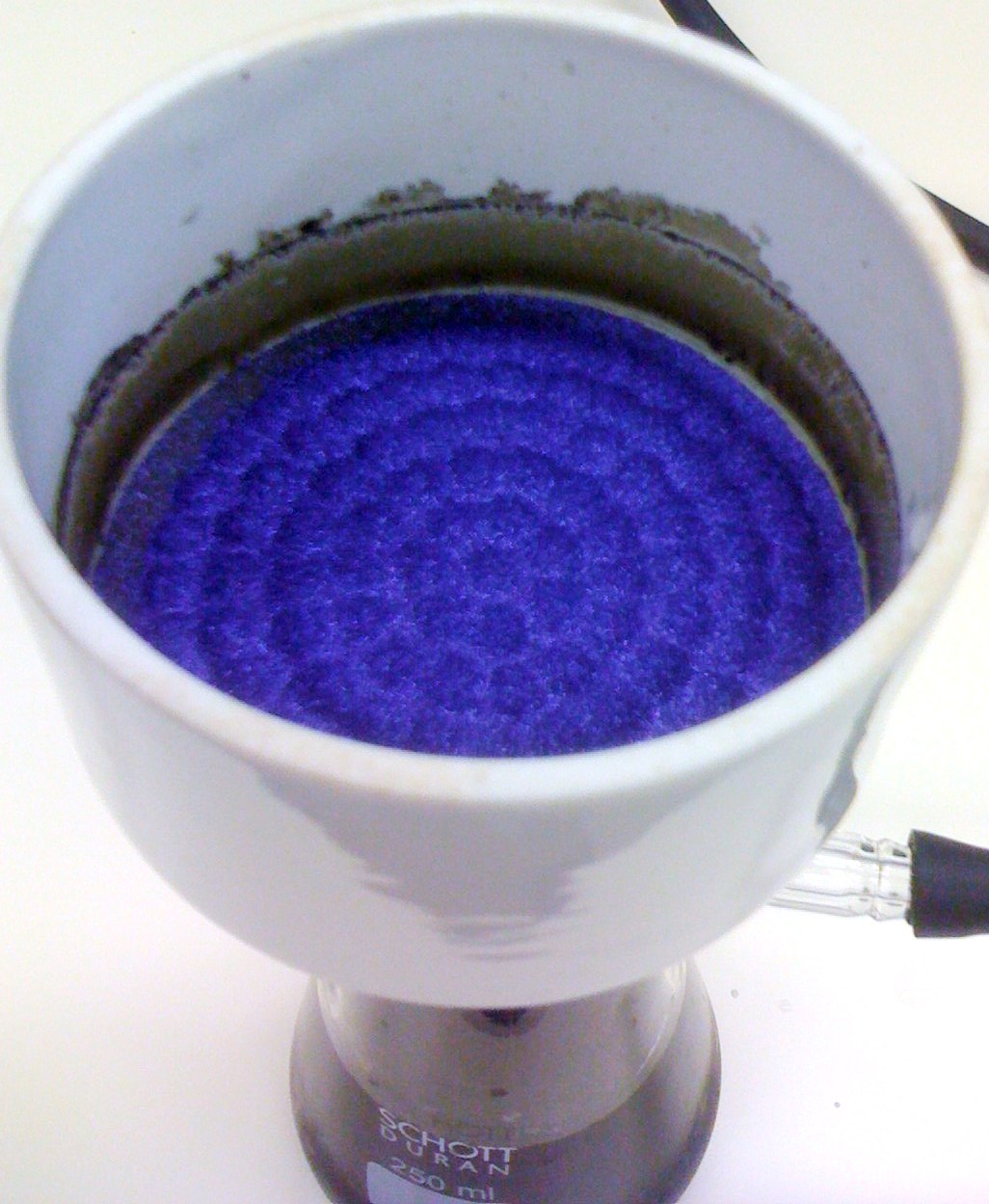
A common synthesis for porphyrins is the Rothemund reaction, first reported in 1936, which is also the basis for more recent methods described by Adler and Longo. The general scheme is a condensation and oxidation process starting with pyrrole and an aldehyde.
:[[Image:H2TPPsyn.png|class=skin-invert-image|400px]]
Potential applications
Photodynamic therapy
Porphyrins have been evaluated in the context of photodynamic therapy (PDT) since they strongly absorb light, which is then converted to heat in the illuminated areas. This technique has been applied in macular degeneration using verteporfin.
PDT is considered a noninvasive cancer treatment, involving the interaction between light of a determined frequency, a photo-sensitizer, and oxygen. This interaction produces the formation of a highly reactive oxygen species (ROS), usually singlet oxygen, as well as superoxide anion, free hydroxyl radical, or hydrogen peroxide. These high reactive oxygen species react with susceptible cellular organic biomolecules such as; lipids, aromatic amino acids, and nucleic acid heterocyclic bases, to produce oxidative radicals that damage the cell, possibly inducing apoptosis or even necrosis.
Molecular electronics and sensors
Porphyrin-based compounds are of interest as possible components of molecular electronics and photonics. Synthetic porphyrin dyes have been incorporated in prototype dye-sensitized solar cells.
Biological applications
Porphyrins have been investigated as possible anti-inflammatory agents and evaluated on their anti-cancer and anti-oxidant activity. Several porphyrin-peptide conjugates were found to have antiviral activity against HIV in vitro.
Toxicology
Heme biosynthesis is used as biomarker in environmental toxicology studies. While excess production of porphyrins indicate organochlorine exposure, lead inhibits ALA dehydratase enzyme.
Gallery
File:H2TPP.png|Lewis structure for meso-tetraphenylporphyrin File:Meso-tetraphenylporphyrin UV-vis.JPG|UV–vis readout for meso-tetraphenylporphyrin File:Porfirina activada con la luz.svg|Light-activated porphyrin. Monatomic oxygen. Cellular aging.
Related species
In nature
Several heterocycles related to porphyrins are found in nature, almost always bound to metal ions. These include
| N4-macrocycle | Cofactor name | metal | comment | |
|---|---|---|---|---|
| chlorin | chlorophyll | magnesium | several versions of chlorophyll exist (sidechain; exception being chlorophyll c) | |
| bacteriochlorin | bacteriochlorophyll (in part) | magnesium | several versions of bacteriochlorophyll exist (sidechain; some use a usual chlorin ring) | |
| sirohydrochlorin (an isobacteriochlorin) | siroheme | iron | Important cofactor in sulfur assimilation | |
| biosynthetic intermediate en route to cofactor F430 and B12 | ||||
| corrin | vitamin B12 | cobalt | several variants of B12 exist (sidechain) | |
| corphin | Cofactor F430 | nickel | highly reduced macrocycle |
Synthetic
A benzoporphyrin is a porphyrin with a benzene ring fused to one of the pyrrole units. e.g. verteporfin is a benzoporphyrin derivative.
Non-natural porphyrin isomers

The first synthetic porphyrin isomer was reported by Emanual Vogel and coworkers in 1986. This isomer [18]porphyrin-(2.0.2.0) is named as porphycene, and the central N4 Cavity forms a rectangle shape as shown in figure. Porphycenes showed interesting photophysical behavior and found versatile compound towards the photodynamic therapy. This result was followed by the preparation of [18]porphyrin-(2.1.0.1), named it as corrphycene or porphycerin. Other non-natural porphyrins include [18]porphyrin-(2.1.1.0) and [18]porphyrin-(3.0.1.0) or isoporphycene. The N-confused porphyrins feature one of the pyrrolic subunits with the nitrogen atoms facing outwards from the core of the macrocycle.
References
References
- (2017). "Energy-Related Small Molecule Activation Reactions: Oxygen Reduction and Hydrogen and Oxygen Evolution Reactions Catalyzed by Porphyrin- and Corrole-Based Systems". Chemical Reviews.
- (2011). "Origin of aromatic character in porphyrinoid systems". Journal of Porphyrins and Phthalocyanines.
- "porphyria (n.)".
- (December 2015). "Conformational control of cofactors in nature - the influence of protein-induced macrocycle distortion on the biological function of tetrapyrroles". Chemical Communications.
- (2011). "Encyclopedia of Inorganic and Bioinorganic Chemistry".
- (February 1998). "Conservation of the conformation of the porphyrin macrocycle in hemoproteins". Biophysical Journal.
- (2014). "Chlorophylls, Symmetry, Chirality, and Photosynthesis". Symmetry.
- (1999). "The Porphyrin Handbook". [[Elsevier]].
- (September 2003). "Total synthesis of the porphyrin mineral abelsonite and related petroporphyrins with five-membered exocyclic rings". Tetrahedron Letters.
- (1989). "Review of the stratigraphic distribution and diagenetic history of abelsonite". Organic Geochemistry.
- Kvenvolden, Keith A. (2006). "Organic geochemistry – A retrospective of its first 70 years". Organic Geochemistry. 37: 1–11. doi:10.1016/j.orggeochem.2005.09.001
- Treibs, A.E. (1936). "Chlorophyll- und Häminderivate in organischen Mineralstoffen". Angewandte Chemie. 49: 682–686. doi:10.1002/ange.19360493803
- (1936). "A New Porphyrin Synthesis. The Synthesis of Porphin". [[J. Am. Chem. Soc.]].
- (1935). "Formation of Porphyrins from Pyrrole and Aldehydes". J. Am. Chem. Soc..
- (1967). "A simplified synthesis for ''meso''-tetraphenylporphine". [[J. Org. Chem.]].
- (2014). "Porphyrin conjugates for cancer therapy".
- (July 2007). "Photodynamic therapy for neovascular age-related macular degeneration". The Cochrane Database of Systematic Reviews.
- (2009). "A role for hydrogen peroxide in the pro-apoptotic effects of photodynamic therapy". Photochemistry and Photobiology.
- (September 2015). "Glycosylated Porphyrins, Phthalocyanines, and Other Porphyrinoids for Diagnostics and Therapeutics". Chemical Reviews.
- (October 2012). "Synthesis of π-extended porphyrins via intramolecular oxidative coupling". Chemical Communications.
- (2010). "Porphyrins and phthalocyanines in solar photovoltaic cells". [[Journal of Porphyrins and Phthalocyanines]].
- (November 2011). "Porphyrin-sensitized solar cells with cobalt (II/III)-based redox electrolyte exceed 12 percent efficiency". Science.
- (May 2015). "Synthesis, antinociceptive and anti-inflammatory effects of porphyrins". Bioorganic & Medicinal Chemistry.
- (December 2019). "Synthesis and bioactivity of oxovanadium(IV)tetra(4-methoxyphenyl)porphyrinsalicylates". BMC Chemistry.
- (June 2021). "Penetrating the Blood-Brain Barrier with New Peptide-Porphyrin Conjugates Having anti-HIV Activity". Bioconjugate Chemistry.
- (2012). "Principles of Ecotoxicology". CRC Press.
- (February 2000). "Verteporfin". Drugs & Aging.
- (March 1986). "Porphycene—a Novel Porphin Isomer". Angewandte Chemie.
- (March 2022). "3,6,13,16-Tetrapropylporphycene: Rational Synthesis, Complexation, and Halogenation". The Journal of Organic Chemistry.
- (2001). "Basic principles of photodynamic therapy". Journal of Porphyrins and Phthalocyanines.
- (November 1993). "New Porphycene Ligands: Octaethyl- and Etioporphycene (OEPc and EtioPc)—Tetra- and Pentacoordinated Zinc Complexes of OEPc". Angewandte Chemie International Edition.
- (October 1999). "Isoporphycene: The Fourth Constitutional Isomer of Porphyrin with an N(4) Core-Occurrence of E/Z Isomerism". Angewandte Chemie.
- (1994). ""N-Confused Porphyrin": A New Isomer of Tetraphenylporphyrin". J. Am. Chem. Soc..
- (18 April 1994). "Tetra-p-tolylporphyrin with an Inverted Pyrrole Ring: A Novel Isomer of Porphyrin". Angewandte Chemie International Edition.
This article was imported from Wikipedia and is available under the Creative Commons Attribution-ShareAlike 4.0 License. Content has been adapted to SurfDoc format. Original contributors can be found on the article history page.
Ask Mako anything about Porphyrin — get instant answers, deeper analysis, and related topics.
Research with MakoFree with your Surf account
Create a free account to save articles, ask Mako questions, and organize your research.
Sign up freeThis content may have been generated or modified by AI. CloudSurf Software LLC is not responsible for the accuracy, completeness, or reliability of AI-generated content. Always verify important information from primary sources.
Report