From Surf Wiki (app.surf) — the open knowledge base
Porkhov
Town in Pskov Oblast, Russia

Town in Pskov Oblast, Russia
| Field | Value |
|---|---|
| en_name | Porkhov |
| ru_name | Порхов |
| image_skyline | Porkhov asv2018-07 img26.jpg |
| image_caption | Porkhov fortress |
| coordinates | |
| map_label_position | bottom |
| image_coa | Porkhov COA (Pskov Governorate) (1781).png |
| federal_subject | Pskov Oblast |
| federal_subject_ref | |
| adm_district_jur | Porkhovsky District |
| adm_district_jur_ref | |
| adm_ctr_of | Porkhovsky District |
| adm_ctr_of_ref | |
| inhabloc_cat | Town |
| inhabloc_cat_ref | |
| mun_district_jur | Porkhovsky Municipal District |
| mun_district_jur_ref | |
| urban_settlement_jur | Porkhov Urban Settlement |
| urban_settlement_jur_ref | |
| mun_admctr_of1 | Porkhovsky Municipal District |
| mun_admctr_of1_ref | |
| mun_admctr_of2 | Porkhov Urban Settlement |
| mun_admctr_of2_ref | |
| pop_2010census | 10608 |
| pop_2010census_ref | |
| established_date | 1239 |
| established_date_ref | |
| postal_codes | 182620, 182629 |
Porkhov () is a town and the administrative center of Porkhovsky District in Pskov Oblast, Russia, located on the Shelon River, 75 km east of Pskov, the administrative center of the oblast. Population:
History
The fortress of Porkhov is believed to have been founded in 1239 by Alexander Nevsky. The timber fortress was sacked by Algirdas (Olgierd) in 1356 and fell in flames in 1387. The Novgorod Republic immediately rebuilt its fortifications in limestone 1.3 km downstream. In 1428, Grand Duke of Lithuania Vytautas destroyed the western wall by artillery fire and entered Porkhov. Two years later, the Novgorodians augmented the fortress and rebuilt its walls. After the fall of Novgorod to the Muscovites in 1478, the fortress lost its military importance.
Porkhov was the second most important town of Shelon Pyatina, after Russa. It was not, however, a significant economical center—there were only seventy-six homesteads there in the 15th century and almost all of them were peasant ones.
In 1606, it was captured by Sweden. In the late 19th century, sizeable trade in linen and grain was conducted there.
During World War II, Porkhov was occupied by German troops from July 11, 1941 to February 26, 1944 and was a place of a concentration camp Dulag 100.
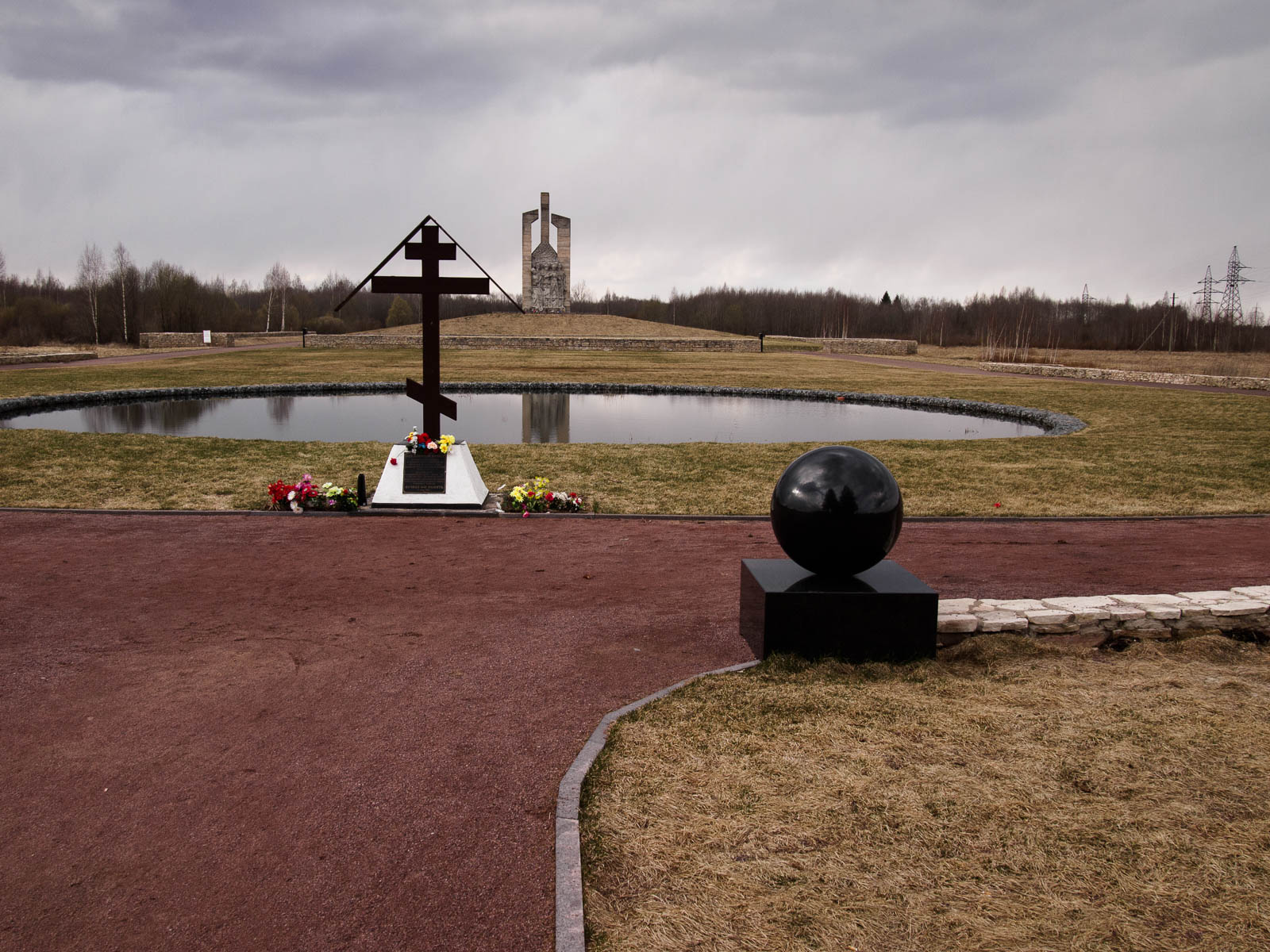
The town of Porkhov, together with Porkhovsky District, was transferred to newly established Pskov Oblast from Leningrad Oblast on August 23, 1944.
Administrative and municipal status
Within the framework of administrative divisions, Porkhov serves as the administrative center of Porkhovsky District, to which it is directly subordinated. As a municipal division, the town of Porkhov is incorporated within Porkhovsky Municipal District as Porkhov Urban Settlement.
Architecture

The fortress consists of a well-preserved encircling wall; two towers, one of which is half-ruined; a diminutive church from 1412, and a museum of local history. Inside the fortress there are a great many trees and plants. The church of the Virgin's Nativity, a remarkable monumental erection of the 14th century, was disfigured during the Soviet period (picture). Another church of note in Porkhov is the Savior church (1670).
References
Notes
Sources
- Архивный отдел Псковского облисполкома. Государственный архив Псковской области. "Административно-территориальное деление Псковской области (1917–1988 гг.). Справочник". (Administrative-Territorial Structure of Pskov Oblast (1917–1988). Reference.) Книга I. Лениздат, 1988
References
- {{OKTMO reference. 58 647
- (2003). "Энциклопедия Города России". Большая Российская Энциклопедия.
- Bernadsky, Viktor Nikolayevich. (1961). "Новгород и новгородская земля в XV веке (''Novgorod and the Novgorod Land in the 15th century'')". [[USSR Academy of Sciences]].
- . (1887). "Słownik geograficzny Królestwa Polskiego i innych krajów słowiańskich, Tom VIII".
- ''Administrative-Territorial Structure of Pskov Oblast'', p. 14
- {{OKATO reference. 58 247
- Law #833-oz stipulates that the borders of the administrative districts are identical to the borders of the municipal districts. The Law #420-oz, which describes the borders and the composition of the municipal districts, lists the town of Porkhov as a part of Porkhovsky District.
- Law #420-oz
This article was imported from Wikipedia and is available under the Creative Commons Attribution-ShareAlike 4.0 License. Content has been adapted to SurfDoc format. Original contributors can be found on the article history page.
Ask Mako anything about Porkhov — get instant answers, deeper analysis, and related topics.
Research with MakoFree with your Surf account
Create a free account to save articles, ask Mako questions, and organize your research.
Sign up freeThis content may have been generated or modified by AI. CloudSurf Software LLC is not responsible for the accuracy, completeness, or reliability of AI-generated content. Always verify important information from primary sources.
Report