From Surf Wiki (app.surf) — the open knowledge base
Polish resistance movement in World War II
Combatant organizations opposed to Nazi Germany
Combatant organizations opposed to Nazi Germany
| Field | Value | ||||
|---|---|---|---|---|---|
| conflict | Polish resistance movement in World War II | ||||
| partof | Resistance during World War II and the Eastern Front of World War II | ||||
| image | [[File:Warsaw Uprising by Deczkowki - Kolegium A -15861.jpg | 150px]] [[File:Jewish prisones of KZGesiowka liberated by Polish Soldiers of Home Army Warsaw1944.jpg | 150px]] [[File:Warsaw 1944.jpg | 150px]] [[File:Jędrusie 3.jpg | 150px]] |
| caption | Sequentially from top: soldiers from Kolegium "A" of Kedyw on Stawki Street in Wola district, during the Warsaw Uprising, 1944; Jewish prisoners of Gęsiówka concentration camp liberated by Polish Home Army soldiers from "Zośka" Battalion, 5 August 1944; Polish partisans of "Jędrusie" unit in Kielce area, 1945; Old Town of Warsaw in flames during Warsaw Uprising | ||||
| date | 27 September 1939 – 25 July 1945 | ||||
| (anti-communist resistance continued until 1953) | |||||
| place | Poland, present-day Lithuania, Belarus, Ukraine. | ||||
| result | Polish victory | ||||
| combatant1 | Nazi Germany | ||||
| combatant2 | Polish Underground State Polish Underground State | ||||
| * Home Army{{efn | Started as Service for Poland's Victory in September 1939 and reformed into the Union of Armed Struggle in November the same year. This in turn became the Home Army in February 1942. | name | AK}} | ||
| Peasants' Battalions{{efn | Integrated into the Home Army in 1944. | name | BCh}}}} | ||
| and others... | |||||
| Supported by: | |||||
| POL Polish Government-in-Exile | |||||
| UKUSA Western Allies | |||||
| commander1 | {{Unbulleted list | ||||
| commander2 | {{Unbulleted list | ||||
| strength2 | Polish Underground State Polish Underground State | ||||
| 650,000 (1944)POL Polish People's Army | |||||
| ~200,000 | |||||
| casualties1 | Nazi Germany | ||||
| casualties2 | Polish Underground State Polish Underground State | ||||
| strength1 | 1,080,000 (1944) | ||||
| territory | Borders of Poland altered; prewar eastern territories of Poland ceded to the Soviet Union in exchange for former German territories in the West |
(anti-communist resistance continued until 1953)
- Contribution to Allied forces
- Restoration of Polish statehood after occupation
- Sovietization of Poland, imposition of a communist puppet government and reduction of Poland to a Soviet satellite state until 1989
- Liquidation of the Polish Home Army and other anti-Nazi resistance movements by the Soviet secret police
- Continued anti-communist resistance
- Flag of Lithuania.svg Lithuanian Auxiliary Police
- OUN-M-03.svg Ukrainian Auxiliary Police
- Polish collaborators ----Soviet Union (1939–1941; after 1944 against non-Communists only)Flag of the Ukrainian Insurgent Army.svg Ukrainian Insurgent Army (1943–1945)
- Polish Underground State Home Army
and others... Supported by: POL Polish Government-in-Exile UKUSA Western Allies
- POL People's Guard (1942–1944)
- POL People's Army (1944) Supported by: USSR Soviet Union (After 1941; only Communists) |Nazi Germany Hans Frank |Nazi Germany Walter Model |Nazi Germany Oskar Dirlewanger |Nazi Germany E. von dem Bach-Zelewski |Nazi Germany Franz Kutschera |Nazi Germany Rainer Stahel |Nazi Germany Heinz Reinefarth
|USSR Lavrenty Beria |USSR Konstantin Rokossovsky |USSR Ivan Serov
|Flag of the Ukrainian Insurgent Army.svg Roman Shukhevych |Flag of the Ukrainian Insurgent Army.svg Dmytro Klyachkivsky |Poland Henryk Dobrzański |Polish Underground State M. Karaszewicz-Tokarzewski |Polish Underground State Stefan Rowecki |Polish Underground State Tadeusz Komorowski |Polish Underground State Leopold Okulicki |Polish Underground State Tadeusz Pełczyński |Polish Underground State Emil August Fieldorf |Polish Underground State Antoni Chruściel |Banner of the Farmer Battalions (Stronnictwo Ludowe Roch).svg Franciszek Kamiński |POL Ignacy Oziewicz |POL Tadeusz Kurcyusz |POL Stanisław Kasznica
|POL Władysław Gomułka |POL Bolesław Bierut |POL Edward Osóbka-Morawski |POL Bolesław Mołojec |POL Marian Spychalski |POL Michał Rola-Żymierski |POL Franciszek Jóźwiak 650,000 (1944)POL Polish People's Army ~200,000
- Up to 150,000 killed, 6,000 officials assassinated
- 4,326 damaged or destroyed vehicles
- 1/8 of Eastern Front rail transport damaged or destroyed Flag of the Ukrainian Insurgent Army.svg Ukrainian Insurgent Army
- 6,000–15,000 killed
- ~34,000–100,000 killed
- 20,000–50,000 wounded or captured POL Polish People's Army
- ~5,000–10,000
In Poland, the resistance movement during World War II was led by the Home Army. The Polish resistance is notable among others for disrupting German supply lines to the Eastern Front (damaging or destroying 1/8 of all rail transports), and providing intelligence reports to the British intelligence agencies (providing 43% of all reports from occupied Europe). It was a part of the Polish Underground State.
Organizations
The largest of all Polish resistance organizations was the Armia Krajowa (Home Army, AK), loyal to the Polish government in exile in London. The AK was formed in 1942 from the Union of Armed Struggle (Związek Walki Zbrojnej or ZWZ, itself created in 1939) and would eventually incorporate most other Polish armed resistance groups (except for the communists and some far-right groups). It was the military arm of the Polish Underground State and loyal to the Polish government in Exile.
Most of the other Polish underground armed organizations were created by a political party or faction, and included:
- The Bataliony Chłopskie (Peasants' Battalions). Created by the leftist People's Party around 1940–1941, it would partially merge with AK around 1942–1943.
- The Gwardia Ludowa WRN (People's Guard of WRN) of Polish Socialist Party (PPS) (joined ZWZ around 1940, subsequently merged into AK){{cite book|author=Halina Lerski HA
- The Konfederacja Narodu (Confederation of the Nation). Created in 1940 by far-right Obóz Narodowo Radykalny-Falanga (National Radical Camp Falanga). It would partially merge with ZWZ around 1941 and finally join AK around fall 1943.
- The Narodowa Organizacja Wojskowa (National Military Organisation), established by the National Party in 1939, mostly integrated with AK around 1942.
- Narodowe Siły Zbrojne (National Armed Forces); created in 1943 from dissatisfied NOW units, which refused to be subordinated to the AK.
- The Obóz Polski Walczącej (Camp of Fighting Poland), established by the Obóz Zjednoczenia Narodowego (Camp of National Unity) around 1942, subordinated to AK. in 1943.
The largest groups that refused to join the AK were the National Armed Forces and the pro-Soviet and communist People's Army (Polish Armia Ludowa or AL), backed by the Soviet Union and established by the Polish Workers' Party (Polish Polska Partia Robotnicza or PPR).
Regarding the scale and scope of the Polish resistance, Reichsfuhrer-SS Heinrich Himmler noted on 31 December 1942:
Size
In February 1942, when AK was formed, it numbered about 100,000 members. In the beginning of 1943, it had reached a strength of about 200,000. In the summer of 1944 when Operation Tempest began, AK reached its highest membership numbers, though the estimates vary from 300,000 to 500,000. The strength of the second largest resistance organization, Bataliony Chłopskie (Peasants' Battalions), can be estimated for summer 1944 (at which time they were mostly merged with AK The third largest group include NSZ (National Armed Forces) with approximately 70,000 men around 1943–1944; only small parts of that force were merged with AK. At its height in 1944, the communist Armia Ludowa, which never merged with AK, numbered about 30,000 people. One estimate for the summer 1944 strength of AK and its allies, including NSZ, gives its strength at 650,000. Overall, the Polish resistance have often been described as the largest or one of the largest resistance organizations in World War II Europe.
Actions, operations, and intelligence, 1939–1945
1939
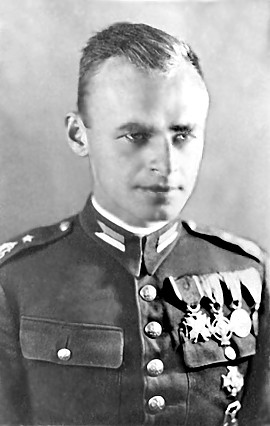
On 9 November 1939, two soldiers of the Polish armyWitold Pilecki and Major Jan Włodarkiewiczfounded the Secret Polish Army (Tajna Armia Polska, TAP), one of the first underground organizations in Poland after defeat. Pilecki became its organizational commander as TAP expanded to cover not only Warsaw but Siedlce, Radom, Lublin and other major cities of central Poland. By 1940, TAP had approximately 8,000 men (more than half of them armed), some 20 machine guns and several anti-tank rifles. Later, the organization was incorporated into the Union for Armed Struggle (Związek Walki Zbrojnej), later renamed and better known as the Home Army (Armia Krajowa).
1940
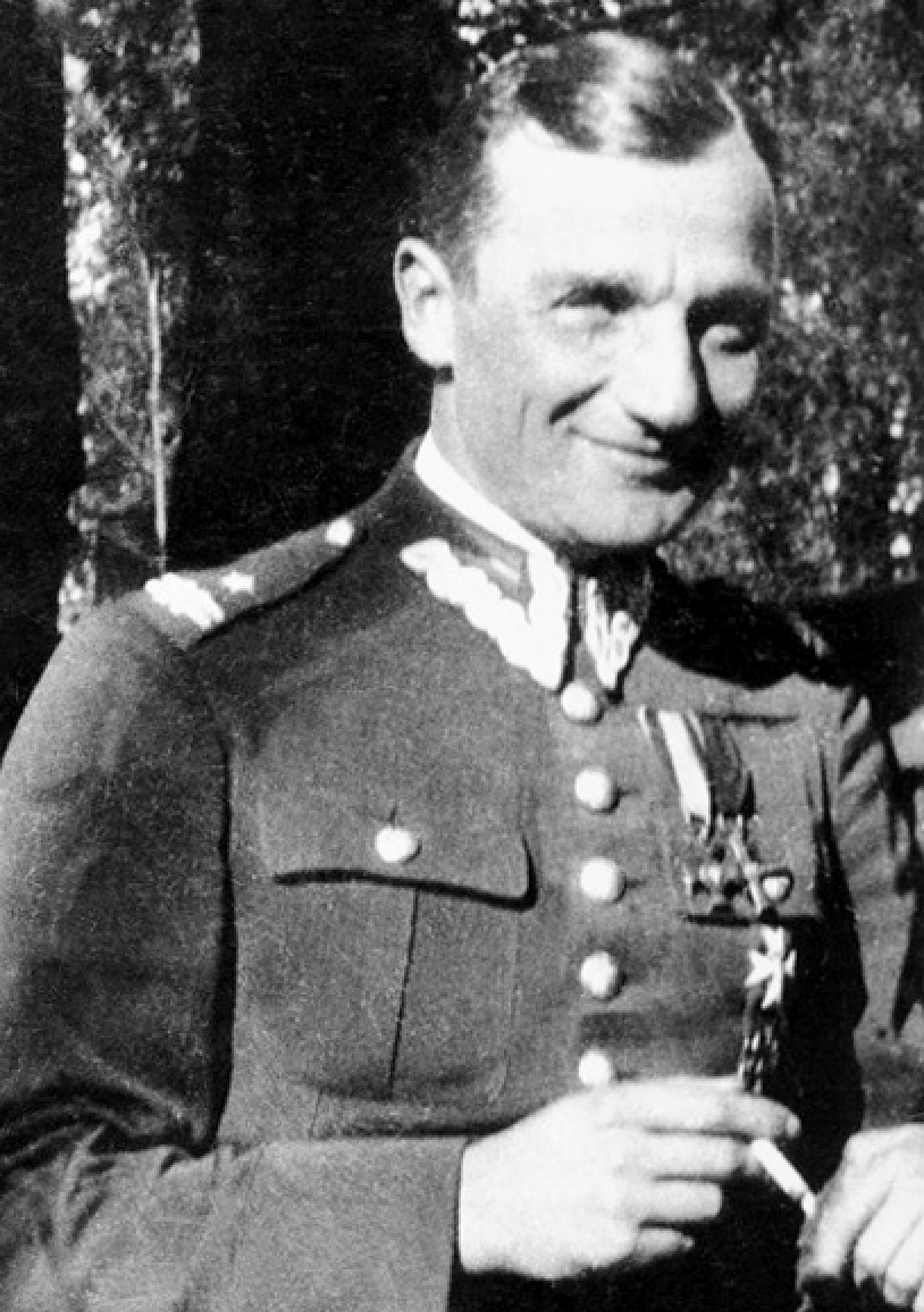
In March 1940, a partisan unit of the first guerrilla commanders in the Second World War in Europe under Major Henryk Dobrzański "Hubal" destroyed a battalion of German infantry in a skirmish near the village of Huciska. A few days later in an ambush near the village of Szałasy it inflicted heavy casualties upon another German unit. To counter this threat the German authorities formed a special 1,000 men strong counter-insurgency unit of combined SS–Wehrmacht forces, including a Panzer group. Although the unit of Major Dobrzański never exceeded 300 men, the Germans fielded at least 8,000 men in the area to secure it.
In 1940, Witold Pilecki, an intelligence officer for the Polish resistance, presented to his superiors a plan to enter Germany's Auschwitz concentration camp, gather intelligence on the camp from the inside, and organize inmate resistance. The Home Army approved this plan, provided him a false identity card, and on 19 September 1940, he deliberately went out during a street roundup (łapanka) in Warsaw and was caught by the Germans along with other civilians and sent to Auschwitz. In the camp he organized the underground organization – Związek Organizacji Wojskowej – ZOW. From October 1940, ZOW sent its first report about the camp and the genocide in November 1940 to Home Army Headquarters in Warsaw through the resistance network organized in Auschwitz.

During the night of 21–22 January 1940, in the Soviet-occupied Podolian town of Czortków, the Czortków Uprising started; it was the first Polish uprising during World War II. Anti-Soviet Poles, most of them teenagers from local high schools, stormed the local Red Army barracks and a prison, in order to release Polish soldiers kept there.
At the end of 1940 Aleksander Kamiński created a Polish youth resistance organization, known as "Wawer". It was part of the Szare Szeregi (the underground Polish Scouting Association). This organisation carried out many minor sabotage operations in occupied Poland. Its first action was drawing graffiti in Warsaw around Christmas Eve of 1940 commemorating the Wawer massacre. Members of the AK Wawer "Small Sabotage" units painted "Pomścimy Wawer" ("We'll avenge Wawer") on Warsaw walls. At first they painted the whole text, then to save time they shortened it to two letters, P and W. Later they invented Kotwica – "Anchor" – which became the symbol of all Polish resistance in occupied Poland.
1941
.jpg)
From April 1941 the Bureau of Information and Propaganda of the Union for Armed Struggle started Operation N headed by Tadeusz Żenczykowski. It involved sabotage, subversion and black-propaganda activities.
From March 1941, Witold Pilecki's reports were forwarded to the Polish government in exile and through it, to the British and other Allied governments. These reports informed the Allies about the Holocaust and were the principal source of intelligence on Auschwitz-Birkenau for the Western Allies.
On 7 March 1941, two Polish agents of the Home Army killed Nazi collaborator actor Igo Sym in his apartment in Warsaw. In reprisal, 21 Polish hostages were executed. Several Polish actors were also arrested by the Nazis and sent to Auschwitz, among them such notable figures as directors Stefan Jaracz and Leon Schiller.
In July 1941 Mieczysław Słowikowski (using the codename "Rygor" – Polish for "Rigor") set up "Agency Africa", one of World War II's most successful intelligence organizations. His Polish allies in these endeavors included Lt. Col. Gwido Langer and Major Maksymilian Ciężki. The information gathered by the Agency was used by the Americans and British in planning the amphibious November 1942 Operation Torch landings in North Africa. These were the first large-scale Allied landings of the war, and their success in turn paved the way for the Allies' Italian campaign.
1942

On 20 June 1942, the most spectacular escape from Auschwitz concentration camp took place. Four Poles, Eugeniusz Bendera, Kazimierz Piechowski, Stanisław Gustaw Jaster and Józef Lempart made a daring escape. The escapees were dressed as members of the SS-Totenkopfverbände, fully armed and in an SS staff car. They drove out the main gate in a stolen Steyr 220 automobile with a smuggled report from Witold Pilecki about the Holocaust. Three of the escapees remained free until the end of the war; Jaster, who joined the Polish Underground, was recaptured in 1943 and died shortly afterwards in German custody.
In September 1942 "The Żegota Council for the Aid of the Jews" was founded by Zofia Kossak-Szczucka and Wanda Krahelska-Filipowicz ("Alinka") and made up of Polish Democrats as well as other Catholic activists. Poland was the only country in occupied Europe where there existed such a dedicated secret organization. Half of the Jews in Poland who survived the war (thus over 50,000) were aided in some way by Żegota. The best-known activist of Żegota was Irena Sendler, head of the children's division, who saved 2,500 Jewish children by smuggling them out of the Warsaw Ghetto, providing them with false documents, and sheltering them in individual and group children's homes outside the ghetto.
In 1942 Jan Karski reported to the Polish, British and U.S. governments on the situation in Poland, especially the Holocaust of the Jews. He met with Polish politicians in exile including the prime minister, and members of political parties such as the Socialist Party, National Party, Labor Party, People's Party, Jewish Bund and Poalei Zion. He also spoke to Anthony Eden, the British foreign secretary, and included a detailed statement on what he had seen in Warsaw and Bełżec.
The Zamość Uprising was an armed uprising of Armia Krajowa and Bataliony Chłopskie against the forced expulsion of Poles from the Zamość region under the Nazi Generalplan Ost. The Germans attempted to remove the local Poles from the Greater Zamość area (through forced removal, transfer to forced labor camps, or, in some cases, mass murder) to get it ready for German colonization. It lasted from 1942 until 1944 and despite heavy casualties suffered by the Underground, the Germans failed.
On the night from 7 to 8 October 1942 Operation Wieniec started. It targeted rail infrastructure near Warsaw. Similar operations aimed at disrupting and harrying German transport and communication in occupied Poland occurred in the coming months and years. It targeted railroads, bridges and supply depots, primarily near transport hubs such as Warsaw and Lublin.
1943


In early 1943 two Polish janitors of Peenemünde's Camp Trassenheide provided maps, sketches and reports to Armia Krajowa Intelligence, and in June 1943 British intelligence had received two such reports which identified the "rocket assembly hall', 'experimental pit', and 'launching tower'. When reconnaissance and intelligence information regarding the V-2 rocket became convincing, the War Cabinet Defence Committee (Operations) directed the campaign's first planned raid (the Operation Hydra bombing of Peenemünde in August 1943) and Operation Crossbow.
On 26 March 1943 in Warsaw Operation Arsenal was launched by the Szare Szeregi (Gray Ranks) Polish Underground The successful operation led to the release of arrested troop leader Jan Bytnar "Rudy". In an attack on the prison, Bytnar and 24 other prisoners were freed.
In 1943 in London Jan Karski met the then much known journalist Arthur Koestler. He then traveled to the United States and reported to President Franklin D. Roosevelt. His report was a major factor in informing the West. In July 1943, again personally reported to Roosevelt about the situation in Poland. He also met with many other government and civic leaders in the United States, including Felix Frankfurter, Cordell Hull, William Joseph Donovan, and Stephen Wise. Karski also presented his report to media, bishops of various denominations (including Cardinal Samuel Stritch), members of the Hollywood film industry and artists, but without success. Many of those he spoke to did not believe him, or supposed that his testimony was much exaggerated or was propaganda from the Polish government in exile.
Main article: Ghetto Action
In April 1943 the Germans began deporting the remaining Jews from the Warsaw ghetto provoking the Warsaw Ghetto Rising, 19 April to 16 May. Polish Underground State ordered Ghetto Action – a series of combat actions carried out by the Home Army during the uprising between 19 April 1943 and May 16, 1943.
Some units of the AK tried to assist the ghetto rising, but for the most part, the resistance was unprepared and unable to defeat the Germans. One Polish AK unit, the National Security Corps (Państwowy Korpus Bezpieczeństwa), under the command of Henryk Iwański ("Bystry"), fought inside the ghetto along with ŻZW. Subsequently, both groups retreated together (including 34 Jewish fighters). Although Iwański's action is the most well-known rescue mission, it was only one of many actions undertaken by the Polish resistance to help the Jewish fighters. In one attack, three cell units of AK under the command of Kapitan Józef Pszenny ("Chwacki") tried to breach the ghetto walls with explosives, but the Germans defeated this action. AK and GL engaged the Germans between 19 and 23 April at six different locations outside the ghetto walls, shooting at German sentries and positions and in one case attempting to blow up a gate. Participation of the Polish underground in the uprising was many times confirmed by a report of the German commander – Jürgen Stroop.

In August 1943 the headquarters of the Armia Krajowa ordered Operation Belt which was one of the large-scale anti-Nazi operations of the AK during the war. By February 1944, 13 German outposts were destroyed with few losses on the Polish side.
Operation Heads began: the serial executions of German personnel who had been sentenced to death by Polish underground Special Courts for crimes against Polish citizens in German-occupied Poland.
On 7 September 1943, the Home Army killed Franz Bürkl during Operation Bürkl. Bürkl was a high-ranking Gestapo agent responsible for the murder and brutal interrogation of thousands of Polish Jews and resistance fighters and supporters. In reprisal, 20 inmates of Pawiak were murdered in a public execution by the Nazis.
In November 1943, Operation Most III started. The Armia Krajowa provided the Allies with crucial intelligence on the German V-2 rocket. In effect some 50 kg of the most important parts of the captured V-2, as well as the final report, analyses, sketches and photos, were transported to Brindisi by a Royal Air Force Douglas Dakota aircraft. In late July 1944, the V-2 parts were delivered to London.
In early 1943 the strength of the forest-based groups can be estimated at 40 groups numbering in total 1,200 to 4,000 fighters, but the numbers grew significantly next year.
1944

On 11 February 1944 the Resistance fighters of Polish Home Army's unit Agat executed Franz Kutschera, SS and Reich's Police Chief in Warsaw in action known as Operation Kutschera. In a reprisal of this action 27 February 140 inmates of PawiakPoles and Jewswere shot in a public execution by the Germans.
13–14 May 1944 the Battle of Murowana Oszmianka the largest clash between the Polish anti-Nazi Armia Krajowa and the Nazi Lithuanian Territorial Defense Force a Lithuanian volunteer security force subordinated to Nazi Germany. The battle took place in and near the village of Murowana Oszmianka in the Generalbezirk Litauen of Reichskommissariat Ostland. The outcome of the battle was that the 301st LVR battalion was routed and the entire force was disbanded by the Germans soon afterwards.
On 14 June 1944 the Battle of Porytowe Wzgórze took place between Polish and Russian partisans, numbering around 3,000, and the Nazi German units consisted of between 25,000 and 30,000 soldiers, with artillery, tanks and armored cars and air support.
On 25–26 June 1944 the Battle of Osuchyone of the largest battles between the Polish resistance and Nazi Germany in occupied Poland during World War IIwas fought, in what was essentially a continuation of the Zamość Uprising.
In 1943 the Home Army built up its forces in preparation for a national uprising. The plan of national anti-Nazi uprising on areas of prewar Poland was code-named Operation Tempest. Preparation began in late 1943 but the military actions started in 1944. Its most widely known elements were Operation Ostra Brama, Lwów Uprising and the Warsaw Uprising.
On 7 July, Operation Ostra Brama started. Approximately 12,500 Home Army soldiers attacked the German garrison and managed to seize most of the city center. Heavy street fighting in the outskirts of the city lasted until 14 July. In Vilnius' eastern suburbs, the Home Army units cooperated with reconnaissance groups of the Soviet 3rd Belorussian Front. The Red Army entered the city on 15 July, and the NKVD started to intern all Polish soldiers. On 16 July, the HQ of the 3rd Belorussian Front invited Polish officers to a meeting and arrested them.
.jpg)
On 23 July the Lwów Uprisingthe armed struggle started by the Armia Krajowa against the Nazi occupiers in Lwów during World War IIstarted. It started in July 1944 as a part of a plan of all-national uprising codenamed Operation Tempest. The fighting lasted until 27 July and resulted in liberation of the city. However, shortly afterwards the Polish soldiers were arrested by the invading Soviets and either forced to join the Red Army or sent to the Gulags. The city itself was occupied by the Soviet Union.
July 25-26, 1944, Operation Most III took place as recalled in Polish documents cited below translated to English. This was a World War II operation in which the Armia Krajowa in Poland provided information regarding the German V-2 Rockets to the Allies. Apart from the Armia Krajowa, several inhabitants of the town of Przybysławice also took part in the operation. Almost the entire town, specifically the youth of the town of Przybysławice, joined the Polish resistance or underground fight against the German enemy. A larger part of intelligence from the cities hid in this town during the war due to being pursued by the Gestapo. The most distinguished members of the resistance from this part of Poland during wartime included Paweł Lata, Tomasz Biś, Jan Szpara, Kazimierz Król, Jan Lechowicz, Mieczysław and Józef Wasiowie, Władysław Myśliński, Wawrzyniec Kusior, Jan and Roman Kuma, and Stanisław Gucwa. One of these members, Jan Szpara, was a headmaster of the school in Przybysławice who taught the youth the spirit of patriotism. He also prepared students for participation in choral and stage groups, which were highly valued in the area after the war. The photo of Jan on his wagon attached is owned and was added by a family member. He had been responsible for the transport of the rocket from the storage area in barns to eventually transport it to England during Most (Wildhorn)|Operation III Most.
In August 1944, as the Soviet armed forces approached Warsaw, the government in exile called for an uprising in the city, so that they could return to a liberated Warsaw and try to prevent a communist take-over. The AK, led by Tadeusz Bór-Komorowski, launched the Warsaw Uprising. Soviet forces were less than 20 km away but on the orders of Soviet High Command they gave no assistance. Stalin described the uprising as a "criminal adventure". The Poles appealed to the Western Allies for help. The Royal Air Force, and the Polish Air Force based in Italy, dropped some munitions, but it was almost impossible for the Allies to help the Poles without Soviet assistance.
The fighting in Warsaw was desperate. The AK had between 12,000 and 20,000 armed soldiers, most with only small arms, against a well-armed German Army of 20,000 SS and regular Army units. Bór-Komorowski's hope that the AK could take and hold Warsaw for the return of the London government was never likely to be achieved. After 63 days of savage fighting the city was reduced to rubble, and the reprisals were savage. The SS and auxiliary units were particularly brutal.
After Bór-Komorowski's surrender, the AK fighters were treated as prisoners-of-war by the Germans, much to the outrage of Stalin, but the civilian population were ruthlessly punished. Overall Polish casualties are estimated to be between 150,000 and 300,000 killed, 90,000 civilians were sent to labor camps in the Reich, while 60,000 were shipped to death and concentration camps such as Ravensbrück, Auschwitz, Mauthausen and others. The city was almost totally destroyed after German sappers systematically demolished the city. The Warsaw Uprising allowed the Germans to destroy the AK as a fighting force, but the main beneficiary was Stalin, who was able to impose a communist government on postwar Poland with little fear of armed resistance.
1945
Main article: Cursed soldiers
In March 1945, a staged trial of 16 leaders of the Polish Underground State held by the Soviet Union took place in Moscow – (Trial of the Sixteen). The Government Delegate, together with most members of the Council of National Unity and the C-i-C of the Armia Krajowa, were invited by Soviet general Ivan Serov with agreement of Joseph Stalin to a conference on their eventual entry to the Soviet-backed Provisional Government. They were presented with a warrant of safety, yet they were arrested in Pruszków by the NKVD on 27 and 28 March. Leopold Okulicki, Jan Stanisław Jankowski and Kazimierz Pużak were arrested on 27th with 12 more the next day. A. Zwierzynski had been arrested earlier. They were brought to Moscow for interrogation in the Lubyanka. After several months of brutal interrogation and torture, they were presented with the forged accusations of "collaboration with Nazi Germany" and "planning a military alliance with Nazi Germany".
In the latter years of the war, there were increasing conflicts between Polish and Soviet partisans. Cursed soldiers continued to oppose the Soviets long after the war. The last cursed soldier – member of the militant anti-communist resistance in Poland was Józef Franczak who was killed with pistol in his hand by ZOMO in 1963.
On 5 May 1945 in Bohemia, the Narodowe Siły Zbrojne brigade liberated prisoners from a Nazi concentration camp in Holiszowo, including 280 Jewish women prisoners. The brigade suffered heavy casualties.
On 7 May 1945 in the village of Kuryłówka, southeastern Poland, the Battle of Kuryłówka started. It was the biggest battle in the history of the Cursed soldiers organization – National Military Alliance (NZW). In battle against Soviet Union's NKVD units anti-communist partisans shot 70 NKVD agents. The battle ended in a victory for the underground Polish forces.
On 21 May 1945, a unit of the Armia Krajowa, led by Colonel Edward Wasilewski, attacked a NKVD camp in Rembertów on the eastern outskirts of Warsaw. The Soviets kept there hundreds of Poles, members of the Home Army, whom they were systematically deporting to Siberia. However, this action of the pro-independence Polish resistance freed all Polish political prisoners from the camp. Between 1944 and 1946, cursed soldiers attacked many communist prisons in Soviet-occupied Poland see Raids on communist prisons in Poland (1944–1946).
From 10 to 25 June 1945, Augustów chase 1945 (the Polish Obława augustowska) took place. It was a large-scale operation undertaken by Soviet forces of the Red Army, the NKVD and SMERSH, with the assistance of Polish UB and LWP units against former Armia Krajowa soldiers in the Suwałki and Augustów region in Poland. The operation also covered territory in occupied Lithuania. More than 2,000 alleged Polish anticommunist fighters were captured and detained in Russian internment camps. 600 of the "Augustów Missing" are presumed dead and buried in an unknown location in the present territory of Russia. The Augustów Roundup was part of an anti-guerilla operation in Lithuania.
| Sabotage / Diversionary Action Type | Cumulative number |
|---|---|
| Damaged locomotives | 6,930 |
| Delayed repairs to locomotives | 803 |
| Derailed transports | 732 |
| Transports set on fire | 443 |
| Damage to railway wagons | 19,058 |
| Blown up railway bridges | 38 |
| Disruptions to electricity supplies in the Warsaw grid | 638 |
| Army vehicles damaged or destroyed | 4,326 |
| Damaged aeroplanes | 28 |
| Fuel tanks destroyed | 1,167 |
| Fuel destroyed (in tonnes) | 4,674 |
| Blocked oil wells | 5 |
| Wagons of wood wool destroyed | 150 |
| Military stores burned down | 130 |
| Disruptions of production in factories | 7 |
| Built-in faults in parts for aircraft engines | 4,710 |
| Built-in faults into cannon muzzles | 203 |
| Built-in faults into artillery missiles | 92,000 |
| Built-in faults into air traffic radio stations | 107 |
| Built-in faults into condensers | 70,000 |
| Built-in faults into (electro-industrial) lathes | 1,700 |
| Damage to important factory machinery | 2,872 |
| Various acts of sabotage performed | 25,145 |
| Pre-planned assassinations of Germans | 5,733 |
Formations
- Antyfaszystowska Organizacja Bojowa
- Armia Krajowa
- Armia Ludowa
- Bataliony Chłopskie
- Brygada Swiętokrzyska
- Gwardia Ludowa
- Gwardia Ludowa WRN
- Narodowa Organizacja Wojskowa
- Narodowe Siły Zbrojne
- Obóz Polski Walczącej
- Państwowy Korpus Bezpieczeństwa
- Polish People's Army PAL
- Szare Szeregi
- Tajna Organizacja Wojskowa Gryf Pomorski
- Związek Odwetu
- Związek Walki Zbrojnej
- Żydowska Organizacja Bojowa
- Związek Organizacji Wojskowej
- Żydowski Związek Wojskowy
- Związek Syndykalistów Polskich
Notes
a A number of sources note that the Home Army, representing the bulk of Polish resistance, was the largest resistance movement in Nazi-occupied Europe. Norman Davies writes that the "Armia Krajowa (Home Army), the AK,... could fairly claim to be the largest of European resistance [organizations]." Gregor Dallas writes that the "Home Army (Armia Krajowa or AK) in late 1943 numbered around 400,000, making it the largest resistance organization in Europe." Mark Wyman writes that the "Armia Krajowa was considered the largest underground resistance unit in wartime Europe." The numbers of Soviet partisans were very similar to those of the Polish resistance.
References
|access-date=9 November 2008
Bibliography
- “Operation Most III.” War History, 13 Dec. 2024, warhistory.org/@msw/article/operation-most-iii.
- Woźny, Franciszek, et al. Pamiętnik Złotego Jubileuszu Klubu Przybysławice. Biblioteka Marcinkowice, 1977.
References
- Krzysztof Komorowski. (2009). "Boje polskie 1939–1945: przewodnik encyklopedyczny". Bellona.
- Ney-Krwawicz, Marek. "The Polish Underground State and The Home Army (1939–45)". London Branch of the Polish Home Army Ex-Servicemen Association.
- {{in lang. pl [http://portalwiedzy.onet.pl/59129,,,,armia_krajowa,haslo.html Armia Krajowa] {{webarchive. link. (26 August 2016 . [[Encyklopedia WIEM]]. Retrieved 2 April 2008.)
- (1996). "Wojskowy przegla̜d historyczny". s.n..
- "Gwardia Ludowa WRN – Zapytaj.onet.pl".
- (1992). "Wizje Polski: programy polityczne lat wojny i okupacji, 1939–1944". Elipsa.
- "Narodowa Organizacja Wojskowa –Zapytaj.onet.pl".
- "Narodowe Siły Zbrojne –Zapytaj.onet.pl".
- "Encyklopedie w interia.pl – największa w Polsce encyklopedia internetowa".
- {{in lang. link. (12 May 2014 . [[Internetowa encyklopedia PWN). Encyklopedia PWN]]. Retrieved 21 December 2006.
- Roy Francis Leslie, ''The History of Poland Since 1863'', Cambridge University Press, 1983, {{ISBN. link. (1 May 2016)
- Stanisław Salmonowicz, ''Polskie Państwo Podziemne'', Wydawnictwa Szkolne i Pedagogiczne, Warszawa, 1994, {{ISBN. 830205500X, p. 317
- Bogdan Biegalski. (1999). "Organizacje podziemne na Środkowym Nadodrzu w latach 1945–1956". Lubuskie Towarzystwo Naukowe.
- (1999). "Leksykon historii Polski po II wojnie światowej 1944–1997". Graf-Punkt.
- Wojciech Zawadzki (2012), [https://web.archive.org/web/20131103214327/http://www.psbprzedborz.pl/index.php?option=com_content&view=article&id=50%3Abendera-eugeniusz Eugeniusz Bendera (1906–1970).] Przedborski Słownik Biograficzny, via Internet Archive.
- Karski (2013)
- Strzembosz (1983)
- Jürgen Stroop, "Es gibt keinen jüdischen Wohnbezirk in Warschau mehr!", Warsaw 1943
- Strzembosz (1978), pp. 277–296.
- Stroop (1979)
- Roy Francis Leslie, ''The History of Poland Since 1863'', Cambridge University Press, 1983, {{ISBN
- [[Tadeusz Bór-Komorowski]], ''The secret army'', London : Victor Gollancz, 1951.
- [[Władysław Bartoszewski]] (1984). Dni Walczącej Stolicy: kronika Powstania Warszawskiego. Warsaw: Muzeum Powstania Warszawskiego; Świat Książki. {{ISBN. 978-8373916791.
- [[Włodzimierz Borodziej]], (2006). ''The Warsaw Uprising of 1944''. Translated by Barbara Harshav. University of Wisconsin Press. {{ISBN. 978-0299207304
- [[Norman Davies]], (2004). ''Rising '44. The Battle for Warsaw'', New York: Viking. {{ISBN. 978-0670032846.
- (8 September 2015). "Operation Most III - War History".
- "Przybysławice w latach I i II wojny światowej – Niepubliczna Szkoła Podstawowa im. Akcji III Most w Przybysławicach".
- "Portal Historyczny Parafii Wietrzychowice - Operacja III Most".
- "Mieczystaw Adamczyk - partyzant z Otfinowa".
- "Transport części niemieckiej rakiety V-2 do Przybysławic".
- [[George Malcher. Malcher, G.C.]] (1993) ''Blank Pages'' Pyrford Press {{ISBN. 1897984006. p. 73.
- Norman Davies. (28 February 2005). "God's Playground: 1795 to the present". Columbia University Press.
- Gregor Dallas, ''1945: The War That Never Ended'', Yale University Press, 2005, {{ISBN. link. (19 December 2016)
- Mark Wyman, ''DPs: Europe's Displaced Persons, 1945–1951'', Cornell University Press, 1998, {{ISBN
- See, for example, Leonid D. Grenkevich, ''The Soviet Partisan Movement, 1941–44: A Critical Historiographical Analysis'', p. 229, and [[Walter Laqueur]], ''The Guerilla Reader: A Historical Anthology'', New York, Charles Scribner's Sons, 1990, p. 233.
- G J Ashworth. (1991). "War and the City". Routledge.
- Baczynska, Gabriela. (12 May 2008). "Sendler, savior of Warsaw Ghetto children, dies". Washington Post.
- Bernard Chiari. (2003). "Die polnische Heimatarmee: Geschichte und Mythos der Armia Krajowa seit dem Zweiten Weltkrieg". Militärgeschichtliches Forschungsamt; Oldenbourg Wissenschaftsverlag.
- Jan M. Ciechanowski. (2002). "The Warsaw Rising of 1944". Cambridge University Press.
- [[Norman Davies]], ''[[Rising '44]]'', 2004, Viking Penguin, {{ISBN. 0670032840, p. 495
- [[Norman Davies]], ''[[Rising '44]]'', 2003, Macmillan, {{ISBN. 0333905687, p. 495
- [[Norman Davies]], ''[[Rising '44]]'', 2004, Pan, {{ISBN. 0330488635, p. 497
- [[Anthony James Joes]]. (2004). "Resisting Rebellion: The History and Politics of Counterinsurgency". University Press of Kentucky.
- [[Stefan Korbonski]], ''"The Polish Underground State: A Guide to the Underground, 1939–1945"'', pp. 120–139, [http://www.ucis.pitt.edu/eehistory/H200Readings/Topic4-R3.html Excerpts] {{webarchive. link. (27 September 2011)
- Bohdan Kwiatkowski, Sabotaż i dywersja, Bellona, London 1949, vol. 1, p. 21; as cited by Marek Ney-Krwawicz, [http://www.polishresistance-ak.org/2%20Article.htm The Polish Underground State and The Home Army (1939–45)] {{webarchive. link. (24 August 2016 . Translated from Polish by Antoni Bohdanowicz. Article on the pages of the London Branch of the Polish Home Army Ex-Servicemen Association. Retrieved 14 March 2008.)
- Michael Alfred Peszke. (2004). "The Polish Underground Army, the Western Allies, and the Failure of Strategic Unity in World War II". McFarland & Company.
- [[Tadeusz Piotrowski (sociologist). (29 June 2016). "Poland's Holocaust: Ethnic Strife, Collaboration with Occupying Forces and Genocide...". McFarland & Company.
- Tadeusz Piotrowsk, ''Poland's Holocaust: Ethnic Strife, Collaboration with Occupying Forces and Genocide in the Second Republic, 1918–1947'', McFarland & Company, 1998, {{ISBN
- [[Tadeusz Piotrowski (sociologist). (1997). "Poland's Holocaust". McFarland & Company.
- [[Aleksander Kamiński]] ''Kamienie na szaniec'' {{ISBN. 8310105053
- [[Adam Cyra]], ''Ochotnik do Auschwitz – Witold Pilecki 1901–1948'' [''Volunteer for Auschwitz''], Oświęcim 2000. {{ISBN. 8391200035
- (13 January 2009). "Auschwitz-Birkenau – The Film about the Amazing Escape from Auschwitz". En.auschwitz.org.pl.
- Michael J. Neufeld ''The Rocket and the Reich: Peenemünde and the Coming of the Ballistic Missile Era'' New York 1995, The Free Press {{ISBN?
- Jozef Garlinski, ''Fighting Auschwitz: the Resistance Movement in the Concentration Camp'', Fawcett, 1975, {{ISBN. 0449225992, reprinted by Time Life Education, 1993. {{ISBN. 0809489252
- Ordway, Frederick I., III. ''The Rocket Team''. Apogee Books Space Series 36 (pp. 158, 173)
- Garlinski, J. (1985) ''Poland in the Second World War'' Macmillan {{ISBN. 0333392582, p, 324
- Garlinski, J. (1985) ''Poland in the Second World War'' Macmillan {{ISBN. 0333392582 pp. 325–326
- Garlinski, J. (1985) ''Poland in the Second World War'' Macmillan {{ISBN. 0333392582 p. 335
- Garlinski, J. (1985) ''Poland in the Second World War'' Macmillan {{ISBN. 0333392582 p. 336
- "Out of the Inferno: Poles Remember the Holocaust".
- Jan Kamienski, ''Hidden in the Enemy's Sight: Resisting the Third Reich from Within'', Dundurn Press Ltd., 2008, {{ISBN. link. (12 May 2016)
- Joseph Poprzeczny, ''Odilo Globocnik, Hitler's Man in the East'', McFarland, 2004, {{ISBN
- Martin Gilbert, ''Second World War A Complete History'', Holt Paperbacks, 2004, {{ISBN. link. (19 May 2016)
- Hershel Edelheit, ''History of the Holocaust: A Handbook and Dictionary'', Westview Press, 1994, {{ISBN
- Tessa Stirling ''et al.'', ''Intelligence Co-operation between Poland and Great Britain during World War II'', vol. I: ''The Report of the Anglo-Polish Historical Committee'', London, Vallentine Mitchell, 2005
- Lidia Świerczek, [http://en.pilecki.ipn.gov.pl/portal/rpe/1025/8193/Rotamaster_Witold_Pilecki.html Pilecki`s life] {{webarchive. link. (12 June 2013 [[Institute of National Remembrance]]. Last accessed on 14 March 2009.)
- E. Thomas Wood & Stanisław M. Jankowski (1994). ''Karski: How One Man Tried to Stop the Holocaust''. John Wiley & Sons Inc. {{ISBN. 0471018562
- Kazimierz Malinowski, Tajna Armia Polska. Znak. Konfederacja Zbrojna. Zarys genezy, organizacji i działalności, Warszawa 1986. {{ISBN. 8321107915
- "Out of the Inferno: Poles Remember the Holocaust".
- Jerzy Węgierski "W lwowskiej Armii Krajowej" PAX, Warszawa 1989 {{ISBN. 8321110444
- Mikolajczyk, S. (1948) ''The pattern of Soviet domination'' Sampson Low, Marston & Co p. 125
- "Aleksandra Ziółkowska Boehm: 'A Polish Partisan's Story' (to be published by Military History Press)".
- ''Forgotten Holocaust. The Poles under German Occupation 1939–1944'' Richard C. Lukas Hippocrene Books, New York 1997, {{ISBN. 0781809010
- "Byłem Numerem: swiadectwa Z Auschwitz" by Kazimierz Piechowski, Eugenia Bozena Kodecka-Kaczynska, Michal Ziokowski, Hardcover, Wydawn. Siostr Loretanek, {{ISBN. 8372571228
- Piesakowski, T. (1990) ''The fate of Poles in the USSR 1939~1989'' Gryf pp. 198–199
- Joseph Poprzeczny, ''Odilo Globocnik, Hitler's Man in the East'', McFarland, 2004, {{ISBN. 0786416254
- Prazmowska, A. (2004) ''Civil war in Poland, 1942–1948'' Palgrave {{ISBN. 0333982126 p. 115
- Prazmowska, A. (2004) ''Civil war in Poland, 1942–1948'' Palgrave {{ISBN. 0333982126 p. 116
- Major-General M.Z. Rygor Slowikowski, ''In the Secret Service: the Lighting of the Torch'', translated by George Slowikowski and Krystyna Brooks, with foreword by [[M.R.D. Foot]], London, The Windrush Press, 1988
- Piotr Stachniewicz, "AKCJA "KUTSCHERA", Książka i Wiedza, Warszawa 1982,
- Joachim Lilla (Bearb.): ''Die Stellvertretenden Gauleiter und die Vertretung der Gauleiter der NSDAP im „Dritten Reich"'', Koblenz 2003, S. 52–53 (Materialien aus dem Bundesarchiv, Heft 13){{ISBN. 3865090206
- Lesław J. Welker "Symbolika znaków Polski Walczącej", publisher Adam Marszałek {{ISBN. 8371744986. 8373220909
- Marek Szymanski: ''Oddzial majora Hubala'', Warszawa, 1999, {{ISBN. 8391223701
- Bolesław Tomaszewski, Jerzy Węgierski "Zarys historii lwowskiego obszaru ZWZ-AK" Warsaw 1987 Pokolenie
- Umiastowski, R. (1946) ''Poland, Russia and Great Britain 1941–1945'' Hollis & Carter pp. 462–464
- Umiastowski, R. (1946) ''Poland, Russia and Great Britain 1941–1945'' Hollis & Carter pp. 467–468
- Józef Garliński ''Hitler's Last Weapons: The Underground War against the V1 and V2'', Times Books, New York 1978
- ''Polish Underground State – a Guide to the Underground, 1939–1945'' Columbia University Press, 1978 and Hippocrene Books, Inc. New York, 1981
- [[Norman Davies]], ''Europe: A History'', Oxford University Press, 1996, {{ISBN?
- [[Włodzimierz Borodziej]], Barbara Harshav (transl.), ''The Warsaw uprising of 1944.'' University of Wisconsin Press, 2006.
- Michta, A. (1990) ''Red Eagle'' Stanford University {{ISBN. 0817988629 p. 39
- Norman Davies, "[[Europe at War 1939–1945: No Simple Victory]]", Viking Penguin 2006
- Jan Bijata, Wawer, Książka i Wiedza, Warszawa 1973
- Halina Auderska, Zygmunt Ziółek, ''Akcja N. Wspomnienia 1939–1945'' (''Action N. Memoirs 1939–1945''), Wydawnictwo Czytelnik, Warszawa, 1972 {{in lang. pl
This article was imported from Wikipedia and is available under the Creative Commons Attribution-ShareAlike 4.0 License. Content has been adapted to SurfDoc format. Original contributors can be found on the article history page.
Ask Mako anything about Polish resistance movement in World War II — get instant answers, deeper analysis, and related topics.
Research with MakoFree with your Surf account
Create a free account to save articles, ask Mako questions, and organize your research.
Sign up freeThis content may have been generated or modified by AI. CloudSurf Software LLC is not responsible for the accuracy, completeness, or reliability of AI-generated content. Always verify important information from primary sources.
Report