From Surf Wiki (app.surf) — the open knowledge base
Polish Navy

| Field | Value | ||
|---|---|---|---|
| unit_name | Polish Navy | ||
| image | POL Marynarka Wojenna.svg | ||
| image_size | 130px | ||
| alt | Military eagle | ||
| caption | Military eagle | ||
| start_date | 24 March 1568 (Sea Commission); 457 years ago | ||
| country | |||
| branch | Navy | ||
| size | 8,240 (2025) | ||
| command_structure | Polish Armed Forces | ||
| garrison | Gdynia | ||
| garrison_label | Headquarters | ||
| battles | World War II | ||
| Iraq War | |||
| <!-- Commanders --> | commander1 | Flag of the President of Poland.svg Karol Nawrocki | |
| commander1_label | Commander-in-Chief | ||
| commander2 | POL Flaga MON.svg Władysław Kosiniak-Kamysz | ||
| commander2_label | Minister of National Defence | ||
| commander3 | Flaga Szefa Sztabu Generalnego Wojska Polskiego.svg General Wiesław Kukuła | ||
| commander3_label | Chief of the General Staff | ||
| commander4 | [[File:DG RSZ oznk rozp.png | 25px]] General Lech Majewski | |
| commander4_label | General Commander | ||
| commander5 | Flaga Dowódcy Operacyjnego Rodzajów Sił Zbrojnych.svg Gen. Broni Tomasz Piotrowski | ||
| commander5_label | Operational Commander | ||
| commander6 | POL Flaga Wiceadmirał.svg wadm. | ||
| commander6_label | Inspector of the Navy | ||
| notable_commanders | |||
| identification_symbol | [[File:PL navy flag IIIRP.svg | 125px]] | |
| identification_symbol_label | Flag | ||
| identification_symbol_2 | [[File:Naval Ensign of Poland.svg | 125px]] | |
| identification_symbol_3 | [[File:Naval Jack of Poland 1927.png | border | 65px]] |
| identification_symbol_2_label | Naval Ensign | ||
| identification_symbol_3_label | Naval Jack | ||
| native_name | Marynarka Wojenna |
1626 (Commission of Royal Ships); 399 years ago
28 November 1918 (Polish Navy); 107 years ago Iraq War The Polish Navy (; often abbreviated to Marynarka) is the naval branch of the Polish Armed Forces. The Polish Navy consists of 46 ships and about 8000 commissioned and enlisted personnel. The traditional ship prefix in the Polish Navy is ORP ().
The first Polish naval forces were organized in 1568 following the Thirteen Years' War, but the Polish Navy in its modern form was not created until 1918. Most of Poland's naval forces escaped capture when Germany invaded in 1939, and carried on the fight in exile during World War II. During the Cold War, the Polish People's Navy was organized to support the Soviet and East German navies in controlling the Baltic Sea in event of a war with NATO. Since the breakup of the Soviet Union in 1991, and Poland's accession to NATO in 1999, the Polish Navy has reversed its former Cold War role, helping to ensure NATO control of the Baltic Sea.
The Polish Navy is the smallest of Poland's armed services, numbering approximately 8,000 personnel in 2025, but has benefited from significant increases in Poland's defense spending in response to Russia's invasion of Ukraine. Headed by Vice Admiral Jarosław Ziemiański, Inspector of the Navy, the Polish Navy is headquartered in Gdynia.
Origins
Main article: Polish–Lithuanian Commonwealth Navy
The Polish Navy has its roots in naval vessels that were largely employed on Poland's main rivers in defense of trade and commerce. During the Thirteen Years' War (1454–66), a small force of ships that primarily operated on rivers and lakes saw real open sea battles for the first time. At the Battle of Vistula Lagoon, a combined fleet of the Kingdom of Poland and the pro-Polish Prussian Confederation decisively defeated the navy of the Teutonic Knights, and secured permanent access to the Baltic Sea. In 1454, the maritime city of Gdańsk was re-incorporated to Poland after being previously occupied by the Teutonic Knights since 1308. The reintegration was confirmed in the Second Peace of Thorn (1466), and Poland acquired the means of maintaining a large fleet on the Baltic. In 1561, following a victory over a Russian fleet in the Baltic, the Polish Navy acquired a second key port at Riga, in modern-day Latvia.
At that time, as the Kingdom of Poland and the Grand Duchy of Lithuania (Polish–Lithuanian union) became involved in conflicts in Livonia, Polish king Sigismund II Augustus organized a Sea Commission (Komisja Morska) which operated between 1568 and 1572, and supported the operations of Polish privateers, but that met with opposition of the Poland's primary port, Gdańsk, which saw them as a threat to its trade operations (see Hanseatic League). This led to the development of a privateer port in Puck. Around the start of the 17th century, Poland became ruled by the House of Vasa, and was involved in a series of wars with Sweden (see also dominium maris baltici). The Polish kings of the period attempted to create a proper naval fleet, but their attempts met with repeated failures, due to lack of funds in the royal treasury (Polish nobility saw little need for the fleet and refused to raise taxes for its construction, and Gdańsk continued its opposition to the idea of a royal fleet). The Commission of Royal Ships (Komisja Okrętów Królewskich) was officially created in 1626 during the reign of Sigismund III of Poland. The most celebrated victory of the Commonwealth Navy took place at the Battle of Oliwa in 1627 against the Swedish Empire, during the Polish–Swedish War. The victory over the Swedish fleet secured for Poland permanent access to the Baltic, and laid the foundations for potential expeditions beyond Europe. The plans for the permanent naval fleet fell through shortly afterwards due to a badly executed alliance with the Habsburgs who in 1629 forcibly took over the fleet.
The Commission of Royal Ships, along with the ultimate allocation of funds by the Sejm in 1637, created a permanent Commonwealth Navy. Władysław IV Vasa, Sigismund's son and successor who took the throne in 1632, purchased 12 ships and built a dedicated port for the royal navy called Władysławowo. The fleet, however, was entirely destroyed in 1637 by Denmark-Norway, despite the Danish not issuing a formal declaration of war. Support for the idea of a Polish-Lithuanian navy was weak and it largely withered away by the 1640s; the remaining ships were sold in the years 1641–1643, which marked the end of the Commonwealth Navy. A small navy was also created by Augustus II the Strong in 1700 during the Great Northern War. The Polish–Lithuanian Commonwealth, though the dominant force in Central and Eastern Europe during the 16th–18th centuries, never developed its navy to its full potential. The proportionally small Polish coastline and the limited access to the Atlantic never allowed for a massive buildup of naval forces to the level of maritime great powers such as the Kingdom of Great Britain and the Kingdom of France. The Partitions of Poland at the end of the 18th century brought an end to the possibility of an independent Polish Navy.
20th century
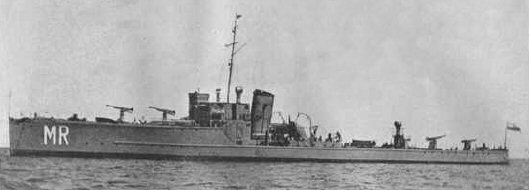
Following World War I, the Second Polish Republic on 28 November 1918, by the order of Józef Piłsudski, commander of the Armed Forces of Poland, founded the modern Polish Navy. The small naval force was placed under the command of Captain Bogumił Nowotny as its first chief. The first ships, which included several torpedo boats, were acquired from the former Imperial German Navy. In the 1920s and 1930s the Polish Navy underwent a modernisation program under the leadership of Vice-Admiral Jerzy Świrski (Chief of Naval Staff) and Rear-Admiral Józef Unrug (CO of the Fleet).
A number of modern ships were built in France, the Netherlands, and the United Kingdom. Despite ambitious plans (including 2 cruisers and 12 destroyers), the budgetary limitations placed on the government by the Great Depression never allowed the navy to expand beyond a small Baltic force. The building of one submarine, , was partly funded by a public collection. One of the main goals of the Polish Navy was to protect the Polish coast against the Soviet Baltic Fleet, therefore it put emphasis on fast submarines, large and heavily armed destroyers and mine warfare. By September 1939 the Polish Navy consisted of 5 submarines, 4 destroyers, 1 big minelayer and various smaller support vessels and mine-warfare ships. This force was no match for the larger Kriegsmarine, and so a strategy of harassment and indirect engagement was implemented.
World War II
Main article: Polish Navy order of battle in 1939, Polish Armed Forces in the West#Navy

The outbreak of World War II caught the Polish Navy in a state of expansion. Lacking numerical superiority, Polish Naval commanders decided to withdraw main surface ships to Great Britain to join the Allied war effort and prevent them from being destroyed in a closed Baltic (the Peking Plan). On 30 August 1939, three destroyers, (, , and ) sailed to the British naval base at Leith in Scotland. They then operated in combination with Royal Navy vessels against Germany. Also two submarines managed to flee from the Baltic Sea through the Danish straits to Great Britain during the Polish September Campaign (one of them, , made a daring escape from internment in Tallinn, Estonia, and traveled without charts). Three submarines were interned in Sweden, while remaining surface vessels were sunk by German aircraft.
The coastal defense subordinated to the Polish Navy fought as one of the longest defending forces in Poland until October 2, 1939. During the 32-day defense, the Hel Fortified Area and the Heliodor Laskowski's Artillery battery were of great importance.
During the war the Polish Navy in exile was supplemented with leased British ships, including two cruisers (, ex-HMS Danae; , ex-HMS Dragon), seven destroyers (one of which was ). three submarines, and a number of smaller fast-attack vessels. The Polish Navy fought alongside the Allied navies in Norway, the North Sea, the Atlantic and the Mediterranean, and aided in the escort of Atlantic and Arctic convoys, in which was lost in 1943. Polish naval vessels played a part in the sinking of the , and in the landings in Normandy during D-Day. During the course of the war, one cruiser, four destroyers, one minelayer, one torpedo boat, two submarines and some smaller vessels (gunboats, mine hunters etc.) were sunk; in total, twenty-six ships were lost, mostly in September 1939. In addition to participating in the sinking of Bismarck, the Polish Navy sank an enemy destroyer and six other surface ships, two submarines and a number of merchant vessels.
Postwar

After World War II, on 7 July 1945, the new Soviet-imposed Communist government revived the Polish Navy with headquarters in Gdynia. During the Communist period, Poland's navy experienced a great buildup, including the development of a separate amphibious force of Polish Marines. The Navy also acquired a number of Soviet-made ships, including 2 destroyers, 2 missile destroyers, 13 submarines and 17 missile boats. Among them was a , and a modified Kashin-class missile destroyer, (). Polish shipyards produced mostly landing craft, minesweepers and auxiliary vessels. The primary role of the Warsaw Pact Polish Navy was to be Baltic Sea control, as well as amphibious operations along the entire Baltic coastline against NATO forces in Denmark and West Germany. The collapse of the Soviet Union, the dissolution of the Warsaw Pact, and the fall of Communism ended this stance.
21st century

Poland's entrance into the North Atlantic Treaty Organization has greatly changed the structure and role of the Polish Navy. Whereas before, most of Naval High Command was concerned with coastal defense and Baltic Sea Operations, the current mindset is for integration with international naval operations. To facilitate these changes the Republic of Poland undertook a number of modernization programs aimed at creating a force capable of power projection. This included the acquisition of two s from the United States. The Naval air arm has also acquired a number of SH-2G Super Seasprite helicopters. The Polish Navy continues to operate one Kilo-class attack submarine ().

The Polish Navy has taken part in numerous joint force operations. In 1999 the naval base at Gdynia became the home base of all NATO submarine forces in the Baltic, codenamed "Cooperative Poseidon". That same year joint American-Polish submarine training manoeuvres codenamed "Baltic Porpoise" for the first time utilized the port in a multinational military exercise.
Modernization

As of the 2020s, the Polish Navy is modernizing its fleet. The work was initially planned as a 9 billion zloty project, but this was reduced in 2012 to 5 billion zloty, causing delays and cancellations in the succeeding years. The navy's 2017 strategy called for spending 13 billion zloty and acquiring 22 new warships, including those completed since 2013. In addition, although the force considers larger warships unsuitable for the confines of the Baltic Sea, the strategy called for extending the operational lifespan of one Oliver Hazard Perry-class frigate.
12 new ships worth around 10 billion PLN were to be acquired before 2026. The plan was updated in 2017 for 2013–2022 period to be worth 13 billion zloty and called to acquire 22 new vessels. These included three coast-defense vessels, code name Miecznik, that would feature a displacement of 2600 tons; and three patrol/mine countermeasure vessels, code name Czapla with 1700 tons displacement. Other purchases include six tugboats, two tankers, two rescue ships, one ELINT, one logistical support ship and one joint support ship. However some deliveries are expected up to 2026. On 2 July 2015, was christened during official launching ceremony, becoming the first new Polish-built Navy ship in 21 years. In 2022, UK shipbuilder Babcock announced that the Polish Navy had selected its Arrowhead 140 design for its Miecznik program, which will equip the navy with three new-build multi-mission frigates. The vessels are expected to be built locally in Poland.

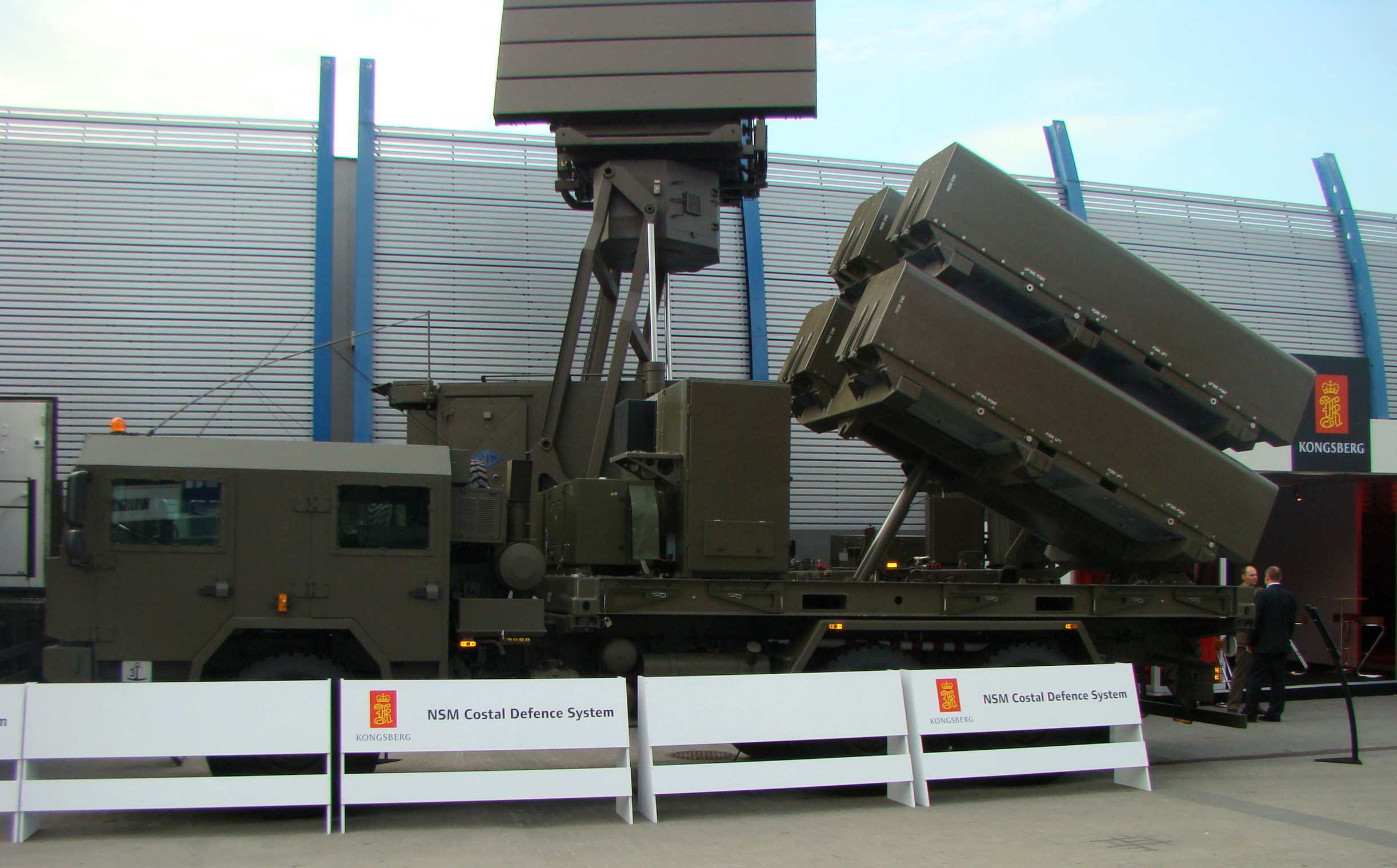
In terms of armament, the Polish Navy has acquired 36 Swedish RBS15 Mk3. and 50 (50/74) Norwegian Naval Strike Missiles for vessels and coastal defence units. , t is planned to reinforce the Navy's helicopter fleet with four to eight ASW/SAR units. The s program was cancelled with the sole surviving unit to be built as a patrol vessel. In June 2013 the Coastal Missile Division (NDR) equipped initially with 12 Naval Strike Missiles and two TRS-15C radars achieved initial readiness.
Mission and organization
The main mission of the Polish Navy is the defense of Poland's territorial waters, coastline and its interests abroad. Other missions include the support of NATO allied operations, and search and rescue operations throughout the Baltic Sea. In addition, the Polish Navy supplies nearly 40 ships as part of the NATO Rapid Reaction Force, designed to be a force projection and conflict response force around the world. The Polish Navy is organized into 2 separate Flotillas and a Naval Air Brigade. Until January 1, 2014 the service had a Chief of the Navy (a three-star Admirał floty) and a Naval Command. On that date the branch-specific Land Forces, Air Forces, Naval and Special Forces Commands were disestablished and combined into two new commands. The functions of the three-star Chief of the Navy were split between two two-star officers (vice-admirals in the Polish system of military ranks) - an Inspector of the Navy under the Armed Forces General Command, responsible for manpower, materiel and combat readiness and a Commander of the Seaborne Component Command, responsible for naval operations.
- Armed Forces Operational Command in Warsaw
- Seaborne Operations Center - Seaborne Component Command in Gdynia
- Armed Forces General Command in Warsaw
- Inspector of the Navy in Warsaw
- 3rd Ship Flotilla "Commodore Bolesław Romanowski" in Gdynia-Oksywie
- Flotilla Command
- Submarine Ships Division in Gdynia-Oksywie
- ORP 291 Orzeł - Kilo-class submarine
- Gdynia Combatant Ships Division - Gdynia-Oksywie
- ORP 272 Generał Kazimierz Pułaski and ORP 273 Generał Tadeusz Kościuszko - Oliver Hazard Perry-class frigates
- ORP 421 Orkan, ORP 422 Piorun and ORP 423 Grom - Orkan-class missile corvettes
- ORP 240 Kaszub - single ship ASW corvette Project 620
- ORP 241 Ślązak - single ship multirole corvette Project Meko A-100, being fitted out until the end of 2018
- Support Ships Division in Gdynia
- ORP 251 Wodnik - single ship Wodnik-class training vessel Project 888
- ORP 281 Piast and ORP 282 Lech - Piast-class rescue-salvage ships Project 570
- ORP R-14 Zbyszko and ORP R-15 Maćko - rescue cutters Project B823
- Reconnaissance Ships Group in Gdynia
- ORP 262 Nawigator and ORP 263 Hydrograf - Nawigator-class reconnaissance ships
- Hydrographic Support Squadron in Gdynia
- ORP 265 Heweliusz and ORP 266 Arctowski - Heweliusz-class hydrographic survey ships
- ORP 253 Iskra - Iskra-class sail training ship
- 2 hydrographic cutters K-4 and K-10 and 3 hydrographic motor launches M-38, M-39 and M-40
- Coastal ASM Unit "Commodore Zbigniew Przybyszewski" in Siemirowice
- 1st Coastal ASM Division - Naval Strike Missile
- 2nd Coastal ASM Division - Naval Strike Missile
- 9th Anti-Aircraft Division in Ustka - Grom MANPADS and S-60 AAA guns
- 43rd Naval Combat Engineer Battalion in Rozewie
- Naval Technical Base in Gdynia
- Military Port Command "Brig. Gen. Stanisław Dąbek" in Gdynia
- Base Location Hel
- Naval Sailing Training Center in Gdynia
- Naval Control and Measurement Range in Gdynia-Oksywie
- ORP H34 Błyskawica - Grom-class destroyer museum ship
- 8th Coastal Defense Flotilla "Vice admiral Kazimierz Porębski" in Świnoujście
- Flotilla Command
- 2nd Landing and Minelaying Ships Division in Swinoujscie
- ORP 821 Lublin, ORP 822 Gniezno, ORP 823 Kraków, ORP 824 Poznań and ORP 825 Toruń - Lublin-class minelayer-landing ships
- ORP 511 Kontradmirał Xawery Czernicki - multirole support ship
- 3 landing cutters Project 716
- 12th Wolin Minesweeper Division in Swinoujscie
- ORP 631 Gardno, ORP 632 Bukowo, ORP 633 Dąbie, ORP 634 Jamno, ORP 635 Mielno, ORP 636 Wicko, ORP 637 Resko, ORP 638 Sarbsko, ORP 639 Necko, ORP 640 Nakło, ORP 641 Drużno, ORP 642 Hańcza - Gardno-class minesweepers Project 207P
- TR-25 and TR-26 - minesweeping cutters Project B410-IVS
- EOD Diver Group
- 13th Minesweeper Division "Fleet Admiral Andrzej Karweta" in Gdynia
- ORP 624 Czajka - minehunter Project 206FM
- ORP 601 Kormoran - minehunter Project 258
- ORP 630 Gopło, ORP 643 Mamry, ORP 644 Wigry, ORP 645 Śniardwy, ORP 646 Wdzydze - coastal minesweepers Project 207M
- EOD Diver Group
- 8th Anti-Aircraft Division in Dziwnów - Grom MANPADS, ZU-23-2 and S-60 AAA guns
- 8th Kołobrzeg Naval Combat Engineer Battalion in Dziwnów
- Military Port Command Swinoujscie
- Base Location Kołobrzeg
- Gdynia '*Naval Aviation Brigade *"Commander Pilot Karol Trzask-Durski"''''' in Gdynia-Babie Doły
- Brigade Command
- 43rd Oksywie Naval Air Base "Commander Edward Stanisław Szystowiski" in Gdynia-Babie Doły (personnel and equipment from 28th Naval Aviation Squadron)
- Air Group
- 4 transport aircraft An-28TD (0703 and 1003) and M28B (1117 and 1118)
- 4 shipborne ASW helicopters Kaman SH-2G Super Seasprite (3543, 3544, 3545 and 3546)
- 6 SAR helicopters W-3WARM Anakonda (0505, 0506, 0511, 0813, 0815 and 0906)
- 2 training and liaison helicopters Mi-2D (5245) and Mi-2R (5348)
- Air Group
- 44th Kaszubian-Darłowo Naval Air Base in Siemirowice
- Kaszubian Air Group in Siemirowice
- 7 maritime patrol aircraft M28B-1R Bryza M28B-1R (1006, 1008, 1017, 1022, 1114, 1115 and 1116)
- 1 maritime patrol and submarine detection aircraft M28B-1RM/BIS Bryza (0810)
- 2 environmental monitoring aircraft An-28E (0404 and 0405)
- Darłowo Air Group in Darłowo
- 2 SAR helicopters Mi-14PŁ/R (1009 and 1012)
- 8 ASW helicopters Mi-14PŁ (1001, 1003, 1004, 1005, 1007, 1008, 1010 and 1011)
- 2 SAR helicopters W-3WARM Anakonda (0209 and 0304)
- 2 training and liaison helicopters Mi-2R (5828 and 5830)
- Kaszubian Air Group in Siemirowice
- Naval Hydrographical Bureau in Gdynia
- 6th Oliwa Radioelectronic Reconnaissance Regiment ″Admiral Arendt Dickmann″
- Naval Training Center "Vice Admiral Józef Unrug" in Ustka
- Naval NCO School in Ustka
- Diving and Deep Diving Training Center of the Polish Armed Forces "Commodore Stanisław Mielczarek" in Gdynia
- 3rd Ship Flotilla "Commodore Bolesław Romanowski" in Gdynia-Oksywie
- Inspector of the Navy in Warsaw
Ranks and insignia
Main article: Polish Armed Forces rank insignia
;Officers
;Other ranks
Equipment
Ships
Main article: List of ships of the Polish Navy
Aircraft
.jpg)

,_Radom_Air_Show,_20230826_1514_9520.jpg)
.jpg)
| Aircraft | Origin | Type | Variant | In service | Notes | Maritime patrol | Transport | Helicopters | ||||||||
|---|---|---|---|---|---|---|---|---|---|---|---|---|---|---|---|---|
| An-28 / | Poland | Maritime patrol | An-28/M28 (MPA) | year=2023 | first=Craig | last=Hoyle | title=World Air Forces 2024 | url=https://www.flightglobal.com/download?ac=98881 | url-status=live | archive-url=https://web.archive.org/web/20240105033828/https://www.flightglobal.com/download?ac=98881 | archive-date=5 January 2024 | access-date=13 April 2024}} | ||||
| An-28 / | Poland | Light transport | — | 5 | ||||||||||||
| AW-101 | United Kingdom | ASW / Transport | Merlin Mk614 | title=Poland inducts first Merlin ASW helicopters | publisher=Jane's | url=https://www.janes.com/defence-news/news-detail/poland-inducts-first-merlin-asw-helicopters | access-date=2024-05-20 | date=2023-12-12 | first=Gareth | last=Jennings | url-status=deviated | archive-url=https://web.archive.org/web/20231231011155/https://www.janes.com/defence-news/news-detail/poland-inducts-first-merlin-asw-helicopters | archive-date=31 Dec 2023}} | Replacement of Mil Mi-14 | ||
| 1 on order | ||||||||||||||||
| PZL Mi-2 | Poland | Search and rescue | 3 | |||||||||||||
| PZL W-3 Sokół | Poland | Search and rescue | PZL W-3WARM SAR | 8 |
Coastal Defense
Current equipment
| Model | Origin | Image | Type | In service | Notes | Division | Composition of a division | |||||
|---|---|---|---|---|---|---|---|---|---|---|---|---|
| NSM CDS division | [[File:Jelcz P662D43 z wyrzutnia.JPG | 150px | Polish Naval Strike Missile]] | Coastal defence missile system | 2 | title=KONGSBERG signs Naval Strike Missile Coastal Defence System contract with Poland worth approximately NOK 16 billion | url=https://www.wojsko-polskie.pl/au/articles/aktualnosci/znaczace-wzmocnienie-polskiej-obrony-wybrzeza/ | access-date=2024-04-23 | website=www.wojsko-polskie.pl}} | |||
| NSM - BCV | — | Battery command | 4 | title=Kongsberg showcasing Polish Navy's NSM Coastal Battery vehicles at MSPO 2014 | url=https://www.navyrecognition.com/index.php/news/defence-news/year-2014-news/september-2014-navy-naval-forces-maritime-industry-technology-security-global-news/1982-kongsberg-showcasing-polish-navys-nsm-coastal-battery-vehicles-at-mspo-2014.html | access-date=2024-04-23 | website=www.navyrecognition.com | date=3 September 2014 }} | ||||
| TRS-15C - MRV | [[File:Jelcz P662D43 NSM 2.JPG | 150x150px | Polish Naval Strike Missile]] | Radar | 4 | Installed on a Jelcz P882 8×8 truck | ||||||
| NSM - MLV | ||||||||||||
| [[File:Jelcz 662D43 NSM MSPO21.jpg | 150x150px | Polish Naval Strike Missile]] | Transporter erector launcher | 12 | Installed on Jelcz 662D43 6×6 truck. | |||||||
| NSM - CCV | — | [[File:Jelcz 662D35 CCV DSC05123.jpg | 150x150px | Polish Naval Strike Missile]] | Fire control | 12 | Installed on Jelcz 662D35 6×6 truck. | |||||
| NSM - MCC | — | — | Mobile communication center | 4 | Installed on Jelcz 662D43 6×6 truck. | |||||||
| NSM - TLV | — | — | Transport and loading vehicle | 2 | 1 per squadron | |||||||
| NSM - MWV | — | — | Mobile workshop vehicle | 2 | 1 per squadron | |||||||
| NSM missile Block 1A | [[File:Naval Strike Missile launch.png | 150x150px | Polish Naval Strike Missile]] | Anti-Ship Missile | 74 | 50 missiles ordered in 2008 and 2011 (including 2 for testing) |
On order
Two additional squadrons of NSM CDS were ordered in 2023, with a delivery planned for 2026 - 2032. Hundreds of missiles are on order.
References
Bibliography
- Peszke, Michael Alfred, Poland's Navy: 1918–1945, New York, Hippocrene Books, 1999, .
References
- "Zestawienie dochodów budżetu na 2025 r. oraz ich podział na dysponentów środków budżetowych według działów, rozdziałów i paragrafów klasyfikacji budżetowe".
- "Ustawa z dnia 19 lutego 1993 r. o znakach Sił Zbrojnych Rzeczypospolitej Polskiej". Internet System of Legal Acts.
- Górski, Karol. (1949). "Związek Pruski i poddanie się Prus Polsce: zbiór tekstów źródłowych". Instytut Zachodni.
- Juliusz Bardach, Boguslaw Lesnodorski, and Michal Pietrzak, ''Historia panstwa i prawa polskiego'' (Warsaw: Paristwowe Wydawnictwo Naukowe), 1987, p.231
- Michael Roberts. (27 April 1984). "The Swedish Imperial Experience 1560–1718". Cambridge University Press.
- Jerzy Pertek ''Polacy na morzach i oceanach: Do roku 1795'', p. 176
- "Rozczarowujące BME 2010". Altair.
- link. (2017-02-02 Altair, January 20, 2017. {{in lang). pl
- [http://baltmilitary.amberexpo.pl/title,Jezyk,pid,1889,lang,2.html The Polish Navy Development Concept.] {{Webarchive. link. (2017-03-05 amberexpo.pl)
- link. (2013-07-15 Altair {{in lang). pl
- [http://www.thenews.pl/1/9/Artykul/212375,Defence-Minister-We-need-to-expand-Polish-Navy Defence Minister: We need to expand Polish Navy.] {{Webarchive. link. (2017-10-04 02.07.2015)
- (7 March 2022). "Babcock's Arrowhead 140 design to form the basis of the future flagships of the Polish Navy".
- "RBS15 Mk 3 Surface to Surface Missile SSM in use". [[Saab Group]].
- "defence.professionals". defpro.com.
- "Poland evaluates three bids for helicopter acquisition".
- "Ukompletowanie NDR". Altair.
- "Polish Navy".
- "Marynarka Wojenna".
- Rydzyk{{!}}2012{{!}}www.rczpi.wp.mil.pl, made by RCZPI{{!}}design by Patryk. "..:: :: Jednostki ::..".
- Hoyle, Craig. (2023). "World Air Forces 2024".
- Harding, Ian. (2024-02-14). "Poland AW101 Merlin Mk614".
- Jennings, Gareth. (2023-12-12). "Poland inducts first Merlin ASW helicopters". Jane's.
- "KONGSBERG signs Naval Strike Missile Coastal Defence System contract with Poland worth approximately NOK 16 billion".
- "NSM Coastal Defence contract valued at NOK 1,3 Billions with Poland - KONGSBERG - Protecting People and Planet".
- (3 September 2014). "Kongsberg showcasing Polish Navy's NSM Coastal Battery vehicles at MSPO 2014".
- (2023-04-10). "Kongsberg showcasing Polish Navy's NSM Coastal Battery vehicles at MSPO 2014".
- "Securing the shoreline – why coastal defence is back on the agenda {{!}} Shephard".
- "Ukompletowanie NDR". Altair.
- Giovanni. (2023-10-27). "Poland Orders Additional Naval Strike Missile Squadrons".
- Saballa, Joe. (2023-09-07). "Poland Orders Hundreds of Naval Strike Missiles for $2 Billion".
This article was imported from Wikipedia and is available under the Creative Commons Attribution-ShareAlike 4.0 License. Content has been adapted to SurfDoc format. Original contributors can be found on the article history page.
Ask Mako anything about Polish Navy — get instant answers, deeper analysis, and related topics.
Research with MakoFree with your Surf account
Create a free account to save articles, ask Mako questions, and organize your research.
Sign up freeThis content may have been generated or modified by AI. CloudSurf Software LLC is not responsible for the accuracy, completeness, or reliability of AI-generated content. Always verify important information from primary sources.
Report