From Surf Wiki (app.surf) — the open knowledge base
Polar Satellite Launch Vehicle
Indian expendable launch vehicle
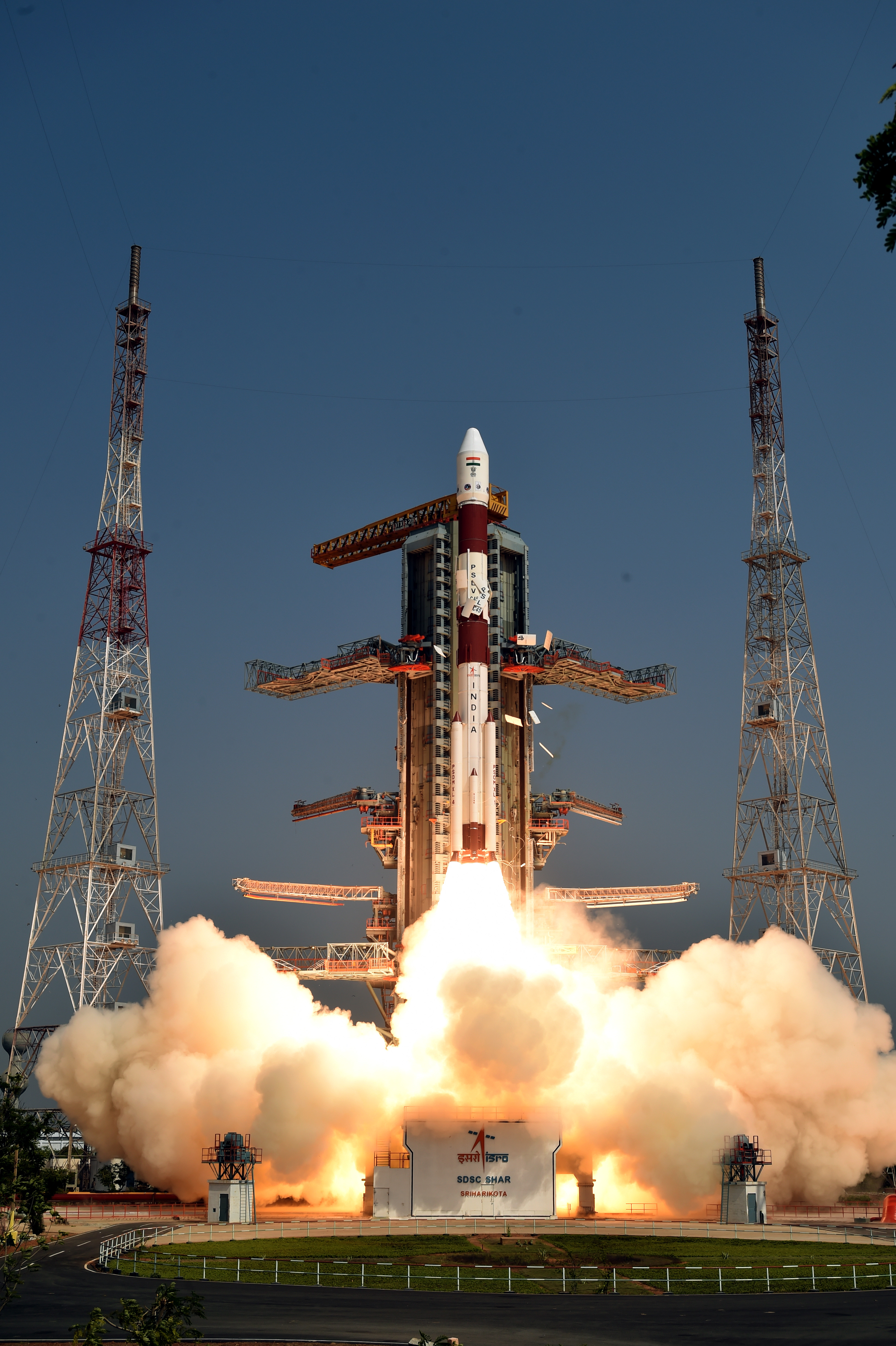
Indian expendable launch vehicle
| Field | Value | ||
|---|---|---|---|
| name | Polar Satellite Launch Vehicle | ||
| image | File:PSLVC62.webp | ||
| caption | PSLV C-62 mission prior to launch | ||
| function | Medium-lift launch system | ||
| manufacturer | ISRO | ||
| country-origin | India | ||
| cpl | |||
| height | 44 m | ||
| diameter | 2.8 m | ||
| mass | PSLV-G: 295000 kg | ||
| PSLV-CA: 230000 kg | |||
| PSLV-XL: 320000 kg | |||
| stages | 4 | ||
| location | LEO (200 km @ 30° inclination) | ||
| mass | {{plainlist | ||
| * XL: }}<ref name | "Access to Space"}} | ||
| location | SSO (620 km circular) | ||
| mass | {{plainlist | ||
| * XL: }}<ref name | "Access to Space" /}} | ||
| location | Sub-GTO (284 × 20650 km) | ||
| mass | 1425 kg | ||
| (PSLV-XL)<ref name | "pslv"/}} | ||
| location | GTO | ||
| mass | {{plainlist | ||
| * XL: }}<ref name | "Access to Space" /}} | ||
| status | Active | ||
| sites | Satish Dhawan Space Centre | ||
| launches | 64 | ||
| success | 59 | ||
| fail | 4 | ||
| partial | 1 | ||
| first | {{plainlist | ||
| last | {{plainlist | ||
| payloads | |||
| stagedata | {{Infobox rocket/stage | ||
| type | booster | ||
| diff | PSLV-G | ||
| name | S9 | ||
| number | 6 | ||
| thrust | 510 kN | ||
| SI | 262 isp | ||
| burntime | 44 s | ||
| fuel | HTPB | ||
| type | booster | ||
| diff | PSLV-XL/QL/DL | ||
| name | S12 | ||
| number | 6 (XL) | ||
| 4 (QL) | |||
| 2 (DL) | |||
| length | 12 m | ||
| diameter | 1 m | ||
| engines | off | ||
| thrust | 703.5 kN | ||
| total | 4221 kN (XL) | ||
| 2814 kN (QL) | |||
| 1407 kN (DL) | |||
| SI | 262 isp | ||
| burntime | 70 s | ||
| fuel | HTPB | ||
| propmass | 12200 kg each | ||
| type | stage | ||
| stageno | First | ||
| engines | S139 | ||
| length | 20 m | ||
| diameter | 2.8 m | ||
| solid | yes | ||
| thrust | 4846.9 kN | ||
| burntime | 110 s | ||
| SI | 237 isp (sea level) | ||
| 269 isp (vacuum) | |||
| fuel | HTPB | ||
| propmass | 138200 kg each | ||
| type | stage | ||
| stageno | Second | ||
| length | 12.8 m | ||
| diameter | 2.8 m | ||
| engines | 1 Vikas | ||
| thrust | 803.7 kN | ||
| SI | 293 isp | ||
| burntime | 151 s | ||
| fuel | N2O4/UDMH | ||
| propmass | 42000 kg each | ||
| type | stage | ||
| stageno | Third | ||
| length | 3.6 m | ||
| diameter | 2 m | ||
| engines | S-7 | ||
| solid | yes | ||
| thrust | 250 kN | ||
| SI | 295 isp | ||
| burntime | 126.7 s | ||
| fuel | HTPB | ||
| propmass | 7600 kg each | ||
| type | stage | ||
| stageno | Fourth | ||
| length | 3 m | ||
| diameter | 1.3 m | ||
| engines | 2 x L-2-5 | ||
| thrust | 14.66 kN | ||
| SI | 308 isp | ||
| burntime | 525 s | ||
| fuel | MMH/MON | ||
| propmass | 2500 kg each | ||
| comparable | Vega, Nuri | logo=[[File:PSLV Logo Classic.svg | 100px]] |
|country-origin = India
PSLV-CA: 230000 kg PSLV-XL: 320000 kg
-
G: 3200 kg
-
CA: 2100 kg
-
XL: 3800 kg}}}}
-
G: 1600 kg
-
CA: 1100 kg
-
XL: 1750 kg}}}}
(PSLV-XL)}}
-
G: 1150 kg
-
XL: 1300 kg}}}}
-
PSLV-G: 20 September 1993
-
PSLV-CA: 23 April 2007
-
PSLV-XL: 22 October 2008
-
PSLV-DL: 24 January 2019
-
PSLV-QL: 1 April 2019
-
PSLV-G: 26 September 2016
-
PSLV-CA: 30 December 2024
-
PSLV-XL: 18 May 2025
-
PSLV-DL: 12 January 2026
-
PSLV-QL: 11 December 2019 4 (QL) 2 (DL) 2814 kN (QL) 1407 kN (DL) 269 isp (vacuum)
The Polar Satellite Launch Vehicle (PSLV) is an expendable medium-lift launch vehicle designed and operated by ISRO. It was developed to allow India to launch its Indian Remote Sensing (IRS) satellites into Sun-synchronous orbits, a service that was, until the advent of the PSLV in 1993, only commercially available from Russia. PSLV can also launch small size satellites into Geostationary Transfer Orbit (GTO).
Some notable payloads launched by PSLV include India's first lunar probe Chandrayaan-1, India's first interplanetary mission, Mars Orbiter Mission (Mangalyaan), India's first space observatory, Astrosat and India's first Solar mission, Aditya-L1.
PSLV has gained credibility as a leading provider of rideshare services for small satellites, owing to its numerous multi-satellite deployment campaigns with auxiliary payloads, usually ride-sharing along with an Indian primary payload. As of June 2022, PSLV has launched 345 foreign satellites from 36 countries. Most notable among these was the launch of PSLV-C37 on 15 February 2017, successfully deploying 104 satellites in Sun-synchronous orbit, tripling the previous record held by Russia for the highest number of satellites sent to space on a single launch, until 24 January 2021, when SpaceX launched the Transporter-1 mission on a Falcon 9 rocket carrying 143 satellites into orbit.
Payloads can be integrated in tandem configuration employing a Dual Launch Adapter. Smaller payloads are also placed on equipment deck and customized payload adapters.
Development
Studies by the PSLV Planning group under S Srinivasan to develop a vehicle capable of delivering a 600 kg payload to a 550 km sun-synchronous orbit from SHAR began in 1978. Among 35 proposed configurations, four were picked; by November 1980, a vehicle configuration with two strap-ons on a core booster (S80) with 80 tonne solid propellant loading each, a liquid stage with 30 tonne propellant load (L30), and an upper stage called the Perigee-Apogee System (PAS) was being considered.
By 1981, confidence grew in remote sensing spacecraft development with the launch of Bhaskara-1, and the PSLV project objectives were upgraded to have the vehicle deliver a 1000 kg payload into a 900 km SSO. As technology transfer of Viking rocket engine firmed up, a new lighter configuration with the inclusion of a liquid powered stage was selected. Funding was approved in July 1982 for the finalized design, employing a single large S125 solid core as first stage with six 9 tonne strap-ons (S9) derived from the SLV-3 first stage, liquid fueled second stage (L33), and two solid upper stages (S7 and S2.) This configuration needed further improvement to meet the orbital injection accuracy requirements of IRS satellites, and hence, the solid terminal stage (S2) was replaced with a pressure fed liquid fueled stage (L1.8 or LUS) powered by twin engines derived from roll control engines of the first stage. Apart from increasing precision, liquid upper stage also absorbed any deviation in performance of solid third stage. The final configuration of PSLV-D1 to fly in 1993 was (6 × S9 + S125) + L37.5 + S7 + L2.
The inertial navigation systems are developed by ISRO Inertial Systems Unit (IISU) at Thiruvananthapuram. The liquid propulsion for the second and fourth stages of the PSLV as well as the Reaction control systems (RCS) are developed by the Liquid Propulsion Systems Centre (LPSC) at Valiamala near Thiruvananthapuram, kerala. The solid propellant motors are processed at Satish Dhawan Space Centre (SHAR) at Sriharikota, Andhra Pradesh, which also carries out launch operations. The aerodynamic characterization research was conducted at the National Aerospace Laboratories' 1.2m Trisonic Wind Tunnel Facility.
The PSLV was first launched on 20 September 1993. The first and second stages performed as expected, but an attitude control problem led to the collision of the second and third stages at separation, and the payload failed to reach orbit. After this initial setback, the PSLV successfully completed its second mission in 1994. The fourth launch of PSLV suffered a partial failure in 1997, leaving its payload in a lower than planned orbit. In November 2014, the PSLV had launched 34 times with no further failures. (Although launch 41: August 2017 PSLV-C39 was unsuccessful.)
PSLV continues to support Indian and foreign satellite launches especially for low Earth orbit (LEO) satellites. It has undergone several improvements with each subsequent version, especially those involving thrust, efficiency as well as weight. In November 2013, it was used to launch the Mars Orbiter Mission, India's first interplanetary probe.
In June 2018, the Union Cabinet approved for 30 operational flights of the PSLV scheduled to take place between 2019 and 2024.
ISRO is working towards handing over the production and operation of PSLV to private industry through a joint venture. On 16 August 2019, NewSpace India Limited issued an invitation to tender for manufacturing PSLV entirely by private industries. On 5 September 2022, NewSpace India Limited signed a contract with Hindustan Aeronautics Limited and Larsen & Toubro led conglomerate for the production of five PSLV-XL launch vehicles after they won competitive bidding. Under this contract, they have to deliver their first PSLV-XL within 24 months and the remaining four vehicles every six months.
Vehicle description
The PSLV has four stages, using solid and liquid propulsion systems alternately.
First stage (PS1)
The first stage, one of the largest solid rocket boosters in the world, carries 138 MT of hydroxyl-terminated polybutadiene-bound (HTPB) propellant and develops a maximum thrust of about 4800 kN. The 2.8 m diameter motor case is made of maraging steel and has an empty mass of 30200 kg.
Pitch and yaw control during first stage flight is provided by the Secondary Injection Thrust Vector Control (SITVC) System, which injects an aqueous solution of strontium perchlorate into the S139 exhaust divergent from a ring of 24 injection ports to produce asymmetric thrust. The solution is stored in two cylindrical aluminium tanks strapped to the core solid rocket motor and pressurised with nitrogen. Underneath these two SITVC tanks, Roll Control Thruster (RCT) modules with small bi-propellant (MMH/MON) liquid engine are also attached.
On the PSLV-G and PSLV-XL, first stage thrust is augmented by six strap-on solid boosters. Four boosters are ground-lit and the remaining two ignite 25 seconds after launch. The solid boosters carry 9 MT or 12 MT (for PSLV-XL configuration) propellant and produce 510 kN and 719 kN thrust respectively. Two strap-on boosters are equipped with SITVC for additional attitude control. The PSLV-CA uses no strap-on boosters.First stage separation is aided by four pairs of retro-rockets installed on inter-stage (1/2L). During staging, these eight rockets help push away the spent stage away from second stage.
Second stage (PS2)
The second stage is powered by a single Vikas engine and carries 41.5 MT of Earth store-able liquid propellantunsymmetrical dimethylhydrazine (UDMH) as fuel and nitrogen tetroxide (N2O4) as oxidiser in two tanks separated by a common bulkhead. It generates a maximum thrust of 800 kN. The engine is gimbaled (±4°) in two planes to provide pitch and yaw control by two actuators, while roll control is provided by a Hot gas Reaction Control Motor (HRCM) that ejects hot gases diverted from gas generator of Vikas engine.
On inter-stage (1/2U) of PS2, there are two pairs of ullage rockets to maintain positive acceleration during PS1/PS2 staging and also two pairs of retro-rockets to help push away spent stage during PS2/PS3 staging.
Second stage also carries water in a toroidal tank at its bottom. Water spray is used to cool hot gases from Vikas' gas generator to about 600 °C before entering turbopump. Propellant and water tanks of second stage are pressurized by Helium.
Third stage (PS3)
The third stage uses 7.6 MT of HTPB solid propellant and produces a maximum thrust of 250 kN. Its burn duration is 126.7 seconds. It has a Kevlar-polyamide fibre case and a submerged nozzle equipped with a flex-bearing-seal gimbaled nozzle with ±2° thrust vector for pitch and yaw control. Roll control is provided by the fourth stage reaction control system (RCS) during thrust phase as well as during combined-coasting phase under which burnt-out PS3 remains attached to PS4.
Fourth stage (PS4)
The fourth stage is powered by regeneratively cooled twin engines, burning monomethylhydrazine (MMH) and mixed oxides of nitrogen (MON). Each pressure fed engine generates 7.4 kN thrust and is gimbaled (±3°) to provide pitch, yaw and roll control during powered flight. Coast phase attitude control is provided by six 50N RCS thrusters. The stage is pressurized by helium and carries 1600 kg to 2500 kg of propellant depending on the mission requirements. PS4 has three variants L1.6, L2.0 and L2.5 based on propellant tank capacity.
On PSLV-C29/TeLEOS-1 mission, the fourth stage demonstrated re-ignition capability for the first time which was used in many subsequent flights to deploy payloads in multiple orbits on a single campaign.
As a space debris mitigation measure, PSLV fourth stage gets passivated by venting pressurant and propellant vapour after achieving main mission objectives. Such passivation prevents any unintentional fragmentation or explosion due to stored internal energy.
The niobium alloy nozzle used on twin engines of fourth stage is expected to be replaced by lighter, silicon carbide coated carbon–carbon nozzle divergent. The new nozzle was hot tested at facilities of IPRC, Mahendragiri in March and April 2024. This substitution should increase payload capacity of PSLV by 15 kg. ISRO also replaced imported Columbium materials in the engine nozzle divergent with Stellite, which resulted in cost savings of 90%. The newly modified engines were tested at IPRC in April 2025.
ISRO successfully completed 665-second hot test of 3D printed PS4 engine, produced by Wipro 3D through selective laser melting. A total of 19 weld joints were eliminated through this process while engine's 14 components were reduced to one piece. It saved 60% of the production time and drastically decreased the amount of raw materials used per engine, from 565 kg to 13.7 kg of metal powder.
PS4 stage as orbital platform
Main article: PSLV Orbital Experiment Module
PS4 has carried hosted payloads like AAM on PSLV-C8, Rubin 9.1/Rubin 9.2 on PSLV-C14 and mRESINS on PSLV-C21. But now, PS4 is being augmented to serve as a long duration orbital platform after completion of primary mission. PS4 Orbital Platform (PS4-OP) will have its own power supply, telemetry package, data storage and attitude control for hosted payloads.
On PSLV-C37 and PSLV-C38 campaigns, as a demonstration PS4 was kept operational and monitored for over ten orbits after delivering spacecraft.
PSLV-C44 was the first campaign where PS4 functioned as independent orbital platform for short duration as there was no on-board power generation capacity. It carried KalamSAT-V2 as a fixed payload, a 1U CubeSat by Space Kidz India based on Interorbital Systems kit.
On PSLV-C45 campaign, the fourth stage had its own power generation capability as it was augmented with an array of fixed solar cells around PS4 propellant tank. The three payloads hosted on PS4-OP were the Advanced Retarding Potential Analyzer for Ionospheric Studies (ARIS 101F) by IIST, an experimental AIS payload by ISRO, and AISAT by Satellize. To function as orbital platform, fourth stage was put in spin-stabilized mode using its RCS thrusters.
On the PSLV-C53 campaign, the PS4-OP is referred to as the PSLV Orbital Experimental Module (POEM), and it hosted six payloads. POEM was the first PSLV fourth stage based orbital platform to be actively stabilised using Helium based cold gas thrusters after the primary mission and stage passivization.
PS4 on RLV-OREX
The Reusable Launch Vehicle Technology Demonstration program is an prototype spaceplane project currently being processed by ISRO. It is planned to use a GSLV, modified by replacing its Cryogenic Upper Stage(CUS) with the PS-4 as the RLV would not required the excess thrust created by the CUS.
Payload fairing
Payload fairing of PSLV, also referred as its "Heatshield" consists of a conical upper section with spherical nose-cap, a cylindrical middle section and a lower boat-tail section. Weighing 1,182 kg, it has 3.2 meter diameter and 8.3 meter height. It has Isogrid construction and is made out of 7075 aluminum alloy with a 3 mm thick steel nose-cap. The two halves of fairing are separated using a pyrotechnic device based jettisoning system consisting of horizontal and lateral separation mechanisms. To protect the spacecraft from damage due to excessive acoustic loads during launch, the heatshield interior is lined with acoustic blankets.
| Stage 1 | Stage 2 | Stage 3 | Stage 4 | Pitch | Yaw | Roll |
|---|---|---|---|---|---|---|
| SITVC | Engine Gimbal | Nozzle Flex | Engine Gimbal | |||
| SITVC | Engine Gimbal | Nozzle Flex | Engine Gimbal | |||
| RCT and SITVC in 2 PSOMs | HRCM Hot Gas Reaction Control Motor | PS4 RCS | PS4 RCS |
Integration gallery
File:PSLV-C11 Strapon01.jpg|PSLV-C11 strap-on File:PSLV-C44 Integrated upto First Stage inside Mobile Service Tower.jpg|PSLV-C44 first stage inside Mobile Service Tower File:PSLV-C55, TeLEOS-2 - Igniter of first stage being integrated with head end segment.webp|First stage Igniter being integrated onto the rocket File:PSLVC62 ullage motor.jpg|PSLV Ullage motors File:PSLVC62 interstage.webp|PSLV First-Second interstage File:PSLV C50 second stage with Vikas engine.jpg|Vikas engine and second stage File:PSLV C45 EMISAT campaign 09.jpg|Third and fourth stages of PSLV-C45 File:Payload Encapsulation of PSLV - C62.webp|Payload fairing integration File:PSLVC62 PSLV rollout.webp|Rollout prior to launch
Variants
ISRO has envisaged a number of variants of PSLV to cater to different mission requirements. There are currently two operational versions of the PSLV — the core-alone (PSLV-CA) without strap-on motors, and the (PSLV-XL) version, with six extended length (XL) strap-on motors carrying 12 tonnes of HTPB based propellant each. These configurations provide wide variations in payload capabilities up to 3800 kg in LEO and 1800 kg in sun-synchronous orbit.
PSLV-G
The standard or "Generic" version of the PSLV, PSLV-G had four stages using solid and liquid propulsion systems alternately and six strap-on motors (PSOM or S9) with 9 tonne propellant loading. It had the capability to launch 1678 kg to 622 km into sun-synchronous orbit. PSLV-C35 was the last operational launch of PSLV-G before its discontinuation.
PSLV-CA
The PSLV-CA, CA meaning "Core Alone", model premiered on 23 April 2007. The CA model does not include the six strap-on boosters used by the PSLV standard variant but two SITVC tanks with Roll Control Thruster modules are still attached to the side of the first stage with addition of two cylindrical aerodynamic stabilizers. The fourth stage of the CA variant has 400 kg less propellant when compared to its standard version. It currently has capability to launch 1100 kg to 622 km Sun-synchronous orbit.
PSLV-XL
PSLV-XL is the upgraded version of Polar Satellite Launch Vehicle in its standard configuration boosted by more powerful, stretched six strap-on boosters with 12 tonne propellant load. Weighing 320 MT at lift-off, the vehicle uses larger strap-on motors (PSOM-XL or S12) to achieve higher payload capability. On 29 December 2005, ISRO successfully tested an improved version of the strap-on booster for the PSLV. The first use of PSLV-XL was the launch of Chandrayaan-1 by PSLV-C11. The payload capability for this variant is 1800 kg to Sun-synchronous orbit.
PSLV-DL
PSLV-DL variant has only two strap-on boosters with 12 tonne propellant load on them. PSLV-C44 on 24 January 2019 was the first flight to use PSLV-DL variant of Polar Satellite Launch Vehicle. It is capable of launching 1257 kg to 600 km Sun-synchronous orbit.
PSLV-QL
PSLV-QL variant has four ground-lit strap-on boosters, each with 12 tonnes of propellant. PSLV-C45 on 1 April 2019 was the first flight of PSLV-QL. It has the capacity to launch 1523 kg to 600 km Sun-synchronous orbit.
PSLV-3S (concept)
PSLV-3S was conceived as a three-staged version of PSLV with its six strap-on boosters and second liquid stage removed. The total lift-off mass of PSLV-3S was expected to be 175 tonnes with capacity to place 500 kg in 550 km low Earth orbit.
Launch profile
PSLV - XL:
- The PS1 ignites at T+0 providing 4846kN of thrust.
- Within T+1, 4 out of the 6 boosters ignite on ground, each producing 703 kN of thrust. 7658kN of total thrust is produced by the combined propulsion of the PSOMs and the PS1.
- At around T+23/26, the remaining 2 unlit boosters are air-lit bringing the rocket at its maximum thrust capacity.
- At T+1:10, the first 4 ground-lit PSOMs have depleted its propellant and now separates and falls down to the ocean. The remaining 2 PSOMs and the PS1 continue to burn.
- At T+1:35, the remaining 2 PSOMs complete its 70 seconds burn and separate, leaving the rocket in a Core Alone configuration.
- At T+1:50, the PS1 has completed its 110-second burn and it separates and the Vikas Engine inside the PS2 ignites.
- The second stage burns for around 130 seconds and around T+4 minutes, the second stages shuts off and separates.
- The third stage, which is a solid rocket booster, and burns 80 seconds and then coasts for the remainder of time and around T+8/10 minutes, it separates and the 4th stage ignites to give the rocket a final push into the orbit.
- This 4th stage burn is highly variable and depends on the mass and number of payloads and is usually around 500 seconds long. The 4th stage may shut off around T+16/18 minutes followed by the Payload Deployment.
Launch statistics
Main article: List of PSLV launches
Launch system status:
| Variant | Launches | Successes | Failures | Partial failures |
|---|---|---|---|---|
| PSLV-G (Standard) | 12 | 10 | 1 | 1 |
| PSLV-CA (Core Alone) | 17 | 17 | 0 | 0 |
| PSLV-XL (Extended) | 27 | 25 | 2 | 0 |
| PSLV-DL | 5 | 4 | 1 | 0 |
| PSLV-QL | 2 | 2 | 0 | 0 |
| Total | 63 | 58 | 4 | 1 |
Decade-wise summary of PSLV launches:
| Decade | Successful | Partial success | Failure | Total |
|---|---|---|---|---|
| 1990s | 3 | 1 | 1 | 5 |
| 2000s | 11 | 0 | 0 | 11 |
| 2010s | 33 | 0 | 1 | 34 |
| 2020s | 11 | 0 | 2 | 13 |
| Total | 58 | 1 | 4 | 63 |
Gallery
File:PSLV - C54 Launch By SDSC , SHAR.webp|PSLV - C54 Liffed off from Satish Dhawan Space Center's, First Launch Pad. File:C533.webp|PSLV C53 Clears Second Launch Pad of Satish Dhawan Space Centre, Shriharikota File:PSLV-C52, EOS-04 (aka RISAT-1A) - Liftoff from First Launch Pad of Satish Dhawan Space Centre, Sriharikota 008.jpg|PSLV C52 lifting off from First Launch Pad File:PSLV-C49, EOS-01(aka RISAT-2BR2) launch from First Launch Pad 001.jpg|PSLV-C49 lift off File:PSLV C45 EMISAT campaign 23.jpg|PSLV C45 ignition File:PSLV C45 EMISAT campaign 12.jpg|Top view of PSLV C45 File:PSLV C48 RISAT-2BR1 lift-off from First Launch Pad 007.jpg|PSLV C48 RISAT-2BR1 lift-off from First Launch Pad File:PSLV-C11 launch2.jpg|PSLV C11 lift off File:PSLV-C44 Microsat-R launch from First Launch Pad SDSC SHAR Sriharikota 06.jpg|PSLV C44 lift off File:PSLV-C55, TeLEOS-2 - Launch vehicle on First Launch Pad (FLP) with Mobile Servicing Tower (MST) retracted at SDSC-SHAR, Sriharikota 01.webp|Integrated PSLV rocket File:PSLV-C50, CMS-01- Midflight vapor cone 005.jpg|PSLV in flight File:PSLV-C53, DS-EO - Mid-flight with a visible vapor cone or shock collar formed around payload fairing.jpg|PSLV Mid-flight with a visible vapor cone or shock collar formed around payload fairing
References
References
- (16 August 2017). "SURPLUS MISSILE MOTORS: Sale Price Drives Potential Effects on DOD and Commercial Launch Providers". U.S. Government Accountability Office.
- "Polar Satellite Launch Vehicle".
- (2011). "Access to Space".
- (8 June 2009). "Galileo Galilei (GG) Launcher Identification And Compatibility Analysis Report".
- (13 November 2025). "Launch Service Requisition : Understanding Launch Demand".
- "PSLV".
- "PSLV-C37 Brochure". ISRO.
- "PSLV_C41_Brochure".
- "Welcome To ISRO :: Launch Vehicles".
- (23 June 2017). "Rideshare demand grows despite development of small launch vehicles". Space News.
- (11 December 2019). "PSLV-C48 successfully launches RISAT-2BRI, 9 foreign satellites". The Times of India.
- Barry, Ellen. (2017-02-15). "India Launches 104 Satellites From a Single Rocket, Ramping Up Space Race". The New York Times.
- "ISRO's record satellites' launch: 10 top facts". The Times of India.
- (24 January 2021). "SpaceX launches 143 satellites on one rocket in record-setting mission".
- "PSLV C35 / Scatsat-1 with Dual Launch Adapter".
- Cong, Indian Science. (5 January 2016). "Here's the #103ISC Official Newsletter 2nd edition brought by Journalism students and researchers. 2/2 @PIB_Indiapic.twitter.com/mLq9CZnY5T".
- Aisha Nazeer. (November 2018). "Research on PSLV-C37 Launcher by ISRO". International Journal of Science and Research.
- (2018). "Ready to Fire: How India and I survived the ISRO Spy case". Bloomsbury Publishing.
- "From Fishing Hamlet to Red Planet". ISRO.
- (22 January 1981). "Indian ambitions in space go sky-high". New Scientist.
- (2012). "A brief history of rocketry in ISRO". Orient Blackswan.
- (2015). "From fishing hamlet to red planet". Harpercollins.
- Raj, Gopal. (2000). "Reach For the Stars: The Evolution of India's Rocket Programme". Viking.
- (2018). "Ready To Fire: How India and I Survived the ISRO Spy Case". Bloomsbury Publishing.
- (2022-06-06). "Bengaluru: 1.2m trisonic wind tunnel at National Aerospace Laboratories completes 55 years of service".
- "PSLV - ISRO".
- "India (Launchers)". Spacecraft Encyclopedia.
- "PSLV (1)". Gunter's Space Page.
- "PSLV".
- "ISRO - Mars Orbiter Mission".
- (7 June 2018). "Government approves Rs 10,000-crore continuation programmes for PSLV, GSLV". The Economic Times.
- "Press Release - NSIL signs Contract with HAL (lead member of HAL-L&T consortium) for production of 05 nos of PSLV-XL".
- D.s, Madhumathi. (2019-08-16). "ISRO's business arm begins search for PSLV makers". The Hindu.
- Chethan Kumar. (Aug 27, 2021). "Adani, L&T among those in race for PSLV contract {{!}} India News - Times of India".
- "HAL-L&T to build five PSLV rockets, bags Rs 860 crore deal from NSIL for the project". The Economic Times.
- (2017-10-26). "ISRO looks at JV for PSLV manufacture; launch to be privatized by 2020". Geospatial World.
- Chethan Kumar. (Apr 9, 2022). "Hal-l&t Wins Over 824-cr Contract For Making 5 Pslvs {{!}} India News - Times of India".
- "PSLV Launch Vehicle Information". Spaceflight 101.
- (10 October 1993). "Current Science (Volume 65 - Issue 07) PSLV-D1".
- "PSLV-C1".
- "Space India 1/1990".
- "PSLV C8 / AGILE brochure".
- (1999). "Development & qualification of Titanium Alloy High-Pressure Gas Bottles for PSLV second Stage". Cooperation in Space.
- Sivathanu Pillai, A.. (2004). "Envisioning An Empowered nation". Tata McGraw-Hill Publishing Company.
- (April 1990). "Space India Jan-Mar 1990".
- "PSLV-C56 Mission Brochure".
- (25 September 2015). "PSLV-C25: the vehicle that launched the Indian Mars Orbiter".
- "ASACO sub-systems for space.".
- (2002-01-01). "Multi-Orbit Mission by PSLV-C3 and Future Launch Opportunities". Iaf Abstracts.
- "Latest Volume14-Issue21 News, Photos, Latest News Headlines about Volume14-Issue21".
- "Signatures, Newsletter of the Indian Society of Remote Sensing – Ahmedabad Chapter. Volume: 24, No.2, April- June 2012".
- "ISRO Successfully Tests Multiple Burn Fuel Engine During Launch of Six Singaporean Satellites".
- (February 2006). "Space debris mitigation measures in India". Acta Astronautica.
- Bonnal, C. (2007-06-01). "Design and operational practices for the passivation of spacecraft and launchers at the end of life". Proceedings of the Institution of Mechanical Engineers, Part G: Journal of Aerospace Engineering.
- "Indian Presentation to the 47th Session of Scientific and Technical Subcommittee of United Nations Committee on the Peaceful Uses of Outer Space Agenda 8 'Space Debris Activities in India'".
- "ISRO Develops Lightweight Carbon-Carbon Nozzle for Rocket Engines, Enhancing Payload Capacity".
- "ISRO Successfully qualifies fourth stage engine of PSLV with Satellite Nozzle Divergent".
- (2024-05-11). "With 3D-printed rocket engine, Isro adds another feather to cap". The Times of India.
- "PSLV C14/Oceansat-2 brochure".
- "Space-India July 2012 to August 2013".
- (21 February 2019). "Opportunities for science experiments in the fourth stage of India's PSLV".
- (15 June 2019). "Announcement of Opportunity (AO) for Orbital platform: an avenue for in-orbit scientific experiments".
- Kumar, Chethan. (15 June 2019). "2 days after Space Station news, Isro calls for "docking experiments" on PSLV stage-4". The Times of India.
- "In-situ observations of rocket burn induced modulations of the top side ionosphere using the IDEA payload on-board the unique orbiting experimental platform (PS4) of the Indian Polar Orbiting Satellite Launch Vehicle mission - ISRO".
- "Department of Space Annual Report 2017-18".
- Singh, Surendra. (16 December 2018). "In a first, ISRO will make dead rocket stage "alive" in space for experiments". The Times of India.
- rajasekhar, pathri. (2017-06-20). "Isro to lower rocket's altitude". Deccan Chronicle.
- Rajwi, Tiki. (2019-01-12). "PSLV lift-off with added features". The Hindu.
- "PSLV-C44 - ISRO".
- Interorbital Systems. (25 January 2019). "Congratulations to ISRO and SpaceKidzIndia on getting their CubeSat into orbit! The students modified their IOS CubeSat kit, complete w/ their own experiments!".
- Clark, Stephen. "Indian military satellite, 20 more Planet imaging CubeSats launched by PSLV". Spaceflight Now.
- "Department of Avionics, R. Sudharshan Kaarthik, Ph.D (Assistant Professor)".
- "Exseed Sat-2". Satellize.
- (16 June 2021). "Opportunity for Scientific Experiments on PSLV Upper Stage Orbital Platform".
- Kumar, Chethan. (June 25, 2012). "Bengaluru's Digantara, Hyderabad startup Dhruva become first to get IN-SPACe authorisation".
- "PSLV-C53/DS-EO mission".
- "పీఎస్ఎల్వీ-సి53లో నూతన సాంకేతికత".
- News9 Staff. (2022-09-08). "Har Ghar Tiranga happened in Antriksh. ISRO did hoist the Indian flag in Space!".
- "RLV re-entry mission to use GSLV with PSLV last stage; landing gear to change & more". The Times of India.
- "MSN".
- Singh, Satyendra. (11 December 2019). "IRNSS-1H/PSLV-C39 Orbit Evolution and Re-entry Analysis".
- (Oct 2001). "Dynamic studies of a typical payload fairing for different boat tail configurations".
- (21 August 2015). "Indigenous Development of Materials for Space Programme".
- "Aerodynamic simulation of heatshield separation on ground.".
- Subramanian, T.S.. (15 July 2011). "The PSLV is a proud symbol of ISRO's self-reliance". The Hindu.
- (2016-06-22). "Where India reaches for the stars: Inside ISRO's Sriharikota Centre". Hindustan Times.
- (2016). "Outcome Budget 2016–2017". Government of India, Department of Space.
- (2015). "From Fishing Hamlet to Red Planet: India's Space Journey". Harpercollins.
- "PSLV Datasheet".
- (15 March 2009). "India's PSLV".
- [http://isro.org/pressrelease/Oct22_2008.htm PSLV-C11 Successfully Launches Chandrayaan-1] {{webarchive. link. (25 October 2008)
- "New Solid Propellant Motor to Increase PSLV Capability". ISRO.
- "SLV-C44 to lift-off with added features".
- Rajwi, Tiki. (2019-01-12). "PSLV lift-off with added features". The Hindu.
- "Launch Kit C45". ISRO.
- "The Polar Satellite Launch Vehicle (PSLV)".
- (25 December 2007). "Evolution of Indian launch vehicle technologies". Indian Academy of Sciences.
- (9 February 2016). "Future of Space Transportation: S. Somanath".
- Murthi, K.R. Sridhara. (9 May 2009). "Space Debris Mitigation – Coordination and Implementation efforts in India".
- "ISRO's baby rocket to carry small satellites, likely to take off in 2019". The New Indian Express.
- "Flight Profile – PSLV C40 {{!}} Spaceflight101".
- (23 June 2017). "Flight Profile – PSLV C38 {{!}} Spaceflight101".
- "PSLV-C24 Brochure".
- "Polar Satellite Launch Vehicle".

This article was imported from Wikipedia and is available under the Creative Commons Attribution-ShareAlike 4.0 License. Content has been adapted to SurfDoc format. Original contributors can be found on the article history page.
Ask Mako anything about Polar Satellite Launch Vehicle — get instant answers, deeper analysis, and related topics.
Research with MakoFree with your Surf account
Create a free account to save articles, ask Mako questions, and organize your research.
Sign up freeThis content may have been generated or modified by AI. CloudSurf Software LLC is not responsible for the accuracy, completeness, or reliability of AI-generated content. Always verify important information from primary sources.
Report