From Surf Wiki (app.surf) — the open knowledge base
Pluricontinentalism
Historical Portuguese colonial unity concept
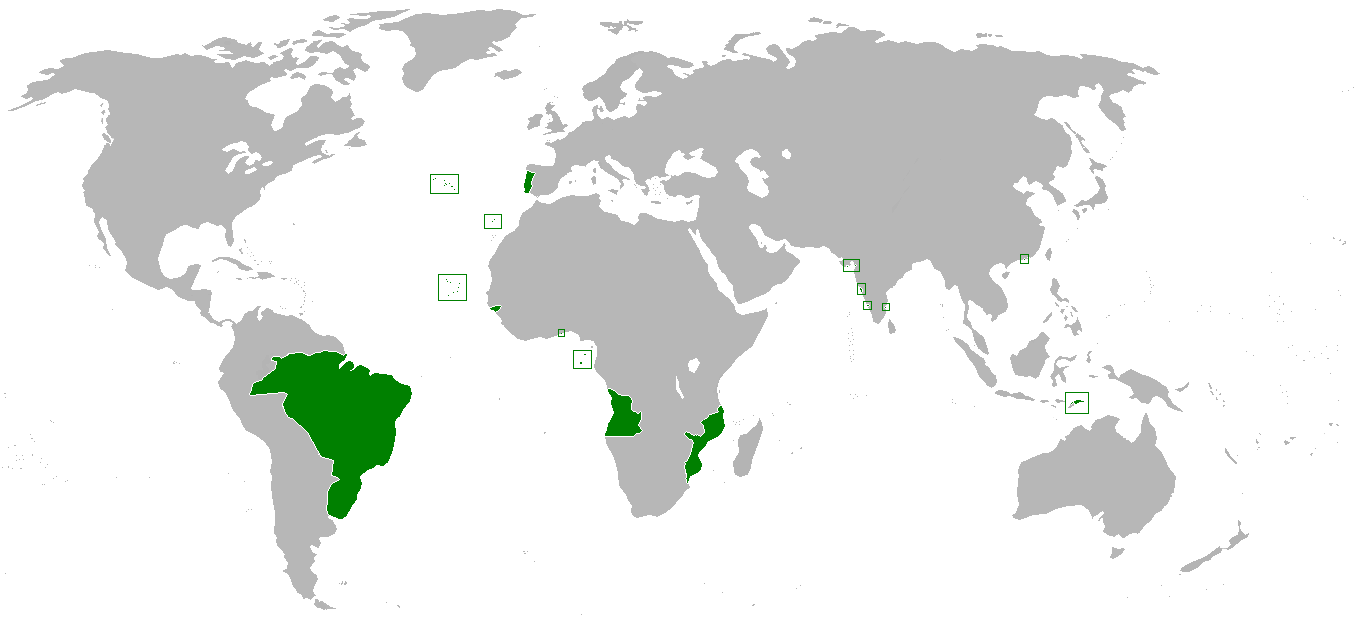
Historical Portuguese colonial unity concept
Pluricontinentalism () was a geopolitical concept framing Portugal as a transcontinental country and a unitary nation-state made up of both continental Portugal and its overseas provinces. Tracing its roots to as early as the 14th century, pluricontinentalism was later promoted under the Estado Novo regime as a last attempt to justify retaining its remaining colonies. It presented Portugal not as a colonial empire but as a single nation-state spanning multiple continents, giving rise to the term.
Overview
Through this concept, Portugal's overseas possessions were regarded as integral to its national identity. The first instance of Portugal being a pluricontinental country occurred during the reign of Maria I of Portugal, with the establishment of the United Kingdom of Portugal, Brazil and the Algarves, when the royal court resided in Brazil and Rio de Janeiro functioned as the national capital. The notion of pluricontinentalism collapsed after the Carnation Revolution in 1974, leading to the independence of the remaining colonies. The Portuguese Empire formally came to an end in 1999 with the Handover of Macau.
People associated with pluricontinentalism
- António Vieira
- Luís da Cunha
- Maria I of Portugal
- John VI of Portugal
- Pedro IV of Portugal
- António de Oliveira Salazar
References
References
- [http://www.priberam.pt/dlpo/default.aspx?pal=pluricontinental Dicionário Priberam da Língua Portuguesa: Pluricontinental]
- (1999). "Portugal's First Domino: 'Pluricontinentalism' and Colonial War in Guinea-Bissau, 1963-1974". Contemporary European History.
This article was imported from Wikipedia and is available under the Creative Commons Attribution-ShareAlike 4.0 License. Content has been adapted to SurfDoc format. Original contributors can be found on the article history page.
Ask Mako anything about Pluricontinentalism — get instant answers, deeper analysis, and related topics.
Research with MakoFree with your Surf account
Create a free account to save articles, ask Mako questions, and organize your research.
Sign up freeThis content may have been generated or modified by AI. CloudSurf Software LLC is not responsible for the accuracy, completeness, or reliability of AI-generated content. Always verify important information from primary sources.
Report