From Surf Wiki (app.surf) — the open knowledge base
Plug (sanitation)
Object used to close a drainage outlet
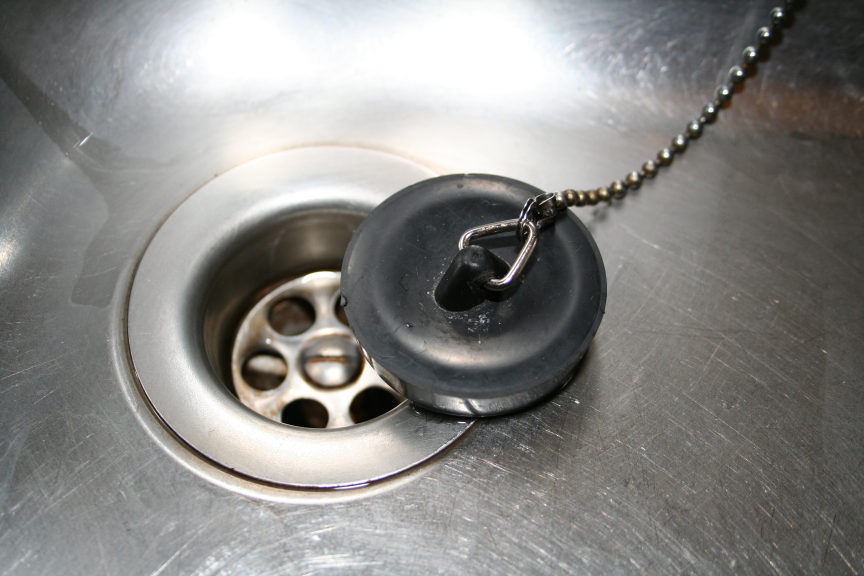
Object used to close a drainage outlet
A plug in sanitation is an object that is used to close a drainage outlet firmly.
The insertion of a plug into a drainage outlet allows the container to be filled with water or other fluids. In contrast to screw on caps, plugs are pushed into the hole and are not put over the hole.
Plugs are most commonly encountered in the bathroom or kitchen, for use in bathtubs, wash basins or sinks.
Traditional plugs
Typically plugs are made from a soft material, such as rubber, or have a soft outer rim, so that they can be fitted to holes slightly smaller than their diameter; this ensures a tight seal. They are often connected by a ball chain which ensures the plug may be pulled from the drain with relative ease.
Pop-up plugs

-
Valve plate with gasket
-
Inlet from basin overflow
-
Sealing rim
-
Screw for height adjustment
-
Ball joint
-
Actuator arm
-
Joint
-
Control arm ]] Some modern plugholes dispense with the need for a separate plug, having instead a built-in 'pop-up plug' operated by a handle on the sink, that can move up or down to open or close the plughole.
References
References
This article was imported from Wikipedia and is available under the Creative Commons Attribution-ShareAlike 4.0 License. Content has been adapted to SurfDoc format. Original contributors can be found on the article history page.
Ask Mako anything about Plug (sanitation) — get instant answers, deeper analysis, and related topics.
Research with MakoFree with your Surf account
Create a free account to save articles, ask Mako questions, and organize your research.
Sign up freeThis content may have been generated or modified by AI. CloudSurf Software LLC is not responsible for the accuracy, completeness, or reliability of AI-generated content. Always verify important information from primary sources.
Report