From Surf Wiki (app.surf) — the open knowledge base
Plain weave
Most basic type of textile weave

Most basic type of textile weave
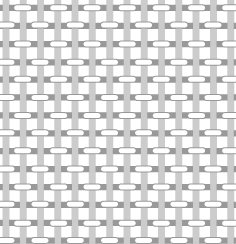
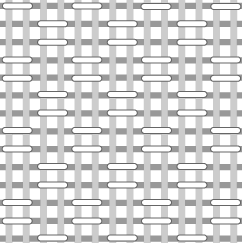

Plain weave (also called tabby weave, linen weave or taffeta weave) is the most basic of three fundamental types of textile weaves (along with satin weave and twill). It is strong and hard-wearing, and is used for fashion and furnishing fabrics. Fabrics with a plain weave are generally strong, durable, and have a smooth surface. They are used for a variety of applications, including clothing, home textiles, and industrial fabrics.
In plain weave cloth, the warp and weft threads cross at right angles, aligned so they form a simple criss-cross pattern. Each weft thread crosses the warp threads by going over one, then under the next, and so on. The next weft thread goes under the warp threads that its neighbor went over, and vice versa.
- Balanced plain weaves are fabrics in which the warp and weft are made of threads of the same weight (size) and the same number of ends per inch as picks per inch.
- Basketweave is a variation of plain weave in which two or more threads are bundled and then woven as one in the warp or weft, or both.
A balanced plain weave can be identified by its checkerboard-like appearance. It is also known as one-up-one-down weave or over and under pattern.
Examples of fabric with plain weave are chiffon, organza, percale and taffeta.
Etymology
According to the 12th-century geographer al-Idrīsī, in Andalusī-era Almería, imitations of Iraqī and Persian silks called «عَتَّابِيِّ» —‘attābī— were manufactured, which David Jacoby identifies as "a taffeta fabric made of silk and cotton (natural fibers) originally produced in Attabiya, a district of Baghdad." The word was adopted into Medieval Latin as attabi, then French as tabis and English as tabby, as in "tabby weave".
End uses
Its uses range from heavy and coarse canvas and blankets made of thick yarns to the lightest and finest cambries and muslins made in extremely fine yarns. Chiffon, organza, percale and taffeta are also plain weave fabrics.
References
Citations
Bibliography
- {{Cite book |editor-last=Kadolph |editor-first=Sara J. |url-access=registration
References
- Emery, Irene. (1966). "The Primary Structures of Fabrics". The Textile Museum.
- Jacoby, "Silk Economics and Cross-Cultural Artistic Interaction: Byzantium, the Muslim World, and the Christian West" ''Dumbarton Oaks Papers'' '''58''' (2004:197–240) p. 217, crediting al-Idrīsī.
- "'Tabby': The Cat's Out of the Bag". Merriam-Webster.
- "tabby (n.)". Online Etymology Dictionary.
- (1999). "World Textiles: A Visual Guide to Traditional Techniques". Thames & Hudson.
This article was imported from Wikipedia and is available under the Creative Commons Attribution-ShareAlike 4.0 License. Content has been adapted to SurfDoc format. Original contributors can be found on the article history page.
Ask Mako anything about Plain weave — get instant answers, deeper analysis, and related topics.
Research with MakoFree with your Surf account
Create a free account to save articles, ask Mako questions, and organize your research.
Sign up freeThis content may have been generated or modified by AI. CloudSurf Software LLC is not responsible for the accuracy, completeness, or reliability of AI-generated content. Always verify important information from primary sources.
Report