From Surf Wiki (app.surf) — the open knowledge base
Plaek Phibunsongkhram
Prime Minister of Thailand (1938–1944; 1948–1957)
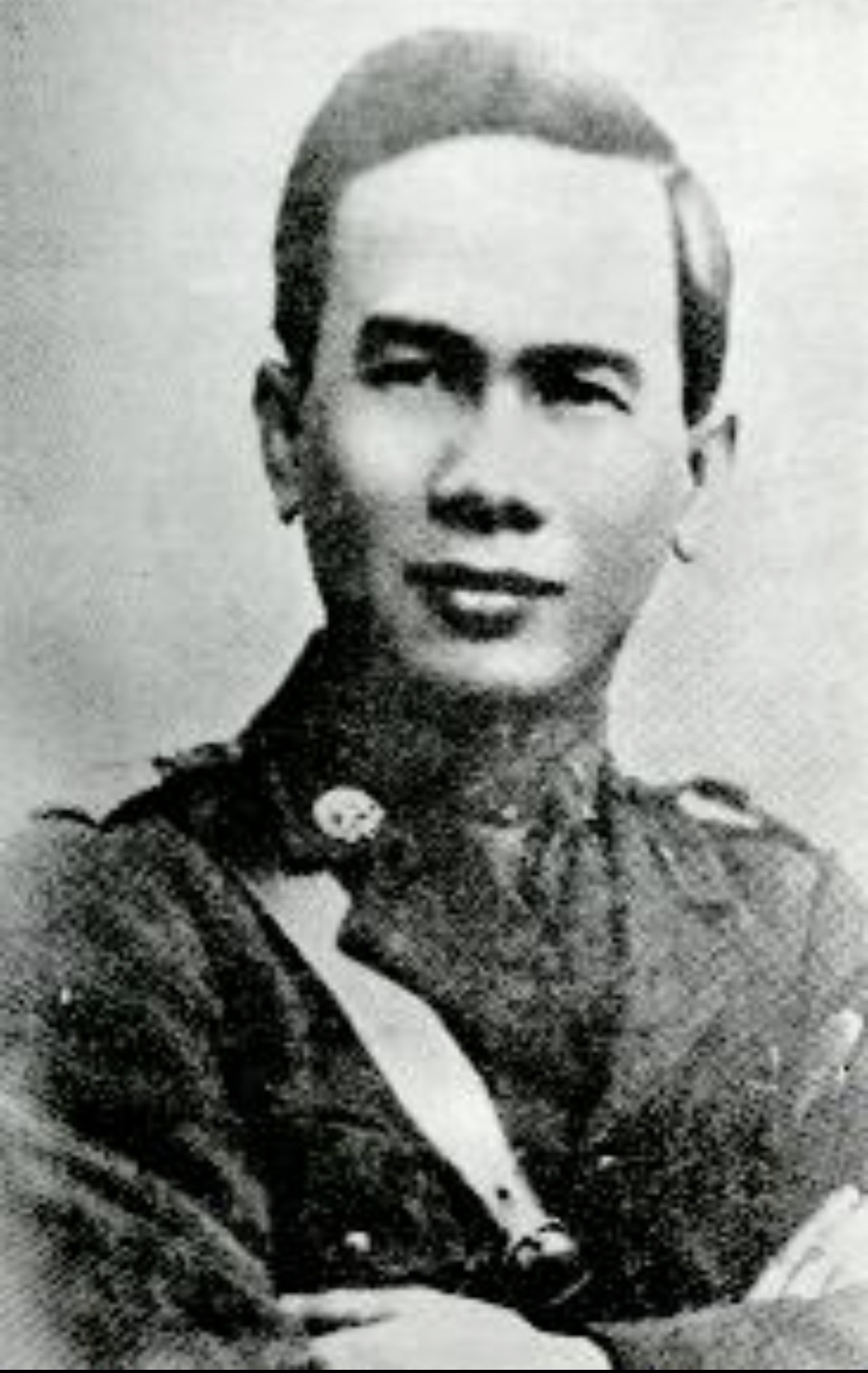
Prime Minister of Thailand (1938–1944; 1948–1957)
| Field | Value | ||
|---|---|---|---|
| name | Plaek Phibunsongkhram | ||
| native_name | แปลก พิบูลสงคราม | ||
| native_name_lang | th | ||
| image | Field Marshal Plaek Phibunsongkhram.jpg | ||
| caption | Plaek | ||
| signature | Plaek Phibunsongkhram signature (1956-05-08).svg | ||
| order | 3rd | ||
| office | Prime Minister of Thailand | ||
| term_start | 8 April 1948 | ||
| term_end | 16 September 1957 | ||
| monarch | Bhumibol Adulyadej | ||
| deputy | |||
| predecessor | Khuang Aphaiwong | ||
| successor | Sarit Thanarat (de facto) | ||
| Pote Sarasin | |||
| term_start1 | 16 December 1938 | ||
| term_end1 | 1 August 1944 | ||
| monarch1 | Ananda Mahidol | ||
| deputy1 | |||
| predecessor1 | Phahon Phonphayuhasena | ||
| successor1 | Khuang Aphaiwong | ||
| {{Collapsed infobox section begin | last | yes | Ministerial offices |
| 1934–1957 | |||
| titlestyle | border:1px dashed lightgrey;}}{{Infobox officeholder | embed=yes | |
| office2 | Minister of Defence | ||
| term_start2 | 12 September 1957 | ||
| term_end2 | 16 September 1957 | ||
| primeminister2 | Himself | ||
| predecessor2 | Sarit Thanarat | ||
| successor2 | Thanom Kittikachorn | ||
| term_start3 | 28 June 1949 | ||
| term_end3 | 21 March 1957 | ||
| primeminister3 | Himself | ||
| predecessor3 | Suk Chatnakrob | ||
| successor3 | Sarit Thanarat | ||
| term_start4 | 15 December 1941 | ||
| term_end4 | 15 November 1943 | ||
| primeminister4 | Himself | ||
| predecessor4 | Mangkorn Phromyothi | ||
| successor4 | Phichit Kriangsakphichit | ||
| term_start5 | 22 September 1934 | ||
| term_end5 | 19 August 1941 | ||
| primeminister5 | Himself | ||
| predecessor5 | Phraya Phahonphonphayuhasena | ||
| successor5 | Mangkorn Phromyothi | ||
| office6 | Minister of Cooperatives | ||
| term_start6 | 12 September 1957 | ||
| term_end6 | 16 September 1957 | ||
| primeminister6 | Himself | ||
| predecessor6 | Siri Siriyothin | ||
| successor6 | Wiboon Thammaboot | ||
| office7 | Minister of Interior | ||
| term_start7 | 2 August 1955 | ||
| term_end7 | 21 March 1957 | ||
| primeminister7 | Himself | ||
| predecessor7 | Pisan Sunavinvivat | ||
| successor7 | Phao Siyanon | ||
| term_start8 | 15 April 1948 | ||
| term_end8 | 25 June 1949 | ||
| primeminister8 | Himself | ||
| predecessor8 | Khuang Aphaiwong | ||
| successor8 | Mangkorn Phromyothi | ||
| term_start9 | 21 December 1938 | ||
| term_end9 | 22 August 1941 | ||
| primeminister9 | Himself | ||
| predecessor9 | Thawan Thamrongnawasawat | ||
| successor9 | Chuang Kwancherd | ||
| office10 | Minister of Commerce | ||
| term_start10 | 4 February 1954 | ||
| term_end10 | 23 March 1954 | ||
| primeminister10 | Himself | ||
| predecessor10 | Boonkerd Sutantanon | ||
| successor10 | Siri Siriyothin | ||
| office11 | Minister of Culture | ||
| term_start11 | 24 March 1952 | ||
| term_end11 | 2 August 1955 | ||
| primeminister11 | Himself | ||
| predecessor11 | Position established | ||
| successor11 | Pisan Sunavinvivat | ||
| office12 | Minister of Finance | ||
| term_start12 | 13 October 1949 | ||
| term_end12 | 18 July 1950 | ||
| primeminister12 | Himself | ||
| predecessor12 | Vivadhanajaya | ||
| successor12 | Chom Jamornmarn | ||
| office13 | Minister of Foreign Affairs | ||
| term_start13 | 28 June 1949 | ||
| term_end13 | 13 October 1949 | ||
| primeminister13 | Himself | ||
| predecessor13 | Mom Chao Pridithepphong Devakula | ||
| successor13 | Pote Sarasin | ||
| term_start14 | 15 December 1941 | ||
| term_end14 | 19 June 1942 | ||
| primeminister14 | Himself | ||
| predecessor14 | Direk Jayanama | ||
| successor14 | Luang Wichitwathakan | ||
| term_start15 | 14 July 1939 | ||
| term_end15 | 22 August 1941 | ||
| primeminister15 | Himself | ||
| predecessor15 | Jit Na Songkhla | ||
| successor15 | Direk Jayanama | ||
| office16 | Minister of Education | ||
| term_start16 | 16 February 1942 | ||
| term_end16 | 7 March 1942 | ||
| primeminister16 | Himself | ||
| predecessor16 | Sindhu Kamolnavin | ||
| successor16 | Prayoon Pamornmontri | ||
| office3 | Supreme Commander of the Armed Forces | ||
| term_start3 | 13 November 1940 | ||
| term_end3 | 24 November 1943 | ||
| predecessor3 | Position established | ||
| successor3 | Sarit Thanarat | ||
| office4 | Commander-in-Chief of the Royal Thai Army | ||
| term_start4 | 9 November 1947 | ||
| term_end4 | 15 May 1948 | ||
| predecessor4 | Adun Adundetcharat | ||
| successor4 | Phin Choonhavan | ||
| term_start5 | 4 January 1938 | ||
| term_end5 | 5 August 1944 | ||
| predecessor5 | Phraya Phahonphonphayuhasena | ||
| successor5 | Phichit Kriangsakphichit | ||
| party | Seri Manangkhasila (1955–1957) | ||
| otherparty | Khana Ratsadon (1927–1954) | ||
| birth_name | Plaek | ||
| birth_date | |||
| birth_place | Nonthaburi, Siam | ||
| death_date | |||
| death_place | Sagamihara, Japan | ||
| spouse | La-iad Bhandhukravi | ||
| partner | |||
| children | 6, including Nitya | ||
| relatives | Krissanapoom Pibulsonggram (great-grandson) | ||
| allegiance | |||
| branch | |||
| serviceyears | 1914–1957 | ||
| rank | |||
| commands | Supreme Commander | ||
| battles | |||
| honorific_prefix | Field Marshal | ||
| honorific_suffix | NR RV PCh MPCh MVM |
Pote Sarasin
- Siamese Revolution
- Boworadet Rebellion
- World War II
- Franco-Thai War
- Pacific War
- Palace Rebellion
Plaek Phibunsongkhram (14 July 1897 – 11 June 1964) was a Thai military officer and politician who served as the third prime minister of Thailand from 1938 to 1944 and again from 1948 to 1957. He rose to power as a leading member of the Khana Ratsadon, becoming prime minister in 1938 and later consolidating his influence as a military dictator. His regime allied with the Empire of Japan during World War II, and his administration was marked by authoritarian policies and the promotion of Thai nationalism. He was closely involved in both domestic reforms and foreign policy during the war and played a central role in shaping modern Thai state ideology.
Phibun was a member of the army wing of Khana Ratsadon, the first political party in Thailand, and a leader of the Siamese revolution of 1932, which replaced Thailand's absolute monarchy with a constitutional monarchy. Phibun became the third Prime Minister of Thailand in 1938 while serving as Commander of the Royal Siamese Army. Inspired by the Italian fascism of Benito Mussolini, he established a de facto military dictatorship run along fascist lines, promoted Thai nationalism and Sinophobia, and allied Thailand with Imperial Japan in World War II. Phibun launched a modernization campaign known as the Thai Cultural Revolution that included a series of cultural mandates, which changed the country's name from "Siam" to "Thailand", and promoted the Thai language.
Phibun was ousted as prime minister by the National Assembly in 1944 and replaced by members of the Free Thai Movement, but returned to power after the Siamese coup d'état of 1947, led by the Coup Group. Phibun aligned Thailand with anti-communism in the Cold War, entered the Korean War under the United Nations Command, and abandoned fascism for a façade of democracy. Phibun's second term as prime minister was plagued by political instability and several attempts to launch a coup d'etat against him were made, including the Army General Staff plot in 1948, the Palace Rebellion in 1949, and the Manhattan Rebellion in 1951. Phibun attempted to transform Thailand into an electoral democracy from the mid-1950s onward, but was overthrown in 1957 and went into exile in Japan, where he died in 1964.
At fifteen years and one month, Phibun's term as Prime Minister of Thailand was the longest to date.
Early years
Phibun was born Plaek on 14 July 1897 in Mueang Nonthaburi, Nonthaburi Province, in the Kingdom of Siam to durian farmers. His family began using the surname Khittasangkha () after a 1913 decree on surnames.
He received his given name – meaning "strange" or "weird" in English – because of his unusual appearance as a child where his ears were positioned below his eyes, rather than above his eyes like others.
Plaek's paternal grandfather was a Chinese immigrant from Guangdong of Cantonese descent. However, the family was completely assimilated, being considered Central Thai people, since most of the Chinese in Thailand are from the Teochew dialect group, Plaek did not pass the criteria for being considered Chinese as well, enabling him to successfully conceal and deny his Chinese roots.
He studied in Buddhist temples before joining the Royal Military Academy; upon graduation in 1914, he was commissioned into the Royal Siamese Army as a second lieutenant in the artillery. Following World War I, he was sent to France to study artillery tactics at the École d'application d'artillerie. In 1928, as he rose in rank, he received the noble title Luang from King Prajadhipok, and became known as Luang Phibunsongkhram. He would later drop his Luang title but permanently adopted Phibunsongkhram as his surname.
1932 revolution
Main article: 1932 Siamese coup d'état
In 1932, Phibun was one of the leaders of the Royal Siamese Army branch of the People's Party (Khana Ratsadon), a political organization that staged a coup d'état which overthrew Siam's absolute monarchy and replaced it with a constitutional monarchy. Phibun, at the time a lieutenant colonel, quickly rose to prominence in the military as a "man-on-horseback". The 1932 coup was followed by the nationalization of several companies and increased state control of the economy.
The following year, Phibun and his military allies successfully crushed the Boworadet Rebellion, a royalist revolt led by Prince Boworadet. The new king, Ananda Mahidol, was still a child studying in Switzerland, and the Parliament appointed Colonel Prince Anuwatjaturong, Lieutenant Commander Prince Aditya Dibabha, and Chao Phraya Yommaraj (Pun Sukhum) as his regents.
Prime Minister of Thailand

First premiership
On 16 December 1938, Phibun replaced Phraya Phahon as Prime Minister of Thailand and as the Commander of the Royal Siamese Army. Phibun became a de facto dictator, and established a military dictatorship, consolidating his position by rewarding several members of his own army clique with influential positions in his government.
After the revolution of 1932, the Thai government of Phraya Phahol was impressed by the success of the March on Rome of Benito Mussolini's Italian fascist movement. Phibun, also an admirer of Italian fascism, sought to replicate fascist-style propaganda tactics, valued in Italy as one of the most powerful propaganda instruments of political power. In Italy, its main purpose was to promote nationalism and militarism, strengthen the unity and harmony of the state, and glorify the policy of ruralisation in Italy and abroad. As a consequence of the fascist leanings of Thai political leaders, Italian propaganda films including newsreels, documentaries, short films, and full-length feature films, such as Istituto Luce Cinecittà, were shown in Thailand during the interwar period. Phibun adopted the fascist salute, modelled on the Roman salute, using it during speeches. The salute was not compulsory in Thailand, and it was opposed by Luang Wichitwathakan and many cabinet members as they believed it inappropriate for Thai culture. Together with Wichitwathakan, the Minister of Propaganda, he built a leadership cult in 1938 and thereafter. Photographs of Phibun were to be found everywhere, and those of the abdicated King Prajadhipok were banned. His quotes appeared in newspapers, were plastered on billboards, and were repeated over the radio.
Thai Cultural Revolution
Main article: Thai cultural mandates

Phibun immediately promoted Thai nationalism (to the point of ultranationalism), and to support this policy, he launched a series of major reforms, known as the Thai Cultural Revolution, to increase the pace of modernisation in Thailand. His goal aimed to uplift the national spirit and moral code of the nation and instil progressive tendencies and a newness into Thai life. A series of cultural mandates were issued by the government, which encouraged all Thais to salute the flag in public places, learn the new national anthem and use the standardised Thai language (not regional dialects or languages). People were encouraged to adopt Western-style attire as opposed to traditional clothing styles, and eat with Western-style utensils, such as forks and spoons, rather than with their hands as was customary in Thai culture at the time. Phibun saw these policies as necessary, in the interest of progressivism, to change Thailand's international image from that of an undeveloped country into a civilized and modern nation.
Phibun's administration encouraged economic nationalism and espoused staunch anti-Teochew sentiment. Sinophobic policies were imposed by the government to reduce the economic power of Siam's Teochew-Hoklo population and encouraged the Central Thai people to purchase as many Thai products as possible. In a speech in 1938, Luang Wichitwathakan, himself of one-quarter Chinese ancestry, followed Rama VI's book Jews of the East in comparing the Teochew in Siam to the Jews in Germany, who at the time were harshly repressed.
On 24 June 1939, Phibun changed the country's official English name from "Siam" to "Thailand" at Wichitwathakan's urging. The name "Siam" was an exonym of unknown and probably foreign origin, which conflicted with Phibun's nationalist policies.
In 1941, in the midst of World War II, Phibun decreed 1 January as the official start of the new year instead of the traditional Songkran date on 13 April.
Franco-Thai War
Main article: Franco-Thai War

Phibun exploited the Fall of France in June 1940 and the Japanese invasion of French Indochina in September 1940 to advance Thai interests in French Indochina following a border dispute with France. Phibun believed Thailand could recover territories ceded to France by King Rama V because the French would avoid armed confrontation or offer serious resistance. Thailand fought against Vichy France over the disputed areas from October 1940 to May 1941. The technologically and numerically superior Thai force invaded French Indochina and attacked military targets in major cities. Despite Thai successes, the French tactical victory at the Battle of Ko Chang prompted intervention from the Japanese, who mediated an armistice where the French were forced to cede the disputed territories to Thailand.
Alliance with Japan
Main article: Thailand in World War II

Phibun and the Thai public viewed the outcome of the Franco-Thai War as a victory, but it resulted in the rapidly expanding Japanese gaining the right to occupy French Indochina. Although Phibun was ardently pro-Japanese, he now shared a border with them and felt threatened by a potential Japanese invasion. Phibun's administration also realised that Thailand would have to fend for itself if a Japanese invasion came, considering its deteriorating relationships with Western powers in the area.
When the Japanese invaded Thailand on 8 December 1941, (because of the International Date Line this occurred an hour and a half before the attack on Pearl Harbor), Phibun was reluctantly forced to order a general ceasefire after just one day of resistance and allow the Japanese armies to use the country as a base for their invasions of the British colonies of Burma and Malaya. Hesitancy, however, gave way to enthusiasm after the Japanese rolled through the Malayan Campaign in a "Bicycle Blitzkrieg" with surprisingly little resistance. On 21 December Phibun signed a military alliance with Japan. The following month, on 25 January 1942, Phibun declared war on Britain and the United States. South Africa and New Zealand declared war on Thailand on the same day. Australia followed soon after. Phibun purged all who opposed the Japanese alliance from his government. Pridi Banomyong was appointed acting regent for the absent King Ananda Mahidol, while Direk Jayanama, the prominent foreign minister who had advocated continued resistance against the Japanese, was later sent to Tokyo as an ambassador. The United States considered Thailand to be a puppet state of Japan and refused to declare war on it. When the Allies were victorious, the United States blocked British efforts to impose a punitive peace.
Removal
In 1944, as the Japanese neared defeat and the underground anti-Japanese Free Thai Movement steadily grew in strength, the National Assembly ousted Phibun as prime minister and his six-year reign as the military commander-in-chief came to an end. Phibun's resignation was partly forced by two grandiose plans: one was to relocate the capital from Bangkok to a remote site in the jungle near Phetchabun in north central Thailand, and another was to build a "Buddhist city" in Saraburi. As early as 1939, his government had been looking to relocate the capital to Lopburi, and then to Saraburi before settling on Phetchabun. Announced at a time of severe economic difficulty, these ideas turned many government officers against him. After his resignation, Phibun went to stay at the army headquarters in Lopburi.
Khuang Aphaiwong replaced Phibun as prime minister, ostensibly to continue relations with the Japanese, but, in reality, to secretly assist the Free Thai Movement. At the war's end, Phibun was put on trial at Allied insistence on charges of having committed war crimes, mainly that of collaborating with the Axis powers. However, he was acquitted amid intense pressure as public opinion was still favourable to him, as he was thought to have done his best to protect Thai interests. Phibun's alliance with Japan had Thailand take advantage of Japanese support to expand Thai territory into Malaya and Burma.
Second premiership
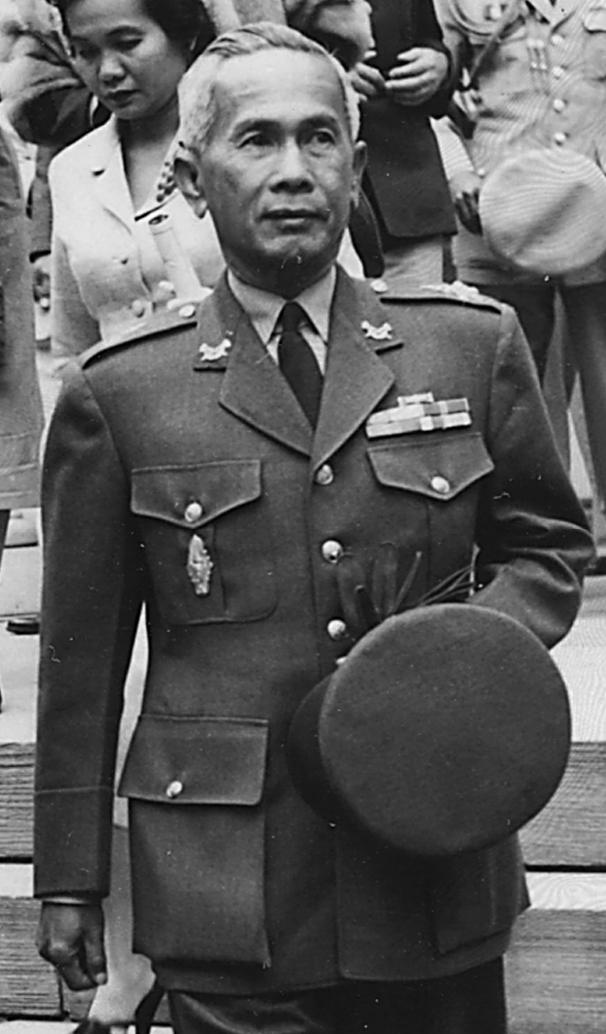

In November 1947, Royal Thai Army units under the control of Phibun known as the Coup Group carried out the 1947 Thai coup d'état which forced then-Prime Minister Thawan Thamrongnawasawat to resign. The rebels installed Khuang Aphaiwong again as prime minister as the military coup risked international disapproval. Pridi Phanomyong was persecuted but was aided by British and US intelligence officers, and thus managed to escape the country. On 8 April 1948, Phibun assumed the position of Prime Minister after the military forced Khuang out of office.
Phibun's second premiership was notably different, abandoning the fascist styling and rhetoric that characterised his first premiership, and instead promoted a façade of democracy. The beginning of the Cold War saw Phibun align Thailand with the anti-communist camp.
Phibun supported UN action in the Korean War and dispatched an expeditionary force of 4,000 troops. and received large quantities of US aid following Thailand's entry into the Korean War as part of the United Nations Command's multi-national allied force against the communist forces of North Korea and the People's Republic of China. Phibun's anti-Chinese campaign was resumed, with the government restricting Chinese immigration and undertaking various measures to restrict economic domination of the Thai market by those of Chinese descent. Chinese schools and associations were once again shut down. Despite open pro-Western and anti-Chinese policies, in the late 1950s Phibun arranged to send two of the children of Sang Phathanothai, his closest advisor, to China with the intention of establishing a backdoor channel for dialogue between China and Thailand. Sirin Phathanothai, aged eight, and her brother, aged twelve, were sent to be brought up under the assistants of Premier Zhou Enlai as his wards. Sirin later wrote The Dragon's Pearl, an autobiography telling her experiences growing up in the 1950s and 1960s among the leaders of China.
Phibun was reportedly thrilled by the democracy and freedom of speech he had witnessed during a long trip abroad to the United States and Europe in 1955. Following the example of Hyde Park in London, he set up a "Speakers' Corner" at the Sanam Luang in Bangkok. Phibun began to democratize Thailand by allowing the formation of new political parties, amnestied political opponents, and planned free elections. Phibun founded and became chairman of his own new political party, the Seri Manangkhasila Party, which was dominated by the most influential in the military and the government. The Employment Act of January 1957 legalized trade unions, limited weekly working hours, regulated holidays and overtime, and instituted health and safety regulations. The International Workers' Day became a public holiday.
Power play
Sarit Thanarat Phao Siyanon
Phibun's second premiership was longer but plagued with political instability, and there were numerous attempts to oppose his rule and remove him from power. Unlike his first premiership, Phibun faced noticeable opposition from people connected to the Free Thai Movement due to his alliance with the Japanese, including from within the military. Additionally, Phibun was indebted to the powerful Coup Group that had returned him to power.
On 1 October 1948, the unsuccessful Army General Staff Plot was launched by members of the army general staff to topple his government, but failed when discovered by the Coup Group. As a result, more than fifty army and reserve officers and several prominent supporters of Pridi Phanomyong were arrested.
On 26 February 1949, the Palace Rebellion was another failed coup attempt against Phibun to restore Pridi Phanomyong by occupying the Grand Palace in Bangkok and declaring a new government led by Direk Jayanama, a close associate of Pridi. The civilian rebels were quickly ousted from the palace, but fighting broke out between military rebels and loyalists which lasted for over a week.
On 29 June 1951, Phibun was attending a ceremony aboard the Manhattan, a US dredge boat, when he was taken hostage by a group of Royal Thai Navy officers, who then quickly confined him aboard the warship Sri Ayutthaya. Negotiations between the government and the coup organizers swiftly broke down, leading to violent street fighting in Bangkok between the navy and the army, which was supported by the Royal Thai Air Force. Phibun was able to escape and swim back to shore when the Sri Ayutthaya was bombed by the air force, and with their hostage gone, the navy were forced to lay down their arms.
Phibun to one of Pridi's sons in June 1957.
On 29 November 1951, the Silent Coup was staged by the Coup Group and it consolidated the military's hold on the country. It reinstated the Constitution of 1932, which effectively eliminated the Senate, established a unicameral legislature composed equally of elected and government-appointed members, and allowed serving military officers to supplement their commands with important ministerial portfolios.
In 1954 Phibun allied Thailand further with the West in the Cold War by helping establish SEATO.
In 1956, it became clearer that Phibun, allied to Phao, was losing to another influential group led by Sarit which consisted of "Sakdina" (royalties and royalists). Both Phibun and Phao intended to bring home Pridi Banomyong to clear his name from the mystery around the death of King Rama VIII. However, the US government disapproved, and they cancelled the plan.
1957 coup and exile

.jpg)
In February 1957, public opinion turned against Phibun at the end of his second term when his party was suspected of fraudulent practices during an election, including the intimidation of the opposition, buying votes, and electoral fraud. In addition, critics of Phibun accused him of a lack of respect for the Thai monarchy, as the anti-aristocratic prime minister had always sought to limit the role of the monarchy to a constitutional minimum and had taken on religious functions that traditionally belonged to the monarch. For example, Phibun led the celebrations of the 2500th anniversary of Buddhism in 1956–57 instead of the King Bhumibol Adulyadej, who was openly critical of Phibun. On 16 September 1957, Phibun was eventually overthrown in a coup d'etat by members of the Royal Thai Army under the command of Field Marshal Sarit Thanarat, who had earlier sworn to be Phibun's most loyal subordinate. Sarit was supported by many royalists who wanted to regain a foothold, and there were rumours that the United States was "deeply involved" in the coup.
Phibun was then forced into exile after the coup, first fleeing to Cambodia, but later settled in Japan after Sarit's new regime rejected his requests to allow him to return to Thailand. In 1960, Phibun briefly travelled to India to be a monk in the Buddhist temple in Bodhgaya.
Death
Phibun died on 11 June 1964 from heart failure in Tokyo, Japan.
After his death, Phibun's ashes were transferred to Thailand in an urn and decorated with military honours in Wat Phra Sri Mahathat (also called "The Temple of Democracy") he had founded in Bang Khen.
Honours
Noble titles
- 7 May 1928: Luang Phibunsongkhram (หลวงพิบูลสงคราม)
- 15 May 1942: Abolition of nobility
Military rank
- 1916 – Second lieutenant
- 1920 – Lieutenant
- 1927 – Captain
- 1930 – Major
- 1933 – Lieutenant colonel
- 1934 – Colonel
- 1939 – Major General, Rear Admiral, Air Vice Marshal
- 1941 – Field Marshal, Admiral of the Fleet, Marshal of the Royal Thai Air Force
- 1955 – Volunteer Defense Corps General
Thai decorations
Plaek Phibunsongkhram received the following royal decorations in the Honours System of Thailand:
- 1941 – [[File:Order of the Nine Gems (Thailand) ribbon.svg|70px]] Knight of The Ancient and Auspicious Order of the Nine Gems
- 1942 – [[File:Ratana Varabhorn Order of Merit ribbon.svg|70px]] The Ratana Varabhorn Order of Merit
- 1942 – [[File:Order of Chula Chom Klao - 1st Class (Thailand) ribbon.svg|70px]] Knight Grand Cross (First Class) of The Most Illustrious Order of Chula Chom Klao
- 1940 – [[File:Order of the White Elephant - Special Class (Thailand) ribbon.svg|70px]] Knight Grand Cordon (Special Class) of The Most Exalted Order of the White Elephant
- 1937 – [[File:Order of the Crown of Thailand - Special Class (Thailand) ribbon.svg|70px]] Knight Grand Cordon (Special Class) of The Most Noble Order of the Crown of Thailand
- 1944 – [[File:Bravery Medal (Thailand) ribbon.svg|70x70px]] Bravery Medal
- 1941 – [[File:Victory Medal - Indochina with flames (Thailand) ribbon.svg|70x70px]] Victory Medal – Franco-Thai War with flames
- 1943 – [[File:Victory Medal - World War II (Thailand) ribbon.svg|70x70px]] Victory Medal – Pacific War
- 1934 – [[File:Safeguarding the Constitution Medal (Thailand) ribbon.svg|70x70px]] Safeguarding the Constitution Medal
- 1934 – [[File:Ribbon bar of Dushdi Mala - Military, Service to the Nation (Thailand).svg|70x70px]] Dushdi Mala Medal Pin Service to the Nation (Military)
- 1943 – [[File:Dushdi Mala - Military (Thailand).svg|70x70px]] Dushdi Mala Medal Pin of Arts and Science (Military)
- 1943 – [[File:Medal for Service in the Interior - Asia (Thailand) ribbon.svg|70x70px]] Medal for Service Rendered in the Interior - Pacific War
- 1954 – [[File:Border Service Medal (Thailand) ribbon.svg|70x70px]] Border Service Medal
- 1930 – [[File:Chakra Mala Medal (Thailand) ribbon.svg|70x70px]] Chakra Mala Medal
- 1938 – [[File:King Rama VIII Royal Cypher Medal (Thailand) ribbon.svg|70x70px]] King Rama VIII Royal Cypher Medal, 1st
- 1953 – [[File:King Rama IX Royal Cypher Medal (Thailand) ribbon.svg|70x70px]] King Rama IX Royal Cypher Medal, 1st
- 1911 – [[File:King Rama VI Coronation Medal (Thailand) ribbon.png|70x70px]] King Rama VI Coronation Medal
- 1925 – [[File:King Rama VII Coronation Medal (Thailand) ribbon.svg|70x70px]] King Rama VII Coronation Medal
- 1932 – [[File:150 Years Commemoration of Bangkok Medal ribbon.svg|70x70px]] Commemorative Medal on the Occasion of the 150th Years of Rattanakosin Celebration
Foreign honours
- Nazi Germany:
- 1937 – [[File:Ribbon Bar of None.svg|70x70px]] Order of the German Red Cross
- 1939 – [[File:Ribbon of Order of the German Eagle.svg|70px]] 1st Class of the Order of the German Eagle
- Kingdom of Italy:
- 1937 – [[File:Cavaliere di gran Croce Regno SSML BAR.svg|70x70px]] Knight Grand Cross of the Order of Saints Maurice and Lazarus
- 1938 – [[File:Grande ufficiale OCI Kingdom BAR.svg|70x70px]] Grand Officer of the Order of the Crown of Italy
- Francoist Spain:
- 1955 – [[File:Spanish Grand Cross of Military Merit White Ribbon.png|70px]] Grand Cross with White Decoration of the Order of Military Merit
- 1954 – [[File:ESP Gran Cruz Merito Naval (Distintivo Blanco) pasador.svg|70x70px]] Grand Cross White Decoration of the Cross of Naval Merit
- Empire of Japan:
- 1942 – [[File:JPN Kyokujitsu-sho 1Class BAR.svg|70px|ribbon bar]] Grand Cordon of the Order of the Rising Sun
- Philippines:
- 1955 – [[File:PHL Order of Sikatuna - Grand Cross BAR.png|70px]] Grand Cross of the Order of Sikatuna
- UK:
- 1939 – [[File:UK Order St-Michael St-George ribbon.svg|70px]] Knight Grand Cross of the Order of St Michael and St George
- USA:
- 1955 – [[File:US Legion of Merit Chief Commander ribbon.png|70px]] Chief Commander of the Legion of Merit
- France:
- 1938 – [[File:Legion Honneur GC ribbon.svg|70x70px]] Grand-Croix of the Legion of Honour
- Belgium:
- 1955 – [[File:BEL - Order of Leopold - Grand Cordon bar.svg|70x70px]] Grand Cordon of the Order of Leopold
- Netherlands:
- 1955 – [[File:Order of the Netherlands Lion ribbon - Knight Grand Cross.svg|70x70px]] Knight Grand Cross of the Order of the Netherlands Lion
- Denmark:
- 1955 – [[File:DNK Order of Danebrog Grand Cross BAR.png|70x70px]] Grand Commander of the Order of the Dannebrog
- Italian Republic:
- 1955 – [[File:Cordone di gran Croce OMRI BAR.svg|70x70px]] Knight Grand Cross of the Order of Merit of the Italian Republic
- Kingdom of Laos:
- 1955 – [[File:LAO Order of the a Million Elephants and the White Parasol - Grand Cross BAR.svg|70x70px]] Grand Cross of the Order of the Million Elephants and the White Parasol
- Cambodia:
- 1955 – [[File:KHM Ordre Royal du Cambodge - Grand Croix BAR.svg|70x70px]] Knight Grand Cross of the Royal Order of Cambodia
- Kingdom of Greece:
- 1956 – [[File:GRE Order of George I - Grand Cross BAR.png|70x70px]] Grand Cross of the Order of George I
- Germany:
- 1955 – [[File:GER Bundesverdienstkreuz 7 Grosskreuz.svg|70x70px]] Grand Cross 1st Class of the Order of Merit of the Federal Republic of Germany
- Union of Burma:
- 1956 – [[File:Ordine della Verità - divisione militare (Birmania).png|70x70px]] Order of the Order of Sirisudharma
Academic rank
- 1939 Adjunct Professor of Thammasat University
Notes
References
Bibliography
References
- "Luang Phibunsongkhram {{!}} Thai Military Leader & Premier {{!}} Britannica".
- "เหตุที่ "นายกฯตลอดกาล" ชื่อ "แปลก" ความแปลกที่ได้มาแต่เกิด! ฉันจะต้องไปทำงานใหญ่!!".
- {{in lang. th[http://www.ndmi.or.th/files/vol03.pdf ผู้นำทางการเมืองไทยกับสงครามโลกครั้งที่ 2: จอมพล ป.พิบูลสงคราม และ ปรีดี พนมยงค์] {{webarchive. link. (27 June 2008)
- (1990). "The Tragedy of Wanit: A Japanese Account of Wartime Thai Politics". University of Singapore Press.
- Ansil Ramsay. (2001). "Global Multiculturalism: Comparative Perspectives on Ethnicity, Race, and Nation". Rowman & Littlefield.
- "man on horseback". The Free Dictionary.
- (September 1978). "Pibulsongkram's Thai Nation-Building Programme during the Japanese Military Presence, 1941–1945". Journal of Southeast Asian Studies.
- "Luang Phibunsongkhram".
- "การเปลี่ยนชื่อประเทศจาก "สยาม" เป็น "ไทย"".
- Churchill, Winston S.'' The Second World War'', Vol 3, "The Grand Alliance", p. 548, Cassell & Co. Ltd, 1950
- "Pattaya Mail – Pattaya's First English Language Newspaper".
- Ford, Daniel. (June 2008). "Colonel Tsuji of Malaya (part 2)".
- (2002). "The Swift Japanese Assault".
- "Columns".
- I.C.B Dear, ed, ''The Oxford companion to World War II'' (1995) p. 1107{{ISBN?
- Batson, Benjamin A.. (1974). "THE FALL OF THE PHIBUN GOVERNMENT, 1944". The Siam Society.
- Roeder, Eric. (Fall 1999). "The Origin and Significance of the Emerald Buddha". Southeast Asian Studies Student Association.
- Aldrich, Richard J. ''The Key to the South: Britain, the United States, and Thailand during the Approach of the Pacific War, 1929–1942.'' Oxford University Press, 1993. {{ISBN. 0-19-588612-7
- "สมศักดิ์ เจียมธีรสกุล: พูนศุข พนมยงค์ ให้สัมภาษณ์กรณีสวรรคต พฤษภาคม 2500".
- Darling, Frank C.. (1962). "American Policy in Thailand". The Western Political Quarterly.
- "ทำเนียบนายกรัฐมนตรี". thaigov.
- "จอมพล ป.พิบูลสงคราม : 123 ปี ชาตกาล กับผลงานและเสียงวิจารณ์นายกรัฐมนตรีที่อยู่ในตำแหน่งนานที่สุด".
- "Data".
- "Data".
- [http://www.rta.mi.th/command/command12.htm Biography of Field Marshal P.] {{webarchive. link. (26 August 2002 , Royal Thai Army website. Retrieved on 4 December 2008.)
- ''Royal Thai Government Gazette''. [https://ratchakitcha.soc.go.th/documents/1110497.pdf แจ้งความสำนักนายกรัฐมนตรี เรื่อง ให้ประดับเครื่องราชอิสสริยาภรณ์ต่างประเทศ] Vol. 56, p. 3594 on 11 March 1939
- ราชกิจจานุเบกษา, [https://web.archive.org/web/20211114132705/http://www.ratchakitcha.soc.go.th/DATA/PDF/2498/D/063/2085.PDF แจ้งความสำนักคณะรัฐมนตรี เรื่อง พระราชทานพระบรมราชานุญาตประดับเครื่องอิสริยาภรณ์ต่างประเทศ], เล่ม ๗๒ ตอนที่ ๖๓ ง หน้า ๒๐๘๕, ๙ สิงหาคม ๒๔๙๘
- "Data".
This article was imported from Wikipedia and is available under the Creative Commons Attribution-ShareAlike 4.0 License. Content has been adapted to SurfDoc format. Original contributors can be found on the article history page.
Ask Mako anything about Plaek Phibunsongkhram — get instant answers, deeper analysis, and related topics.
Research with MakoFree with your Surf account
Create a free account to save articles, ask Mako questions, and organize your research.
Sign up freeThis content may have been generated or modified by AI. CloudSurf Software LLC is not responsible for the accuracy, completeness, or reliability of AI-generated content. Always verify important information from primary sources.
Report