From Surf Wiki (app.surf) — the open knowledge base
Pin and hanger assembly
Assembly used to connect two plate girders of a bridge
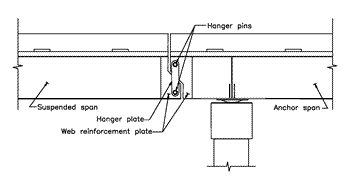
Assembly used to connect two plate girders of a bridge
Safety concerns
Pin and hanger assemblies are considered fracture critical bridge components, meaning that the assemblies are non-redundant and failure of these systems could cause part or all of the bridge to collapse. The collapse of the Mianus River Bridge in Connecticut exposed potential flaws with pin and hanger bridges that could lead to catastrophic failures, if left unchecked. Because of this, state departments of transportation incur costly expenses on bridges with pin and hanger assemblies, as they require constant inspection and maintenance. As a result of these safety concerns, and advances in bridge design to allow longer spans, pin and hanger assemblies are no longer used on new bridges in the United States.

Retrofitting
Attempts have been made to increase the safety of bridges with pin and hanger assemblies by adding some form of redundancy to the assembly. Retrofits that add redundancy to pin and hanger assemblies include adding a "catcher's mitt"a short steel beam attached to the bottom of the cantilevered girder that extends out beneath the suspended girder to "catch" the suspended girder should the pin and hanger assembly fail. Another redundancy is connecting the cantilevered and suspended girders at the pin and hanger assembly with welded blocks and tie rods. Replacement options include bolted splices (gusset plates) plus shear connectors; a link slab; a ship-lap joint; and a new pin and hanger assembly with improved materials.
References
References
- (January 2017). "Steel Pin and Hanger Assembly Replacement Options". A Research Report Sponsored by Mid-America Transportation Center University of Nebraska-Lincoln Nebraska Department of Roads.
This article was imported from Wikipedia and is available under the Creative Commons Attribution-ShareAlike 4.0 License. Content has been adapted to SurfDoc format. Original contributors can be found on the article history page.
Ask Mako anything about Pin and hanger assembly — get instant answers, deeper analysis, and related topics.
Research with MakoFree with your Surf account
Create a free account to save articles, ask Mako questions, and organize your research.
Sign up freeThis content may have been generated or modified by AI. CloudSurf Software LLC is not responsible for the accuracy, completeness, or reliability of AI-generated content. Always verify important information from primary sources.
Report