From Surf Wiki (app.surf) — the open knowledge base
Phragmites
Genus of grasses commonly known as reeds
Genus of grasses commonly known as reeds
the common reed
- Miphragtes Nieuwl.
- Oxyanthe Steud.
- Trichoon Roth
- Xenochloa Licht. ex Roem. & Schult.
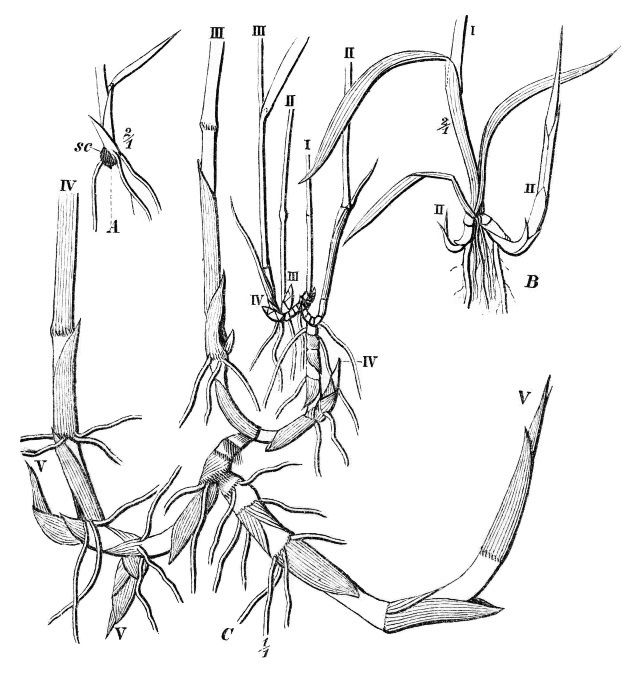
Phragmites () is a genus of four species of large perennial reed grasses found in wetlands throughout temperate and tropical regions of the world.
Taxonomy
The World Checklist of Selected Plant Families, maintained by Kew Garden in London, accepts the following four species:
- Phragmites australis (Cav.) Trin. ex Steud. – The cosmopolitan common reed
- Phragmites japonicus Steud. – Japan, Korea, Ryukyu Islands, Russian Far East
- Phragmites karka (Retz.) Trin. ex Steud. – tropical Africa, southern Asia, Australia, some Pacific Islands, invasive in New Zealand
- Phragmites mauritianus Kunth – central + southern Africa, Madagascar, Mauritius
Wildlife in reed beds
Phragmites stands can provide food and shelter resources for a number of birds, insects, and other animals. Habitat benefits are often optimal when stands are thinner, and management of stands may promote more suitable habitat benefits. Some evidence suggests that a short term management rotation of 1–2 years could maximize bird and invertebrate numbers.
Uses
Ecosystem services
P. australis provides ecosystem services such as nutrient sequestration, soil stabilization, and waste treatment. Others have argued that the ecosystem services lost as a result of invasion outweigh the benefits gained and managers need to be responsive to invasion control.
Cultivation
P. australis is cultivated as an ornamental plant in aquatic and marginal settings such as pond- and lakesides. Its aggressive colonisation means it must be sited with care.
Phytoremediation water treatment
Main article: Constructed wetland
Phragmites australis is one of the main wetland plant species used for phytoremediation water treatment.
Waste water from lavatories and greywater from kitchens is routed to an underground septic tank-like compartment where the solid waste is allowed to settle out. The water then trickles through a constructed wetland or artificial reed bed, where bioremediation bacterial action on the surface of roots and leaf litter removes some of the nutrients in biotransformation. The water is then suitable for irrigation, groundwater recharge, or release to natural watercourses.
Thatching
Main article: Thatching
Reed is used in many areas for thatching roofs. In the British Isles, common reed used for this purpose is known as Norfolk reed or water reed. However, "wheat reed" and "Devon reed", also used for thatching, are not in fact reed, but long-stemmed wheat straw.
Music


In Middle East countries Phragmites is used to create a small instrument similar to the clarinet called a sipsi, with either a single, as in the picture, or double pipes as in bagpipes. The reed of the zurna is made from the common reed which is flattened after removing its brittle outer glaze and the loose inner membrane, and after softening it by wetting. The result is a double reed with an elliptical opening that vibrates by closing and opening at a high speed. This is not to be confused with other double reeds like that of the oboe which uses two reeds made from the giant reed leaning against each other.
Food
The leaves, roots, seeds and stems of phragmites are edible. Young shoots can be cooked or eaten raw just like bamboo shoots. The young stems, "while still green and fleshy, can be dried and pounded into a fine powder, which when moistened is roasted like marshmallows." The seeds and rhizomes "can be ground into flour or made into gruel." In Japan, young leaves are dried, ground, and then mixed with cereal flour to make dumplings. Grazing on phragmites by large-bodied domestic herbivores, such as cows, horses, sheep, and goats, can effectively control the plant and provide a reciprocal positive benefit for humans by generating meat, milk, leather, and wool etc.
Other uses
Some other uses for Phragmites australis and other reeds in various cultures include baskets, mats, reed pen tips (qalam), and paper. Beekeepers can utilize the reeds to make nesting.
In the Philippines, Phragmites is known by the local name tambo. Reed stands flower in December, and the blooms are harvested and bundled into whisk brooms called "walis". Hence the common name of household brooms is walis tambo.
Reeds have been used to make arrows and weapons such as spears for hunting game.
Invasiveness and control
Some Phragmites, when introduced by accident or intent, spread rapidly. In tropics and subtropics, Phragmites karka is an abundant invasive species. In the United States, prior to 1910, only a few areas in the Northeast contained non-native haplotypes of Phragmites australis. However, by 1960 non-native haplotypes were found in samples taken from coast to coast. Today, in some places like Michigan, Phragmites australis (haplotype M) has become the dominant haplotype. The problem is invasive non-native Phragmites australis quickly spread through marshes and wetland areas. They replace native plants, deny fish and wildlife nutrients and space; block access to the water for swimming, fishing and other recreation endeavors; spoil shoreline views; and pose a fire hazard. Phragmites also alters wetland biogeochemistry and affects both floral and faunal species assemblages, including potentially reducing nitrogen and phosphorus availability for other plants.
Phragmites can drive out competing vegetation in two main ways. Their sheer height and density can deprive other plants of sunlight and the chemicals they produce when decaying reduce the germination of competing seeds. Among other effects, the monocultures that result from invasion decrease spatial and temporal habitat heterogeneity and increase avian homogeneity.

Recognizing the non-native form of Phragmites early in its invasion increases the opportunity for successful eradication dramatically. Once it has become established, removal by hand is nearly impossible. The two most common active ingredients in herbicides for Phragmites control are glyphosate and imazapyr. It is important to select the proper herbicide for the location. Further, even the proper herbicide can lead to unintended consequences since a large amount of decaying dead plant material can depress oxygen levels in the water and kill all the fish in a pond or small lake. Some success has also been obtained using goats to graze on Phragmites, controlled burns, and native wild rice crops. Biological controls have been suggested to be the most likely control method to succeed and biocontrols have been approved for introduction in North America Unfortunately, biocontrols may destroy the native subspecies population as well. When cutting under water, cutting and then flooding, or burning and then flooding, it is important that the entire Phragmites stand is completely submerged so that the plants cannot obtain oxygen.
Biocontrol using two species of moth larvae (Lenisa geminipuncta and Archanara neurica) is being investigated in Ontario.
Gallery
Image:Riet Phragmites australis planten.jpg|Reed growth in early summer Image:Phragmites_snow_ehm.jpg|Common reed in winter, Sudbury, Massachusetts, US Image:Phragmites in Amsterdam 2013.JPG|Phragmites in Amsterdam, Netherlands Image:Phragmites_at_Farmington_Bay,_Utah.jpg| Phragmites in Farmington, Utah Image:Phragmites australis - NASA Tracks an Environmental Invader (48049936657).jpg| Phragmites australis in the Great Lakes
References
References
- (1914). "The Upper Cretaceous and Eocene floras of South Carolina and Georgia". U.S. Geological Survey Professional Paper.
- "''Phragmites'' Adans.". Royal Botanic Gardens, Kew.
- Kiviat, E.. (2013). "Ecosystem services of ''Phragmites'' in North America with emphasis on habitat functions". AoB Plants.
- (2008-02-01). "The impact of reed management on wildlife: A meta-analytical review of European studies". Biological Conservation.
- (2016-09-01). "Biological control of invasive Phragmites australis will be detrimental to native P. australis". Biological Invasions.
- (2009). "A Framework for Ecosystem Services Valuation". Conservation Biology.
- "RHS Plant Selector - ''Phragmites australis''".
- "hitite musician (second millennia B.C.) playing double sipsi".
- "Norwegian food, recipes from Norway, Norwegian news and link directory fromnorway.net".
- "Tambo / Phragmites vulgaris / COMMON REED, Lu gen: Philippine Medicinal Herbs / Philippine Alternative Medicine".
- Peterson, Lee, "A Field Guide to Edible Wild Plants of Eastern and Central North America", page 228, Houghton Mifflin Company, New York City, accessed the sixth of September, 2010.{{ISBN. 0-395-20445-3
- (2014-09-23). "Livestock as a potential biological control agent for an invasive wetland plant". PeerJ.
- (27 June 2013). "Phragmites Australis - Plants can be made into Paper".
- masonbeesforsale.com. "Top Nesting Materials for Solitary Bees".
- Tagalog Lang. (11 October 2020). "Tambo".
- [[William C. Sturtevant]] (1978) ''Handbook of North American Indians: Great Basin'', p. 269, Government Printing Office. {{ISBN. 0160045819, 9780160045813.
- [[David Unaipon. Unaipon, D.]] (2001) ''Legendary Tales of the Australian Aborigines'', p. 138, The Miegunyah Press, Melbourne. {{ISBN. 0-522-85246-7.
- (2020-03-23). "De novo transcriptome assembly and analysis of Phragmites karka, an invasive halophyte, to study the mechanism of salinity stress tolerance". Scientific Reports.
- Saltonstall, Kristin. (2002-02-19). "Cryptic invasion by a non-native genotype of the common reed, Phragmites australis, into North America". Proceedings of the National Academy of Sciences.
- "Great Lakes Phragmites Collaborative. Linking people, information & action".
- Gross, Bob. "Groups battle invasive species at St. Johns Marsh".
- (22 November 2013). "Invasive ''Phragmites australis'': What is it and why is it a problem?".
- (2018). "Effects of ''Phragmites'' Management on the Ecology of a Wetland". Northeastern Naturalist.
- (2000). "Linking the Success of Phragmites to the Alteration of Ecosystem Nutrient Cycles". Springer Netherlands.
- (2014-01-02). "Phytotoxicity induced by ''Phragmites australis'': an assessment of phenotypic and physiological parameters involved in germination process and growth of receptor plant". Journal of Plant Interactions.
- (2022). "Invasive grass causes biotic homogenization in wetland birds in a Lake Erie coastal marsh". Hydrobiologia.
- "Management Techniques | Great Lakes Phragmites Collaborative".
- (2014). "''Phragmites australis'' management in the United States: 40 years of methods and outcomes". AoB Plants.
- "Phragmites Control: Easily Kill Phragmites in your Pond or Lake".
- Network, Crystal Gammon for Yale Environment 360, part of The Guardian Environment. (2014-10-22). "Are goats the answer to the reed choking US east coast marshes?".
- (2020-10-05). "Welcome Surprise: Wild Rice Seems to Deter Phragmites on Harsens Island".
- Blossey, B.. (2020). "When misconceptions impede best practices: evidence supports biological control of invasive ''Phragmites''". Biological Invasions.
- "Ontario scientists are using caterpillars to combat an invasive aquatic plant".
- "Phragmites in Great Salt Lake".
- "Search: Phragmites".
This article was imported from Wikipedia and is available under the Creative Commons Attribution-ShareAlike 4.0 License. Content has been adapted to SurfDoc format. Original contributors can be found on the article history page.
Ask Mako anything about Phragmites — get instant answers, deeper analysis, and related topics.
Research with MakoFree with your Surf account
Create a free account to save articles, ask Mako questions, and organize your research.
Sign up freeThis content may have been generated or modified by AI. CloudSurf Software LLC is not responsible for the accuracy, completeness, or reliability of AI-generated content. Always verify important information from primary sources.
Report