From Surf Wiki (app.surf) — the open knowledge base
Photochrom
Process of hand-coloring black-and-white photographs and subsequent printing
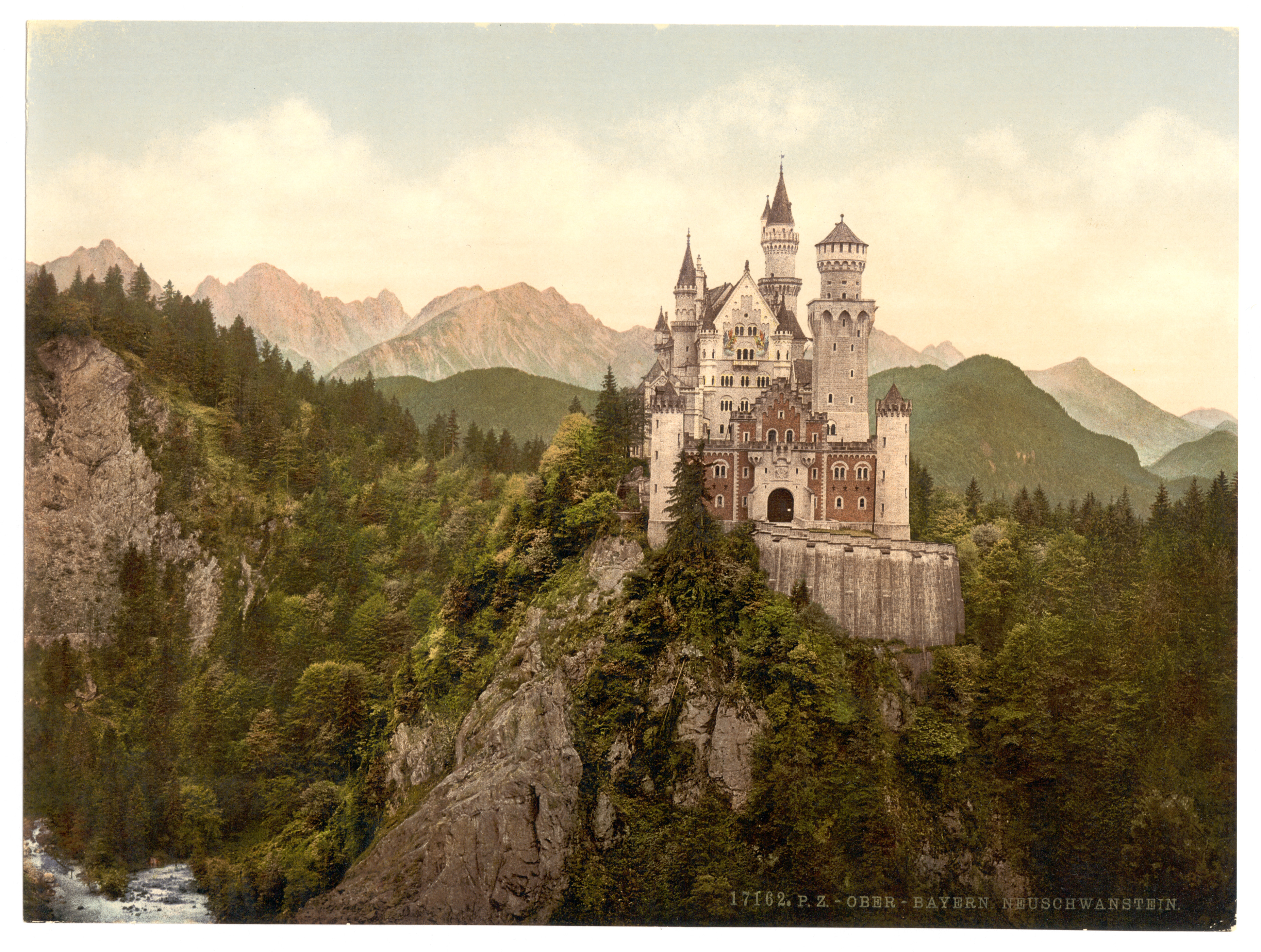
Process of hand-coloring black-and-white photographs and subsequent printing
hand-painted photographs
Photochrom, Fotochrom, Photochrome{{cite web | archive-url = https://web.archive.org/web/20080724054843/http://www.uvm.edu/landscape/dating/postcards/photochrome.php | archive-date = 2008-07-24
History
The process was invented in the 1880s by Hans Jakob Schmid (1856–1924), an employee of the Swiss company Orell Gessner Füssli—a printing firm whose history began in the 16th century. Füssli founded the stock company Photochrom Zürich (later Photoglob Zürich AG) as the business vehicle for the commercial exploitation of the process and both Füssli and Photoglob continue to exist today. From the mid-1890s the process was licensed by other companies, including the Detroit Photographic Company in the US (making it the basis of their "phostint" process), and the Photochrom Company of London.
Amongst the first commercial photographers to employ the technique were French photographer Félix Bonfils, British photographer Francis Frith and American photographer William Henry Jackson, all active in the 1880s. The photochrom process was most popular in the 1890s, when true color photography was first developed but was still commercially impractical.
In 1898, the US Congress passed the Private Mailing Card Act which let private publishers produce postcards. These could be mailed for one cent each, while the letter rate was two cents. Publishers created thousands of photochrom prints, usually of cities or landscapes, and sold them as postcards. In this format, photochrom reproductions became popular. The Detroit Photographic Company reportedly produced as many as seven million photochrom prints in some years, and ten to thirty thousand different views were offered.
After World War I, which ended the craze for collecting photochrom postcards, the chief use of the process was for posters and art reproductions. The last photochrom printer operated up to 1970.
Process
A tablet of lithographic limestone called a "litho stone" is coated with a light-sensitive surface composed of a thin layer of purified bitumen dissolved in benzene. A reversed halftone negative is hand colored according to the sketch and notes taken at the scene, then pressed against the coating and exposed to daylight through gel filters, causing the bitumen to harden in proportion to the amount of light passing through each portion of the negative. This will take ten to thirty minutes in summer and up to several hours in winter. A solvent such as turpentine is applied to remove the unhardened bitumen. The plate can be retouched to adjust the tonal scale, strengthening or softening tones as required. The image becomes imprinted on the stone in bitumen. Each tint is applied using a separate stone that bears the appropriate retouched image. The finished prints are produced using at least six, but more commonly ten to fifteen, tint stones.
Gallery
File:3g04637u unprocessed.jpg|A photochrom of Mulberry Street in New York City , which shows the evocative coloration characteristic of the process File:01001u unprocessed.jpg|A photochrom of Hildesheim town hall in Germany, , using fewer color plates File:Detroit_Publishing_Company_-_Shakespeare's_Memorial_Theatre,_Stratford-on-Avon,_England.jpg|Photochrom of the old Shakespeare Memorial Theatre, Stratford-on-Avon, England, File:Agra, Taj Mahal LCCN95505064.jpg|Photochrom of the Taj Mahal at Agra, India, File:09875u unprocessed.jpg|A photochrom print of Shelbourne Hotel, File:05666u unprocessed.jpg|A photochrom of Belgian milk peddlers with a dogcart, File:09892u unprocessed.jpg|A photochrom of an elderly Irish woman using a spinning wheel, County Galway, Ireland, File:07617u unprocessed.jpg|Entrance to Fingal's Cave near low tide, 1900 File:09091u unprocessed.jpg|HMY Osborne photochrom print, File:Ruins_of_the_Castle_of_Arques,_near_Dieppe,_France,_ca._1895.jpg|Ruins of the Castle of Arques, near Dieppe, France, File:BergenHordalandNorwayVagen.jpg|Bergen, Norway, . Visible are Bergen Cathedral in the bottom left side, Holy Cross Church in the middle, the bay (Vågen) and the Bergenhus Fortress to the right of the opening of Vågen. File:Detroit Photographic Company (0837).jpg|A photochrom print of Arlington House, The Robert E. Lee Memorial, in Arlington National Cemetery, Virginia, U.S., (Detroit Photographic Company)
Explanatory notes
References
References
- "Orell Füssli Company History (in German)". Ofv.ch.
- "History / Erfolgsgeschichte".
- "MetropoPostcard Guide to Printing Techniques 5". metropostcard.com.
- ''Farbige Reise,'' Paris bibliothèques, 2009, p. 41
- Marc Walter & Sabine Arque, “The World in 1900”, Thames & Hudson, 2007 contains about 300 well-reproduced photochromes from around the world.
- Hannavy, John. (2008). "Encyclopedia of Nineteenth-century Photography". CRC Press.
- "An introduction to photochromes".
This article was imported from Wikipedia and is available under the Creative Commons Attribution-ShareAlike 4.0 License. Content has been adapted to SurfDoc format. Original contributors can be found on the article history page.
Ask Mako anything about Photochrom — get instant answers, deeper analysis, and related topics.
Research with MakoFree with your Surf account
Create a free account to save articles, ask Mako questions, and organize your research.
Sign up freeThis content may have been generated or modified by AI. CloudSurf Software LLC is not responsible for the accuracy, completeness, or reliability of AI-generated content. Always verify important information from primary sources.
Report