From Surf Wiki (app.surf) — the open knowledge base
Phospholipase C
Class of enzymes

Class of enzymes
Phospholipase C (PLC) is a class of membrane-associated enzymes that cleave phospholipids just before the phosphate group (see figure). It is most commonly taken to be synonymous with the human forms of this enzyme, which play an important role in eukaryotic cell physiology, in particular signal transduction pathways. Phospholipase C's role in signal transduction is its cleavage of phosphatidylinositol 4,5-bisphosphate (PIP2) into diacyl glycerol (DAG) and inositol 1,4,5-trisphosphate (IP3), which serve as second messengers. Activators of each PLC vary, but typically include heterotrimeric G protein subunits, protein tyrosine kinases, small G proteins, Ca2+, and phospholipids.
There are thirteen kinds of mammalian phospholipase C that are classified into six isotypes (β, γ, δ, ε, ζ, η) according to structure. Each PLC has unique and overlapping controls over expression and subcellular distribution. However, PLC is not limited to mammals, and is present in bacteria and Chromadorea as well.
Variants
Mammalian variants
The extensive number of functions exerted by the PLC reaction requires that it be strictly regulated and able to respond to multiple extra- and intracellular inputs with appropriate kinetics. This need has guided the evolution of six isotypes of PLC in animals, each with a distinct mode of regulation. The pre-mRNA of PLC can also be subject to differential splicing such that a mammal may have up to 30 PLC enzymes.
- beta: PLCB1, PLCB2, PLCB3, PLCB4
- gamma: PLCG1, PLCG2
- delta: PLCD1, PLCD3, PLCD4
- epsilon: PLCE1
- eta: PLCH1, PLCH2
- zeta: PLCZ1
- phospholipase C-like: PLCL1, PLCL2
Bacterial variants
Most of the bacterial variants of phospholipase C are characterized into one of four groups of structurally related proteins. The toxic phospholipases C are capable of interacting with eukaryotic cell membranes and hydrolyzing phosphatidylcholine and sphingomyelin, leading to cell lysis.
- Zinc-metallophospholipases C: Clostridium perfringens alpha-toxin, Bacillus cereus PLC (BC-PLC)
- Sphingomyelinases: B. cereus, Staphylococcus aureus
- Phosphatidylinositol-hydrolyzing enzymes: B. cereus, B. thuringiensis, L. monocytogenes (PLC-A)
- Pseudomonad phospholipases C: Pseudomonas aeruginosa (PLC-H and PLC-N)
Chromadorea
The class of Chromadorea also uses the enzyme phospholipase C to regulate the releases of calcium. The enzyme releases inositol 1,4,5-trisphosphate (IP3) that denotes a signaling pathway involved in activating ovulation, the propelling of the oocyte into the spermatheca. This gene is involved in various activities like controlling GTPase, breaking down certain molecules, and binding to small GTPase. It helps in fighting bacteria and regulating protein movement in cells. It's found in the excretory system, intestines, nerves, and reproductive organs. The expression of the enzyme in the spermatheca is controlled by the transcription factors FOS-1 and JUN-1.
Enzyme structure
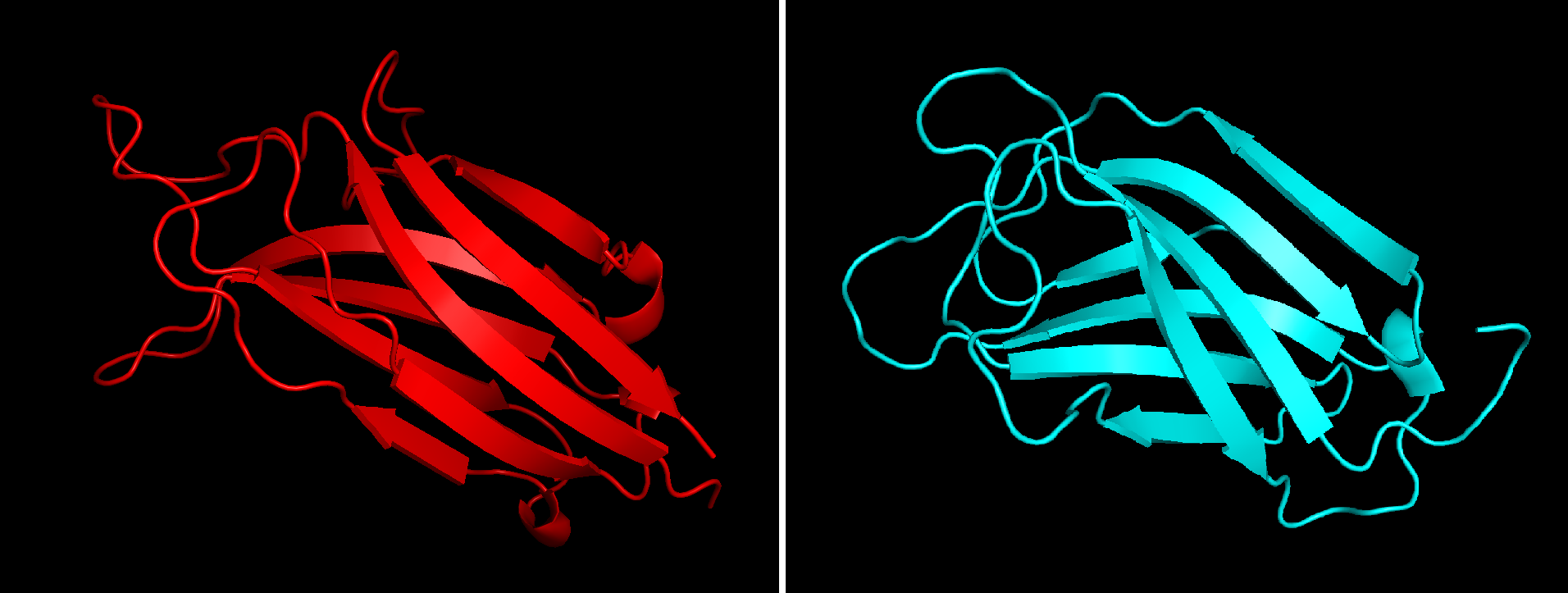
In mammals, PLCs share a conserved core structure and differ in other domains specific to each family. The core enzyme includes a split triosephosphate isomerase (TIM) barrel, pleckstrin homology (PH) domain, four tandem EF hand domains, and a C2 domain. The TIM barrel contains the active site, all catalytic residues, and a Ca2+ binding site. It has an autoinhibitory insert that interrupts its activity called an X-Y linker. The X-Y linker has been shown to occlude the active site, and with its removal, PLC is activated.
The genes encoding alpha-toxin (Clostridium perfringens), Bacillus cereus PLC (BC-PLC), and PLCs from Clostridium bifermentans and Listeria monocytogenes have been isolated and nucleotides sequenced. The sequences have significant homology, approximately 250 residues, from the N-terminus. Alpha-toxin has an additional 120 residues in the C-terminus. The C-terminus of the alpha-toxin has been reported as a "C2-like" domain, referencing the C2 domain found in eukaryotes that are involved in signal transduction and present in mammalian phosphoinositide phospholipase C.
Enzyme mechanism
The primary catalyzed reaction of PLC occurs on an insoluble substrate at a lipid-water interface. The residues in the active site are conserved in all PLC isotypes. In animals, PLC selectively catalyzes the hydrolysis of the phospholipid phosphatidylinositol 4,5-bisphosphate (PIP2) on the glycerol side of the phosphodiester bond. There is the formation of a weakly enzyme-bound intermediate, inositol 1,2-cyclic phosphodiester, and release of diacylglycerol (DAG). The intermediate is then hydrolyzed to inositol 1,4,5-trisphosphate (IP3). Thus the two end products are DAG and IP3. The acid/base catalysis requires two conserved histidine residues and a Ca2+ ion is needed for PIP2 hydrolysis. It has been observed that the active-site Ca2+ coordinates with four acidic residues and if any of the residues are mutated then a greater Ca2+ concentration is needed for catalysis.
Signaling Pathway
Phosphoinositide-specific phospholipase C (PLC) is a key player in cell signaling processes. When cells encounter signals like hormones or growth factors, PLC breaks down a molecule called PIP2 to produce new signaling molecules. PIP2 is a type of molecule found in cell membranes. When cells receive certain signals from outside, an enzyme called PLC breaks down PIP2 into smaller molecules, which then send messages within the cell. Various types of PLC are activated differently, contributing to cells' ability to respond to their surroundings.
Regulation
Activation
Receptors that activate this pathway are mainly G protein-coupled receptors coupled to the Gαq subunit, including:
- 5-HT2 serotonergic receptors
- α1 (Alpha-1) adrenergic receptors
- Calcitonin receptors
- H1 histamine receptors
- Metabotropic glutamate receptors, Group I
- M1, M3, and M5 muscarinic receptors
- Thyroid-Releasing Hormone receptor in anterior pituitary gland
Other, minor, activators than Gαq are:
- MAP kinase. Activators of this pathway include PDGF and FGF.
- βγ-complex of heterotrimeric G-proteins, as in a minor pathway of growth hormone release by growth hormone-releasing hormone.
- Cannabinoid receptors
Inhibition
- Small molecule U73122: aminosteroid, putative PLC inhibitor. However, the specificity of U73122 has been questioned. It has been reported that U73122 activates the phospholipase activity of purified PLCs.
- Edelfosine: lipid-like, anti-neoplastic agent (ET-18-OCH3)
- Autoinhibition of the X-Y linker in mammalian cells: It is proposed that the X-Y linker consists of long stretches of acidic amino acids that form dense areas of negative charge. These areas could be repelled by the negatively charged membrane upon binding of the PLC to membrane lipids. The combination of repulsion and steric constraints is thought to remove the X-Y linker from near the active site and relieve auto-inhibition.
- Compounds containing the morpholinobenzoic acid scaffold belong to a class of drug-like phosphatidylcholine-specific PLC inhibitors.
- o-phenanthroline: heterocyclic organic compound, known to inhibit zinc-metalloenzymes
- EDTA: molecule that chelates Zn2+ ions and effectively inactivates PLC, known to inhibit zinc-metalloenzymes{{Cite web
Biological function
PLC cleaves the phospholipid phosphatidylinositol 4,5-bisphosphate (PIP2) into diacyl glycerol (DAG) and inositol 1,4,5-trisphosphate (IP3). Thus PLC has a profound impact on the depletion of PIP2, which acts as a membrane anchor or allosteric regulator and an agonist for many lipid-gated ion channels. PIP2 also acts as the substrate for synthesis of the rarer lipid phosphatidylinositol 3,4,5-trisphosphate (PIP3), which is responsible for signaling in multiple reactions. Therefore, PIP2 depletion by the PLC reaction is critical to the regulation of local PIP3 concentrations both in the plasma membrane and the nuclear membrane.
The two products of the PLC catalyzed reaction, DAG and IP3, are important second messengers that control diverse cellular processes and are substrates for synthesis of other important signaling molecules. When PIP2 is cleaved, DAG remains bound to the membrane, and IP3 is released as a soluble structure into the cytosol. IP3 then diffuses through the cytosol to bind to IP3 receptors, particularly calcium channels in the smooth endoplasmic reticulum (ER). This causes the cytosolic concentration of calcium to increase, causing a cascade of intracellular changes and activity.
Both DAG and IP3 are substrates for the synthesis of regulatory molecules. DAG is the substrate for the synthesis of phosphatidic acid, a regulatory molecule. IP3 is the rate-limiting substrate for the synthesis of inositol polyphosphates, which stimulate multiple protein kinases, transcription, and mRNA processing. Regulation of PLC activity is thus vital to the coordination and regulation of other enzymes of pathways that are central to the control of cellular physiology.
Additionally, phospholipase C plays an important role in the inflammation pathway. The binding of agonists such as thrombin, epinephrine, or collagen, to platelet surface receptors can trigger the activation of phospholipase C to catalyze the release of arachidonic acid from two major membrane phospholipids, phosphatidylinositol and phosphatidylcholine. Arachidonic acid can then go on into the cyclooxygenase pathway (producing prostoglandins (PGE1, PGE2, PGF2), prostacyclins (PGI2), or thromboxanes (TXA2)), and the lipoxygenase pathway (producing leukotrienes (LTB4, LTC4, LTD4, LTE4)).
The bacterial variant Clostridium perfringens type A produces alpha-toxin. The toxin has phospholipase C activity, and causes hemolysis, lethality, and dermonecrosis. At high concentrations, alpha-toxin induces massive degradation of phosphatidylcholine and sphingomyelin, producing diacylglycerol and ceramide, respectively. These molecules then participate in signal transduction pathways. It has been reported that the toxin activates the arachidonic acid cascade in isolated rat aorta. The toxin-induced contraction was related to generation of thromboxane A2 from arachidonic acid. Thus it is likely the bacterial PLC mimics the actions of endogenous PLC in eukaryotic cell membranes.
References
--
References
- (2013). "Mammalian phospholipase C". Annual Review of Physiology.
- (2008). "Multiple roles of phosphoinositide-specific phospholipase C isozymes.". BMB Reports.
- (1993). "Bacterial phospholipases C.". Microbiological Reviews.
- (January 2013). "Calcium signaling surrounding fertilization in the nematode Caenorhabditis elegans". Cell Calcium.
- (August 2008). "General and versatile autoinhibition of PLC isozymes". Molecular Cell.
- (November 2004). "Clostridium perfringens alpha-toxin: characterization and mode of action". Journal of Biochemistry.
- (February 1997). "Structural mapping of the catalytic mechanism for a mammalian phosphoinositide-specific phospholipase C". Biochemistry.
- (1998). "Catalytic Domain of Phosphoinositide-specific Phospholipase C (PLC): mutation analysis of residues within the active site of hydrophobic ridge of PLCD1". The Journal of Biological Chemistry.
- "Phospholipase C Pathway".
- Walter F. Boron. (2003). "Medical Physiology: A Cellular And Molecular Approach". Elsevier/Saunders.
- link. (2020-03-27 Retrieved on May 31, 2009)
- (November 1990). "Selective inhibition of receptor-coupled phospholipase C-dependent processes in human platelets and polymorphonuclear neutrophils". The Journal of Pharmacology and Experimental Therapeutics.
- (July 2010). "The phospholipase C inhibitor U-73122 inhibits Ca(2+) release from the intracellular sarcoplasmic reticulum Ca(2+) store by inhibiting Ca(2+) pumps in smooth muscle". British Journal of Pharmacology.
- (February 2013). "Small molecule inhibitors of phospholipase C from a novel high-throughput screen". The Journal of Biological Chemistry.
- (April 2011). "Direct activation of human phospholipase C by its well known inhibitor u73122". The Journal of Biological Chemistry.
- (September 2005). "Phospholipase C in living cells: activation, inhibition, Ca2+ requirement, and regulation of M current". The Journal of General Physiology.
- (2021-09-01). "Development of 2-Morpholino-N-hydroxybenzamides as anti-proliferative PC-PLC inhibitors". Bioorganic Chemistry.
- (1 February 2020). "Discovery of novel phosphatidylcholine-specific phospholipase C drug-like inhibitors as potential anticancer agents". European Journal of Medicinal Chemistry.
- (2020). "Development, Synthesis and Biological Investigation of a Novel Class of Potent PC-PLC Inhibitors". European Journal of Medicinal Chemistry.
- (June 1975). "The metal ion dependence of phospholipase C from Bacillus cereus". Biochimica et Biophysica Acta (BBA) - Enzymology.
- (October 2007). "Local PIP(2) signals: when, where, and how?". Pflügers Archiv.
- (1 May 2015). "Lipid agonism: The PIP2 paradigm of ligand-gated ion channels". Biochimica et Biophysica Acta (BBA) - Molecular and Cell Biology of Lipids.
- (September 2010). "Phosphoinositides: lipid regulators of membrane proteins". The Journal of Physiology.
- (2002). "Molecular biology of the cell". Garland Science.
- (February 2000). "Roles of PLC-beta2 and -beta3 and PI3Kgamma in chemoattractant-mediated signal transduction". Science.
- (2012). "Phosphoinositides I: Enzymes of Synthesis and Degradation".
- Piomelli, Daniele. (1993-04-01). "Arachidonic acid in cell signaling". Current Opinion in Cell Biology.
- (May 1989). "Contraction of the rat isolated aorta caused by Clostridium perfringens alpha toxin (phospholipase C): evidence for the involvement of arachidonic acid metabolism". British Journal of Pharmacology.
This article was imported from Wikipedia and is available under the Creative Commons Attribution-ShareAlike 4.0 License. Content has been adapted to SurfDoc format. Original contributors can be found on the article history page.
Ask Mako anything about Phospholipase C — get instant answers, deeper analysis, and related topics.
Research with MakoFree with your Surf account
Create a free account to save articles, ask Mako questions, and organize your research.
Sign up freeThis content may have been generated or modified by AI. CloudSurf Software LLC is not responsible for the accuracy, completeness, or reliability of AI-generated content. Always verify important information from primary sources.
Report