From Surf Wiki (app.surf) — the open knowledge base
Philip Barton Key II
American lawyer (1818–1859)
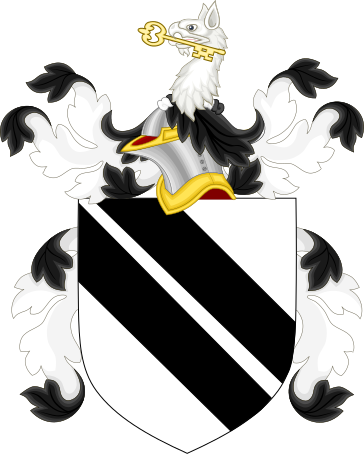
American lawyer (1818–1859)
| Field | Value |
|---|---|
| name | Philip Barton Key II |
| occupation | Lawyer |
| image | HarpersMagazinePhilipBartonKey.jpg |
| caption | Harper's Weekly engraving of Philip Barton Key from a photograph by Mathew Brady |
| order | 8th |
| office | United States Attorney for the District of Columbia |
| president | |
| term_start | September 6, 1853 |
| term_end | February 27, 1859 |
| predecessor | Philip Richard Fendall II |
| successor | Robert Ould |
| birth_date | |
| birth_place | Georgetown, Washington, D.C., U.S. |
| spouse | Ellen Swan |
| death_date | |
| death_place | Washington, D.C., U.S. |
| resting_place | Oak Hill Cemetery |
| Washington, D.C., U.S. | |
| parents | |
| children | 4 |
Washington, D.C., U.S. Philip Barton Key II (April 5, 1818 – February 27, 1859) was an American lawyer who served as U.S. Attorney for the District of Columbia. He is most famous for his public affair with Teresa Bagioli Sickles, and his eventual murder at the hands of her husband, Congressman Daniel Sickles of New York. Sickles defended himself by adopting a defense of temporary insanity, the first time the defense had been successfully used in the United States.
Biography
Born in Georgetown, D.C., Key was the son of Francis Scott Key and the great-nephew of Philip Barton Key. He was also a nephew of Chief Justice Roger B. Taney. He married Ellen Swan, the daughter of a Baltimore attorney, on November 18, 1845. Allegedly the most handsome man in Washington and by 1859 a widower with four children, Key was known to be flirtatious with many women.
Key was appointed to his father's former position, United States Attorney for the District of Columbia, by President Pierce in September 1853, during a recess of the Senate; the Senate later confirmed his nomination in March 1854. Four years later, he was nominated, and confirmed again, for another four-year term; thus, he would serve until his death.
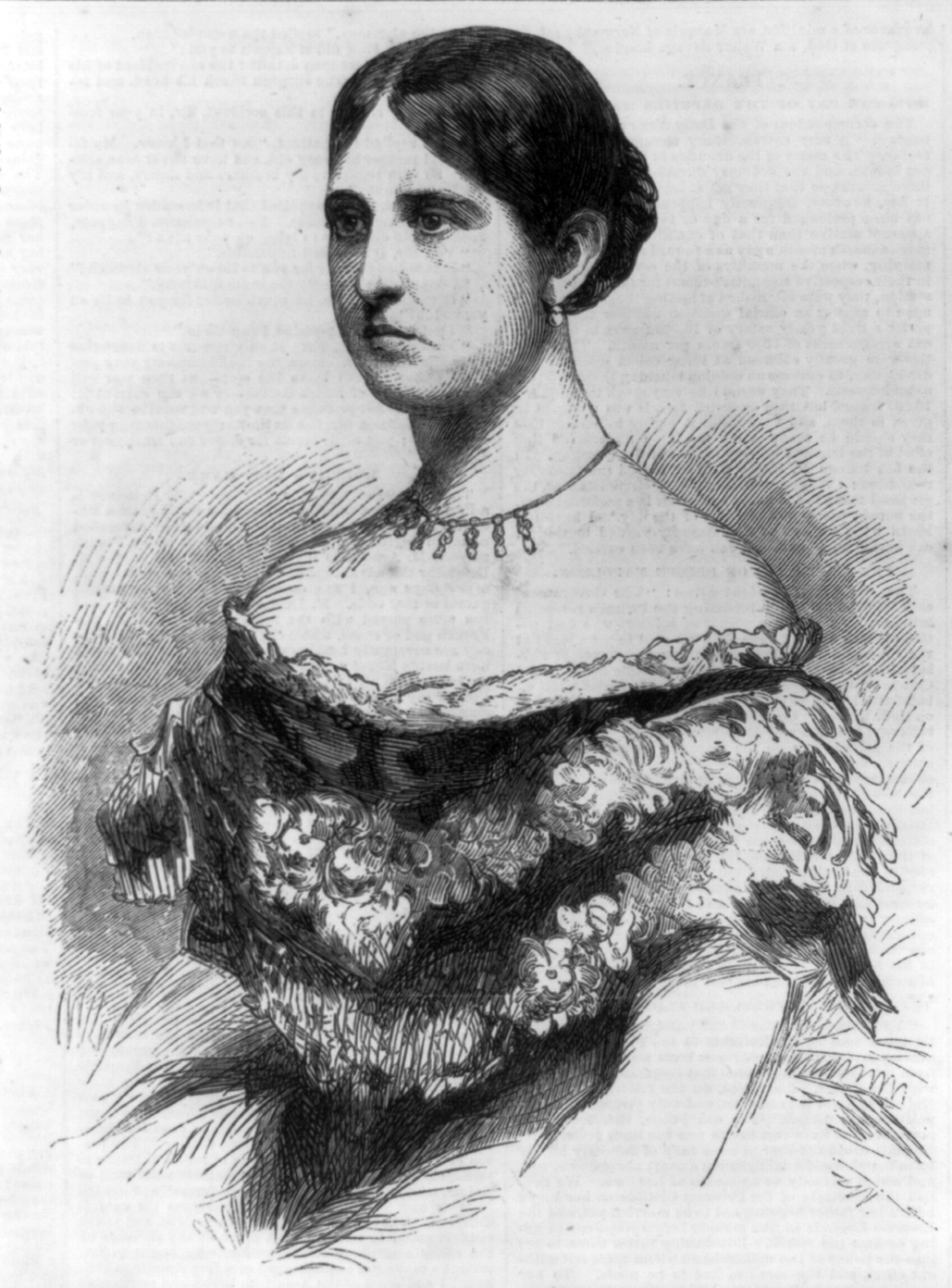
Sometime in the spring of 1858, Teresa Sickles began an affair with Key. Dan Sickles, though a serial adulterer himself, had accused his much-younger wife of adultery several times during their five-year marriage, and she had repeatedly denied it to his satisfaction. But then Sickles received a poison pen letter informing him of his wife's affair with Key. He confronted his wife, who confessed to the affair. Sickles then made his wife write out her confession on paper.
Death
Main article: Trial of Daniel Sickles
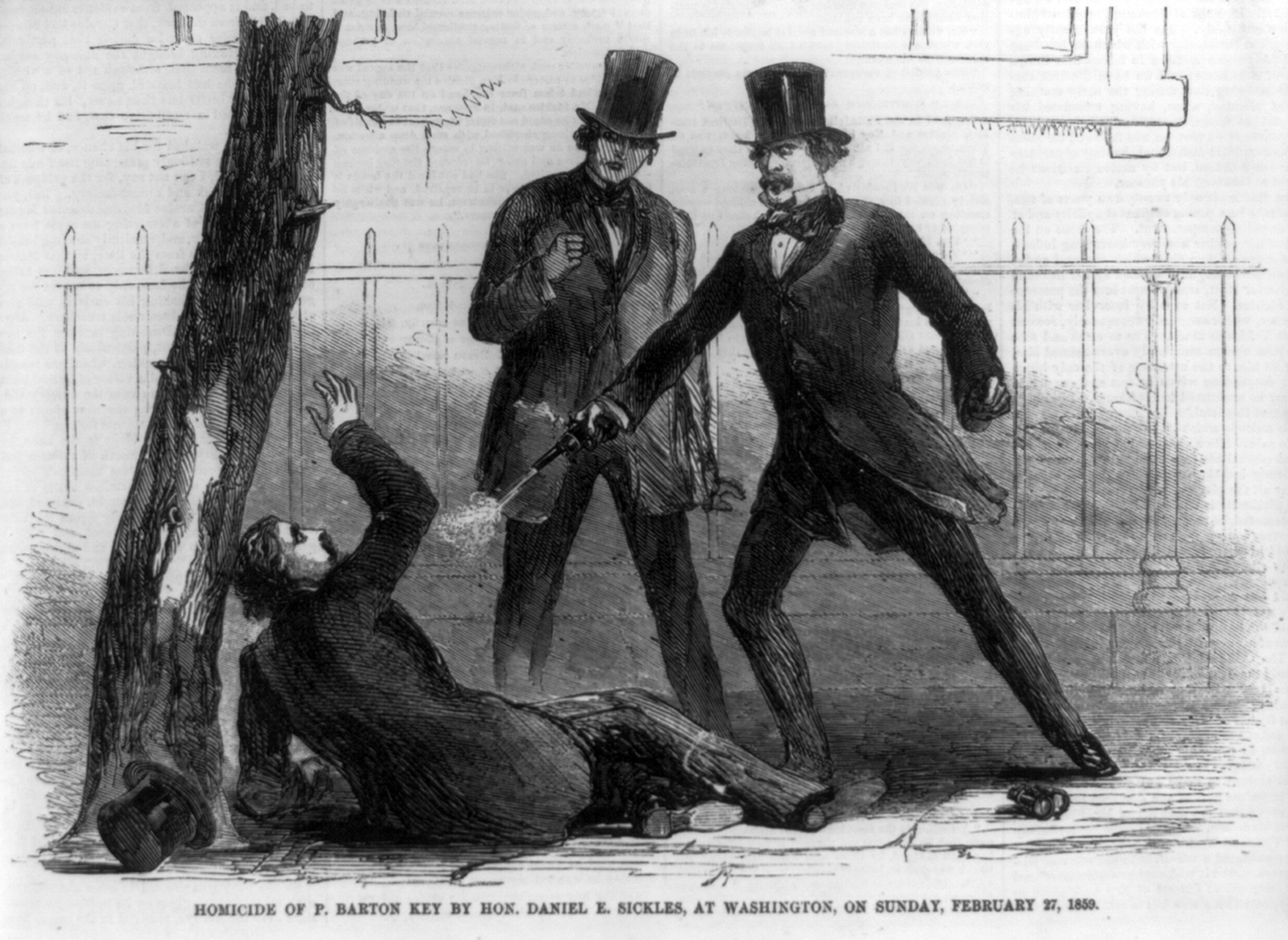
Sickles saw Key sitting on a bench outside the Sickles home on February 27, 1859, signalling to Teresa, and confronted him. Sickles rushed outside into Lafayette Square, cried "Key, you scoundrel, you have dishonored my home; you must die", and with a pistol repeatedly shot the unarmed Key, who was pleading for his life. After being shot, an unconscious Key was taken into the nearby Benjamin Ogle Tayloe House, where he died some time later.
Sickles was acquitted based on temporary insanity, a crime of passion, in one of the most controversial trials of the 19th century. It was the first successful use of the defense in the United States. One of Sickles' attorneys, Edwin Stanton, later became the Secretary of War. Newspapers declared Sickles a hero for "saving" women from Key. Years later, while attending the theater in New York City, Sickles became aware of the presence of Key's son, James Key, in the audience; both men watched each other throughout the performance. Nothing else happened.
Key is buried in Oak Hill Cemetery, with a dedicatory in his son-in-law's family plot in Westminster Hall and Burying Ground in Baltimore.
Notes
References
References
- Richardson, Hester Dorsey. ''Side-Lights on Maryland History: With Sketches of Early Maryland Families.'' Baltimore, Md.: Williams and Wilkins company, 1913.
- [[Gary W. Gallagher. Gallagher, Gary W.]] ''Three Days at Gettysburg: Essays on Confederate and Union Leadership.'' Kent, Ohio: Kent State University Press, 1999. {{ISBN. 0-87338-629-9
- Spiegel, Allen D. ''Murder and Madness: Military Matters and Managed Medicine: Memorable Milestones and Moments.'' Charleston, S.C.: Heritage Books, 2007. {{ISBN. 0-7884-4079-9; Wylie, Paul R. ''The Irish General: Thomas Francis Meagher.'' Stillwater, Okla.: University of Oklahoma Press, 2007. {{ISBN. 0-8061-3847-5
- Walther, Eric H. ''The Shattering of the Union: America in the 1850s.'' New York: Rowman & Littlefield, 2004. {{ISBN. 0-8420-2799-8
- Flower, Frank Abial. ''Edwin McMasters Stanton: The Autocrat of Rebellion, Emancipation, and Reconstruction.'' New York: W.W. Wilson, 1905.
- Taylor, John M. ''William Henry Seward: Lincoln's Right Hand.'' New York: Brassey's, 1996. {{ISBN. 1-57488-119-1
- Goode, James M. ''Capital Losses: A Cultural History of Washington's Destroyed Buildings.'' Washington, D.C.: Smithsonian Institution Press, 1981. {{ISBN. 0-87474-479-2
- (September 16, 1853). "From Washington". The Times-Picayune.
- (February 2, 1854). "Senate Executive Journal --THURSDAY, February 2, 1854.".
- (March 14, 1854). "Senate Executive Journal --TUESDAY, March 14, 1854.".
- (March 24, 1858). "Senate Executive Journal --WEDNESDAY, March 24, 1858.".
- (March 30, 1858). "Senate Executive Journal --TUESDAY, March 30, 1858.".
- from [http://www.assumption.edu/dept/history/Hi113net/sickles/default1.html assumption.edu] {{webarchive. link. (2006-09-14 "The stories told how Sickles had received an anonymous letter on Thursday, February 24th, informing him of his wife's relationship with Key.")
- The anonymous letter was reproduced in Harper's: [http://www.assumption.edu/acad/ii/Academic/history/Hi113net/sickles/anonletter.html Letter image] {{Webarchive. link. (2006-05-20)
- Hartog, Hendrik. ''Man and Wife in America: A History.'' Reprint ed. Cambridge, Mass.: Harvard University Press, 2002. {{ISBN. 0-674-00811-1
- Tagg, Larry. ''The Generals of Gettysburg.'' Campbell, Calif.: Savas Publishing, 1998. {{ISBN. 1-882810-30-9. p. 62.
- Flower, ''Edwin McMasters Stanton: The Autocrat of Rebellion, Emancipation, and Reconstruction,'' 1905, p. 73.
- Smith, Hal H. "Historic Washington Homes." ''Records of the Columbia Historical Society, Washington.'' 1908.
- Twain, Mark. (2010). "The Autobiography of Mark Twain, Volume One". University of California Press.
- "Crime History", ''The Washington Examiner'', Feb. 27, 2012, p. 8.
- Brandt, Nat. ''The Congressman Who Got Away With Murder.'' Syracuse, N.Y.: University of Syracuse Press, 1991. {{ISBN. 0-8156-0251-0. p. 213.
- [https://books.google.com/books?id=K3ZsDwAAQBAJ&dq=philip+barton+key+westminster&pg=PT10 ''Murder of the U.S. Attorney'']
This article was imported from Wikipedia and is available under the Creative Commons Attribution-ShareAlike 4.0 License. Content has been adapted to SurfDoc format. Original contributors can be found on the article history page.
Ask Mako anything about Philip Barton Key II — get instant answers, deeper analysis, and related topics.
Research with MakoFree with your Surf account
Create a free account to save articles, ask Mako questions, and organize your research.
Sign up freeThis content may have been generated or modified by AI. CloudSurf Software LLC is not responsible for the accuracy, completeness, or reliability of AI-generated content. Always verify important information from primary sources.
Report