From Surf Wiki (app.surf) — the open knowledge base
Petroleum jelly
Chemical substance used as a lubricating agent and topical ointment
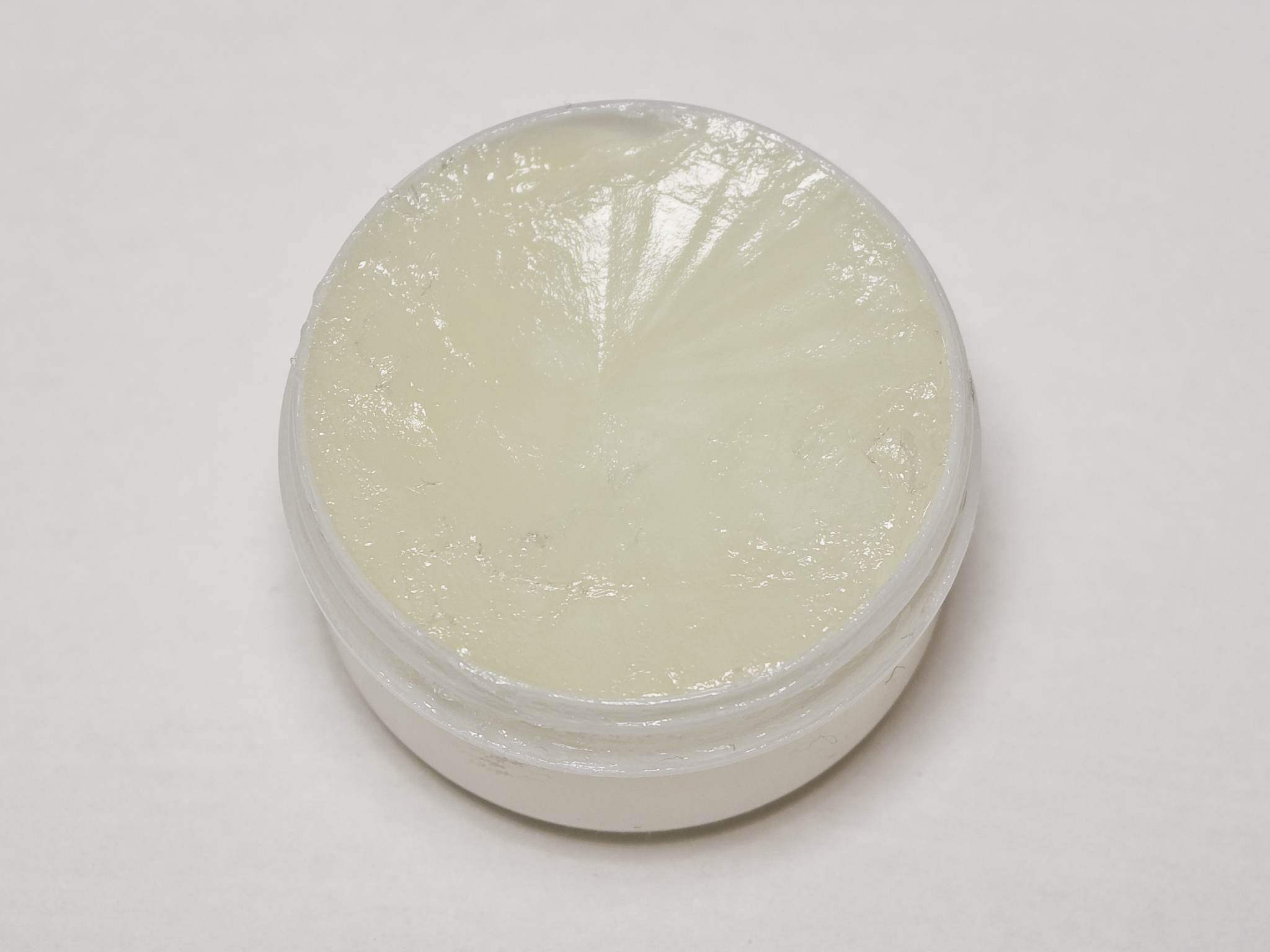
Chemical substance used as a lubricating agent and topical ointment
Petroleum jelly, petrolatum (), white petrolatum, soft paraffin, or multi-hydrocarbon, CAS number 8009-03-8, is a semi-solid mixture of hydrocarbons (with carbon numbers mainly higher than 25), originally promoted as a topical ointment for its healing properties. Vaseline has been the leading brand of petroleum jelly since 1870.
After petroleum jelly became a medicine-chest staple, consumers began to use it for cosmetic purposes and for many ailments including toenail fungus, genital rashes (non-STI), nosebleeds, diaper rash, and common colds. Its folkloric medicinal value as a "cure-all" has since been limited by a better scientific understanding of appropriate and inappropriate uses. It is recognized by the U.S. Food and Drug Administration (FDA) as an approved over-the-counter (OTC) skin protectant and remains widely used in cosmetic skin care, where it is often loosely referred to as mineral oil.
History
Marco Polo in 1273 described the exportation of Baku oil by hundreds of camels and ships for burning and as an ointment for treating mange.
Native Americans discovered the use of petroleum jelly for protecting and healing the skin. Sophisticated oil pits had been built as early as 1415–1450 in Western Pennsylvania. In 1859, workers operating the United States' first oil rigs noticed a paraffin-like material forming on rigs in the course of investigating malfunctions. Believing the substance hastened healing, the workers used the jelly on cuts and burns.
Robert Chesebrough, a young chemist whose previous work of distilling fuel from the oil of sperm whales had been rendered obsolete by petroleum, went to Titusville, Pennsylvania, to see what new materials had commercial potential. Chesebrough took the unrefined green-to-gold-colored "rod wax", as the drillers called it, back to his laboratory to refine it and explore potential uses. He discovered that by distilling the lighter, thinner oil products from the rod wax, he could create a light-colored gel. Chesebrough patented the process of making petroleum jelly by in 1872. The process involved vacuum distillation of the crude material followed by filtration of the still residue through bone char. Chesebrough traveled around New York demonstrating the product to encourage sales by burning his skin with acid or an open flame, then spreading the ointment on his injuries and showing his past injuries healed, he said, by his miracle product. He opened his first factory in 1870 in Brooklyn using the name Vaseline.
Physical properties
Petroleum jelly is a mixture of hydrocarbons, with a melting point that depends on the exact proportions. The melting point is typically between 40 and. It is flammable only when heated to liquid; then the fumes will light, not the liquid itself, so a wick material is needed to ignite petroleum jelly. It is colorless (or of a pale yellow color when not highly distilled), translucent, and devoid of taste and smell when pure. It does not oxidize on exposure to the air and is not readily acted on by chemical reagents. It is insoluble in water. It is soluble in dichloromethane, chloroform, benzene, diethyl ether, carbon disulfide and turpentine. Petroleum jelly is slightly soluble in alcohol. It acts as a plasticizer on polypropylene (PP), but is compatible with a wide range of materials and chemicals.{{Cite web | access-date = 2024-11-29}} It is a semi-solid, in that it holds its shape indefinitely like a solid, but it can be forced to take the shape of its container without breaking apart, like a liquid, though it does not flow on its own. Its microstructure is made up of partially crystalline stacks of lamellar sheets which immobilize the liquid portion. In general, only 7–13% of it is made up of high molecular weight paraffins, 30–45% of smaller paraffins, and 48–60% of small paraffins.
Depending on the specific application of petroleum jelly, it may be USP, B.P., or Ph. Eur. grade. This pertains to the processing and handling of the petroleum jelly so it is suitable for medicinal and personal-care applications.
Uses
Petroleum jelly has lubricating and coating properties, including use on dry lips and dry skin. Below are some examples of the uses of petroleum jelly.
Medical treatment
Vaseline brand First Aid Petroleum Jelly, or carbolated petroleum jelly containing phenol to give the jelly additional antibacterial effect, has been discontinued.{{Cite web | access-date = 2024-11-29}}
During World War II, a variety of petroleum jelly called red veterinary petrolatum, or Red Vet Pet for short, was often included in life raft survival kits. Acting as a sunscreen, it provides protection against ultraviolet rays.
The American Academy of Dermatology recommends keeping skin injuries moist with petroleum jelly to reduce scarring. A verified medicinal use is to protect and prevent moisture loss of the skin of a patient in the initial post-operative period following laser skin resurfacing.
Petroleum jelly is used extensively by otorhinolaryngologists—ear, nose, and throat doctors—for nasal moisture and epistaxis treatment, and to combat nasal crusting. Large studies have found petroleum jelly applied to the nose for short durations to have no significant side effects.{{Cite journal | doi-access = free
Historically, it was also consumed for internal use and even promoted as "Vaseline confection".
Skin and hair care
Most petroleum jelly today is used as an ingredient in skin lotions and cosmetics, providing various types of skin care and protection by minimizing friction or reducing moisture loss, or by functioning as a grooming aid (e.g., pomade). It is also used for treating dry scalp and dandruff. Although long known as just an occlusive, recent studies show that it is actually able to penetrate into the stratum corneum and helps in better absorption of other cosmetic products. Applying a significant amount of petroleum jelly onto one's face before bed is known as "slugging".
Preventing moisture loss
By reducing the loss of moisture via transepidermal water loss, petroleum jelly can prevent chapped hands and lips, and soften nail cuticles.
This property is exploited to provide heat insulation: petroleum jelly can be used to keep swimmers warm in water when training, or during channel crossings or long ocean swims. It can prevent chilling of the face due to evaporation of skin moisture during cold weather outdoor sports.{{Cite web | access-date = 2024-11-29}}
Hair grooming
In the first part of the twentieth century, petroleum jelly, either pure or as an ingredient, was also popular as a hair pomade. When used in a 50/50 mixture with pure beeswax, it makes an effective moustache wax.
Skin lubrication
Petroleum jelly can be used to reduce the friction between skin and clothing during various sport activities, for example to prevent chafing of the seat region of cyclists, or the nipples of long distance runners wearing loose T-shirts, and is commonly used in the groin area of wrestlers and footballers.
Petroleum jelly is commonly used as a personal lubricant, because it does not dry out like water-based lubricants, and has a distinctive "feel", different from that of K-Y and related methylcellulose products. However, it is not recommended for use with latex condoms during sexual activity, as it increases the chance of rupture. In addition, petroleum jelly is difficult for the body to break down naturally, and may cause vaginal health problems when used for intercourse.{{Cite web | access-date = 2024-11-29}}
Product care and protection
Coating
Petroleum jelly can be used to coat corrosion-prone items such as metallic trinkets, non-stainless steel blades, and gun barrels prior to storage as it serves as an excellent and inexpensive water repellent. It is used as an environmentally friendly underwater antifouling coating for motor boats and sailing yachts. It was recommended in the Porsche owner's manual as a preservative for light alloy (alleny) anodized Fuchs wheels to protect them against corrosion from road salts and brake dust.
Finishing
It can be used to finish and protect wood, much like a mineral oil finish. It is used to condition and protect smooth leather products like bicycle saddles, boots, motorcycle clothing, and used to put a shine on patent leather shoes (when applied in a thin coat and then gently buffed off).
Lubrication
Petroleum jelly can be used to lubricate zippers and slide rules. It was also recommended by Porsche in maintenance training documentation for lubrication (after cleaning) of "Weatherstrips on Doors, Hood, Tailgate, Sun Roof". It is used in bullet lubricant compounds.
Industrial production processes
Petroleum jelly is a useful material when incorporated into candle wax formulas. It softens the overall blend, allows the candle to incorporate additional fragrance oil, and facilitates adhesion to the sidewall of the glass. Petroleum jelly is used to moisten nondrying modelling clay such as plasticine, as part of a mix of hydrocarbons including those with greater (paraffin wax) and lesser (mineral oil) molecular weights. It is used as a tack reducer additive to printing inks to reduce paper lint "picking" from uncalendered paper stocks. It can be used as a release agent for plaster molds and castings. It is used in the leather industry as a waterproofing cream.
Other
Explosives
Petroleum jelly can be mixed with a high proportion of strong inorganic chlorates due to it acting as a plasticizer and a fuel source. An example of this is Cheddite C which consists of a ratio of 9:1, KClO3 to petroleum jelly. This mixture is unable to detonate without the use of a blasting cap. It is also used as a stabiliser in the manufacture of the propellant Cordite.
Mechanical, barrier functions
Petroleum jelly can be used to fill copper or fiber-optic cables using plastic insulation to prevent the ingress of water, see icky-pick.
Petroleum jelly can be used to coat the inner walls of terrariums to prevent animals from crawling out to escape.
A stripe of petroleum jelly can be used to prevent the spread of a liquid (retain or confine a liquid to a specific area). For example, it can be applied close to the hairline when using a home hair dye kit to prevent the hair dye from irritating or staining the skin. It is also used to prevent diaper rash.
Petroleum jelly is sometimes used to protect the terminals on batteries.{{Cite web
Surface cleansing
Petroleum jelly is used to gently clean a variety of surfaces, ranging from makeup removal from faces to tar stain removal from leather.
Pet care
Petroleum jelly is used to moisturize the paws of dogs. It is a common ingredient in hairball remedies for domestic cats.
Sports
Some goalkeepers in association football put petroleum jelly on their gloves to make them stickier.
Health
Petroleum jelly contains mineral oil aromatic hydrocarbons (MOAH). Many MOAH, mainly polycyclic aromatic hydrocarbons (PAH), are considered carcinogenic. The content of both MOAH and PAH in petroleum jelly products varies. The EU limits PAH content in cosmetics to 0.005%. The risks of PAH exposure through cosmetics have not been comprehensively studied, but food products with low levels (
A 2012 scientific opinion by the European Food Safety Authority stated that mineral oil aromatic hydrocarbons (MOAH) and polyaromatics were potentially carcinogenic and may present a health risk.
In 2015, German consumer watchdog Stiftung Warentest analyzed cosmetics containing mineral oils, finding significant concentrations of MOAH and polyaromatics in products containing mineral oils. Vaseline products contained the most MOAH of all tested cosmetics (up to 9%). Based on the 2015 results, Stiftung Warentest warned consumers not to use Vaseline or any product that is based on mineral oils for lip care.
A study published in 2017 found levels of MOAH levels to be up to 1% in petroleum jelly and likewise to be less than 1% in petroleum jelly-based beauty products.
References
References
- (March 2002). "Petrolatum (white)". International Programme on Chemical Safety and the Commission of the European Communities.
- Speser, Phyllis L.. (2012). "The Art and Science of Technology Transfer". John Wiley & Sons.
- "Travels of Marco Polo". Project Gutenberg.
- (2010). "Indian Givers: How Native Americans Transformed the World". Crown.
- (2003). "American Indian Contributions to the World: 15,000 Years of Inventions and Innovations". Facts on File.
- The History of Vaseline Petroleum Jelly began in the Pennsylvania Oil Fields!, Drake Well Museum pamphlet, copyright 1996 by Holigan Group Ltd, Dallas, Texas.
- "Vasoline corporate history page".
- Robert Leach. (6 December 2012). "The Printing Ink Manual". Springer Science & Business Media.
- "Petroleum Jelly". HCI Wax.
- [http://www.makingcosmetics.com/msds1/msds-vaseline.pdf Vaseline (Petroleum Jelly) Material Safety Data Sheet (MSDS)] {{Webarchive. link. (7 September 2008 (15 June 2007). MakingCosmetics.com Inc. Retrieved 5 August 2011.)
- (2006). "Remington, the science and practice of pharmacy". Lippincott Williams & Wilkins.
- "Polypropylene Chemical Compatibility Chart".
- (April 2018). "Study of petrolatum structure: Explaining its variable rheological behavior". International Journal of Pharmaceutics.
- (September 1971). "Structural Rheological and Textual Properties of Soft Paraffins". Journal of Texture Studies.
- (1964). "A Practical Sunscreen – 'Red Vet Pet'". Archives of Dermatology.
- (2017). "Proper wound care: How to minimize a scar". American Academy of Dermatology.
- (2008). "Pearls and Pitfalls in Cosmetic Oculoplastic Surgery".
- (2001). "Resurfacing of Pitted Facial Acne Scars with a Long-Pulsed Er:YAG Laser". Dermatologic Surgery.
- Loughran S, Spinou E, Clement WA, et al. A prospective, single-blind, randomized controlled trial of petroleum jelly/Vaseline for recurrent paediatric epistaxis. Clin Otolaryngol 2004; 29:266–269.
- "Vaseline".
- Chesebrough Manufacturing Co. (1884). "Petroleum: Its Origin, Uses, and Future Development : a Highly Interesting Sketch". Chesebrough Manufacturing Company.
- (13 February 2021). "Vaseline for Dandruff". thewanderlustproject.com.
- Ryu, Jenna. "What is 'slugging,' the viral moisturizing hack? Does it work?".
- Ted Sedman. (2007). "D.I.Y. Moustache Wax". [[Handlebar Club]].
- (4 June 2011). "Condoms Fact Sheet". thebody.com.
- P. 61 Porsche Owner's Manual 911 Turbo 911 Carrera WKD91102187
- (31 January 1890). "A new use for Vaseline". Hardware.
- P.16 928S Maintenance and General Repairs - Service Training Center WKS006021
- "From Ingot to Target: A Cast Bullet Guide for Handgunners".
- "How to Safely Clean Car Battery Corrosion".
- (September 2020). "Car Battery Corrosion: How to Clean a Corroded Car Battery".
- "Paw and Pad Care | Okaw Veterinary Clinic".
- "Cats & Hairballs".
- LLC, Aquanta. "Hairballs in Cats".
- Pyzdrowski, Matt. "Andre Onana uses Vaseline on his gloves - our goalkeeping expert finds out why". The New York Times.
- (2019-11-07). "Mineral oils and waxes in cosmetics: an overview mainly based on the current European regulations and the safety profile of these compounds". Journal of the European Academy of Dermatology and Venereology.
- EFSA Panel on Contaminants in the Food Chain. (2012). "Scientific Opinion on Mineral Oil Hydrocarbons in Food". EFSA Journal.
- (26 May 2015). "Critical substances in creams, lip care products and Vaseline (translated from German)". Stiftung Warentest.
- (2017). "Evaluation of mineral oil saturated hydrocarbons (MOSH) and mineral oil aromatic hydrocarbons (MOAH) in pure mineral hydrocarbon-based cosmetics and cosmetic raw materials using 1H NMR spectroscopy". F1000Res.
This article was imported from Wikipedia and is available under the Creative Commons Attribution-ShareAlike 4.0 License. Content has been adapted to SurfDoc format. Original contributors can be found on the article history page.
Ask Mako anything about Petroleum jelly — get instant answers, deeper analysis, and related topics.
Research with MakoFree with your Surf account
Create a free account to save articles, ask Mako questions, and organize your research.
Sign up freeThis content may have been generated or modified by AI. CloudSurf Software LLC is not responsible for the accuracy, completeness, or reliability of AI-generated content. Always verify important information from primary sources.
Report