From Surf Wiki (app.surf) — the open knowledge base
PetroChina
Chinese oil producer
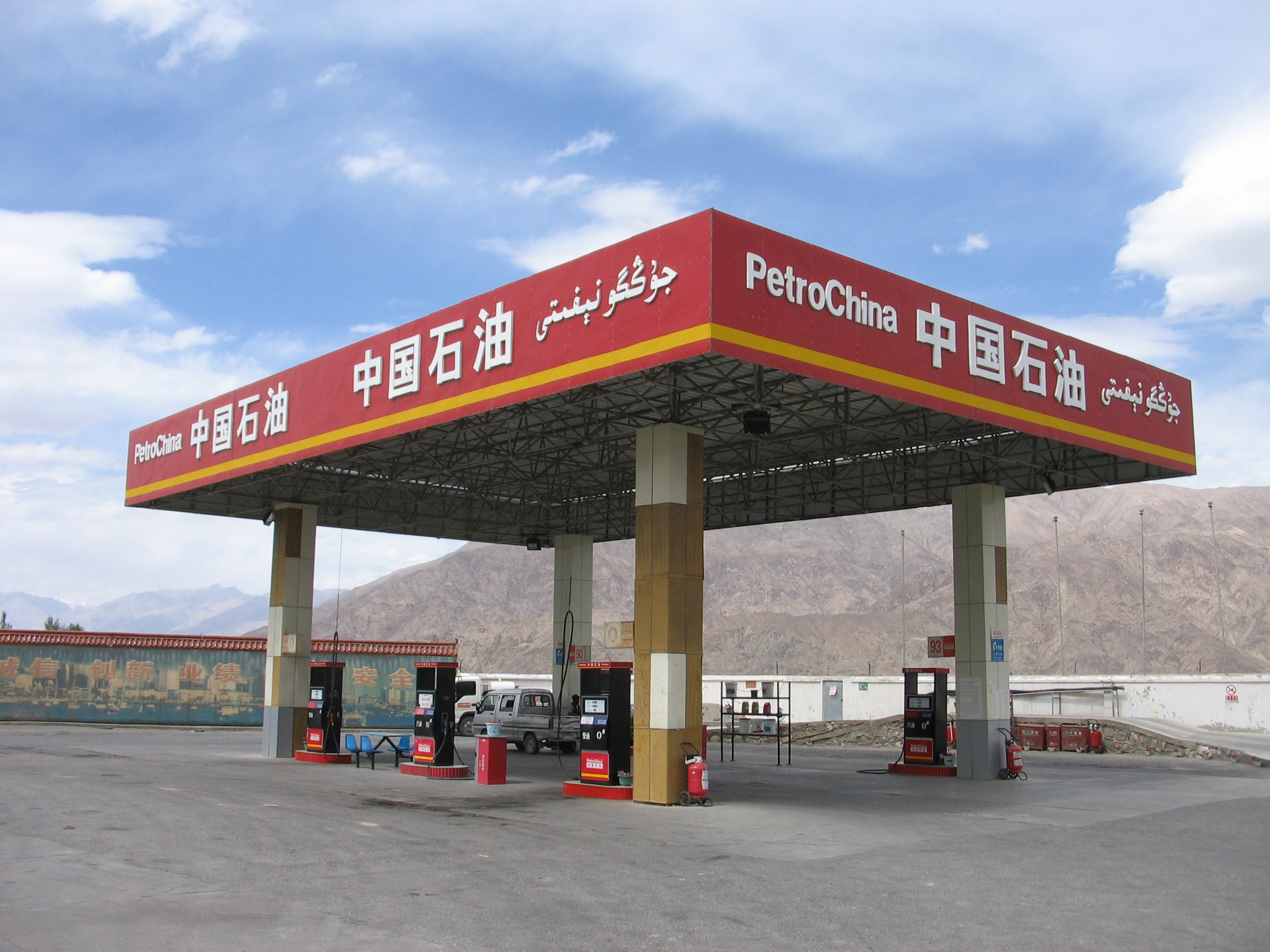
Chinese oil producer
| Field | Value | |
|---|---|---|
| name | PetroChina Company Limited | |
| 中国石油天然气股份有限公司 | ||
| logo | Petrochina logo.svg | |
| logo_upright | .7 | |
| image | 中石油大楼远景.jpg | |
| image_size | 250px | |
| image_caption | Headquarters in Beijing | |
| native_name | 中国石油天然气股份有限公司 | |
| type | State owned enterprise | |
| traded_as | ||
| ISIN | ||
| area_served | Worldwide with primary markets in China | |
| key_people | Zhou Jiping (chairman) | |
| Wang Dongjin (CEO) | ||
| industry | Oil and gas | |
| products | Fuels, lubricants, natural gas, petrochemicals | |
| revenue | (2020) | |
| operating_income | (2017) | |
| net_income | (2017) | |
| assets | (2017) | |
| equity | (2017) | |
| num_employees | 506,000 (2019) | |
| parent | China National Petroleum Corporation | |
| subsid | Singapore Petroleum Company | |
| foundation | ||
| location | Dongcheng District, Beijing | |
| homepage | ||
| module | {{Infobox Chinese | child=yes |
| s | 中国石油天然气股份有限公司 | |
| t | 中國石油天然氣股份有限公司 | |
| p | Zhōngguó Shíyóu Tiānránqì Gǔfèn Yǒuxiàn Gōngsī | |
| order | st |
中国石油天然气股份有限公司 Wang Dongjin (CEO) China PetroChina Company Limited () is a Chinese oil and gas company and is the listed arm of state-owned China National Petroleum Corporation (CNPC), headquartered in Dongcheng District, Beijing. The company is currently Asia's largest oil and gas producer. and subsequently entered the constituent of SSE 50 Index. In the 2020 Forbes Global 2000, PetroChina was ranked as the 32nd-largest public company in the world.
History
PetroChina was established as a joint stock company with limited liabilities under the Company Law of the People's Republic of China (the PRC) on 5 November 1999, as part of the restructuring of CNPC. In the restructuring, CNPC injected into PetroChina most of the assets and liabilities of CNPC relating to its exploration and production, refining and marketing, chemicals and natural gas businesses. Because of Sinopec's link to Sudan through parent company China Petrochemical Corporation, several institutional investors such as Harvard and Yale decided, in 2005, to divest from Sinopec. Sudan divestment efforts have continued to be concentrated on PetroChina since then. Fidelity Investments, after pressure from activist groups, also announced in a filing in the US that it had sold 91 per cent of its American Depositary Receipts in PetroChina in the first quarter of 2007.
At the beginning of May 2007, the company announced it had made China's largest oil find in a decade off the country's northeast coast, in an oilfield named Jidong Nanpu oil field in Bohai Bay. In May 2008 these expectations were lowered.
On 7 November 2007, Hang Seng Indexes Company announced that PetroChina would be a Hang Seng Index Constituent Stock, effective 10 December 2007. PetroChina also came under scrutiny from international organizations for its part in trading with the Sudanese government as it undertook the war in Darfur.
On 19 August 2009, PetroChina signed an A$50 billion deal with ExxonMobil to purchase liquefied natural gas from the Gorgon field in Western Australia, considered the largest contract ever signed between China and Australia, which ensures China a steady supply of LNG fuel for 20 years, and also forms as China's largest supply of relatively "clean energy". This deal has been formally secured, despite relations between Australia and China being at their lowest point in years, following the Rio Tinto espionage case and the granting of visas to Rebiya Kadeer to visit Australia.
PetroChina's Dushanzi District refinery became fully operational on 24 September 2009. The refinery is China's largest refinery with annual capacity of 10 million tons of oil and 1 million tons of ethylene. The refinery is an integral part of China's ambitions to import oil from Kazakhstan.
In February 2011, PetroChina agreed to pay $5.4 billion for a 49% stake in Canada's Duvernay shale assets owned by Encana. It was China's biggest investment in shale gas to date. PetroChina's subsidiary in Canada is named PetroChina Canada and has an office in Calgary. It operates under the direction of Li Zhiming.
China signed a deal in 2016 with the Nepal Oil Corporation to sell 30% of the total Nepalese petroleum consumption. China plans to build a pipeline to Nepal's Panchkhal along with a storage depot.
In 2017, the shares of PetroChina upped after the rise of natural gas prices for commercial use.
In February 2019, as part of the Arrow Energy joint venture with Royal Dutch Shell, the company was granted leases for $10 billion (AUS) towards the Surat project in Queensland, Australia. Liaoyang Petrochemical Corp, a unit of PetroChina, in May 2019 exported to Europe for the first time. PetroChina posted a US$4 billion profit for 2019. In 2023, PetroChina received the equivalent of US$343 million in state subsidies.
PetroChina was allowed to accelerate its renewable energy business in 2022, installing 5.36 gigawatts of wind and solar power plants and 11.2 million square meters of geothermal projects during the first half of the year. This came after the company posted a 55.3 percent year-on-year increase in interim earnings.
PetroChina Pipelines
PetroChina Pipelines is a subsidiary (72.26%) of PetroChina that managed the first three pipelines of the project.
West–East Gas Pipeline I
History
The construction of the West–East Gas Pipeline started in 2002. The pipeline was put into trial operation on 1 October 2004, and the full commercial supply of natural gas commenced on 1 January 2005. The pipeline is owned and operated by PetroChina West–East Gas Pipeline Company, a subsidiary of PetroChina. Originally, it was agreed that PetroChina would have owned 50% of the pipeline, while Royal Dutch Shell, Gazprom, and ExxonMobil had been slated to hold 15% each, and Sinopec 5%. However, in August 2004, the Board of Directors of PetroChina announced that following good faith discussions with all parties to the Joint Venture Framework Agreement, the parties had not been able to reach an agreement, and the joint venture framework agreement was terminated. |access-date=18 November 2010}}
Technical features
The 4000 km long pipeline runs from Lunnan in Xinjiang to Shanghai. The pipeline passes through 66 cities in the 10 provinces in China. | access-date = 2007-05-12}} Natural gas transported by the pipeline is used for electricity production in the Yangtze River Delta area. The capacity of the pipeline is 12 e9m3 of natural gas annually.{{cite news | access-date = 2007-05-12 | archive-date = 28 September 2007 | archive-url = https://web.archive.org/web/20070928211804/http://www.chinadaily.cn/english/doc/2005-06/22/content_453517.htm | url-status = dead | access-date = 2007-05-12}}
Connections
The West–East Gas Pipeline is connected to the Shaan-Jing pipeline by three branch pipelines. | access-date = 2009-06-30}} The 886 km long Ji-Ning branch between the Qingshan Distributing Station and the Anping Distributing Station became operational on 30 December 2005.
Source of supply
The pipeline is supplied from the Tarim Basin oil and gas fields in Xinjiang province. The Changqing gas area in Shaanxi province is a secondary gas source. In the future, the planned Kazakhstan-China gas pipeline will be connected to the West–East Gas Pipeline.
Starting from 15 September 2009, the pipeline is also supplied with coalbed methane from the Qinshui Basin in Shanxi. | archive-url= https://web.archive.org/web/20201129090833/https://uk.reuters.com/article/idUKPEK27598720090916 | url-status= dead | archive-date= 29 November 2020 | access-date =19 September 2009}}
West–East Gas Pipeline II
Construction of the second West–East Gas Pipeline started on 22 February 2008. The pipeline with a total length of 9102 km, including 4843 km of the main line and eight sub-lines, will run from Khorgas in northwestern Xinjiang to Guangzhou in Guangdong. Up to Gansu, it will be parallel and interconnected with the first west–east pipeline. The western part of the pipeline is expected to be commissioned by 2009, and the eastern part by June 2011. | access-date = 2008-02-23}}
The capacity of the second pipeline is 30 e9m3 of natural gas per year. It is mainly supplied by the Central Asia-China gas pipeline. The pipeline is expected to cost US$20 billion. | archive-url = https://web.archive.org/web/20121008124425/http://news.xinhuanet.com/english/2007-04/06/content_5942133.htm | url-status = dead | archive-date = 8 October 2012 | access-date = 2007-05-12}} The project is developed by China National Oil and Gas Exploration and Development Corp. (CNODC), a joint venture of China National Petroleum Corporation and PetroChina. | access-date = 2010-10-24}}
West–East Gas Pipeline III
Construction of the third pipeline started in October 2012 and it is to be completed by 2015. The third pipeline will run from Horgos in western Xinjiang to Fuzhou in Fujian. | access-date = 2008-12-25}} It will cross Xinjiang, Gansu, Ningxia, Shaanxi, Henan, Hubei, Hunan, Jiangxi, Fujian, and Guangdong provinces.
The total length of the third pipeline is 7378 km, including a 5220 km trunkline and eight branches. In addition, the project includes three gas storages and a LNG plant. It will have a capacity of 30 e9m3 of natural gas per year with operating pressure of 10 -. The pipeline will be supplied from Central Asia–China gas pipeline's Line C supplemented by supplies from the Tarim basin and coalbed methane in Xinjiang. Compressors for the pipeline are supplied by Rolls-Royce. | access-date = 2012-10-24}}
Controversies
Chemical spills
Main article: 2005 Jilin chemical plant explosions
In November 2005, one of PetroChina's chemical plants exploded in Jilin, China, resulting in 100 tons of benzene, which is a carcinogen and toxic, pouring into the Songhua River. There was a slick of chemicals that spanned 80 kilometres. Harbin, which is another city along the Songhua River, had to cut the water supply from almost 4 million people, for 5 days. More than 60 people were injured, five died, and one person was missing due to the incident. The spill reached as far as Khabarovsk, Russia, where residents stocked up on bottled water. The Russian city tried filtering its water of toxic substances, but could not guarantee the water was safe. China's environmental agency fined the company one million yuan (approximately $125,000, £64,000) for its pollution, which was the maximum fine that can be handed out in China for breaking an environmental law. The Chinese government said that cleaning up the aftermath would require one billion US dollars. Li Zhaoxing, Chinese Foreign Minister at the time, issued a public apology to Russia due to the incident. The Chinese press responded harshly to the authorities' response to the disaster.
In 2014, Petrochina's subsidiary Lanzhou Petrochemical was responsible for ethylene and ammonia leaks, benzene contamination of water supplies, and air pollution in Lanzhou. City officials criticized the company and demanded an apology.{{cite news |url = https://www.scmp.com/news/china/article/1678520/chinese-city-lashes-petrochina-unit-over-chemical-leaks
The "Western Gas to the East" Pipeline Project
Main article: West–East Gas Pipeline
PetroChina's development of gas reserves in Tarim Basin, Xinjiang has been the subject of controversy, as such a project could pose a threat to the environment.
Demonstration at Chengdu plant
In 2008, PetroChina began constructing a $5.5 billion petrochemical plant, expected to produce 800,000 tons of ethylene and refine 10 million tons of crude oil a year, in Chengdu, China. Although PetroChina claimed that $565 million of the total investment would be dedicated to environmental protection, residents of Chengdu believed it might bring pollution to the local area and took to the streets on 3 and 4 May 2008, to protest the petrochemical plant. The whole demonstration was peaceful, with little Chinese government intervention.
Trade anomalies
On 19 January 2022, Chinese authorities punished PetroChina's subsidiary "PetroChina Fuel Oil Co Ltd" for alleged oil trade inconsistencies that "severely disrupted oil products market order... facilitated blind development of outdated production capacity at independent refineries...caused losses in government tax revenue indirectly," said the National Development and Reform Commission.
Human rights
In 2011, Earthrights International accused PetroChina of complicity in serious human rights abuses in Burma, a country known for militarily furthering its economic interests through the use of forced labor.
Corruption
In September 2013, Jiang Jiemin, a former chairman of PetroChina, was abruptly removed from his role as director of the State-owned Assets Supervision and Administration Commission of the State Council and investigated for corruption and abuse of power, along with four other senior oil executives. Jiang was considered an ally of corrupt former security chief Zhou Yongkang, and part of a group of officials that had political ties with Zhou. On 12 October 2015, the court found Jiang guilty on all counts, including accepting bribes, possessing dark assets, and abusing his power. He was sentenced to 16 years in prison.
In January 2017, former vice chairman Liao Yongyuan was sentenced to 15 years in prison for abuse of power and accepting nearly $2 million worth of bribes.
In October 2021, the Central Commission for Discipline Inspection announced that it was investigating former vice president Ling Xiao, for "serious disciplinary violations".
Tax issues
In January 2014, the International Consortium of Investigative Journalists published research based on leaked financial records from the British Virgin Islands, implicating CNPC, PetroChina, Sinopec, and CNOOC in offshore tax evasion.
Ranking
PetroChina was ranked 30th in 2018 Forbes Global 2000, a list of top listed companies of the world. In 2019, PetroChina was ranked 22nd in Forbes Global 2000. In 2023, PetroChina was ranked #18 in Forbes' Global 2000 (World's Largest Public Companies).
Corporate bonds
PetroChina, on 24 October 2008 issued a series of medium-term corporate bonds worth 80 billion yuan ($11.7 billion), which was the biggest ever domestic issue by a listed company.
Logo
The logo of PetroChina has represented the company in plenary capacity since 2004. The logo's basic, abecedarian design consists of a rising sun, projected onto a petal-based graphic. The colors utilized in the graphic are red and yellow, auspicious in Chinese culture. Beneath the English-language version of the design is positioned the company's name in an emboldened, black typeset, "PetroChina" ().
PetroChina's current logo was adopted 26 December 2004. The contour of the logo is defined as a "petal graphic equally divided by ten in red and yellow colors", which, according to description, "are the basic colors of the national flag of the People's Republic of China, and which embody the characteristics of the oil and gas industry". The essentially spherical design of the logo, meant to exemplify PetroChina's global development stratagem. The ten equanimous petals are indicative of PetroChina's ten consolidated core businesses. The red substratum is intended to highlight "an angle of a square shape, not only demonstrating PetroChina's strong fundamentals, but also implicating the company's huge power of cohesion and creativity". The general floral connotations of the logo are designed to capture PetroChina's "social responsibility of creating harmony between energy and environment". Finally, the sun ascending over the horizon in the center of the logo epitomizes the prosperous future hoped to lie within the future of PetroChina.
References
Citations
Sources
- 2004 Annual Report, pp. 135, 137
- McGregor, Richard. The Party: The Secret World of China's Communist Rulers. Harper Perennial: New York, 2012. . Originally published in 2010 by Allen Lane, a Penguin Books imprint.
References
- "Executive Profiles".
- (22 March 2018). "Annual Report 2017". PetroChina Company Limited.
- "[http://www.petrochina.com.cn/Ptr/About_PetroChina/Contact_Us/ Contact Us] {{Webarchive. link. (29 September 2011 ." PetroChina. Retrieved on 8 July 2010. "Address: 9 Dongzhimen North Street, Dongcheng District, Beijing, P.R.China.")
- (29 August 2019). "PetroChina first-half profit rises 3.6% on higher oil, gas sales". Reuters.
- Traded in [[Hong Kong Stock Exchange. Hong Kong]] and [[New York Stock Exchange. New York]], the mainland enterprise announced its plans to issue stock in [[Shanghai Stock Exchange
- "Forbes Global 2000".
- {{usurped
- (2007-05-16). "Darfur activists claim Fidelity success".
- (4 May 2007). "China claims major oil field find". BBC News.
- (May 28, 2010). "China: PetroChina's Jidong Nanpu oil field smaller than originally thought".
- "Hang Seng Indexes".
- Stephen McDonell, 19 August 2009, [http://www.abc.net.au/am/content/2009/s2660091.htm Record gas deal between China and Australia – AM] – Australian Broadcasting Corporation
- Babs McHugh, 19 August 2009, [http://www.abc.net.au/rural/content/2008/s2660434.htm Massive sale from Gorgon Gas Project] – Australian Broadcasting Corporation
- David McLennan, 20 August 2009, [http://www.canberratimes.com.au/news/national/national/general/australia-to-be-global-supplier-of-clean-energy/1601141.aspx Australia to be 'global supplier of clean energy'] – The Canberra Times
- 20 August 2009, [http://www.chinadaily.com.cn/bizchina/2009-08/20/content_8592558.htm CNPC to import 2.25m tons of LNG annually from Australia] – ChinaDaily (Source: Xinhua)
- Peter Ryan, 19 August 2009, [http://www.abc.net.au/am/content/2009/s2660092.htm Deal means 2.2 million tonnes exported per year – AM] – Australian Broadcasting Corporation
- [http://thechinaperspective.com/articles/petrochinaactivateschina039sbiggestrefinery6402/index.html PetroChina Activates China's Biggest Refinery] {{Webarchive. link. (2009-09-28 – The China Perspective)
- (11 February 2011). "PetroChina in $5.4bn Canada gas buy".
- "Executive Team – Brion Energy".
- "PetroChina to increase investment in oil, gas business despite financial crisis_English_Xinhua".
- "PetroChina's shares fuelled by increase in natural gas prices". [[South China Morning Post]].
- (2019-02-28). "Shell, PetroChina JV Arrow wins leases for big Australian gas project". Reuters.
- (28 May 2019). "PetroChina exports diesel to Europe for first time -CNPC". Reuters.
- Ng, Eric. (30 August 2019). "PetroChina to broaden LNG import sources amid US-China trade war, posts US$4 billion profit". [[South China Morning Post]].
- Douglas, Jason. (August 3, 2024). "The U.S. Has Been Spending Billions to Revive Manufacturing. But China Is in Another League.". [[The Wall Street Journal]].
- (25 August 2022). "PetroChina picks up renewable energy development pace to meet nation's climate goals as it unveils record profit".
- (24 December 2016). "DISCLOSEABLE TRANSACTION, CONNECTED TRANSACTION". archive of Hong Kong Stock Exchange.
- "Top Ten Longest Oil Pipelines". Oil Patch Asia.
- (25 January 2007). "Maximum fine over China pollution". BBC News.
- (22 December 2005). "Toxic leak reaches Russian city". BBC News.
- Bezlova, Antoaneta. (2 December 2005). "China's toxic spillover". Asia Times.
- (2005-11-24). "Chinese papers condemn Harbin 'lies'". [[BBC News]].
- Aneja, Atul. (2019-06-29). "The inescapable revival of the Tarim basin". The Hindu.
- Chen, Yaning. (July 2007). "Ecological impacts of water resources utilization in the Tarim River Basin of China". Changes in Water Resources Systems: Methodologies to Maintain Water Security and Ensure Integrated Management (Proceedings of Symposium HS3006 at IUGG2007, Perugia, July 2007.
- Wong, Edward. (6 May 2008). "In China City, Protesters See Pollution Risk of New Plant". [[The New York Times]].
- (2022-01-19). "China punishes PetroChina unit for irregular oil trade". Reuters.
- (2011-03-29). "Chinese pipelines in Myanmar cause rights abuses, graft -report". Reuters.
- "Chinese Oil Company Linked to Human Rights Abuses in Burma (Myanmar)".
- (2009-08-13). "Burmese villagers 'forced to work on Total pipeline'".
- (1995-10-12). "Reports of Slave Labor on Pipeline Rouse Critics of Military in Burma". Christian Science Monitor.
- (1 September 2013). "Senior Chinese Official Falls Under Scrutiny as Some Point to Larger Inquiry". New York Times.
- (12 October 2015). "Former China energy chief Jiang Jiemin jailed for corruption".
- "China: Former Oil Executive Jailed For Taking US$ 2 Million in Bribes".
- Spegele, Brian. (2015-03-16). "PetroChina Vice Chairman Under Investigation". Wall Street Journal.
- (2021-10-04). "Former PetroChina executive under probe for suspected graft".
- (2014-01-22). "Chinese oil giants make use of offshore shell companies in Caribbean".
- (2014-01-22). "China's Scandal-Torn Oil Industry Embraces Tax Havens - ICIJ".
- (June 2018). "The World's Largest Public Companies List". Forbes.
- "PetroChina".
- "The Global 2000 2023".
- "PetroChina launches new logo". PetroChina.
This article was imported from Wikipedia and is available under the Creative Commons Attribution-ShareAlike 4.0 License. Content has been adapted to SurfDoc format. Original contributors can be found on the article history page.
Ask Mako anything about PetroChina — get instant answers, deeper analysis, and related topics.
Research with MakoFree with your Surf account
Create a free account to save articles, ask Mako questions, and organize your research.
Sign up freeThis content may have been generated or modified by AI. CloudSurf Software LLC is not responsible for the accuracy, completeness, or reliability of AI-generated content. Always verify important information from primary sources.
Report