From Surf Wiki (app.surf) — the open knowledge base
Petrila
| Field | Value |
|---|---|
| type | town |
| county | Hunedoara |
| population_total | auto |
| image_map | Petrila jud Hunedoara.png |
| map_caption | Location in Hunedoara County |
| official_name | Petrila |
| image_shield | ROU HD Petrila CoA.jpg |
| image_skyline | Lonyaytelep02.jpg |
| image_caption | Catholic Church in Lonea |
| leader_name | Vasile Jurca |
| leader_term | 2024–2028 |
| leader_party | PSD |
| coordinates | |
| area_total | 308.68 |
| elevation | 675 |
| postal_code | 335800 |
| area_code | +40 x54 |
| website |
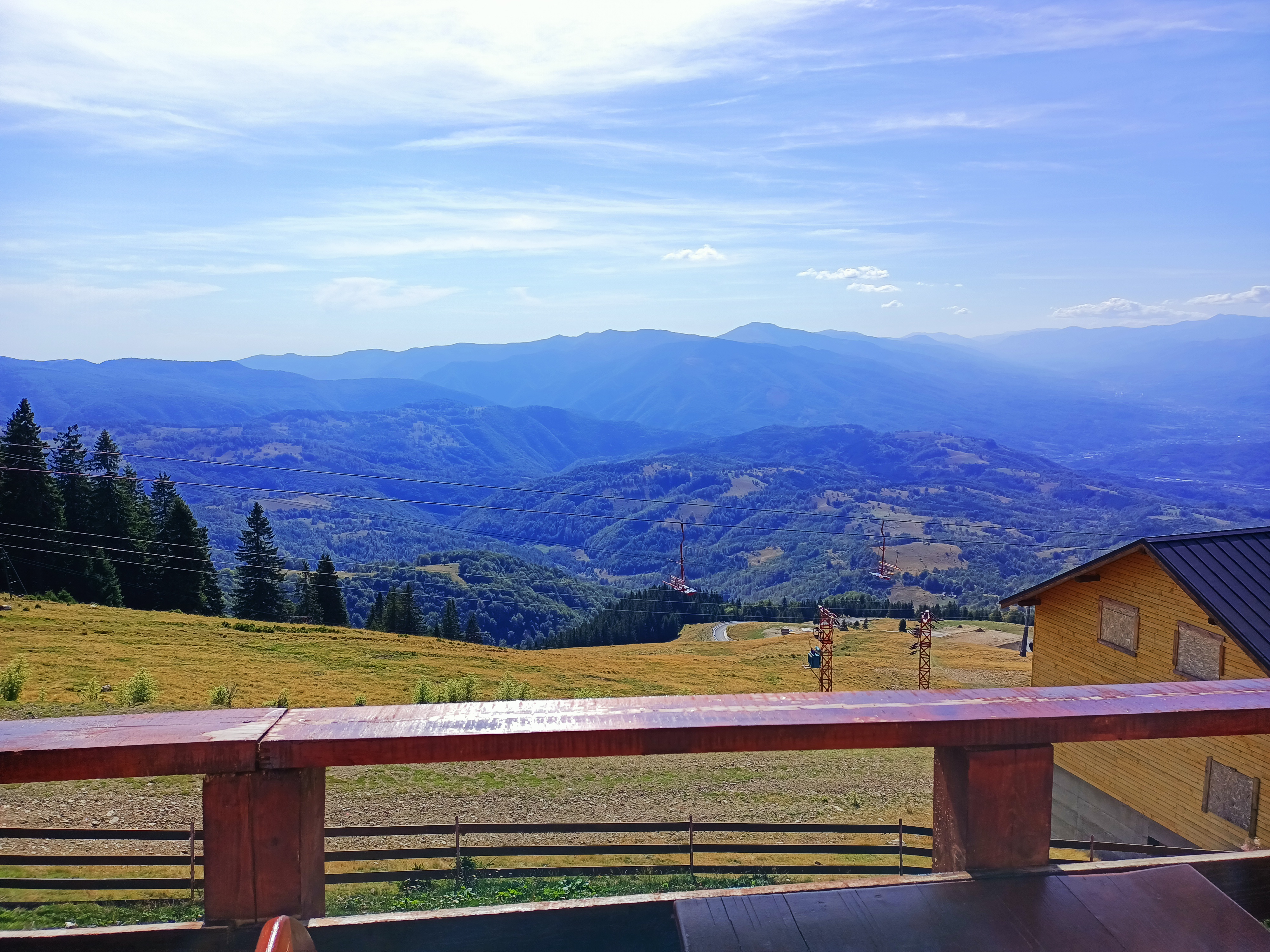
Petrila (; ) is a town in the Jiu Valley, Hunedoara County, Transylvania, Romania. It is located near the confluence of the rivers Jiul de Est, Taia, and Jieț.
The town administers four villages: Cimpa (Csimpa), Jieț (Zsiec), Răscoala (Reszkola), and Tirici.
History
A Romanian town in the Carpathian Mountains, Petrila is an ancient settlement, but its existence was not documented until 1493 in a donation letter between Vladislav the First, King of Hungary and a Romanian prince named Mihai Cande.
The name of the town was noted in 1733 as coming from the Latin word “petrinus” ("pietros" in Romanian), which can be translated into English to mean “of stone”, a reference to the large coal deposits in the area that would become a profitable export in the Industrial Revolution. The exploitation of coal deposits in and around Petrila made the town grow as a single-industry town, revolving either around the mining of coal or the processing of the coal mined there, which is listed under the grade “Pitcoal”. Mining operations began in 1840, but the town would remain sparsely populated until the arrival of Western Moldavian workers forced to relocate by the former president of Romania Nicolae Ceaușescu under Communist rule. The restructuring of the economy since the Romanian Revolution of 1989 has led to a decrease in production and supply for the region, including Petrila.
It was the site in recent times of the Petrila Mine disaster, wherein two methane gas explosions in a coal mine on November 15, 2008 killed at least 12 miners and/or rescue workers. This is not the first time this millennium a coal mine in Petrila has suffered such an incident; another similar incident occurred in 2001.
Economy
The mining in the town began in 1840 and the peak production of coal was in 1984 1,255,240 tonnes, since then it decreased to 504,000 tonnes.
Population
|1956|19955 |1966|24796 |1977|25173 |1992|29302 |2002|28742 |2011|21373 |2021|19600
At the 2011 census, Petrila had a population of 21,373; of these, 93.97% were Romanians, 4.9% Hungarians, and 0.73% Roma. At the 2021 census, the town had a population of 19,600.
Natives
- (1930–2015), composer
- Ferenc Doór (1918–2015), painter
- Alexandru Hrisanide (1936–2018 ), composer
- Josef Kappl (b. 1950), rock musician
- Horațiu Lasconi (b. 1963), footballer
- Ion Dezideriu Sîrbu (1919–1989), philosopher and novelist
- Maria von Tasnady (1911–2001), actress
- Daniel Timofte (b. 1967), footballer
References
References
- "Results of the 2024 local elections". Central Electoral Bureau.
- (15 November 2008). "Gas blasts kill Romanian miners". [[BBC News]].
- (31 May 2023). "Populația rezidentă după grupa de vârstă, pe județe și municipii, orașe, comune, la 1 decembrie 2021". [[National Institute of Statistics (Romania).
This article was imported from Wikipedia and is available under the Creative Commons Attribution-ShareAlike 4.0 License. Content has been adapted to SurfDoc format. Original contributors can be found on the article history page.
Ask Mako anything about Petrila — get instant answers, deeper analysis, and related topics.
Research with MakoFree with your Surf account
Create a free account to save articles, ask Mako questions, and organize your research.
Sign up freeThis content may have been generated or modified by AI. CloudSurf Software LLC is not responsible for the accuracy, completeness, or reliability of AI-generated content. Always verify important information from primary sources.
Report